📅 Discovery timeline
Drag the slider or press play to move through time and watch discoveries appear. Each dot is a discovery, colored by field — hover to see what it is, click to open it.
 Illustration🌋 Earth Science
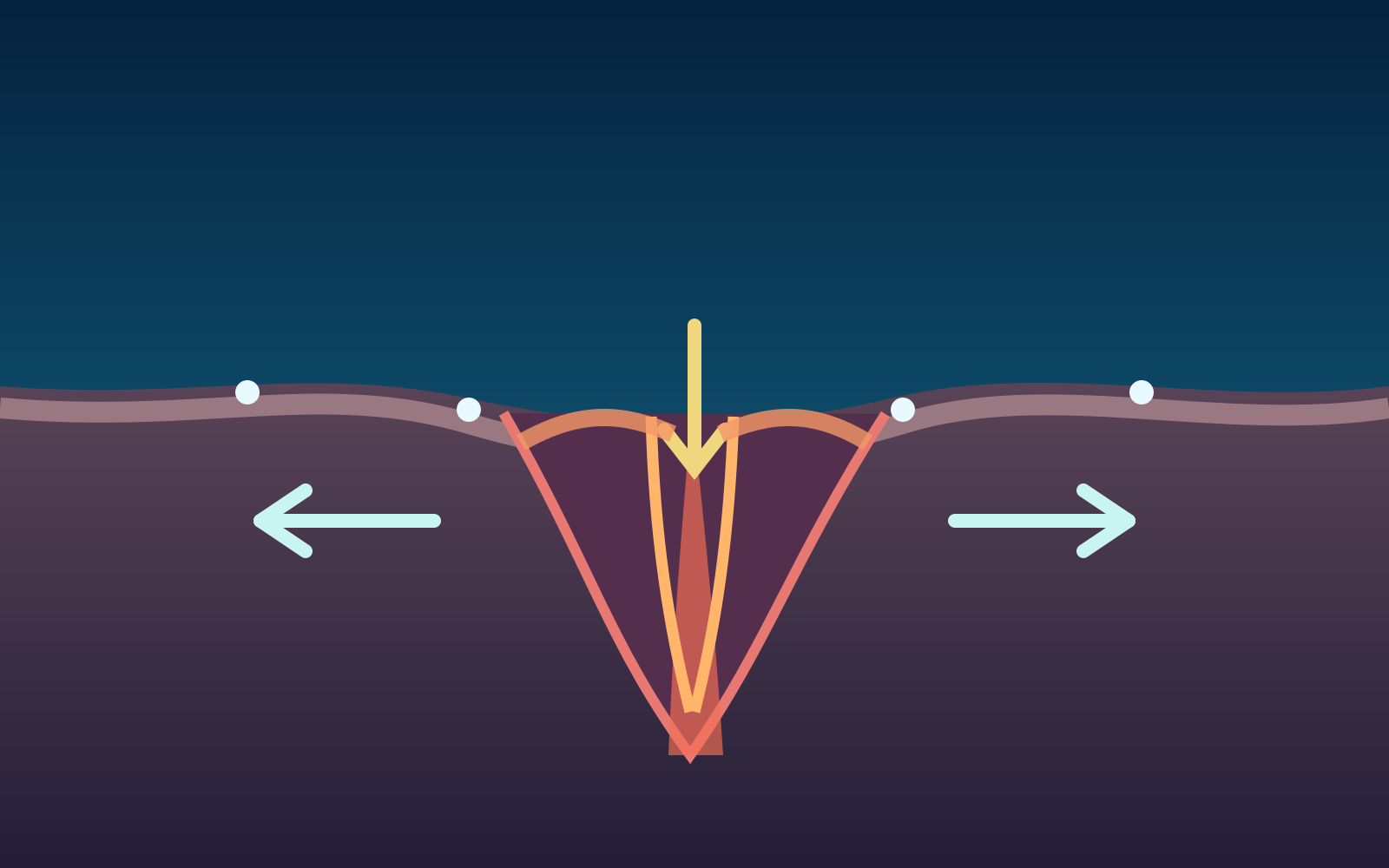
Seafloor Spreading Captured at the Southeast Indian Ridge
An autonomous seismogeodetic observatory captured a 2024 rifting event at the Southeast Indian Ridge, directly measuring seismicity, metre-scale deformation, and fresh lava emplacement at a mid-ocean ridge.
Read more →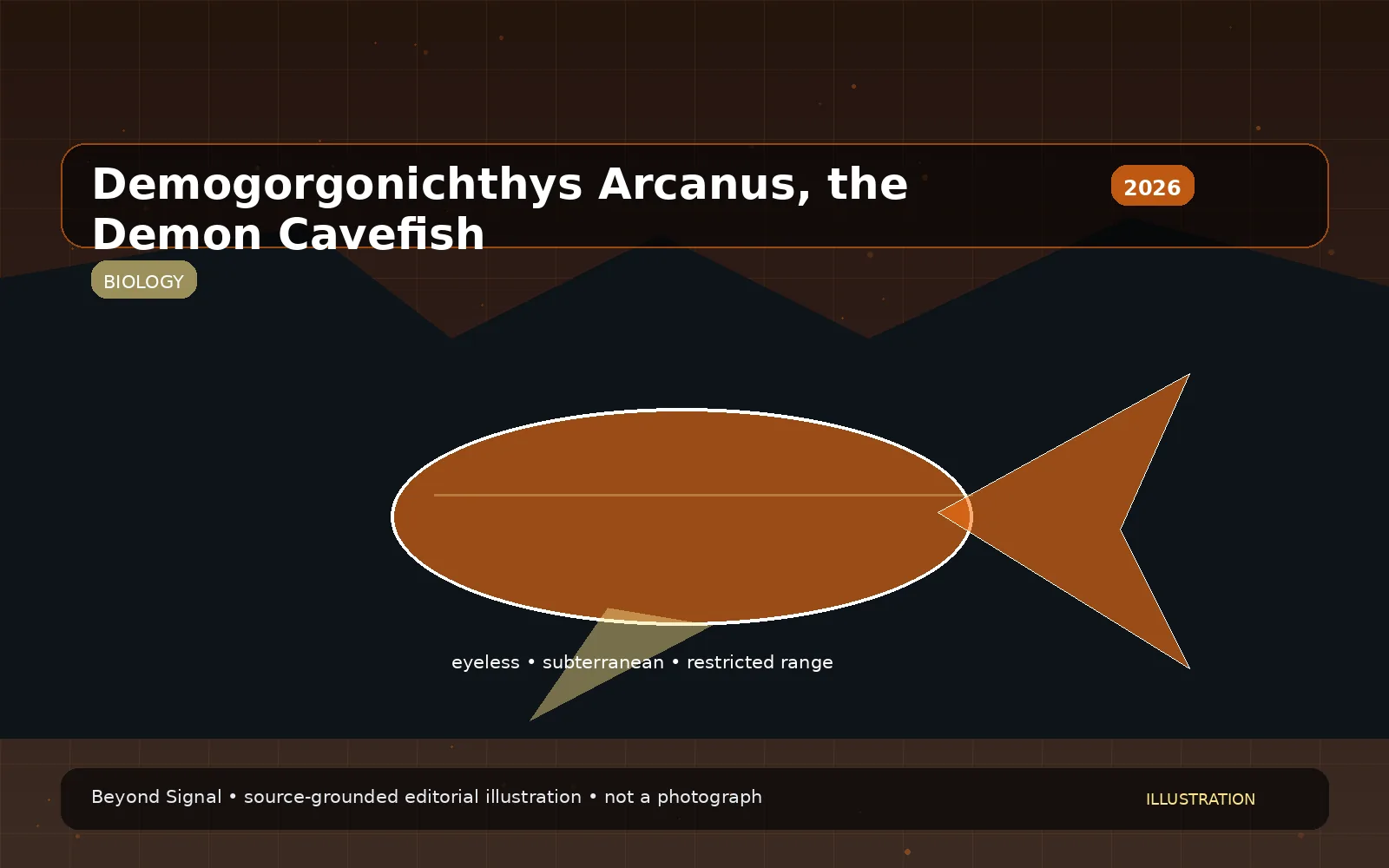 Illustration🧬 Biology
Demogorgonichthys Arcanus, the Demon Cavefish
Researchers described Demogorgonichthys arcanus, a new cavefish from the Redstone Arsenal karst near Huntsville. The pale subterranean predator differs from the Southern cavefish in head shape and fin-ray anatomy, and its coexistence with another predatory cavefish makes the small groundwater habitat ecologically unusual.
Read more → Illustration⚛️ Physics
Magnetic Fields Boost Superconductivity in Rhombohedral Graphene
Transport experiments in rhombohedral four- and five-layer graphene revealed superconducting states that persist, strengthen, or emerge in magnetic fields that would ordinarily suppress conventional superconductivity.
Read more → Representative🪸 Ocean Discoveries
31 New Species Found in Brazil's Ocean Midwater
A two-week expedition off Brazil rapidly identified 31 likely new species, including jellyfish, comb jellies, siphonophores, worms, amphipods, larvaceans, and giant single-celled organisms.
Read more →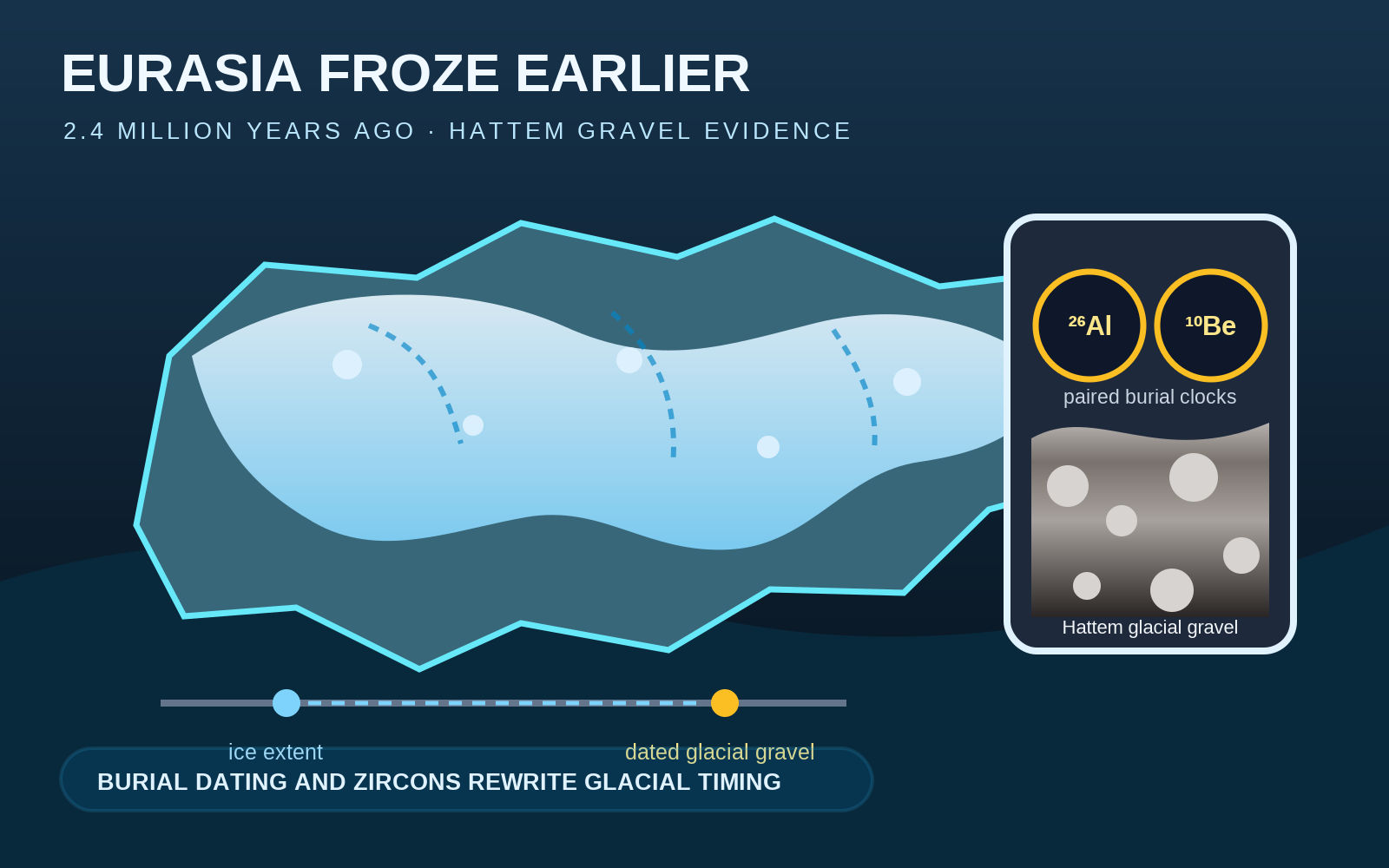 Illustration🌋 Earth Science
A Continental-Scale Eurasian Ice Sheet 2.4 Million Years Ago
Burial dating and zircon provenance showed that Fennoscandian glacial gravels reached the Netherlands about 2.41 million years ago, documenting continental-scale Eurasian ice more than a million years earlier than the classic mid-Pleistocene expansion.
Read more → Representative🪸 Ocean Discoveries
Dudgeon's Walking Shark
A newly described walking shark from shallow Papua New Guinea reefs, identified by its distinctive spotted pattern and confirmed as a separate species through DNA comparisons.
Read more →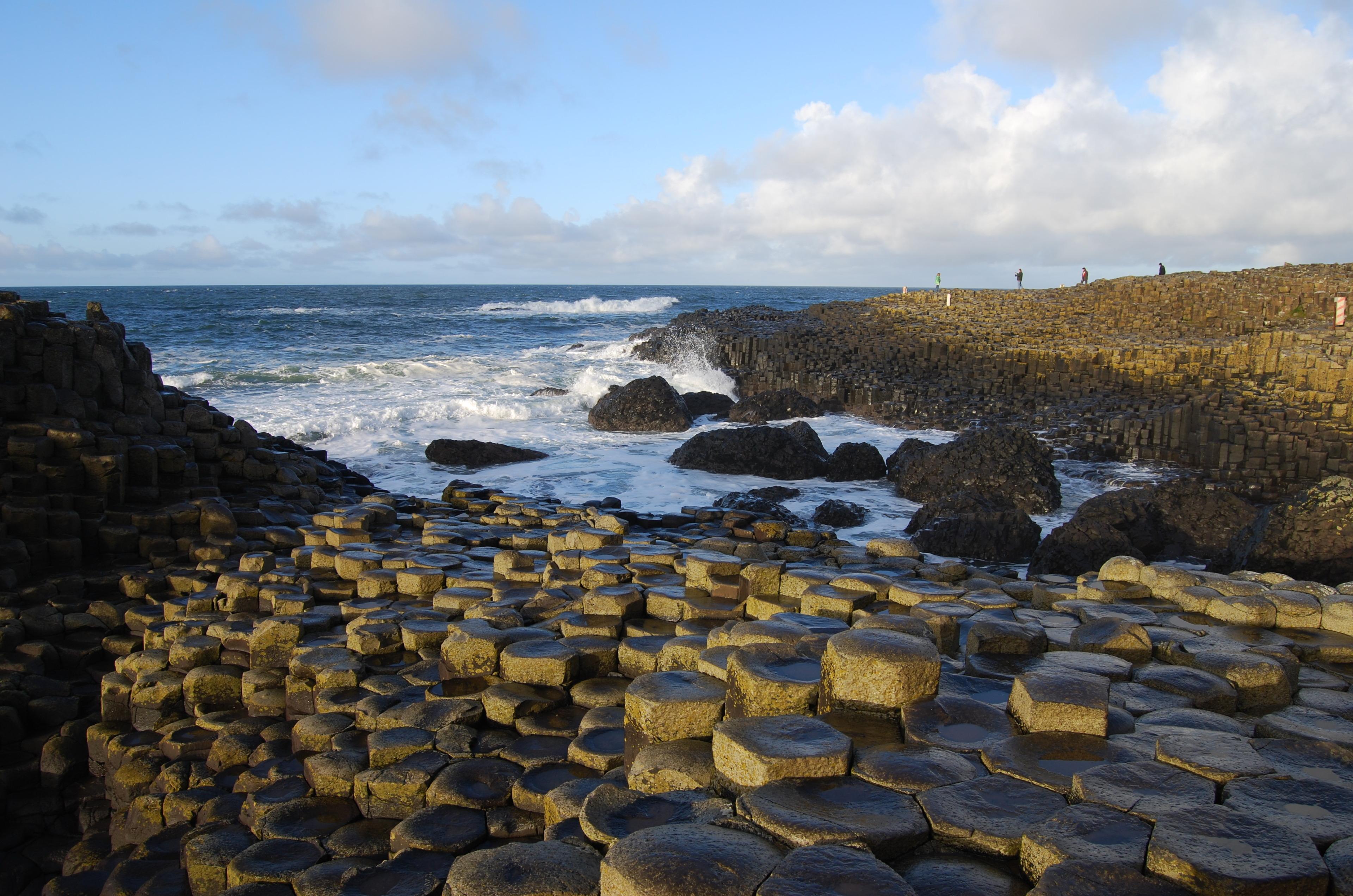 🌋 Earth Science
A New Timeline for the Giant's Causeway Eruptions
High-precision dating compressed the region's volcanic history into about 5.5 million years and tied the Causeway to a North Atlantic event recorded from Scotland to Greenland.
Read more → Illustration🦕 Dinosaurs & Fossils
A Deep-Sea Whale Necropolis in the Diamantina Zone
Dives in the Diamantina Zone recorded five modern whale-fall communities and 476 fossil cetacean sites over 1,200 kilometres of seafloor, documenting a whale-fall archive that extends back at least 5.3 million years.
Read more →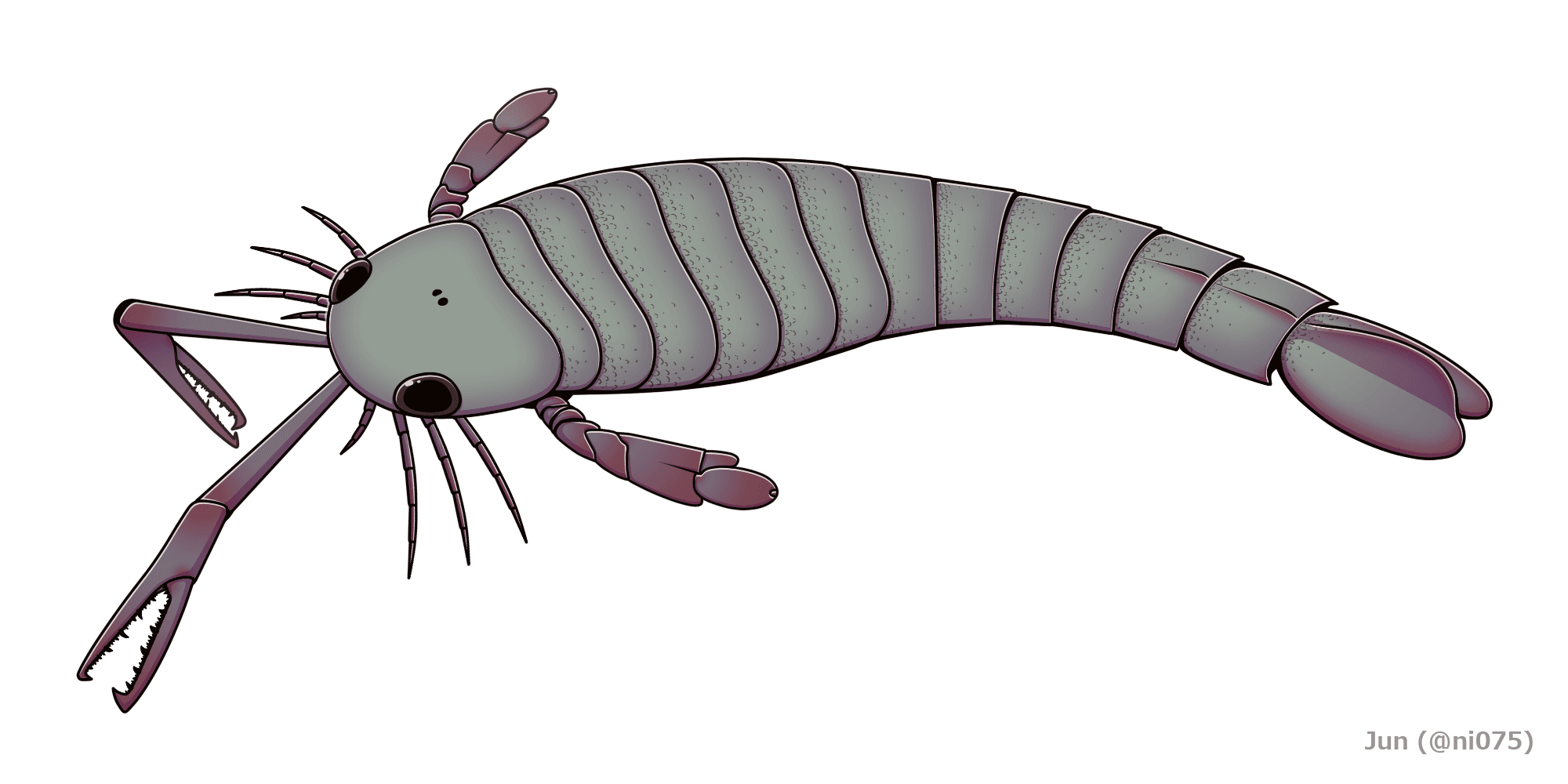 🦕 Dinosaurs & Fossils
The Metre-Long Scorpion Praearcturus
Modern reanalysis supports identifying fragmentary British fossils as a roughly one-metre scorpion, potentially the largest scorpion yet recognized.
Read more → Representative🪸 Ocean Discoveries
A Tiny Blue Octopus from the Galápagos Deep
A golf-ball-sized, deep-blue octopus from nearly 1,800 m below the Galápagos was formally described as a new species after non-destructive CT scans revealed its unusual anatomy.
Read more →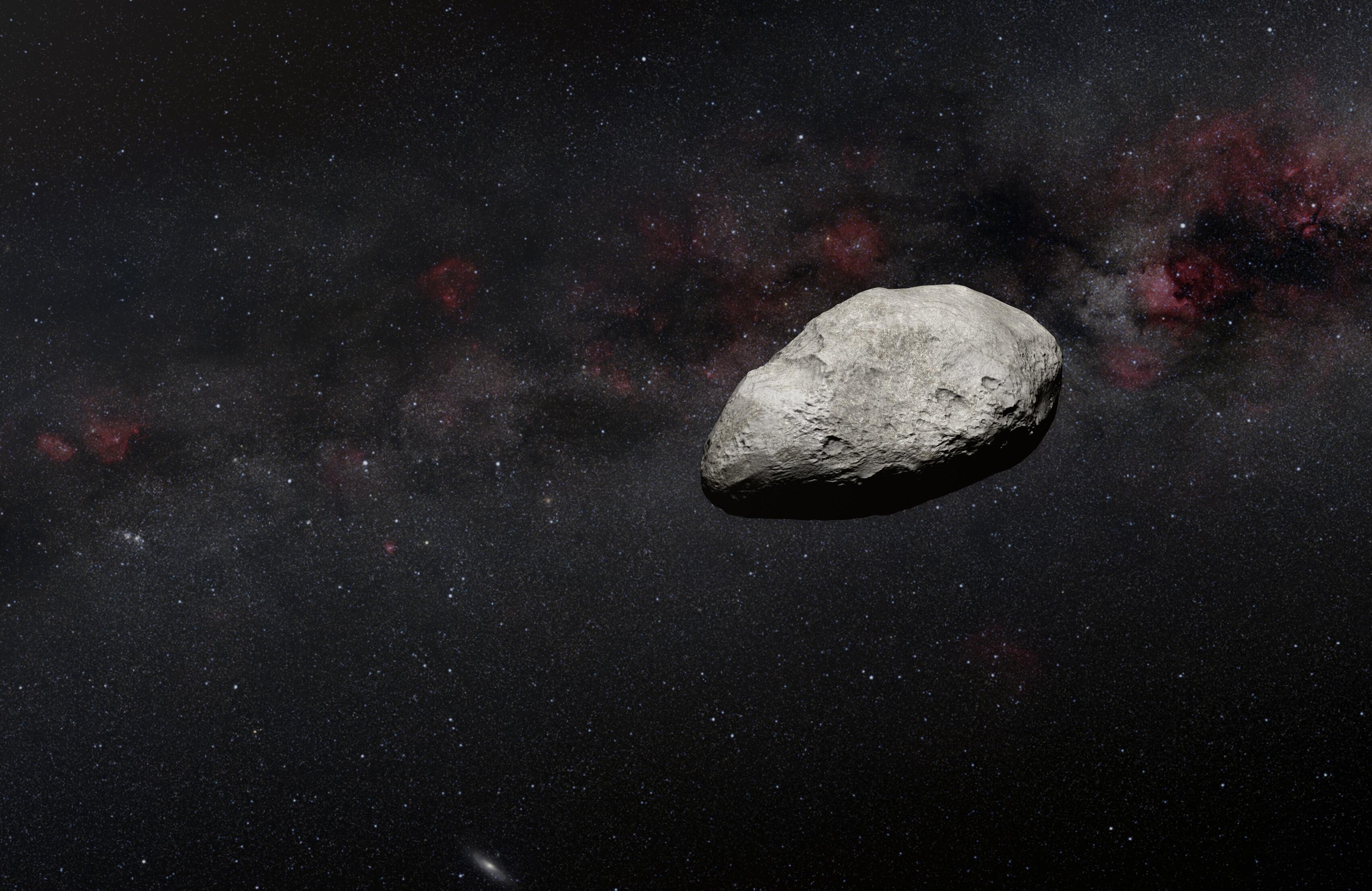 🌌 Space
JWST Rules Out a 2032 Lunar Impact
Faint James Webb Space Telescope observations extended asteroid 2024 YR4’s measured orbit and ruled out its previously possible collision with the Moon in December 2032.
Read more → 🪸 Ocean Discoveries
The Deep-Sea ‘Golden Orb’ Identified
A mysterious golden mass collected from the Gulf of Alaska seafloor was identified as tissue shed from the attachment base of the giant deep-sea anemone Relicanthus daphneae.
Read more → 🌌 Space
Proba-3 Reveals a Faster Slow Solar Wind
Artificial-eclipse observations showed small slow-solar-wind outflows racing through the inner corona three to four times faster than expected.
Read more →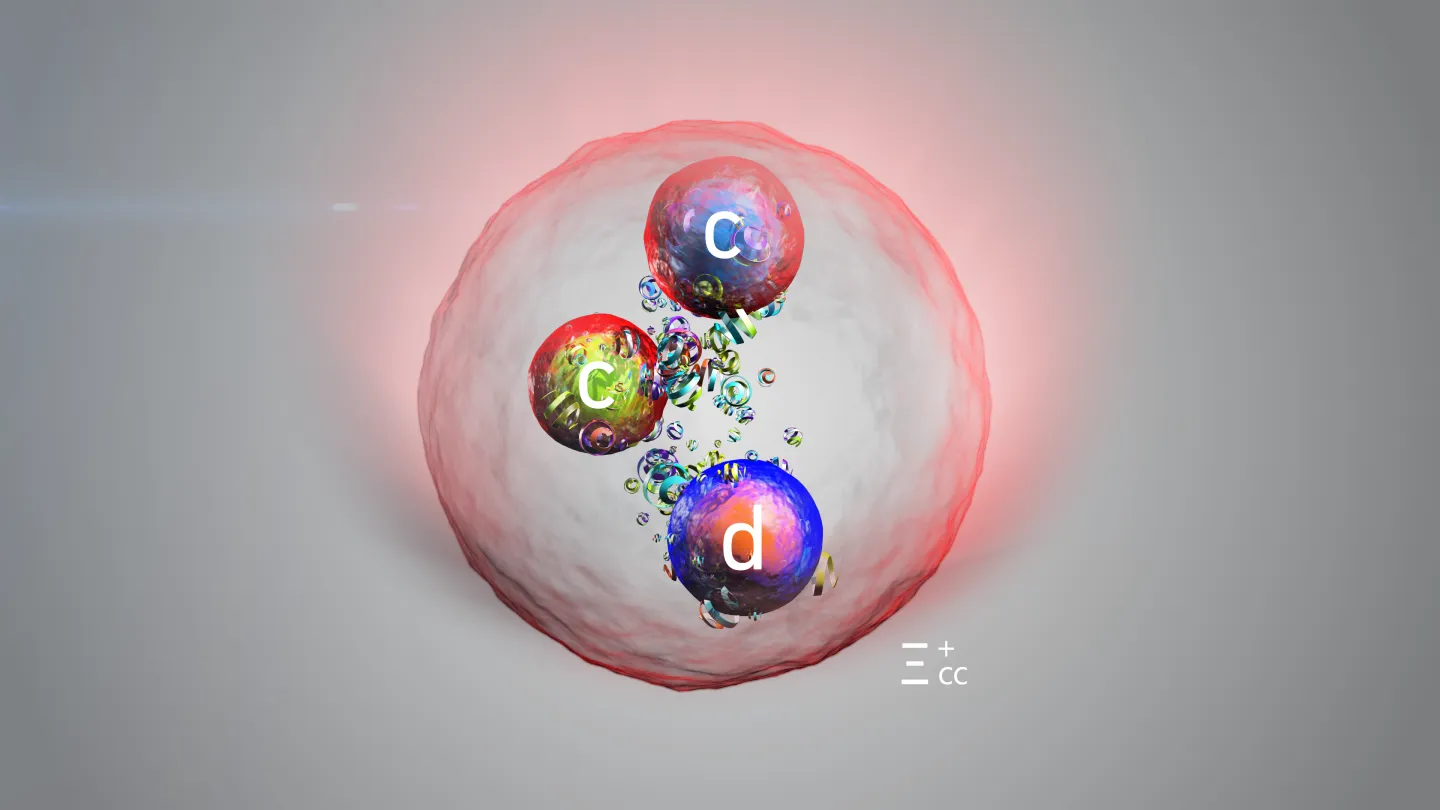 Illustration⚛️ Physics
The Doubly Charmed Baryon Ξcc+
LHCb observed a proton-like particle containing two charm quarks and one down quark with discovery-level significance, resolving a long-running experimental puzzle.
Read more →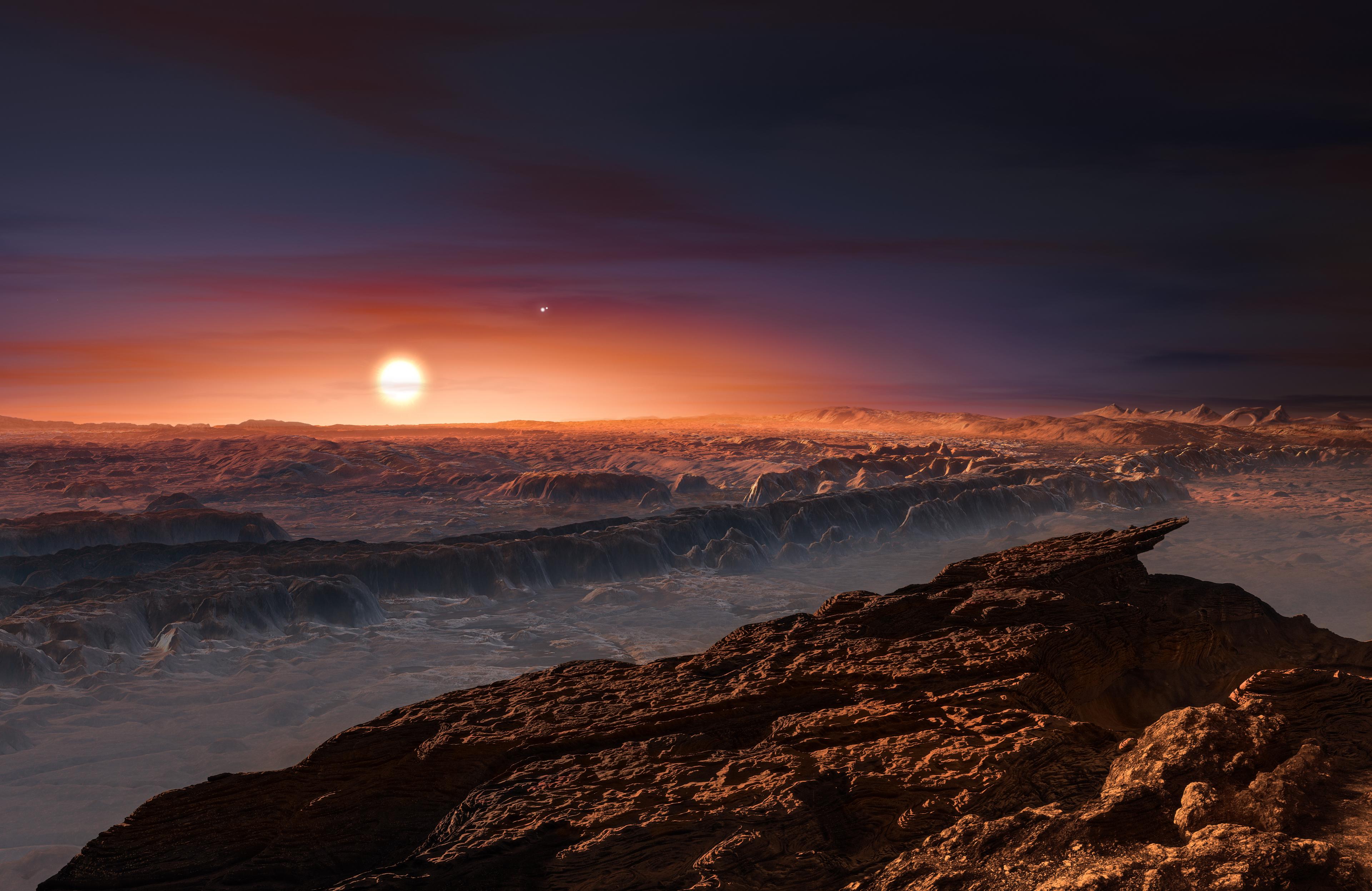 🌌 Space
GJ 887 d, a Nearby Habitable-Zone Super-Earth
A 50.77-day super-Earth confirmed in the habitable zone of GJ 887, only about 10.7 light-years away and second only to Proxima b in proximity among known temperate planets.
Read more →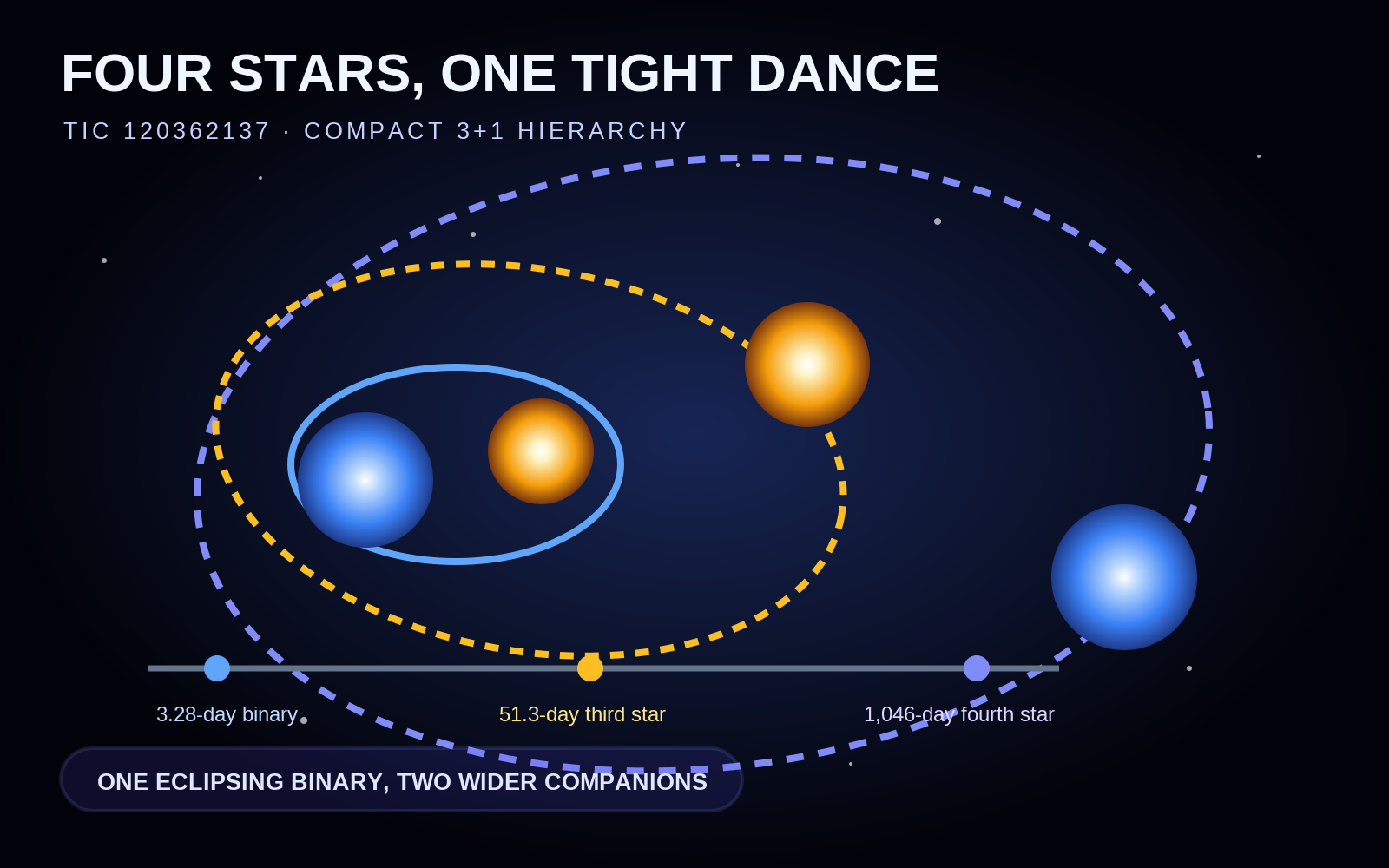 Illustration🌌 Space
The Most Compact Known 3+1 Quadruple Star System
TESS eclipse timing, ground photometry, and spectra revealed TIC 120362137 as the tightest known hierarchical 3+1 quadruple: three stars fit inside a region comparable to Mercury's orbit while a fourth circles outside them.
Read more →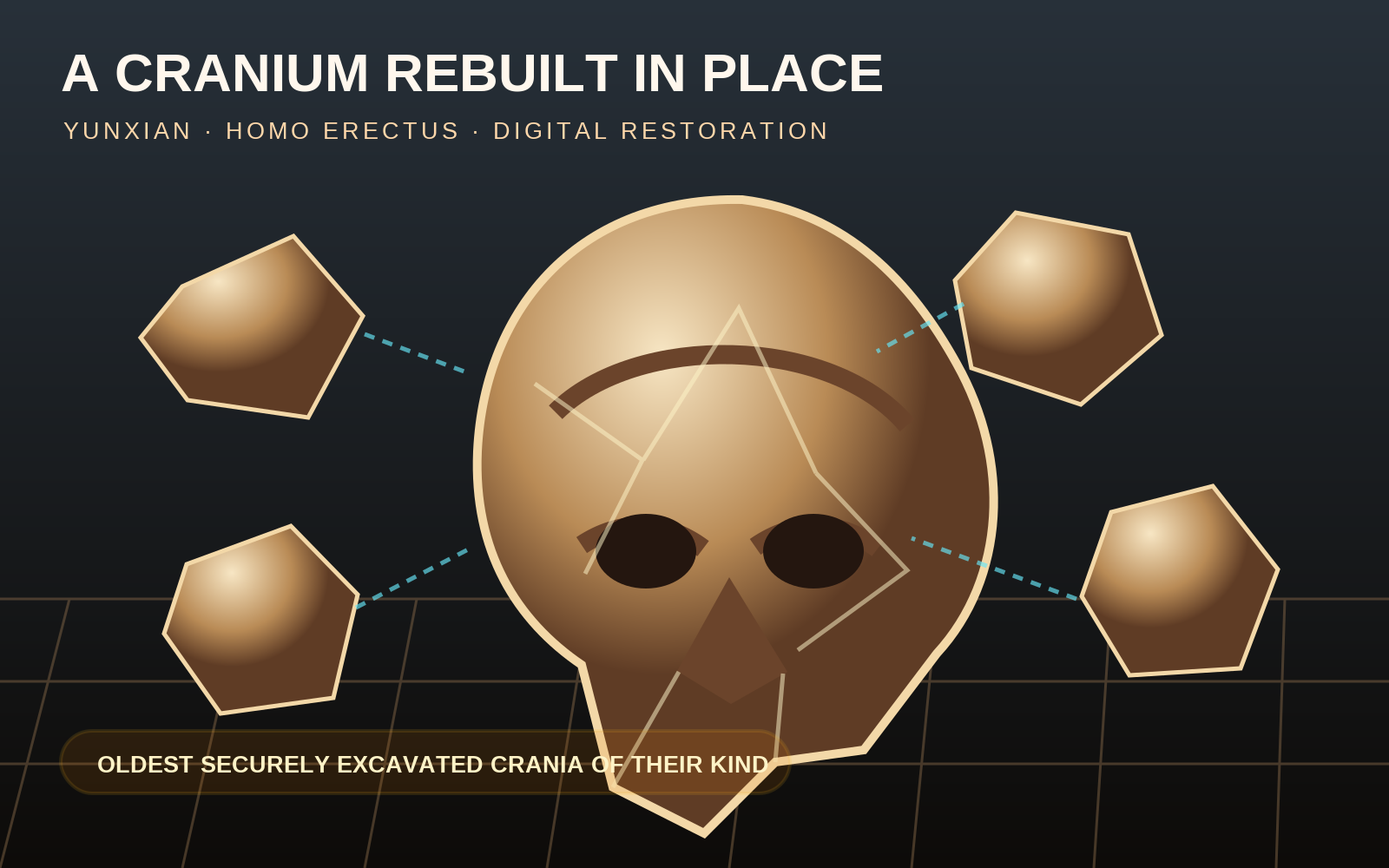 Illustration🏺 Archaeology
Yunxian's 1.77-Million-Year-Old Homo Erectus Crania
Cosmogenic-nuclide burial dating placed the fossil-bearing Yunxian sediments at 1.77 ± 0.08 million years old, making the three crania the oldest Homo erectus fossils securely recovered in place in eastern Asia.
Read more →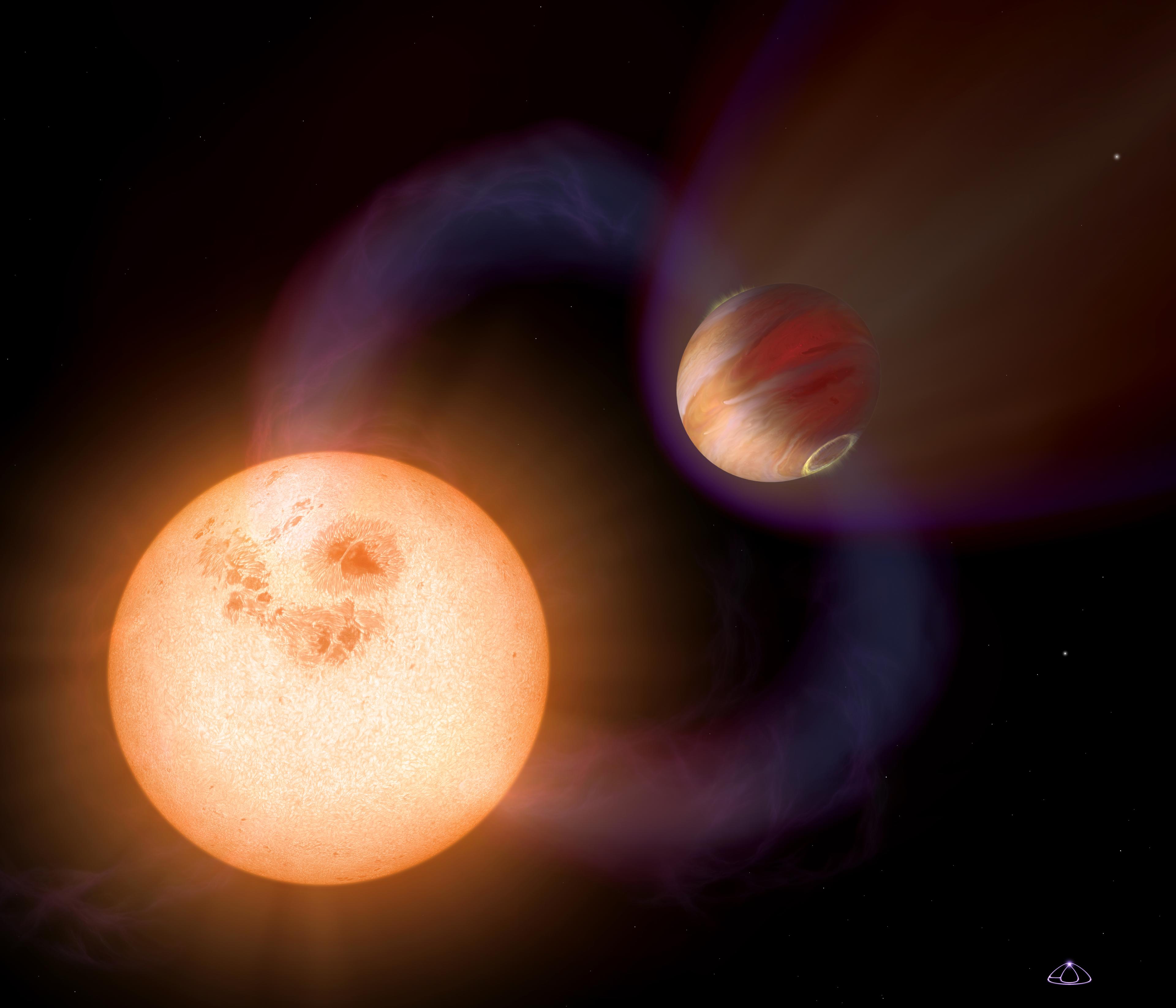 🌌 Space
The Inside-Out LHS 1903 Planetary System
Four close-orbiting planets arranged rocky–gaseous–gaseous–rocky, an unexpected architecture that supports sequential, gas-depleted planet formation.
Read more →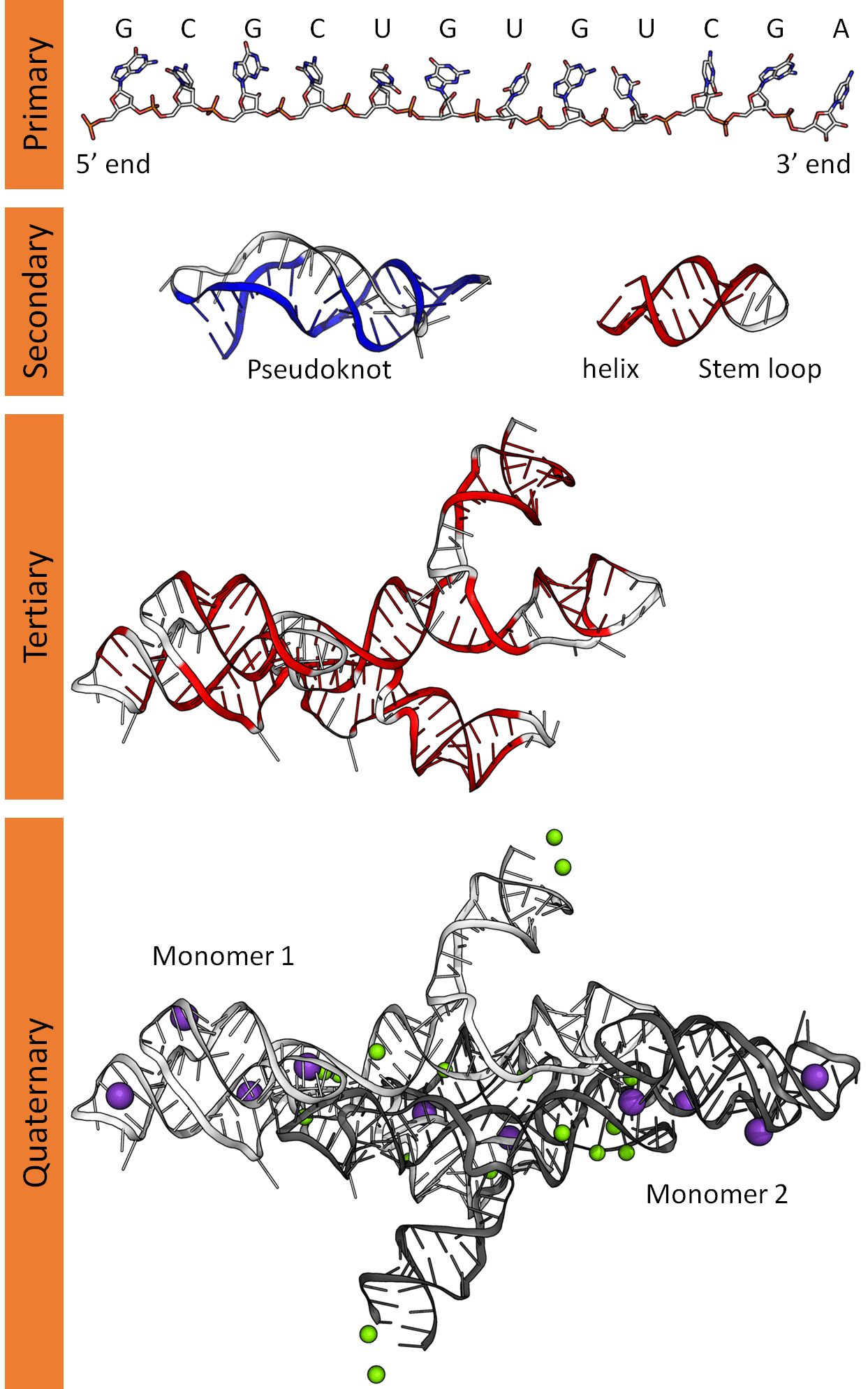 🧬 Biology
A Tiny RNA Enzyme That Can Copy Itself
A compact 45-nucleotide catalytic RNA synthesized both its complementary strand and a copy of itself, strengthening a central prediction of the RNA-world hypothesis.
Read more →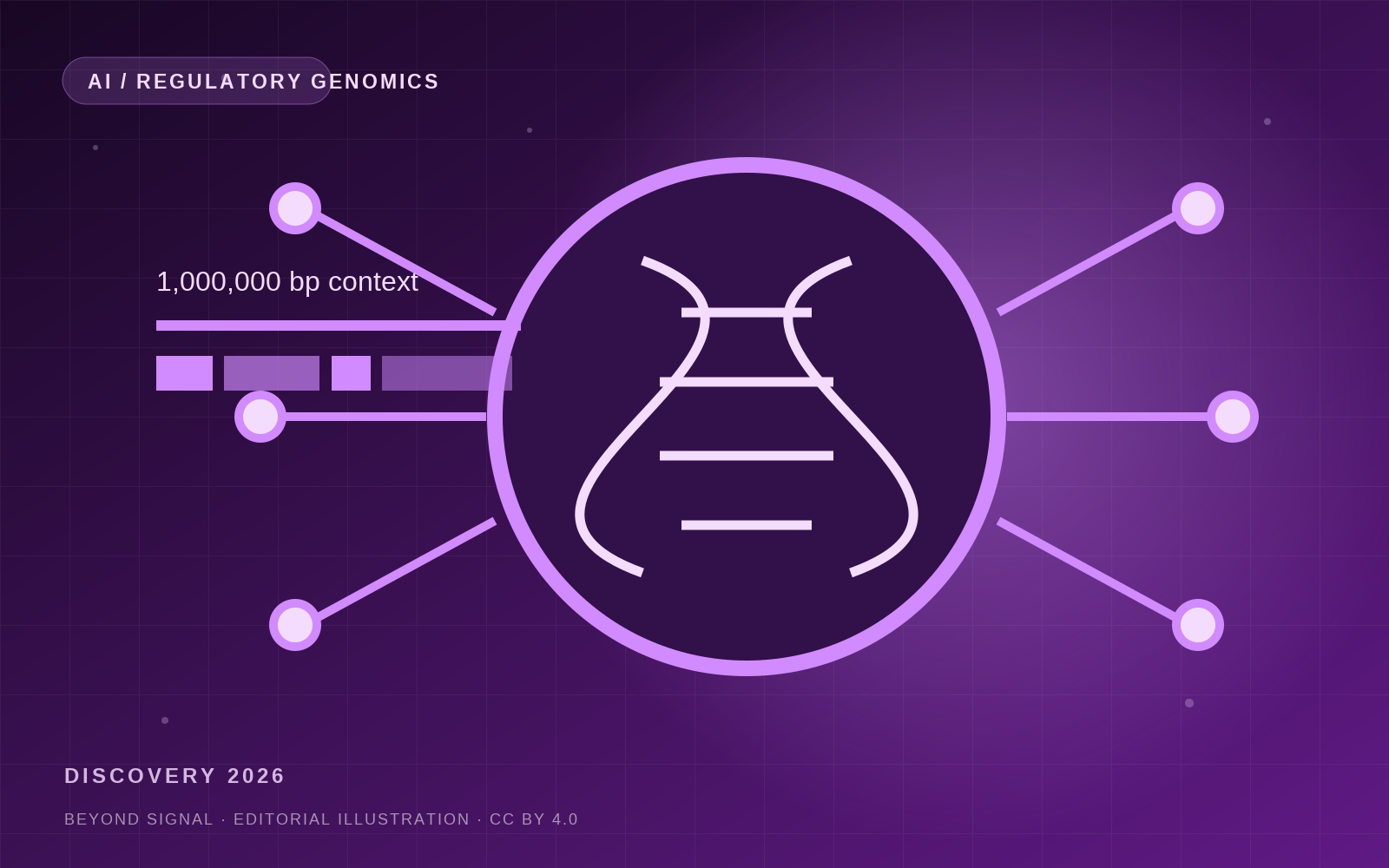 Illustration🤖 Technology
AlphaGenome Predicts How DNA Variants Alter Gene Regulation
AlphaGenome was published as a sequence model that analyses up to one million DNA letters and predicts thousands of regulatory readouts, including gene expression, chromatin state, and RNA splicing.
Read more →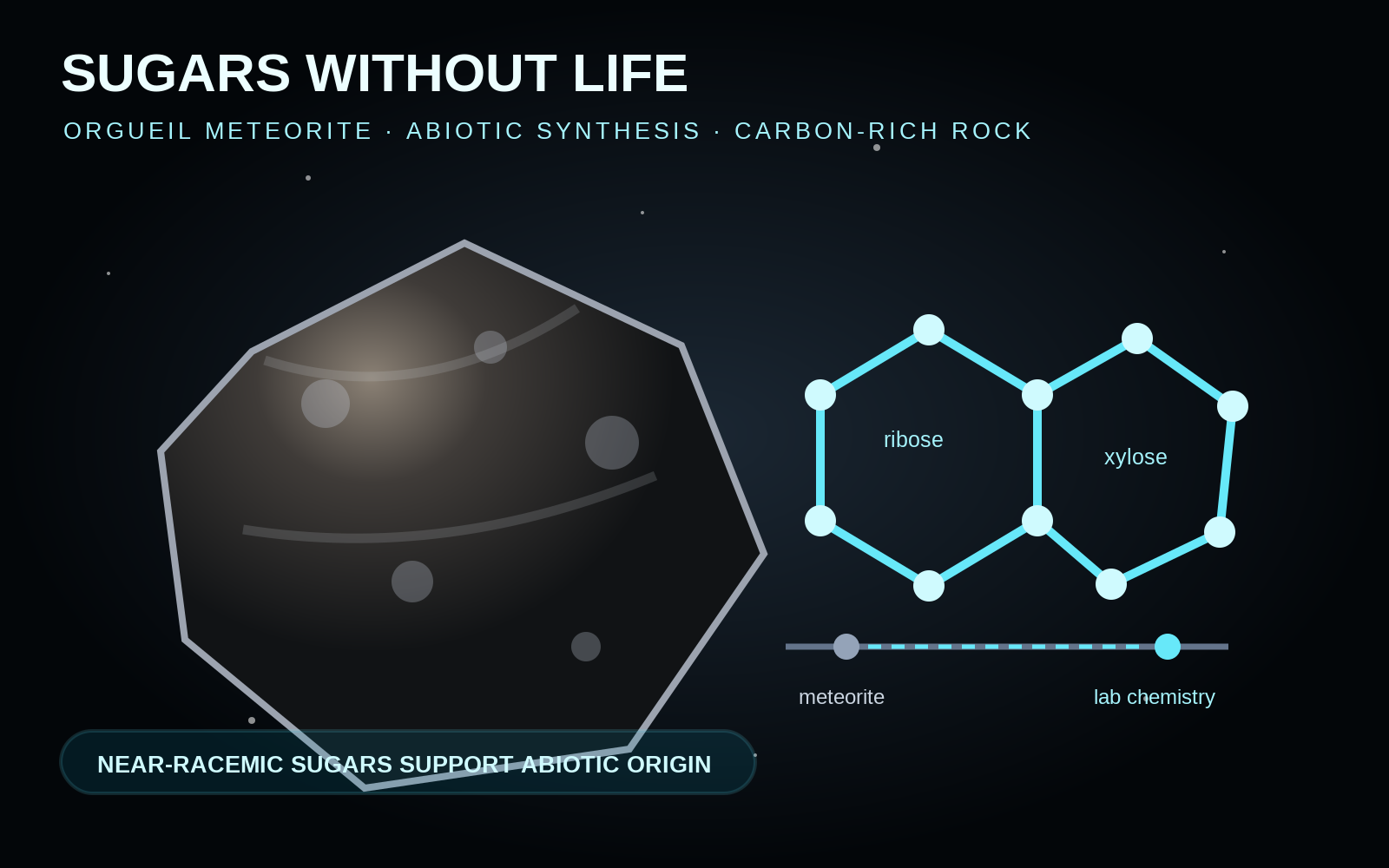 Illustration🌌 Space
Abiotic Sugars in the Orgueil Meteorite
Chiral analysis of an Orgueil meteorite sample detected ribose, arabinose, xylose, lyxose, and ribulose, with several near-racemic mixtures supporting abiotic extraterrestrial formation rather than ordinary biological contamination.
Read more →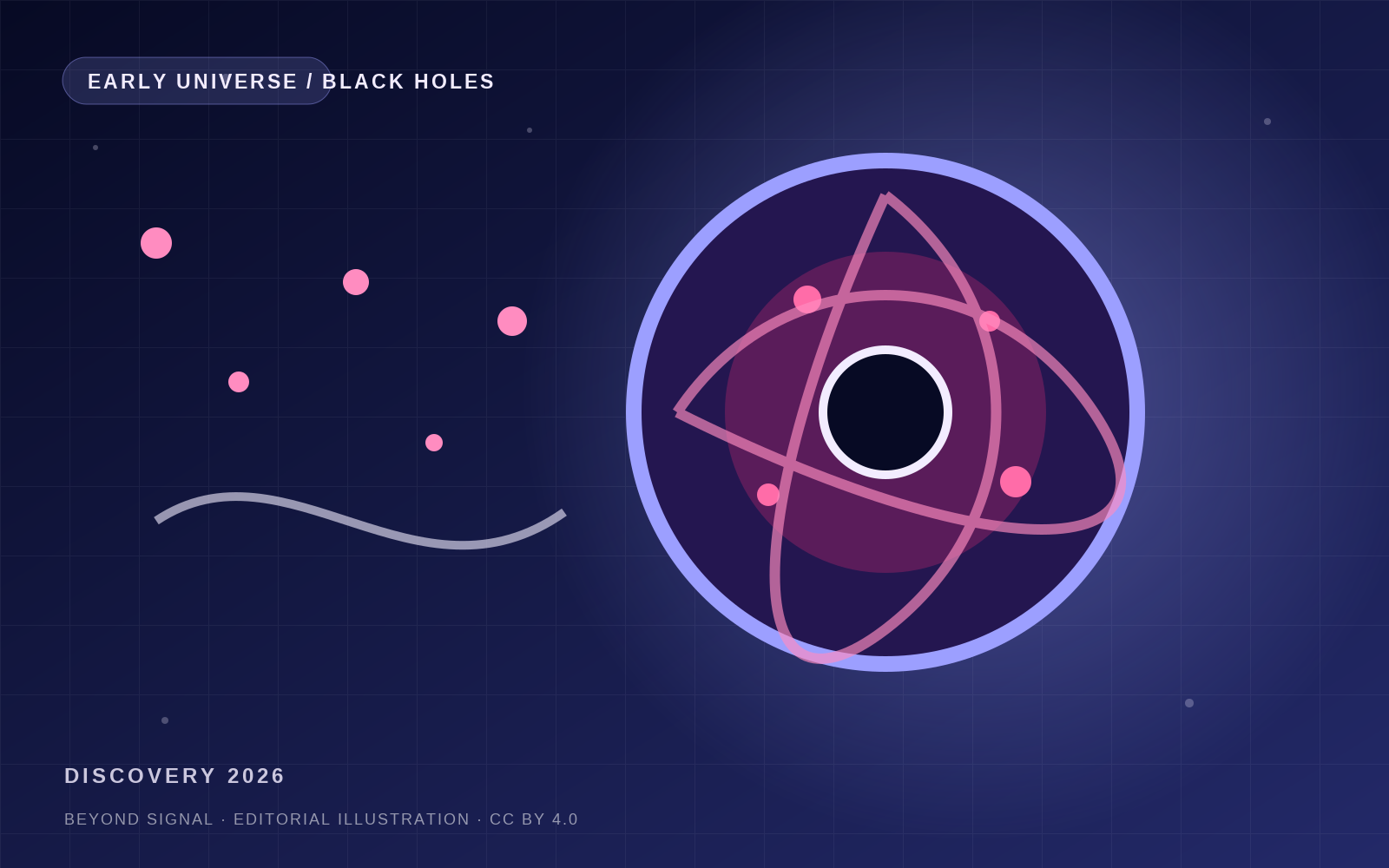 Illustration🌌 Space
Dense Gas Cocoons Explain Many Little Red Dots
Radiative-transfer modelling showed that the puzzling spectra of many JWST 'little red dots' can be reproduced by relatively young supermassive black holes embedded in compact, dense cocoons of ionized gas.
Read more →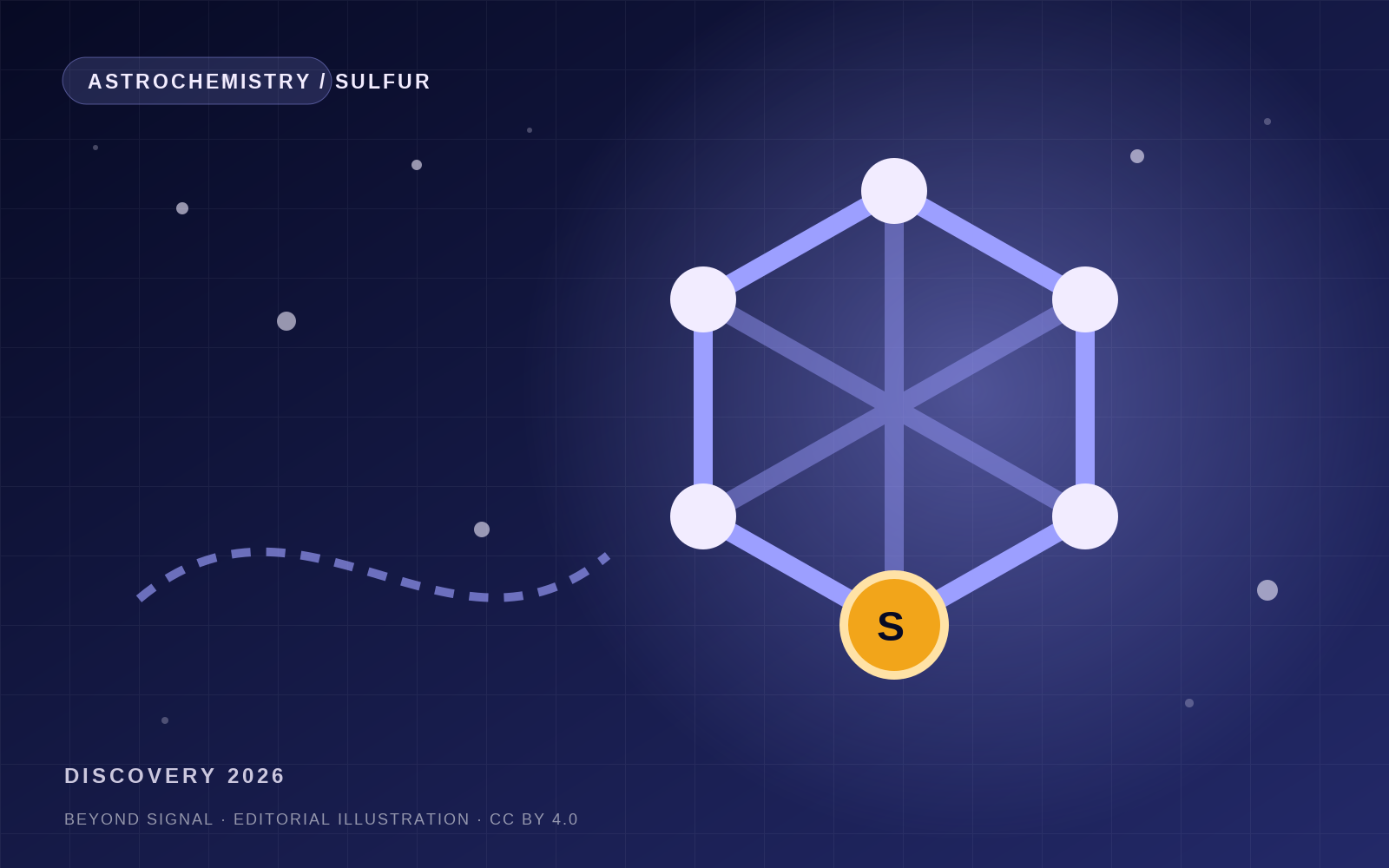 Illustration🌌 Space
The Largest Interstellar Sulfur-Bearing Molecule Yet
Radio spectra revealed 2,5-cyclohexadiene-1-thione in a Galactic-centre molecular cloud, the largest sulfur-bearing molecule yet identified in interstellar space.
Read more →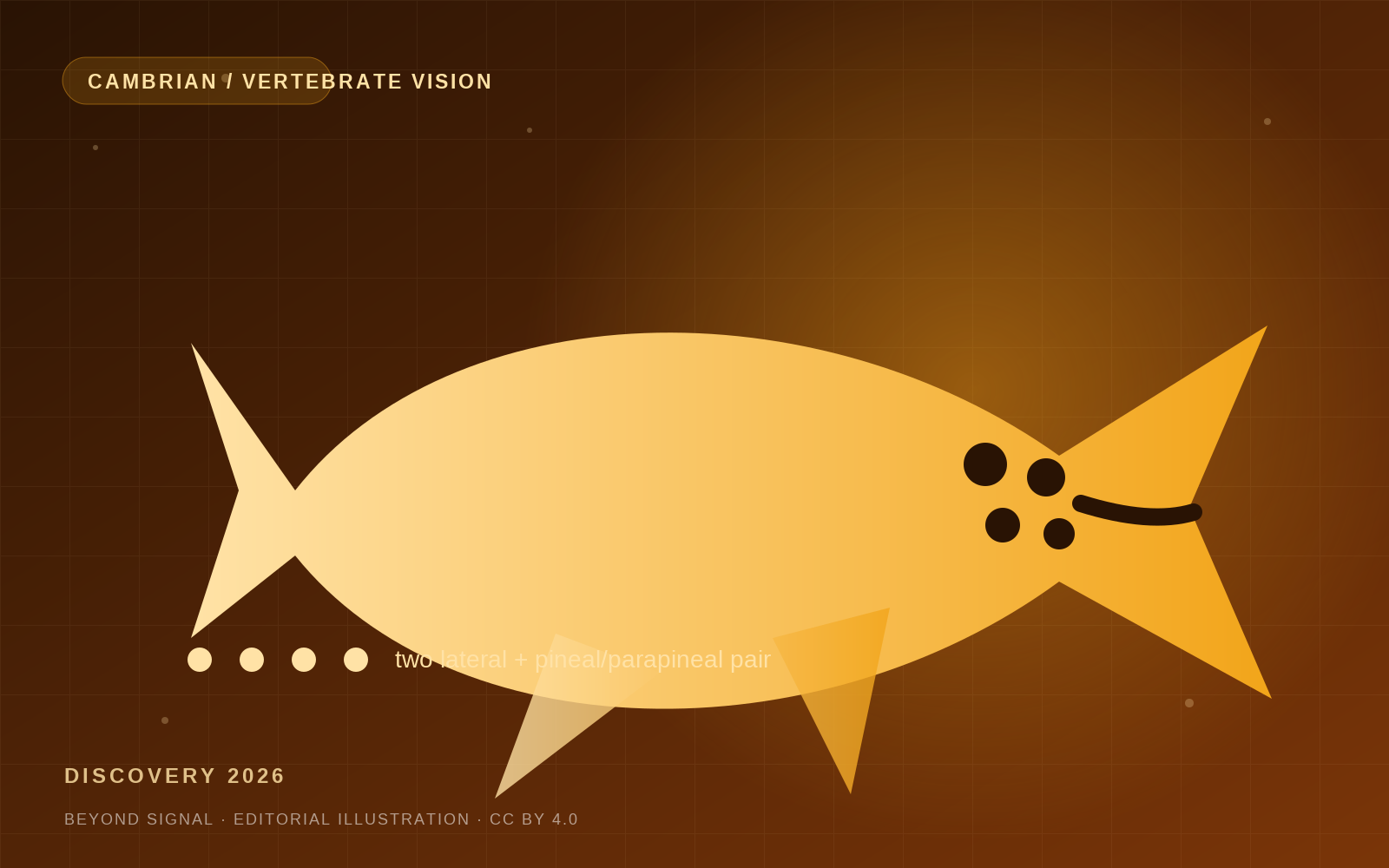 Illustration🦕 Dinosaurs & Fossils
Cambrian Vertebrates Had Four Camera-Type Eyes
Reanalysis of exceptionally preserved Cambrian fish fossils interpreted two structures once called nasal sacs as an additional pair of image-forming eyes.
Read more →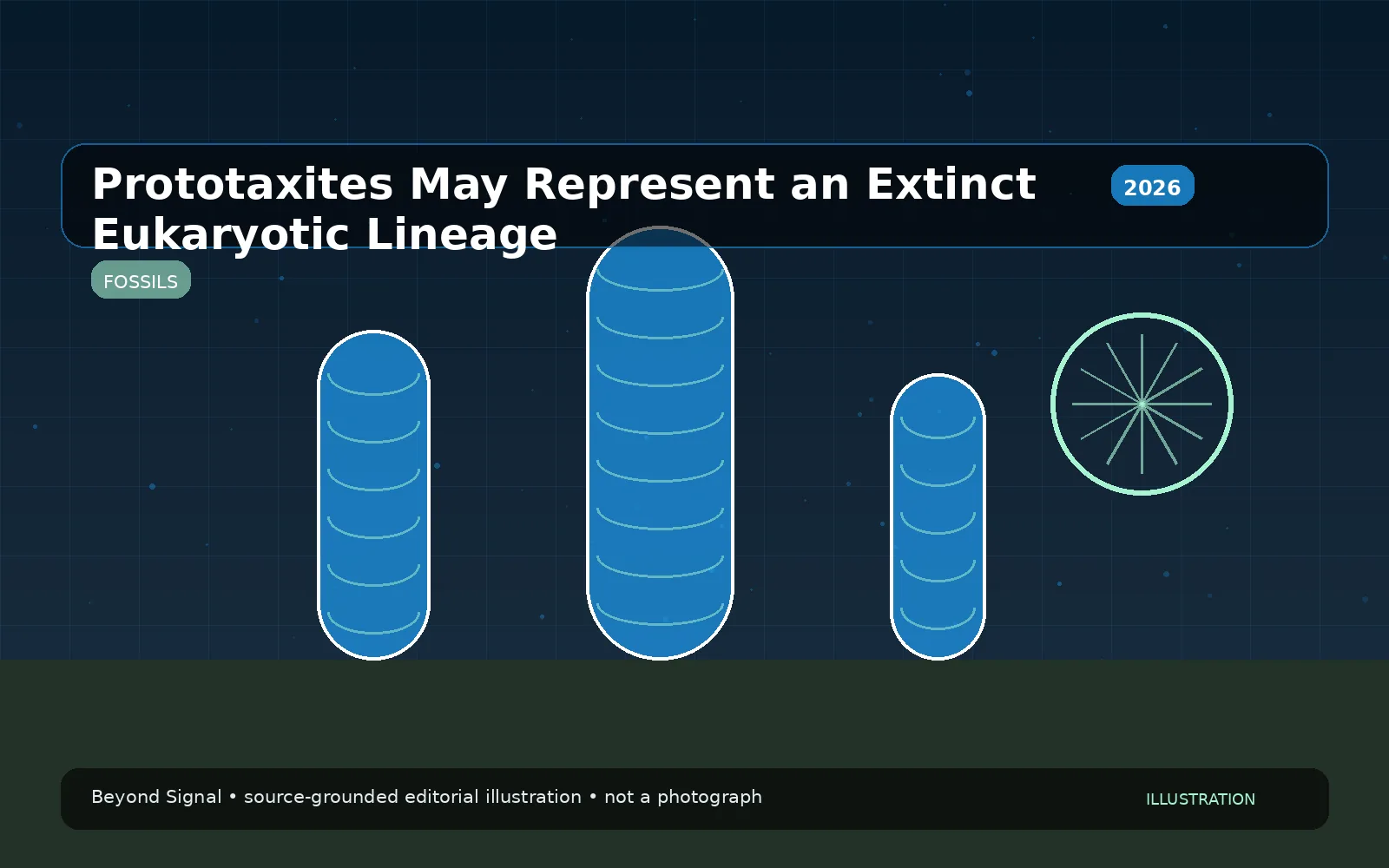 Illustration🦕 Dinosaurs & Fossils
Prototaxites May Represent an Extinct Eukaryotic Lineage
Chemical and structural analyses of the giant Devonian organism Prototaxites found that its tissues do not match known fungi and may represent an entirely extinct branch of complex eukaryotic life. The interpretation revives a long-running debate over the identity of trunk-like fossils that towered over early land ecosystems.
Read more → 🌌 Space
C/2026 A1 (MAPS), an Early-Spotted Sungrazer
A Kreutz sungrazer detected unusually far from the Sun, giving astronomers a rare multi-month warning before its extremely close solar pass.
Read more →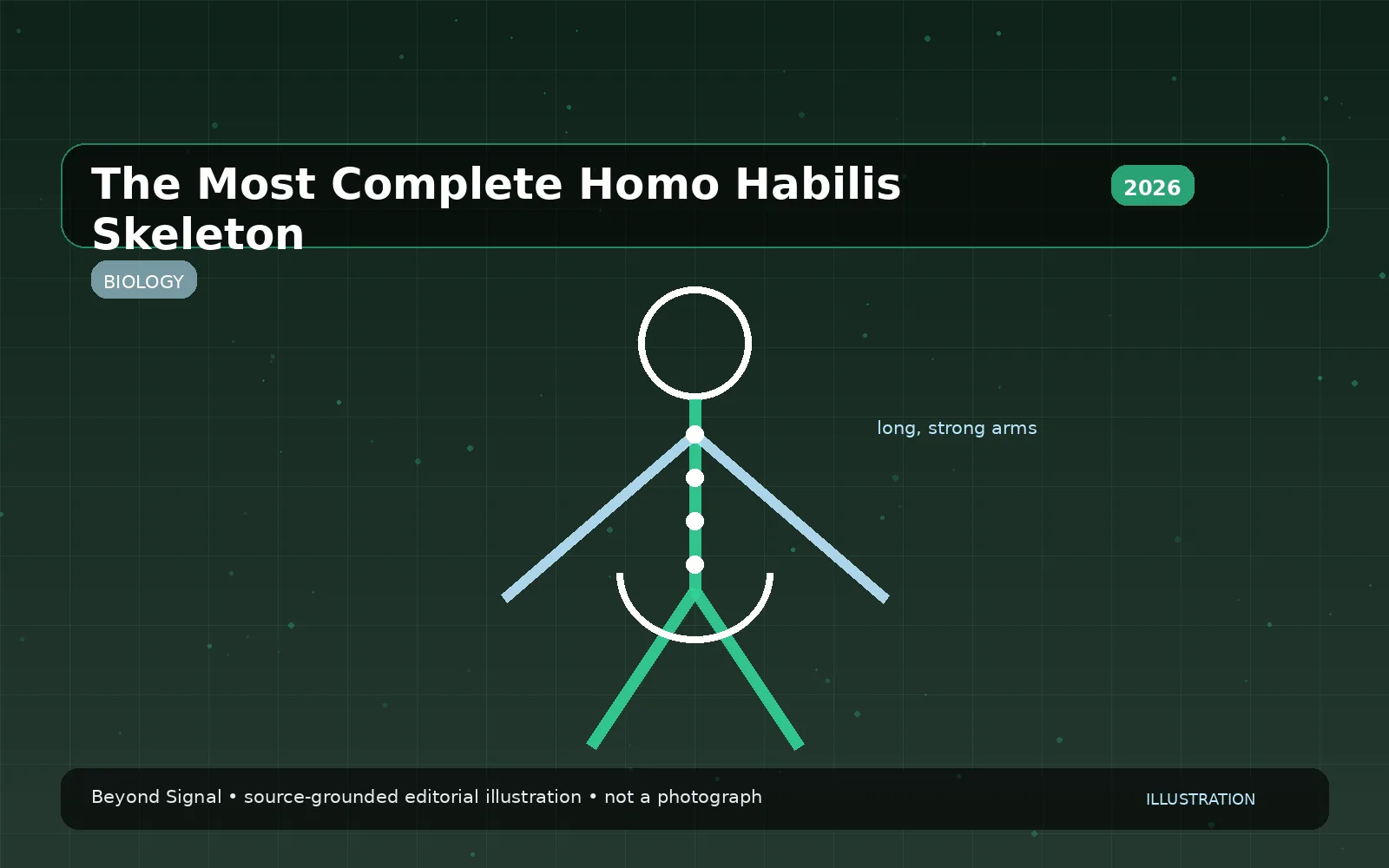 Illustration🧬 Biology
The Most Complete Homo Habilis Skeleton
KNM-ER 64061, a partial skeleton dated to about 2.02–2.06 million years ago, was described as the most complete Homo habilis skeleton yet recognized. Its associated teeth, shoulder, arm, spine, pelvis, and leg fragments reveal a small-bodied early human with long, powerful arms and a mosaic of primitive and derived traits.
Read more → Illustration🏺 Archaeology
773,000-Year-Old Hominins from Casablanca
Fossils from Thomas Quarry I in Casablanca were tightly dated to about 773,000 years ago and show a mix of traits that the authors place near the root of the Homo sapiens lineage.
Read more →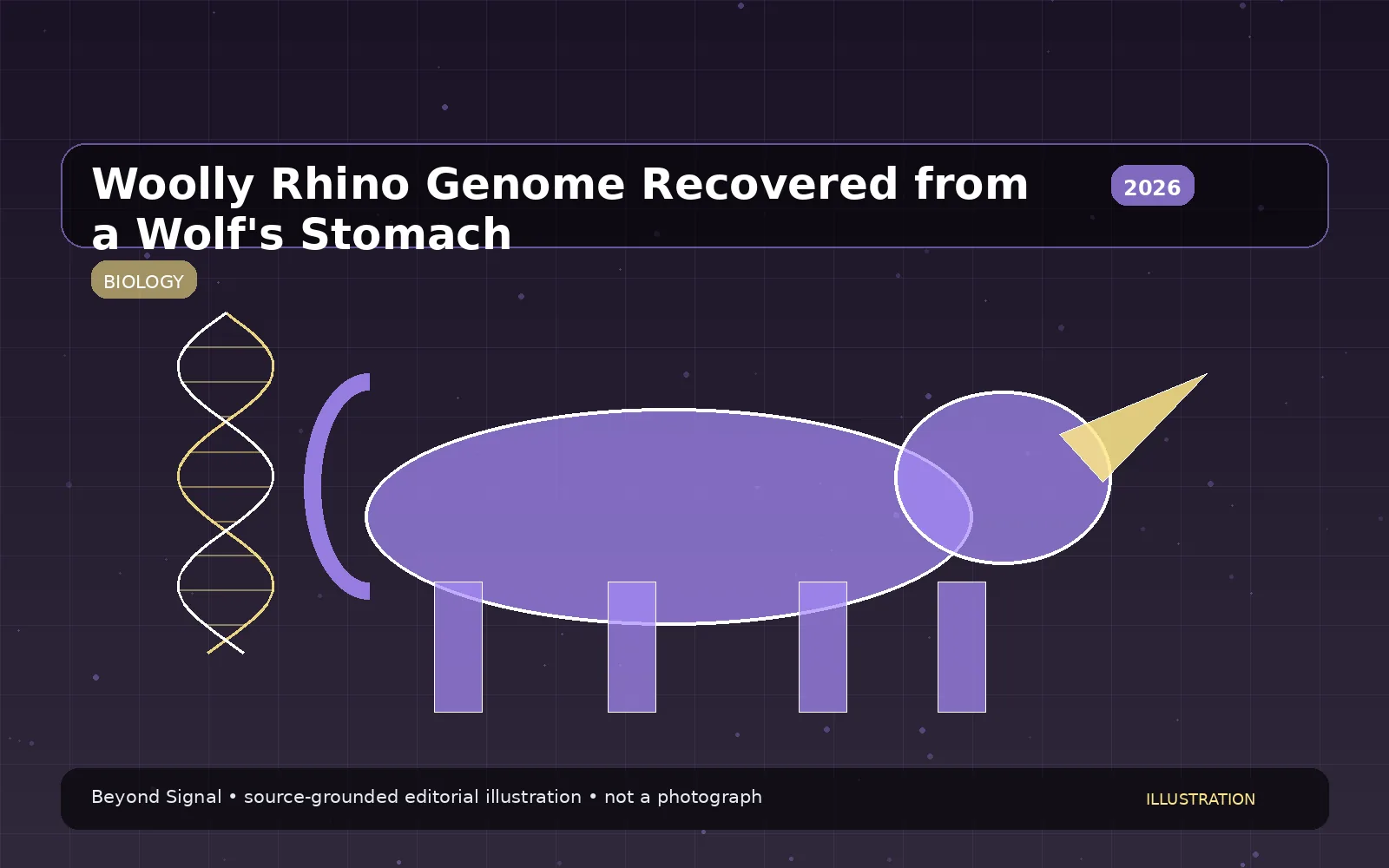 Illustration🧬 Biology
Woolly Rhino Genome Recovered from a Wolf's Stomach
Scientists reconstructed a high-quality woolly rhinoceros genome from undigested meat preserved in the stomach of a roughly 14,400-year-old wolf pup. Comparisons with older rhino genomes found no prolonged loss of diversity or rising inbreeding before extinction, supporting a comparatively rapid population collapse.
Read more → Illustration🌌 Space
Cassini Gravity Data Reveal Strong Tidal Dissipation in Titan
A reanalysis of Cassini radio tracking measured unexpectedly strong tidal energy loss in Titan and found that the gravity signal is inconsistent with the global subsurface ocean model previously favored for the moon.
Read more →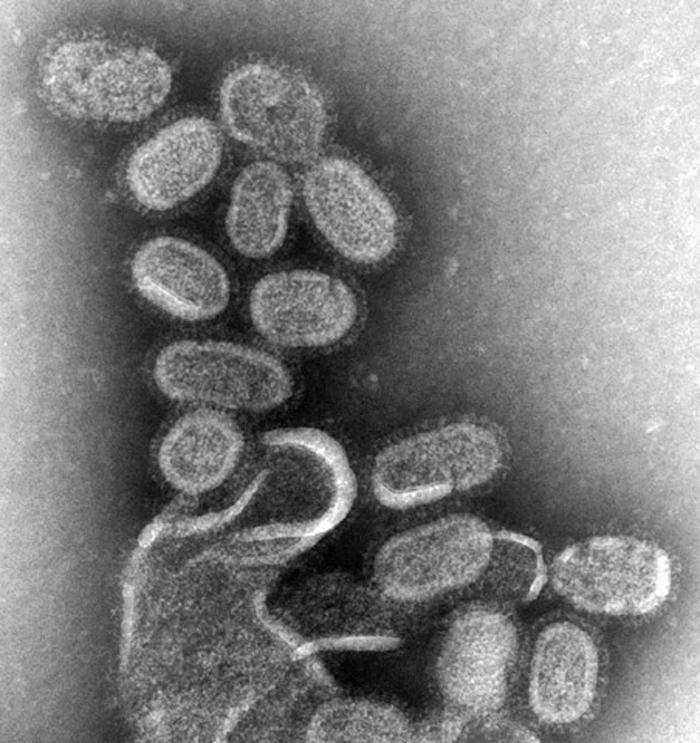 🧬 Biology
Watching Influenza Enter a Living Cell
A new combined microscopy method let scientists watch influenza viruses invade living cells in real time, revealing that cells actively help capture the virus.
Read more → Illustration🦕 Dinosaurs & Fossils
A Jurassic Midge from Gondwana
A 151-million-year-old fossil midge from Australia became the oldest known member of its group in the Southern Hemisphere, challenging assumptions about where these insects evolved.
Read more →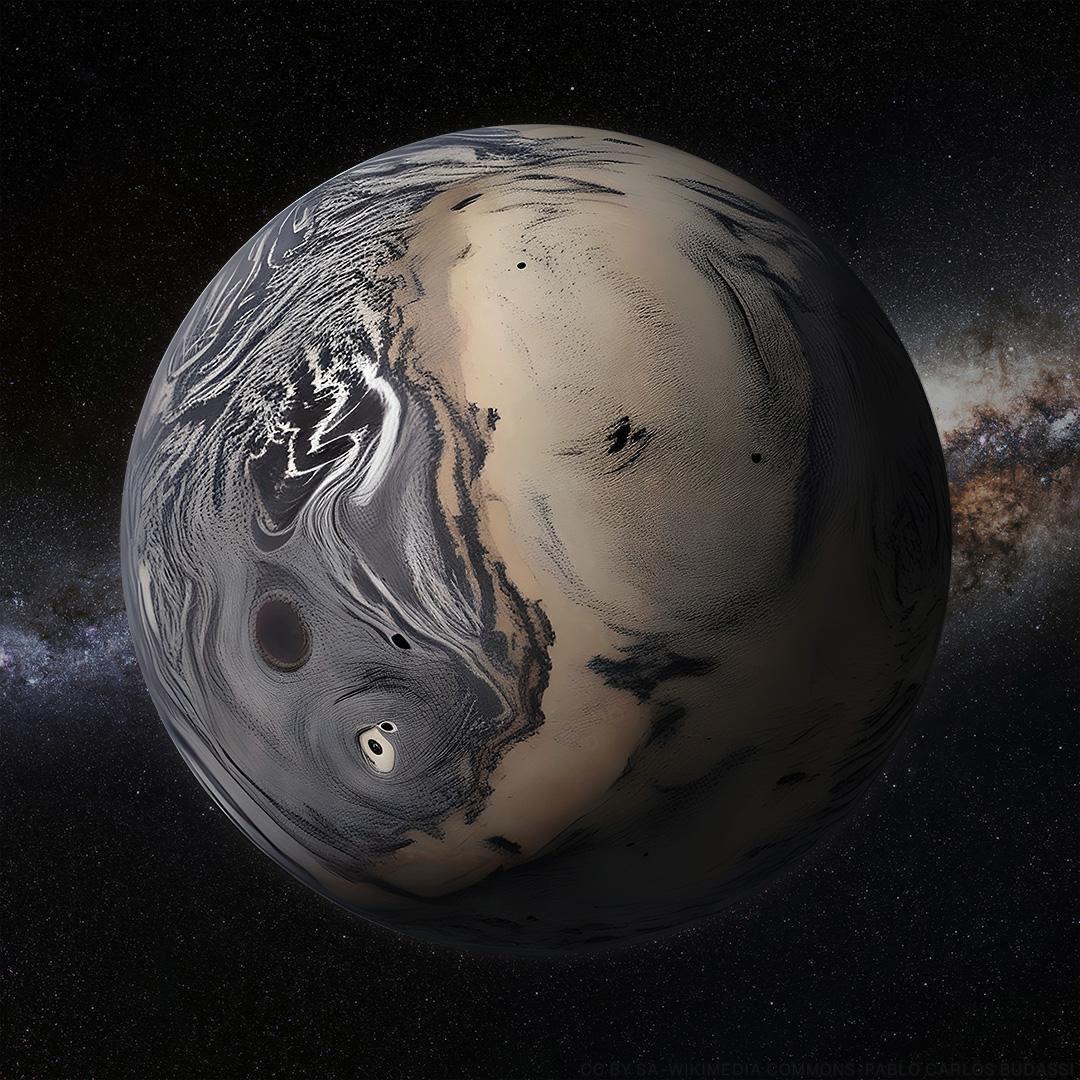 🌌 Space
A Rogue Planet's Record Growth Spurt
Astronomers observed the free-floating planetary-mass object Cha 1107-7626 accreting gas and dust at about six billion tonnes per second — the fastest growth rate recorded for a rogue planet.
Read more →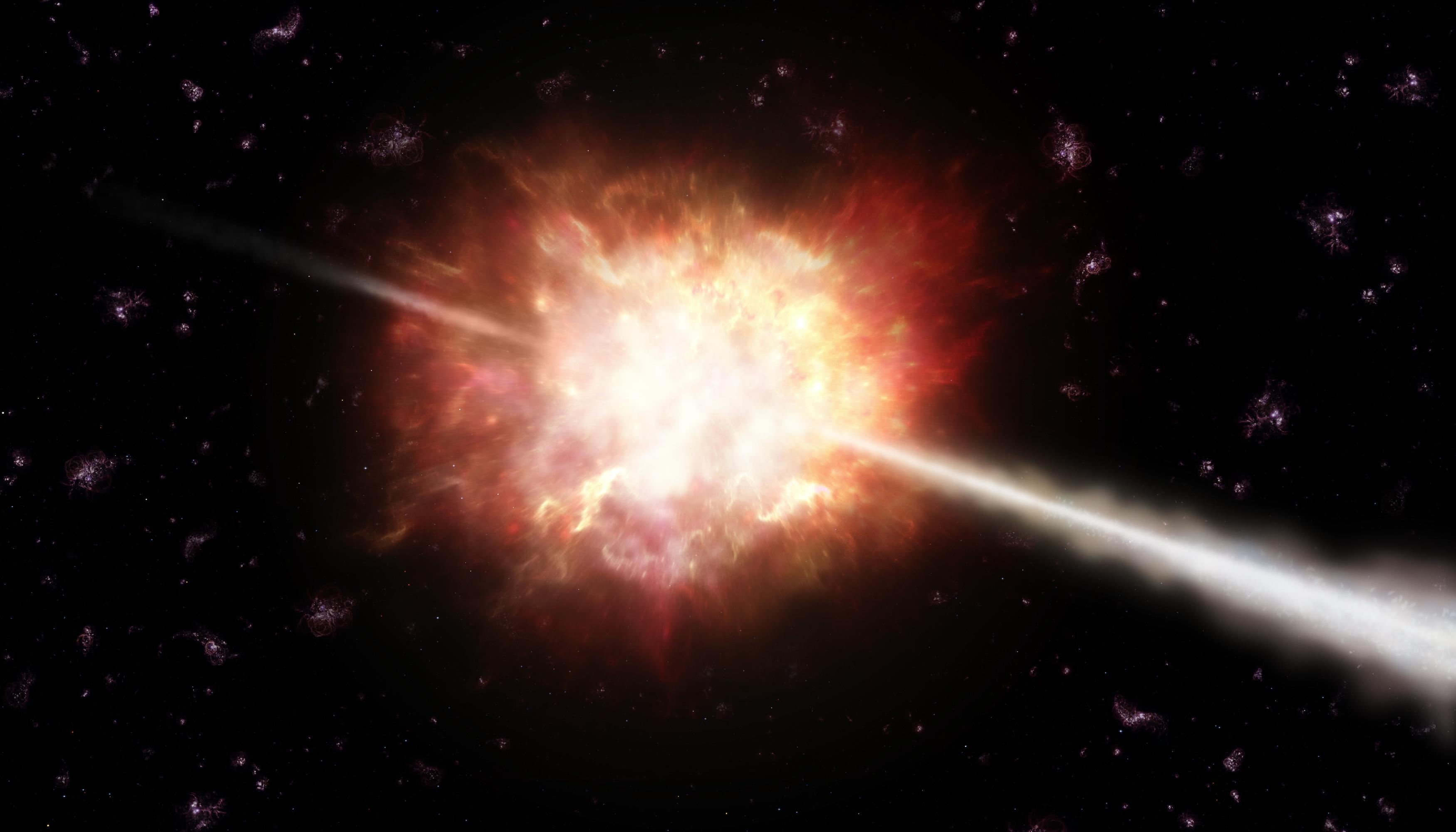 🌌 Space
A Strange Repeating Gamma-Ray Explosion
GRB 250702B produced repeated gamma-ray flashes across a day, an unusually long and unlike-anything-seen-before explosion traced to a source outside the Milky Way.
Read more →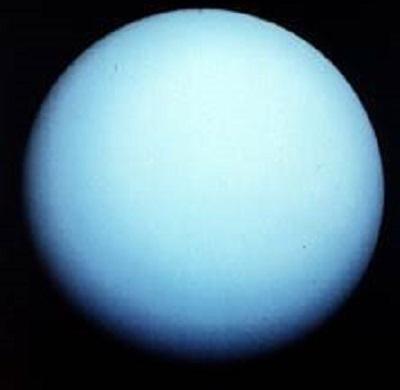 🌌 Space
A New Moon around Uranus
The James Webb Space Telescope found a previously unknown inner moon of Uranus, provisionally designated S/2025 U1 and estimated at roughly 10 km across.
Read more → Illustration🏺 Archaeology
Early Homo and an Unnamed Australopithecus at Ledi-Geraru
Thirteen teeth from Ledi-Geraru date to 2.6–2.8 million years ago and support the coexistence there of early Homo and a previously unrecognized Australopithecus form.
Read more → Illustration🪸 Ocean Discoveries
Chemosynthetic Communities Found Across Hadal Trenches
Crewed dives documented extensive communities of tube worms and bivalves sustained by methane- and hydrogen-sulfide-rich fluids from 5,800 to 9,533 metres in the Kuril–Kamchatka and western Aleutian trenches.
Read more →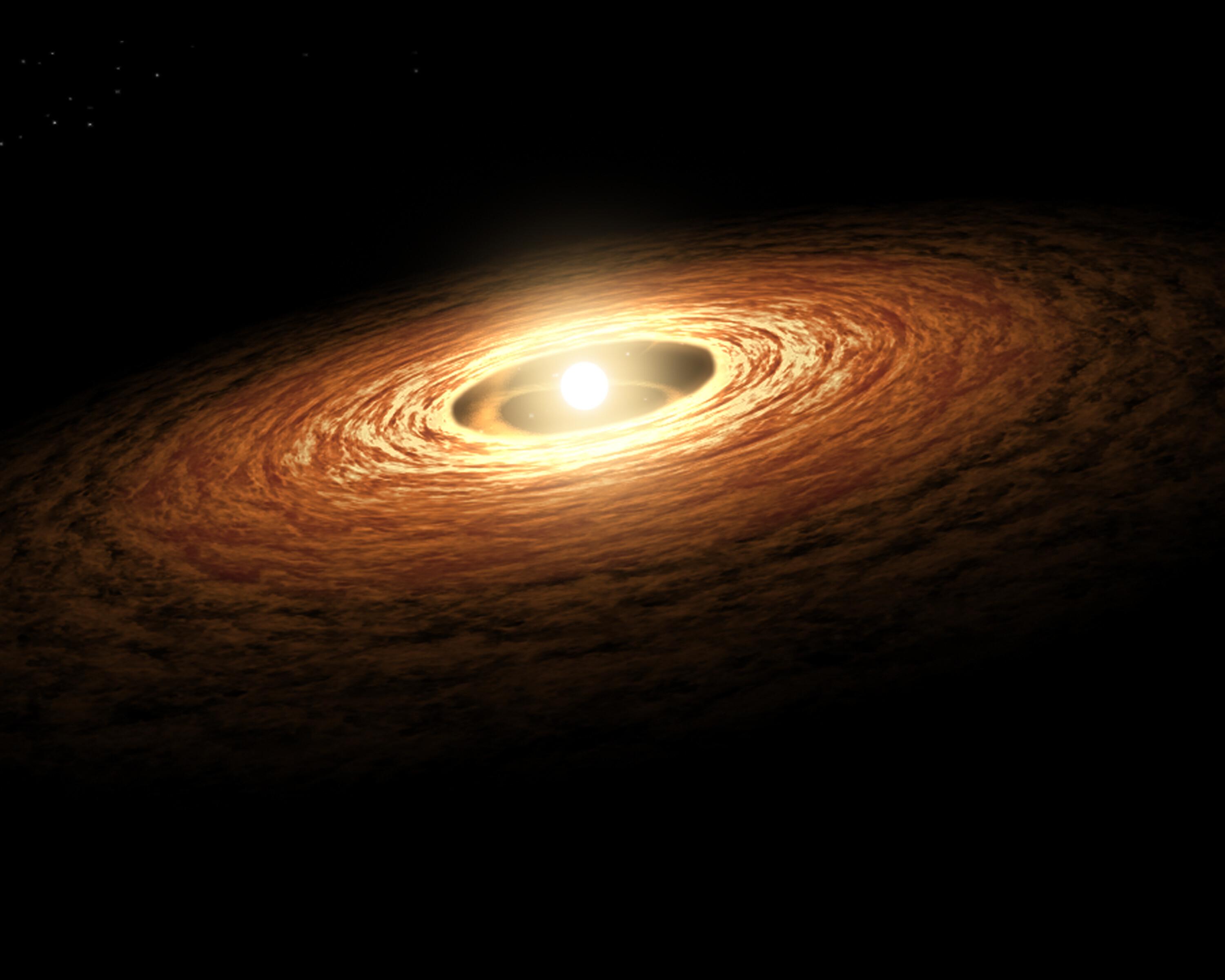 🌌 Space
Planet Formation Caught at the Start around HOPS-315
Astronomers observed the first specks of planet-forming minerals beginning to solidify around a young star, catching a process analogous to the birth of our Solar System.
Read more →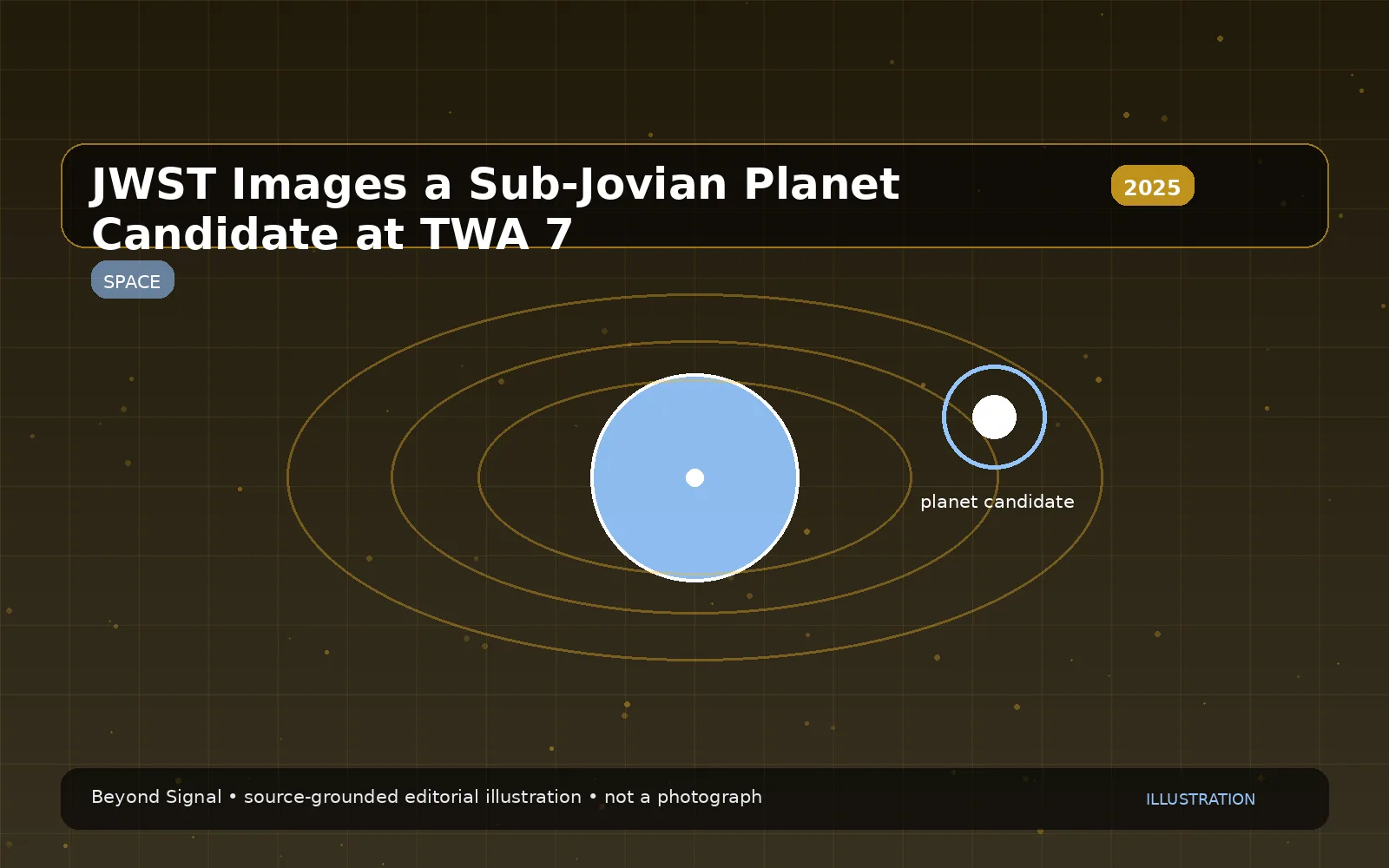 Illustration🌌 Space
JWST Images a Sub-Jovian Planet Candidate at TWA 7
James Webb Space Telescope coronagraphy revealed a compact infrared source embedded in a narrow ring of the young star TWA 7's debris disk. Models place the candidate near 0.3 Jupiter masses at about 52 astronomical units, potentially making it the lowest-mass planet directly imaged around another star.
Read more → 🌌 Space
The First Views of the Sun's South Pole
ESA's Solar Orbiter returned humanity's first clear views of the Sun's south pole, revealing a tangled mixture of magnetic polarities during solar maximum.
Read more →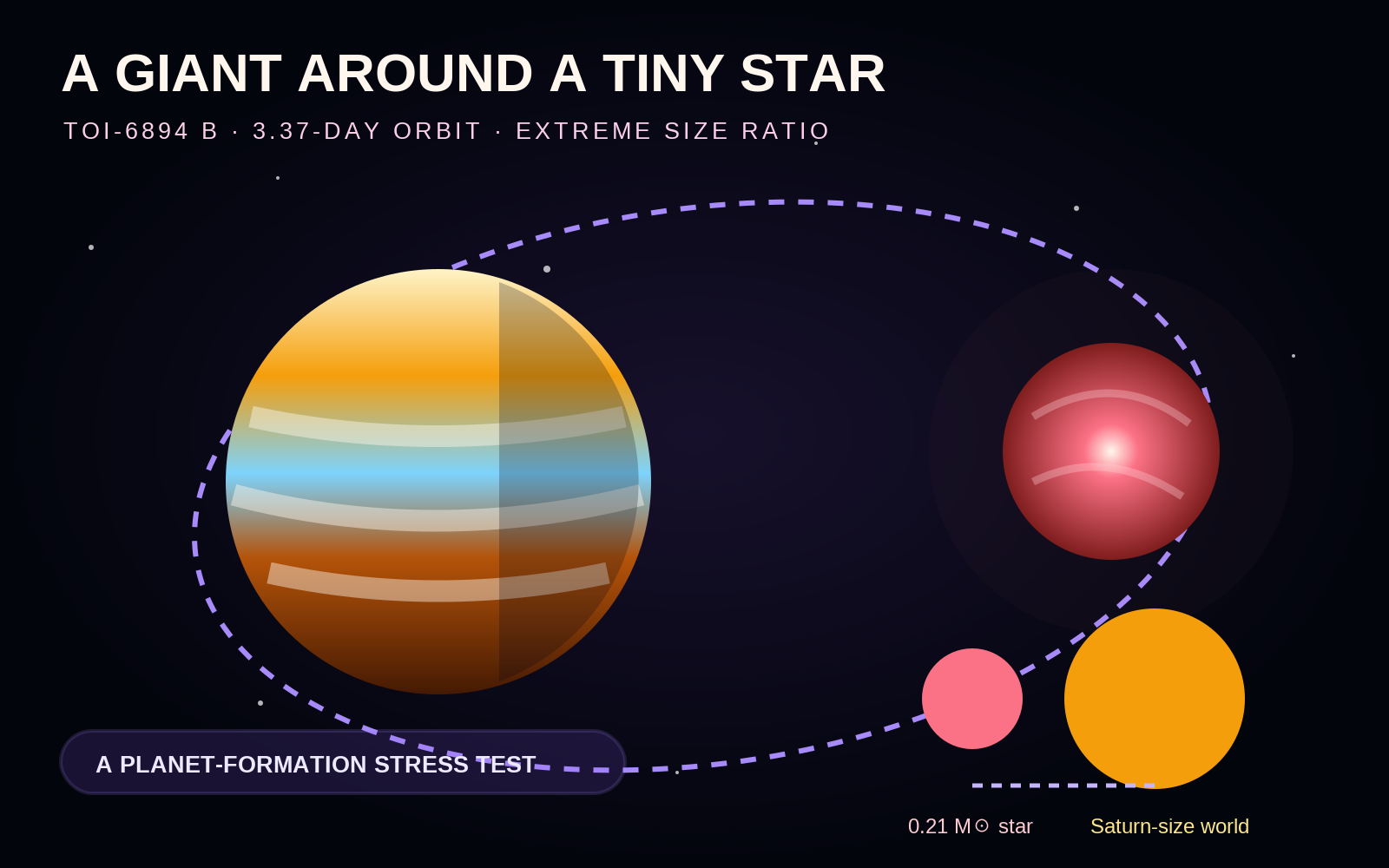 Illustration🌌 Space
TOI-6894 b, a Giant Planet Around a Tiny Star
Transit and radial-velocity measurements confirmed a low-density giant planet around a star only about one-fifth the Sun's mass, creating a demanding test for planet-formation models around very low-mass stars.
Read more → Illustration🤖 Technology
The First Personalized In Vivo CRISPR Treatment
A bespoke adenine base editor was designed, manufactured, and infused into an infant with severe CPS1 deficiency, producing early clinical improvement in the first reported patient-specific CRISPR treatment delivered inside the body.
Read more →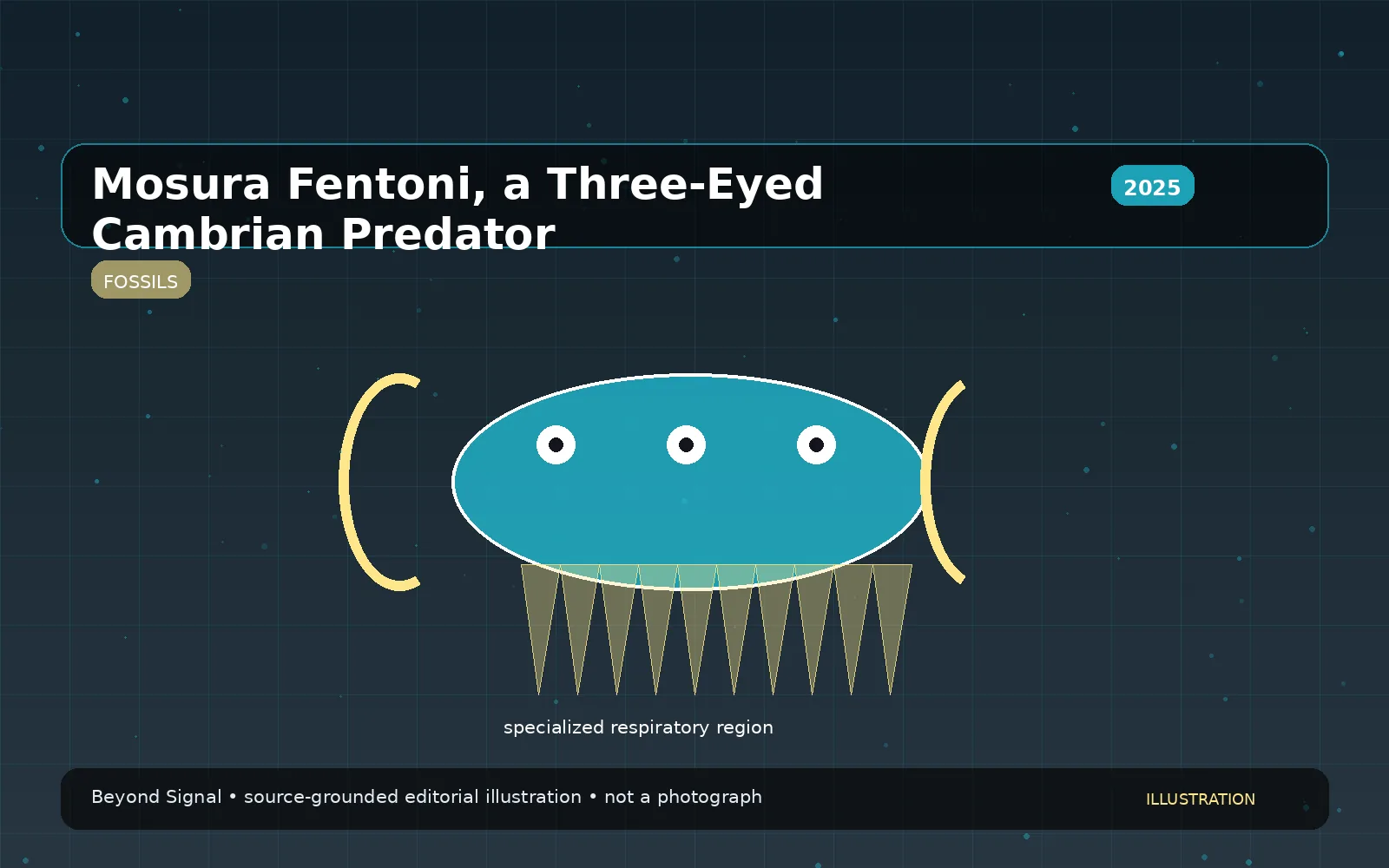 Illustration🦕 Dinosaurs & Fossils
Mosura Fentoni, a Three-Eyed Cambrian Predator
More than 60 Burgess Shale fossils revealed Mosura fentoni, a roughly six-centimetre radiodont with three eyes, grasping frontal appendages, and a body divided into a broad swimming region and a specialized rear section carrying respiratory structures. The anatomy expands the known diversity of early arthropod relatives.
Read more →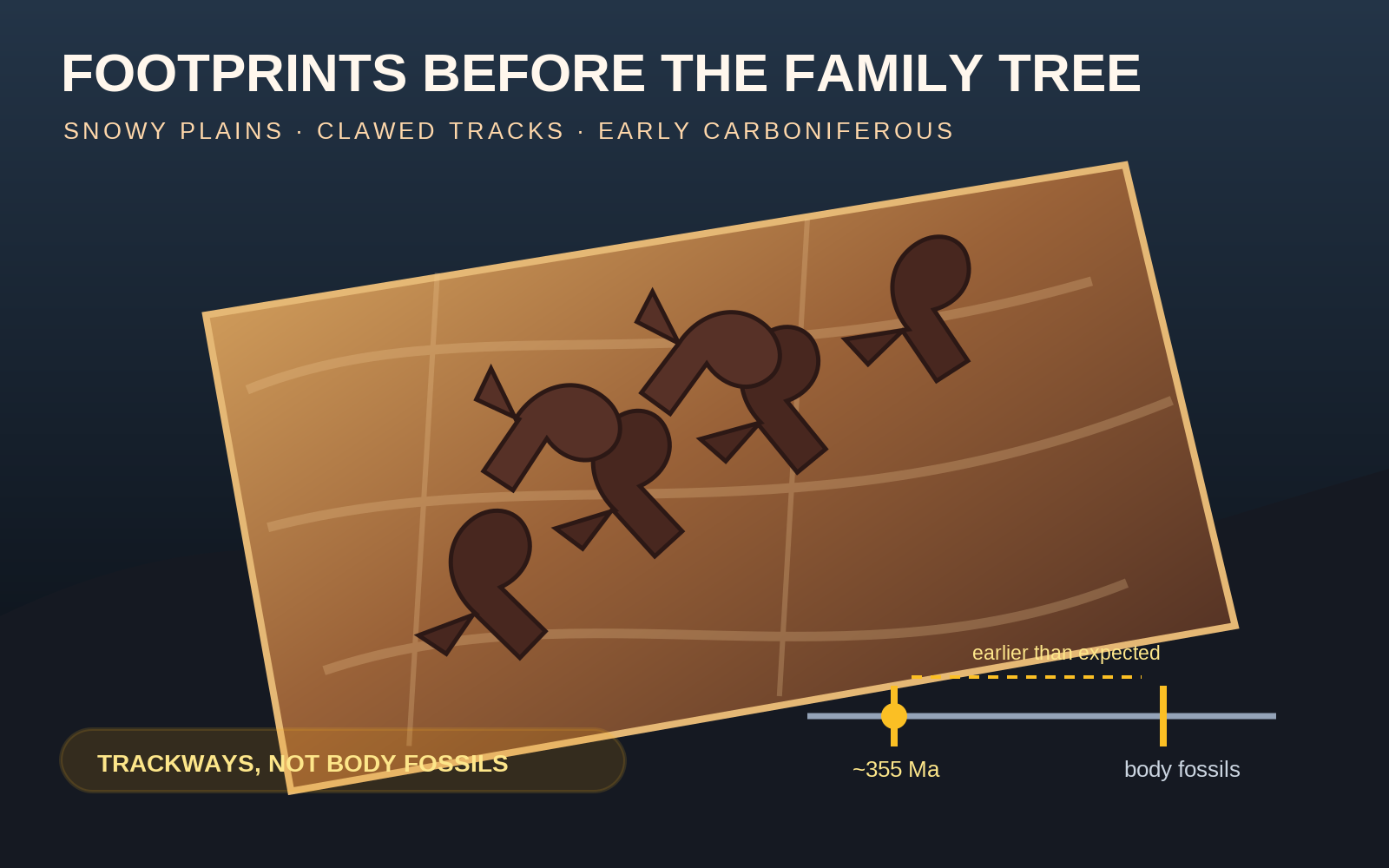 Illustration🦕 Dinosaurs & Fossils
The Earliest Known Amniote Trackways
Clawed five-toed trackways from Australia's Snowy Plains Formation were attributed to an early sauropsid amniote and dated to roughly 359–354 million years ago, extending the amniote record by about 35 million years.
Read more →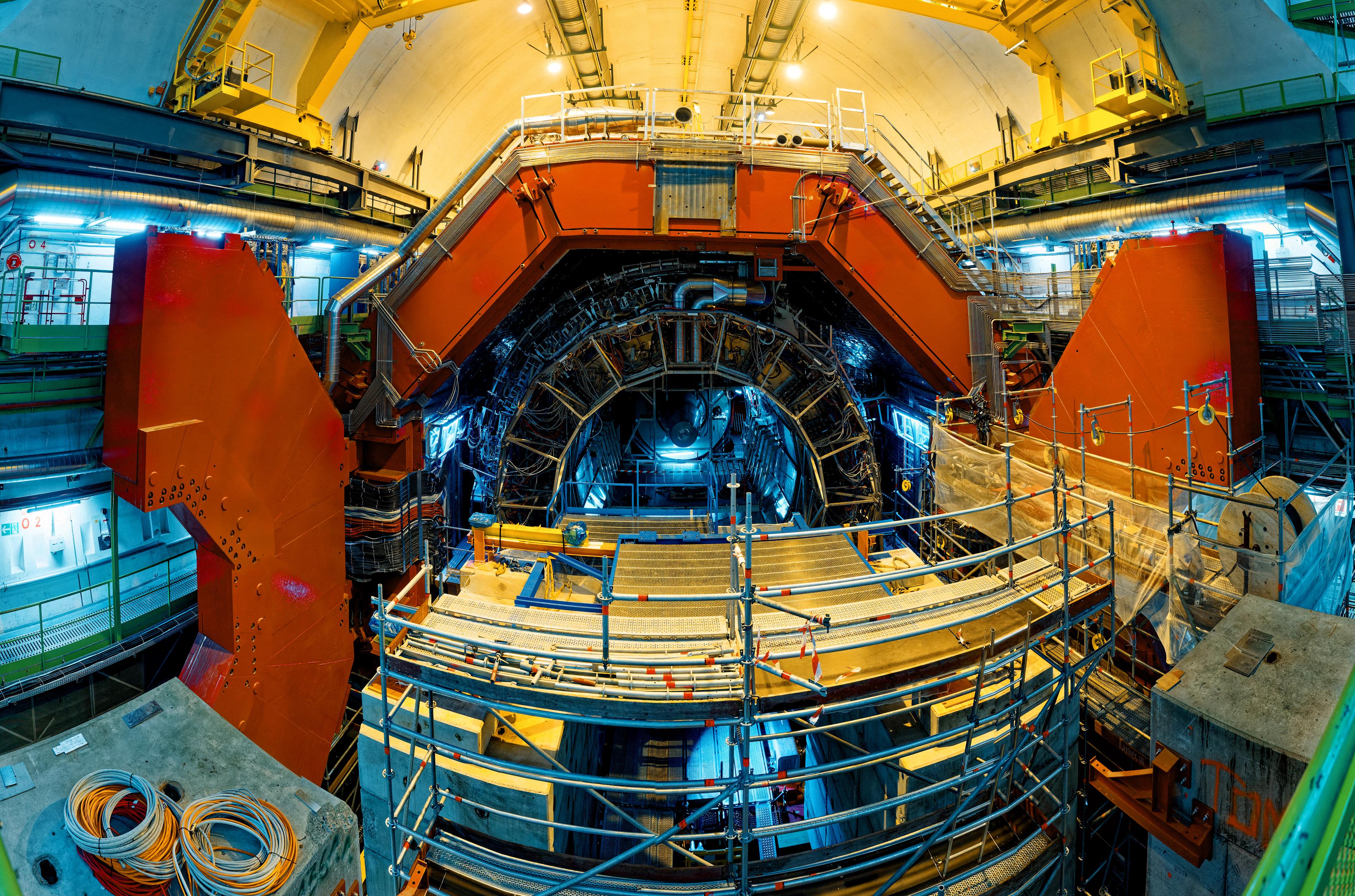 ⚛️ Physics
Lead Turned into Gold at the LHC
The ALICE experiment measured lead nuclei turning into gold during near-miss collisions at the Large Hadron Collider — in fleeting, subatomic quantities rather than usable metal.
Read more →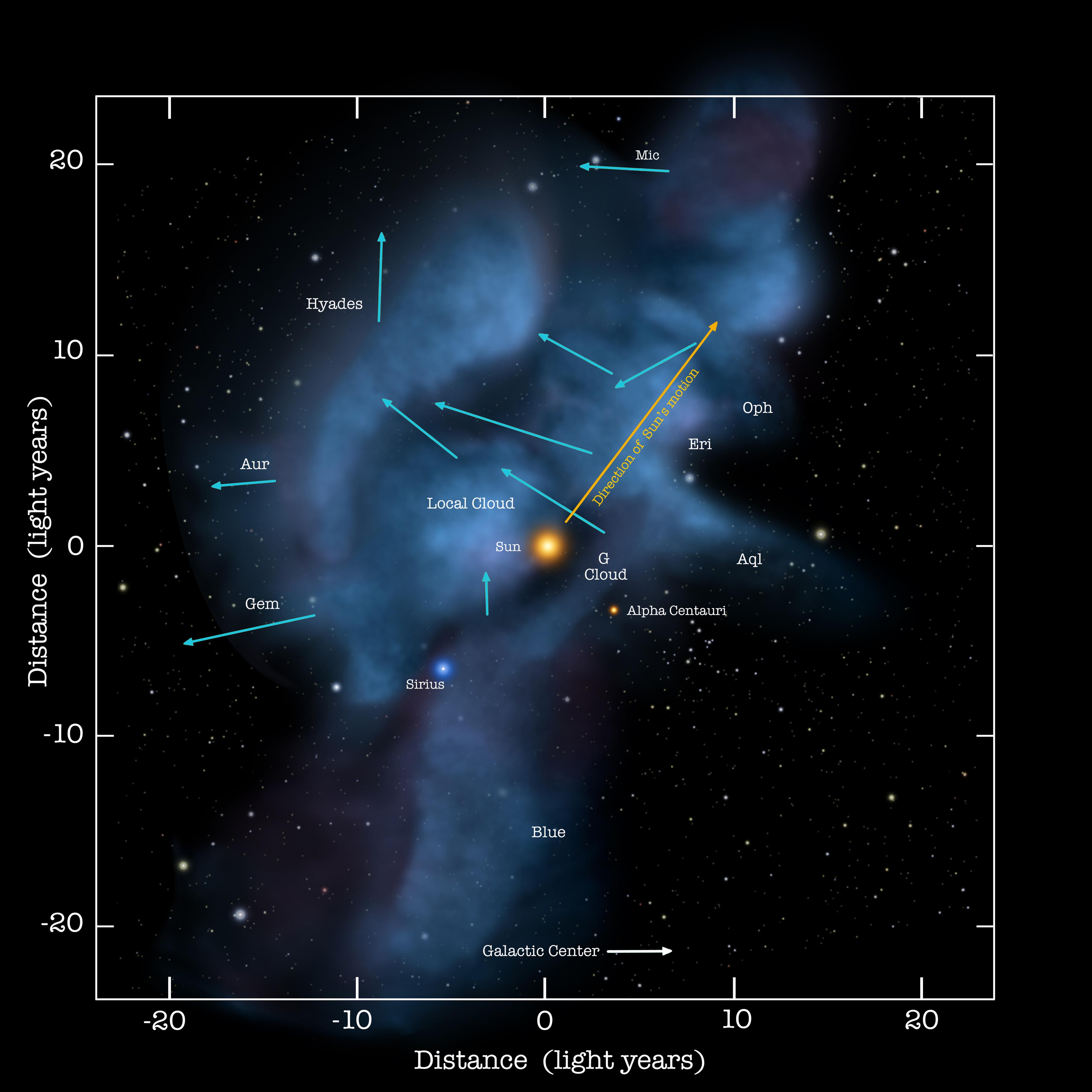 🌌 Space
Eos: A Hidden Molecular Cloud Near the Sun
Astronomers discovered Eos, a vast molecular cloud only about 300 light-years away, by detecting ultraviolet fluorescence from molecular hydrogen — a first for this class of cloud.
Read more →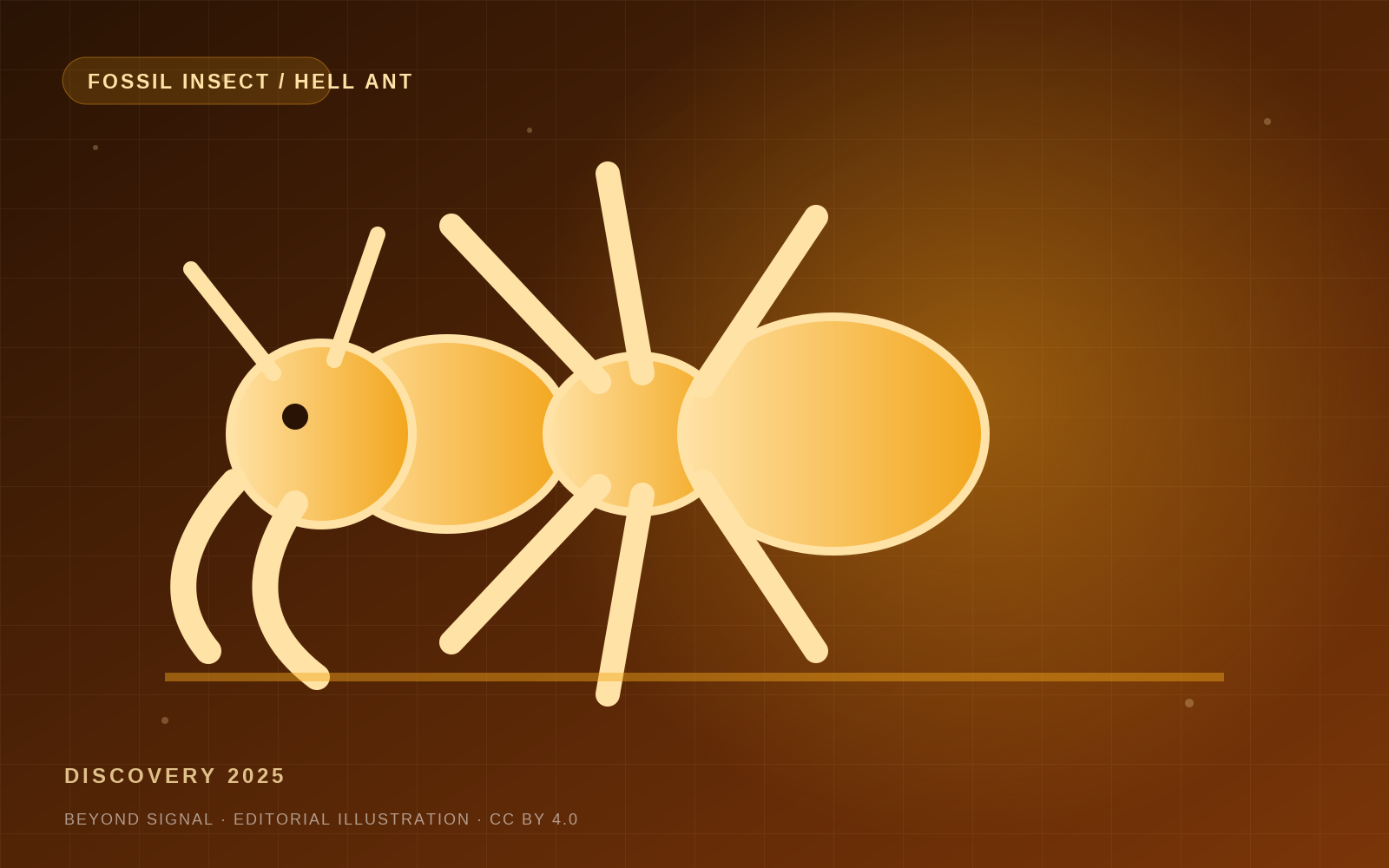 Illustration🦕 Dinosaurs & Fossils
Vulcanidris Cratensis, the Oldest Known Ant
A 113-million-year-old compression fossil from Brazil was recognized as a new hell-ant species and the oldest verified ant known from the fossil record.
Read more →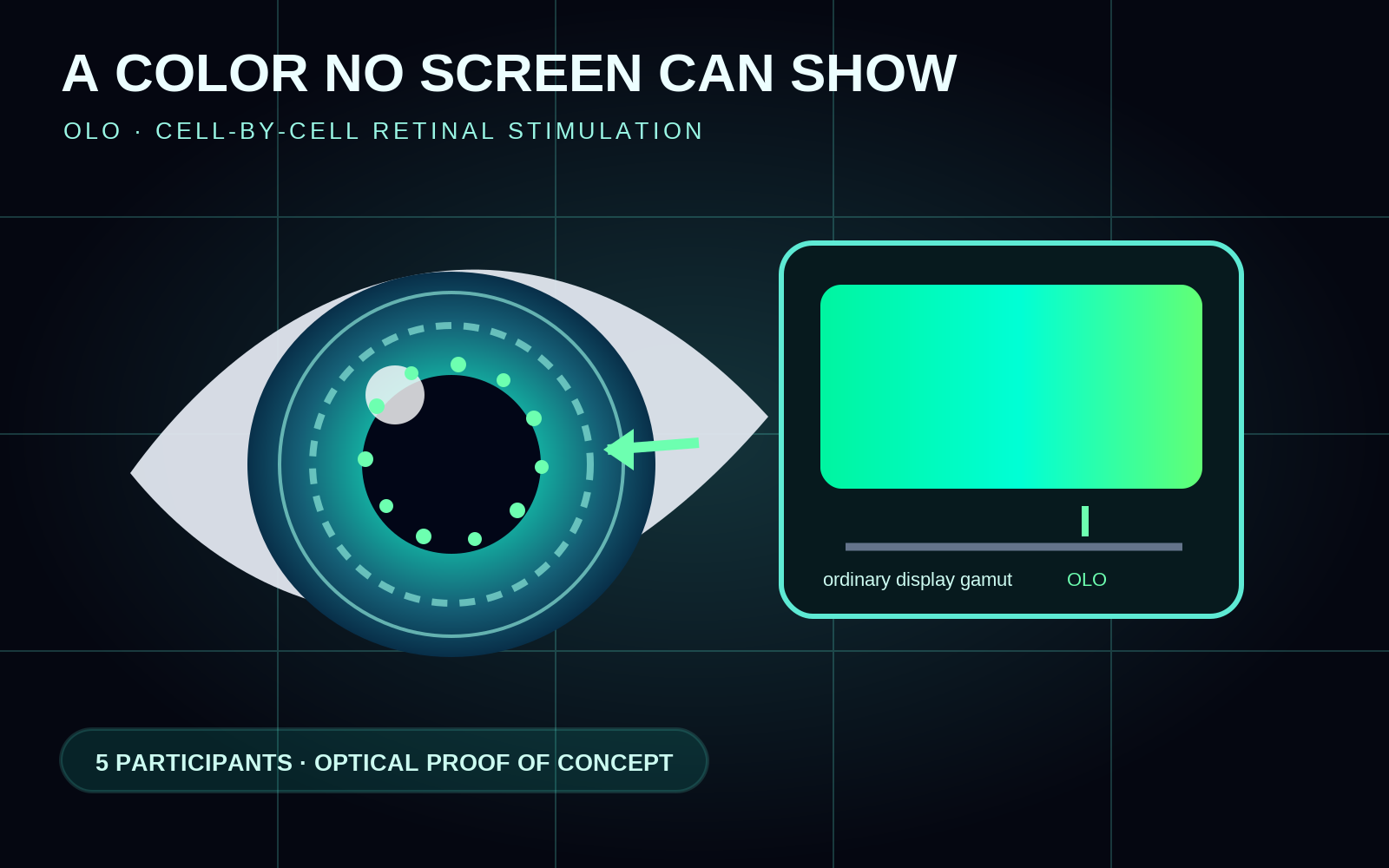 Illustration🤖 Technology
Olo, a Color Beyond the Natural Human Gamut
An adaptive-optics system stimulated selected retinal cone cells one by one, letting five participants perceive an exceptionally saturated blue-green called olo that ordinary light mixtures cannot produce on the same patch of retina.
Read more →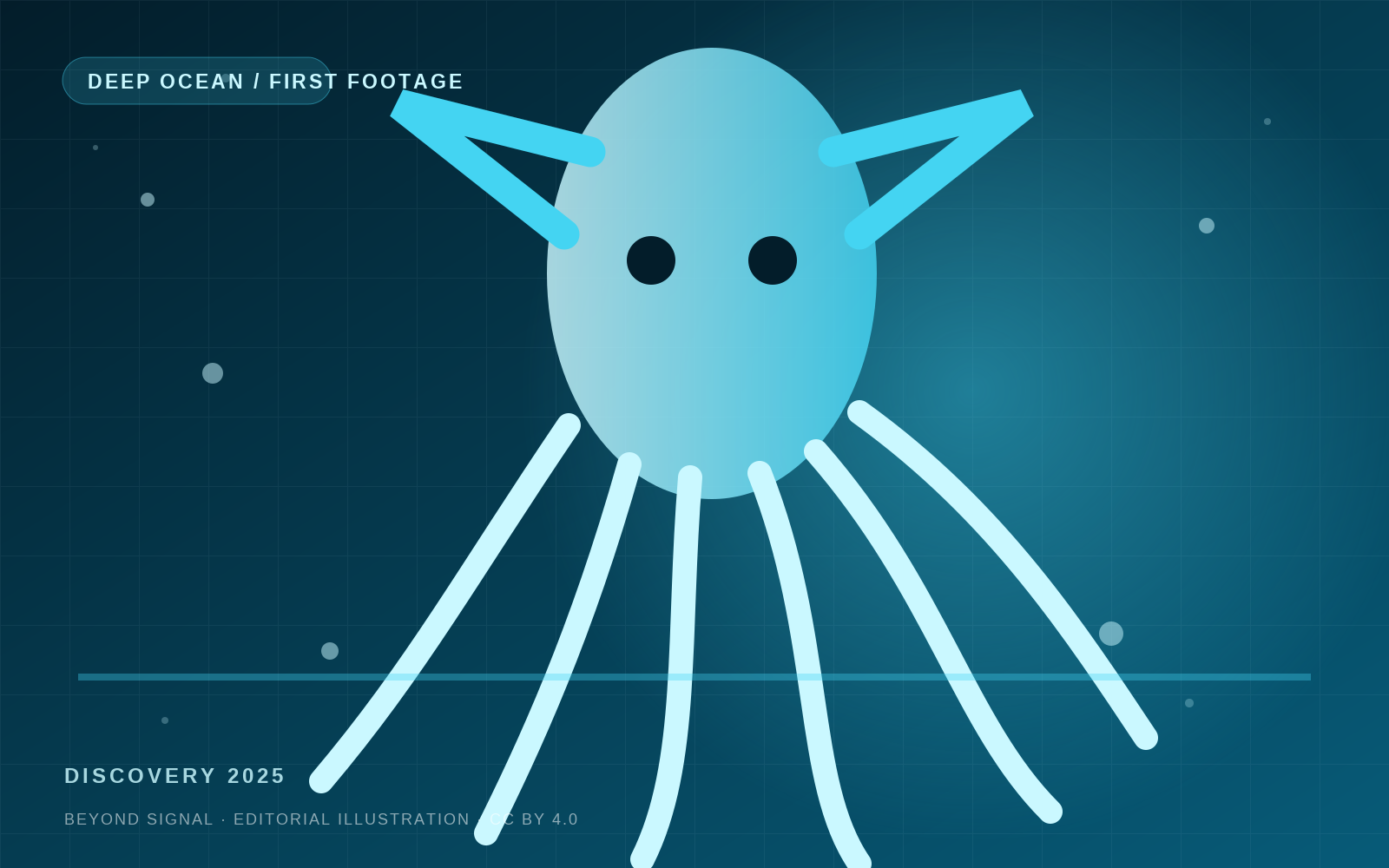 Illustration🪸 Ocean Discoveries
A Colossal Squid Filmed Alive in Its Natural Habitat
An ROV recorded a transparent juvenile colossal squid at about 600 metres depth, providing the first confirmed video of the species alive in its natural deep-sea habitat.
Read more →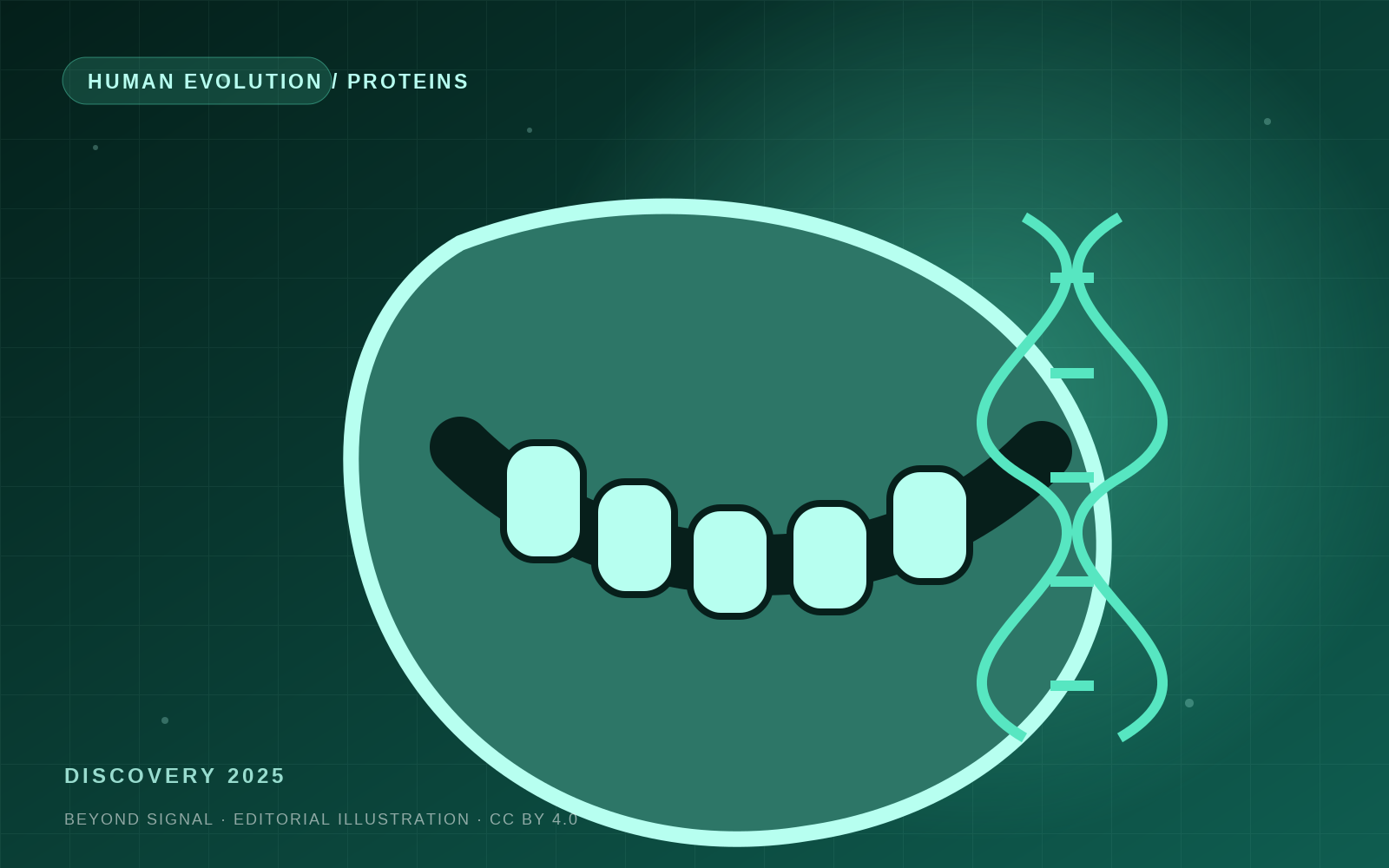 Illustration🧬 Biology
The Penghu Jaw Is Identified as Denisovan
Ancient proteins extracted from the robust Penghu 1 jaw identified it as the remains of a male Denisovan, extending direct evidence of the group into subtropical Taiwan.
Read more → Illustration🌋 Earth Science
Glacier Retreat Exposed Thousands of Kilometres of New Arctic Coastline
A Northern Hemisphere survey mapped 2,466 ± 0.8 kilometres of coastline exposed by retreating marine-terminating glaciers between 2000 and 2020, with 66% of the total in Greenland.
Read more →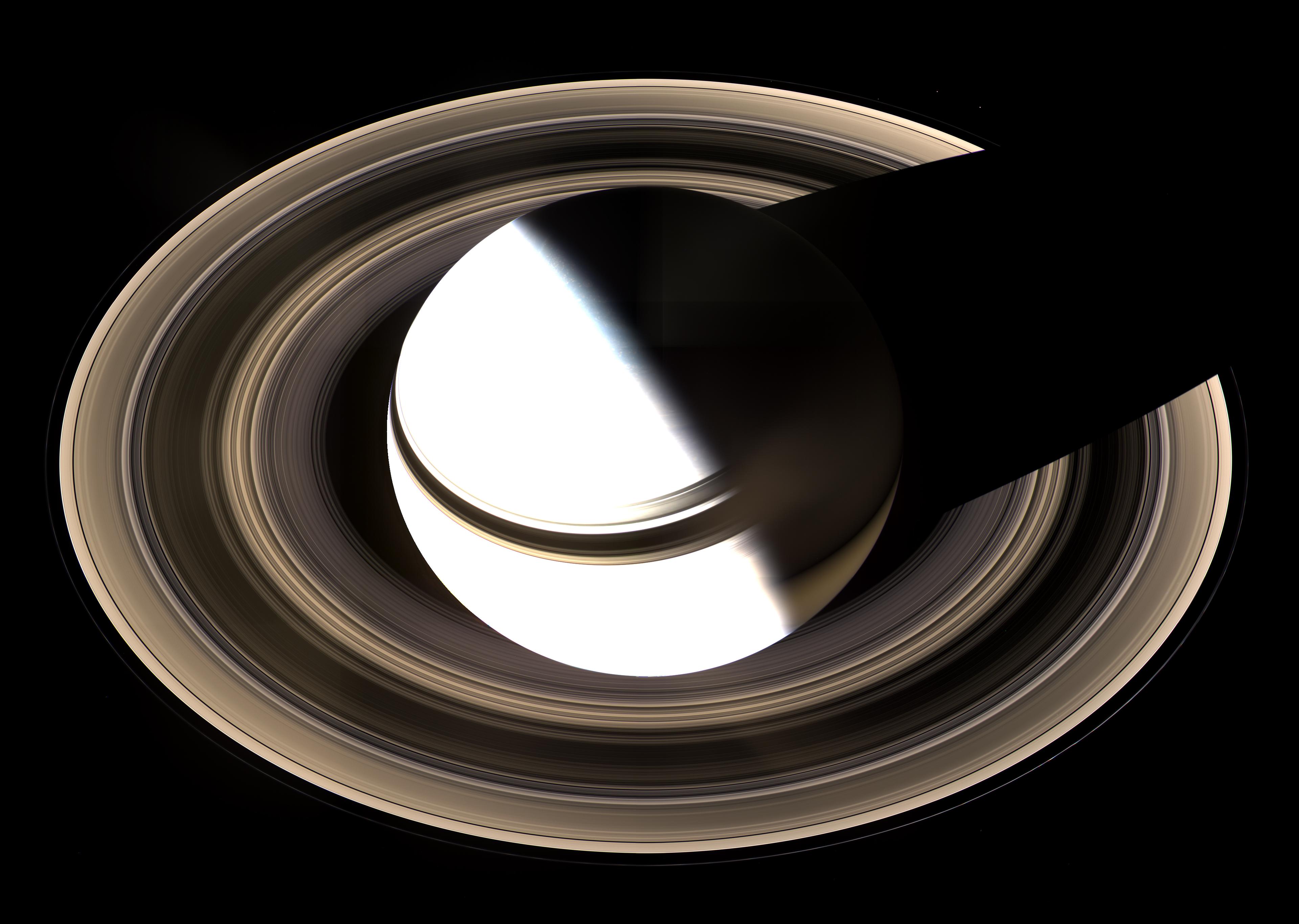 🌌 Space
Saturn's 128 New Moons
An international team found and confirmed 128 previously unrecognized small moons of Saturn, raising the planet's official total to 274 at the time of announcement.
Read more →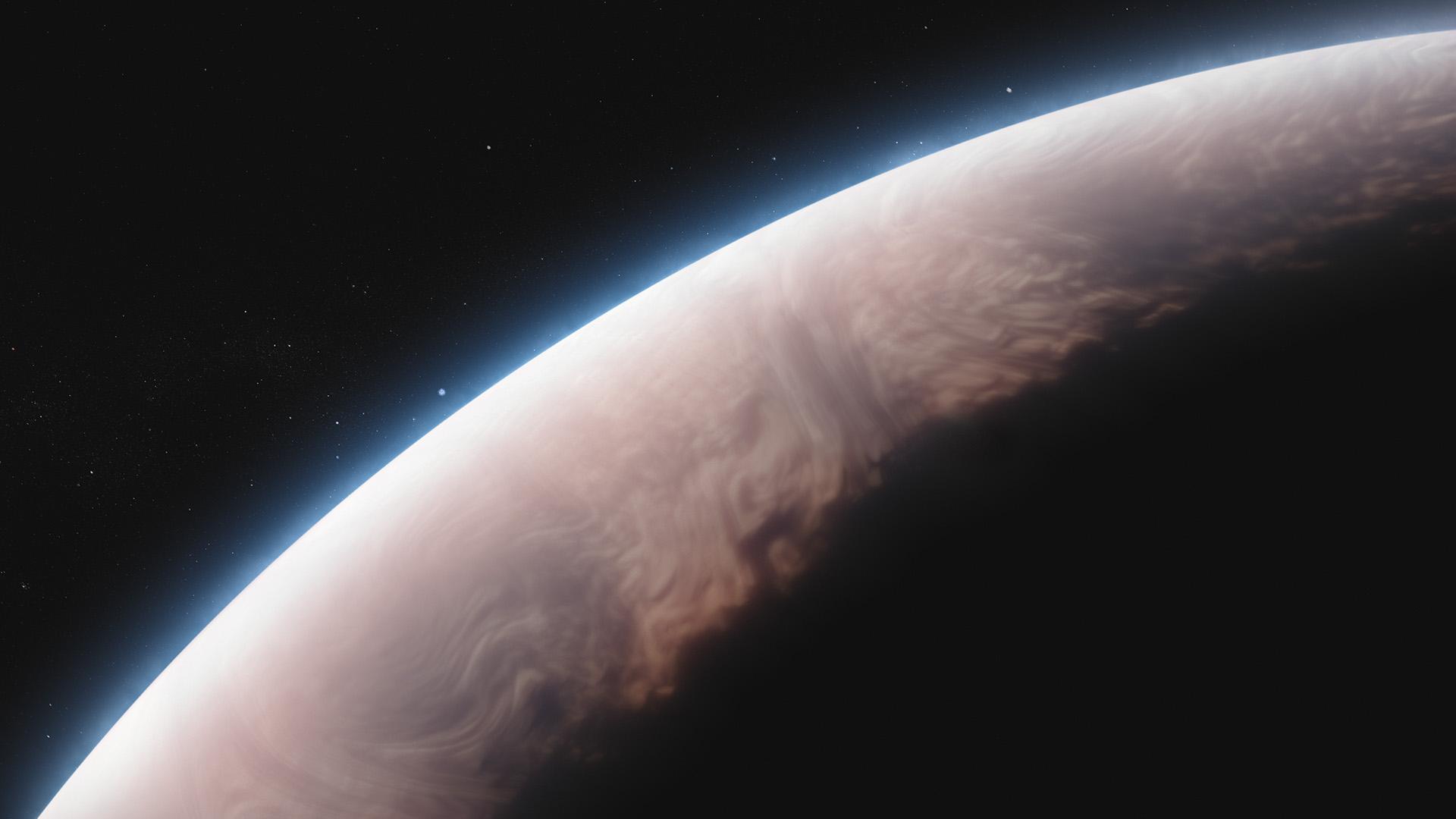 🌌 Space
A 3D Weather Map of Exoplanet Tylos
For the first time, astronomers mapped several layers of an exoplanet's atmosphere in three dimensions, revealing separate winds carrying iron, sodium, hydrogen, and titanium.
Read more → Illustration🏺 Archaeology
The Tomb of Pharaoh Thutmose II Identified
Inscriptions on alabaster vessels and decorated plaster identified a badly flood-damaged tomb west of Luxor as the original burial place of the Eighteenth Dynasty pharaoh Thutmose II.
Read more →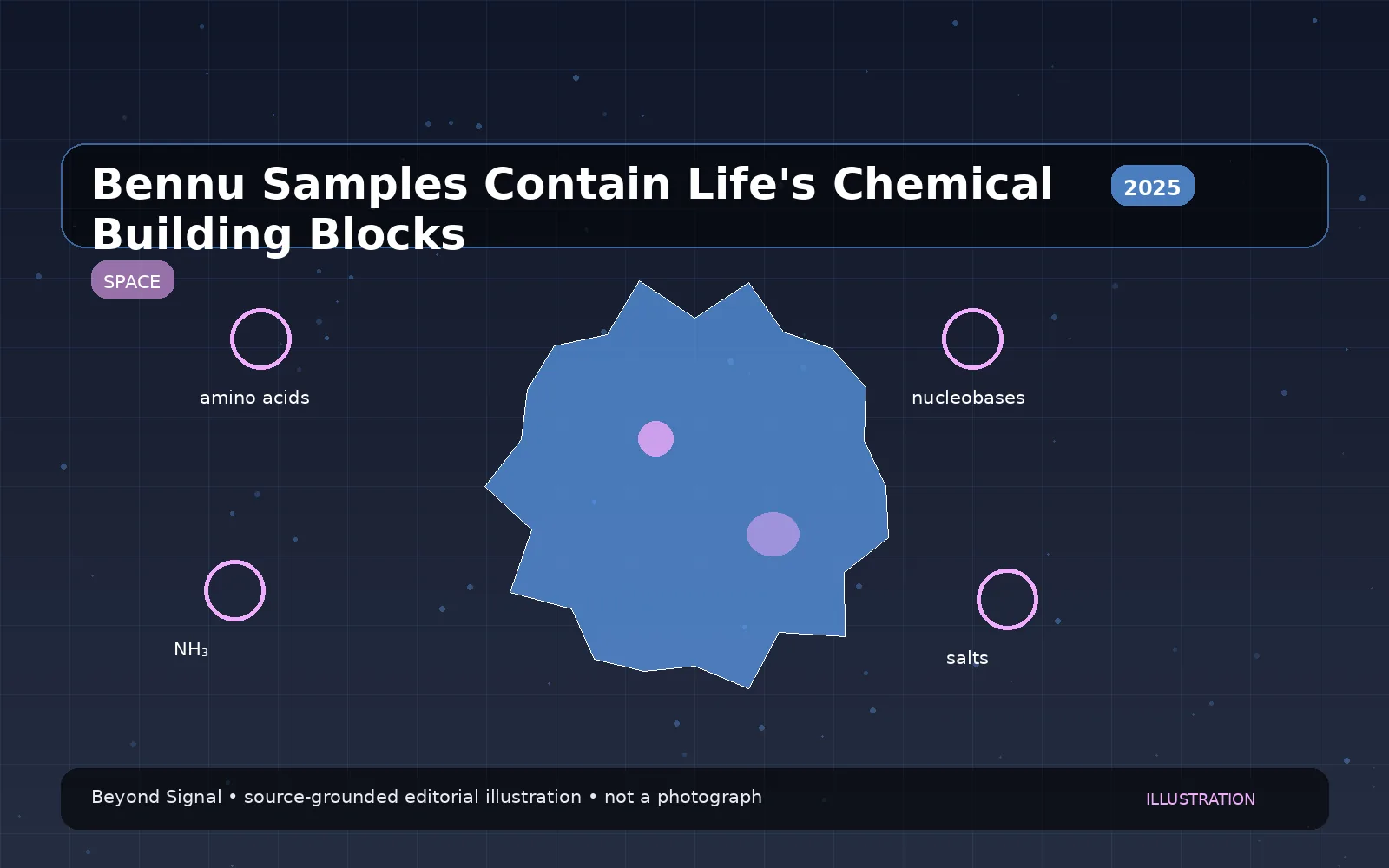 Illustration🌌 Space
Bennu Samples Contain Life's Chemical Building Blocks
Laboratory analyses of pristine asteroid Bennu material returned by OSIRIS-REx found abundant ammonia, nitrogen-rich organic matter, 14 of the 20 amino acids used by terrestrial life, and all five nucleobases used in DNA and RNA. The chemistry shows that life's ingredients were widespread, not that life existed on Bennu.
Read more →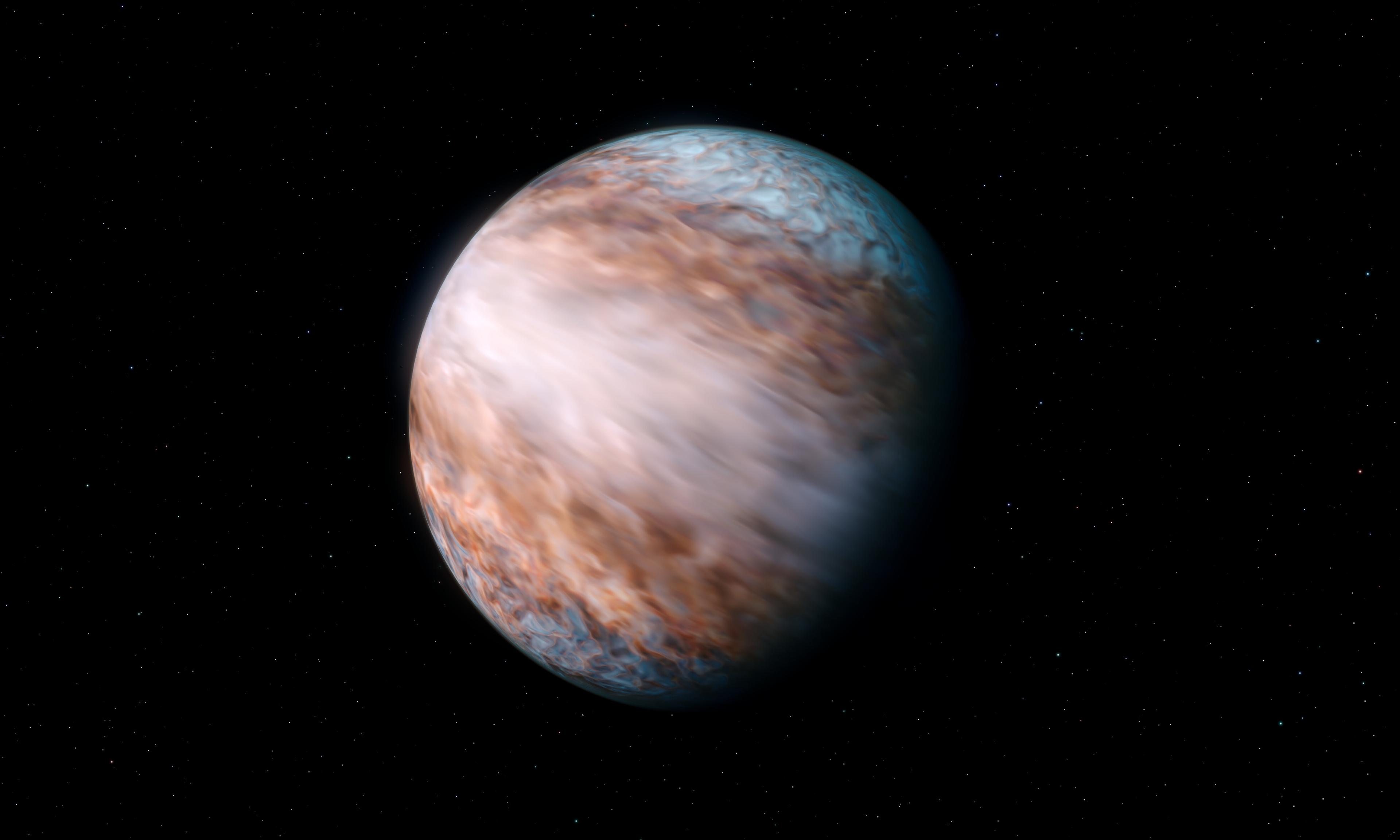 🌌 Space
Supersonic Winds on WASP-127b
Astronomers measured equatorial winds on the exoplanet WASP-127b moving at up to 33,000 km/h — the fastest planetary jet stream of its kind measured at the time.
Read more →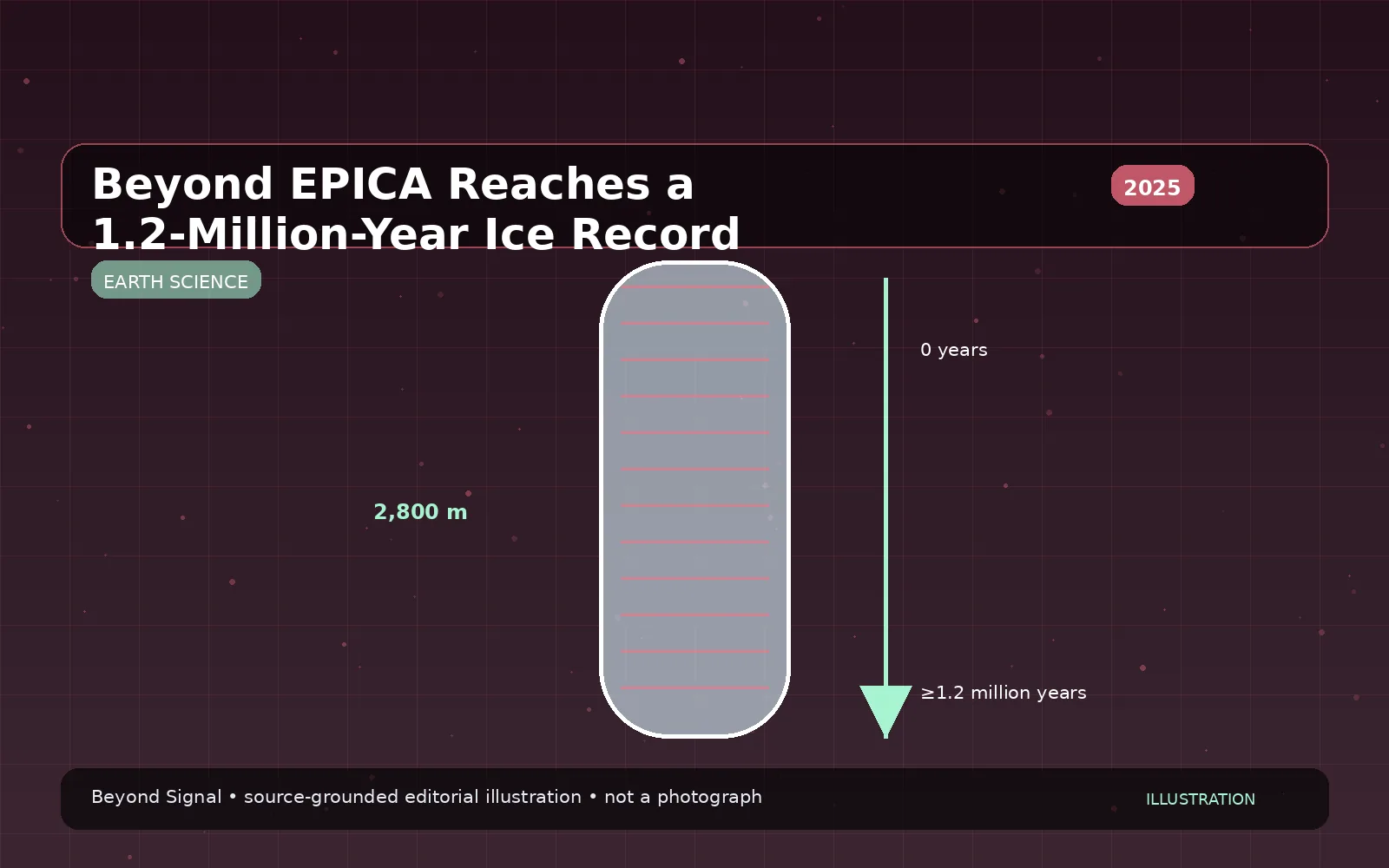 Illustration🌋 Earth Science
Beyond EPICA Reaches a 1.2-Million-Year Ice Record
The Beyond EPICA team completed drilling to bedrock at Little Dome C, recovering a 2,800-metre Antarctic ice core expected to preserve a continuous climate record reaching at least 1.2 million years. The core targets the interval when glacial cycles shifted from roughly 41,000-year to 100,000-year rhythms.
Read more →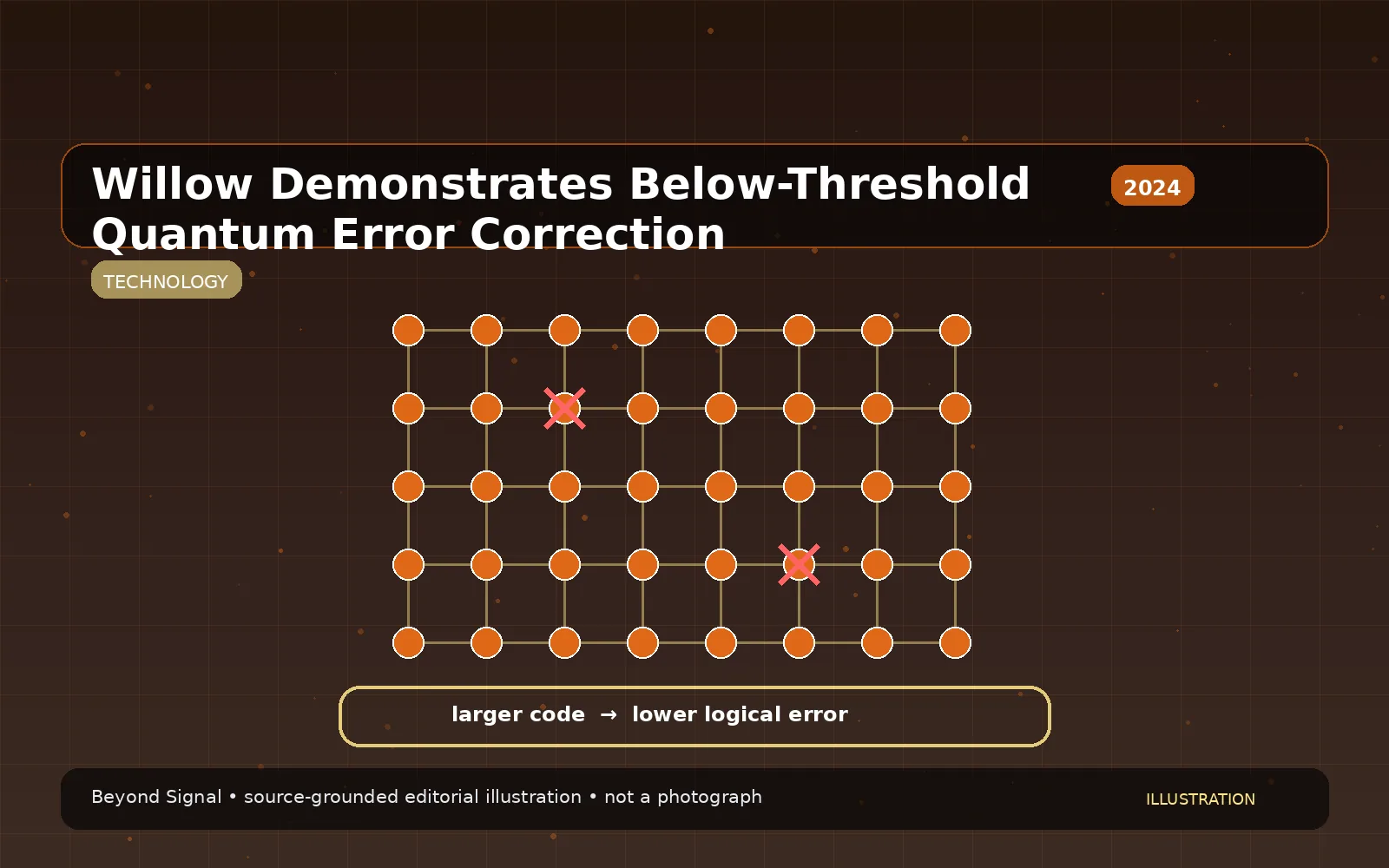 Illustration🤖 Technology
Willow Demonstrates Below-Threshold Quantum Error Correction
Google's Willow processor demonstrated below-threshold surface-code error correction: as researchers increased the size of encoded logical qubits, the logical error rate fell rather than rose. The experiment was an important scaling result for fault-tolerant quantum computing, although it did not produce a general-purpose error-corrected computer.
Read more →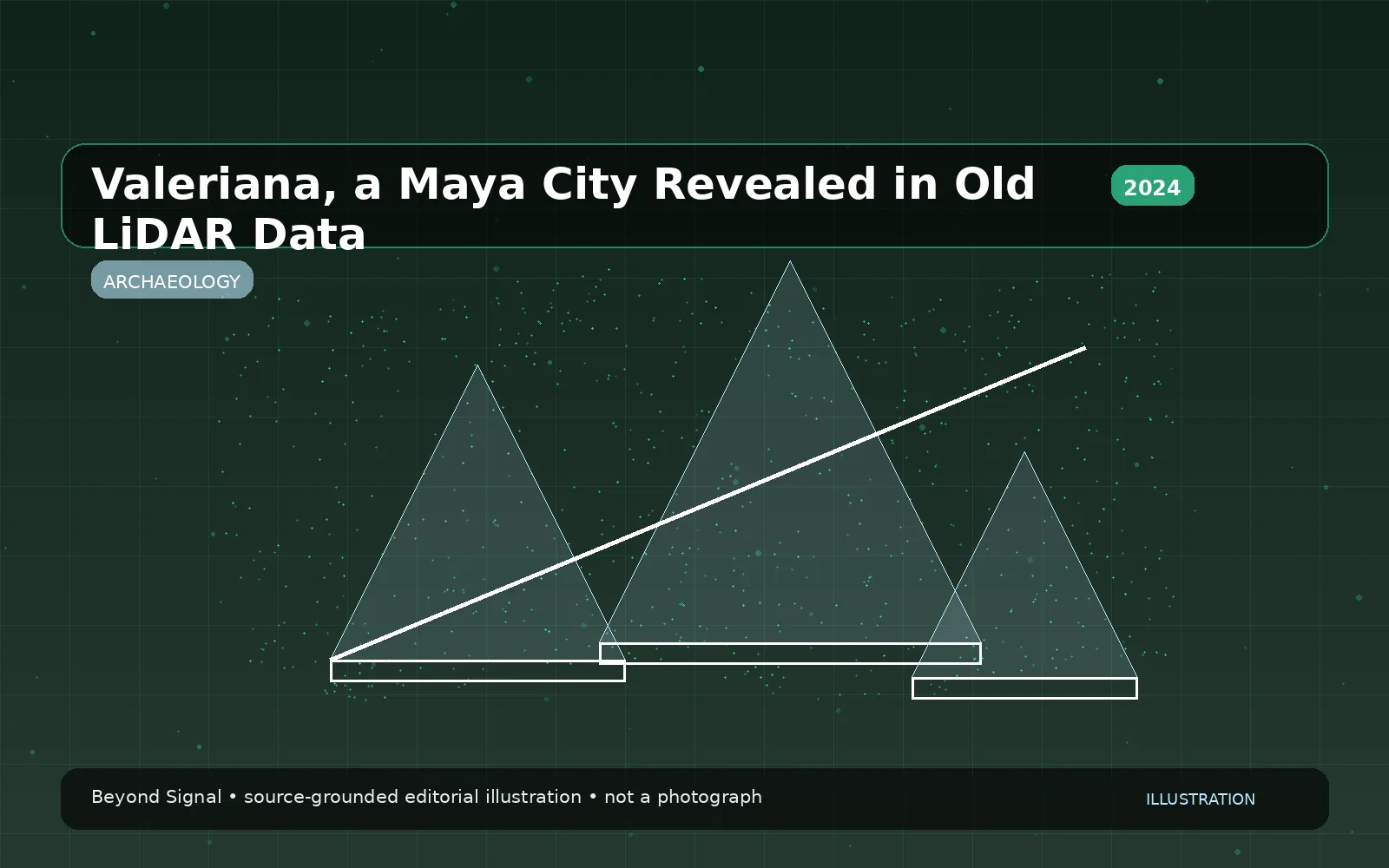 Illustration🏺 Archaeology
Valeriana, a Maya City Revealed in Old LiDAR Data
Archaeologists reanalysed airborne LiDAR collected for an environmental survey and identified a dense Maya urban landscape in eastern Campeche, including the newly named centre Valeriana. Across 122 square kilometres, the data revealed 6,479 structures, ceremonial complexes, plazas, reservoirs, causeways, and residential zones.
Read more → Illustration⚛️ Physics
Landau–Phonon Polaritons Imaged in Graphene Heterostructures
Infrared magneto-nanoscopy visualized hybrid Landau–phonon polaritons in graphene heterostructures and showed that their propagation can be tuned with a magnetic field.
Read more →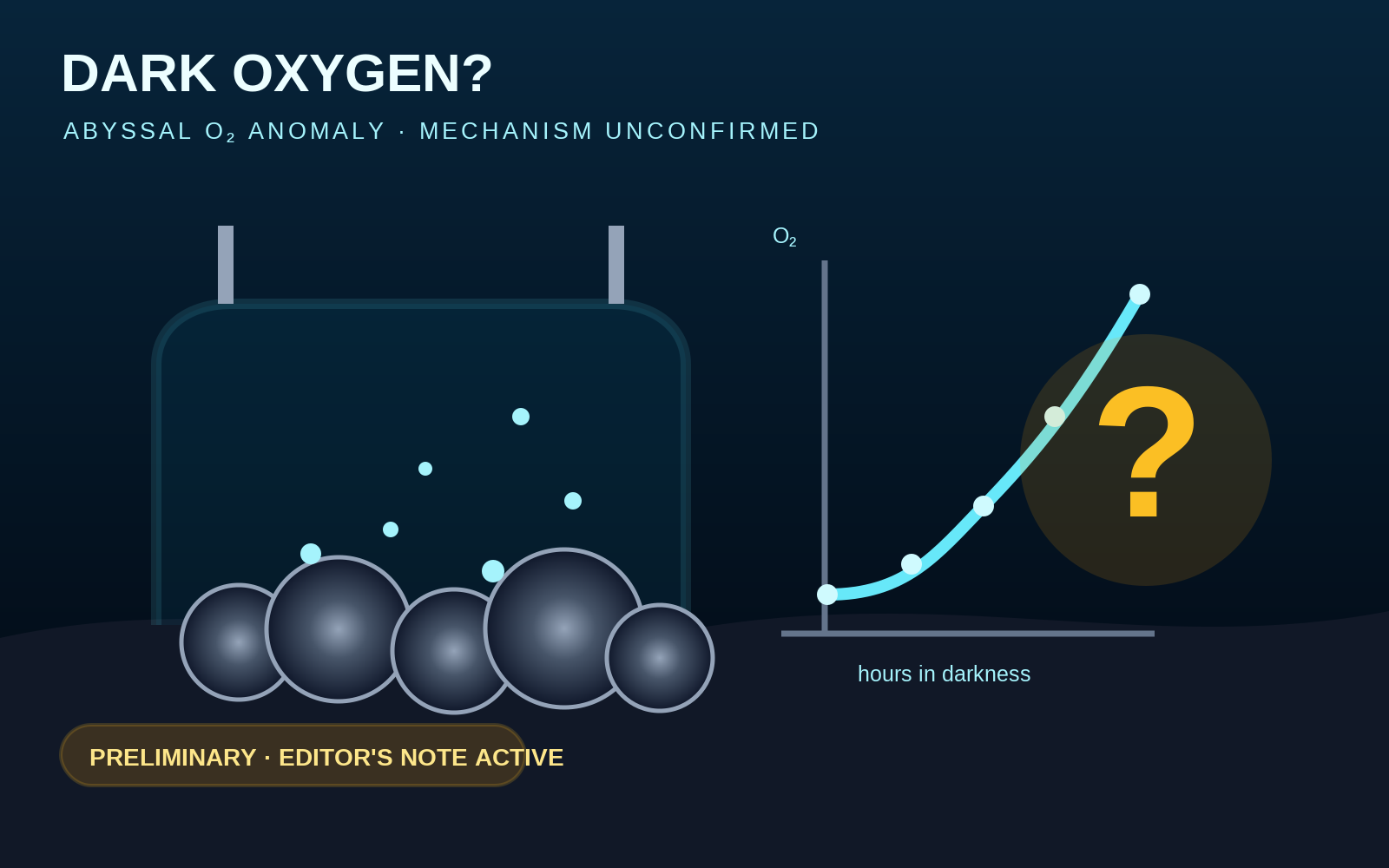 Illustration🪸 Ocean Discoveries
Evidence for 'Dark Oxygen' at the Abyssal Seafloor
Benthic-chamber experiments in the Clarion-Clipperton Zone recorded oxygen concentrations increasing in darkness near polymetallic nodules, but the proposed natural production mechanism remains unconfirmed and aspects of the paper are under editorial review.
Read more →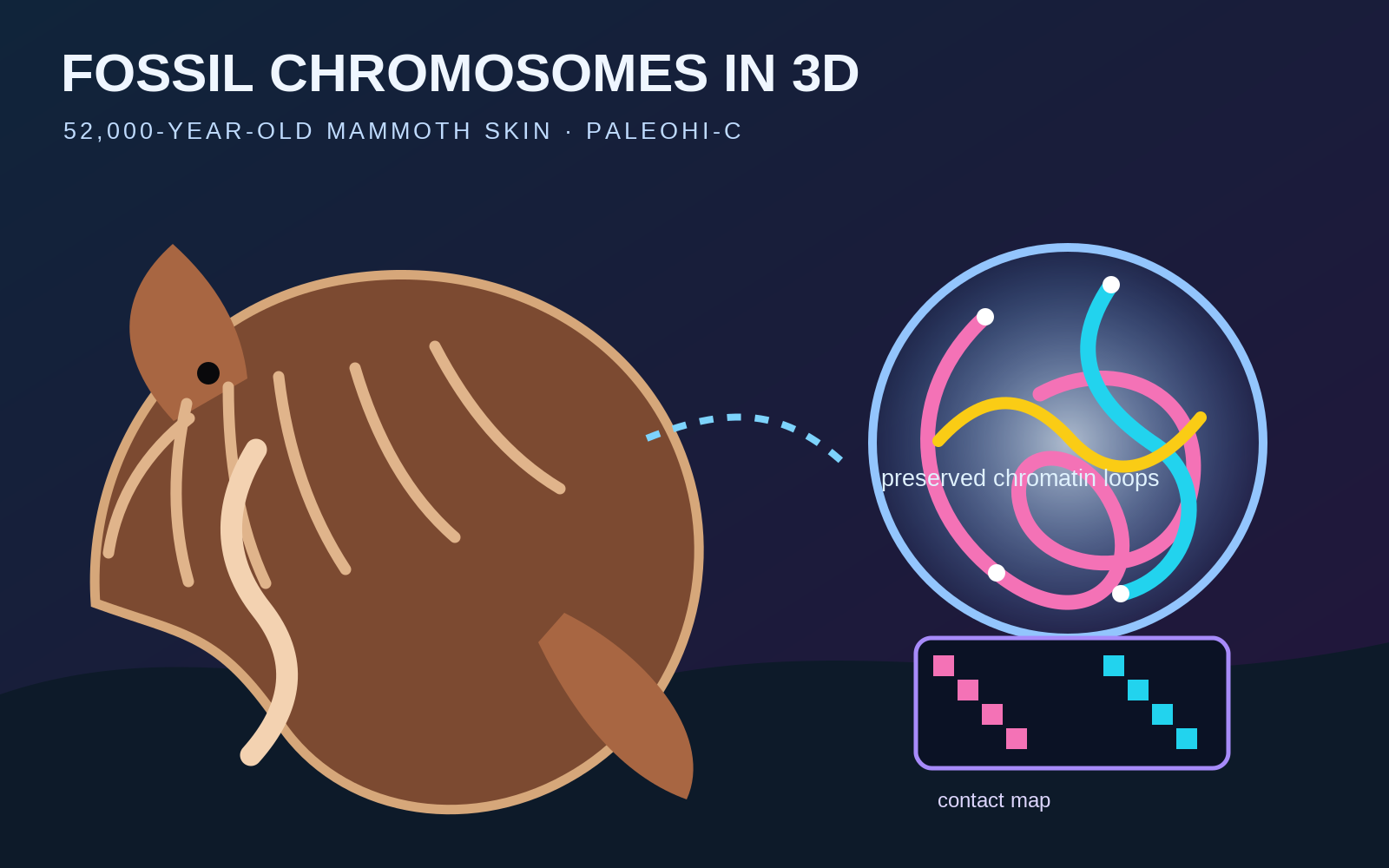 Illustration🧬 Biology
Three-Dimensional Chromosomes Preserved in Mammoth Skin
A 52,000-year-old woolly mammoth skin sample retained chromosome-scale contacts, allowing researchers to reconstruct 28 chromosomes and features of the genome's three-dimensional organization in an extinct animal.
Read more →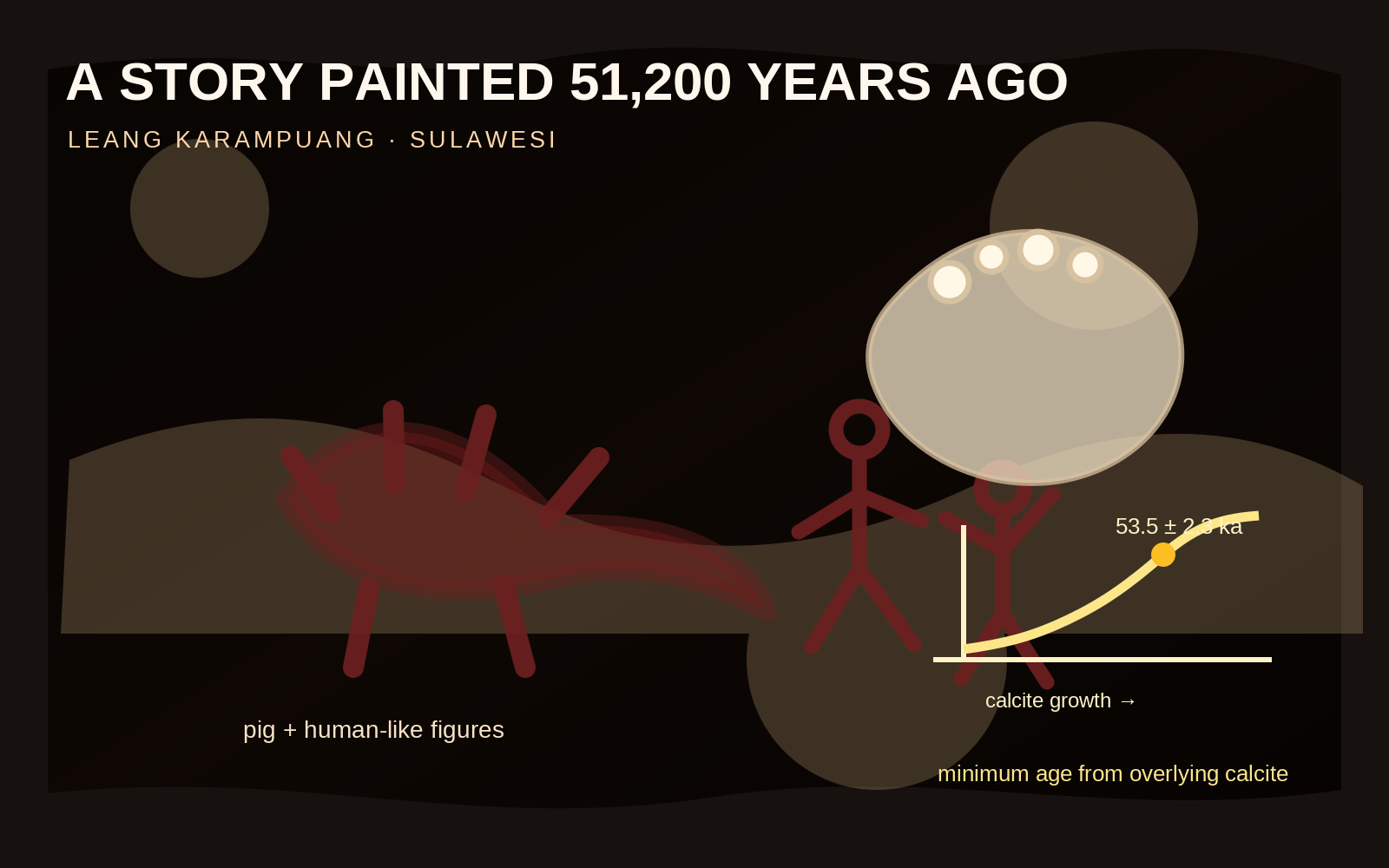 Illustration🏺 Archaeology
The 51,200-Year-Old Sulawesi Narrative Cave Art
Laser-ablation uranium-series dating showed that a scene of human-like figures interacting with a pig at Leang Karampuang was painted at least 51,200 years ago, then the oldest securely dated surviving narrative and representational art.
Read more → Illustration🤖 Technology
Bridge RNAs Link DNA Targets and Donors for Programmable Recombination
Researchers found that IS110 elements use a bridge RNA with independently programmable donor- and target-recognition loops, enabling sequence-specific DNA insertion, excision, and inversion in laboratory experiments.
Read more →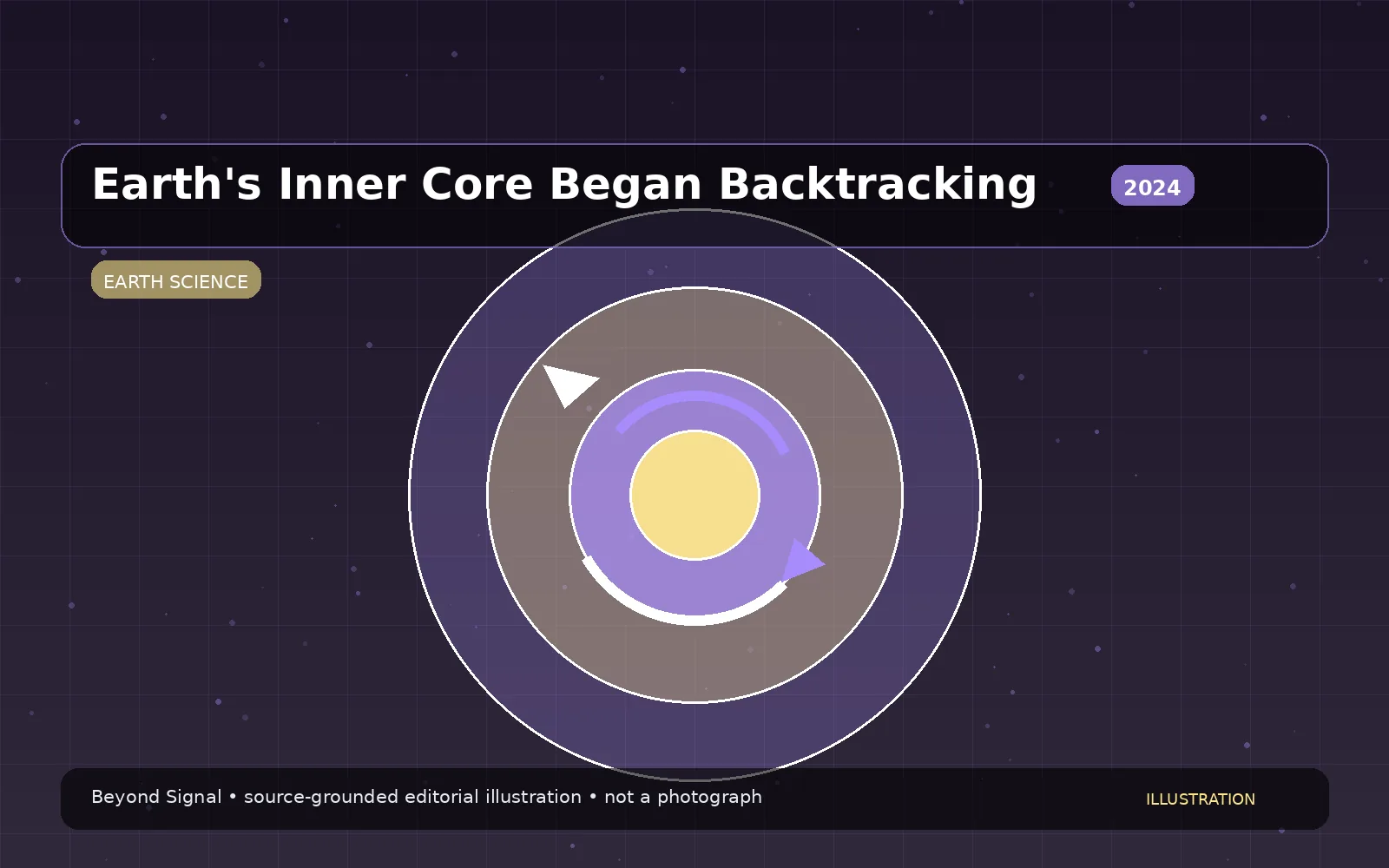 Illustration🌋 Earth Science
Earth's Inner Core Began Backtracking
Seismic waveforms from repeating earthquakes indicated that Earth's solid inner core had slowed and was moving backward relative to the mantle after about 2010. The result extended evidence that inner-core rotation oscillates over decades rather than maintaining a constant faster or slower spin.
Read more →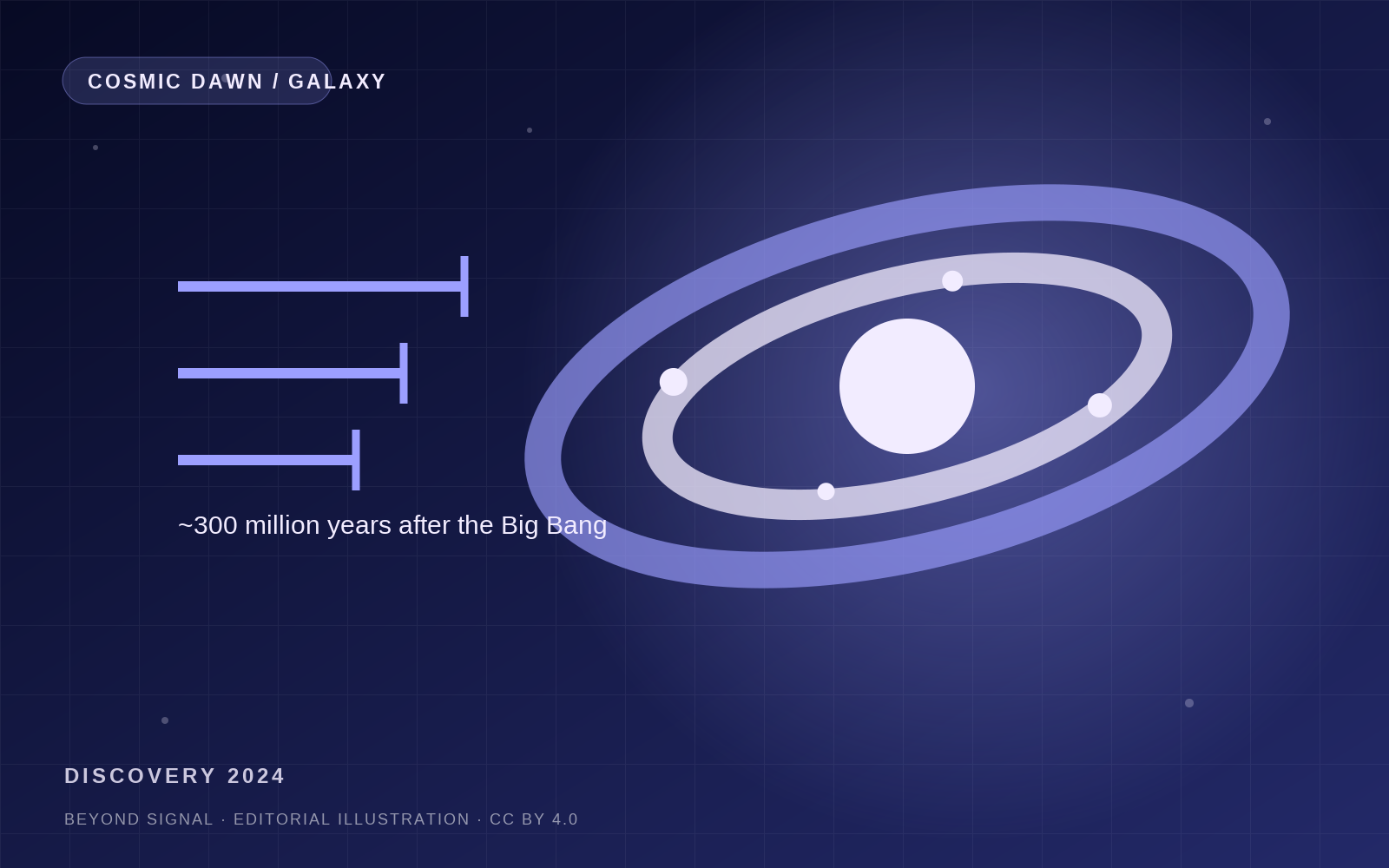 Illustration🌌 Space
JWST Confirms JADES-GS-z14-0 at Cosmic Dawn
JWST spectroscopy confirmed a remarkably luminous galaxy seen only about 300 million years after the Big Bang, showing that substantial galaxies assembled unexpectedly early.
Read more →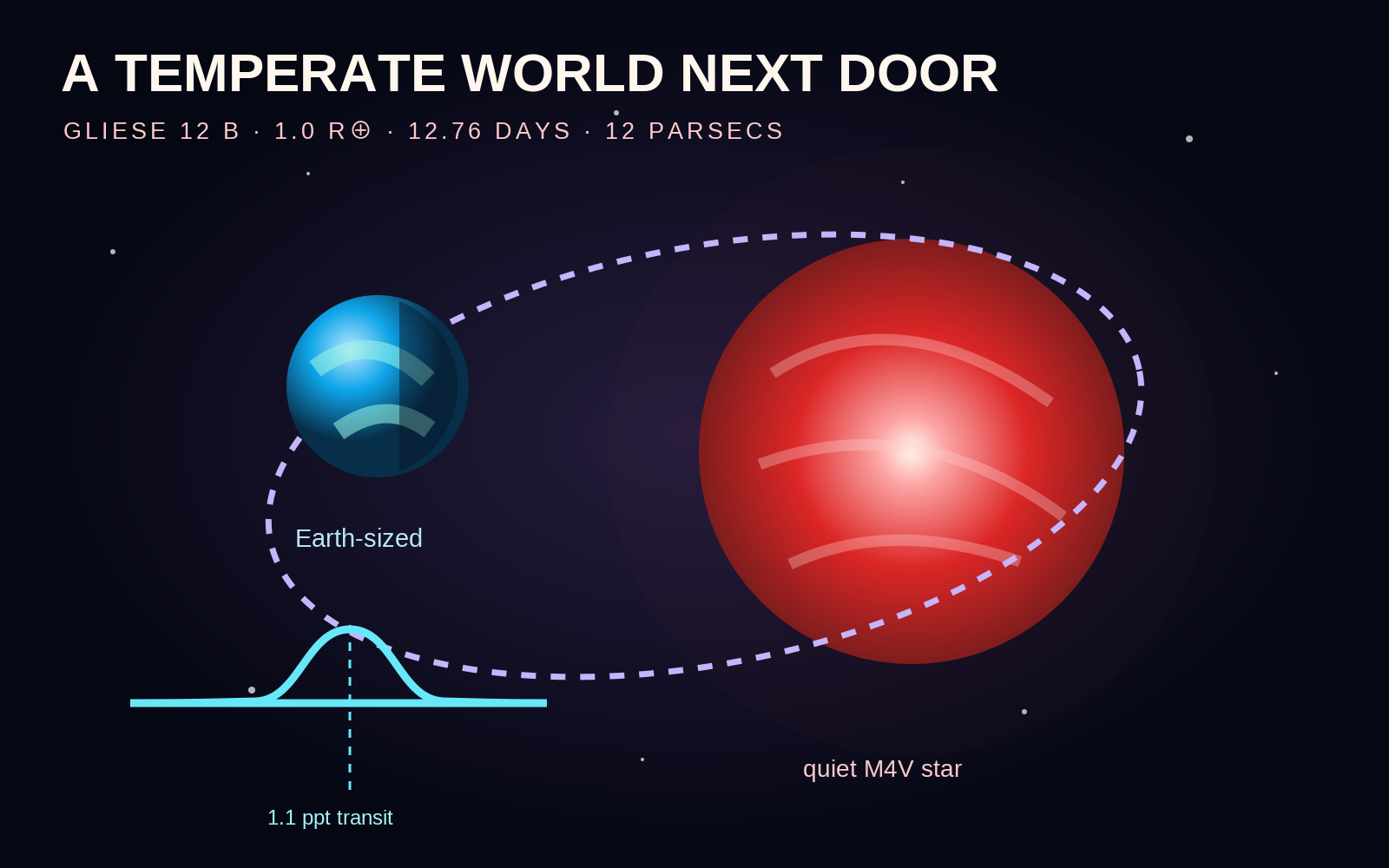 Illustration🌌 Space
Gliese 12 b, a Nearby Temperate Earth-Sized Planet
Transit observations validated Gliese 12 b as a planet about Earth's size orbiting a quiet red dwarf only 12 parsecs away, with an equilibrium temperature near 315 kelvin under standard assumptions.
Read more → Illustration🧬 Biology
A New Sex-Determination Mechanism in an African Butterfly
Work in Bicyclus anynana showed that combinations of variants of the Z-linked Masculinizer gene determine sex, revealing a sex-determination mechanism not previously described in butterflies.
Read more →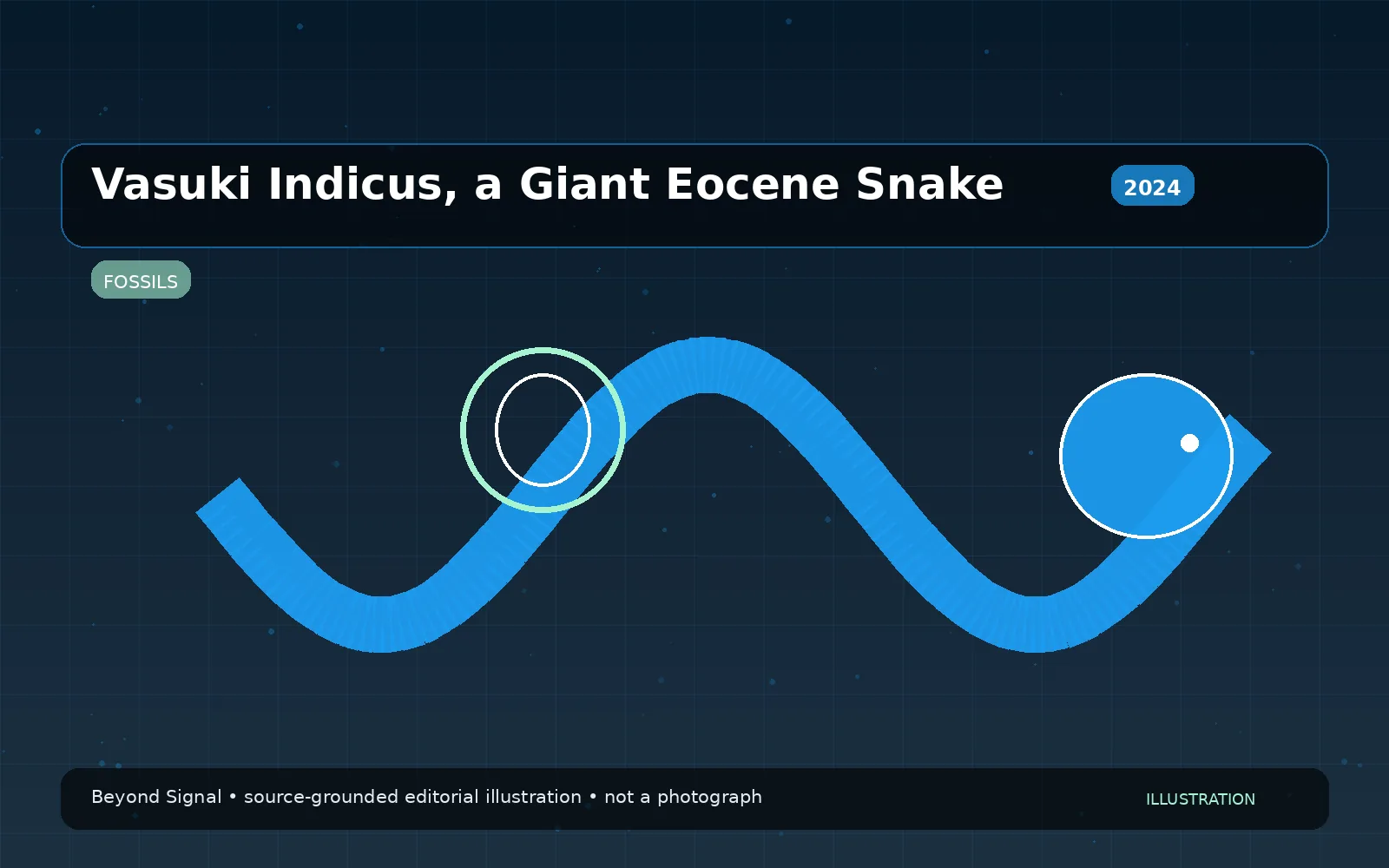 Illustration🦕 Dinosaurs & Fossils
Vasuki Indicus, a Giant Eocene Snake
Twenty-seven associated vertebrae from western India were described as Vasuki indicus, a giant madtsoiid snake that lived about 47 million years ago. Scaling from the vertebrae produced a broad estimated length of roughly 11 to 15 metres, placing it among the largest snakes known but leaving substantial uncertainty.
Read more →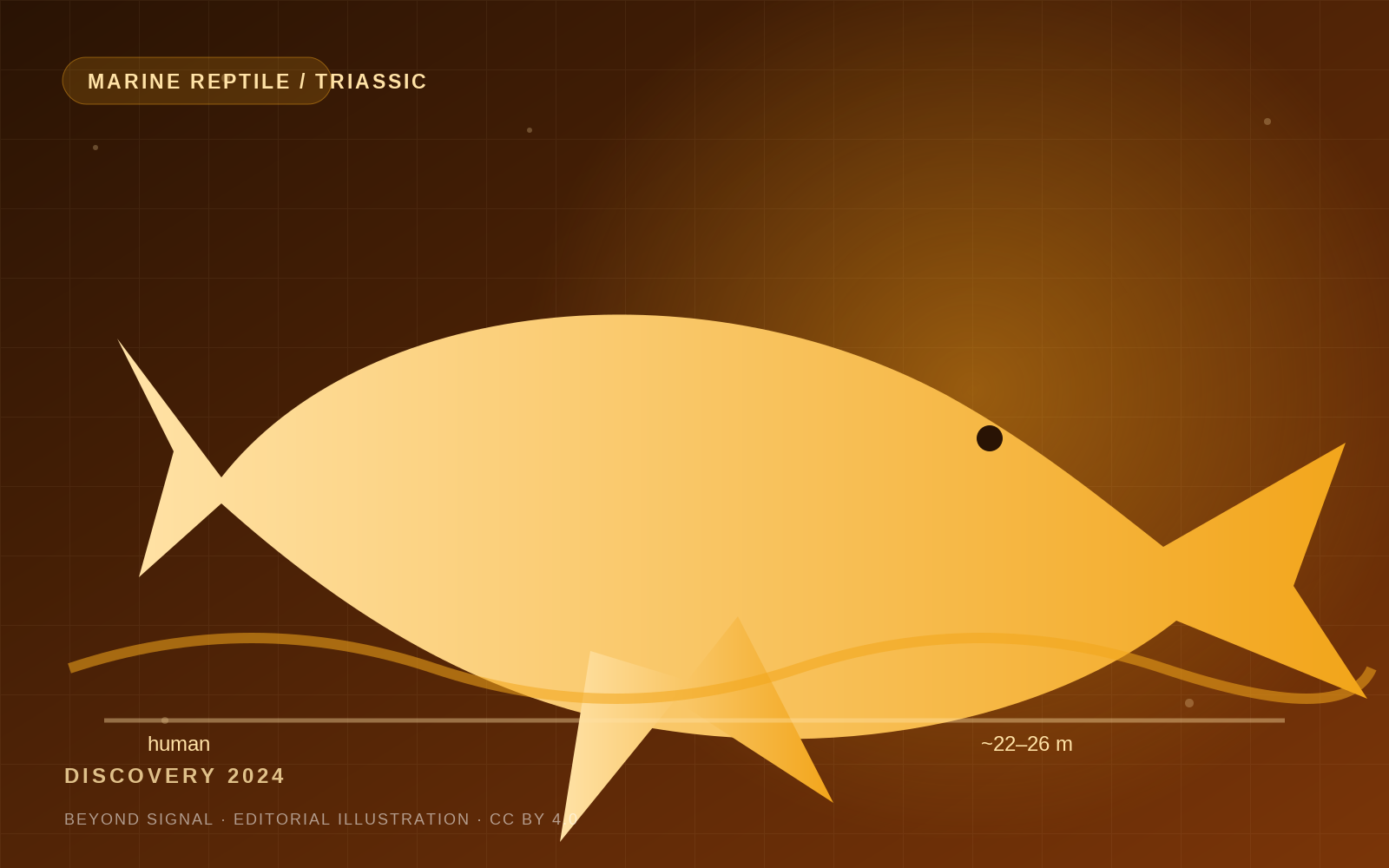 Illustration🦕 Dinosaurs & Fossils
Ichthyotitan Severnensis, a Blue-Whale-Sized Marine Reptile
Fragments of enormous jawbones from southwest England were assigned to a new Late Triassic ichthyosaur estimated at roughly 22–26 metres long.
Read more →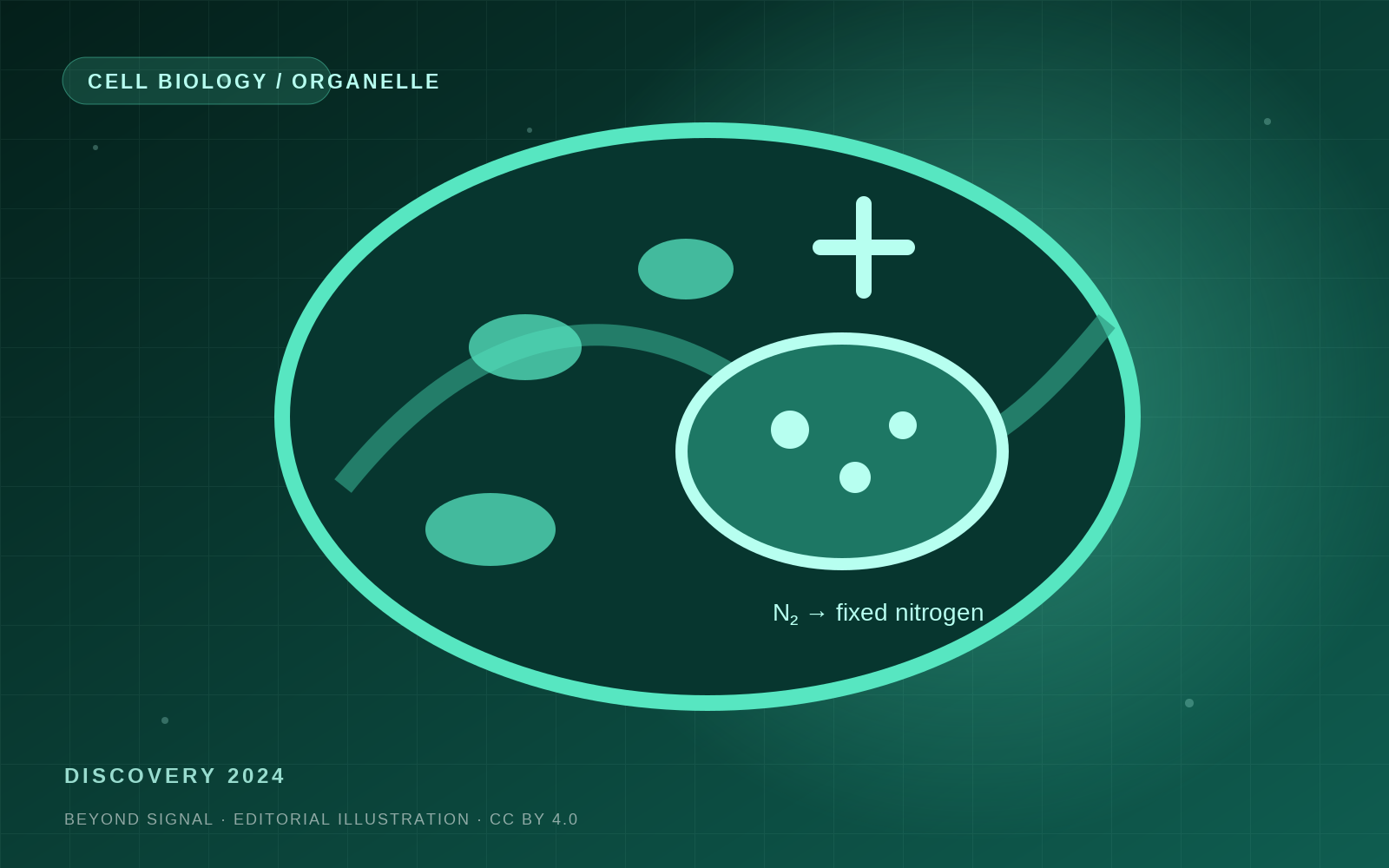 Illustration🧬 Biology
The Nitroplast, a Nitrogen-Fixing Organelle
Researchers showed that a cyanobacterial partner inside a marine alga is integrated deeply enough to function as a true nitrogen-fixing organelle, named the nitroplast.
Read more → Illustration🦕 Dinosaurs & Fossils
Pebanista yacuruna, the Largest Known River Dolphin
A 16-million-year-old skull from Peru established Pebanista yacuruna as a new, 3–3.5-metre river dolphin and the closest known fossil relative of living South Asian river dolphins.
Read more →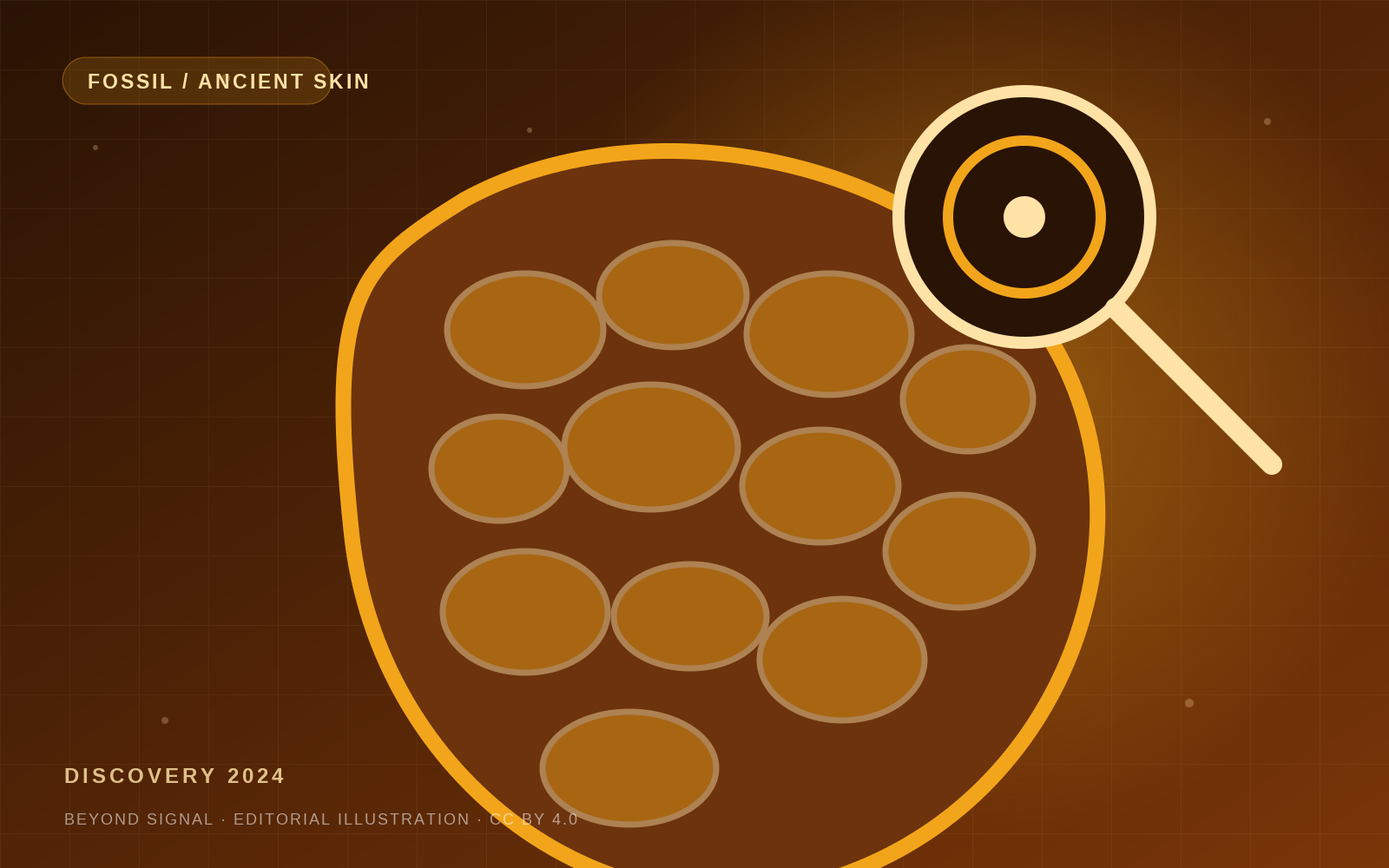 Illustration🦕 Dinosaurs & Fossils
The Oldest Known Fossilized Amniote Skin
A tiny three-dimensional patch of reptile-like skin from an Oklahoma cave system pushed the direct fossil record of amniote skin back by more than 130 million years.
Read more →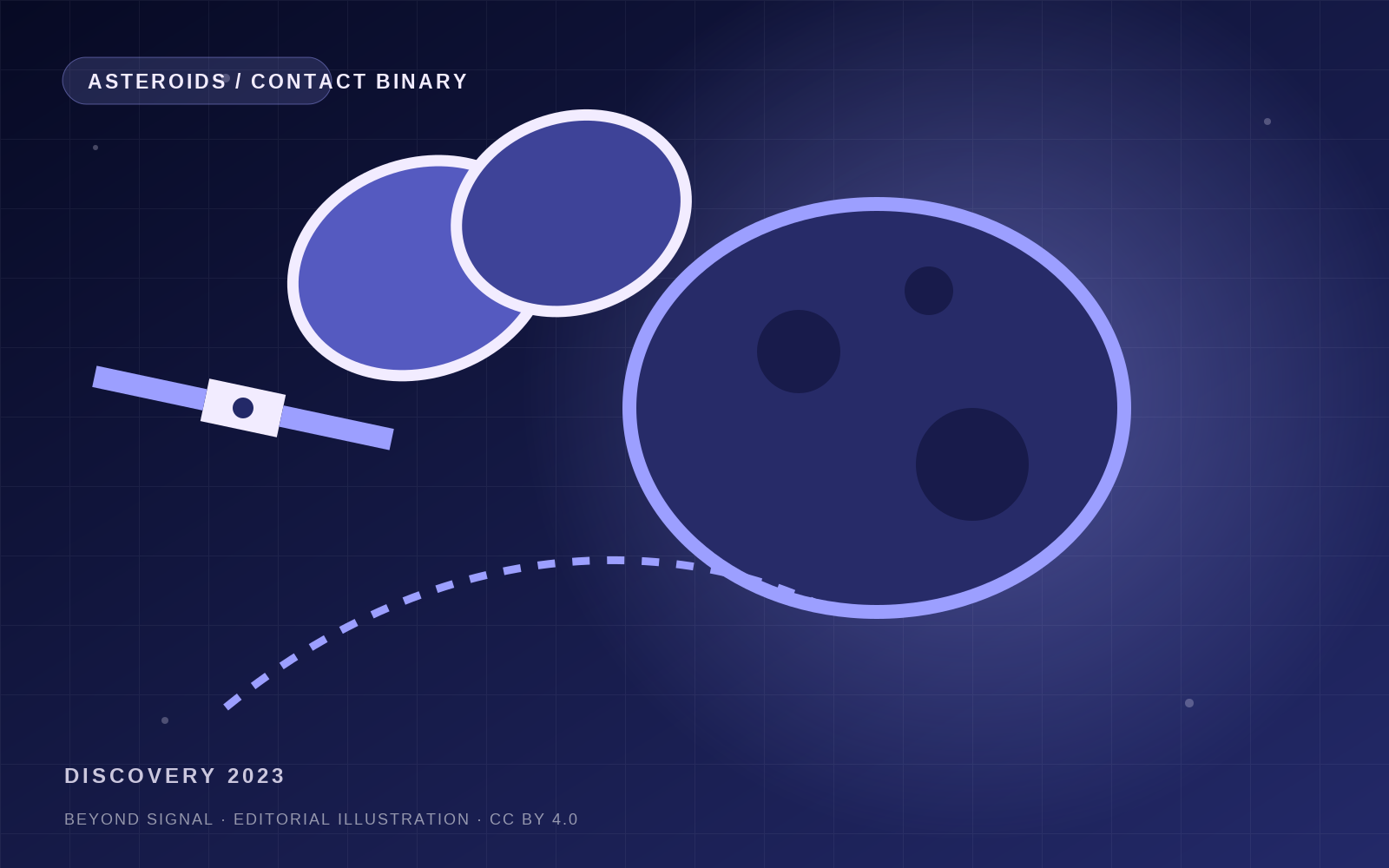 Illustration🌌 Space
Lucy Discovers Selam, Dinkinesh's Contact-Binary Moon
NASA's Lucy spacecraft found that the small main-belt asteroid Dinkinesh has a moon composed of two lobes touching each other, the first contact-binary satellite seen during a spacecraft flyby.
Read more →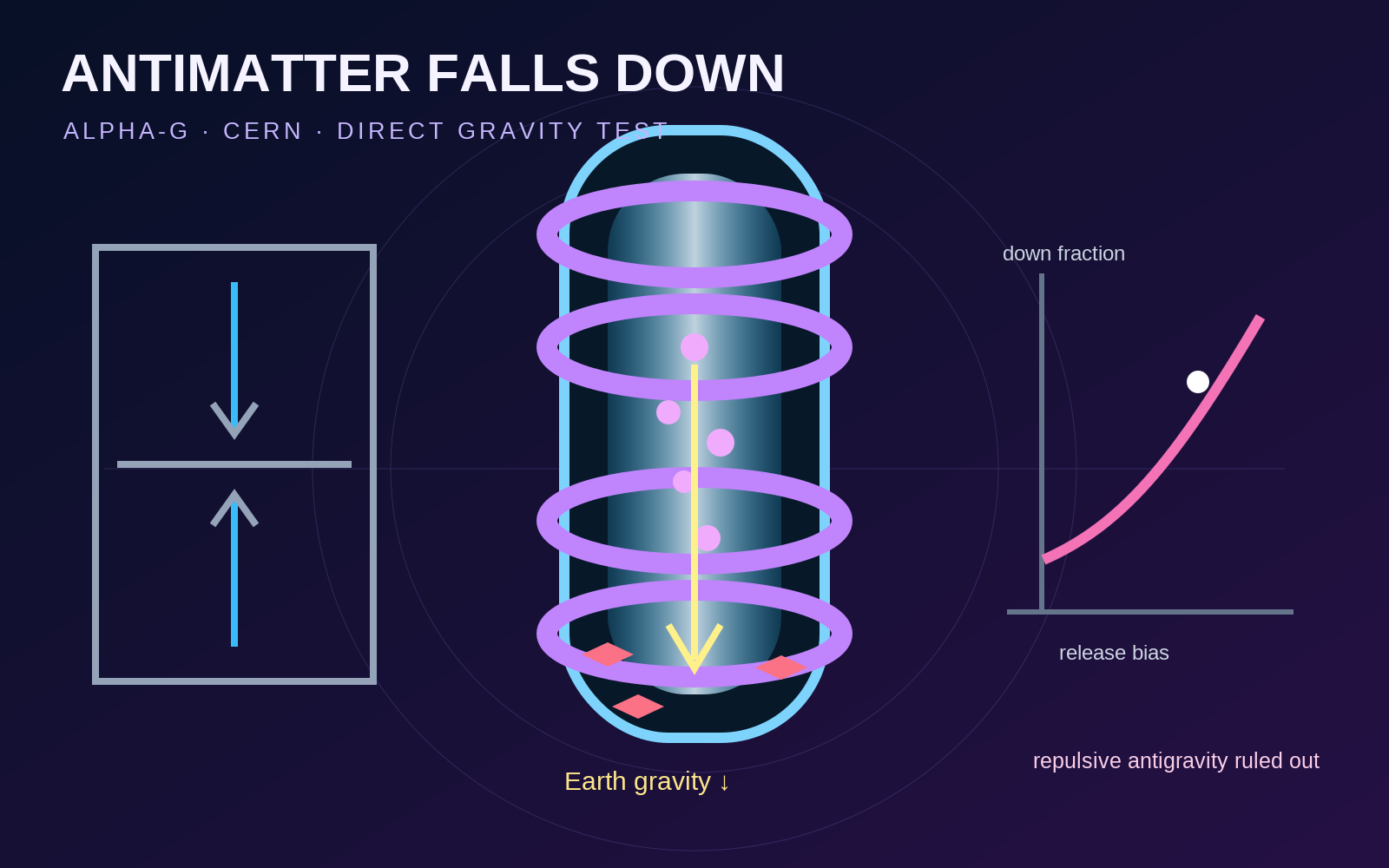 Illustration⚛️ Physics
Antihydrogen Falls Downward Under Gravity
The ALPHA-g experiment released trapped antihydrogen atoms in a vertical magnetic apparatus and observed motion consistent with gravitational attraction toward Earth, directly ruling out repulsive antigravity for antihydrogen at the experiment's precision.
Read more →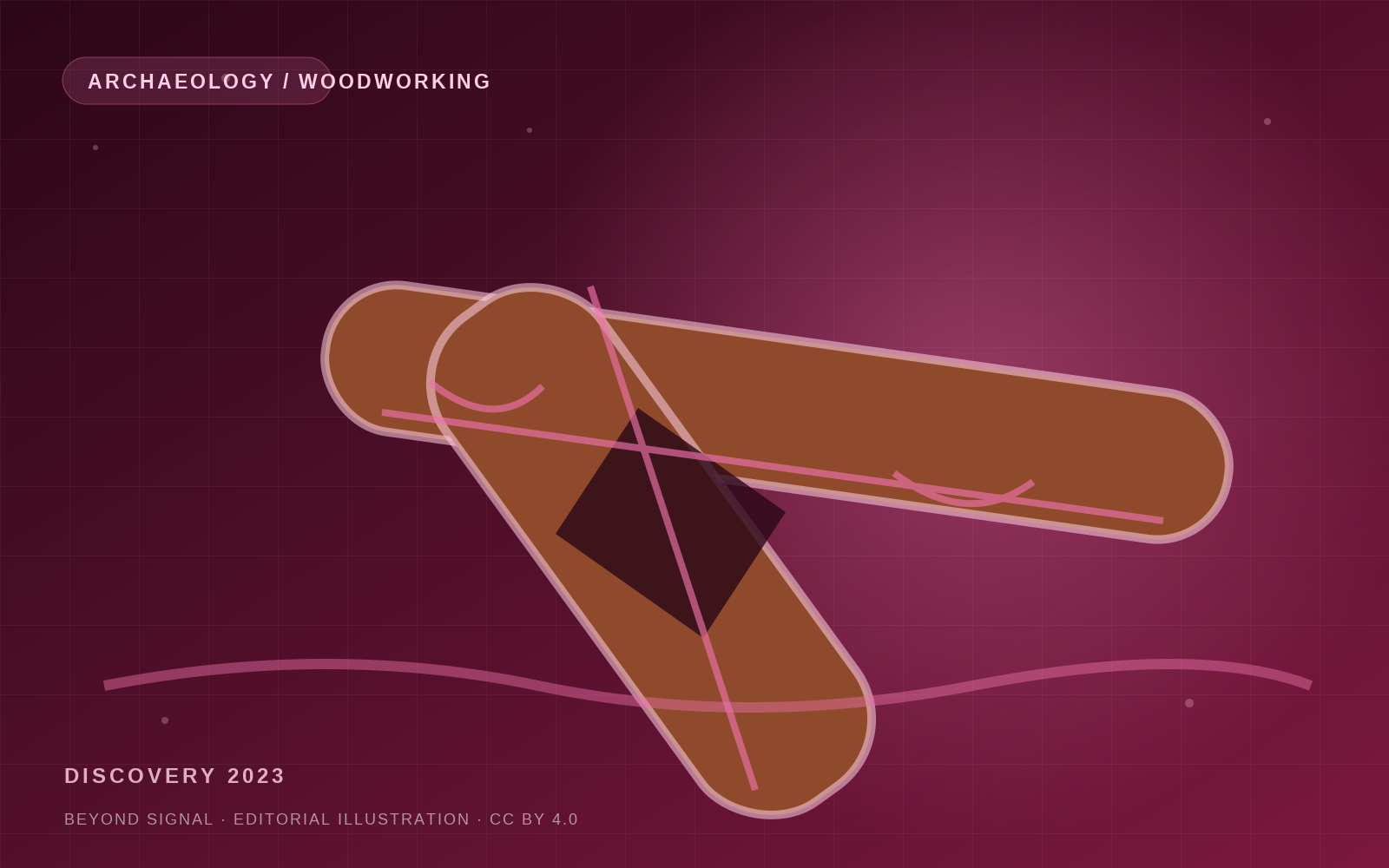 Illustration🏺 Archaeology
The 476,000-Year-Old Wooden Structure at Kalambo Falls
Two shaped logs from Zambia were dated to at least 476,000 years ago, preserving the earliest known structural use of wood by hominins.
Read more →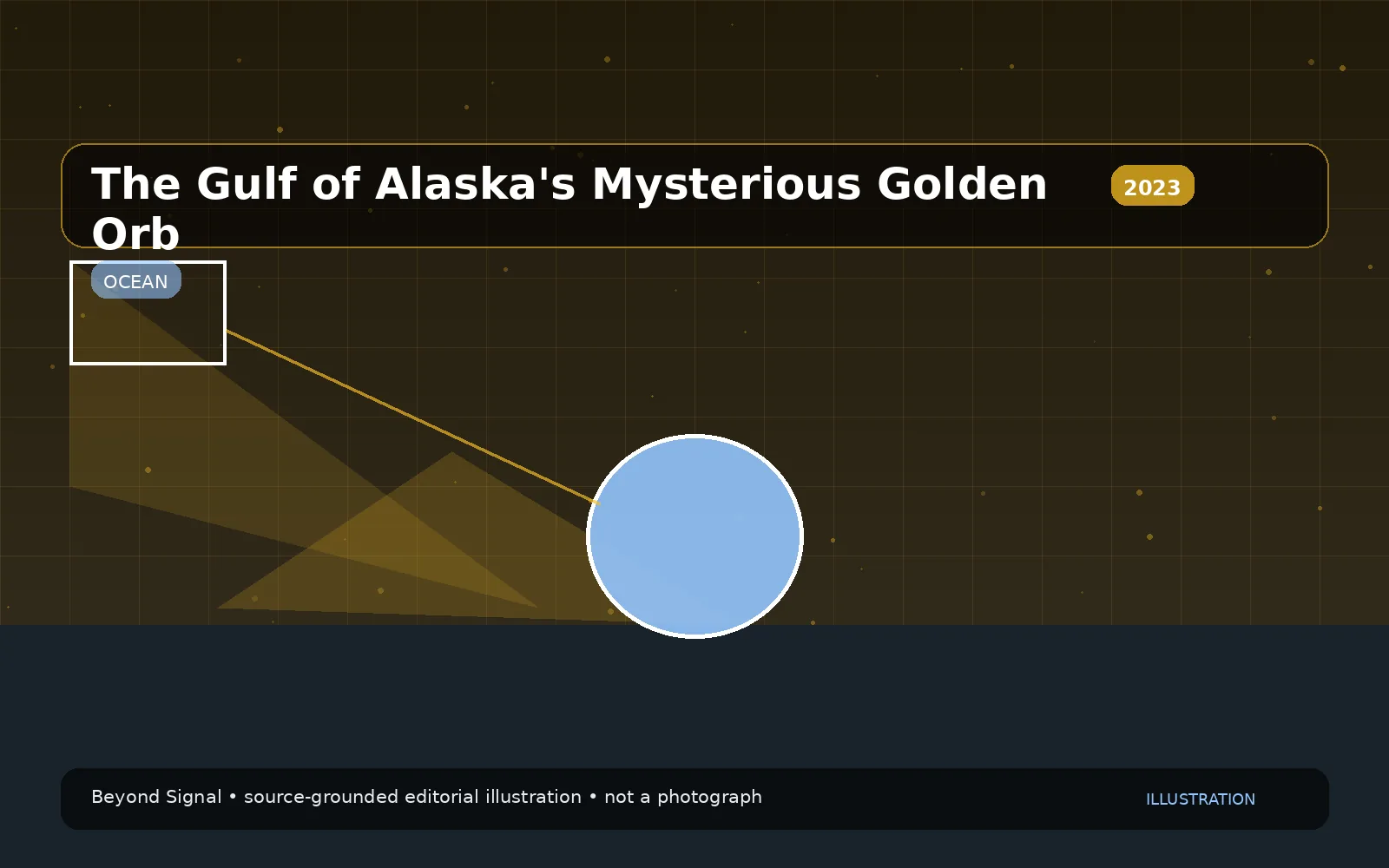 Illustration🪸 Ocean Discoveries
The Gulf of Alaska's Mysterious Golden Orb
A NOAA remotely operated vehicle found a smooth golden object attached to rock about 3,300 metres deep in the Gulf of Alaska. It resisted immediate identification as an egg case, sponge, or coral. Later microscopy and genetic work linked the material to the anchoring structure of the deep-sea anemone Relicanthus daphneae.
Read more →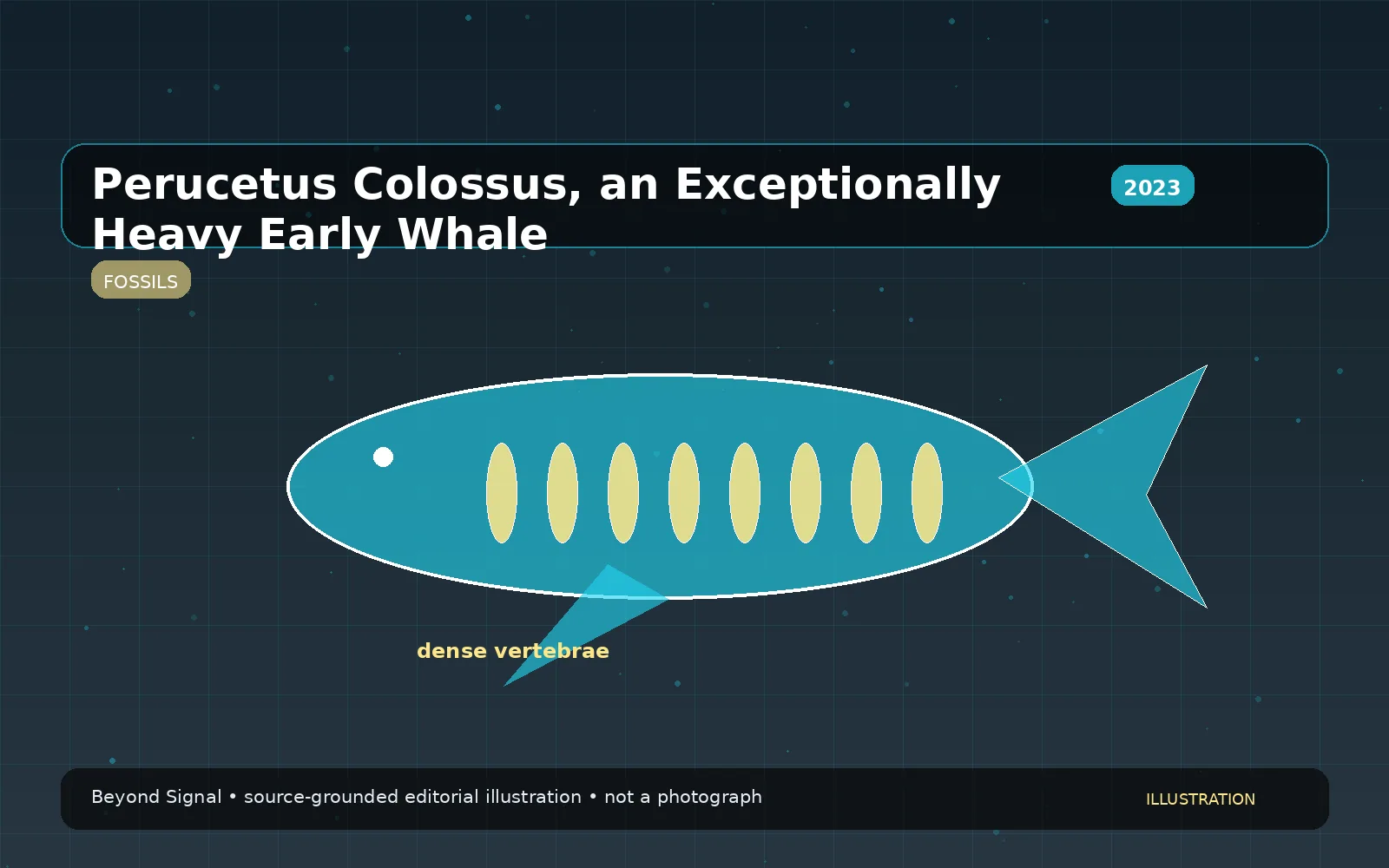 Illustration🦕 Dinosaurs & Fossils
Perucetus Colossus, an Exceptionally Heavy Early Whale
A partial skeleton from Peru's Eocene Pisco Basin revealed Perucetus colossus, an early whale with extraordinarily thick and dense vertebrae and ribs. Initial mass estimates suggested an animal of exceptional weight, although later analyses have debated how much soft tissue should be reconstructed around the unusual bones.
Read more →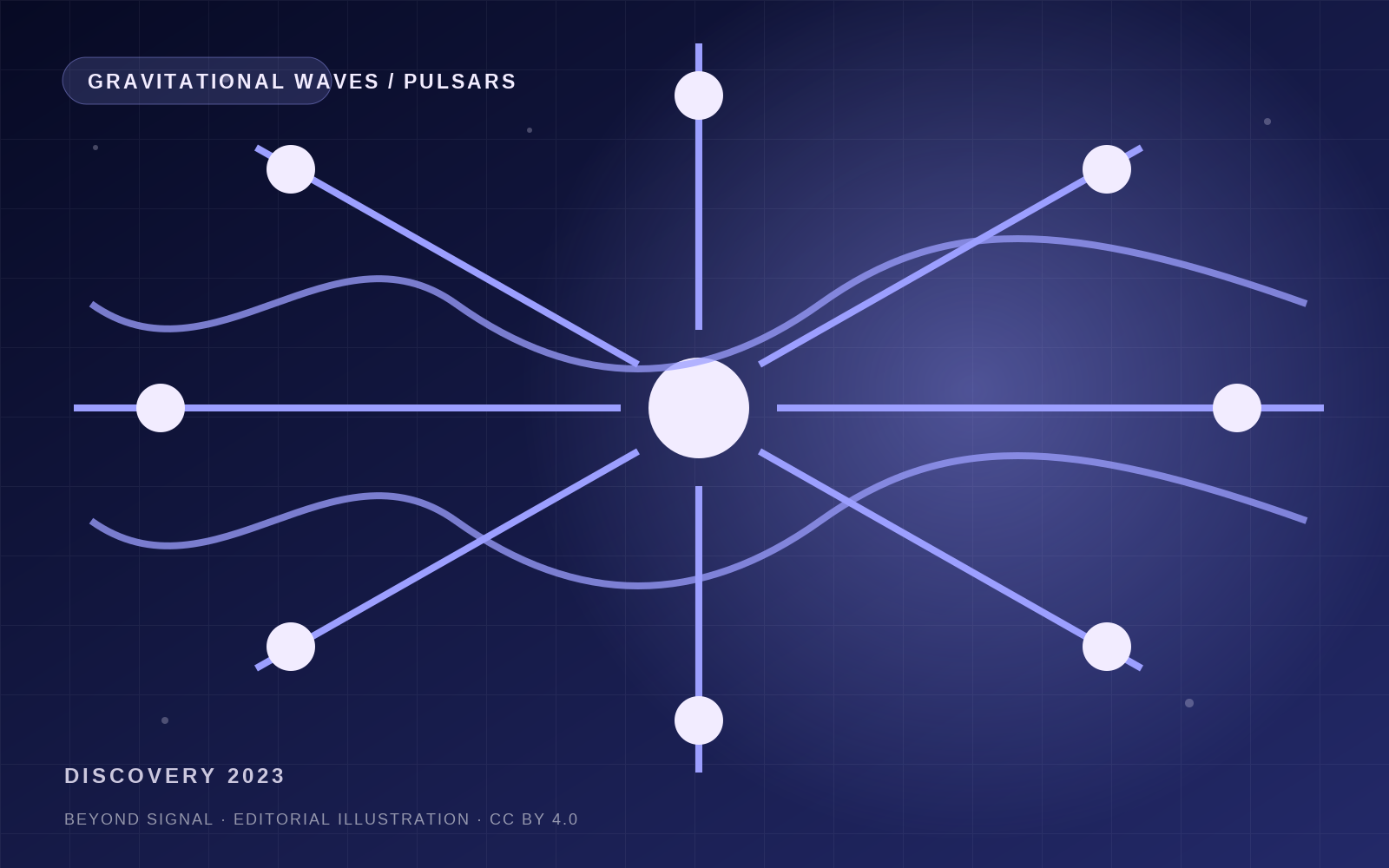 Illustration🌌 Space
NANOGrav Finds Evidence of a Cosmic Gravitational-Wave Background
Fifteen years of pulsar timing revealed the distinctive inter-pulsar correlations expected from a low-frequency gravitational-wave background, likely produced largely by orbiting supermassive black-hole binaries.
Read more → Illustration🌌 Space
JWST Detects the Methyl Cation in a Protoplanetary Disk
JWST spectra provided the first detection in space of CH₃⁺, the methyl cation, in a planet-forming disk in the Orion Nebula—direct evidence for a reactive carbon ion long expected to help initiate interstellar chemistry.
Read more →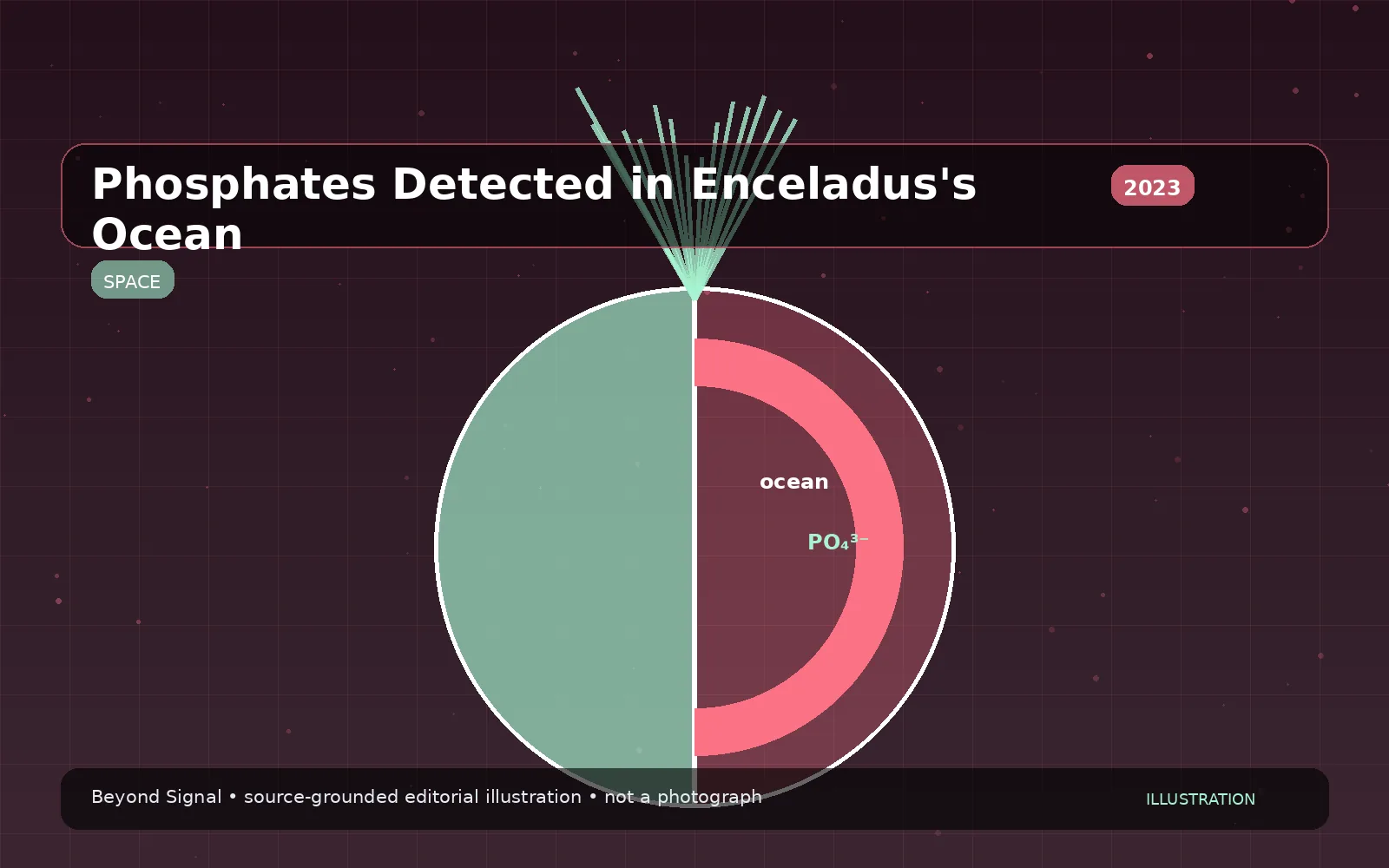 Illustration🌌 Space
Phosphates Detected in Enceladus's Ocean
Reanalysis of ice grains sampled by NASA's Cassini spacecraft detected sodium phosphates originating from the subsurface ocean of Saturn's moon Enceladus. Phosphorus is essential to terrestrial biology, and the inferred ocean concentrations were at least comparable to, and potentially higher than, those in Earth's oceans.
Read more →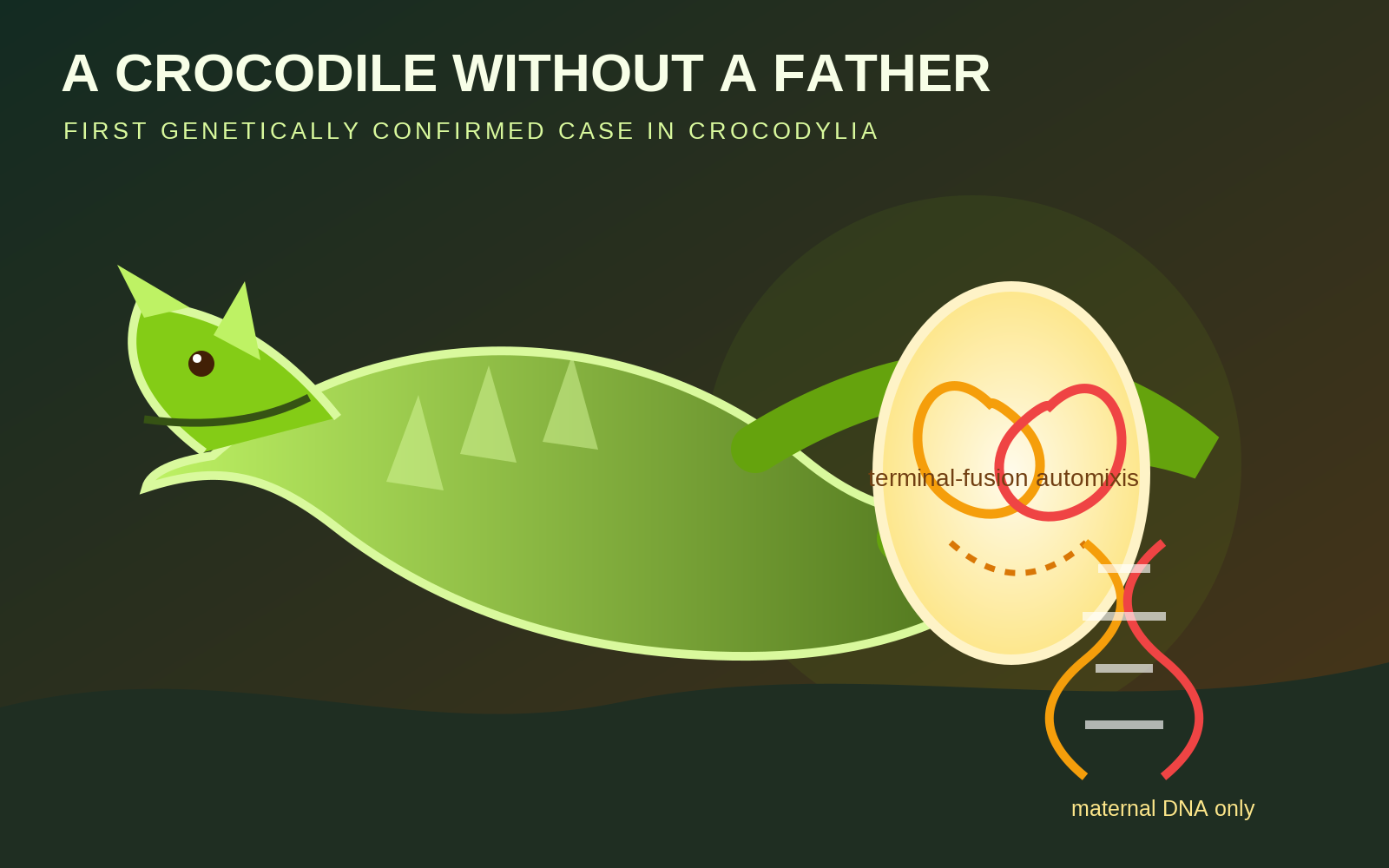 Illustration🧬 Biology
Crocodile Facultative Parthenogenesis Confirmed
Genetic analysis of a fully formed fetus from an egg laid by an isolated American crocodile documented facultative parthenogenesis in crocodilians for the first time.
Read more →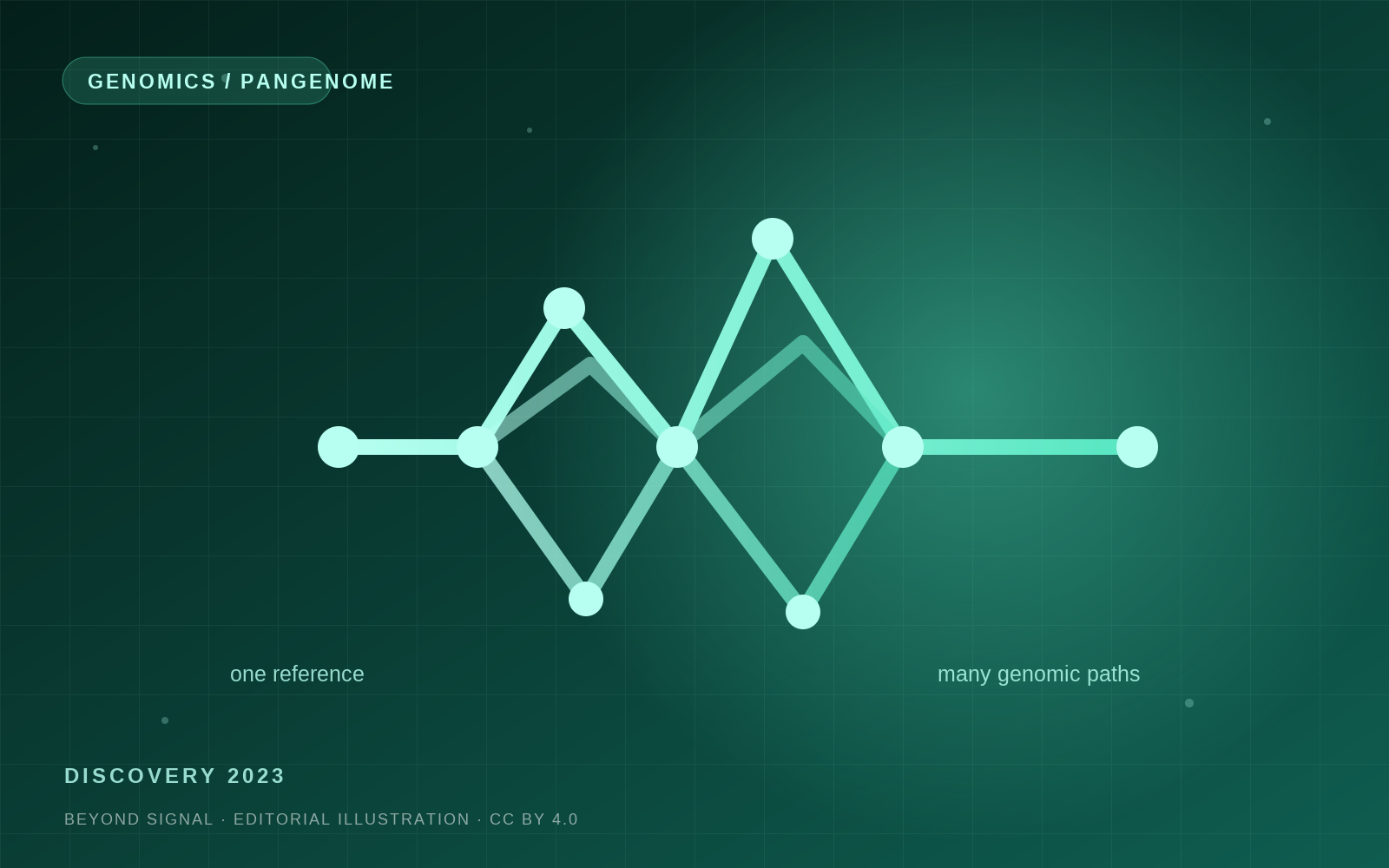 Illustration🧬 Biology
A More Diverse Human Pangenome Reference
Researchers released a draft human pangenome built from 47 genetically diverse people, replacing a single linear reference with multiple possible genomic paths.
Read more → Illustration🤖 Technology
Human Lung-Bud Microarrays Expose a BMP-Linked Infection Signal
Researchers grew reproducible human lung buds in microarrays and used them to identify BMP signalling as a host pathway associated with SARS-CoV-2 infection in the model.
Read more →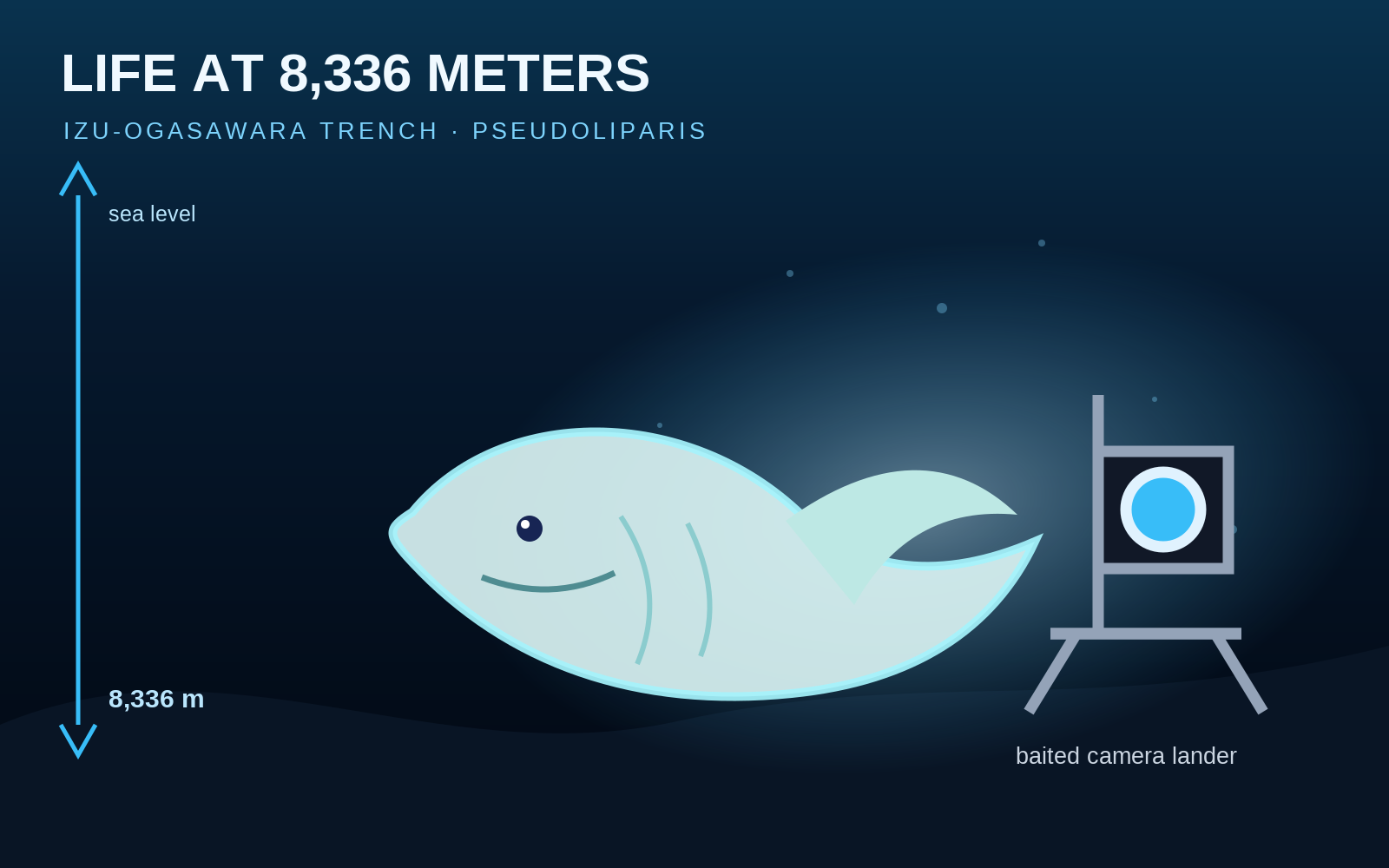 Illustration🪸 Ocean Discoveries
The Deepest Fish Ever Filmed
A baited lander recorded an unidentified Pseudoliparis snailfish 8,336 meters down in the Izu-Ogasawara Trench, setting the verified depth record for a fish filmed in the ocean.
Read more → Illustration🧬 Biology
The Anteromedial Thalamus Gates Long-Term Memory in Mice
Longitudinal recordings and targeted perturbations in mice identified the anteromedial thalamus as a circuit node that helps select and stabilize salient memories for long-term cortical storage.
Read more →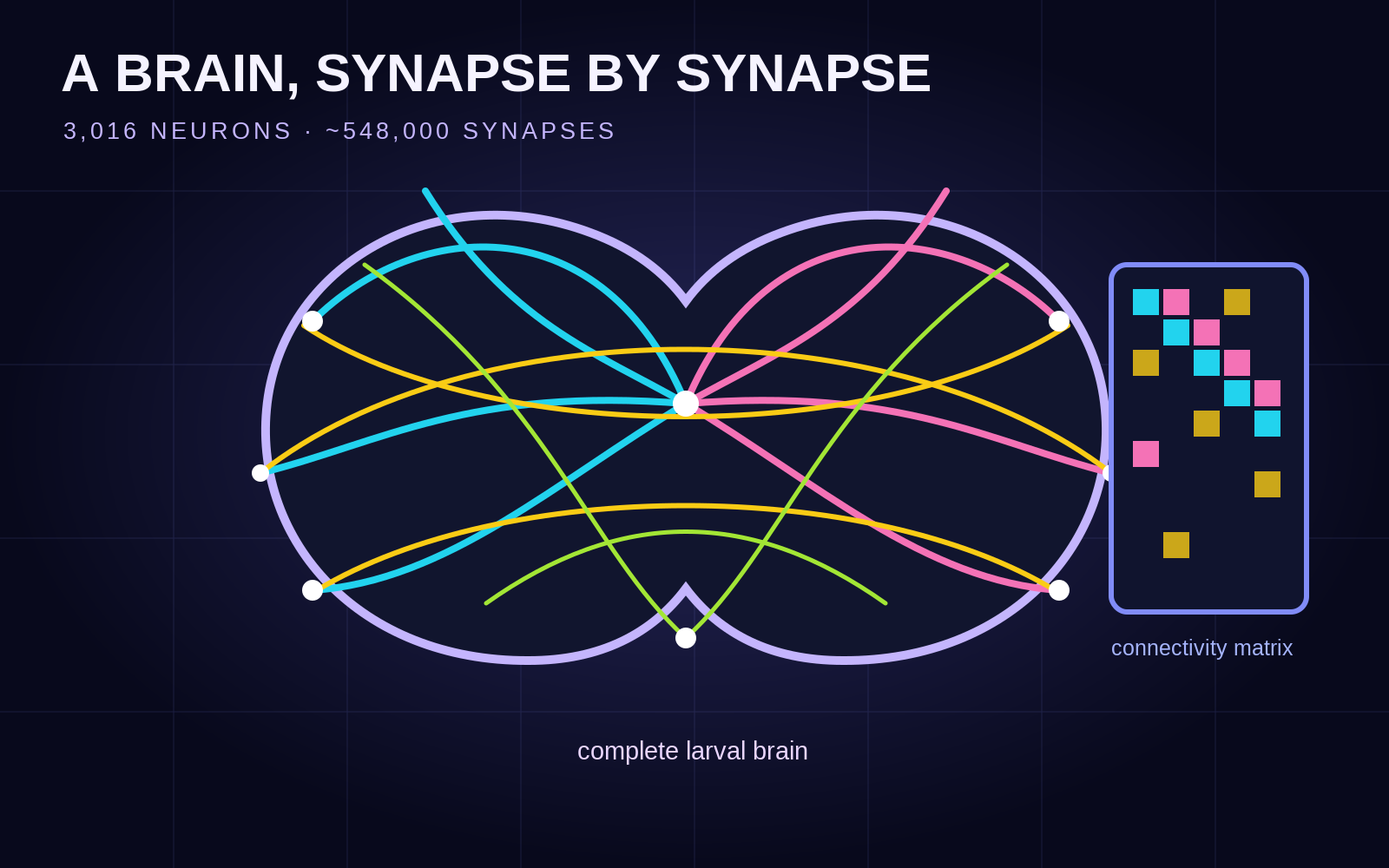 Illustration🧬 Biology
The First Complete Connectome of an Insect Brain
Researchers reconstructed all 3,016 neurons and roughly 548,000 synapses in a fruit-fly larva's brain, producing the first complete synaptic-resolution wiring map of an insect brain capable of complex behavior.
Read more →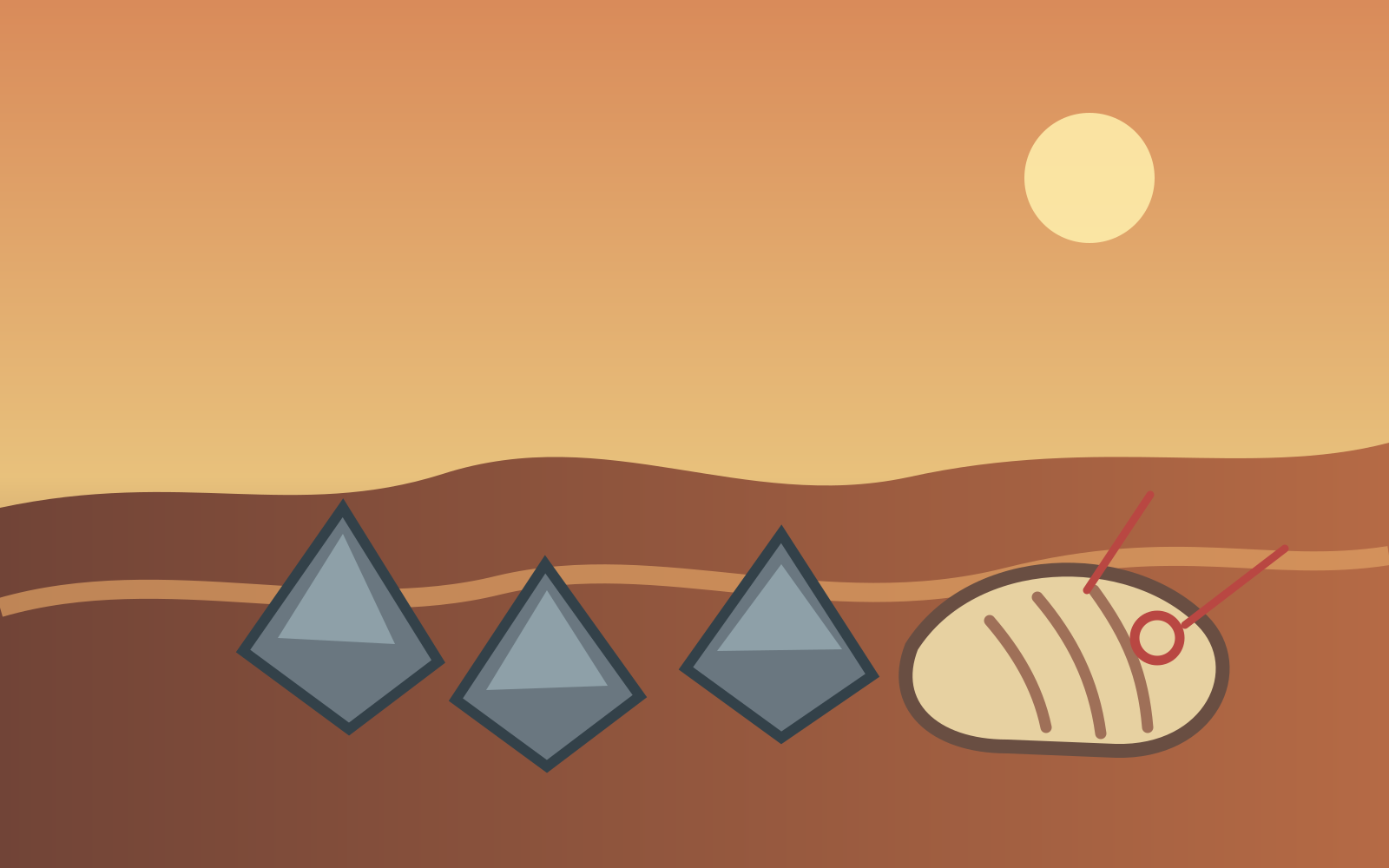 Illustration🏺 Archaeology
Oldowan Tools at Nyayanga Butchered Hippos
At Nyayanga in Kenya, researchers documented roughly 2.9-million-year-old Oldowan tools together with animal bones bearing evidence of butchery, including hippopotamid remains.
Read more →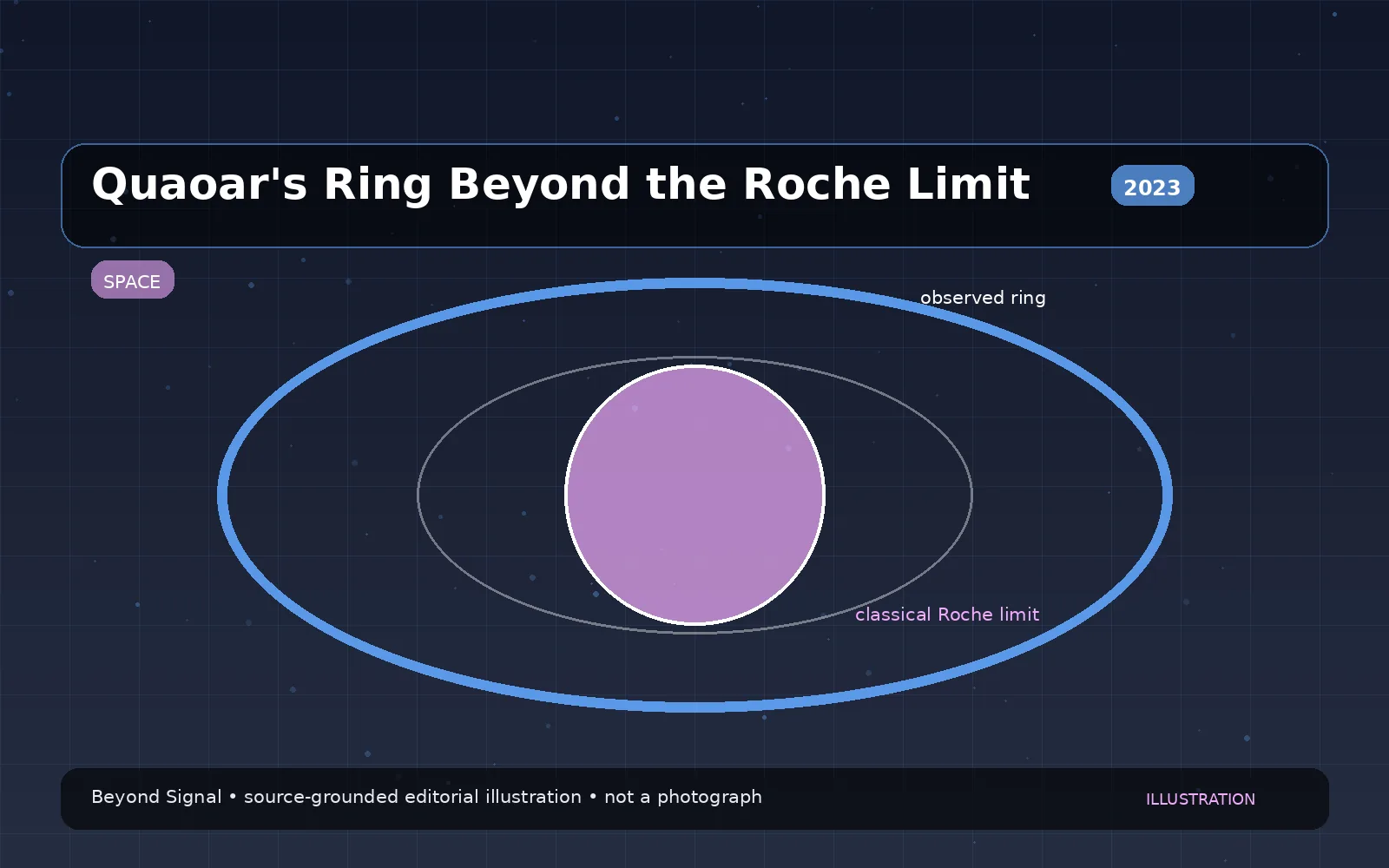 Illustration🌌 Space
Quaoar's Ring Beyond the Roche Limit
Observations of the dwarf planet Quaoar revealed a dense ring far beyond the classical Roche limit, the distance inside which tidal forces are expected to prevent ring material from assembling into a moon. The ring challenges a simple rule used to explain why planetary rings persist.
Read more →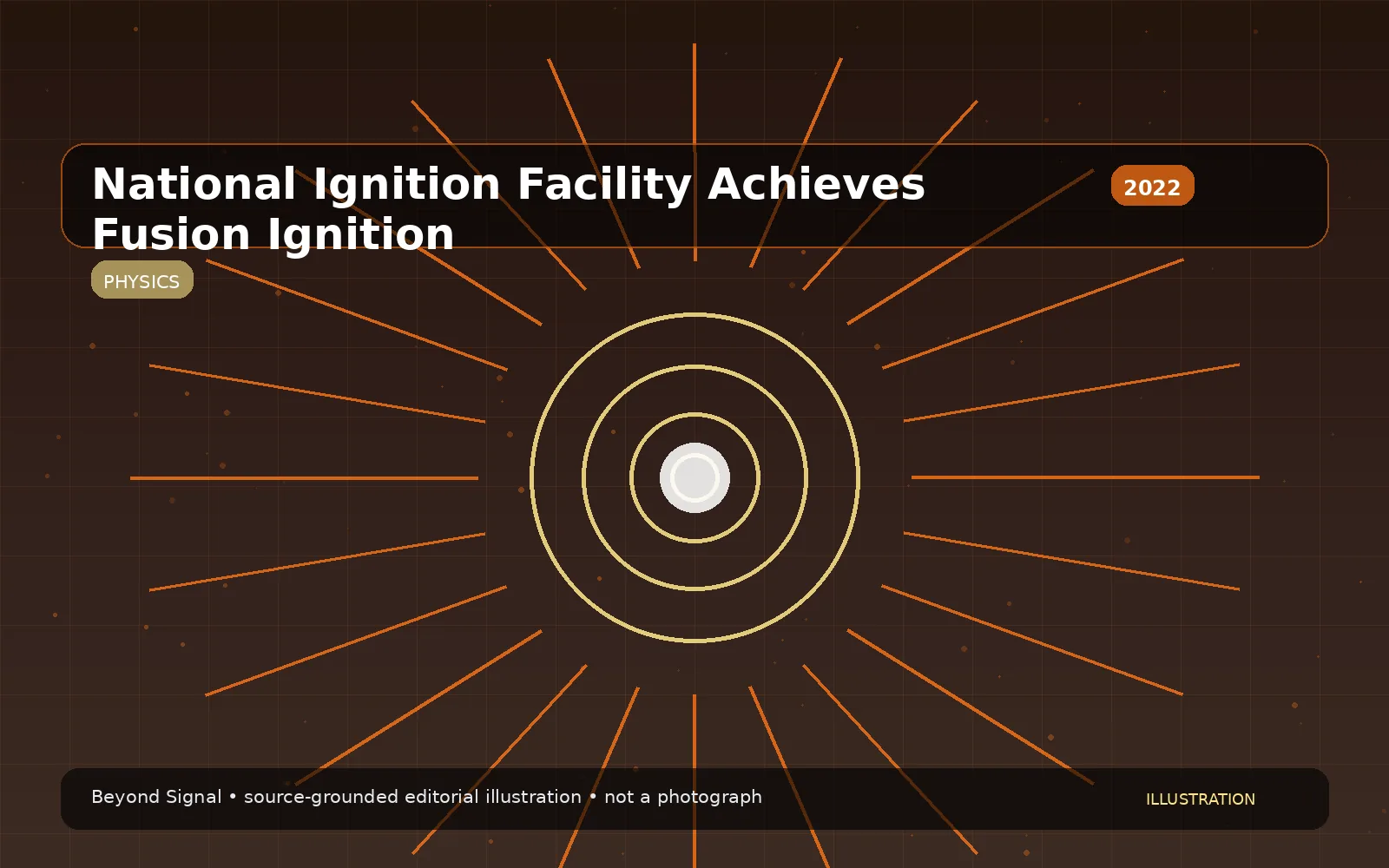 Illustration⚛️ Physics
National Ignition Facility Achieves Fusion Ignition
The National Ignition Facility announced the first controlled fusion experiment to produce more fusion energy from a target than the laser energy delivered to it. The December 5 shot sent 2.05 megajoules of laser energy into a fuel capsule and produced about 3.15 megajoules of fusion output.
Read more → Illustration🧬 Biology
Greenland's Two-Million-Year-Old Environmental DNA
Environmental DNA recovered from mineral-rich sediments at Greenland's Kap København Formation reconstructed a roughly two-million-year-old ecosystem containing mastodons, reindeer, hares, geese, plants, and marine organisms. The fragmented DNA extended the known survival limit of ancient genetic material by about one million years.
Read more → ⚛️ Physics
Fusion Ignition at the NIF
For the first time, a fusion reaction produced more energy than the laser energy delivered to the fuel — crossing the long-sought ignition threshold.
Read more →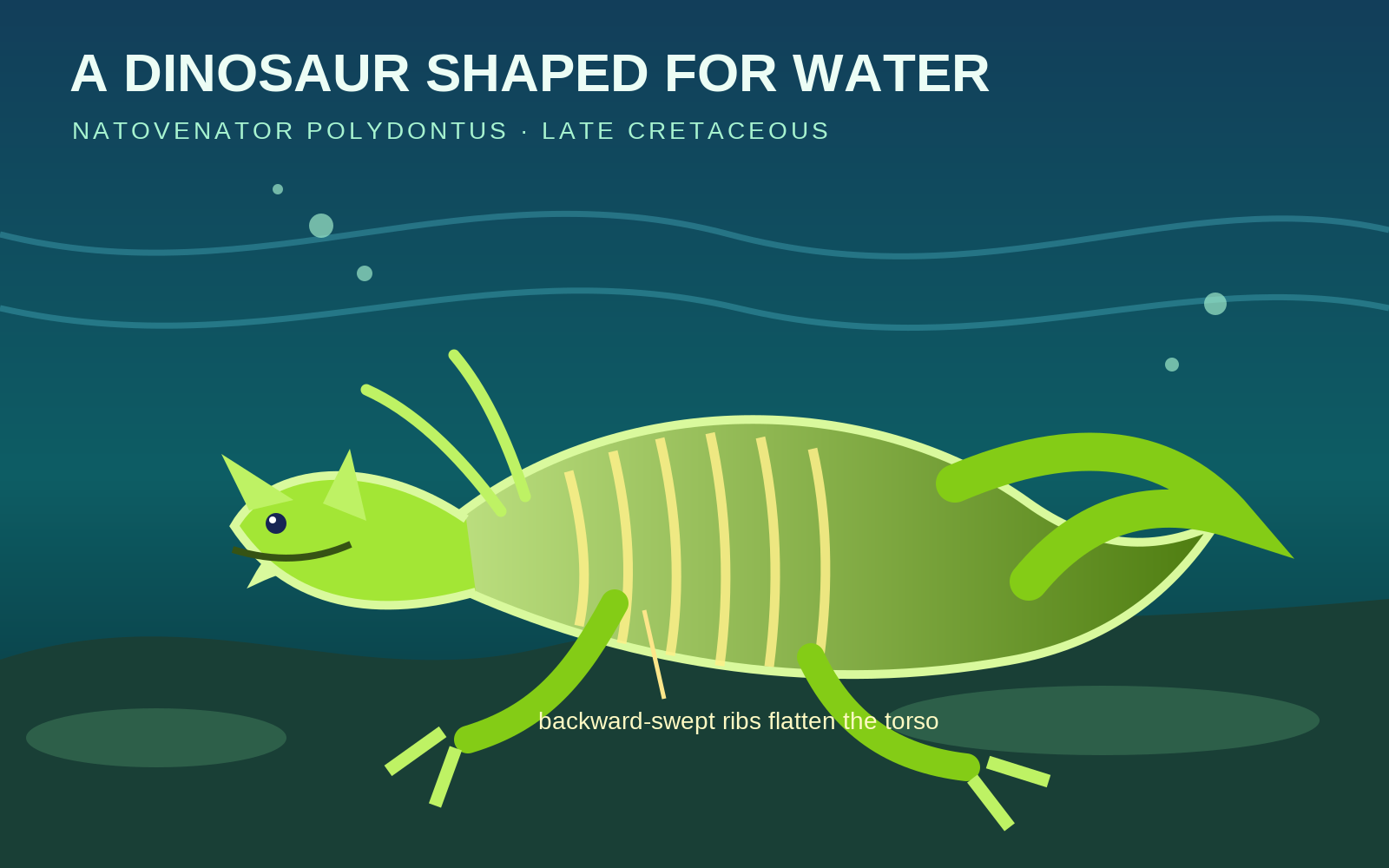 Illustration🦕 Dinosaurs & Fossils
Natovenator, a Streamlined Swimming Dinosaur
A well-articulated dromaeosaurid skeleton from Mongolia preserved backward-swept ribs and a flattened torso, providing the first compelling evidence of a streamlined body in a non-avian theropod dinosaur.
Read more →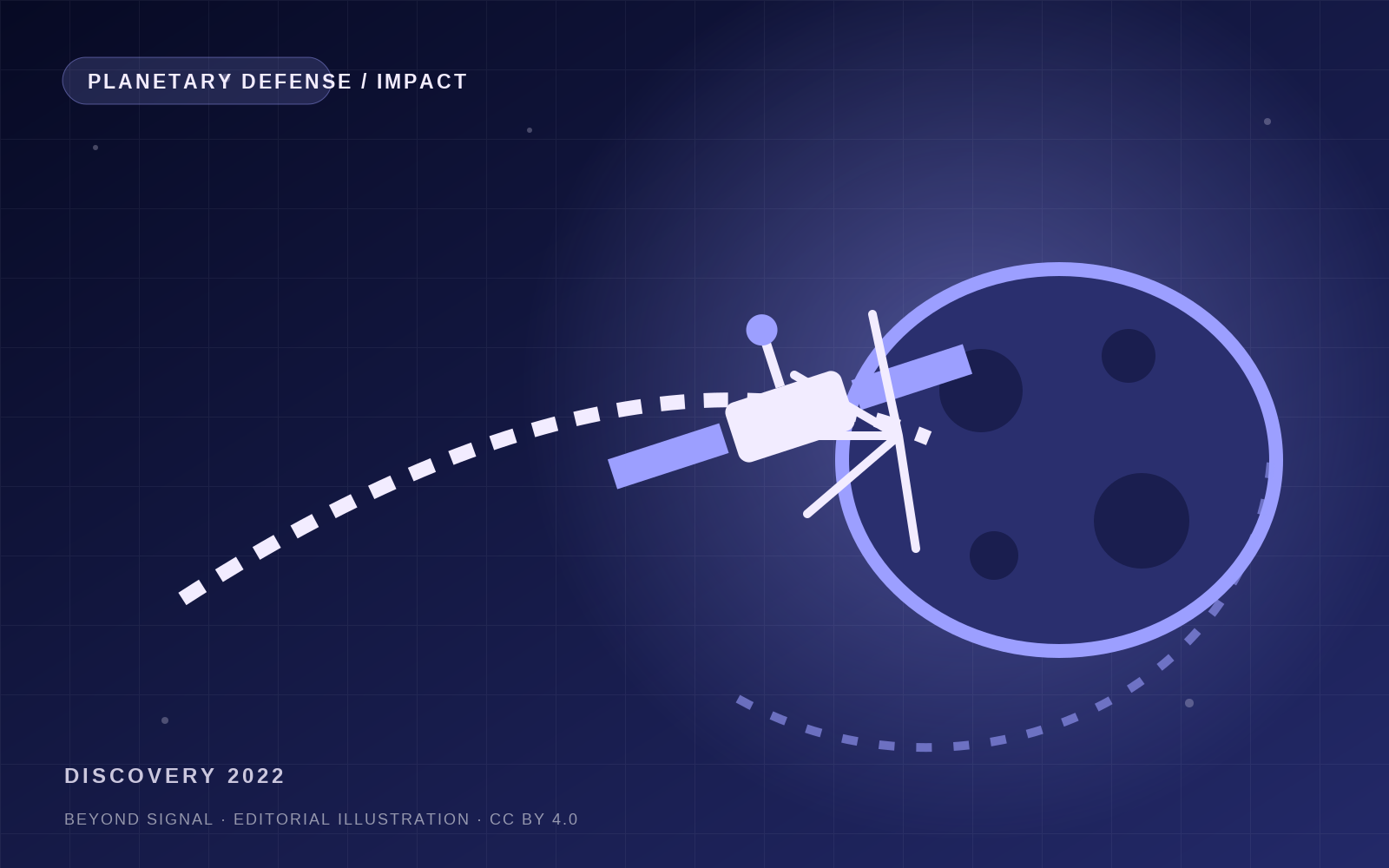 Illustration🌌 Space
DART Successfully Changes an Asteroid's Orbit
Observations confirmed that NASA's DART spacecraft shortened Dimorphos's orbit around Didymos by roughly 32 minutes, proving that a kinetic impactor can measurably deflect an asteroid.
Read more → Illustration🌌 Space
Webb Detects Carbon Dioxide in WASP-39 b’s Atmosphere
JWST transmission spectroscopy delivered the first unambiguous carbon-dioxide detection in an exoplanet atmosphere, measuring a strong 4.3-micrometre absorption feature in the hot gas giant WASP-39 b.
Read more →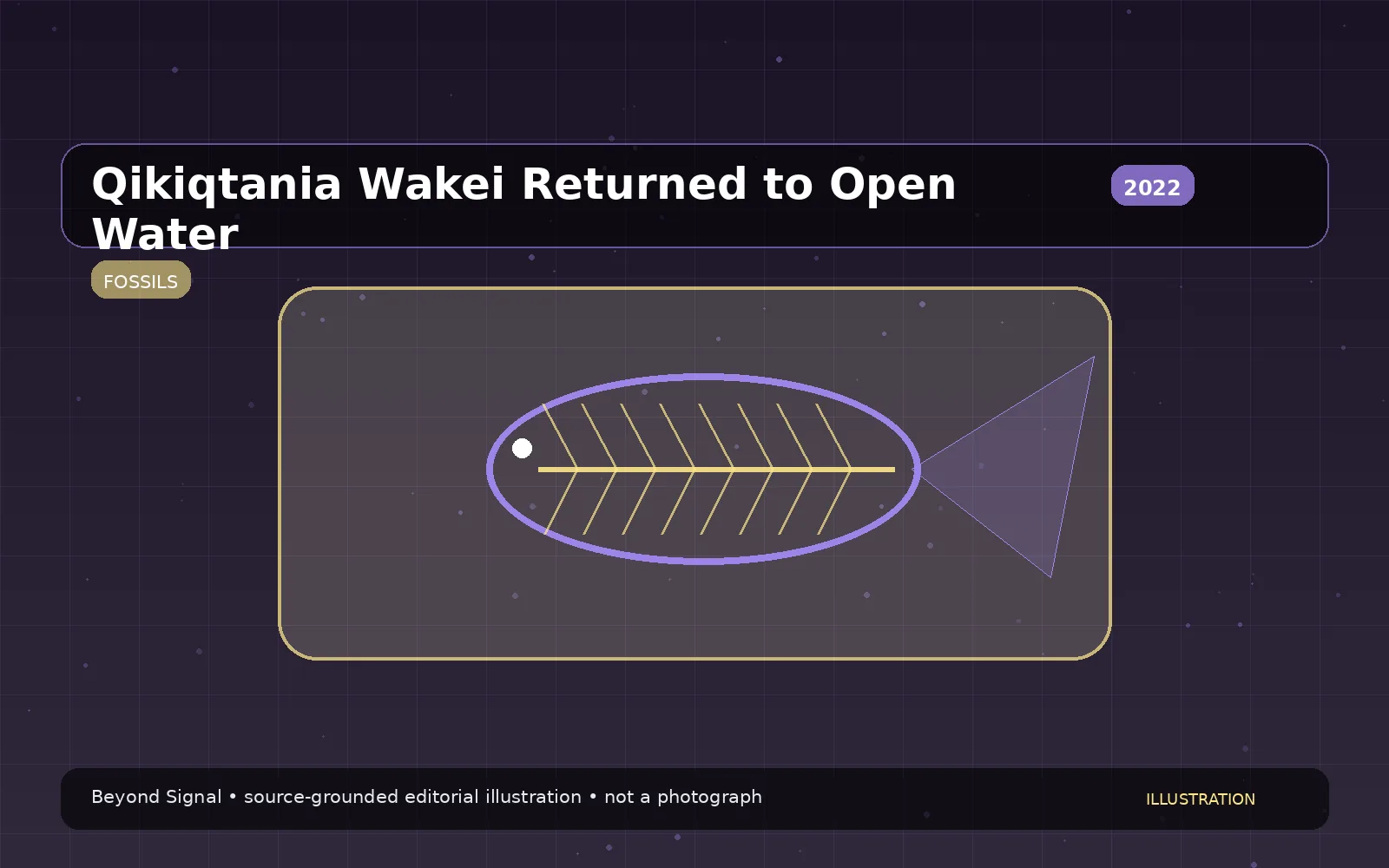 Illustration🦕 Dinosaurs & Fossils
Qikiqtania Wakei Returned to Open Water
A Late Devonian fossil from Nunavut revealed Qikiqtania wakei, a close relative of limbed vertebrates whose pectoral fin was specialized for swimming rather than supporting the body on a hard surface. The animal shows that evolution near the fish-to-tetrapod transition explored more than one ecological direction.
Read more →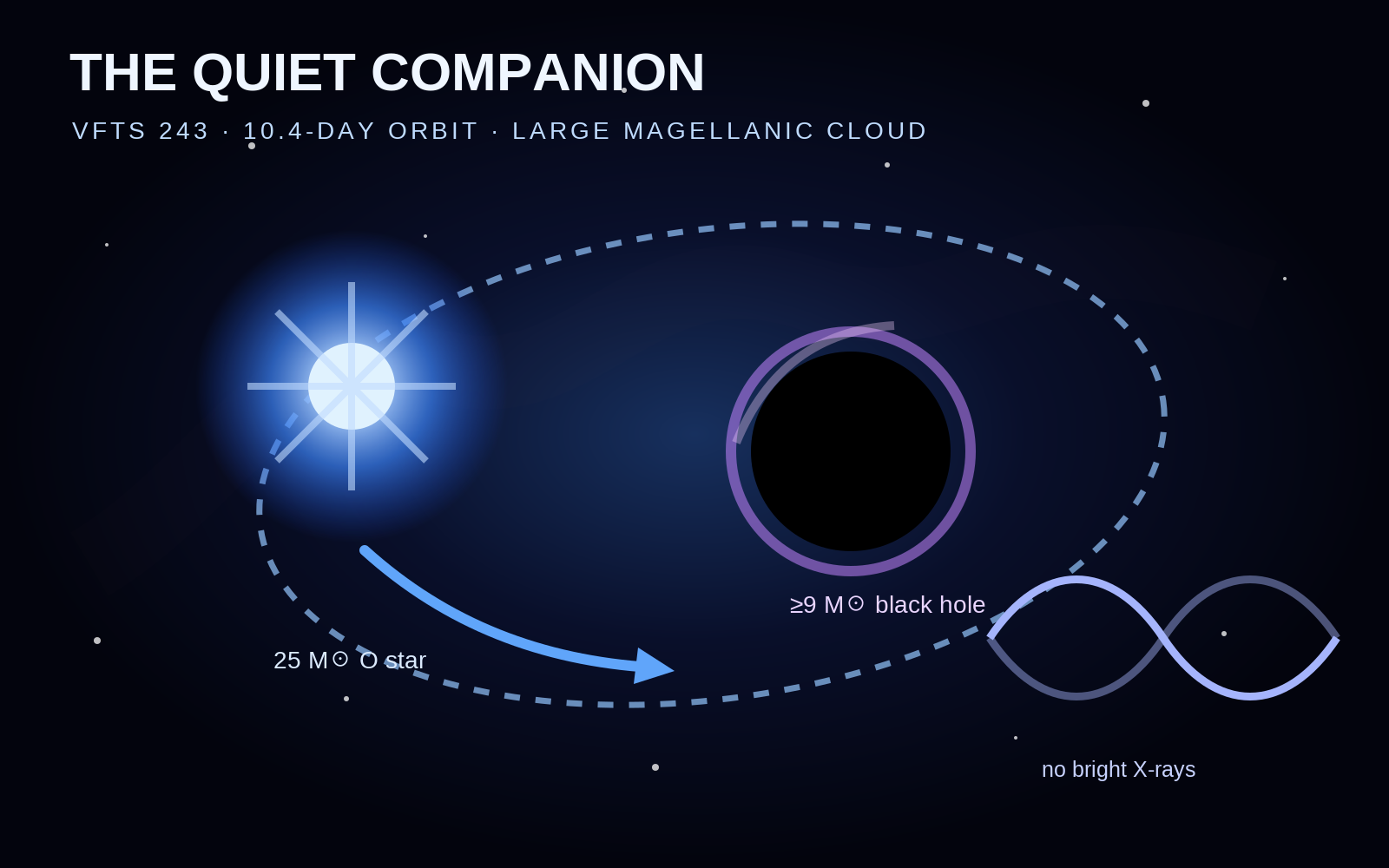 Illustration🌌 Space
VFTS 243, an Extragalactic Dormant Black Hole
Six years of stellar spectra revealed that the massive star VFTS 243 orbits an unseen companion of at least nine solar masses, making the companion the first unambiguous X-ray-quiet stellar black hole identified outside the Milky Way at the time.
Read more →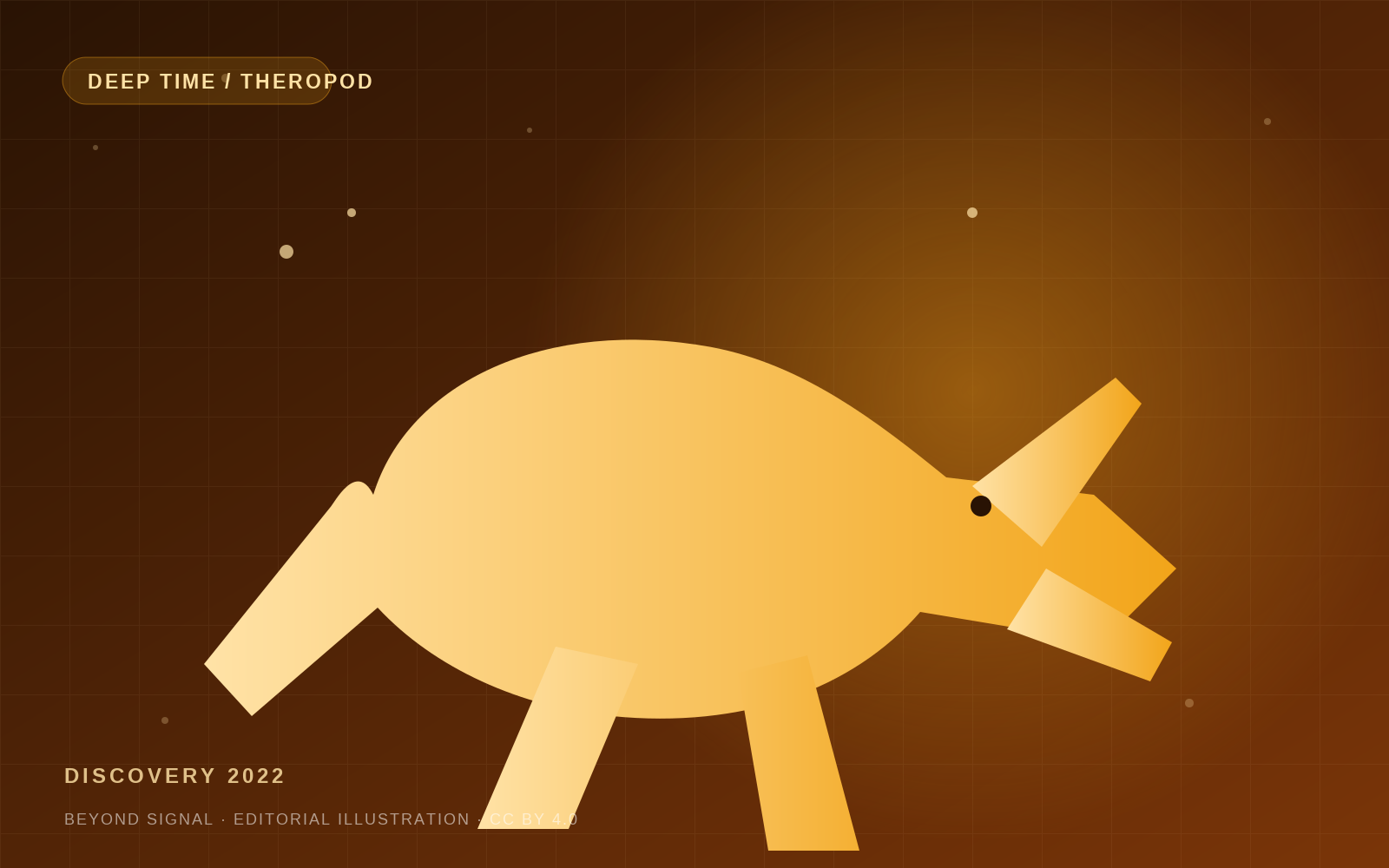 Illustration🦕 Dinosaurs & Fossils
Meraxes Gigas, a Giant Short-Armed Predator
An unusually complete giant predatory dinosaur from Patagonia revealed that reduced forelimbs evolved independently in several large theropod lineages.
Read more → Illustration⚛️ Physics
LHCb’s Strange Pentaquark Candidate
LHCb reported a high-significance resonance consistent with the first pentaquark candidate containing a strange quark, adding a new case to the study of exotic combinations of quarks.
Read more →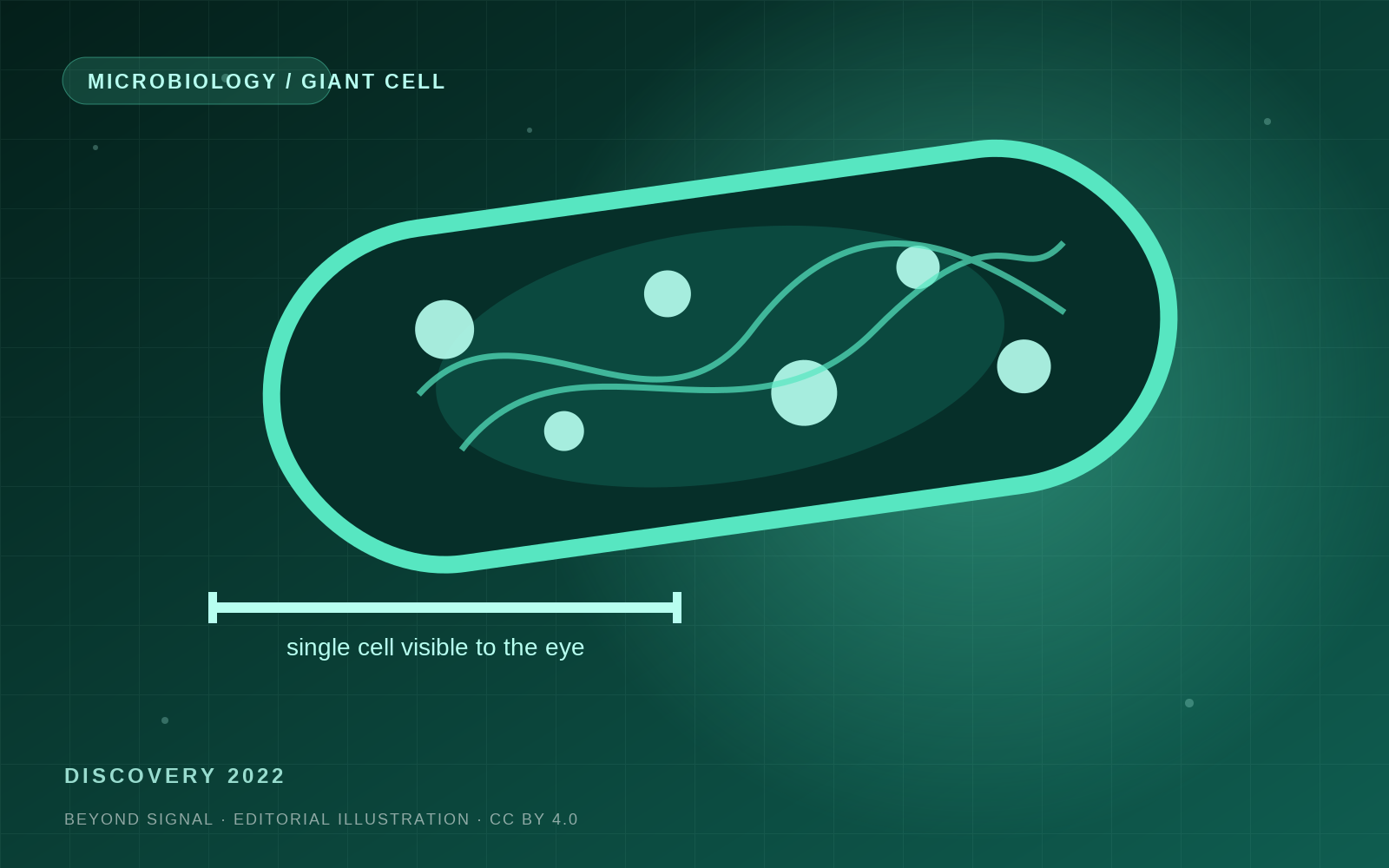 Illustration🧬 Biology
Thiomargarita Magnifica, the Giant Bacterium
A filament-shaped bacterium from Caribbean mangroves was shown to grow up to about two centimetres long, making a single bacterial cell visible to the unaided eye.
Read more →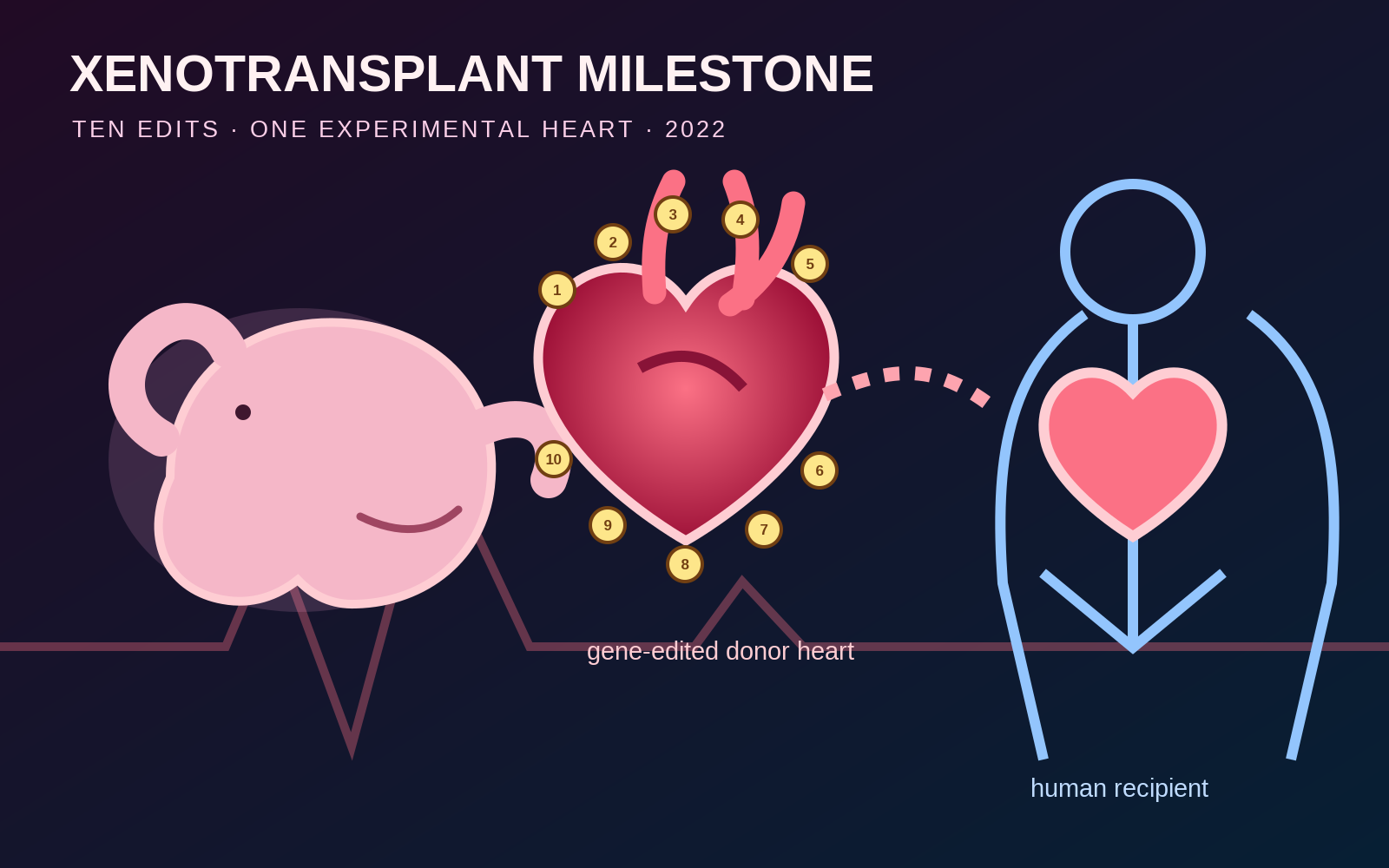 Illustration🤖 Technology
The First Gene-Edited Pig Heart Transplant in a Living Human
Surgeons transplanted a heart from a pig carrying ten targeted genetic modifications into a living adult under compassionate-use authorization, and the organ supported circulation without immediate rejection for several weeks.
Read more → 🌌 Space
Image of Our Galaxy's Black Hole (Sgr A*)
The first image of the supermassive black hole at the center of our own galaxy, 27,000 light-years away.
Read more → Illustration🪸 Ocean Discoveries
A Global Ocean Census of RNA Viruses
A metatranscriptomic survey of ocean samples substantially expanded the known RNA virome, reorganizing major evolutionary groups and revealing that marine RNA viruses are both abundant and deeply diverse.
Read more →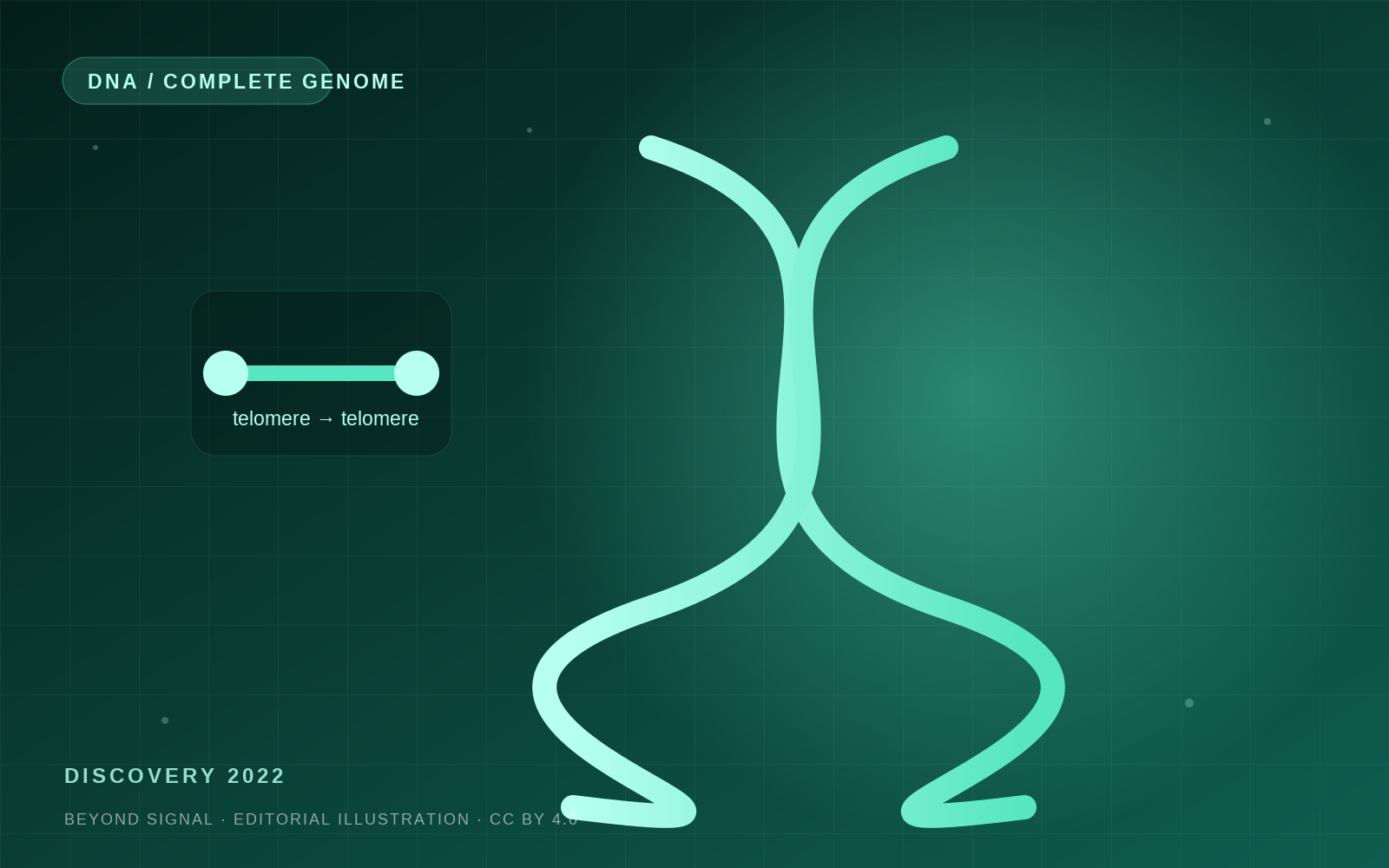 Illustration🧬 Biology
The First Gapless Human Genome Sequence
The Telomere-to-Telomere Consortium filled the remaining gaps in the human reference genome, adding nearly 200 million DNA letters and complete views of centromeres, segmental duplications, and chromosome ends.
Read more → Illustration🪸 Ocean Discoveries
Shackleton's Endurance Found in the Weddell Sea
The Endurance22 expedition located Sir Ernest Shackleton's ship Endurance upright on the Weddell Sea floor at 3,008 metres, roughly four miles south of Captain Frank Worsley's recorded sinking position. The unusually intact wooden wreck was documented without being touched under Antarctic Treaty protection.
Read more → Illustration🏺 Archaeology
Modern Humans at Grotte Mandrin 54,000 Years Ago
Teeth, stratigraphy, and stone-tool layers at Grotte Mandrin indicate a short Homo sapiens presence in southeastern France about 54,000 years ago, followed by renewed Neanderthal occupation.
Read more →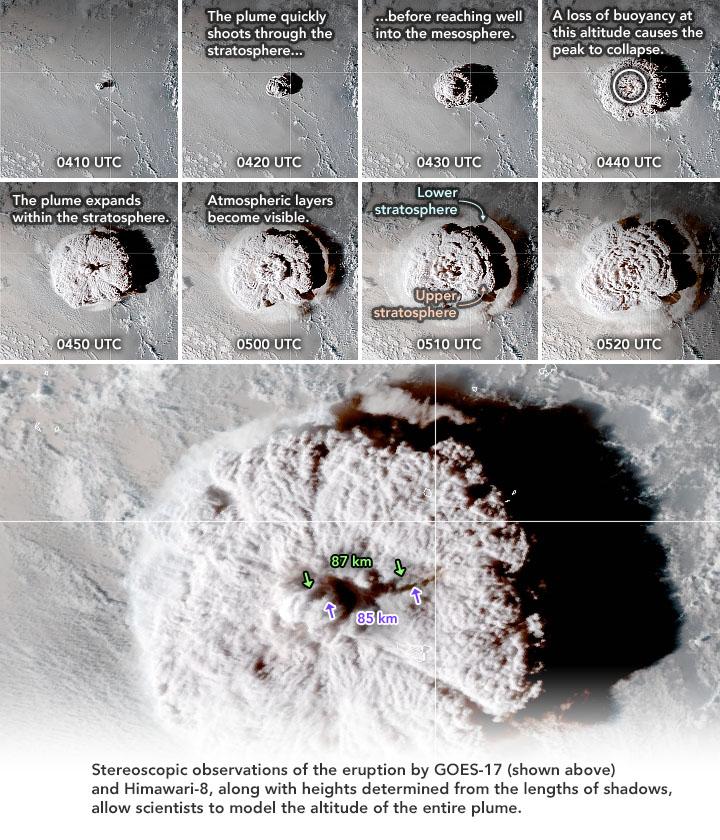 🌋 Earth Science
The Hunga Tonga Eruption
An undersea volcano produced the tallest eruption plume ever recorded — reaching the mesosphere — and a pressure wave that circled the globe.
Read more →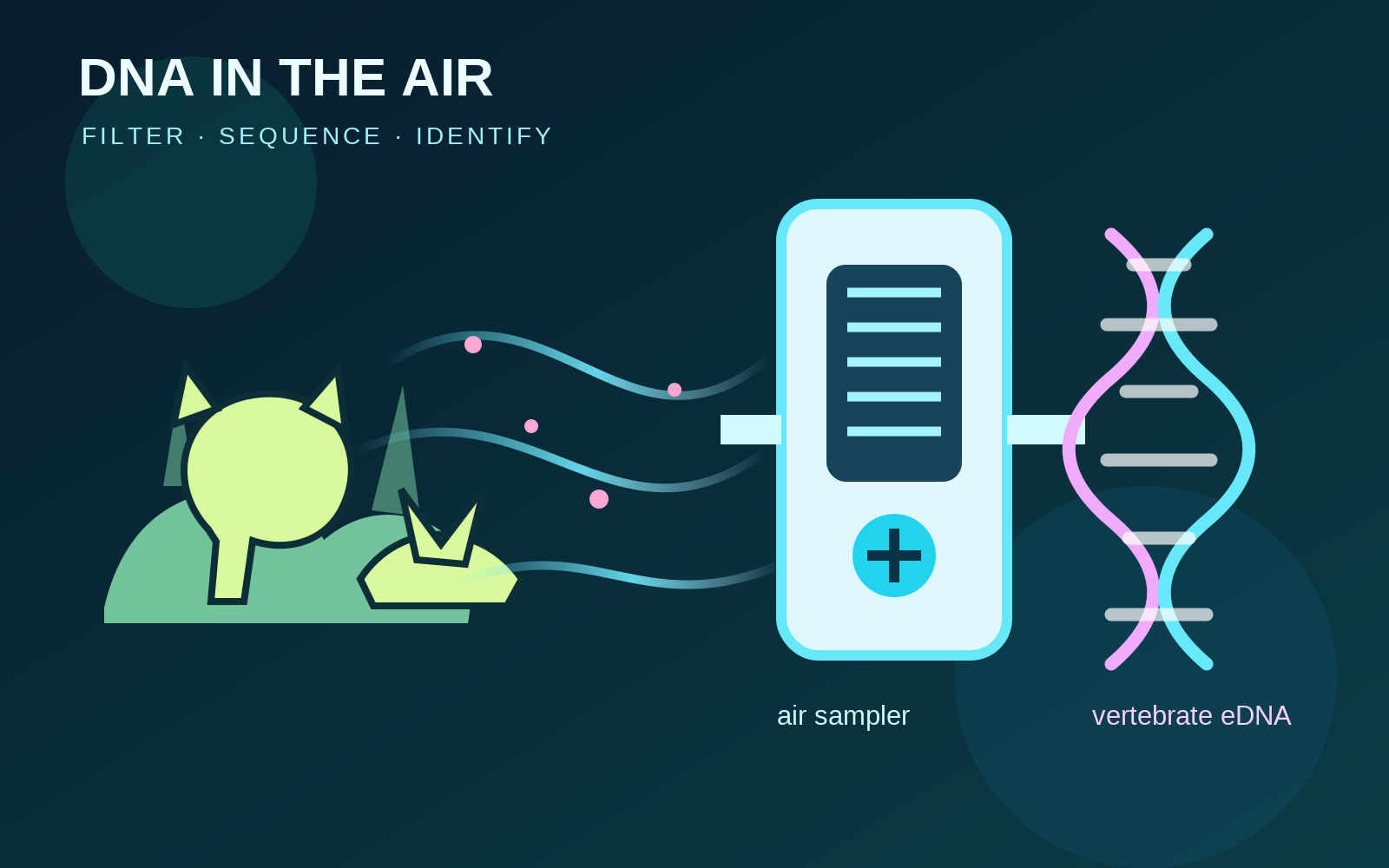 Illustration🧬 Biology
Airborne eDNA Reveals Terrestrial Vertebrates
Two independent zoo studies showed that vertebrate DNA can be collected directly from air and matched to nearby species, establishing airborne eDNA as a practical new route for surveying terrestrial biodiversity.
Read more →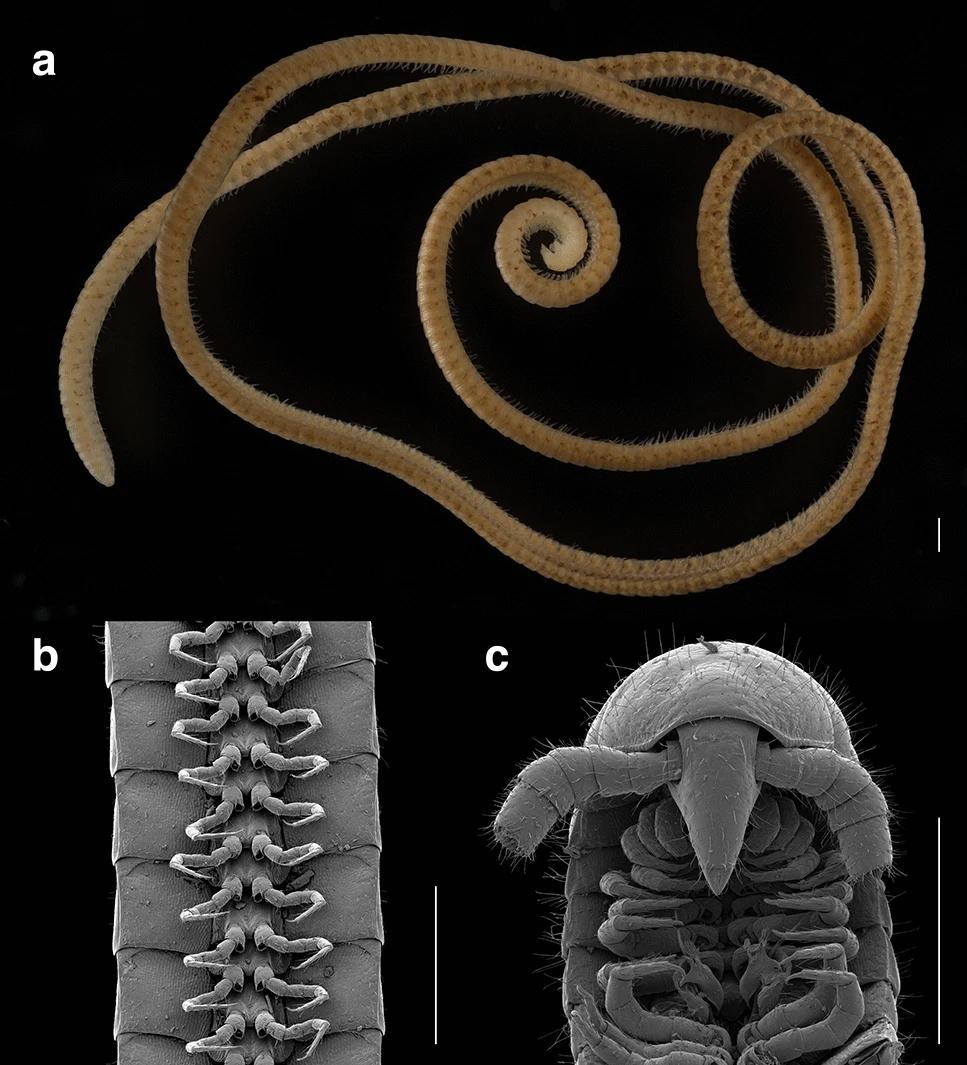 🧬 Biology
The First True Millipede (1,306 Legs)
A pale, eyeless arthropod with up to 1,306 legs — the first millipede ever found that literally has more than a thousand.
Read more →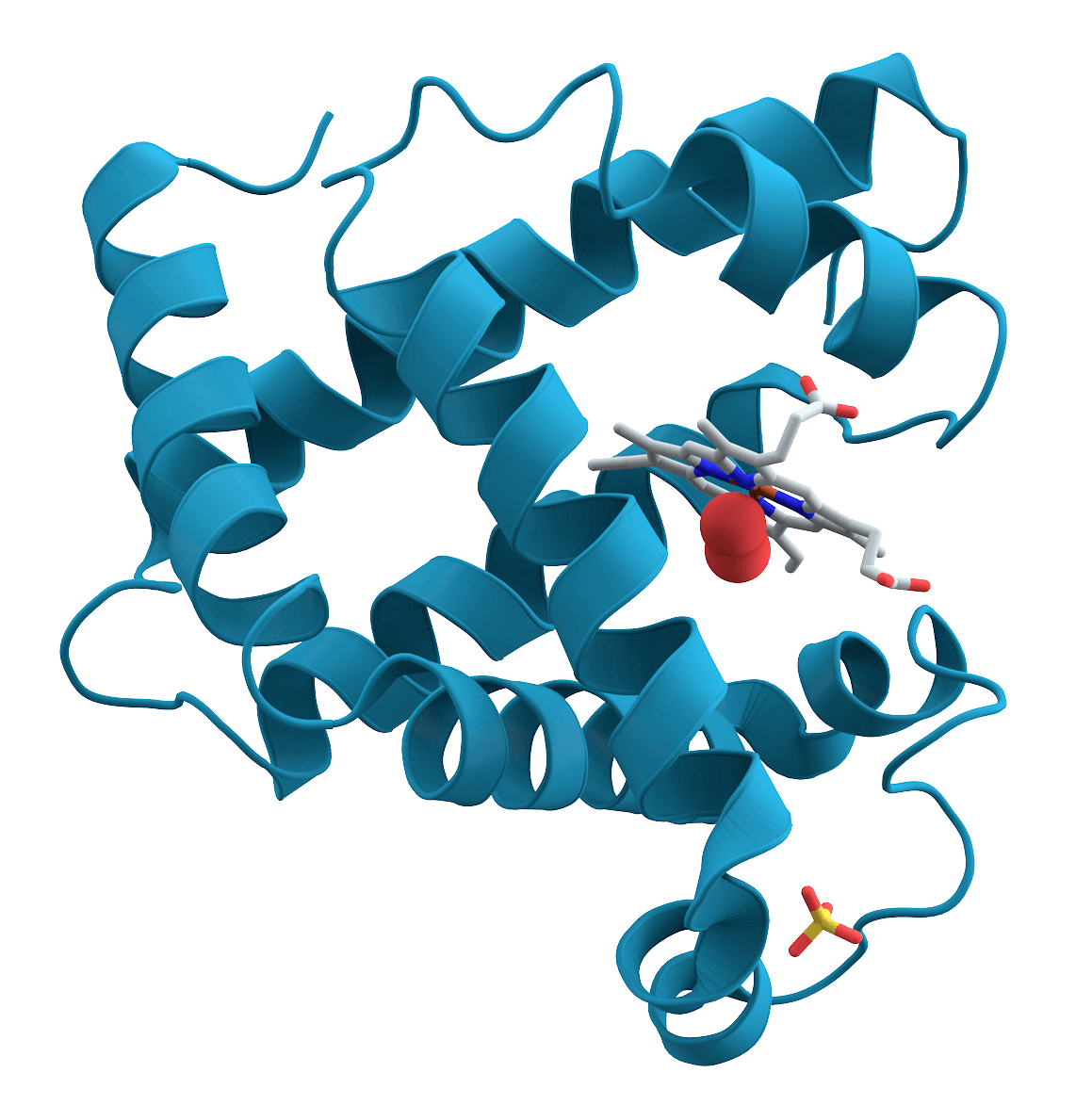 🤖 Technology
AlphaFold Solves Protein Folding
A neural network predicted protein 3D structures from sequence with near-experimental accuracy — cracking a 50-year grand challenge in biology.
Read more →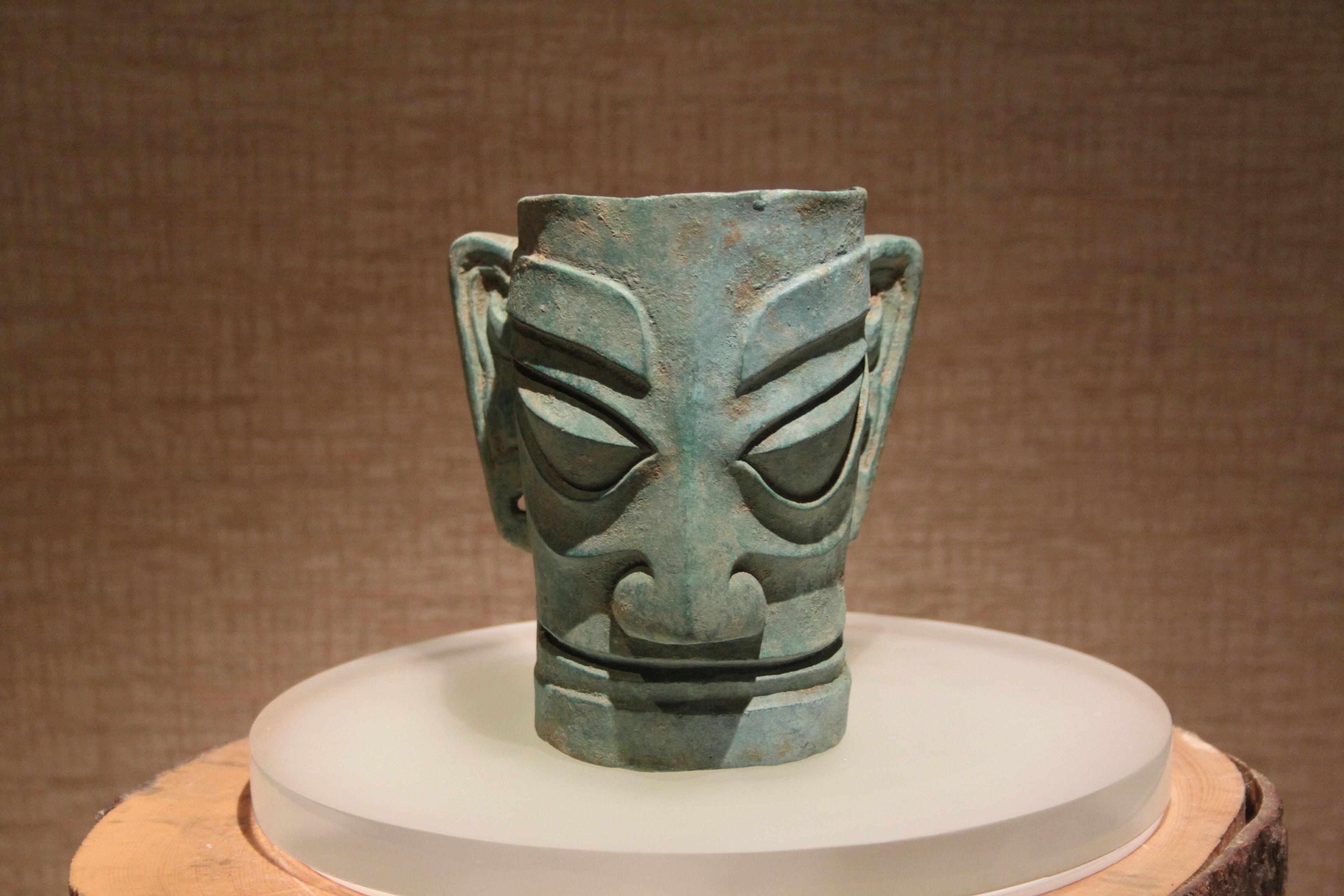 🏺 Archaeology
New Sanxingdui Sacrificial Pits
Six newly opened pits yielded thousands of artifacts — gold masks, bronze trees, and ivory — from the mysterious 3,000-year-old Shu kingdom.
Read more → Representative🪸 Ocean Discoveries
A 500-Metre Detached Coral Reef
The first detached reef found in over a century — taller than the Empire State Building at ~500 m, with its peak just 40 m below the surface.
Read more → 🪸 Ocean Discoveries
The Deepest Octopus Ever Seen
A Dumbo octopus filmed at 6,957 m in the Java Trench — nearly 2 km deeper than any confirmed octopus before, pushing the group into the hadal zone.
Read more →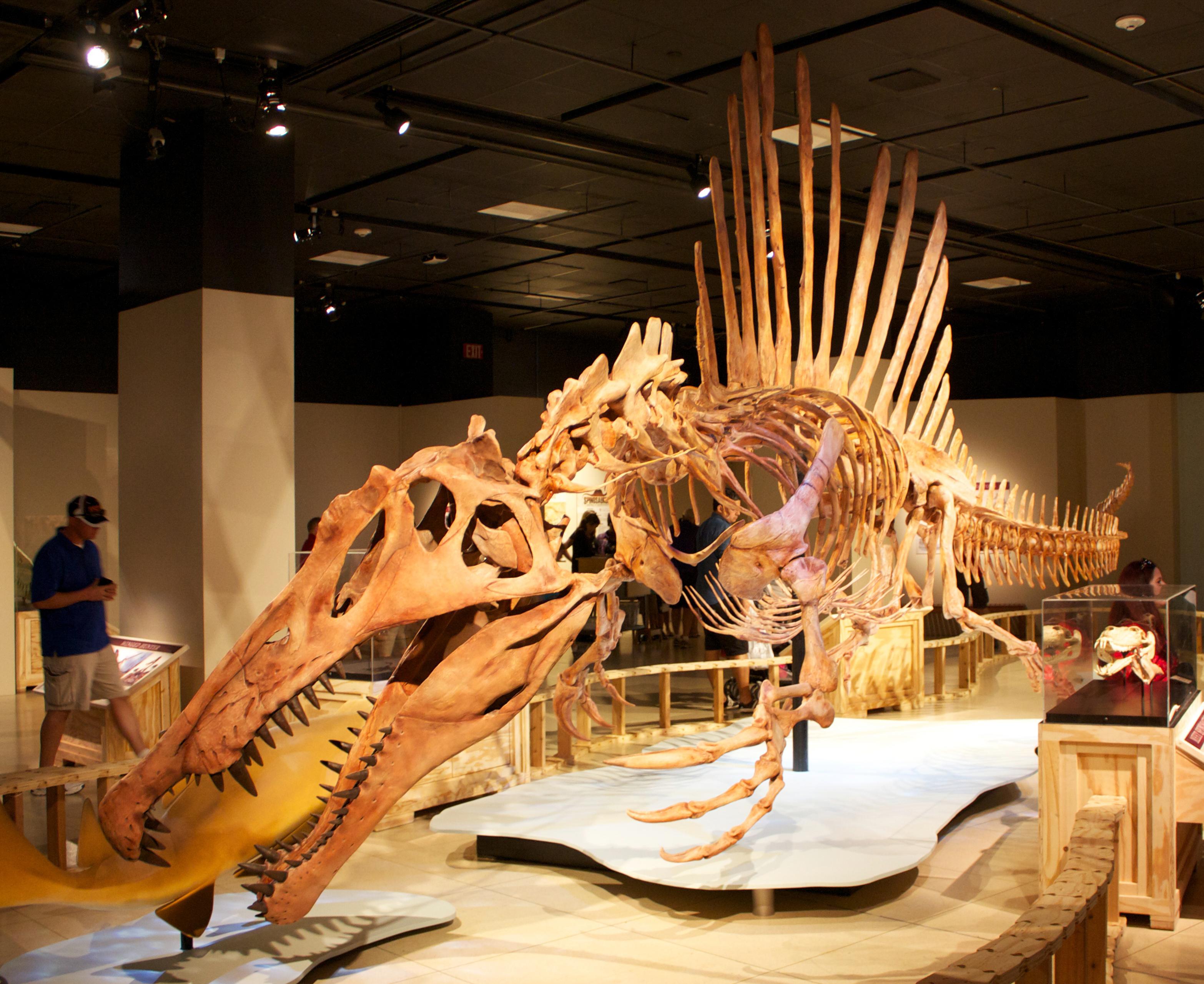 🦕 Dinosaurs & Fossils
Spinosaurus: the Swimming Dinosaur
A near-complete fossil tail showed Spinosaurus had a fin-like paddle — the strongest evidence yet of a swimming, water-propelled dinosaur.
Read more →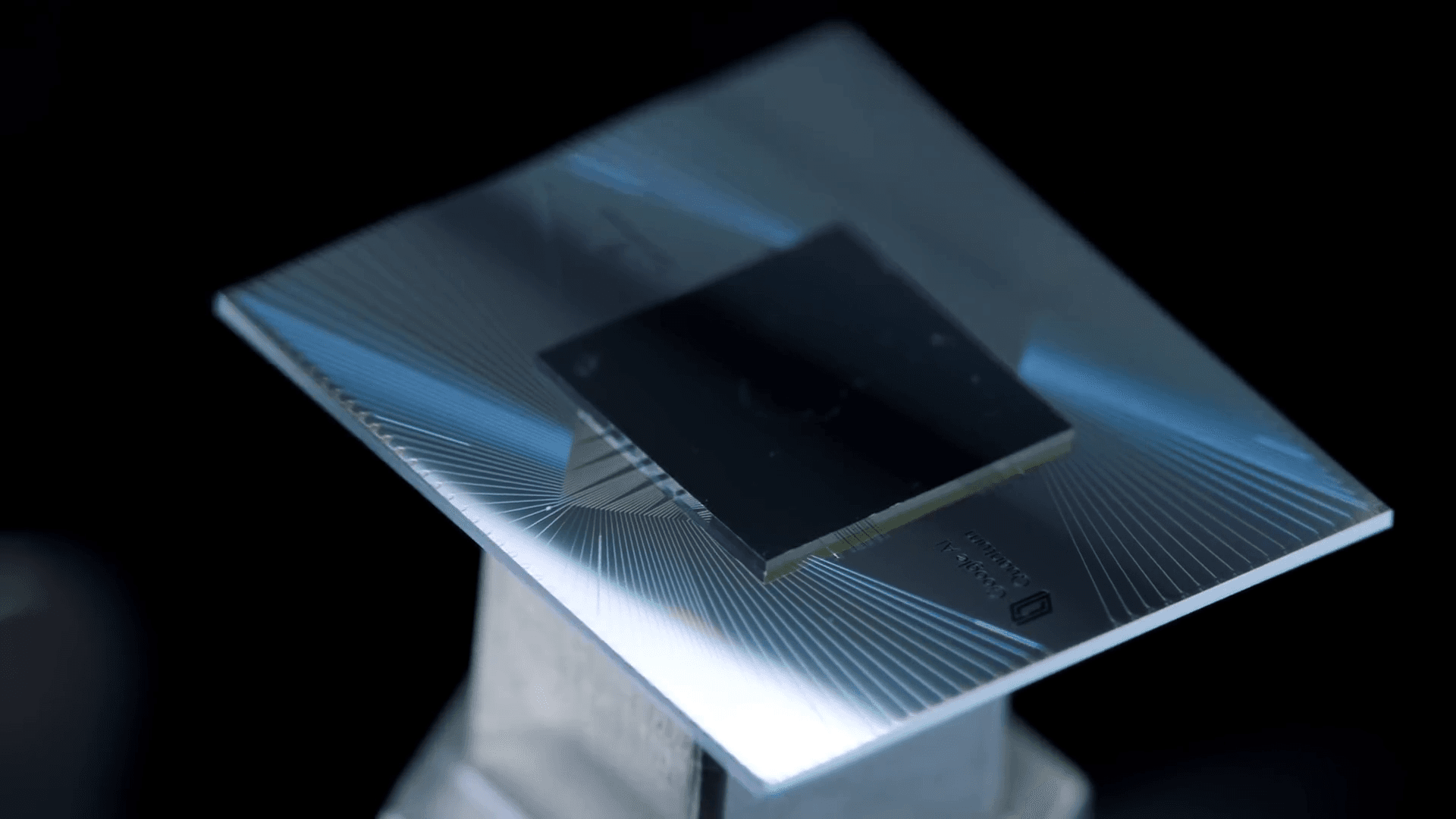 🤖 Technology
Quantum 'Supremacy' with Sycamore
A 53-qubit processor performed in minutes a sampling task estimated to take a classical supercomputer thousands of years.
Read more → 🌌 Space
First Image of a Black Hole (M87*)
Humanity's first direct image of a black hole — a glowing ring of light around the shadow of M87*, 6.5 billion solar masses.
Read more → 🪸 Ocean Discoveries
The Mariana Snailfish, Deepest Fish
A small, translucent snailfish that thrives near 8,000 m in the Mariana Trench — the deepest-living fish ever described.
Read more → 🌌 Space
The TRAPPIST-1 Planetary System
Seven Earth-sized planets circling a cool red dwarf 40 light-years away — three of them in the habitable zone.
Read more → 🪸 Ocean Discoveries
"Casper" the Ghost Octopus
A ghostly, pigmentless octopus filmed at 4,290 m off Hawaii — likely a previously unknown genus living deeper than any known finned octopod.
Read more →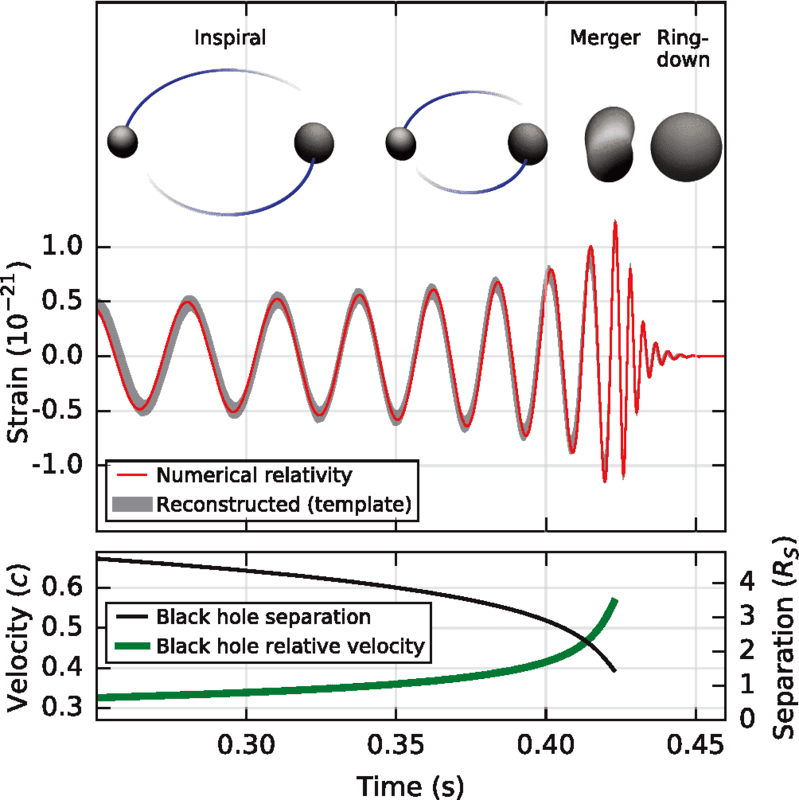 ⚛️ Physics
First Detection of Gravitational Waves
LIGO recorded the spacetime ripple from two black holes colliding 1.3 billion years ago — confirming a key prediction of general relativity.
Read more →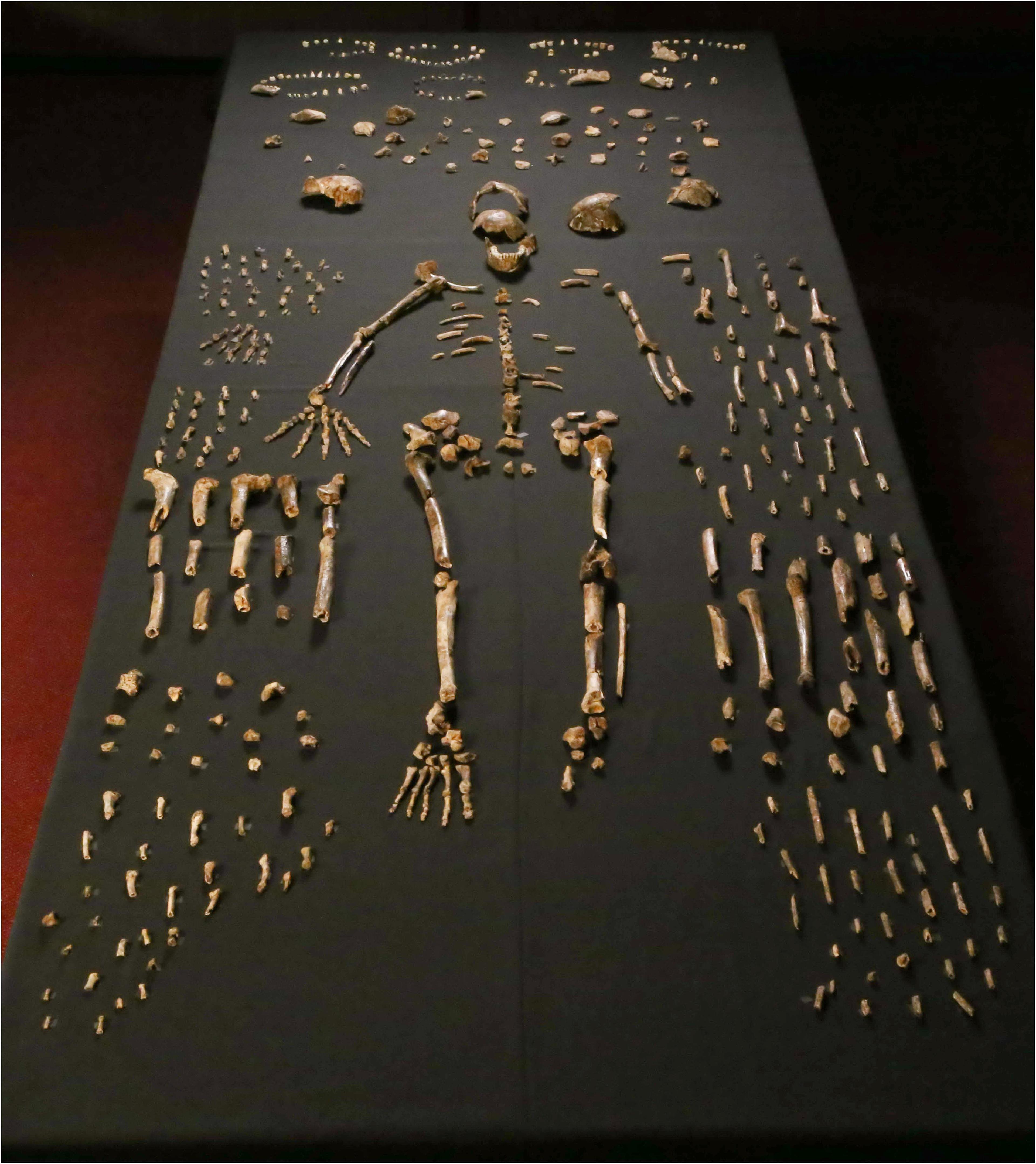 🧬 Biology
Homo naledi, a New Human Relative
More than 1,500 fossil pieces from a deep cave chamber revealed a small-brained human relative with a surprising mix of ancient and modern traits.
Read more →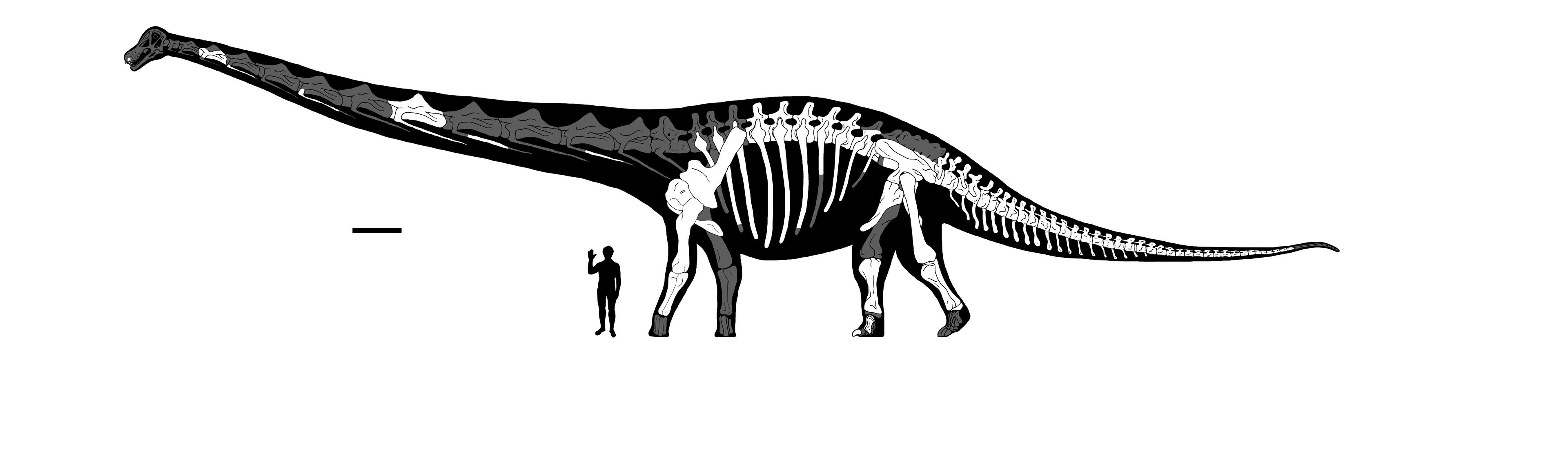 🦕 Dinosaurs & Fossils
Dreadnoughtus, a Colossal Titanosaur
One of the most complete giant dinosaurs ever found — a 26 m sauropod whose skeleton let scientists reliably estimate its ~59-tonne mass.
Read more → Representative🪸 Ocean Discoveries
Giant Squid Filmed in the Deep
The first footage of a live giant squid in its natural deep-sea habitat, ending centuries of the animal being known mostly from carcasses.
Read more →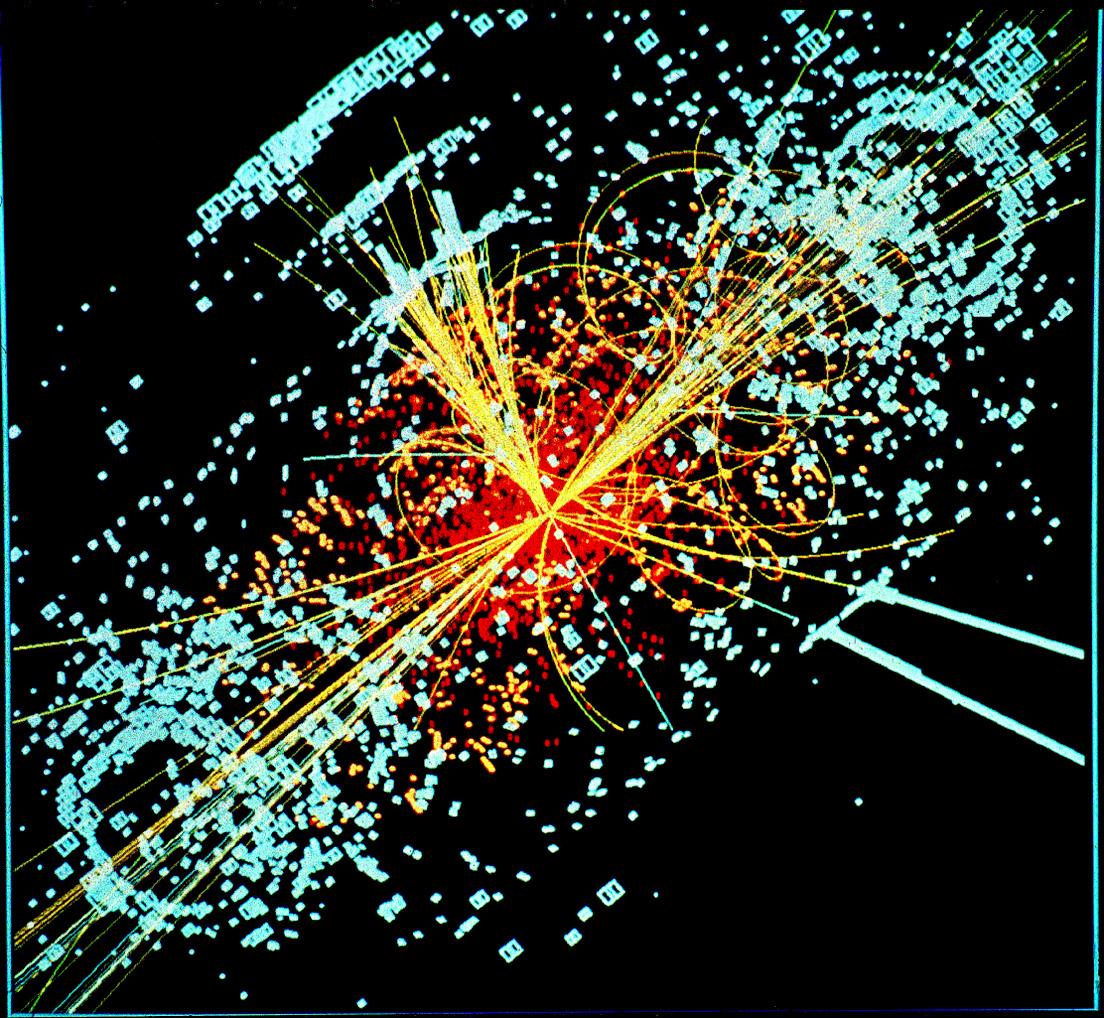 ⚛️ Physics
Discovery of the Higgs Boson
The Large Hadron Collider revealed the particle behind the field that gives other particles mass — the keystone of the Standard Model.
Read more →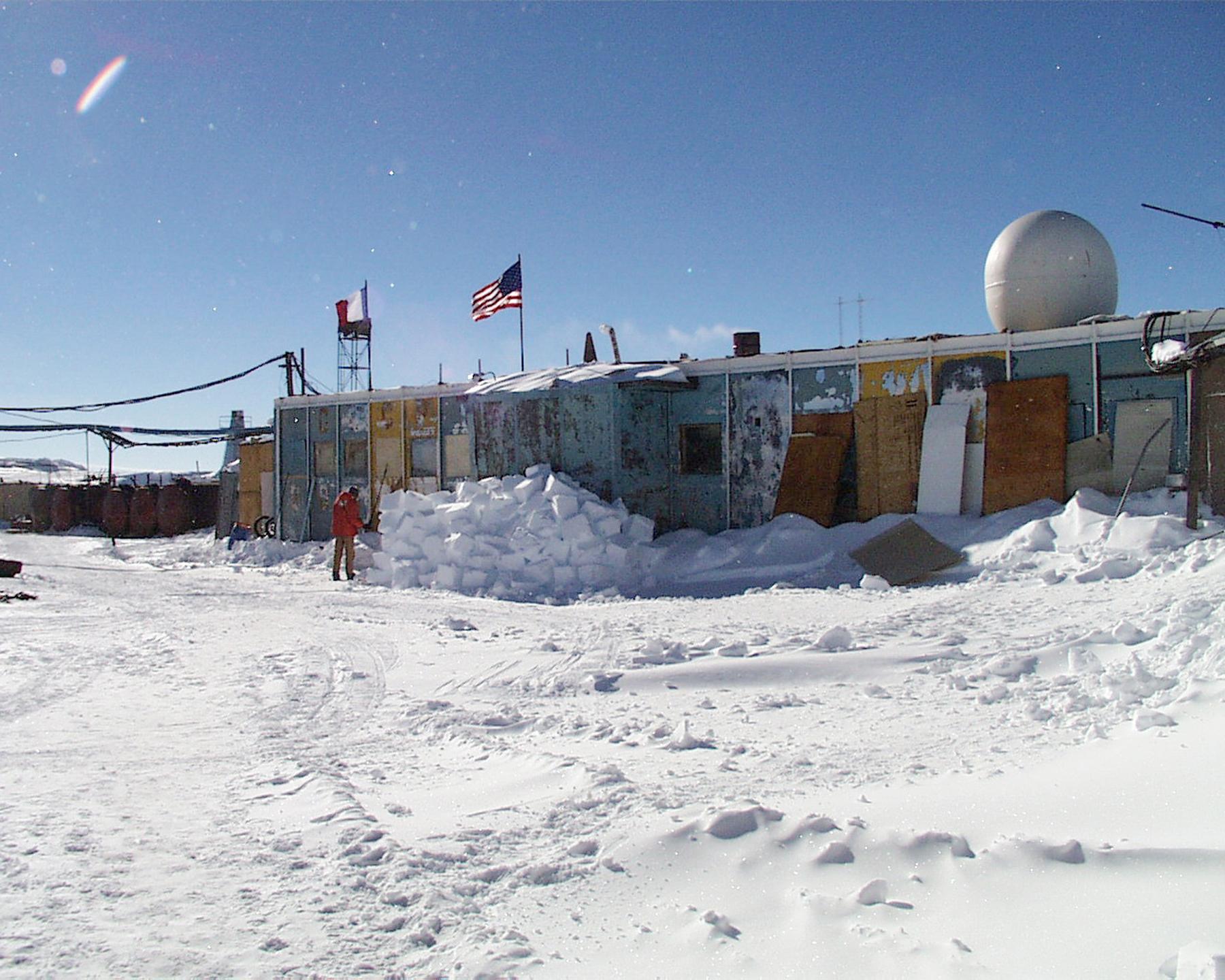 🌋 Earth Science
Reaching Subglacial Lake Vostok
Drillers reached the surface of a vast lake sealed beneath ~3.8 km of Antarctic ice and isolated from the surface for millions of years.
Read more → 🪸 Ocean Discoveries
The Barreleye Fish with a Transparent Head
The first images of a living barreleye — a fish whose transparent, fluid-filled head lets its tubular eyes rotate to peer up through its own skull.
Read more → 🪸 Ocean Discoveries
The Yeti Crab
A blind, silky-clawed crab from hydrothermal vents so distinctive it required an entirely new family — nicknamed the 'yeti crab' for its hairy arms.
Read more →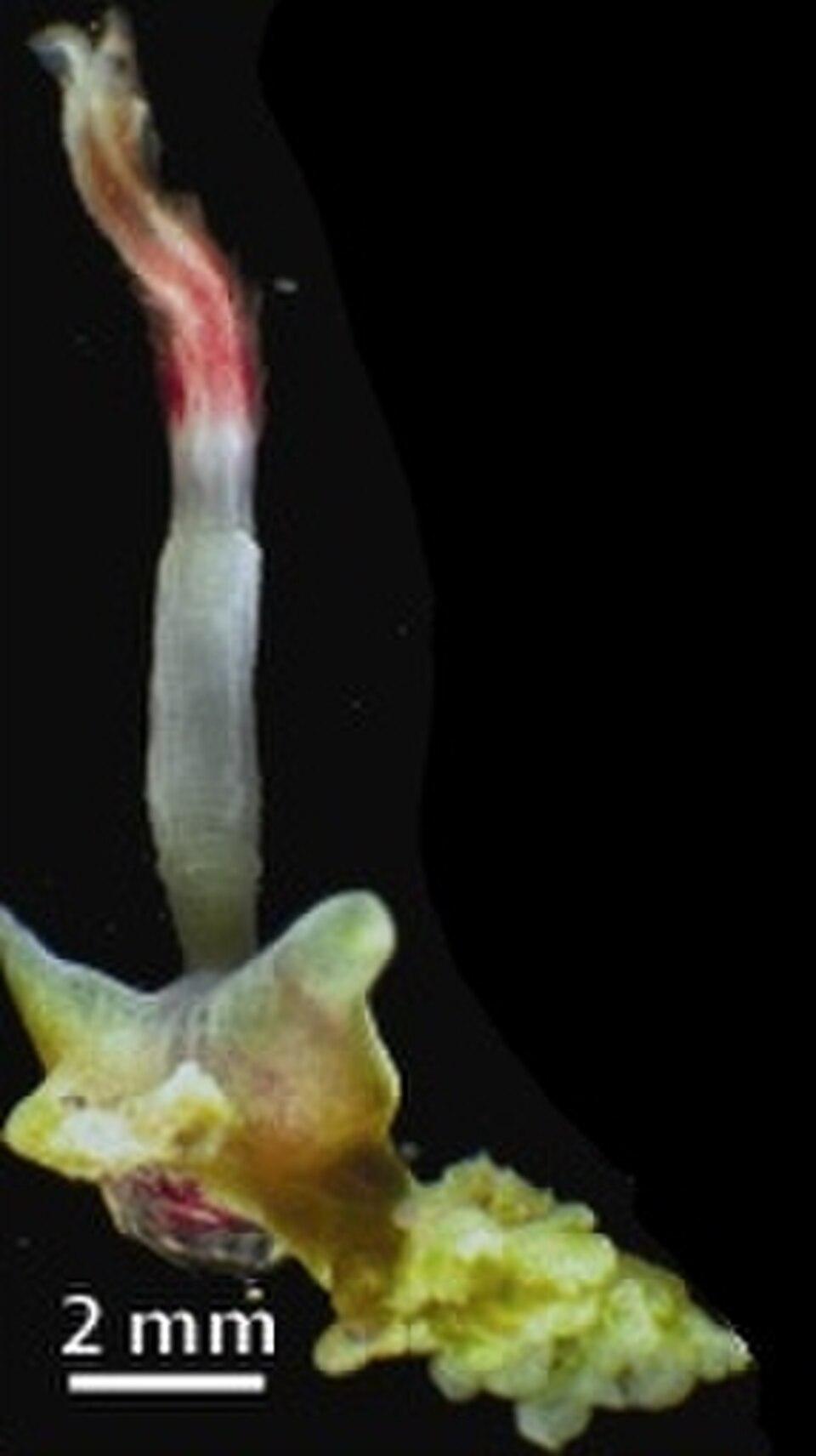 🪸 Ocean Discoveries
Bone-Eating 'Zombie' Worms
Rootless worms that bore into whale bones on the seafloor, dissolving them with acid and feeding through symbiotic bacteria — a new genus found on a sunken whale.
Read more → 🪸 Ocean Discoveries
The Scaly-foot Snail
A deep-sea snail that armors its foot with iron-sulfide scales — the only animal known to build part of its skeleton from iron.
Read more → 🪸 Ocean Discoveries
The Lost City Hydrothermal Field
A field of towering white carbonate chimneys — one over 60 m tall — driven by seawater reacting with mantle rock rather than volcanic heat.
Read more →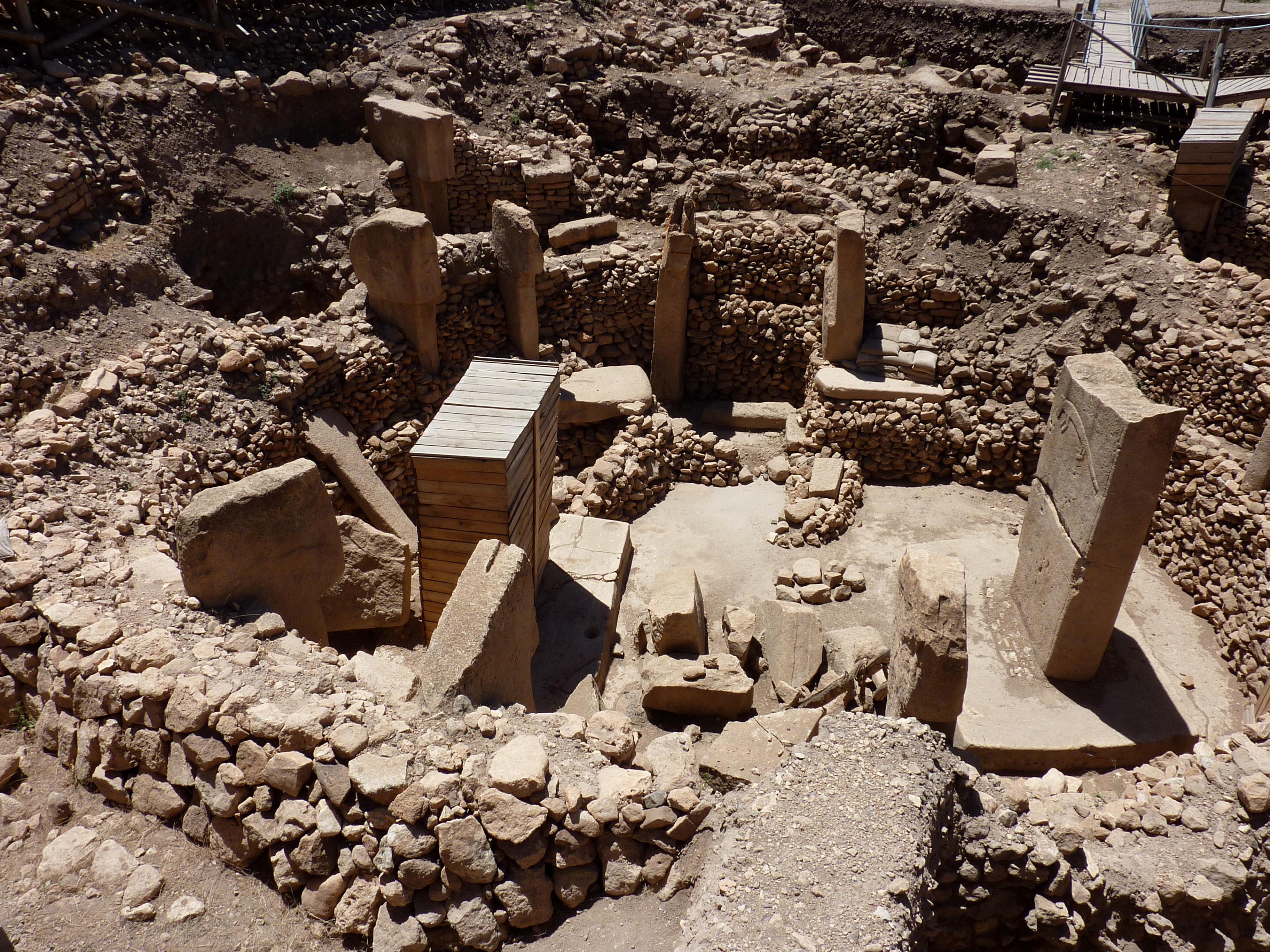 🏺 Archaeology
Göbekli Tepe, the First Temple
Massive carved stone pillars built ~11,000 years ago — monumental architecture from hunter-gatherers, predating Stonehenge by six millennia.
Read more →