
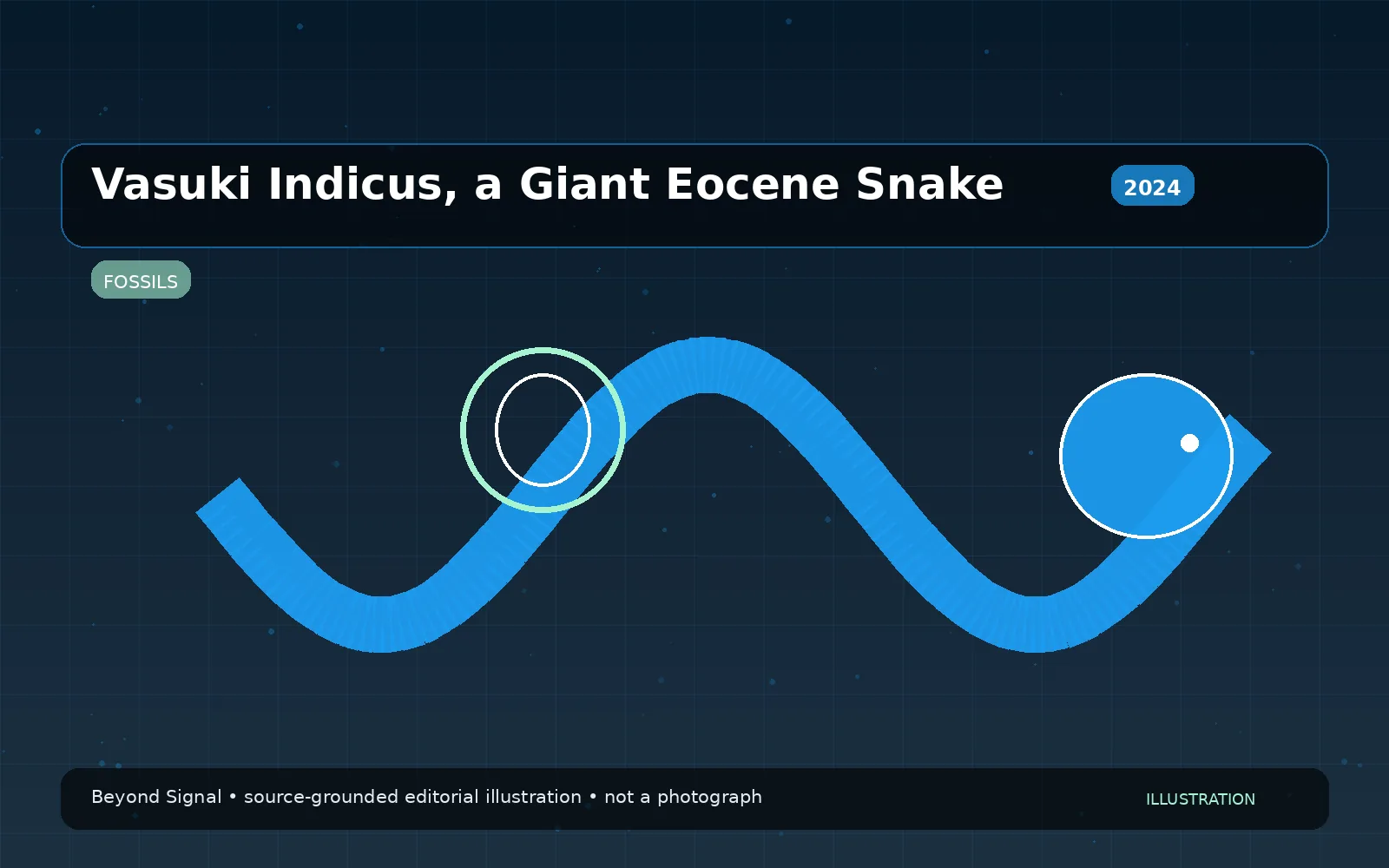
 Illustration — not a photo of the discovery
Vasuki Indicus, a Giant Eocene Snake
Twenty-seven associated vertebrae from western India were described as Vasuki indicus, a giant madtsoiid snake that lived about 47 million years ago. Scaling from the vertebrae produced a broad estimated length of roughly 11 to 15 metres, placing it among the largest snakes known but leaving substantial uncertainty.
The story
Why scientists were there
The fossil-bearing lignite mine preserves a warm, swampy Eocene ecosystem from a time when India was approaching Asia. Researchers examined vertebrae collected from the mine's Naredi Formation to understand the diversity and dispersal of Gondwanan snakes.
How they found it
The team compared vertebral proportions, joint surfaces, and diagnostic ridges with madtsoiid snakes from India, Africa, Madagascar, and South America. Body length was estimated using relationships between vertebral width and total length in living and fossil snakes.
What makes it unique
Vasuki combines enormous size with a geographic position relevant to Gondwanan dispersal. The authors interpreted it as a slow-moving ambush predator, but the incomplete skeleton means exact length, mass, and ecology cannot be reconstructed with precision.
Gallery
Where it was found
Panandhro Lignite Mine, Kutch, Gujarat
Tags
Related discoveries
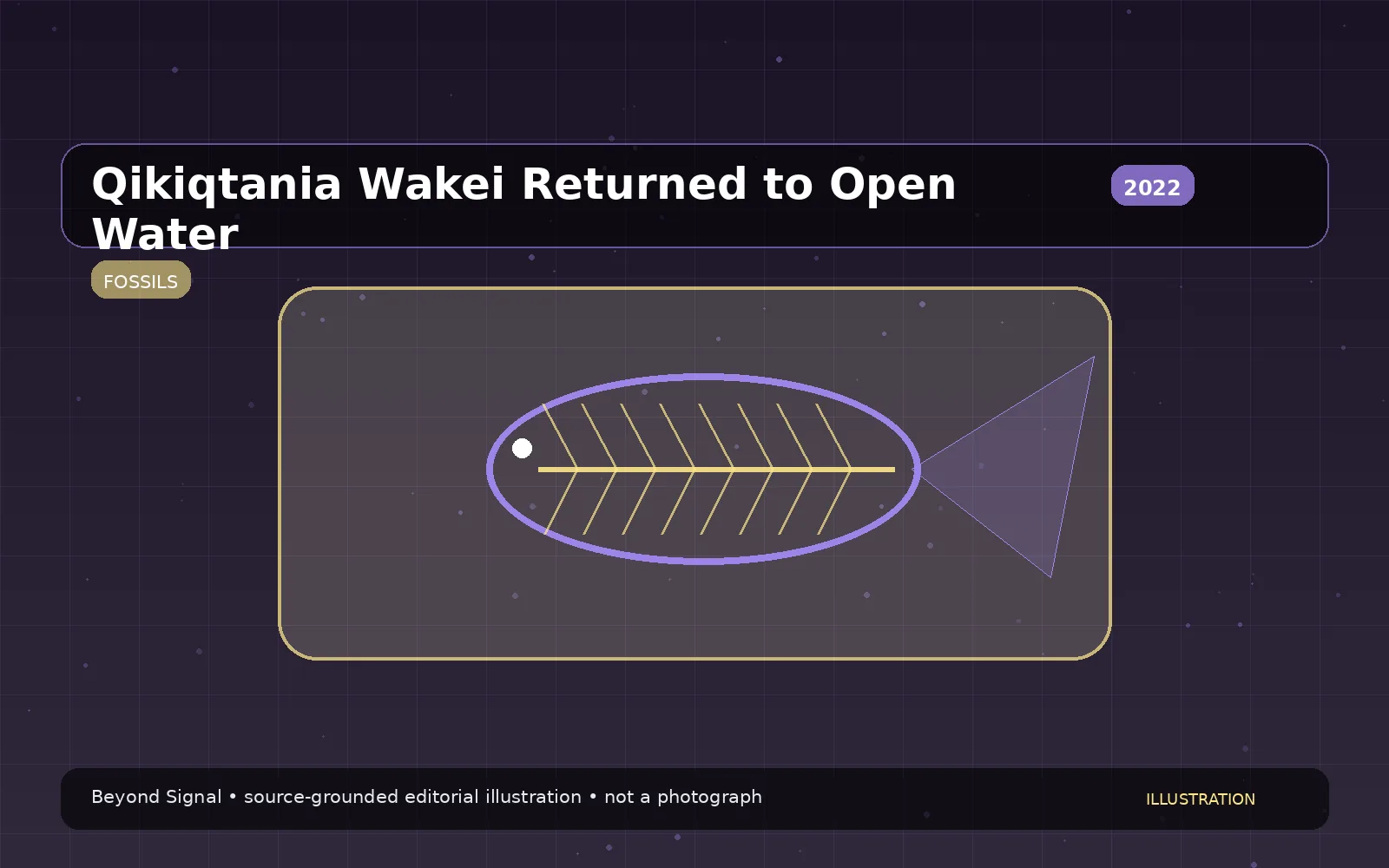 Illustration🦕 Dinosaurs & Fossils
Qikiqtania Wakei Returned to Open Water
A Late Devonian fossil from Nunavut revealed Qikiqtania wakei, a close relative of limbed vertebrates whose pectoral fin was specialized for swimming rather than supporting the body on a hard surface. The animal shows that evolution near the fish-to-tetrapod transition explored more than one ecological direction.
Read more →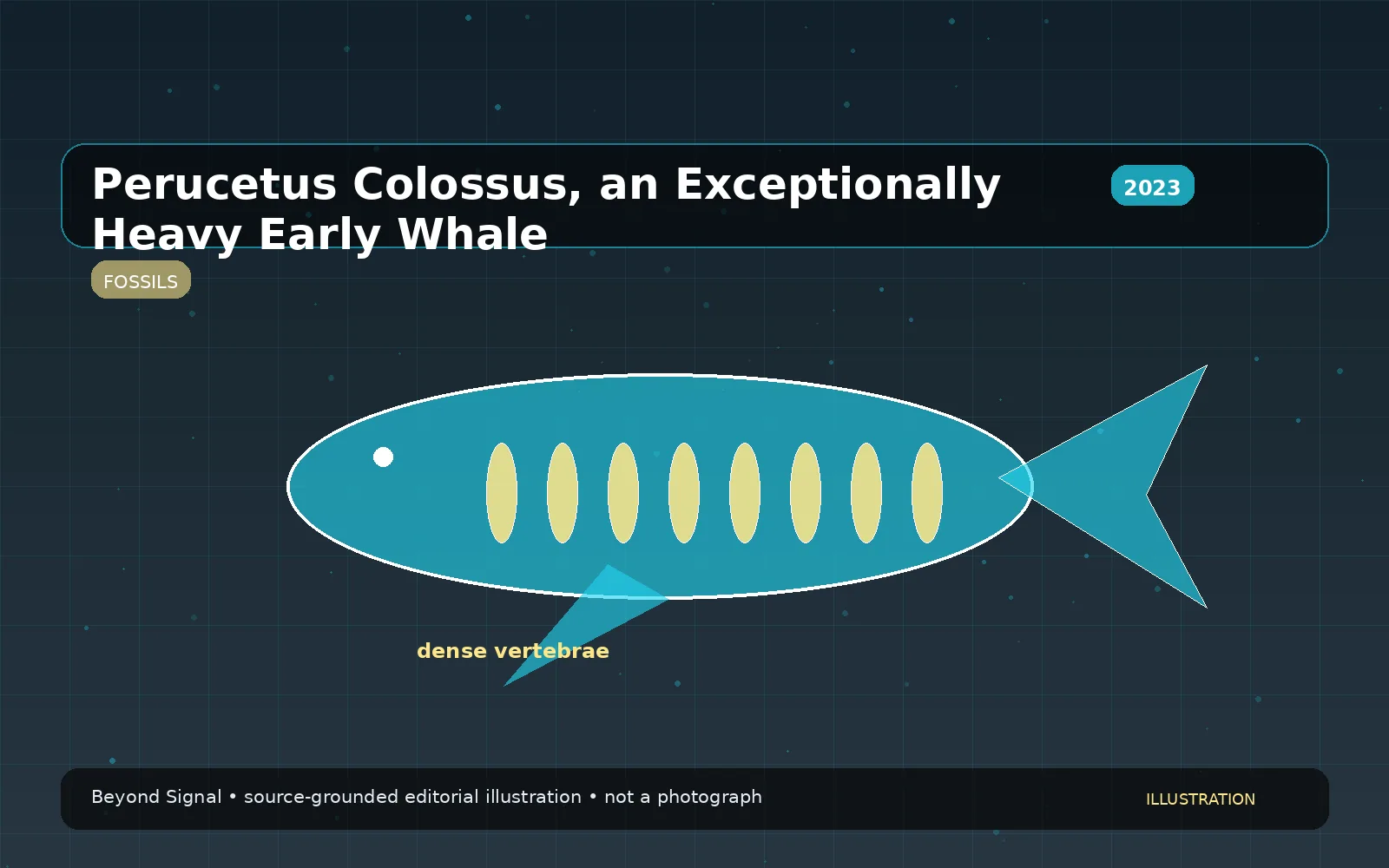 Illustration🦕 Dinosaurs & Fossils
Perucetus Colossus, an Exceptionally Heavy Early Whale
A partial skeleton from Peru's Eocene Pisco Basin revealed Perucetus colossus, an early whale with extraordinarily thick and dense vertebrae and ribs. Initial mass estimates suggested an animal of exceptional weight, although later analyses have debated how much soft tissue should be reconstructed around the unusual bones.
Read more →