
 Illustration — not a photo of the discovery
Cassini Gravity Data Reveal Strong Tidal Dissipation in Titan
A reanalysis of Cassini radio tracking measured unexpectedly strong tidal energy loss in Titan and found that the gravity signal is inconsistent with the global subsurface ocean model previously favored for the moon.
The story
Why scientists were there
Titan’s interior controls its geology, chemistry, and potential habitability. The measurements strongly constrain models but do not image the interior directly; a global ocean is disfavored by this analysis, while slush layers and isolated meltwater pockets are model-based explanations that future measurements, including Dragonfly observations, can test.
How they found it
Researchers reprocessed Doppler tracking data from Cassini flybys to reconstruct Titan’s varying gravity field. The improved analysis measured the imaginary component of the tidal Love number, Im(k₂) = 0.135 ± 0.035, corresponding to a low tidal quality factor and substantial internal energy dissipation.
What makes it unique
The direct result is the phase-lag and gravity measurement derived from spacecraft radio data. The conclusion that a global ocean is incompatible with that dissipation and the proposed ice-and-slush structure are physical-model inferences, so this entry remains preliminary despite the peer-reviewed measurement.
Gallery
Where it was found
Jet Propulsion Laboratory, Pasadena
Tags
Related discoveries
 Illustration🌌 Space
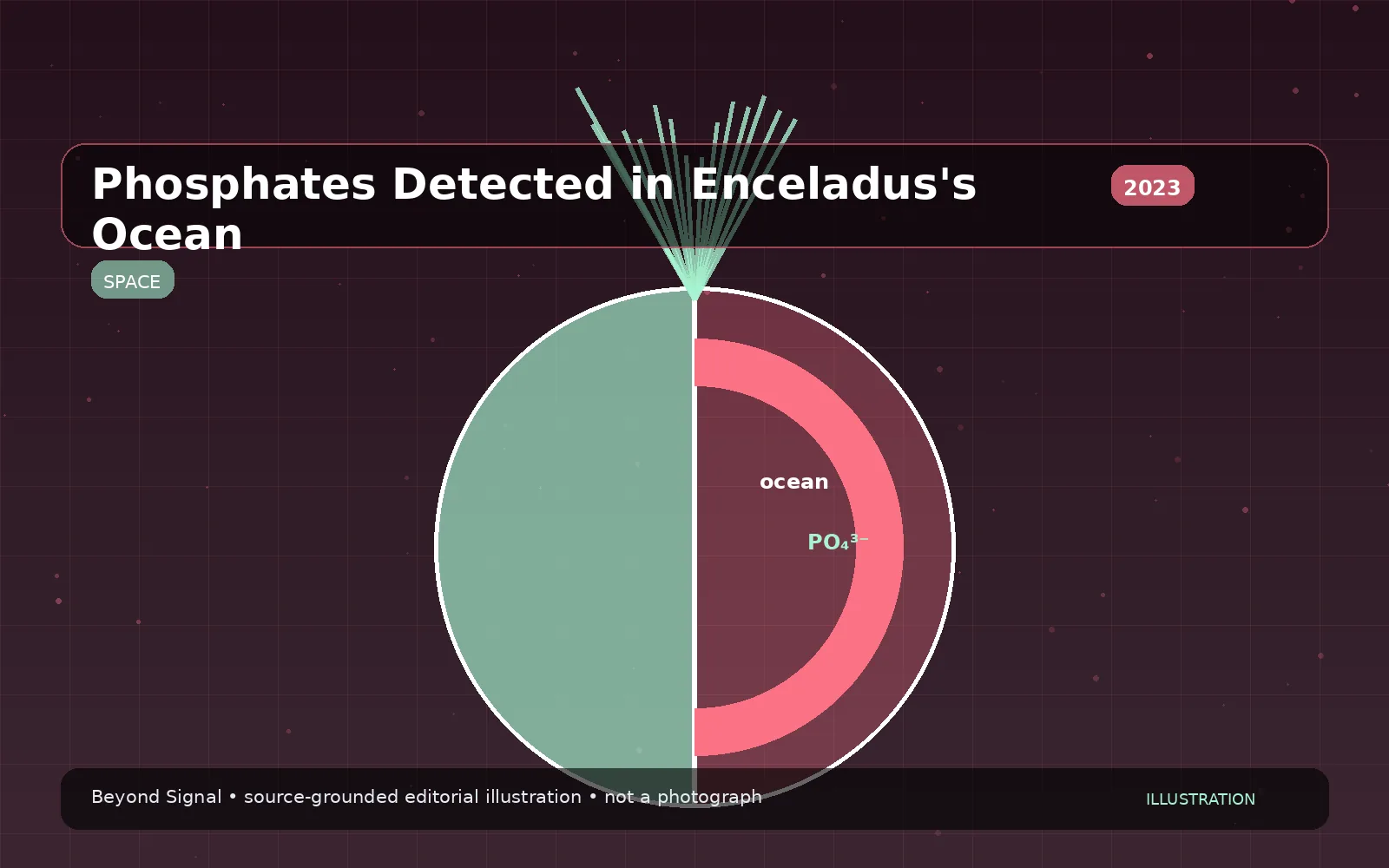
Phosphates Detected in Enceladus's Ocean
Reanalysis of ice grains sampled by NASA's Cassini spacecraft detected sodium phosphates originating from the subsurface ocean of Saturn's moon Enceladus. Phosphorus is essential to terrestrial biology, and the inferred ocean concentrations were at least comparable to, and potentially higher than, those in Earth's oceans.
Read more →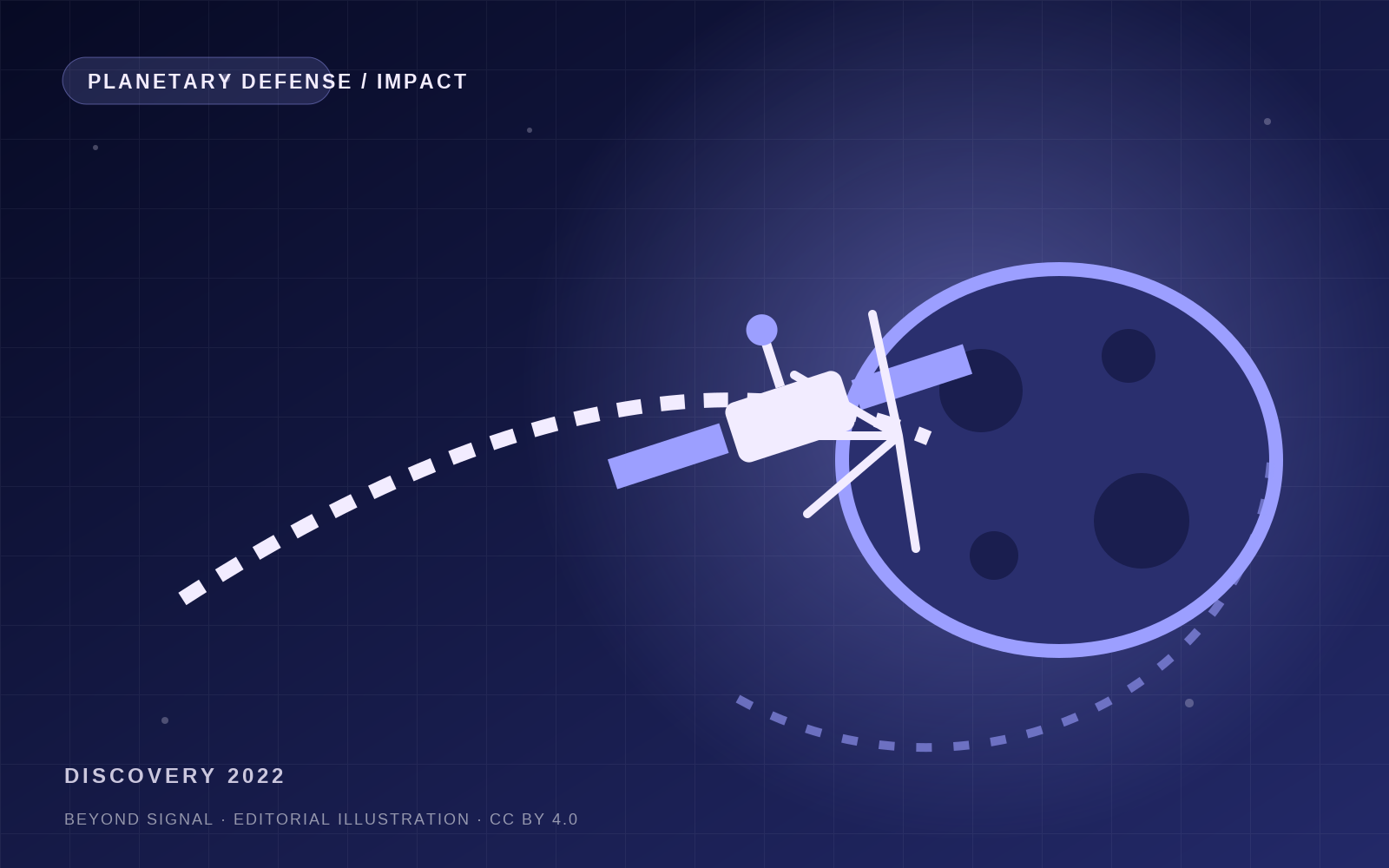 Illustration🌌 Space
DART Successfully Changes an Asteroid's Orbit
Observations confirmed that NASA's DART spacecraft shortened Dimorphos's orbit around Didymos by roughly 32 minutes, proving that a kinetic impactor can measurably deflect an asteroid.
Read more →