
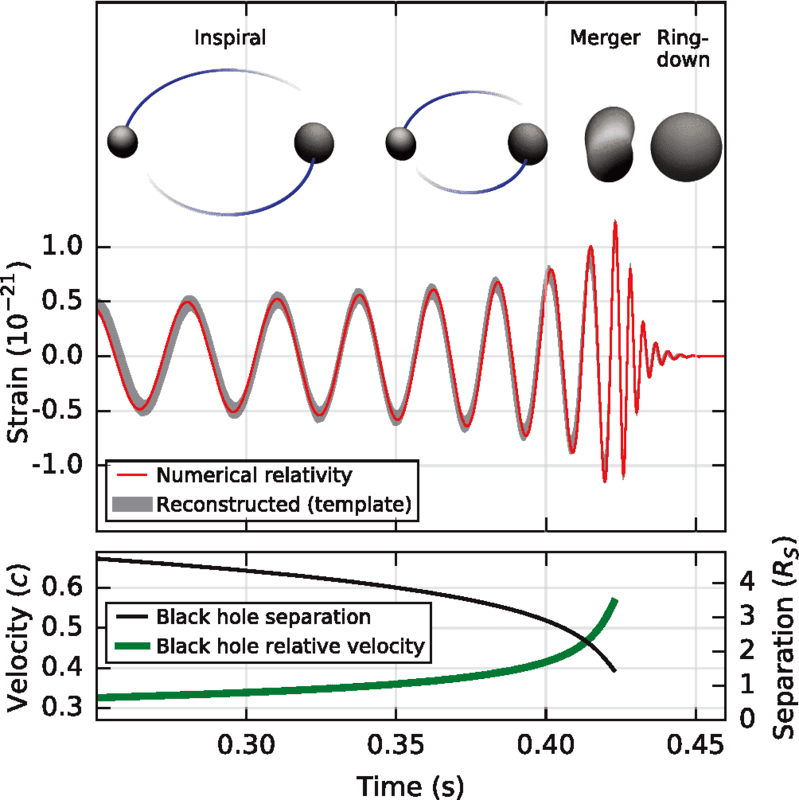
First Detection of Gravitational Waves
LIGO recorded the spacetime ripple from two black holes colliding 1.3 billion years ago — confirming a key prediction of general relativity.
The story
Why scientists were there
Twin laser interferometers were built to sense distortions in spacetime smaller than a proton.
How they found it
On 14 September 2015 both detectors caught the same rising 'chirp' as two black holes spiraled together and merged.
What makes it unique
It opened gravitational-wave astronomy, a whole new way to observe the universe, and won the 2017 Nobel Prize.
Gallery

Where it was found
LIGO Hanford Observatory, Washington, USA
Tags
Related discoveries
 ⚛️ Physics
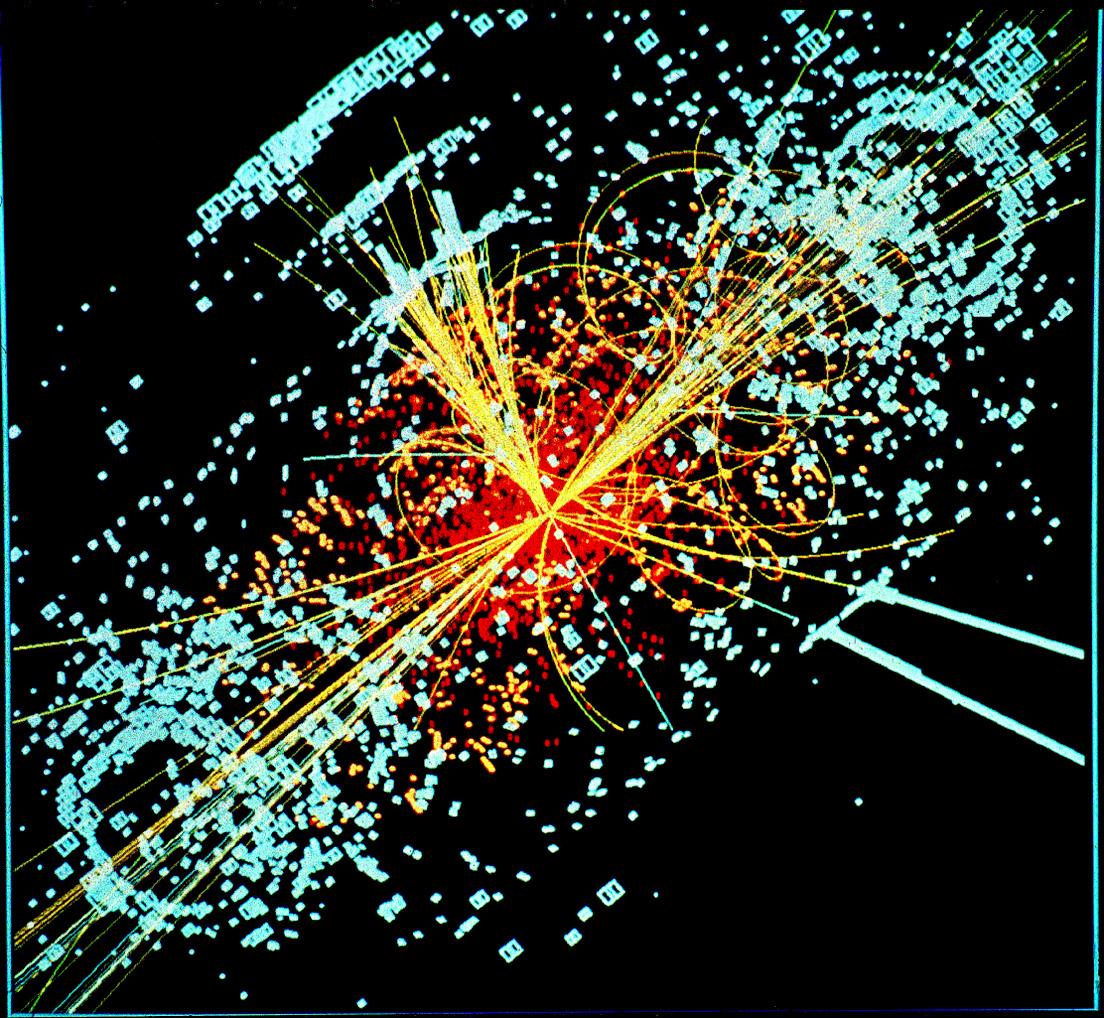
Discovery of the Higgs Boson
The Large Hadron Collider revealed the particle behind the field that gives other particles mass — the keystone of the Standard Model.
Read more → 🌌 Space
First Image of a Black Hole (M87*)
Humanity's first direct image of a black hole — a glowing ring of light around the shadow of M87*, 6.5 billion solar masses.
Read more →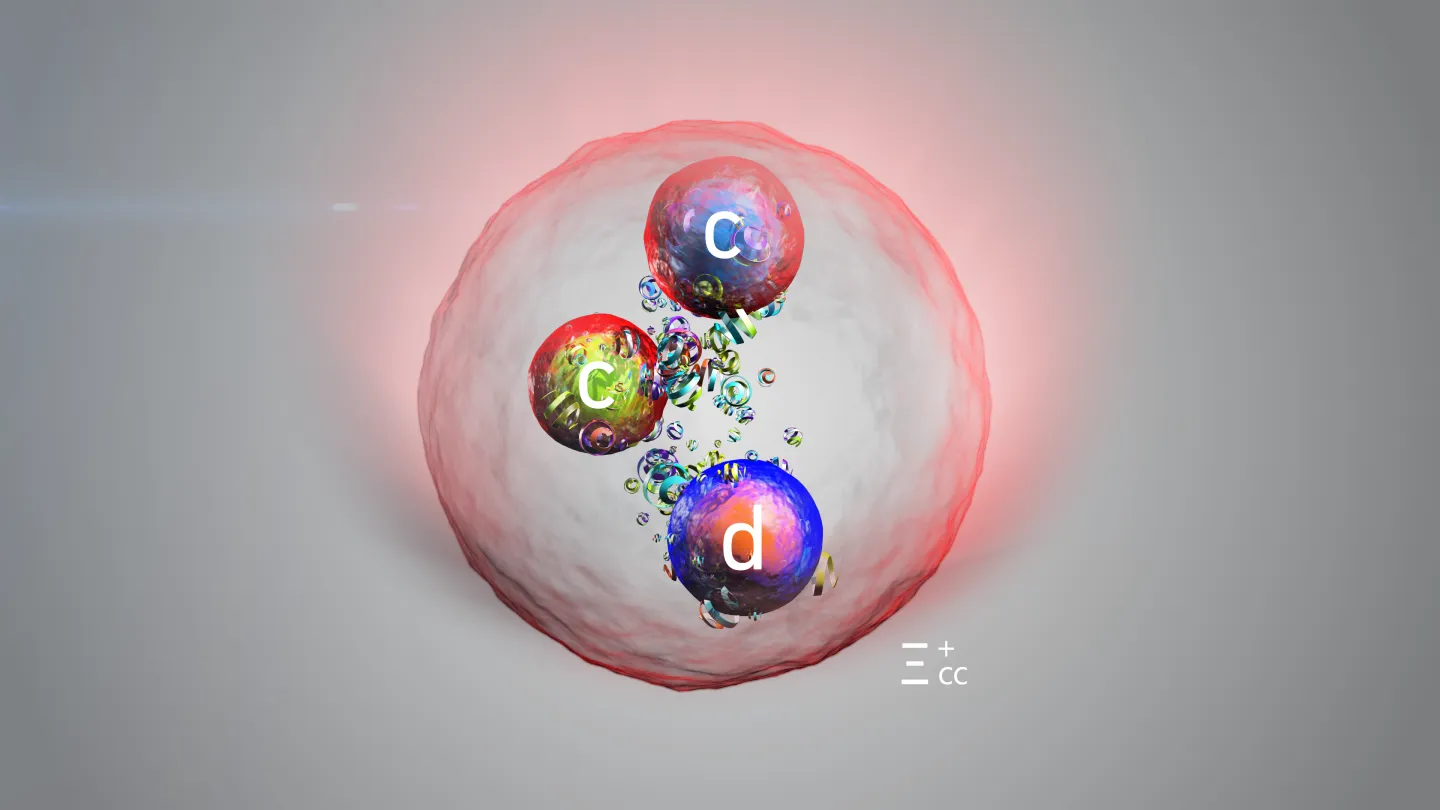 Illustration⚛️ Physics
The Doubly Charmed Baryon Ξcc+
LHCb observed a proton-like particle containing two charm quarks and one down quark with discovery-level significance, resolving a long-running experimental puzzle.
Read more →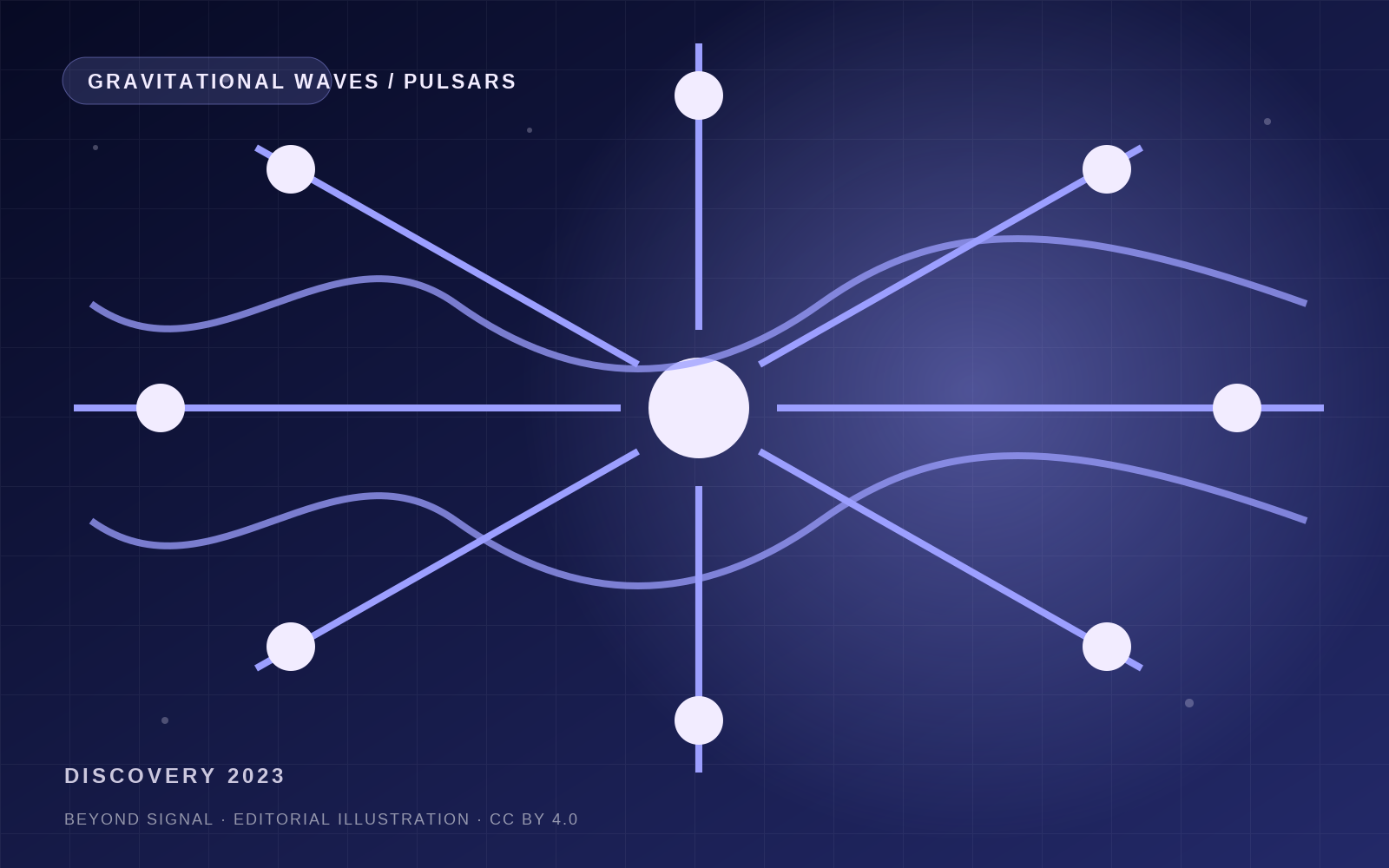 Illustration🌌 Space
NANOGrav Finds Evidence of a Cosmic Gravitational-Wave Background
Fifteen years of pulsar timing revealed the distinctive inter-pulsar correlations expected from a low-frequency gravitational-wave background, likely produced largely by orbiting supermassive black-hole binaries.
Read more → ⚛️ Physics
Fusion Ignition at the NIF
For the first time, a fusion reaction produced more energy than the laser energy delivered to the fuel — crossing the long-sought ignition threshold.
Read more →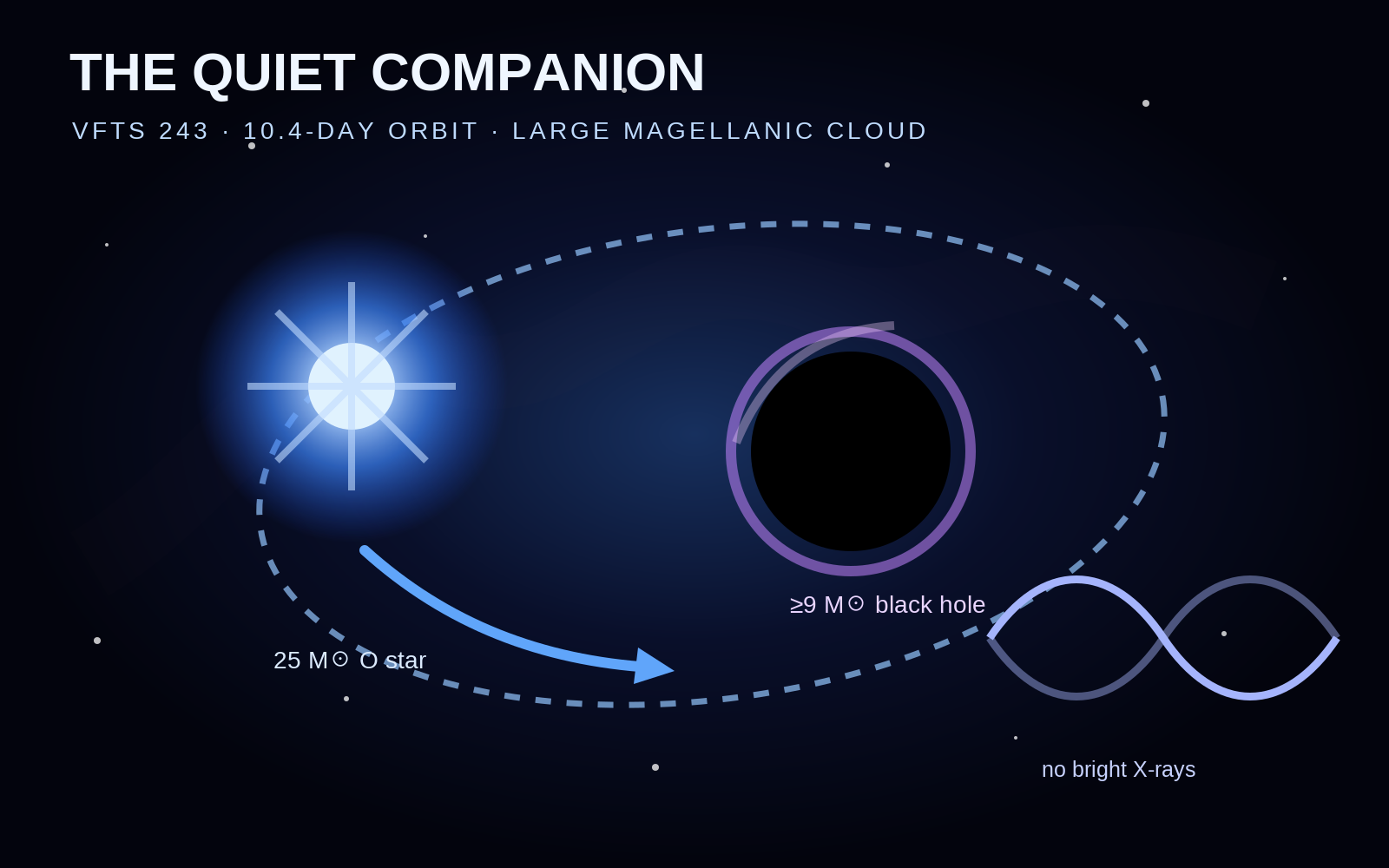 Illustration🌌 Space
VFTS 243, an Extragalactic Dormant Black Hole
Six years of stellar spectra revealed that the massive star VFTS 243 orbits an unseen companion of at least nine solar masses, making the companion the first unambiguous X-ray-quiet stellar black hole identified outside the Milky Way at the time.
Read more →