
 Illustration — not a photo of the discovery
Woolly Rhino Genome Recovered from a Wolf's Stomach
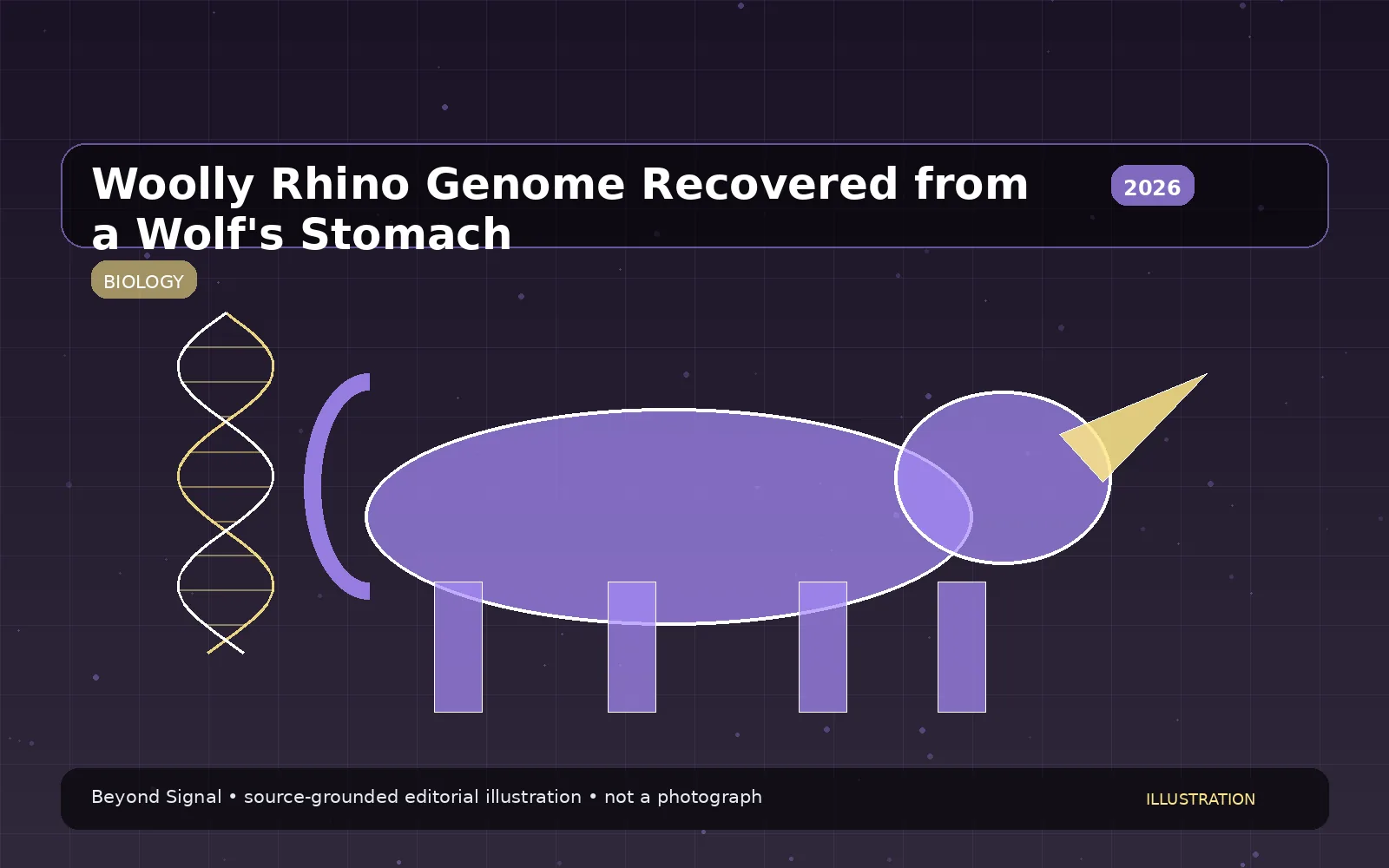
Scientists reconstructed a high-quality woolly rhinoceros genome from undigested meat preserved in the stomach of a roughly 14,400-year-old wolf pup. Comparisons with older rhino genomes found no prolonged loss of diversity or rising inbreeding before extinction, supporting a comparatively rapid population collapse.
The story
Why scientists were there
Two wolf pups recovered from Siberian permafrost preserved their last meals as well as their own tissues. Researchers recognized one stomach fragment as woolly rhinoceros and tested whether DNA partially exposed to digestion could still support genome-scale analysis.
How they found it
The team authenticated the tissue, sequenced its fragmented DNA, assembled a genome, and compared measures of heterozygosity, inbreeding, and harmful variation with woolly rhinos dated to about 18,000 and 49,000 years ago.
What makes it unique
It was the first high-quality Ice Age genome recovered from another animal's stomach contents. The absence of long-term genomic erosion does not identify a single extinction cause, but it is consistent with a sharp decline near the end of the last ice age rather than a slow genetic collapse.
Gallery
Where it was found
Tumat, Sakha Republic, northeastern Siberia
Tags
Related discoveries
 Illustration🧬 Biology
Greenland's Two-Million-Year-Old Environmental DNA
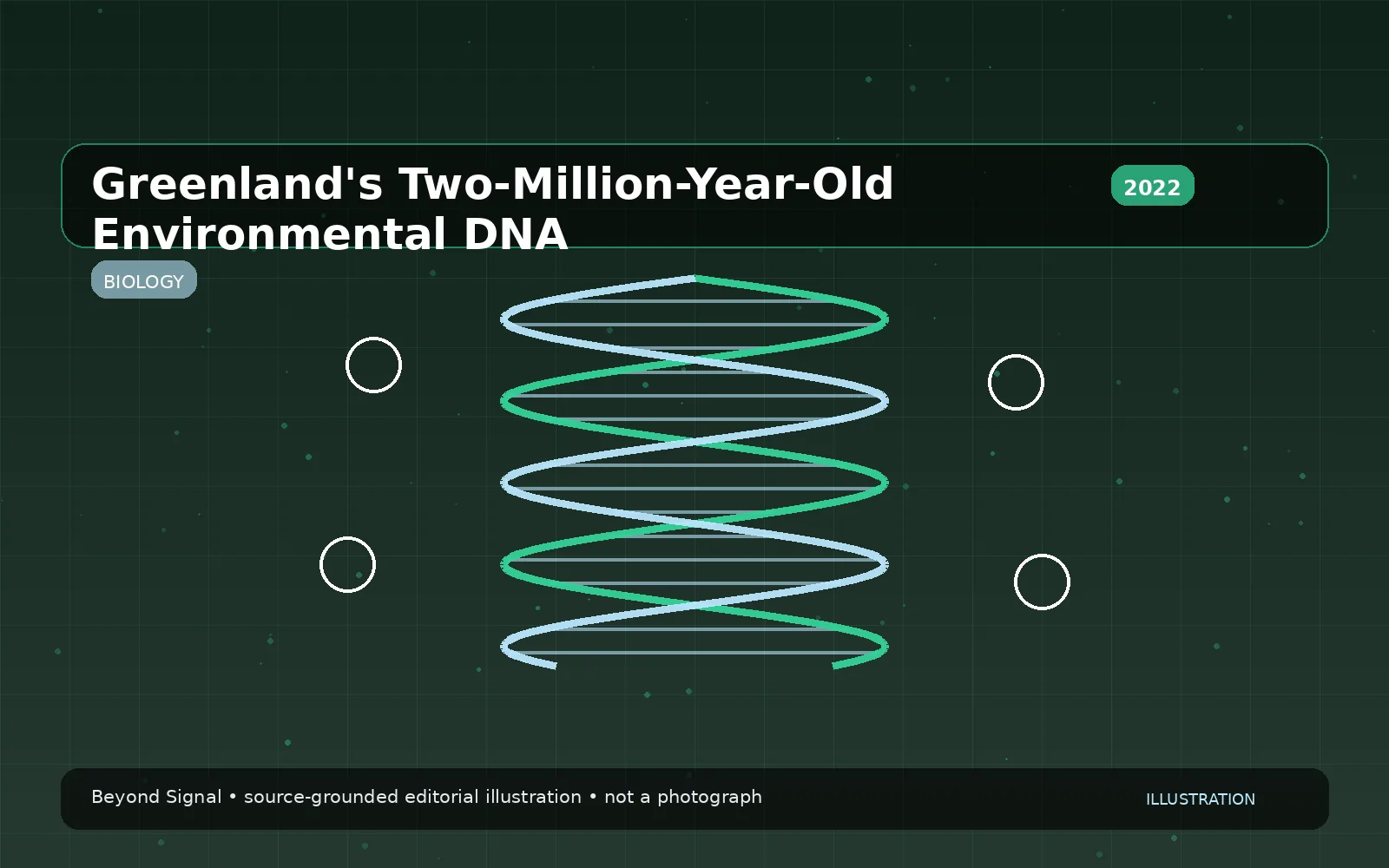
Environmental DNA recovered from mineral-rich sediments at Greenland's Kap København Formation reconstructed a roughly two-million-year-old ecosystem containing mastodons, reindeer, hares, geese, plants, and marine organisms. The fragmented DNA extended the known survival limit of ancient genetic material by about one million years.
Read more →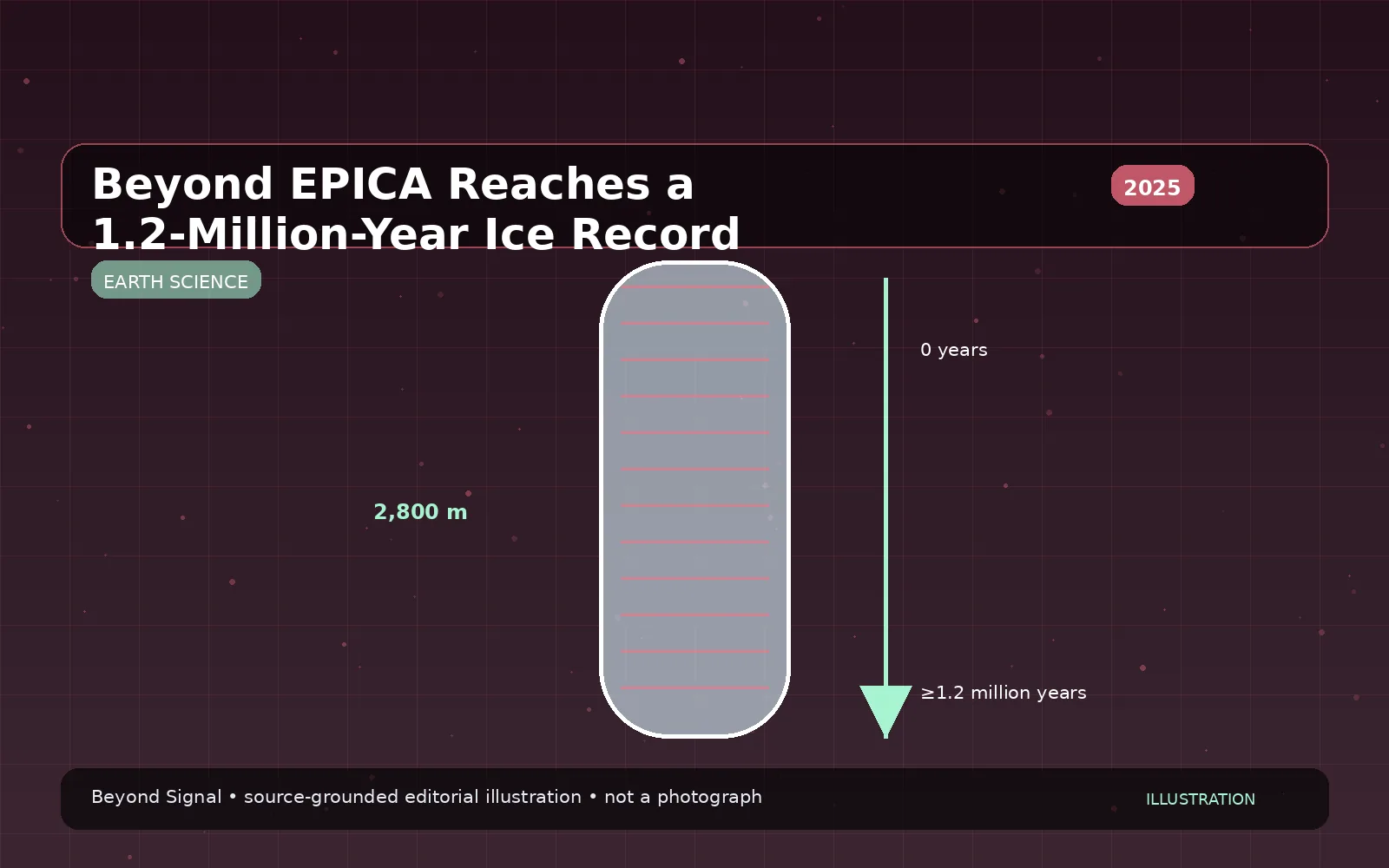 Illustration🌋 Earth Science
Beyond EPICA Reaches a 1.2-Million-Year Ice Record
The Beyond EPICA team completed drilling to bedrock at Little Dome C, recovering a 2,800-metre Antarctic ice core expected to preserve a continuous climate record reaching at least 1.2 million years. The core targets the interval when glacial cycles shifted from roughly 41,000-year to 100,000-year rhythms.
Read more →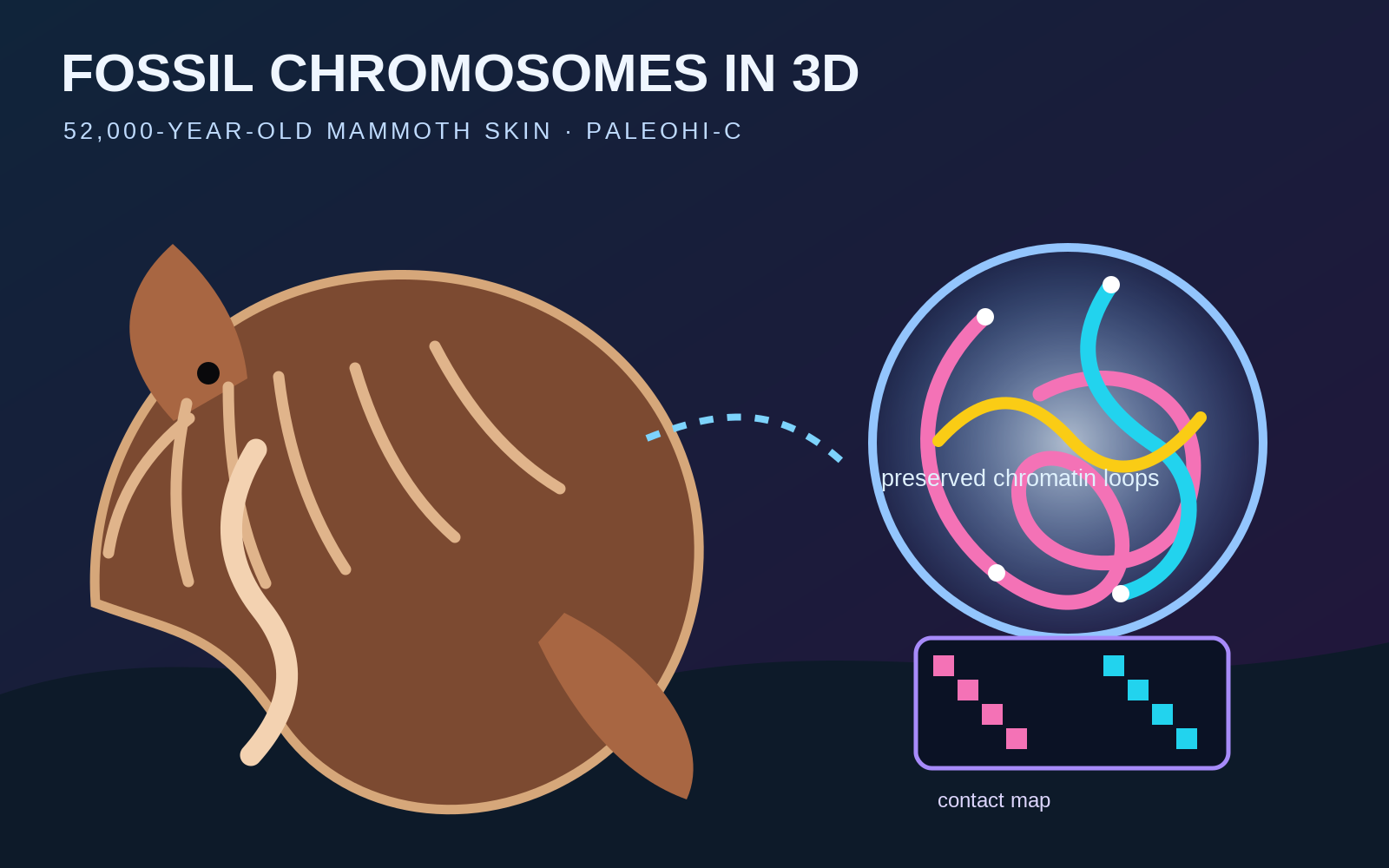 Illustration🧬 Biology
Three-Dimensional Chromosomes Preserved in Mammoth Skin
A 52,000-year-old woolly mammoth skin sample retained chromosome-scale contacts, allowing researchers to reconstruct 28 chromosomes and features of the genome's three-dimensional organization in an extinct animal.
Read more →