 Illustration — not a photo of the discovery
A New Sex-Determination Mechanism in an African Butterfly
Work in Bicyclus anynana showed that combinations of variants of the Z-linked Masculinizer gene determine sex, revealing a sex-determination mechanism not previously described in butterflies.
The story
Why scientists were there
Sex determination has evolved repeatedly, and its diversity matters for understanding development, population genetics, and conservation. This mechanism is demonstrated in Bicyclus anynana, not all butterflies; whether it occurs in other lineages and how it affects vulnerable wild populations are separate questions.
How they found it
The team combined genome and expression analyses with experimental tests of the Masculinizer locus in the squinting bush brown butterfly. Their results linked one gene variant to female development and two different variants to male development, while embryos carrying two identical variants did not survive.
What makes it unique
The direct observation is the relationship between specific Masculinizer variant combinations and developmental outcomes in this species. The authors’ interpretation that the mechanism independently converged on a honeybee-like solution is supported by comparative genetics, but it does not make the two systems identical or establish the same mechanism across Lepidoptera.
Gallery
Where it was found
Biology Centre CAS, České Budějovice
Tags
Related discoveries
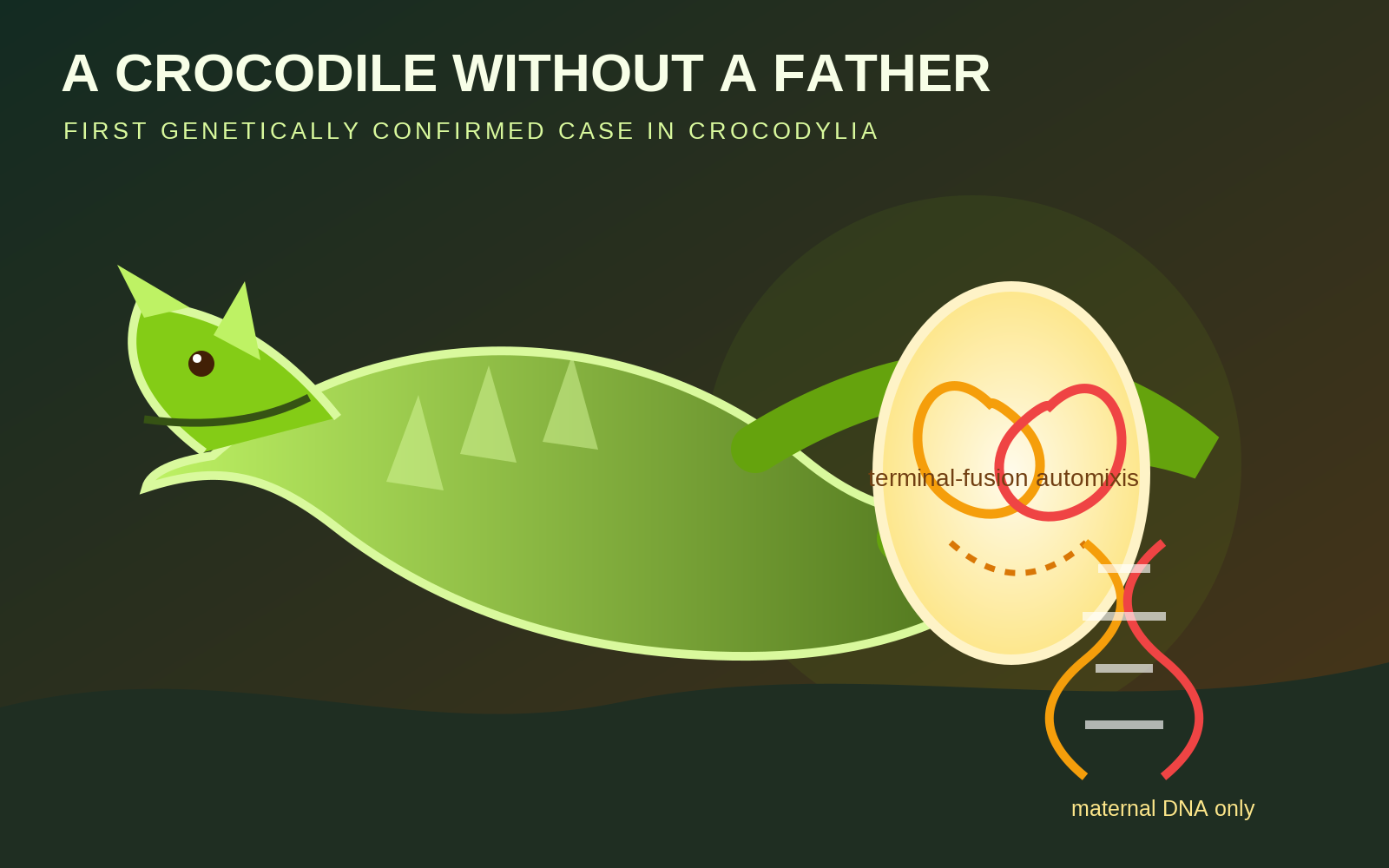 Illustration🧬 Biology
Crocodile Facultative Parthenogenesis Confirmed
Genetic analysis of a fully formed fetus from an egg laid by an isolated American crocodile documented facultative parthenogenesis in crocodilians for the first time.
Read more → Illustration🧬 Biology
A More Diverse Human Pangenome Reference
Researchers released a draft human pangenome built from 47 genetically diverse people, replacing a single linear reference with multiple possible genomic paths.
Read more →