 Illustration — not a photo of the discovery
Pebanista yacuruna, the Largest Known River Dolphin
A 16-million-year-old skull from Peru established Pebanista yacuruna as a new, 3–3.5-metre river dolphin and the closest known fossil relative of living South Asian river dolphins.
The story
Why scientists were there
Freshwater dolphins evolved repeatedly, but their fossil histories are sparse. Pebanista offers a rare calibration point for that history, although a single skull cannot reconstruct its full body, behavior, or exact extinction pathway; more material and environmental records are needed to test those broader questions.
How they found it
A field team recovered the holotype skull, MUSM 4017, from Miocene deposits in Peruvian Amazonia. Researchers described its anatomy, compared it with living and extinct toothed whales, and placed it in phylogenetic analyses alongside platanistoid dolphins.
What makes it unique
The direct evidence is the skull’s morphology and its dated geological context. Its estimated body length and close relationship to South Asian river dolphins are comparative inferences from the fossil and phylogeny, which together revise the geographic history of this dolphin lineage without making the animal a direct ancestor of any living species.
Gallery
Where it was found
Peruvian proto-Amazonia, Napo River region
Tags
Related discoveries
 Illustration🦕 Dinosaurs & Fossils
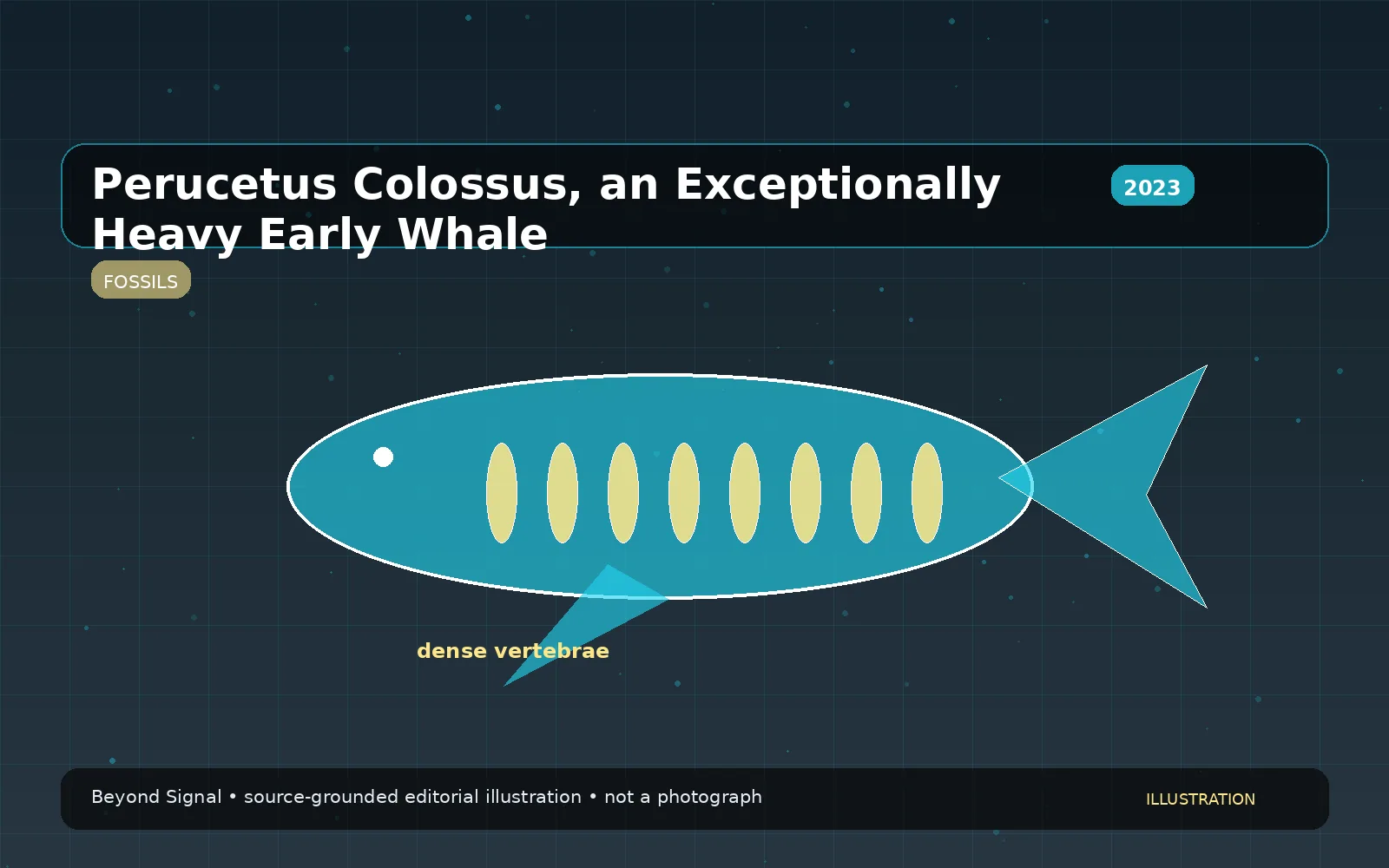
Perucetus Colossus, an Exceptionally Heavy Early Whale
A partial skeleton from Peru's Eocene Pisco Basin revealed Perucetus colossus, an early whale with extraordinarily thick and dense vertebrae and ribs. Initial mass estimates suggested an animal of exceptional weight, although later analyses have debated how much soft tissue should be reconstructed around the unusual bones.
Read more →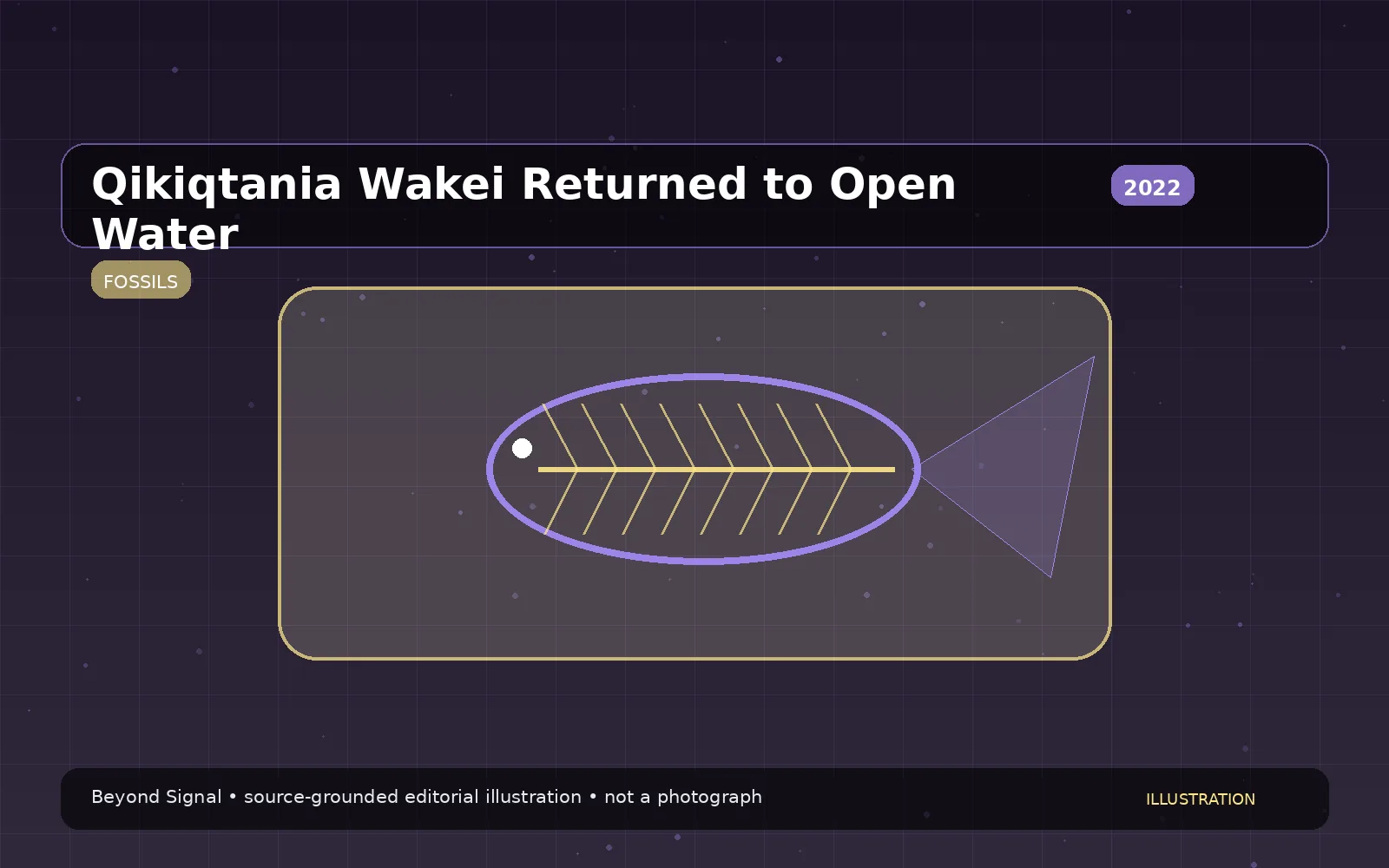 Illustration🦕 Dinosaurs & Fossils
Qikiqtania Wakei Returned to Open Water
A Late Devonian fossil from Nunavut revealed Qikiqtania wakei, a close relative of limbed vertebrates whose pectoral fin was specialized for swimming rather than supporting the body on a hard surface. The animal shows that evolution near the fish-to-tetrapod transition explored more than one ecological direction.
Read more →