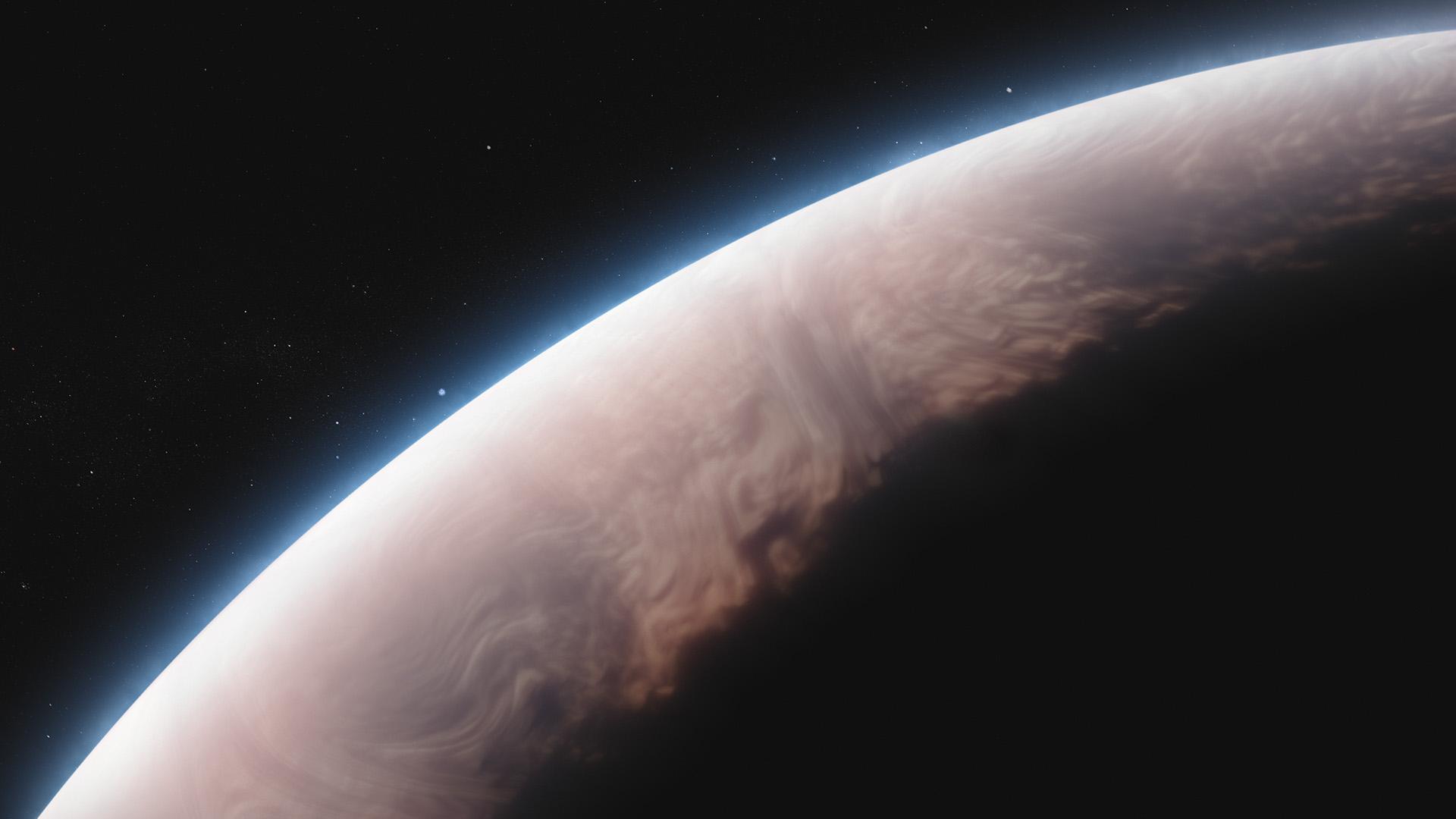
A 3D Weather Map of Exoplanet Tylos
For the first time, astronomers mapped several layers of an exoplanet's atmosphere in three dimensions, revealing separate winds carrying iron, sodium, hydrogen, and titanium.
The story
Why scientists were there
Tylos is an ultra-hot gas giant that circles its star in about 30 hours, creating an extreme laboratory for planetary weather.
How they found it
The team combined all four units of ESO's Very Large Telescope through the ESPRESSO instrument and read different chemical signatures during a full transit.
What makes it unique
The observations separated deep, middle, and upper atmospheric flows, showing a high-altitude equatorial jet and a lower circulation pattern unlike weather seen on any Solar System planet.
Gallery
Where it was found
Paranal Observatory, Atacama Desert, Chile
Tags
Related discoveries
 🌌 Space
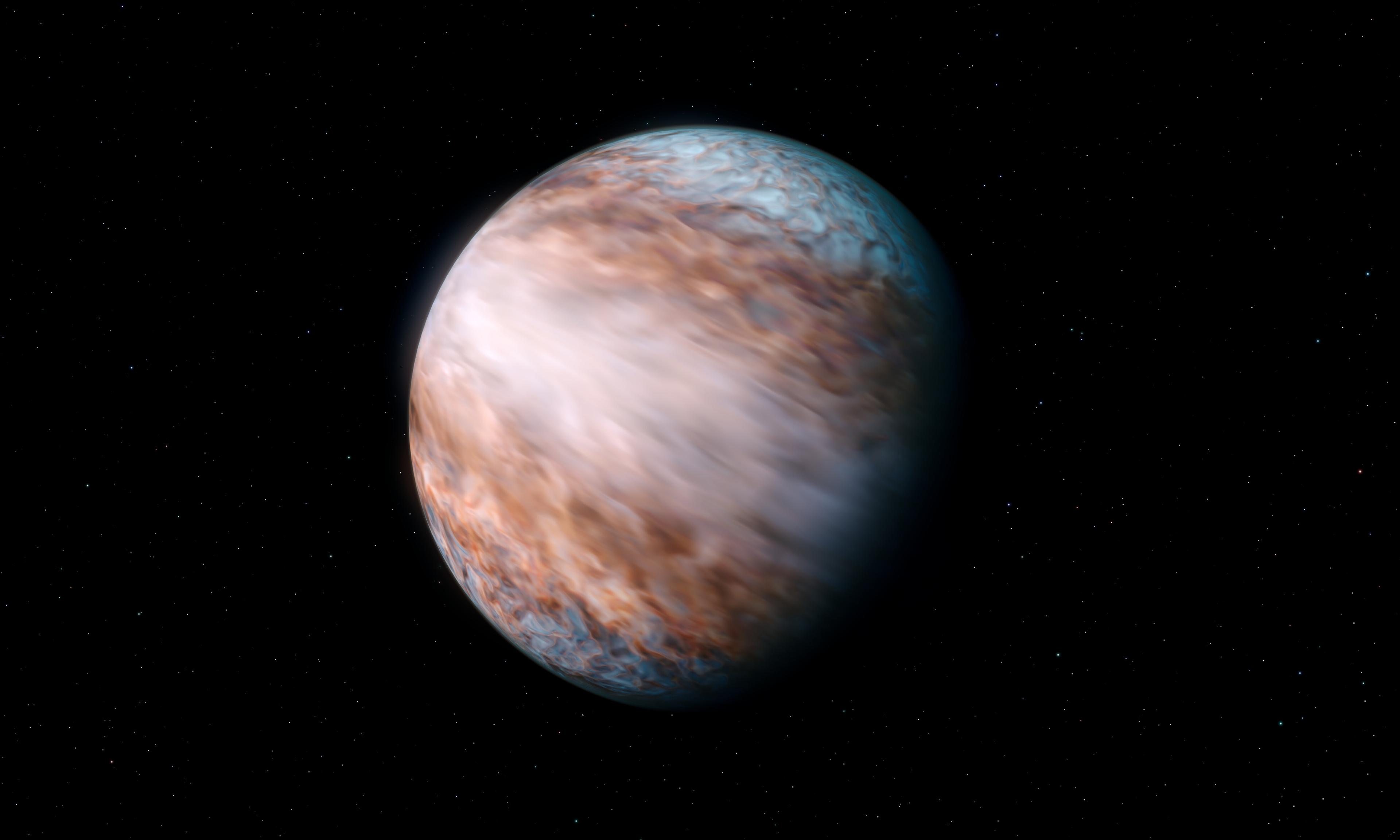
Supersonic Winds on WASP-127b
Astronomers measured equatorial winds on the exoplanet WASP-127b moving at up to 33,000 km/h — the fastest planetary jet stream of its kind measured at the time.
Read more → 🌌 Space
Planet Formation Caught at the Start around HOPS-315
Astronomers observed the first specks of planet-forming minerals beginning to solidify around a young star, catching a process analogous to the birth of our Solar System.
Read more →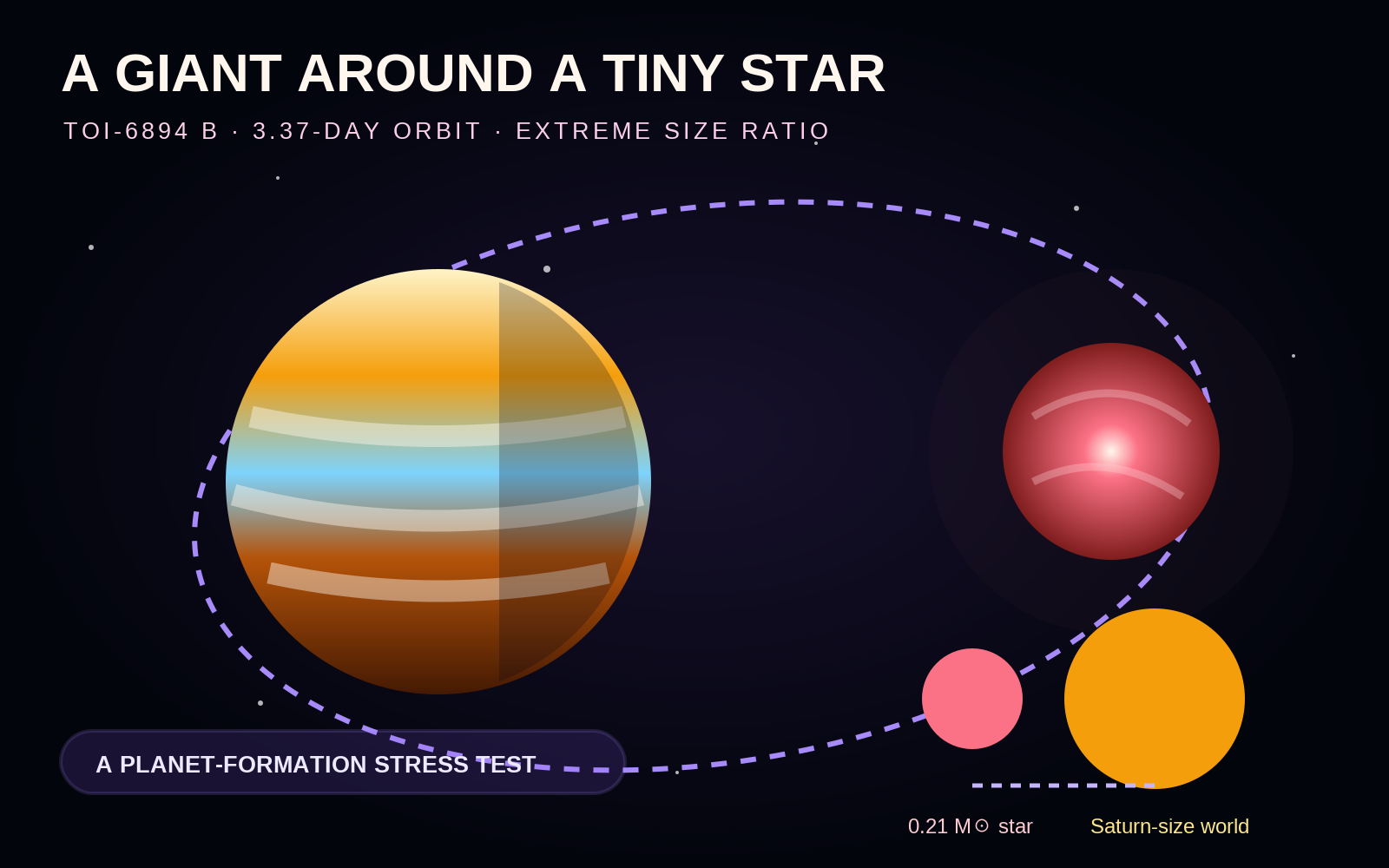 Illustration🌌 Space
TOI-6894 b, a Giant Planet Around a Tiny Star
Transit and radial-velocity measurements confirmed a low-density giant planet around a star only about one-fifth the Sun's mass, creating a demanding test for planet-formation models around very low-mass stars.
Read more → Illustration🌌 Space
Webb Detects Carbon Dioxide in WASP-39 b’s Atmosphere
JWST transmission spectroscopy delivered the first unambiguous carbon-dioxide detection in an exoplanet atmosphere, measuring a strong 4.3-micrometre absorption feature in the hot gas giant WASP-39 b.
Read more →