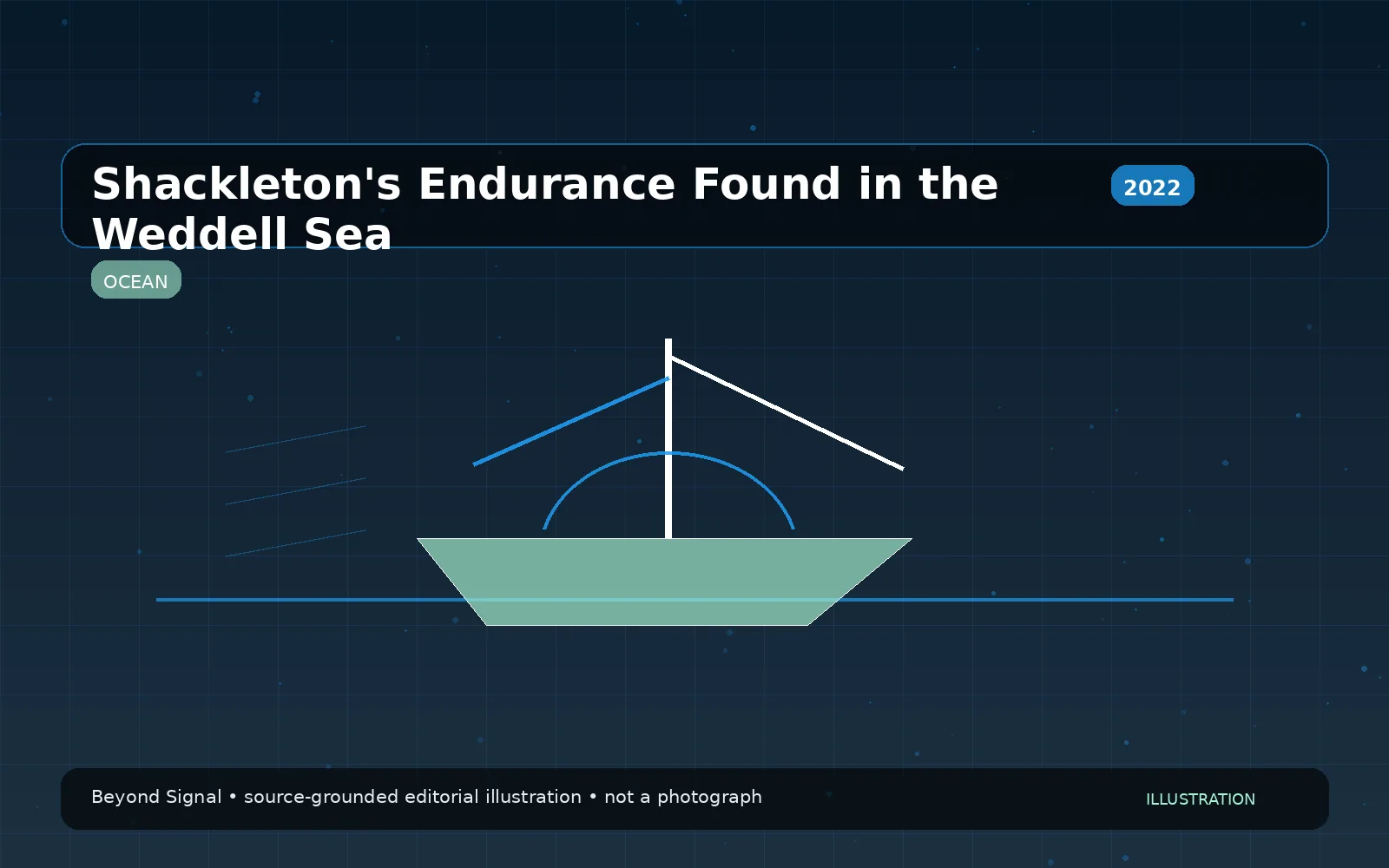
 Illustration — not a photo of the discovery
Shackleton's Endurance Found in the Weddell Sea
The Endurance22 expedition located Sir Ernest Shackleton's ship Endurance upright on the Weddell Sea floor at 3,008 metres, roughly four miles south of Captain Frank Worsley's recorded sinking position. The unusually intact wooden wreck was documented without being touched under Antarctic Treaty protection.
The story
Why scientists were there
The expedition targeted one of maritime archaeology's most difficult search zones: a remote, ice-covered sector of the Weddell Sea where Endurance was crushed and sank in 1915. Captain Worsley's navigation records defined the historical search area, while modern sea-ice and weather studies supported safe operations.
How they found it
Researchers deployed Saab Sabertooth hybrid underwater vehicles from the South African vessel S.A. Agulhas II. The vehicles searched beneath shifting pack ice, mapped the seabed, and transmitted imagery that revealed the ship's name, wheel, timbers, and other identifying features.
What makes it unique
Cold, dark Antarctic water and the absence of wood-boring organisms helped preserve the wreck in exceptional condition. Its discovery closed a century-old historical search while creating a protected archaeological record rather than a salvage site.
Gallery
Where it was found
Weddell Sea, Antarctica
Tags
Related discoveries
 Illustration🪸 Ocean Discoveries
The Gulf of Alaska's Mysterious Golden Orb
A NOAA remotely operated vehicle found a smooth golden object attached to rock about 3,300 metres deep in the Gulf of Alaska. It resisted immediate identification as an egg case, sponge, or coral. Later microscopy and genetic work linked the material to the anchoring structure of the deep-sea anemone Relicanthus daphneae.
Read more →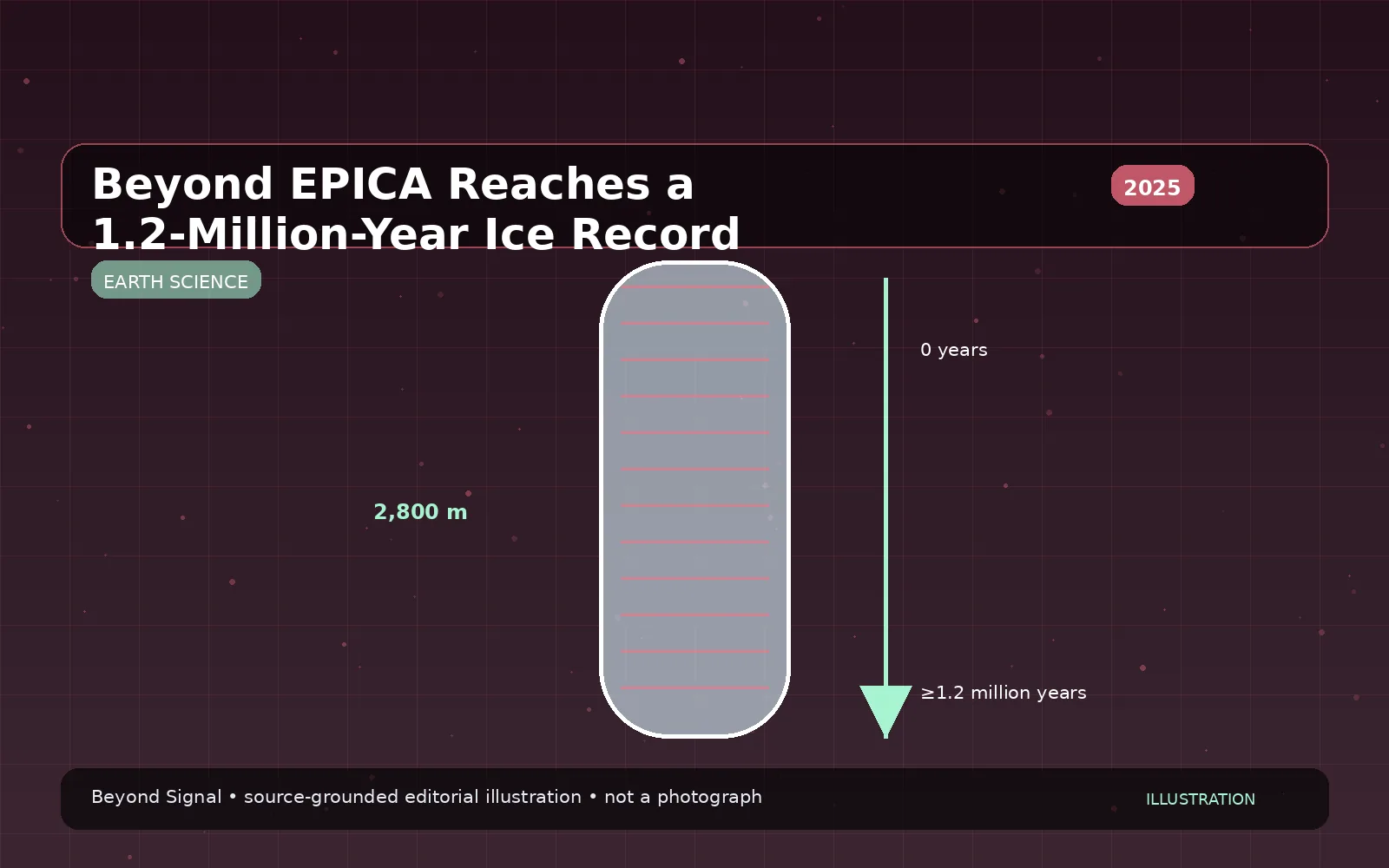 Illustration🌋 Earth Science
Beyond EPICA Reaches a 1.2-Million-Year Ice Record
The Beyond EPICA team completed drilling to bedrock at Little Dome C, recovering a 2,800-metre Antarctic ice core expected to preserve a continuous climate record reaching at least 1.2 million years. The core targets the interval when glacial cycles shifted from roughly 41,000-year to 100,000-year rhythms.
Read more →