
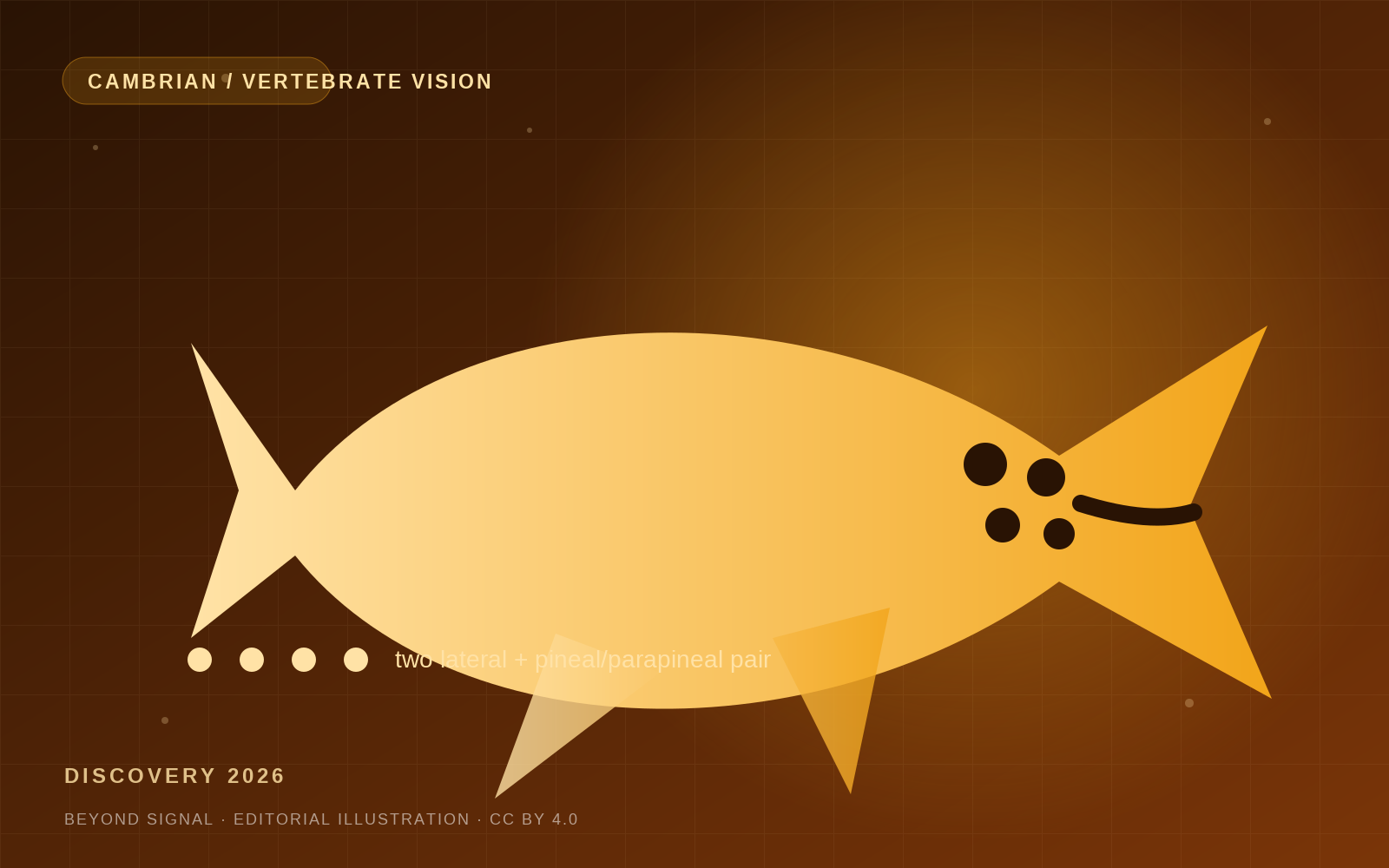
 Illustration — not a photo of the discovery
Cambrian Vertebrates Had Four Camera-Type Eyes
Reanalysis of exceptionally preserved Cambrian fish fossils interpreted two structures once called nasal sacs as an additional pair of image-forming eyes.
The story
Why scientists were there
The paired medial organs in early vertebrate heads had long been difficult to identify because their soft tissues were flattened and preserved only as subtle films.
How they found it
Researchers compared ten Chengjiang fossils with modern vertebrate eye anatomy, mapped pigment and tissue boundaries, and evaluated the organs' position relative to the brain.
What makes it unique
The work suggests the earliest vertebrates combined two lateral eyes with a second pineal-parapineal pair, revealing unexpected complexity near the origin of the vertebrate visual system.
Gallery
Where it was found
Chengjiang biota, Yunnan Province
Tags
Related discoveries
 Illustration🦕 Dinosaurs & Fossils
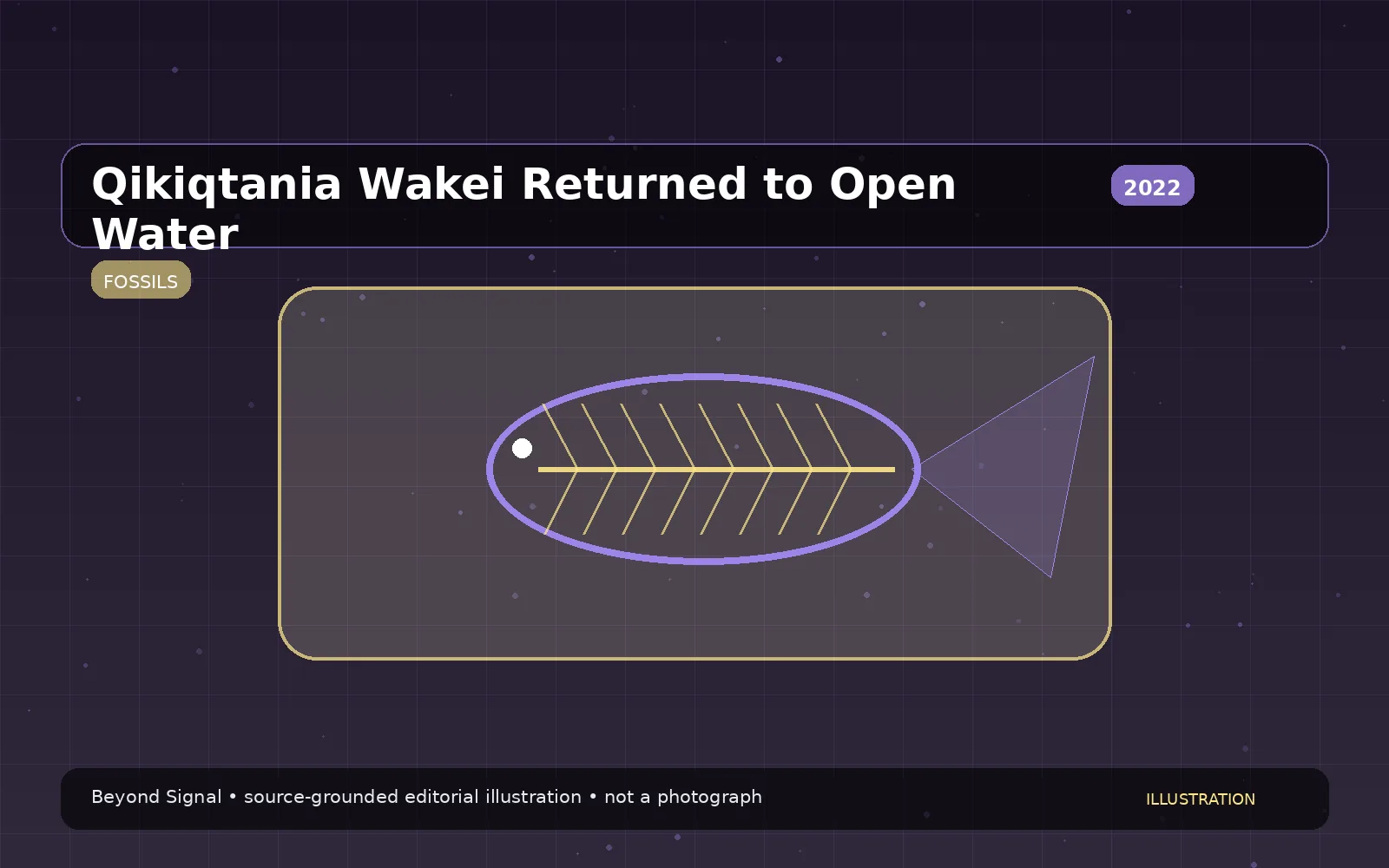
Qikiqtania Wakei Returned to Open Water
A Late Devonian fossil from Nunavut revealed Qikiqtania wakei, a close relative of limbed vertebrates whose pectoral fin was specialized for swimming rather than supporting the body on a hard surface. The animal shows that evolution near the fish-to-tetrapod transition explored more than one ecological direction.
Read more →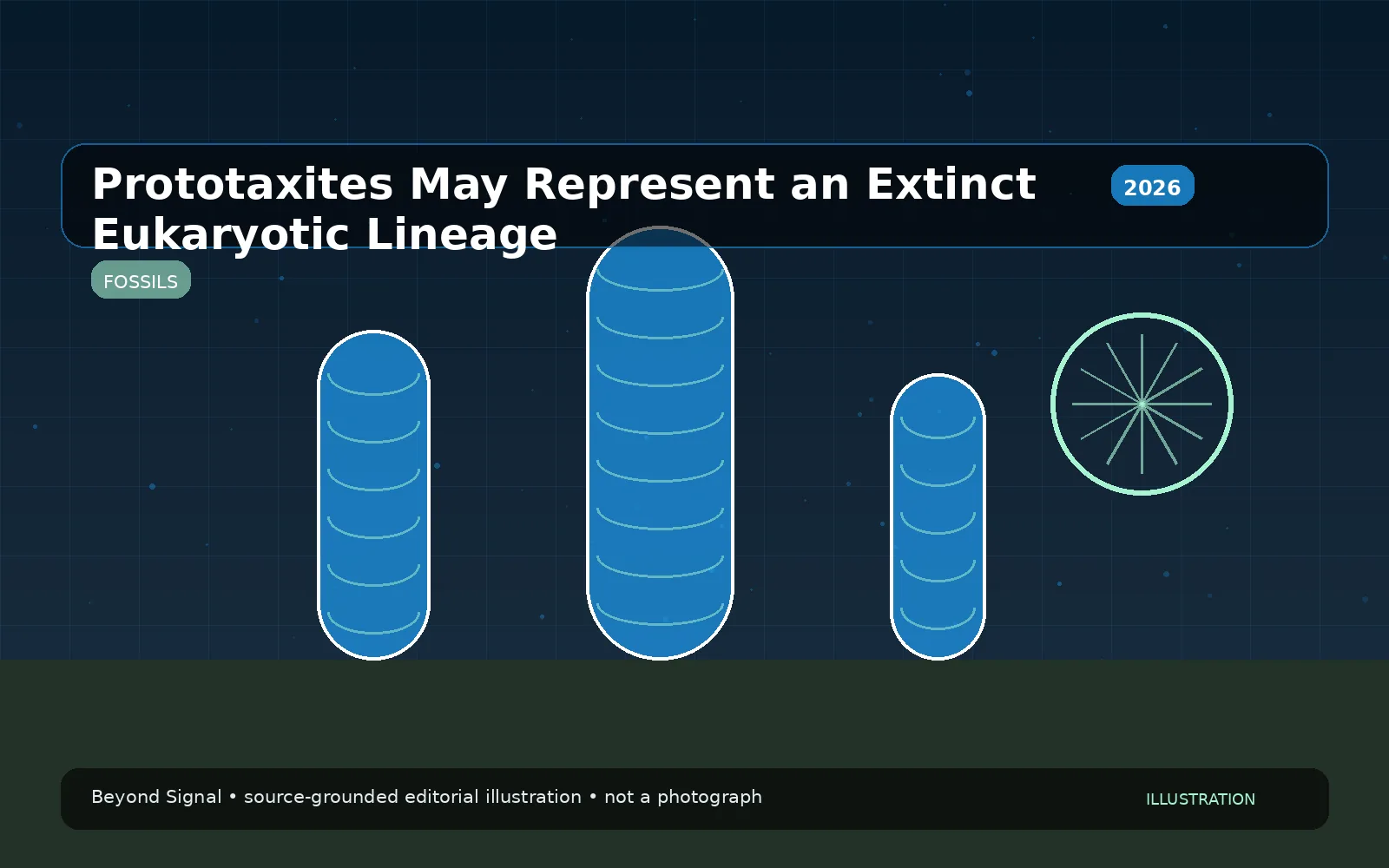 Illustration🦕 Dinosaurs & Fossils
Prototaxites May Represent an Extinct Eukaryotic Lineage
Chemical and structural analyses of the giant Devonian organism Prototaxites found that its tissues do not match known fungi and may represent an entirely extinct branch of complex eukaryotic life. The interpretation revives a long-running debate over the identity of trunk-like fossils that towered over early land ecosystems.
Read more →