
The First Views of the Sun's South Pole
ESA's Solar Orbiter returned humanity's first clear views of the Sun's south pole, revealing a tangled mixture of magnetic polarities during solar maximum.
The story
Why scientists were there
Most spacecraft orbit close to the plane of the planets, so they see the Sun from near its equator and cannot directly image the poles.
How they found it
Solar Orbiter tilted its orbit about 17 degrees out of the ecliptic and combined visible-light, ultraviolet, and spectroscopic measurements from several instruments.
What makes it unique
The new angle opens a missing perspective on the Sun's magnetic field and its roughly 11-year cycle, which controls space weather reaching Earth.
Gallery

Where it was found
ESA Solar Orbiter mission operations, Darmstadt, Germany
Tags
Related discoveries
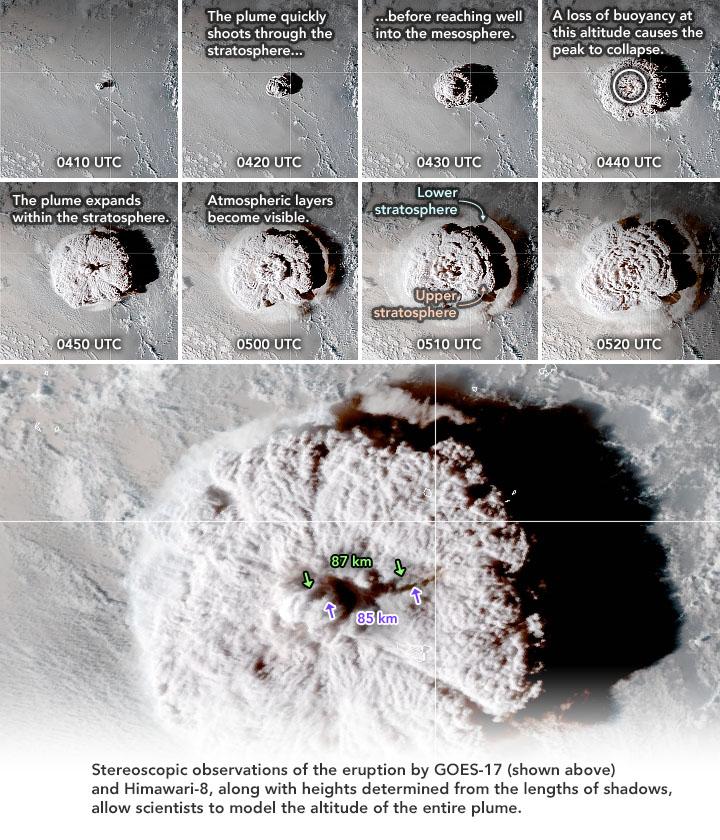 🌋 Earth Science
The Hunga Tonga Eruption
An undersea volcano produced the tallest eruption plume ever recorded — reaching the mesosphere — and a pressure wave that circled the globe.
Read more → 🌌 Space
The TRAPPIST-1 Planetary System
Seven Earth-sized planets circling a cool red dwarf 40 light-years away — three of them in the habitable zone.
Read more →