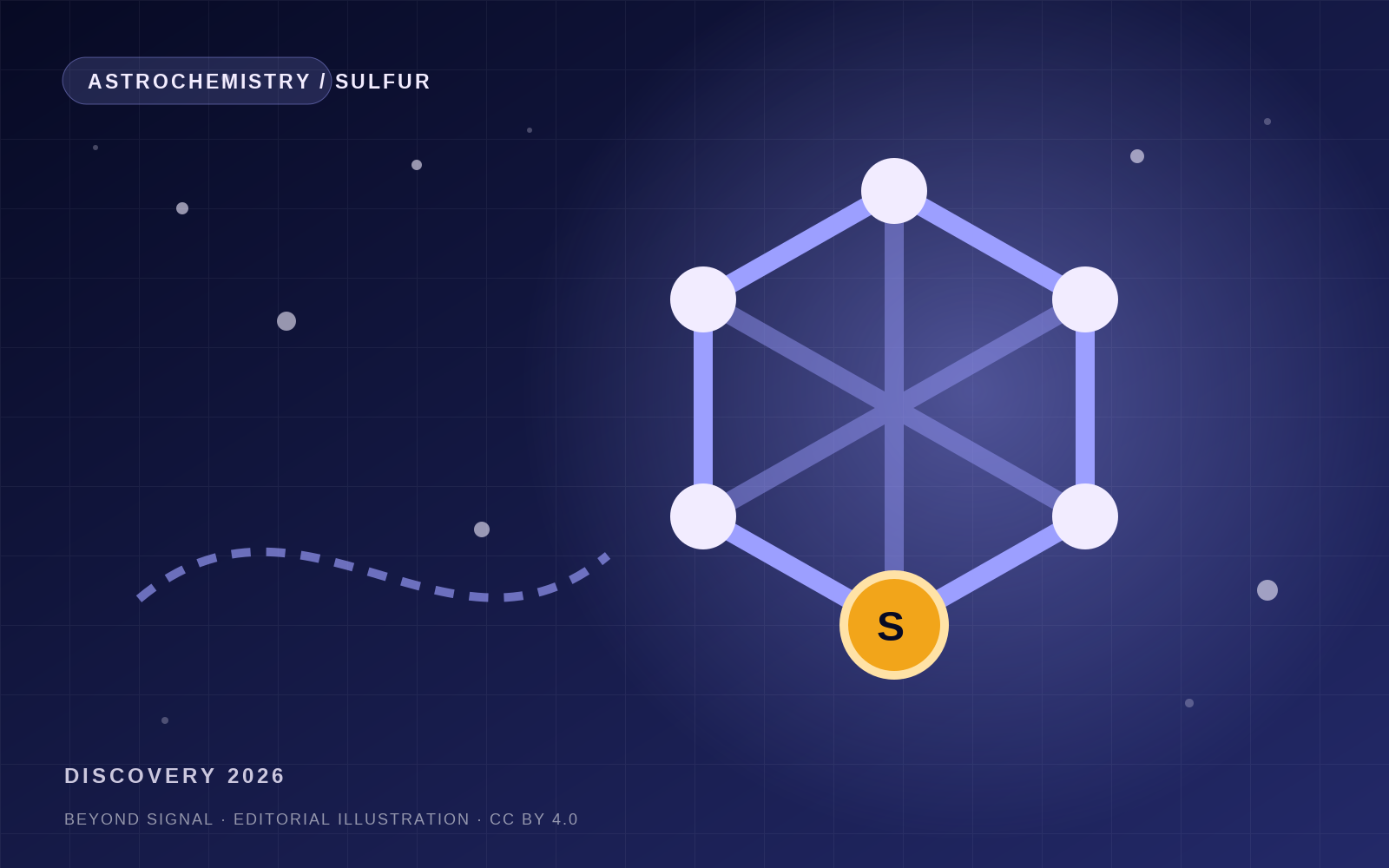
 Illustration — not a photo of the discovery
The Largest Interstellar Sulfur-Bearing Molecule Yet
Radio spectra revealed 2,5-cyclohexadiene-1-thione in a Galactic-centre molecular cloud, the largest sulfur-bearing molecule yet identified in interstellar space.
The story
Why scientists were there
Sulfur chemistry is central to biology and planetary materials, yet astronomers had found surprisingly few large sulfur-bearing molecules between the stars.
How they found it
Laboratory microwave spectroscopy first established the molecule's fingerprint, which was then matched across broadband observations from the Yebes 40-metre and IRAM 30-metre telescopes.
What makes it unique
The detection opened a new family of cyclic organosulfur compounds in space and strengthened the chemical bridge between cold molecular clouds and prebiotic material in young planetary systems.
Gallery
Where it was found
IRAM 30-m Telescope, Pico Veleta, Spain
Tags
Related discoveries
 🌌 Space
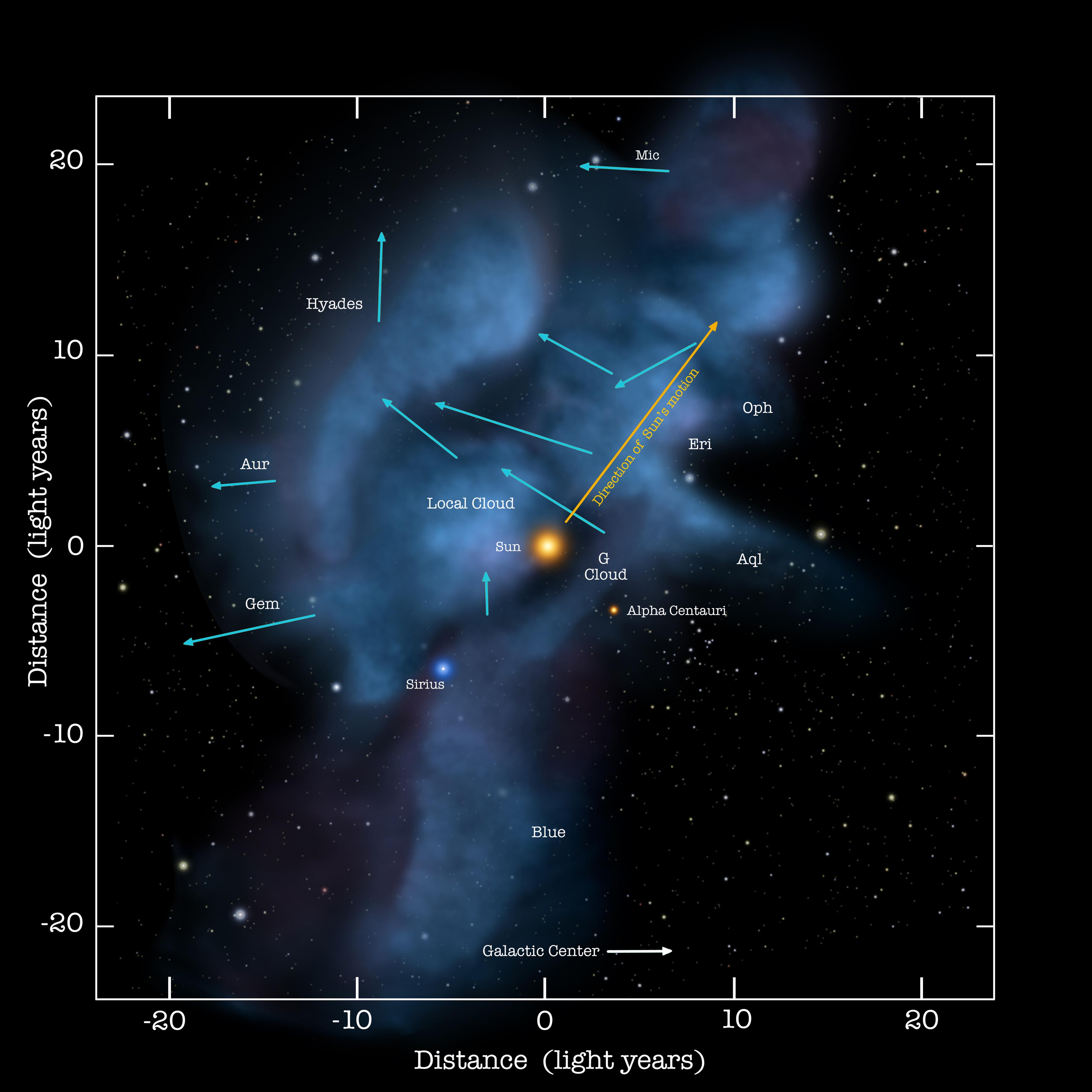
Eos: A Hidden Molecular Cloud Near the Sun
Astronomers discovered Eos, a vast molecular cloud only about 300 light-years away, by detecting ultraviolet fluorescence from molecular hydrogen — a first for this class of cloud.
Read more →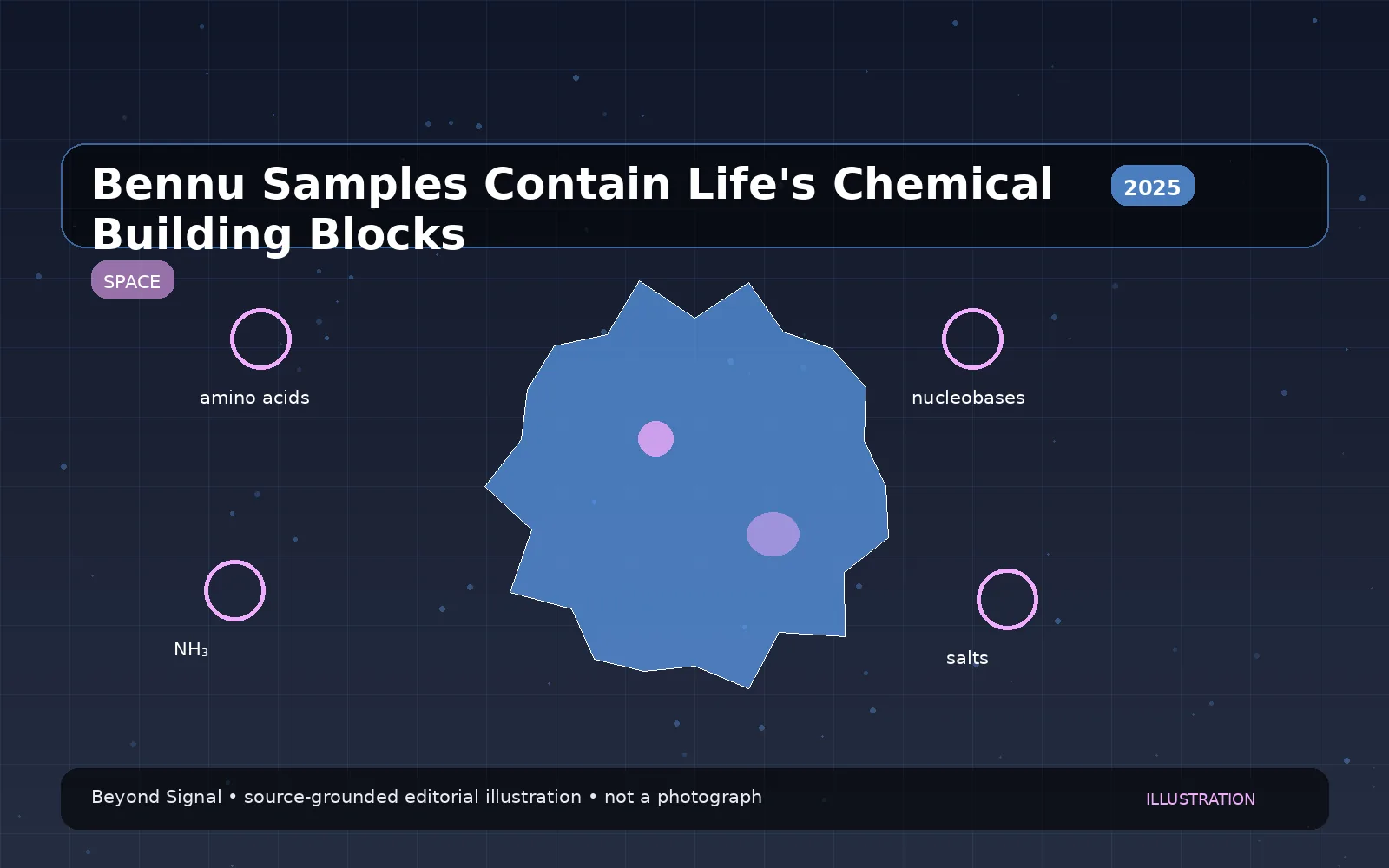 Illustration🌌 Space
Bennu Samples Contain Life's Chemical Building Blocks
Laboratory analyses of pristine asteroid Bennu material returned by OSIRIS-REx found abundant ammonia, nitrogen-rich organic matter, 14 of the 20 amino acids used by terrestrial life, and all five nucleobases used in DNA and RNA. The chemistry shows that life's ingredients were widespread, not that life existed on Bennu.
Read more →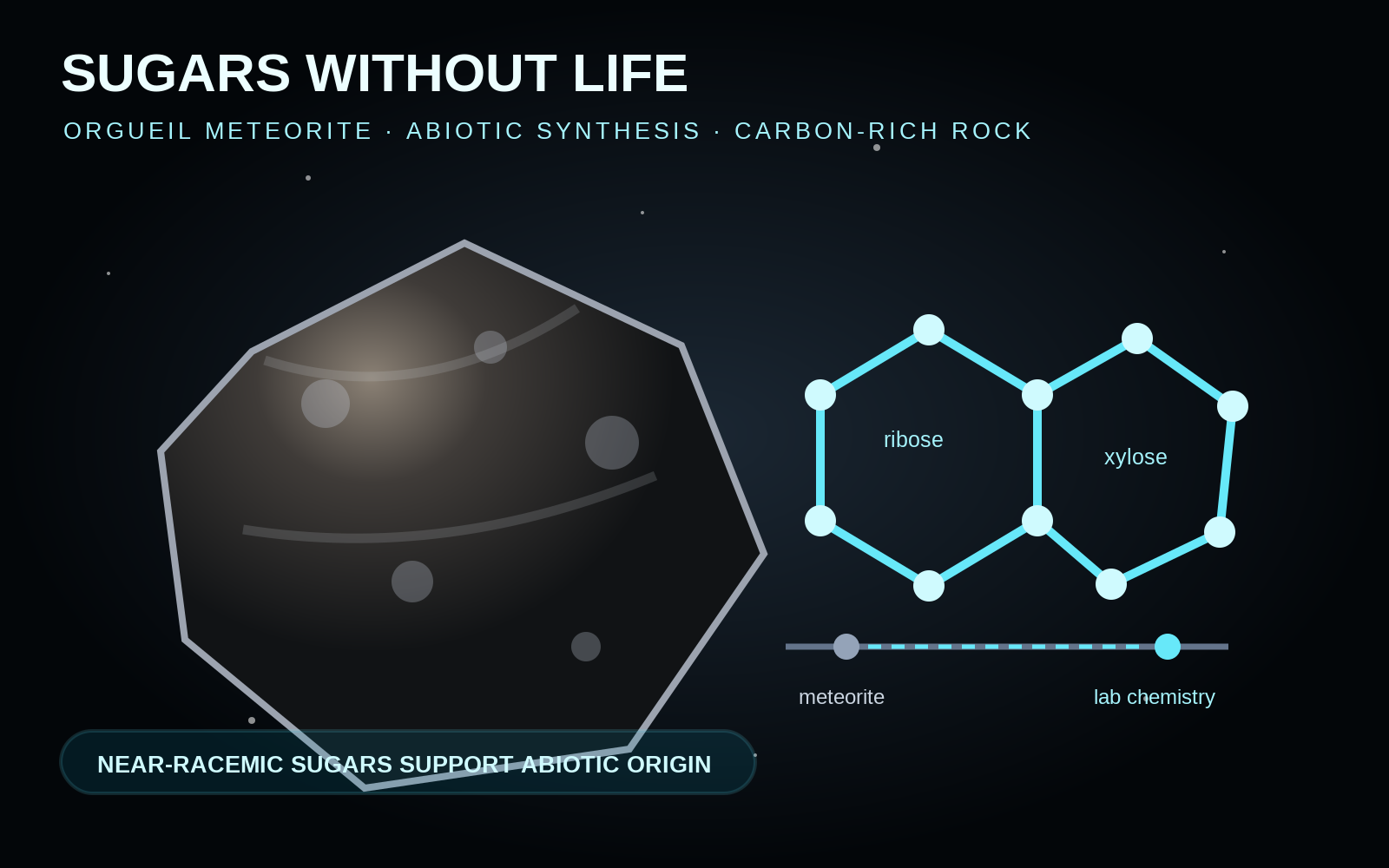 Illustration🌌 Space
Abiotic Sugars in the Orgueil Meteorite
Chiral analysis of an Orgueil meteorite sample detected ribose, arabinose, xylose, lyxose, and ribulose, with several near-racemic mixtures supporting abiotic extraterrestrial formation rather than ordinary biological contamination.
Read more →