
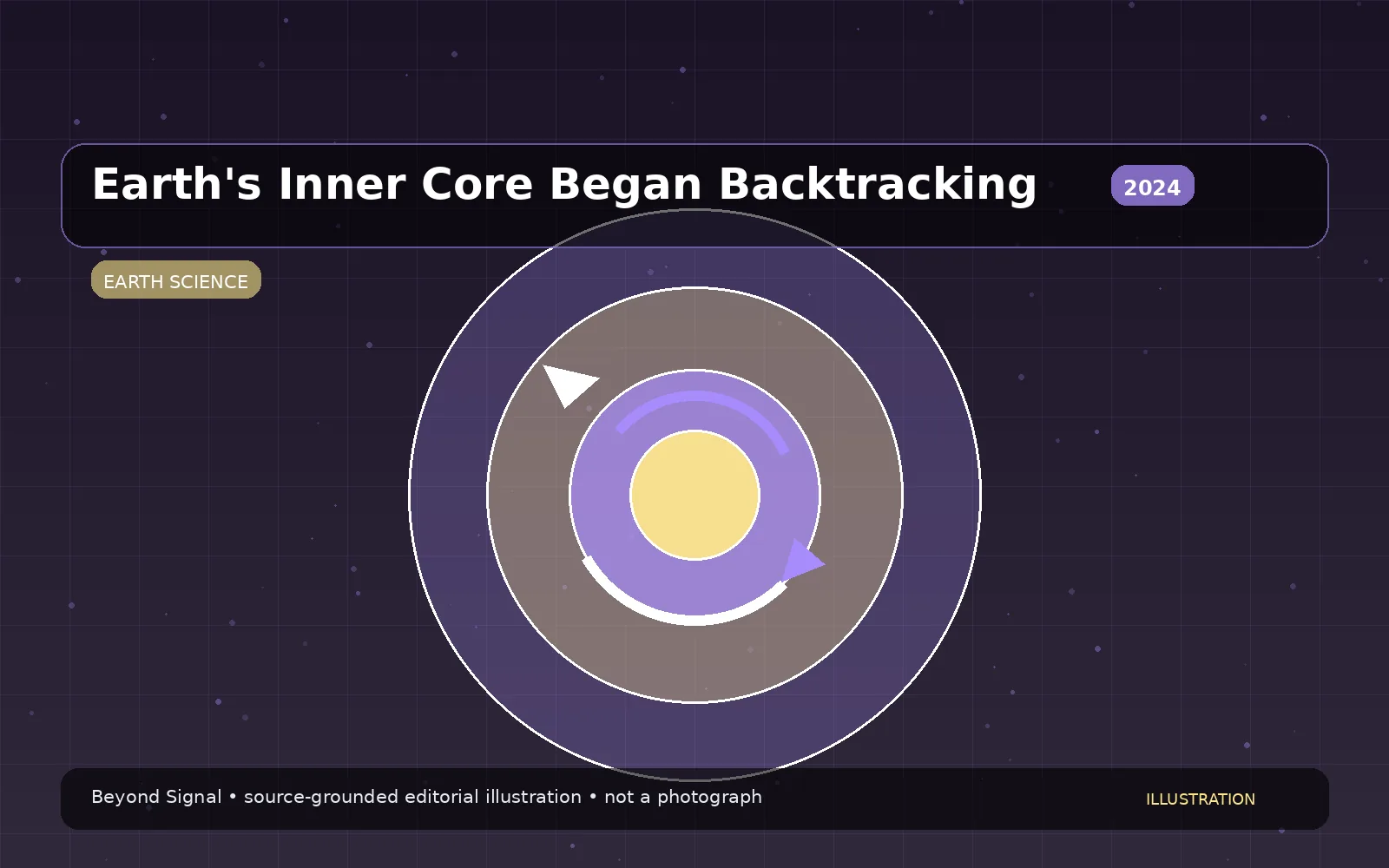
 Illustration — not a photo of the discovery
Earth's Inner Core Began Backtracking
Seismic waveforms from repeating earthquakes indicated that Earth's solid inner core had slowed and was moving backward relative to the mantle after about 2010. The result extended evidence that inner-core rotation oscillates over decades rather than maintaining a constant faster or slower spin.
The story
Why scientists were there
The inner core cannot be observed directly, so seismologists search for earthquakes that recur along nearly identical paths. Comparing waves from such events can reveal tiny changes in the structure or orientation of the deep interior through which they travelled.
How they found it
Researchers assembled waveform pairs from South Sandwich Islands earthquakes recorded in Alaska and Canada between 1991 and 2023. Changes that appeared and then reversed provided a distinctive signature of inner-core positions repeating as its relative motion changed direction.
What makes it unique
The study supplied evidence for backtracking, not a reversal of Earth's overall rotation. It helps constrain how the inner core couples to the liquid outer core and mantle, processes connected to the planet's magnetic field and subtle changes in day length.
Gallery
Where it was found
University of Southern California, Los Angeles
Tags
Related discoveries
 Illustration🌋 Earth Science
Beyond EPICA Reaches a 1.2-Million-Year Ice Record
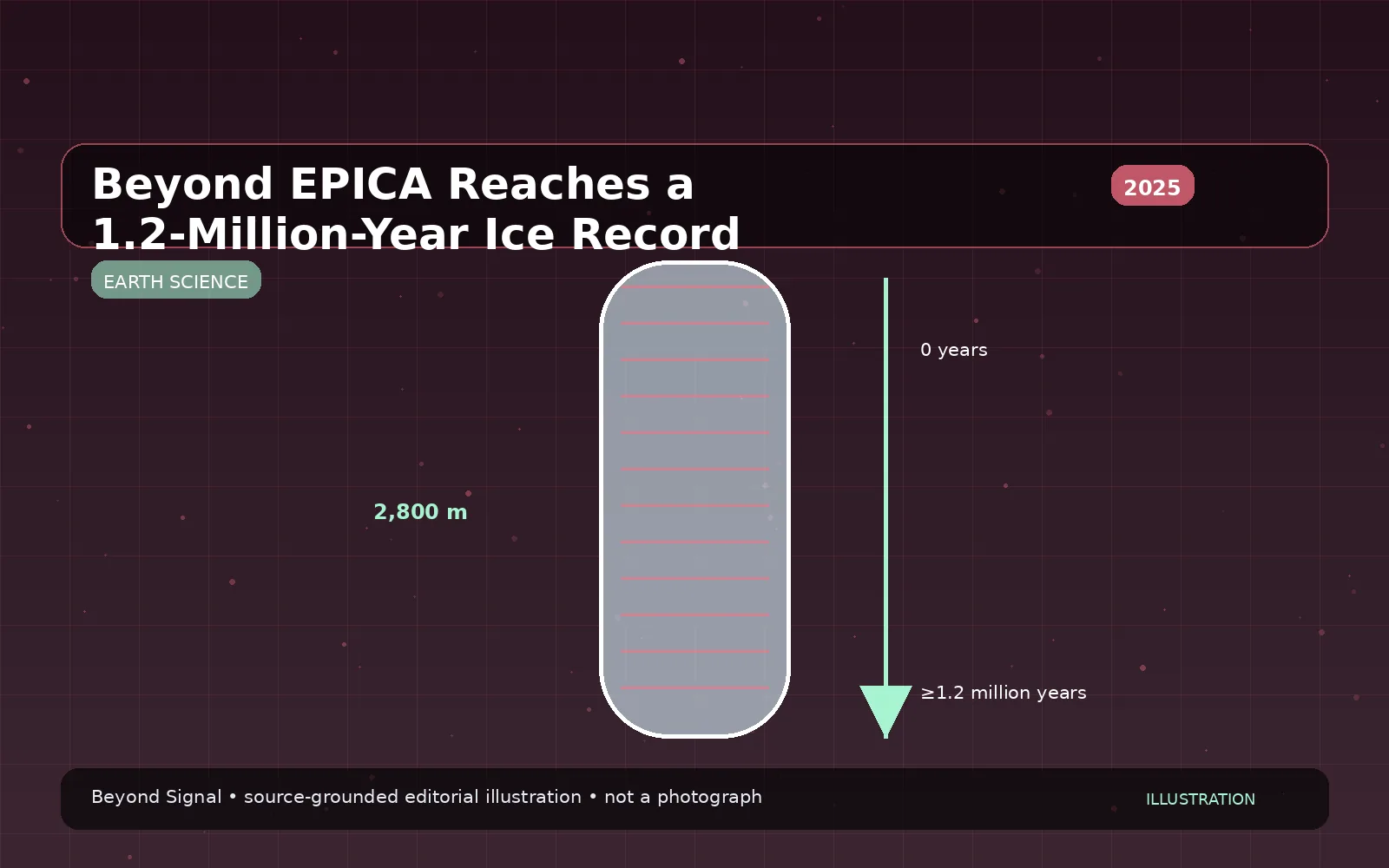
The Beyond EPICA team completed drilling to bedrock at Little Dome C, recovering a 2,800-metre Antarctic ice core expected to preserve a continuous climate record reaching at least 1.2 million years. The core targets the interval when glacial cycles shifted from roughly 41,000-year to 100,000-year rhythms.
Read more →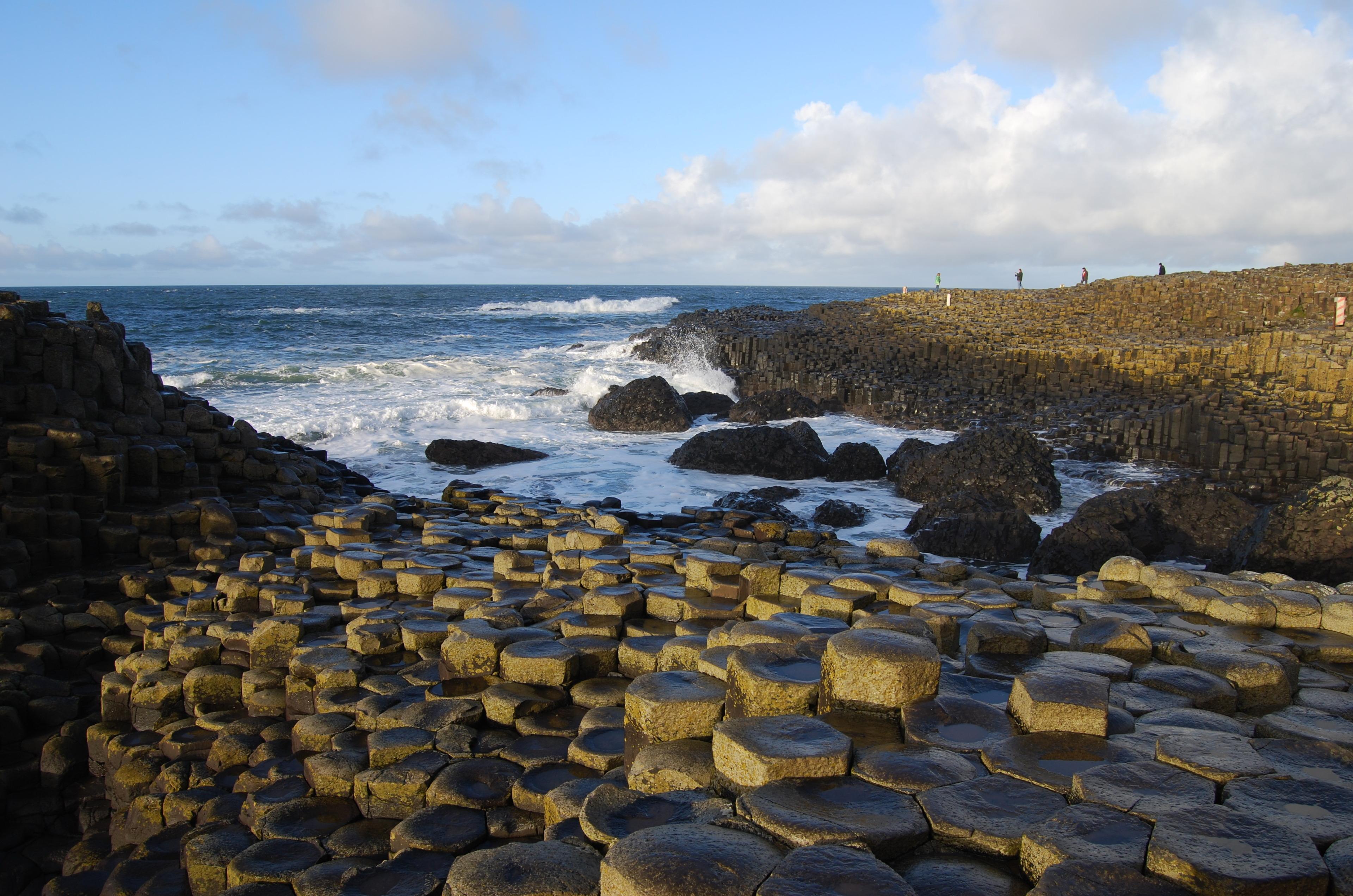 🌋 Earth Science
A New Timeline for the Giant's Causeway Eruptions
High-precision dating compressed the region's volcanic history into about 5.5 million years and tied the Causeway to a North Atlantic event recorded from Scotland to Greenland.
Read more →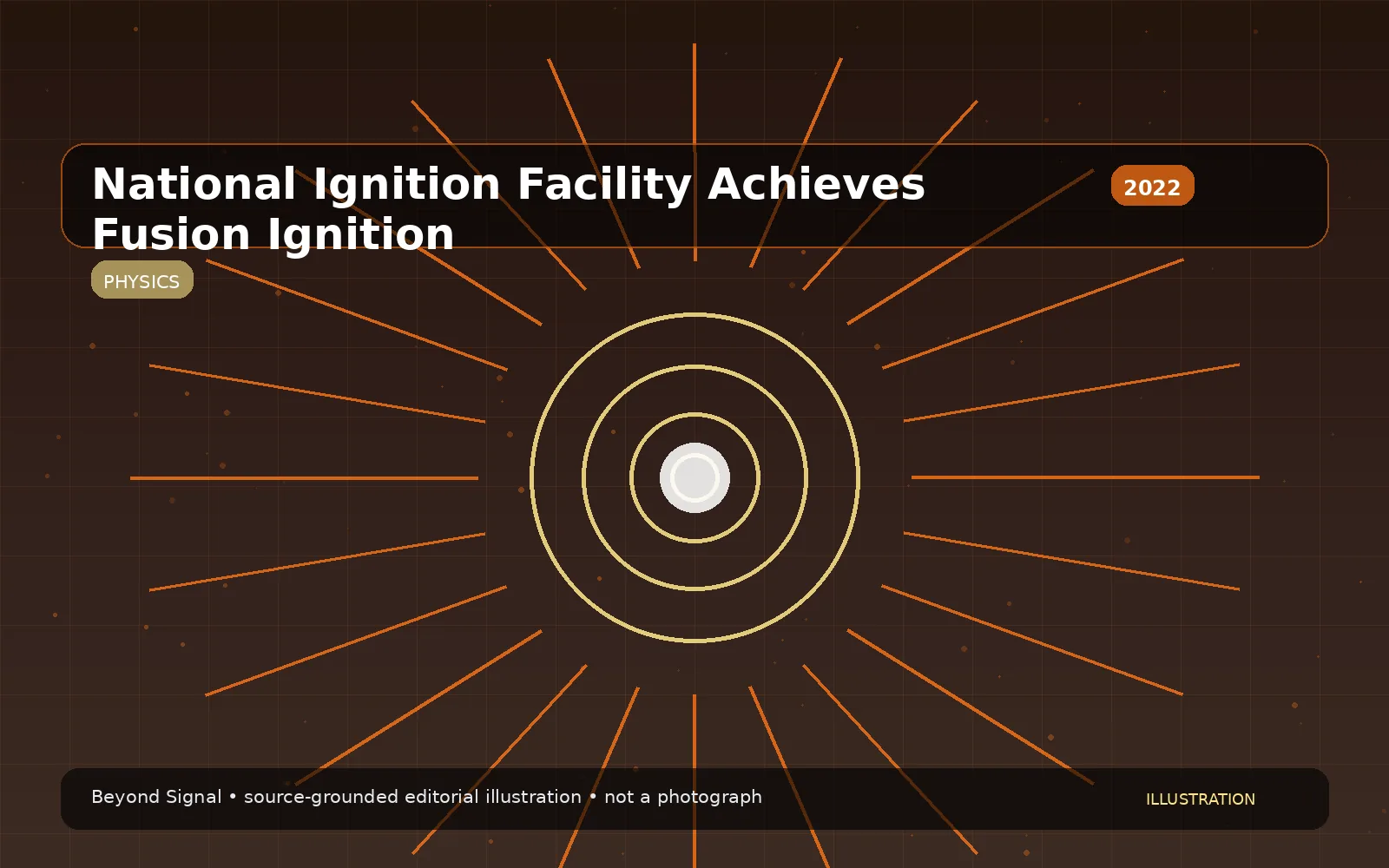 Illustration⚛️ Physics
National Ignition Facility Achieves Fusion Ignition
The National Ignition Facility announced the first controlled fusion experiment to produce more fusion energy from a target than the laser energy delivered to it. The December 5 shot sent 2.05 megajoules of laser energy into a fuel capsule and produced about 3.15 megajoules of fusion output.
Read more →