 Illustration — not a photo of the discovery
Landau–Phonon Polaritons Imaged in Graphene Heterostructures
Infrared magneto-nanoscopy visualized hybrid Landau–phonon polaritons in graphene heterostructures and showed that their propagation can be tuned with a magnetic field.
The story
Why scientists were there
Hybrid light–matter modes can concentrate and steer infrared energy far below ordinary optical length scales. The experiment demonstrates nanoscale control in specialized cryogenic materials, not an immediately deployable sensor or communications device; researchers must still establish fabrication tolerance, losses, and useful operating conditions.
How they found it
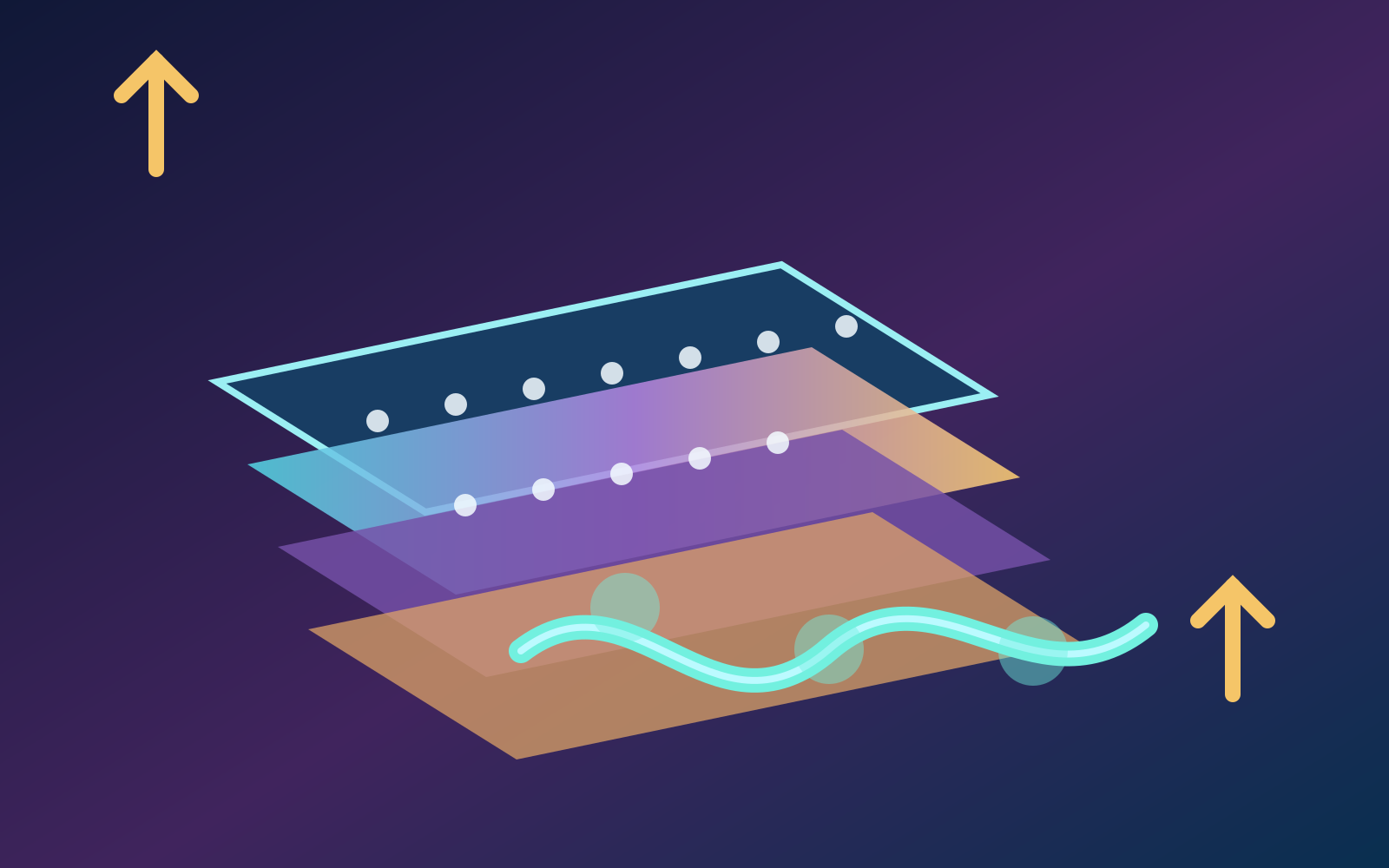
Researchers combined graphene with hexagonal boron nitride, applied a magnetic field to quantize graphene’s electronic states into Landau levels, and scanned the structure with infrared near-field microscopy. Spatial interference patterns and spectra revealed hybridization between electronic and phonon-polariton excitations.
What makes it unique
The direct observations are field-dependent real-space wave patterns and spectral avoided crossings. Calling the modes Landau–phonon polaritons is the physical interpretation that accounts for both measurements; their potential for tunable nanophotonics is a plausible application rather than a finished technology.
Gallery
Where it was found
Brookhaven National Laboratory, Upton
Tags
Related discoveries
 Illustration⚛️ Physics
Magnetic Fields Boost Superconductivity in Rhombohedral Graphene
Transport experiments in rhombohedral four- and five-layer graphene revealed superconducting states that persist, strengthen, or emerge in magnetic fields that would ordinarily suppress conventional superconductivity.
Read more →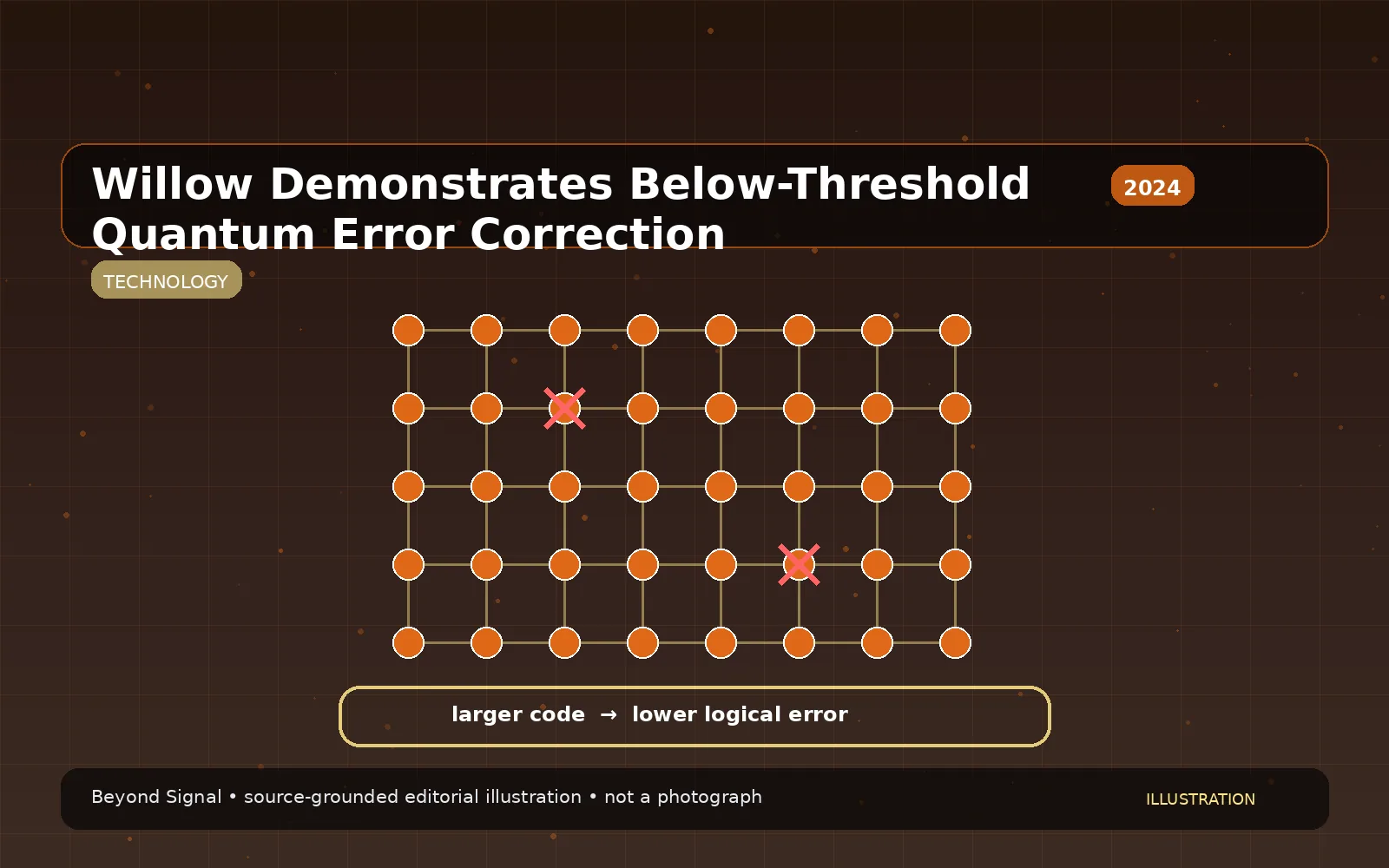 Illustration🤖 Technology
Willow Demonstrates Below-Threshold Quantum Error Correction
Google's Willow processor demonstrated below-threshold surface-code error correction: as researchers increased the size of encoded logical qubits, the logical error rate fell rather than rose. The experiment was an important scaling result for fault-tolerant quantum computing, although it did not produce a general-purpose error-corrected computer.
Read more →