 Illustration — not a photo of the discovery
Early Homo and an Unnamed Australopithecus at Ledi-Geraru
Thirteen teeth from Ledi-Geraru date to 2.6–2.8 million years ago and support the coexistence there of early Homo and a previously unrecognized Australopithecus form.
The story
Why scientists were there
The interval between roughly three and two million years ago records major changes in the hominin fossil record but remains patchy. Teeth preserve useful anatomy and dates, yet cannot by themselves establish a complete species description, population size, or ancestral relationship; more cranial and postcranial material is needed.
How they found it
Field teams recovered 13 teeth from several Ledi-Geraru localities and combined their geological context with radiometric and stratigraphic chronology. Comparative dental morphology assigned some specimens to Homo and others to Australopithecus that the authors judged distinct from Australopithecus afarensis.
What makes it unique
The direct evidence is the dated set of dental fossils and their measured anatomy. The conclusion that the Australopithecus teeth represent a new species is a taxonomic interpretation based on limited material and has not yet resulted in a formal species name; that is why this entry is marked preliminary.
Gallery
Where it was found
Ledi-Geraru Research Area, Afar
Tags
Related discoveries
 Illustration🏺 Archaeology
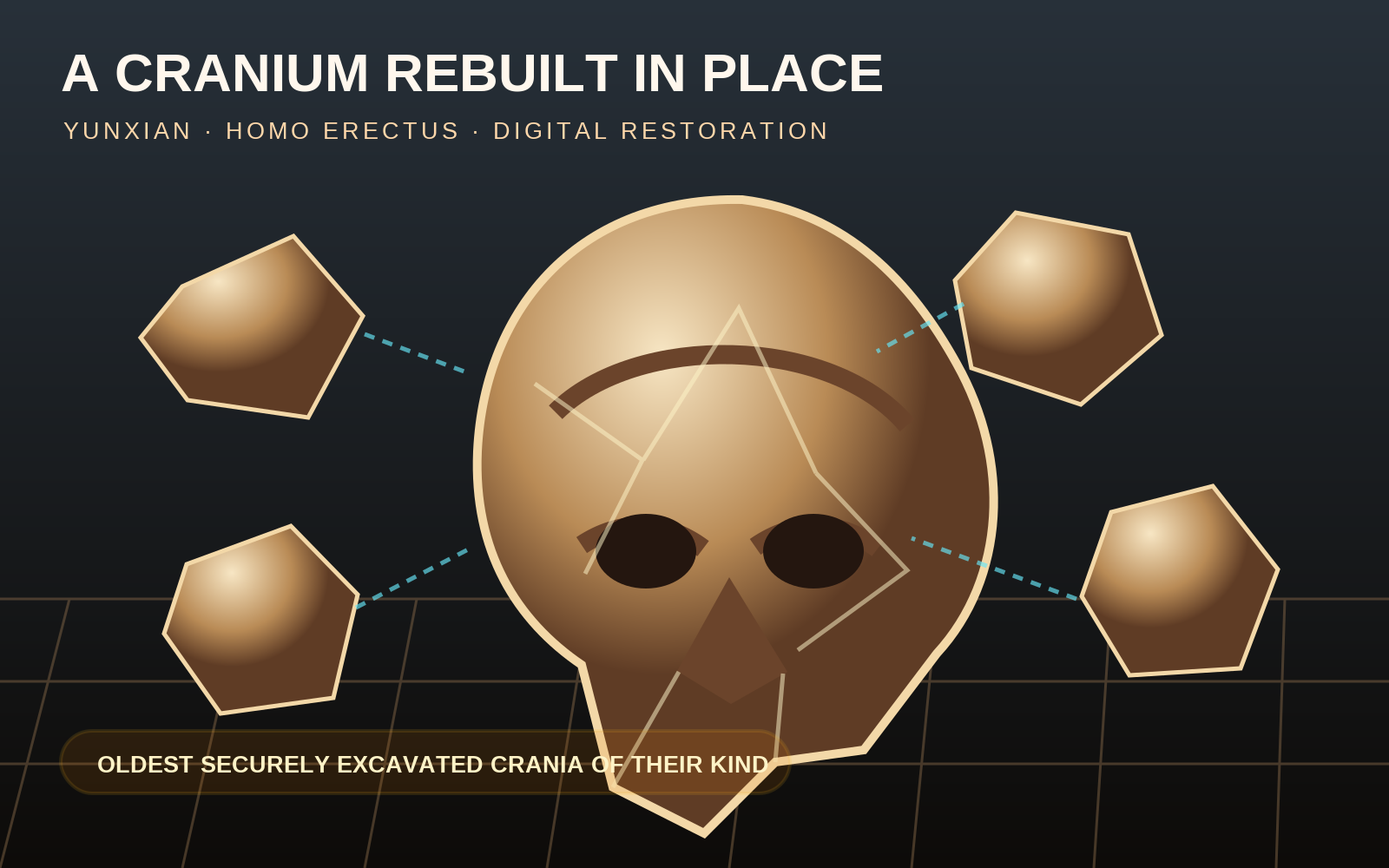
Yunxian's 1.77-Million-Year-Old Homo Erectus Crania
Cosmogenic-nuclide burial dating placed the fossil-bearing Yunxian sediments at 1.77 ± 0.08 million years old, making the three crania the oldest Homo erectus fossils securely recovered in place in eastern Asia.
Read more → Illustration🏺 Archaeology
773,000-Year-Old Hominins from Casablanca
Fossils from Thomas Quarry I in Casablanca were tightly dated to about 773,000 years ago and show a mix of traits that the authors place near the root of the Homo sapiens lineage.
Read more →