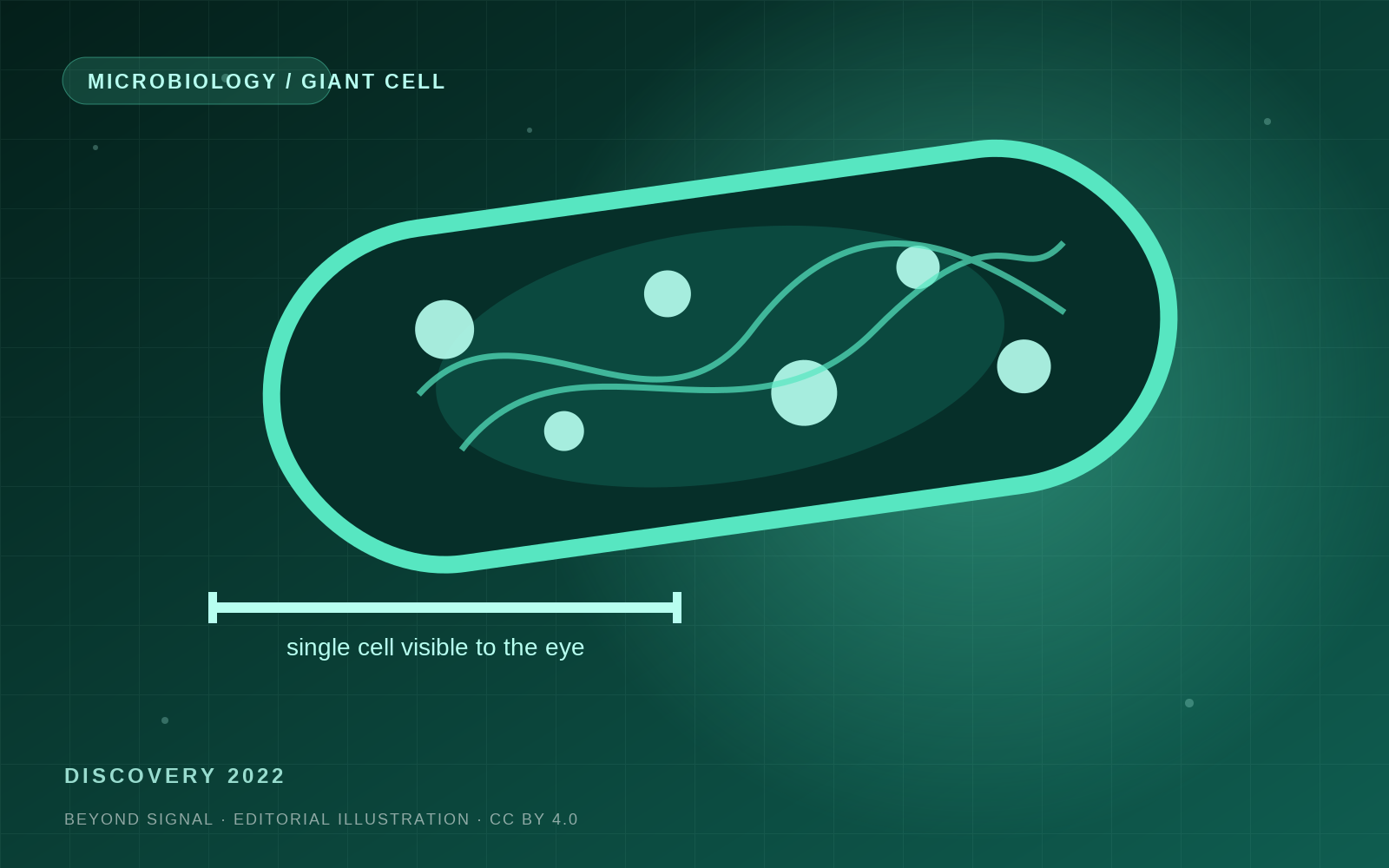
 Illustration — not a photo of the discovery
Thiomargarita Magnifica, the Giant Bacterium
A filament-shaped bacterium from Caribbean mangroves was shown to grow up to about two centimetres long, making a single bacterial cell visible to the unaided eye.
The story
Why scientists were there
White threads coating decaying mangrove leaves looked fungal, but microscopy and genetic tests suggested they were unusually large sulfur-oxidizing bacteria.
How they found it
Researchers combined fluorescence imaging, electron microscopy, genome sequencing, and three-dimensional analysis to map the cell and its DNA-containing membrane compartments.
What makes it unique
Its size shattered familiar bacterial limits, while thousands of genome copies packaged inside structures called pepins revealed an unexpected level of cellular organization.
Gallery
Where it was found
Red mangroves, Guadeloupe archipelago
Tags
Related discoveries
 Illustration🧬 Biology
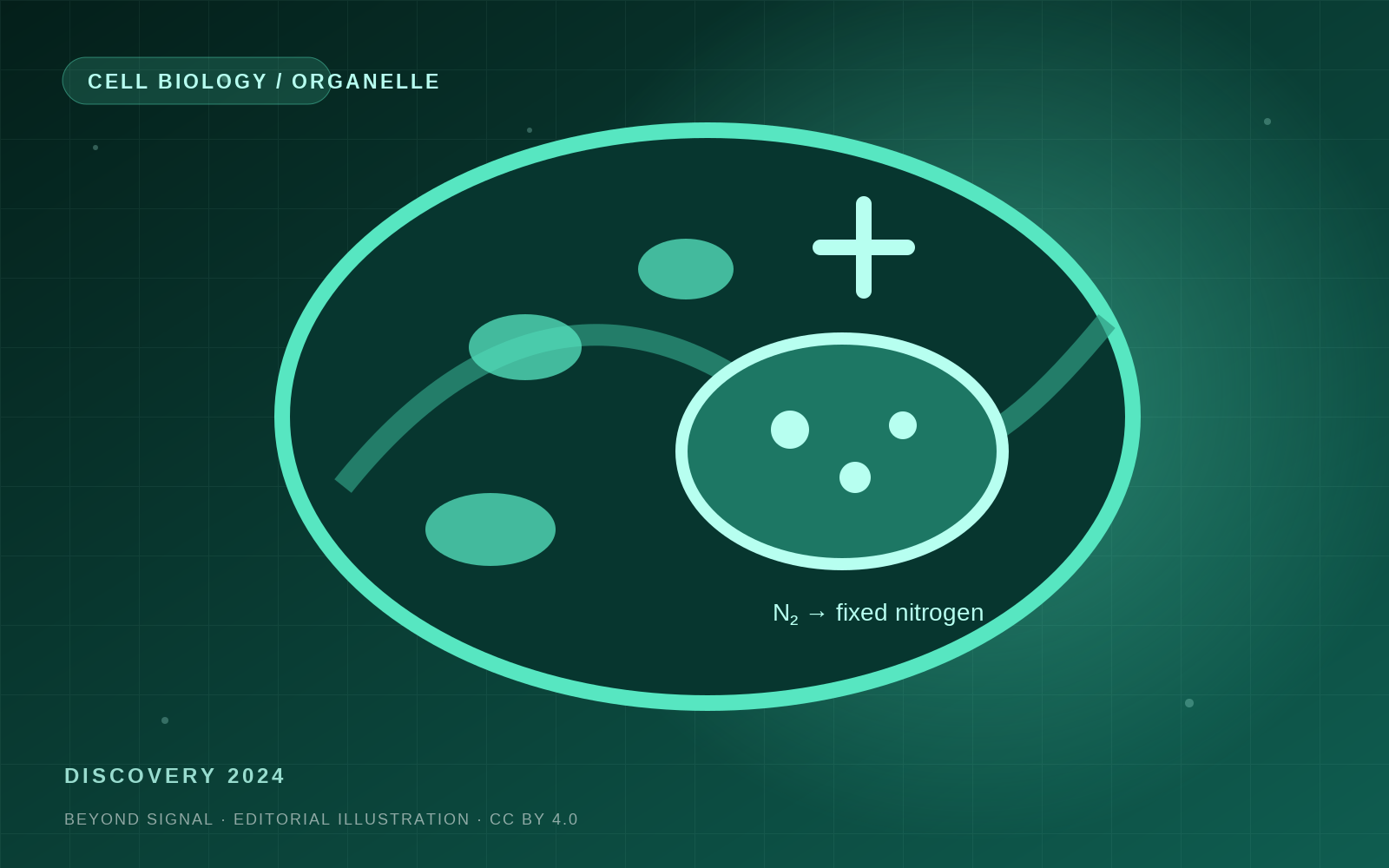
The Nitroplast, a Nitrogen-Fixing Organelle
Researchers showed that a cyanobacterial partner inside a marine alga is integrated deeply enough to function as a true nitrogen-fixing organelle, named the nitroplast.
Read more →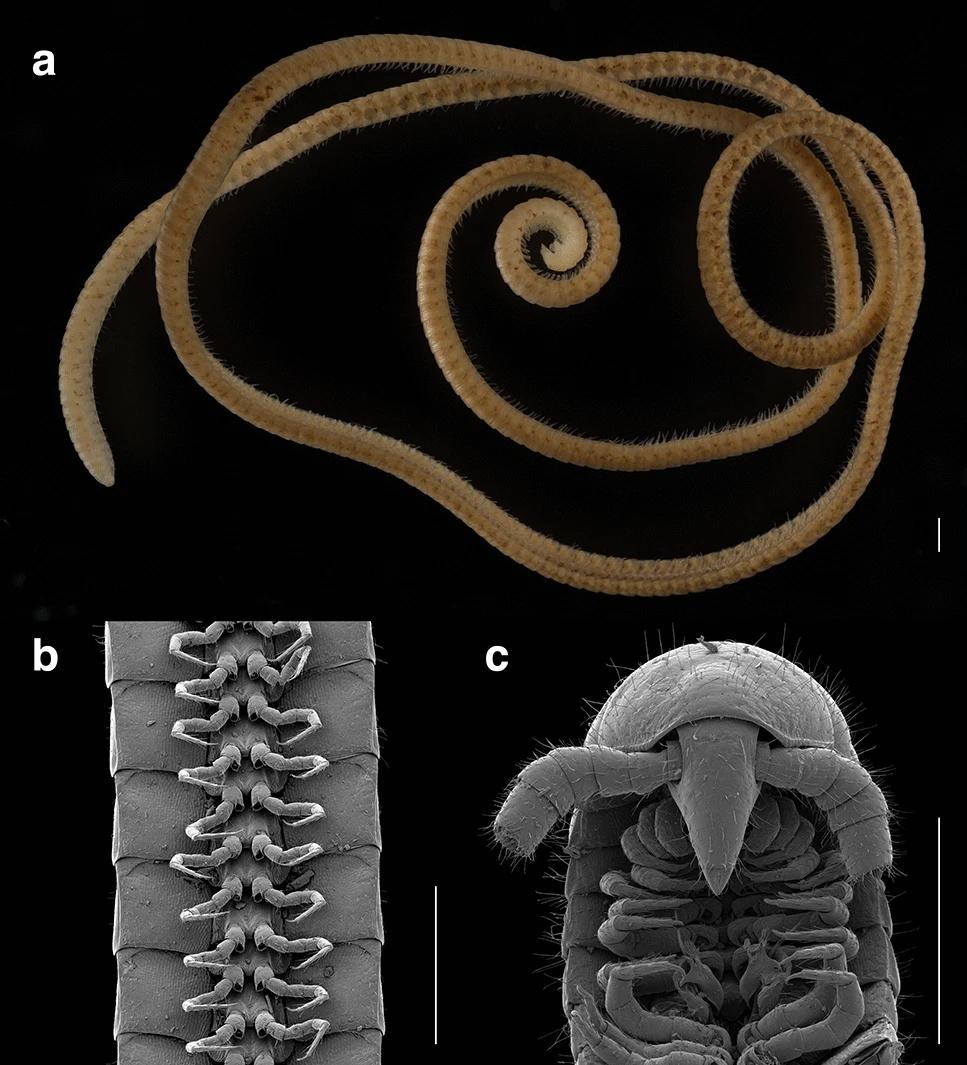 🧬 Biology
The First True Millipede (1,306 Legs)
A pale, eyeless arthropod with up to 1,306 legs — the first millipede ever found that literally has more than a thousand.
Read more → Illustration🪸 Ocean Discoveries
A Global Ocean Census of RNA Viruses
A metatranscriptomic survey of ocean samples substantially expanded the known RNA virome, reorganizing major evolutionary groups and revealing that marine RNA viruses are both abundant and deeply diverse.
Read more →