 Illustration — not a photo of the discovery
Phosphates Detected in Enceladus's Ocean
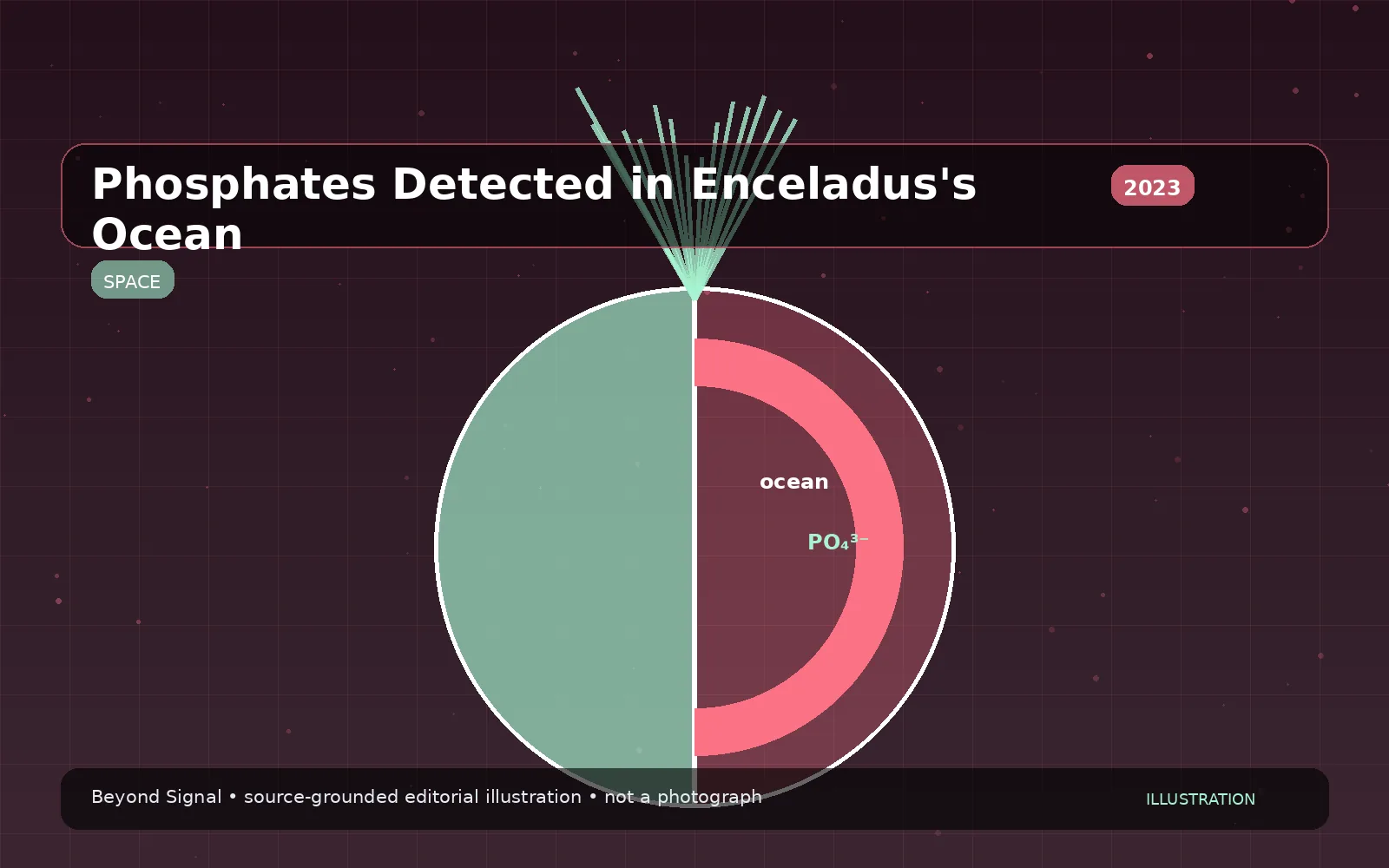
Reanalysis of ice grains sampled by NASA's Cassini spacecraft detected sodium phosphates originating from the subsurface ocean of Saturn's moon Enceladus. Phosphorus is essential to terrestrial biology, and the inferred ocean concentrations were at least comparable to, and potentially higher than, those in Earth's oceans.
The story
Why scientists were there
Enceladus sprays ocean-derived ice and vapour through fractures near its south pole. Cassini repeatedly crossed those plumes and Saturn's E ring, giving scientists preserved samples from an alien ocean without landing or drilling through the moon's ice shell.
How they found it
Researchers revisited mass spectra from Cassini's Cosmic Dust Analyzer and identified a phosphate-bearing signature in a small subset of salt-rich ice grains. Laboratory experiments with analogue Enceladus water tested whether the detected compounds could remain dissolved under the moon's alkaline, carbonate-rich conditions.
What makes it unique
It was the first direct detection of phosphorus from an ocean beyond Earth. The finding strengthened Enceladus's chemical habitability case, but it did not detect life and does not show that biological processes are occurring there.
Gallery
Where it was found
Freie Universität Berlin, planetary sciences analysis
Tags
Related discoveries
 Illustration🌌 Space
Quaoar's Ring Beyond the Roche Limit
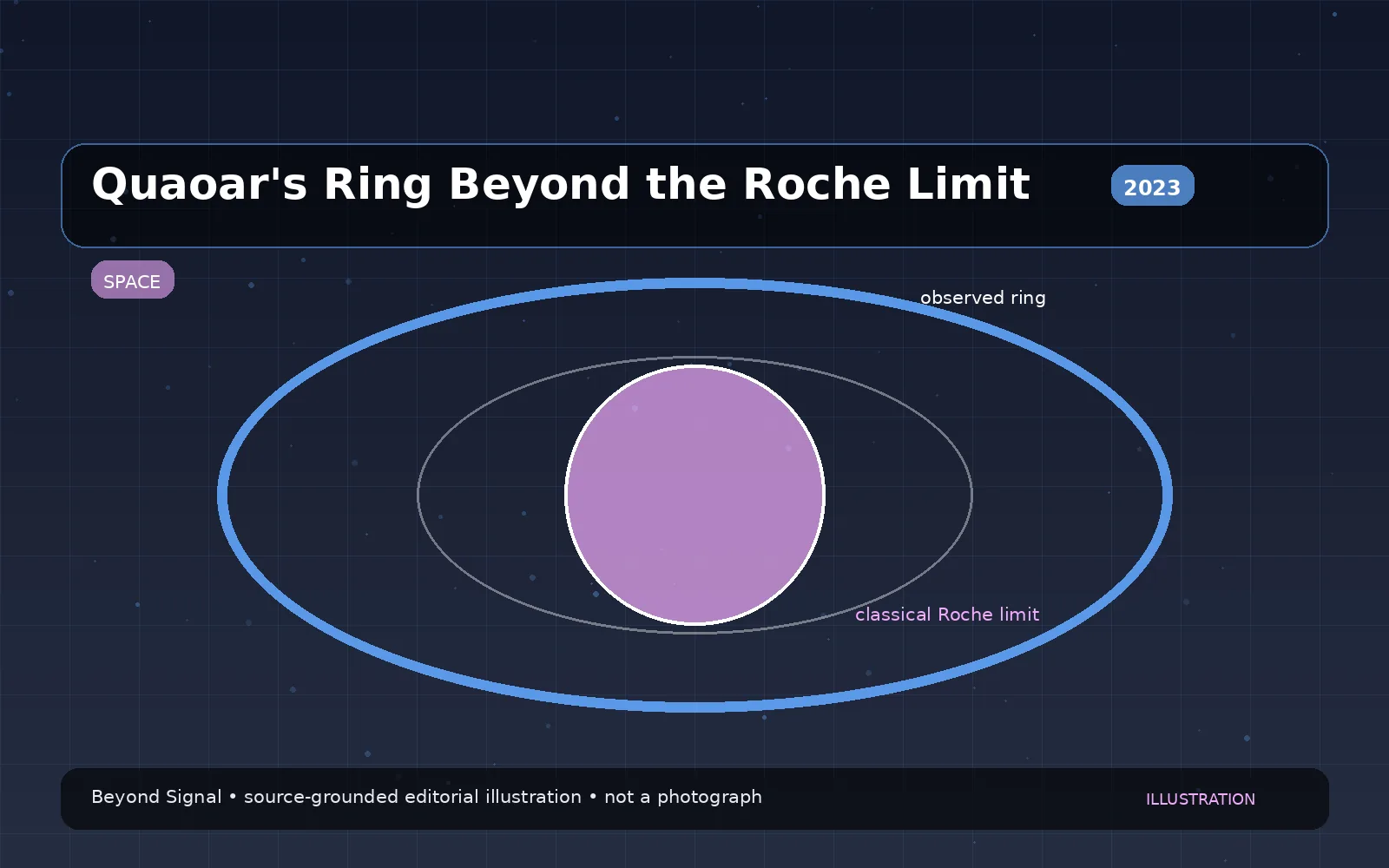
Observations of the dwarf planet Quaoar revealed a dense ring far beyond the classical Roche limit, the distance inside which tidal forces are expected to prevent ring material from assembling into a moon. The ring challenges a simple rule used to explain why planetary rings persist.
Read more →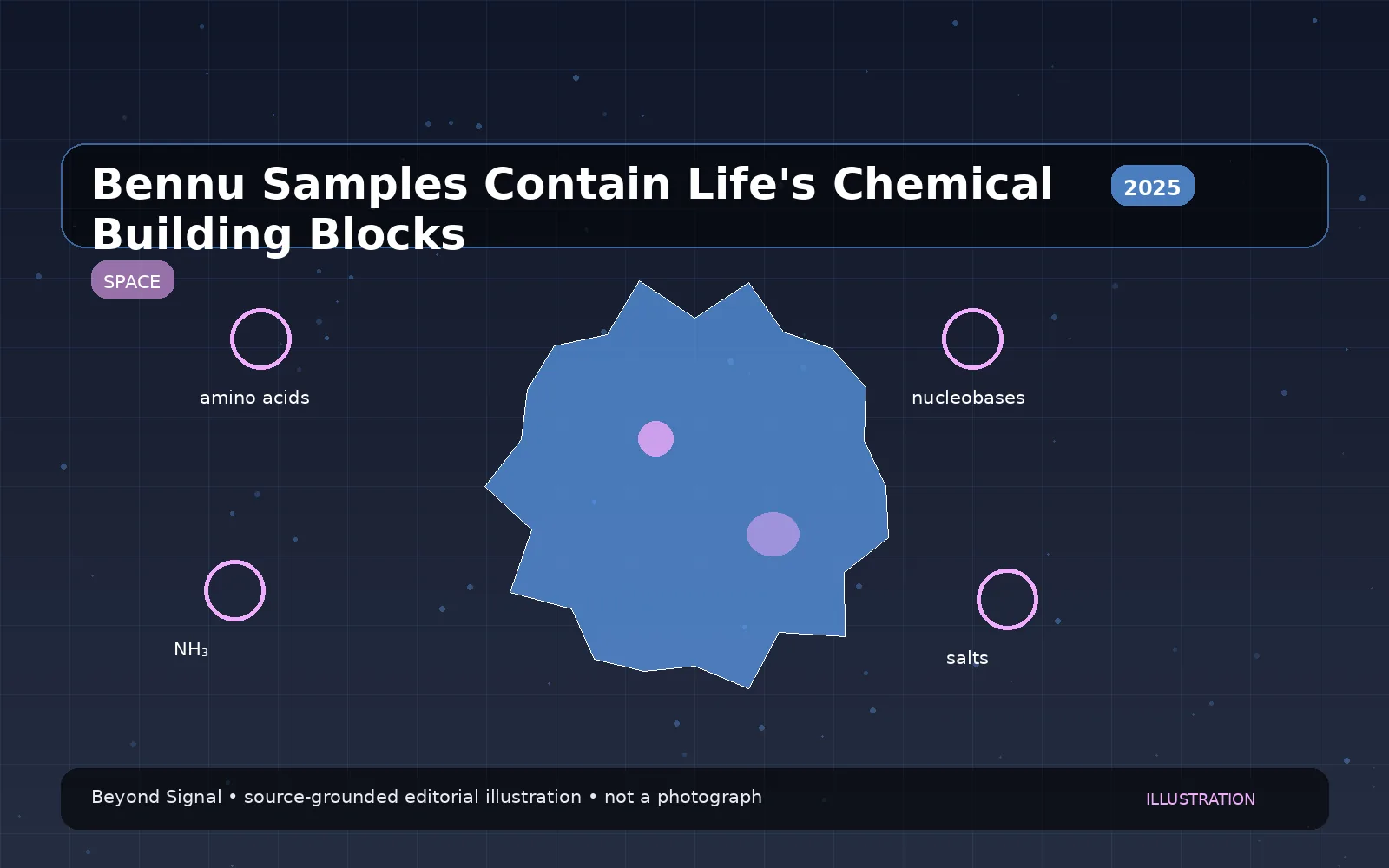 Illustration🌌 Space
Bennu Samples Contain Life's Chemical Building Blocks
Laboratory analyses of pristine asteroid Bennu material returned by OSIRIS-REx found abundant ammonia, nitrogen-rich organic matter, 14 of the 20 amino acids used by terrestrial life, and all five nucleobases used in DNA and RNA. The chemistry shows that life's ingredients were widespread, not that life existed on Bennu.
Read more → Illustration🌌 Space
Cassini Gravity Data Reveal Strong Tidal Dissipation in Titan
A reanalysis of Cassini radio tracking measured unexpectedly strong tidal energy loss in Titan and found that the gravity signal is inconsistent with the global subsurface ocean model previously favored for the moon.
Read more →