 Illustration — not a photo of the discovery
Quaoar's Ring Beyond the Roche Limit
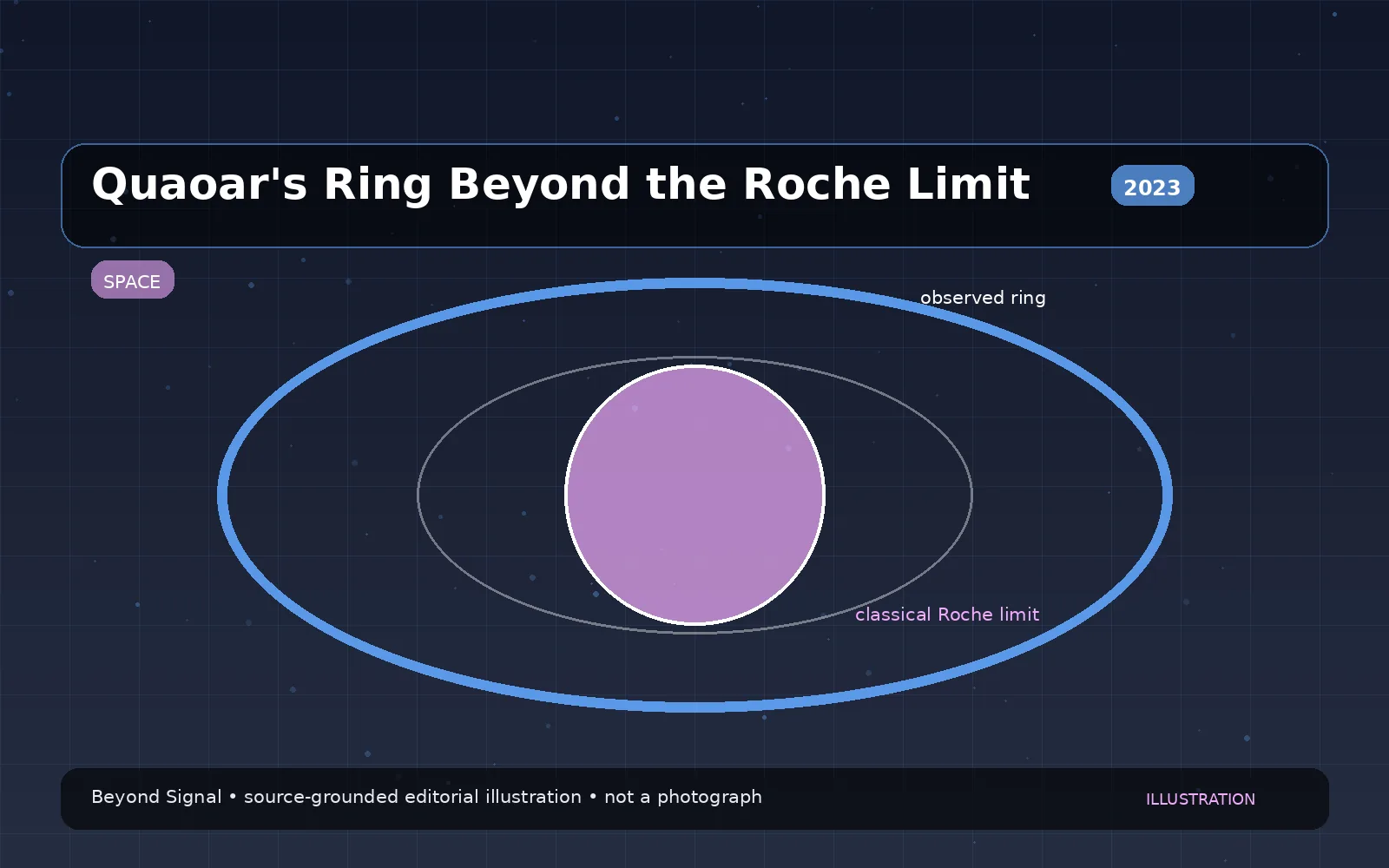
Observations of the dwarf planet Quaoar revealed a dense ring far beyond the classical Roche limit, the distance inside which tidal forces are expected to prevent ring material from assembling into a moon. The ring challenges a simple rule used to explain why planetary rings persist.
The story
Why scientists were there
Astronomers monitored Quaoar as it passed in front of distant stars. Such stellar occultations can measure an object's size and reveal faint surrounding material through brief extra dips in starlight that ordinary imaging cannot resolve.
How they found it
Ground-based telescopes and ESA's CHEOPS satellite recorded repeated secondary dimmings before and after Quaoar blocked the star. Combining events from multiple dates established that the material formed a ring at roughly 4,100 kilometres from Quaoar's centre.
What makes it unique
The ring orbits at about 7.4 Quaoar radii, more than twice the conventional Roche-limit estimate. Its survival suggests that resonances, unusual particle collisions, or other dynamics can keep material dispersed where standard models would predict moon formation.
Gallery
Where it was found
University of Bern, CHEOPS analysis centre
Tags
Related discoveries
 Illustration🌌 Space
Phosphates Detected in Enceladus's Ocean
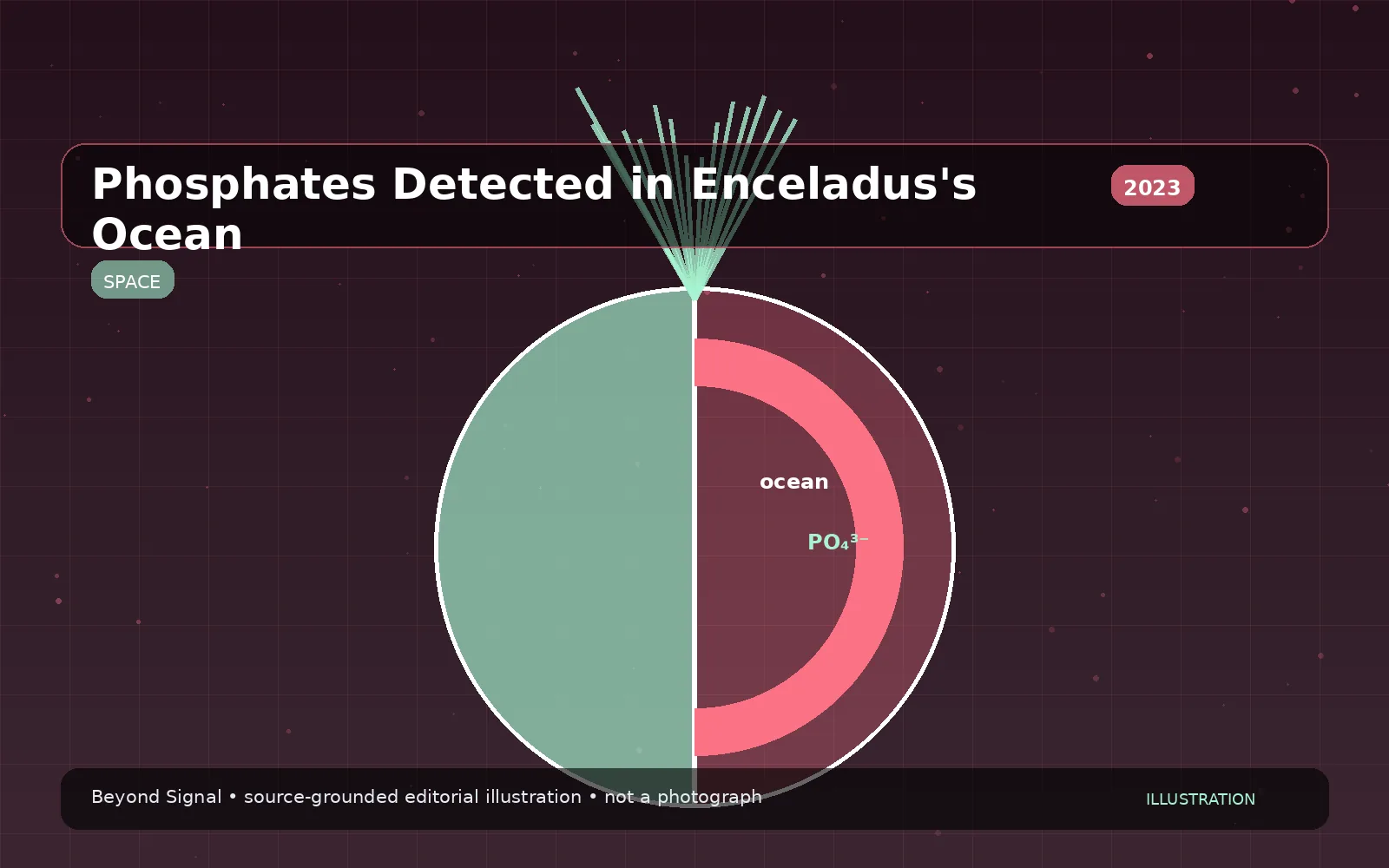
Reanalysis of ice grains sampled by NASA's Cassini spacecraft detected sodium phosphates originating from the subsurface ocean of Saturn's moon Enceladus. Phosphorus is essential to terrestrial biology, and the inferred ocean concentrations were at least comparable to, and potentially higher than, those in Earth's oceans.
Read more →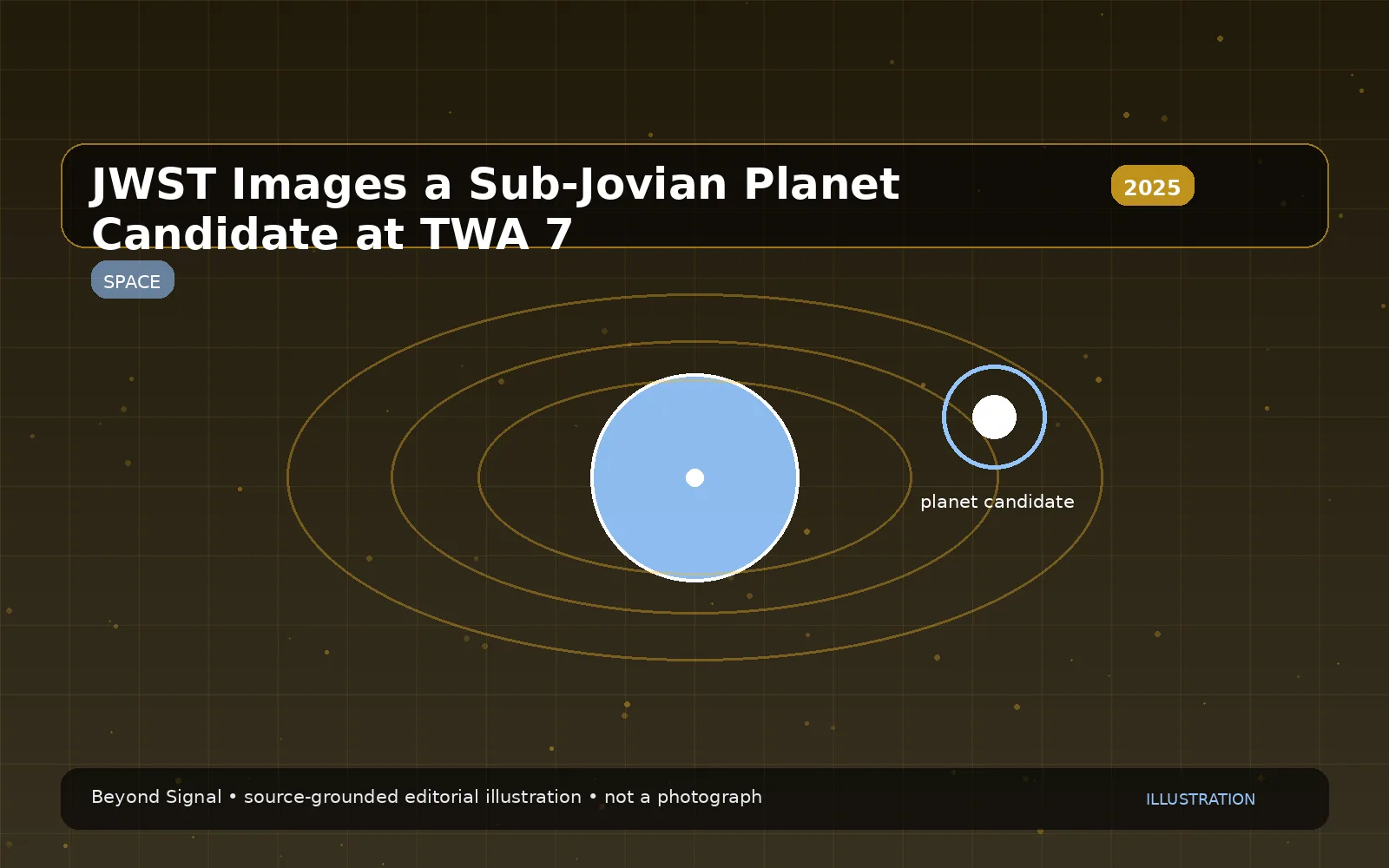 Illustration🌌 Space
JWST Images a Sub-Jovian Planet Candidate at TWA 7
James Webb Space Telescope coronagraphy revealed a compact infrared source embedded in a narrow ring of the young star TWA 7's debris disk. Models place the candidate near 0.3 Jupiter masses at about 52 astronomical units, potentially making it the lowest-mass planet directly imaged around another star.
Read more →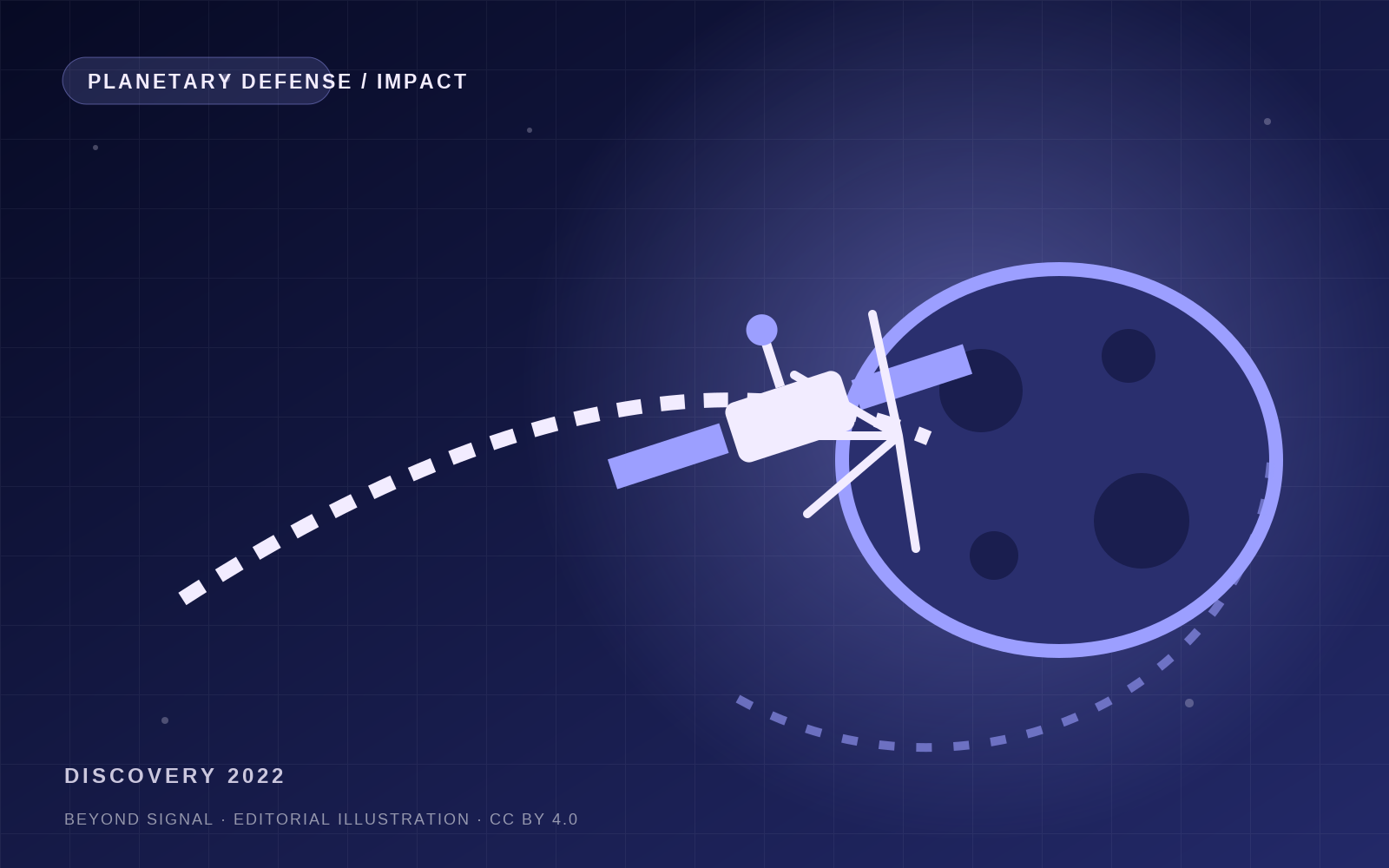 Illustration🌌 Space
DART Successfully Changes an Asteroid's Orbit
Observations confirmed that NASA's DART spacecraft shortened Dimorphos's orbit around Didymos by roughly 32 minutes, proving that a kinetic impactor can measurably deflect an asteroid.
Read more →