 Illustration — not a photo of the discovery
Greenland's Two-Million-Year-Old Environmental DNA
Environmental DNA recovered from mineral-rich sediments at Greenland's Kap København Formation reconstructed a roughly two-million-year-old ecosystem containing mastodons, reindeer, hares, geese, plants, and marine organisms. The fragmented DNA extended the known survival limit of ancient genetic material by about one million years.
The story
Why scientists were there
The Kap København sediments formed when northern Greenland was considerably warmer than today. Researchers sampled the deposits to test whether DNA could remain adsorbed to clay and quartz minerals long after recognizable biological remains had disappeared.
How they found it
The team extracted minute DNA fragments from sediment, authenticated their age and environmental origin, and matched short sequences against modern and ancient reference databases. They combined genetic evidence with pollen, fossils, and geological context rather than treating any single fragment as a complete genome.
What makes it unique
The resulting ecological portrait mixed Arctic and temperate organisms in a community with no exact modern counterpart. It demonstrated that environmental DNA can reveal whole ecosystems far deeper in time than previously possible, while also showing the limits of reconstructing organisms from highly fragmented sequences.
Gallery
Where it was found
Kap København Formation, Peary Land, northern Greenland
Tags
Related discoveries
 Illustration🧬 Biology
Woolly Rhino Genome Recovered from a Wolf's Stomach
Scientists reconstructed a high-quality woolly rhinoceros genome from undigested meat preserved in the stomach of a roughly 14,400-year-old wolf pup. Comparisons with older rhino genomes found no prolonged loss of diversity or rising inbreeding before extinction, supporting a comparatively rapid population collapse.
Read more →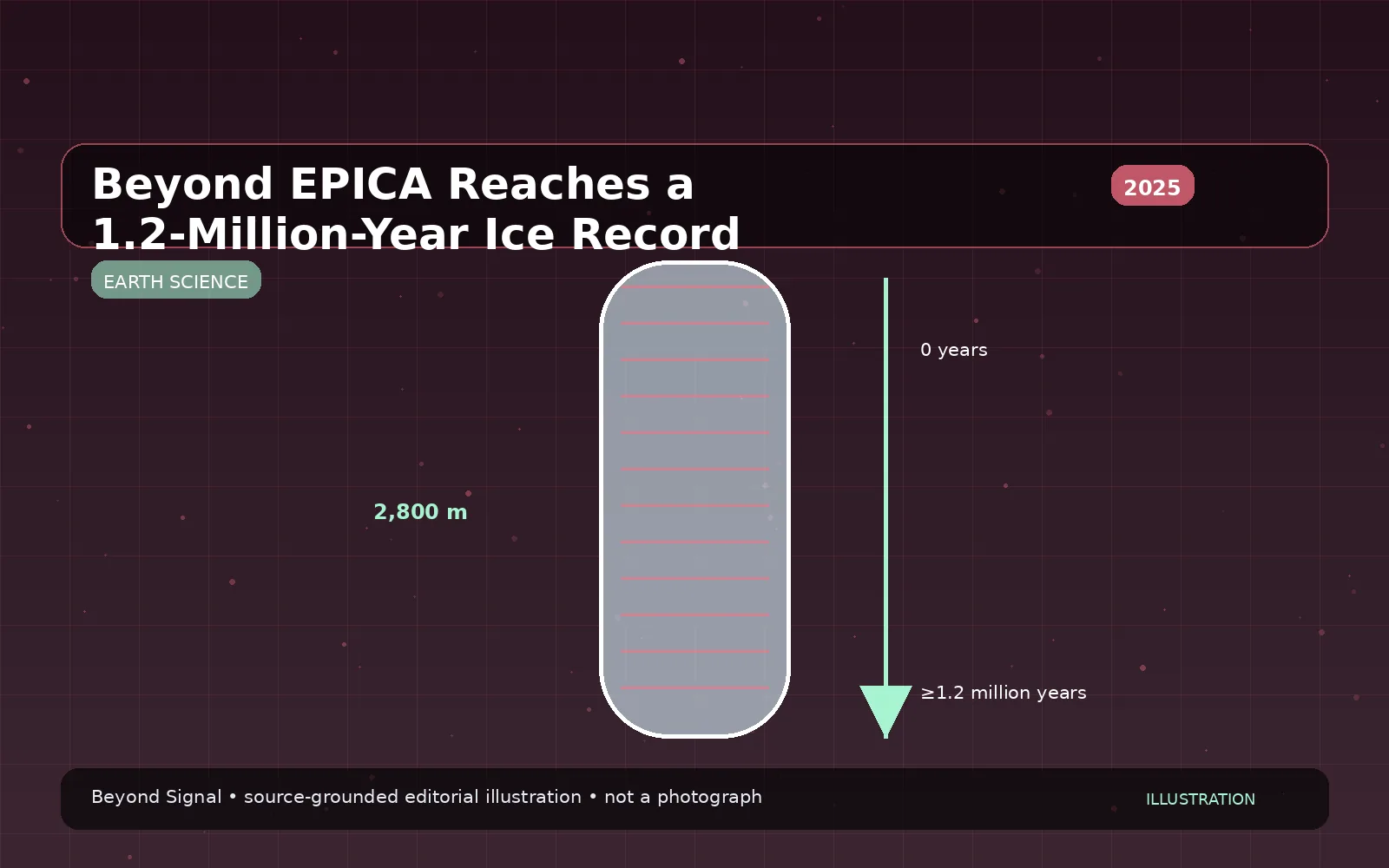 Illustration🌋 Earth Science
Beyond EPICA Reaches a 1.2-Million-Year Ice Record
The Beyond EPICA team completed drilling to bedrock at Little Dome C, recovering a 2,800-metre Antarctic ice core expected to preserve a continuous climate record reaching at least 1.2 million years. The core targets the interval when glacial cycles shifted from roughly 41,000-year to 100,000-year rhythms.
Read more →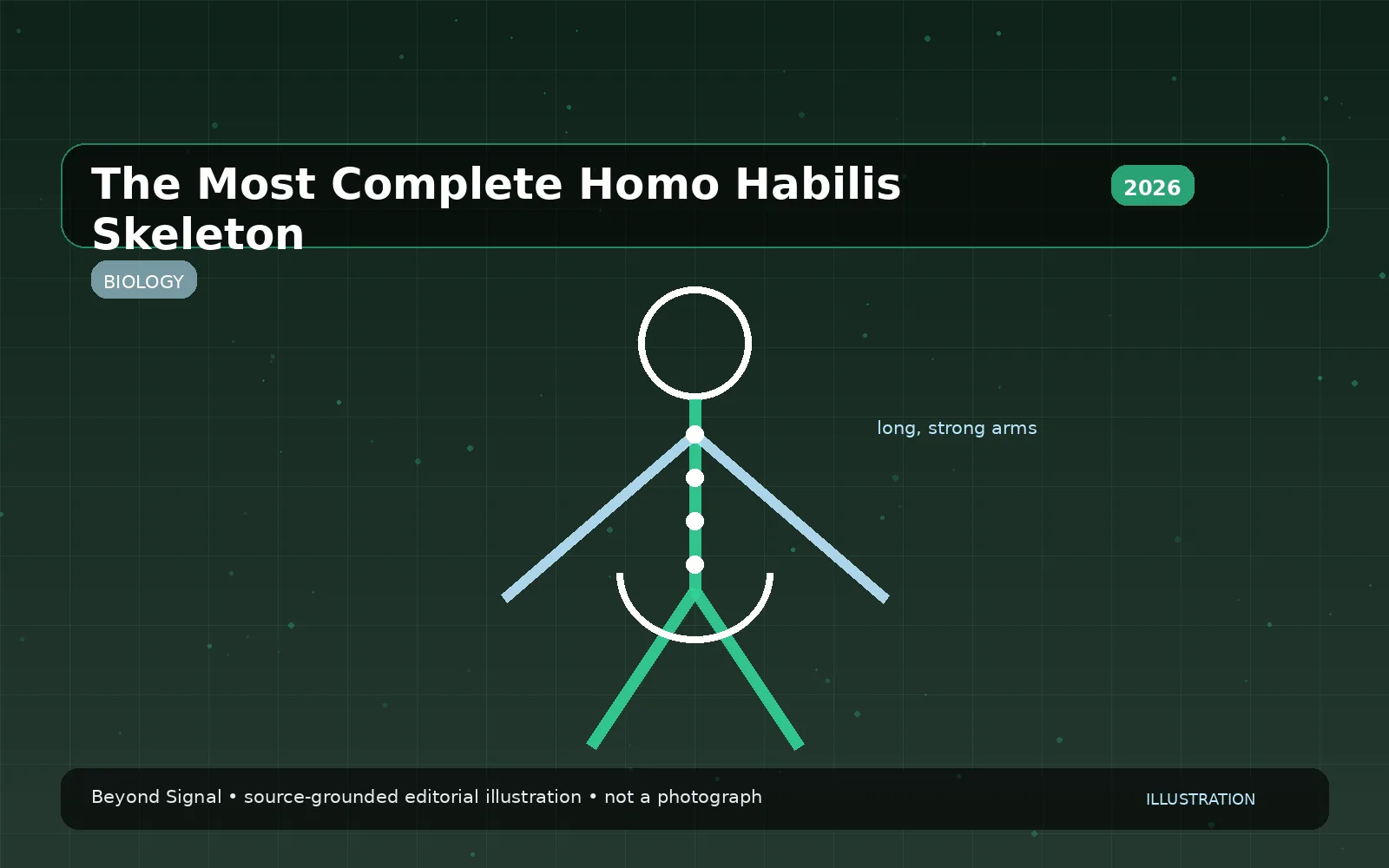 Illustration🧬 Biology
The Most Complete Homo Habilis Skeleton
KNM-ER 64061, a partial skeleton dated to about 2.02–2.06 million years ago, was described as the most complete Homo habilis skeleton yet recognized. Its associated teeth, shoulder, arm, spine, pelvis, and leg fragments reveal a small-bodied early human with long, powerful arms and a mosaic of primitive and derived traits.
Read more →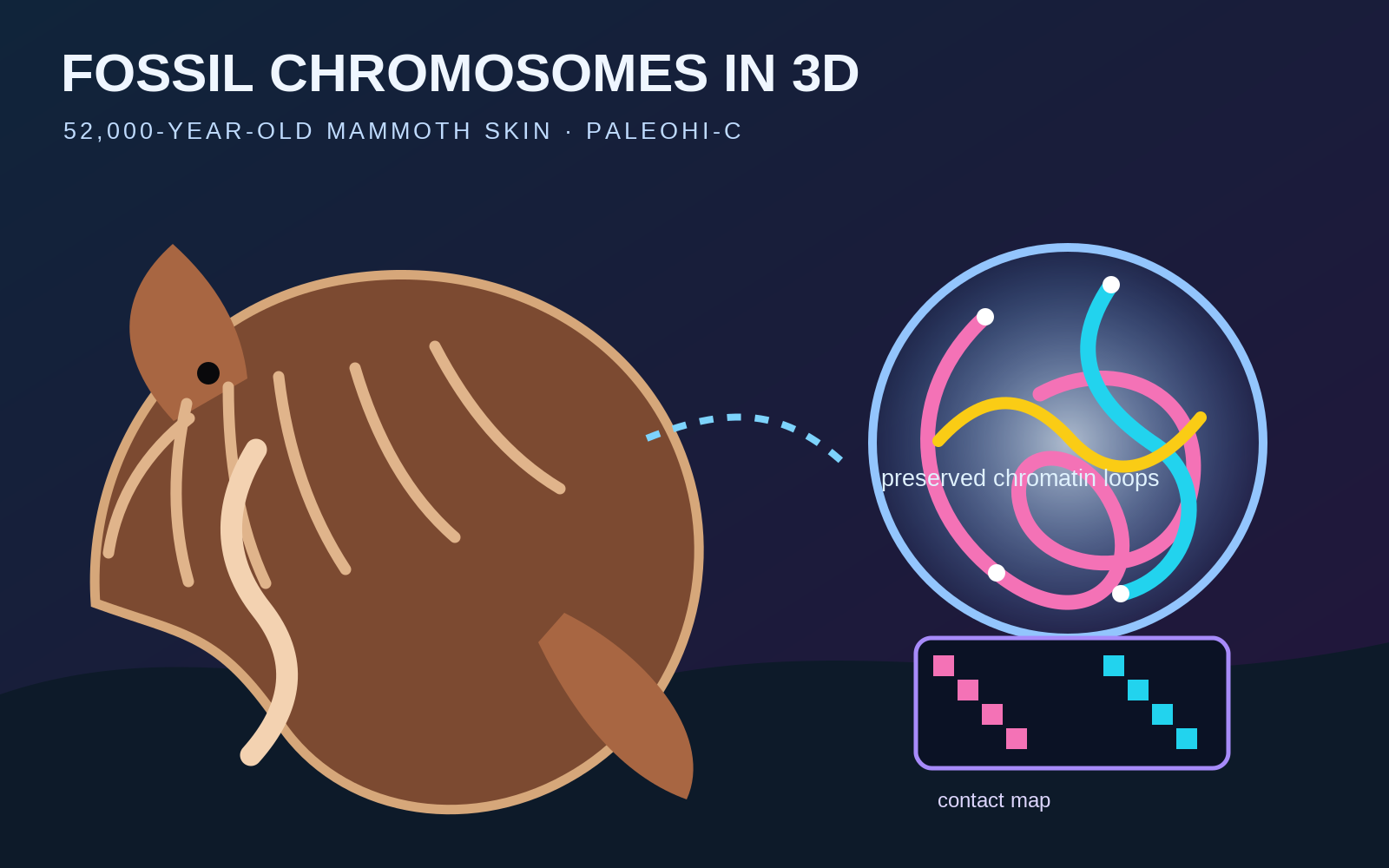 Illustration🧬 Biology
Three-Dimensional Chromosomes Preserved in Mammoth Skin
A 52,000-year-old woolly mammoth skin sample retained chromosome-scale contacts, allowing researchers to reconstruct 28 chromosomes and features of the genome's three-dimensional organization in an extinct animal.
Read more →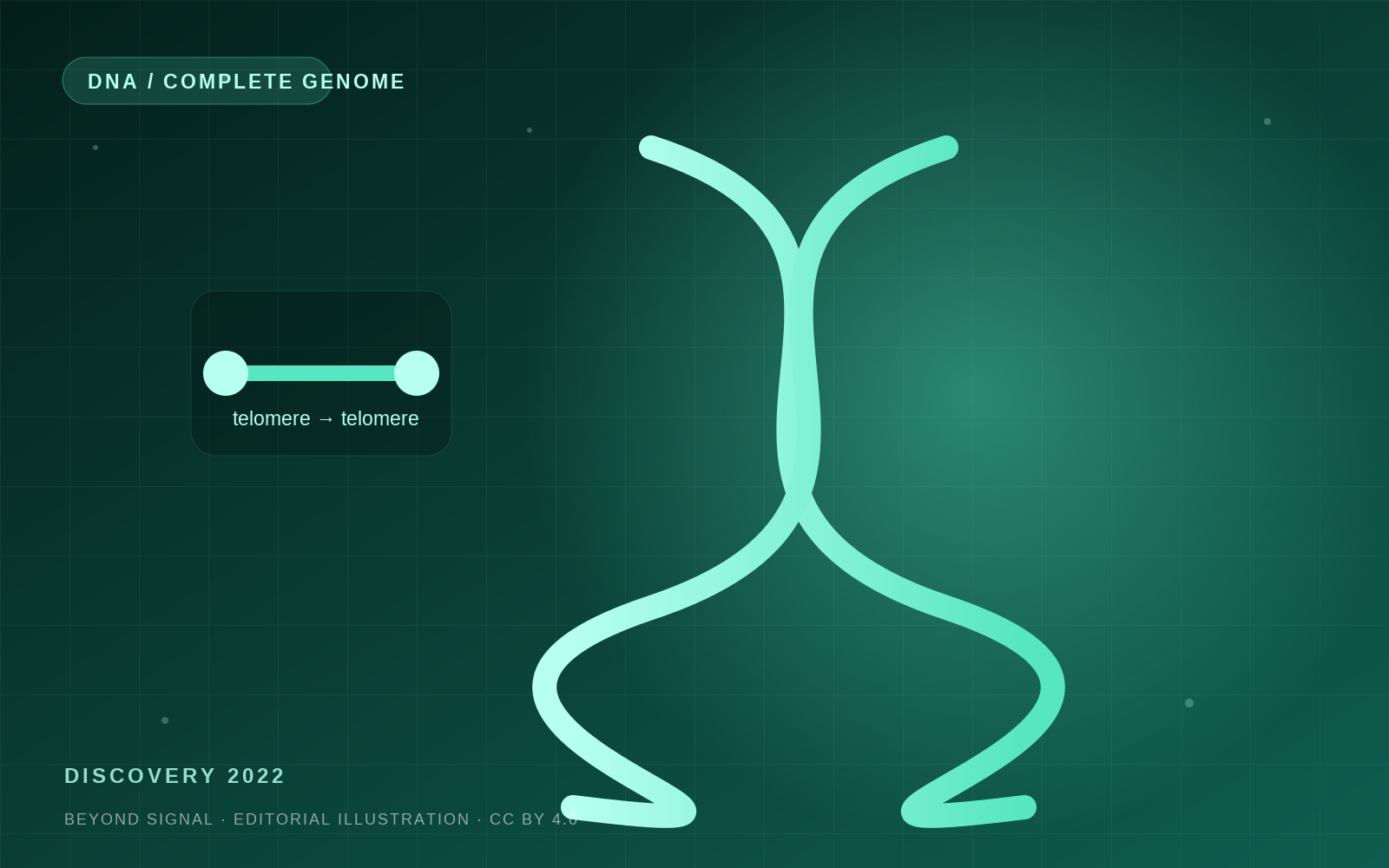 Illustration🧬 Biology
The First Gapless Human Genome Sequence
The Telomere-to-Telomere Consortium filled the remaining gaps in the human reference genome, adding nearly 200 million DNA letters and complete views of centromeres, segmental duplications, and chromosome ends.
Read more →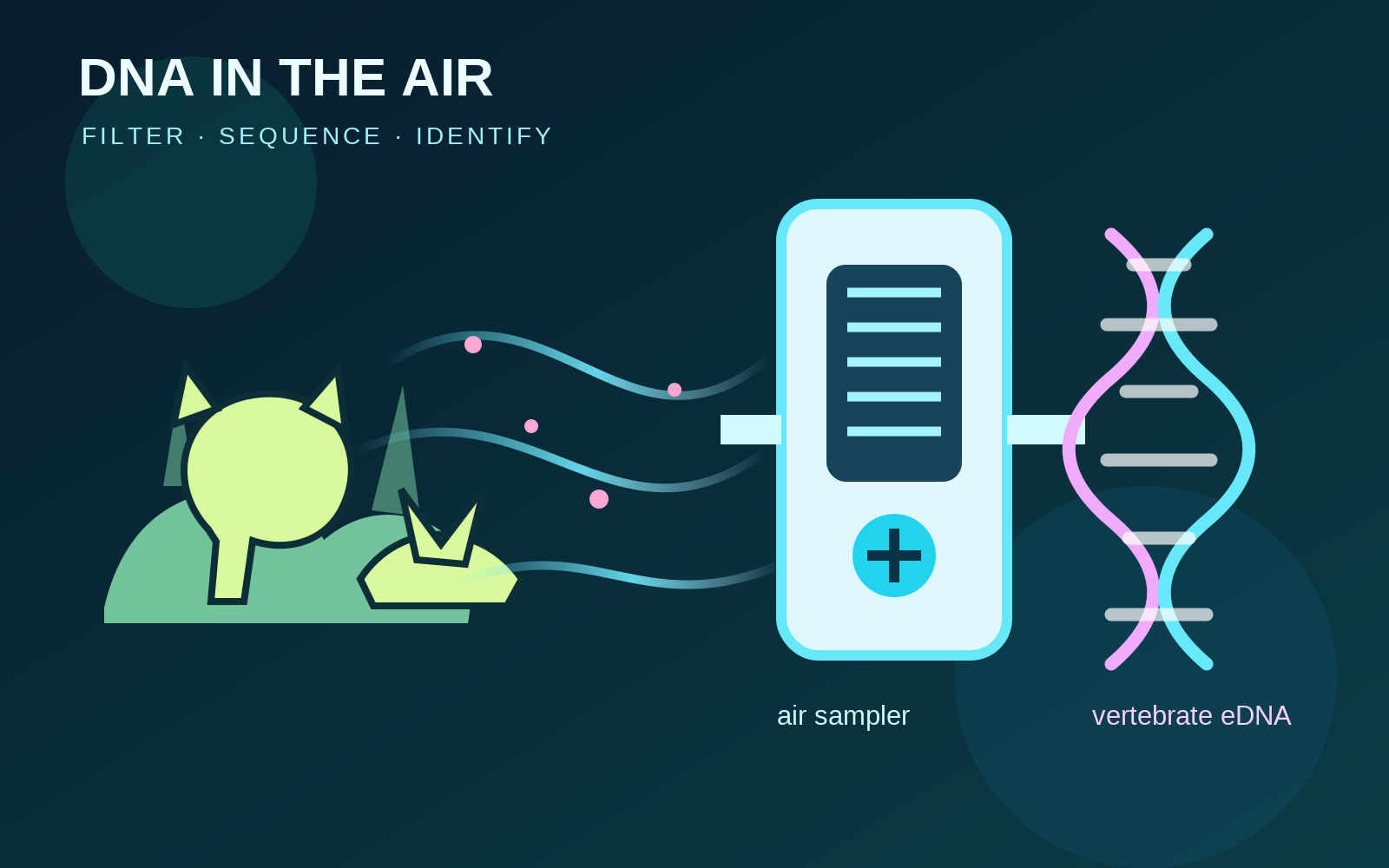 Illustration🧬 Biology
Airborne eDNA Reveals Terrestrial Vertebrates
Two independent zoo studies showed that vertebrate DNA can be collected directly from air and matched to nearby species, establishing airborne eDNA as a practical new route for surveying terrestrial biodiversity.
Read more →