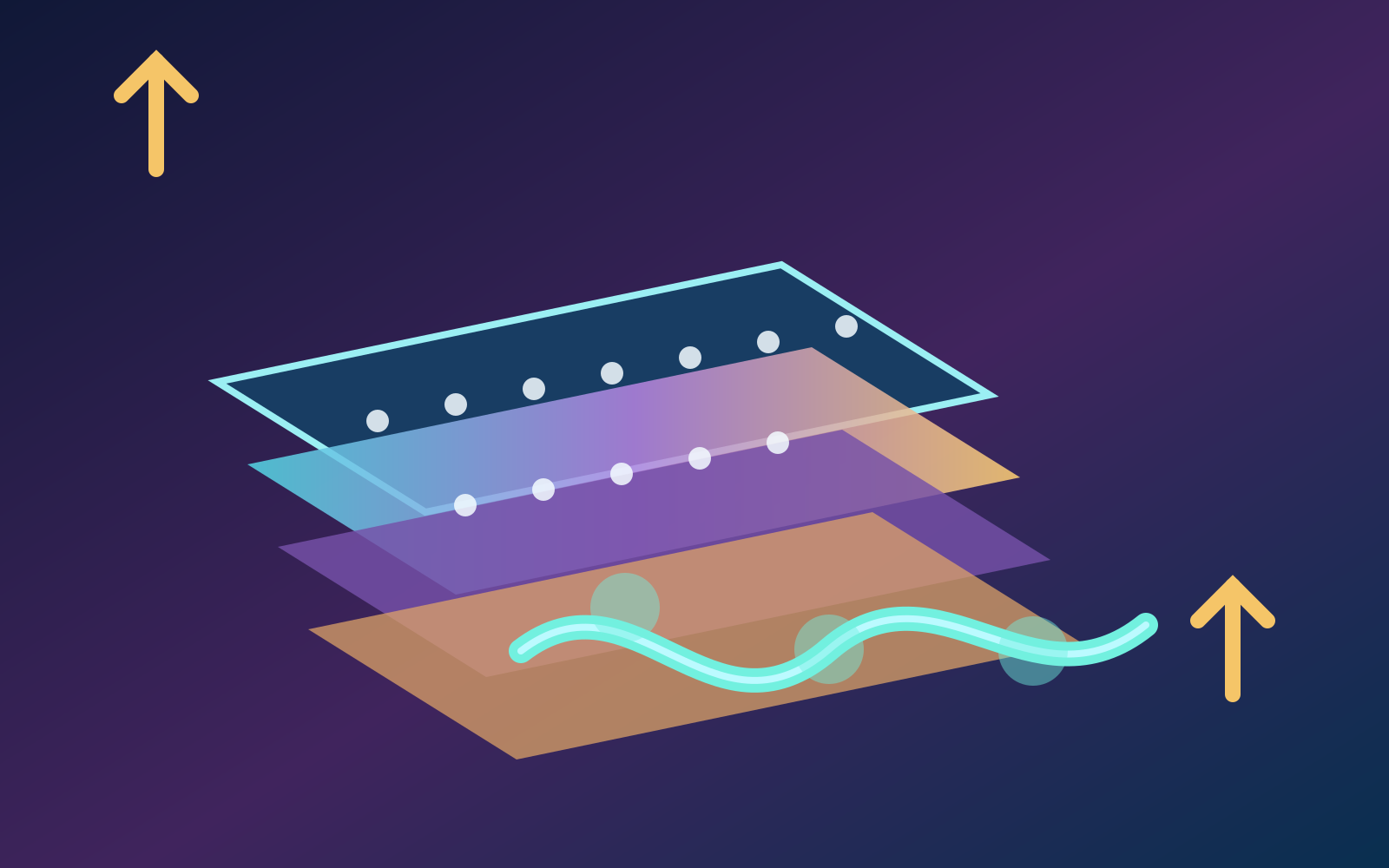
 Illustration — not a photo of the discovery
Magnetic Fields Boost Superconductivity in Rhombohedral Graphene
Transport experiments in rhombohedral four- and five-layer graphene revealed superconducting states that persist, strengthen, or emerge in magnetic fields that would ordinarily suppress conventional superconductivity.
The story
Why scientists were there
Magnetic fields usually disrupt conventional electron pairs, so field-enhanced behavior is a strong clue to unconventional superconductivity. The experiment does not establish a usable room-temperature or power-grid material; the microscopic pairing mechanism, sensitivity to disorder, and engineering route remain open research questions.
How they found it
The team fabricated exceptionally clean rhombohedral multilayer-graphene devices, tuned their carrier density electrostatically, and measured electrical transport under in-plane and perpendicular magnetic fields. They observed several superconducting states in which the critical response survived fields near 9 tesla, with some states enhanced or induced by field.
What makes it unique
The direct result is the field- and gate-dependent transport signature of superconductivity in specific graphene devices. The proposed links to spin-triplet pairing, topological states, and non-Abelian quasiparticles are interpretations or future directions; the paper explicitly leaves the microscopic mechanism unresolved.
Gallery
Where it was found
Massachusetts Institute of Technology, Cambridge
Tags
Related discoveries
 Illustration⚛️ Physics
Landau–Phonon Polaritons Imaged in Graphene Heterostructures
Infrared magneto-nanoscopy visualized hybrid Landau–phonon polaritons in graphene heterostructures and showed that their propagation can be tuned with a magnetic field.
Read more →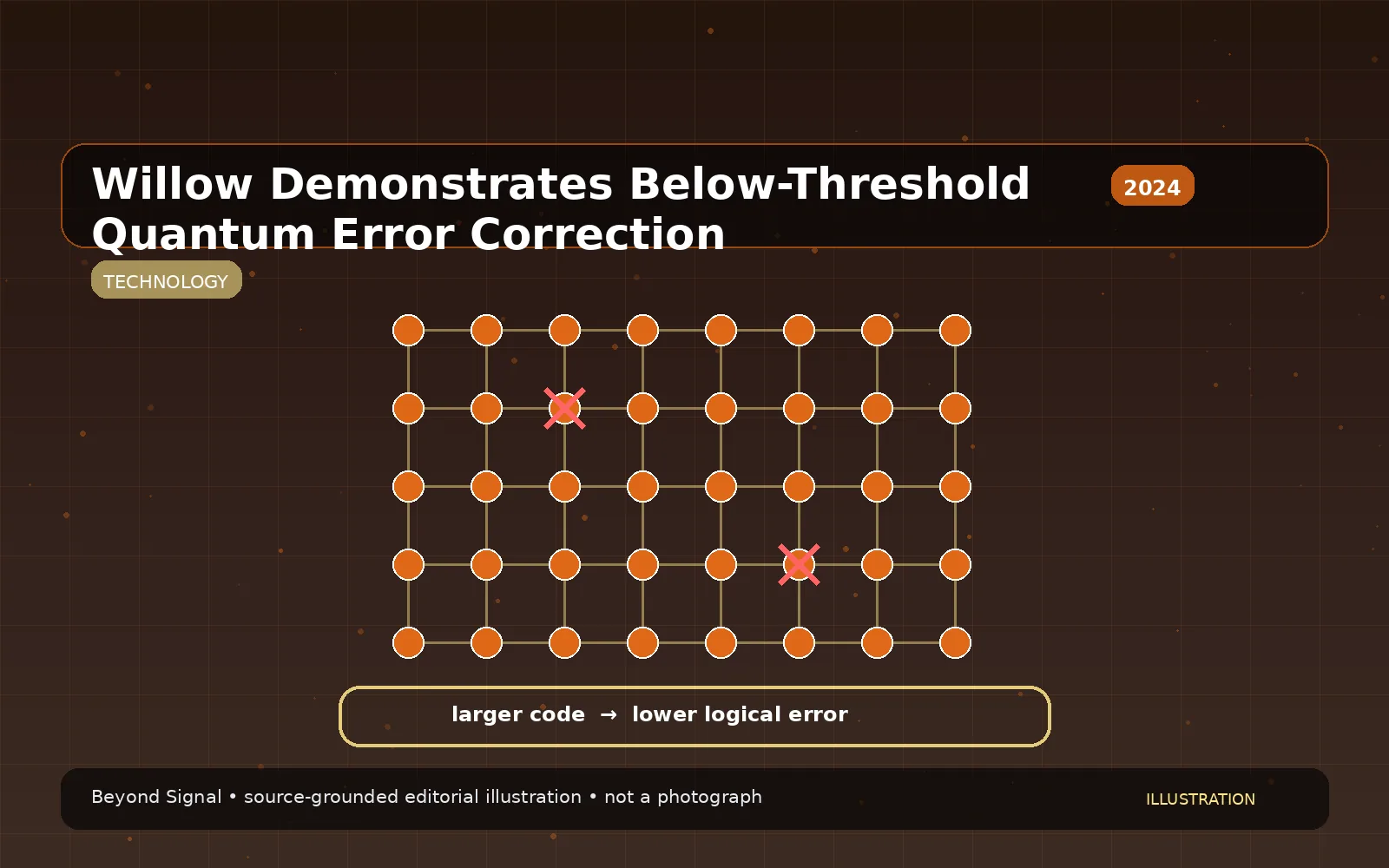 Illustration🤖 Technology
Willow Demonstrates Below-Threshold Quantum Error Correction
Google's Willow processor demonstrated below-threshold surface-code error correction: as researchers increased the size of encoded logical qubits, the logical error rate fell rather than rose. The experiment was an important scaling result for fault-tolerant quantum computing, although it did not produce a general-purpose error-corrected computer.
Read more →