JWST Rules Out a 2032 Lunar Impact
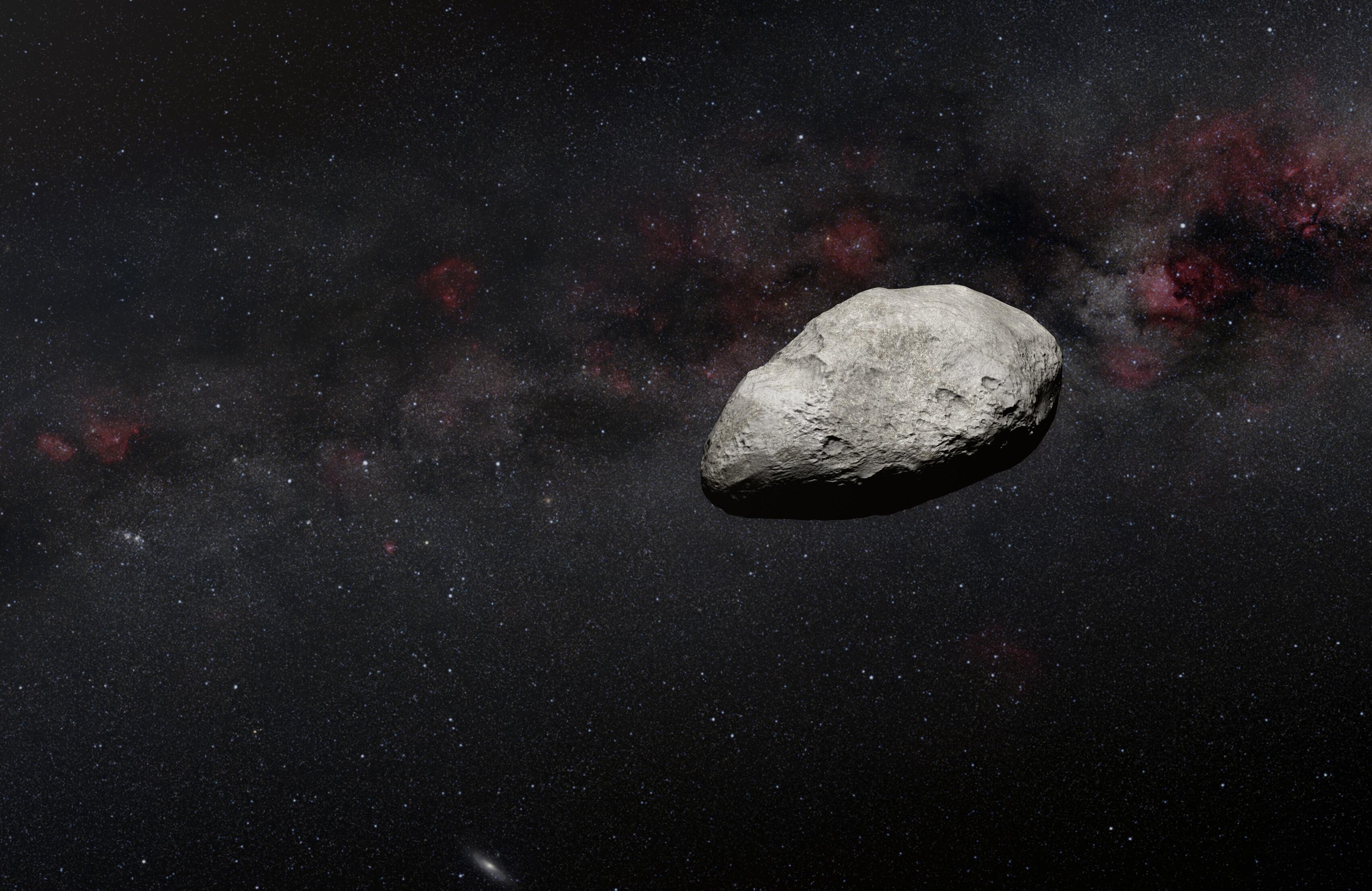
Faint James Webb Space Telescope observations extended asteroid 2024 YR4’s measured orbit and ruled out its previously possible collision with the Moon in December 2032.
The story
Why scientists were there
After Earth impact was excluded, asteroid 2024 YR4 still carried a small but meaningful probability of hitting the Moon, making precise follow-up important for lunar and satellite safety.
How they found it
JWST’s NIRCam detected the roughly 60 m asteroid when it was too faint for ground telescopes, extending its observational arc and shrinking the uncertainty around its predicted lunar encounter by more than a factor of 30.
What makes it unique
The work produced one of the faintest detections of a near-Earth object and demonstrated how space telescopes can settle impact risks years before an asteroid becomes observable again from Earth.
Gallery
Where it was found
Space Telescope Science Institute, Baltimore, Maryland, USA
Tags
Related discoveries
 🌌 Space
The TRAPPIST-1 Planetary System
Seven Earth-sized planets circling a cool red dwarf 40 light-years away — three of them in the habitable zone.
Read more → 🌌 Space
First Image of a Black Hole (M87*)
Humanity's first direct image of a black hole — a glowing ring of light around the shadow of M87*, 6.5 billion solar masses.
Read more →