Space
Exoplanets, black holes, nebulae, galaxies, asteroids, and the missions reaching deeper into the cosmos.
Field guide
Understanding space
Space discoveries turn faint signals into physical knowledge. A periodic dip in starlight can reveal a planet; a radio pattern can expose a black-hole environment; a carefully timed gravitational-wave signal can confirm that two massive objects merged. The catalogue treats these results as measurements before they become headlines, explaining the instrument, observing strategy, and uncertainty behind each claim.
Astronomy also rewards patient comparison. A single observation may suggest an exoplanet or transient event, but follow-up telescopes establish its orbit, mass, composition, or distance. The same approach helps separate a genuine cosmic object from an instrumental artifact. Each entry is therefore connected to an observatory, mission, or collaboration so readers can follow how evidence moved from detector to discovery.
Seeing what cannot be visited
Astronomers rarely collect their objects directly. They infer them from light, radio waves, particle showers, and changes in motion. That makes calibration, repeated observations, and statistical confidence central parts of discovery. Images are powerful, but many of the most important results are built from data that cannot be seen with the naked eye.
Worlds, stars, and extreme physics
The space catalogue spans nearby planets, stellar remnants, galaxies, and the physics of the early universe. Taken together, these discoveries show how the same laws operate across radically different scales—from the atmosphere of a rocky planet to the shadow of a supermassive black hole.
Space guides & articles
All guides →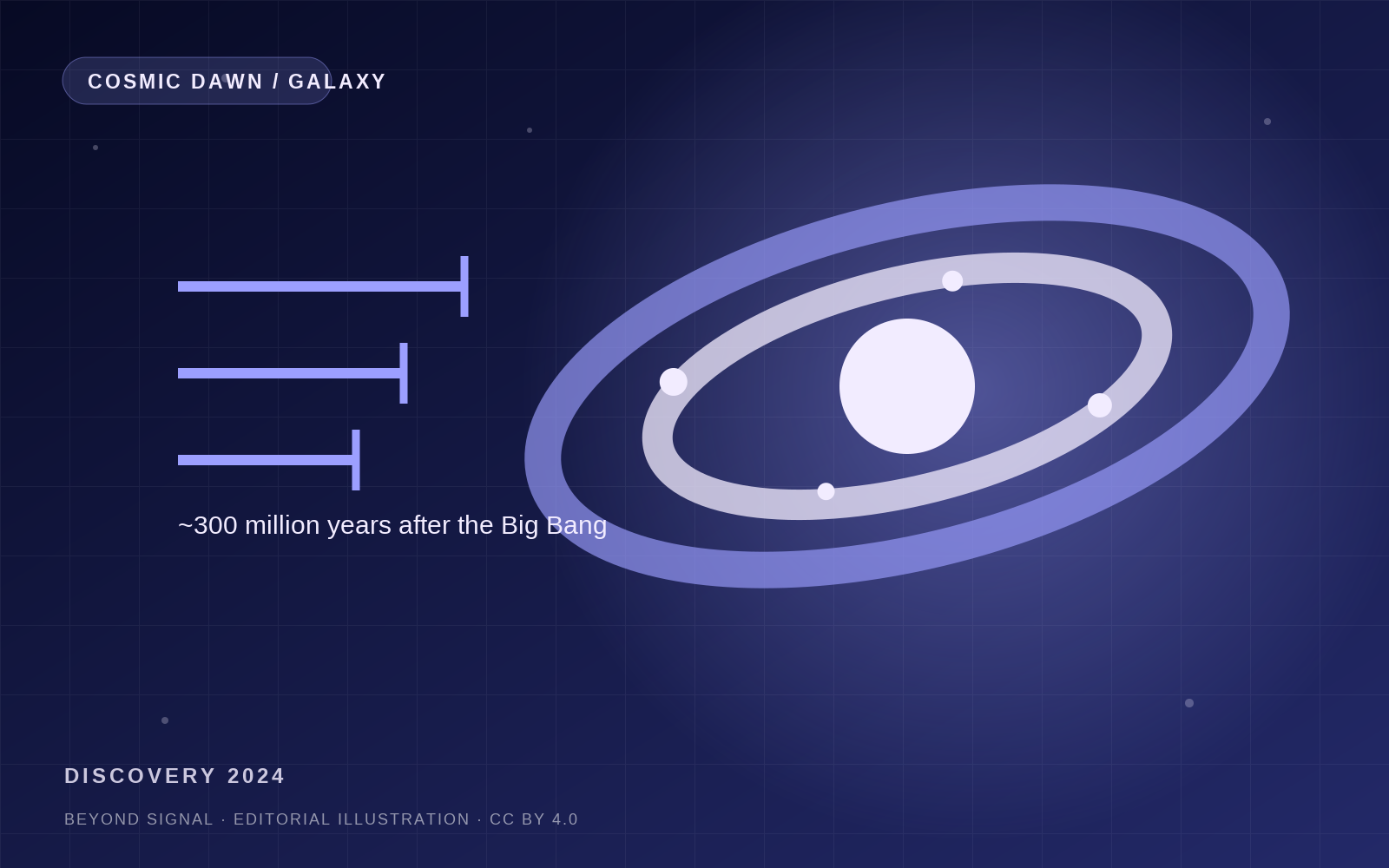 🌌 Space
JADES-GS-z14-0: A Galaxy From the Universe's First 300 Million Years
How JWST confirmed JADES-GS-z14-0 at redshift 14 and why its brightness challenged expectations for the infant universe.
Read guide →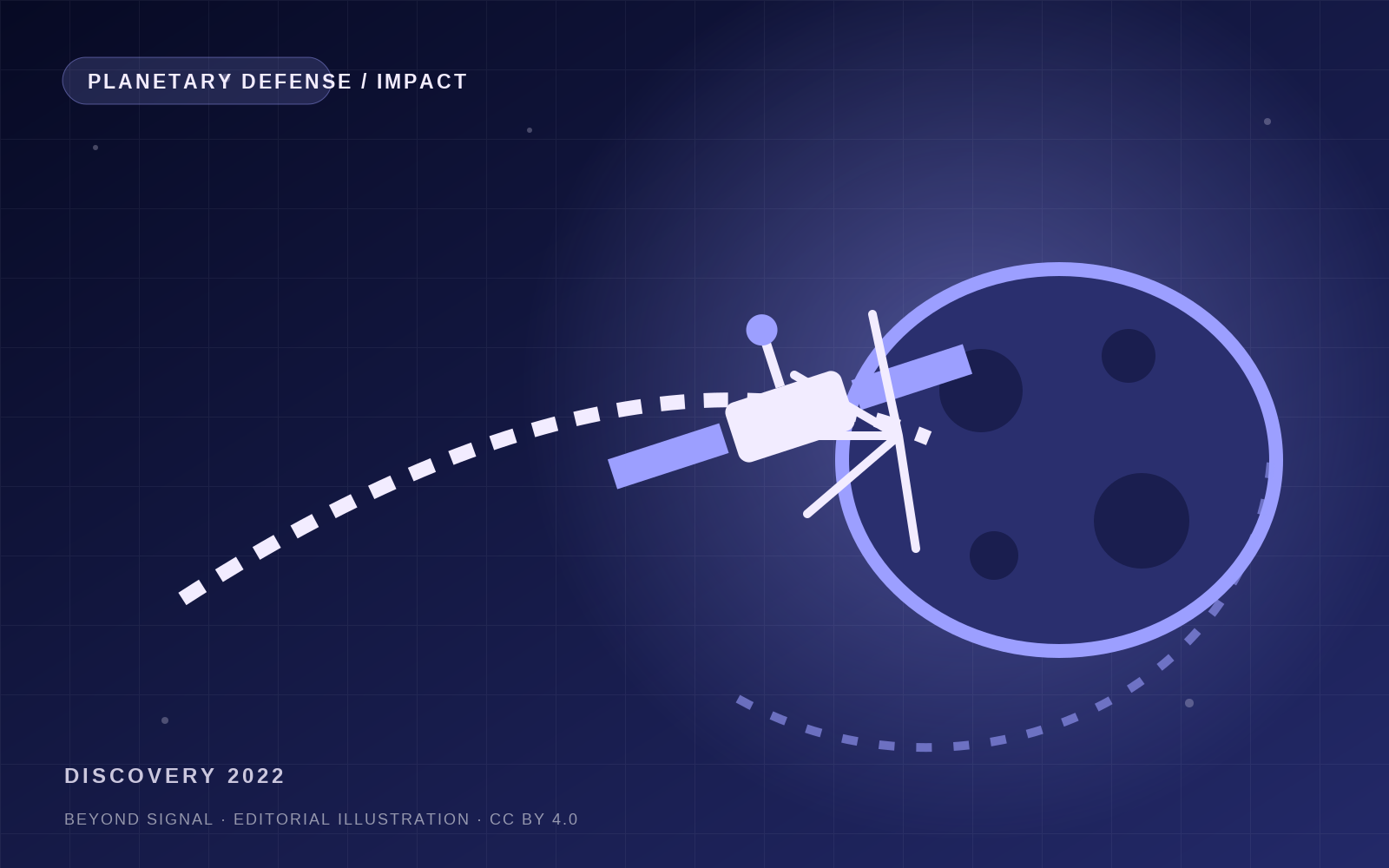 🌌 Space
DART and Dimorphos: How Humanity Moved an Asteroid
How NASA's DART spacecraft struck Dimorphos, shortened its orbit and turned asteroid deflection from theory into a demonstrated technique.
Read guide →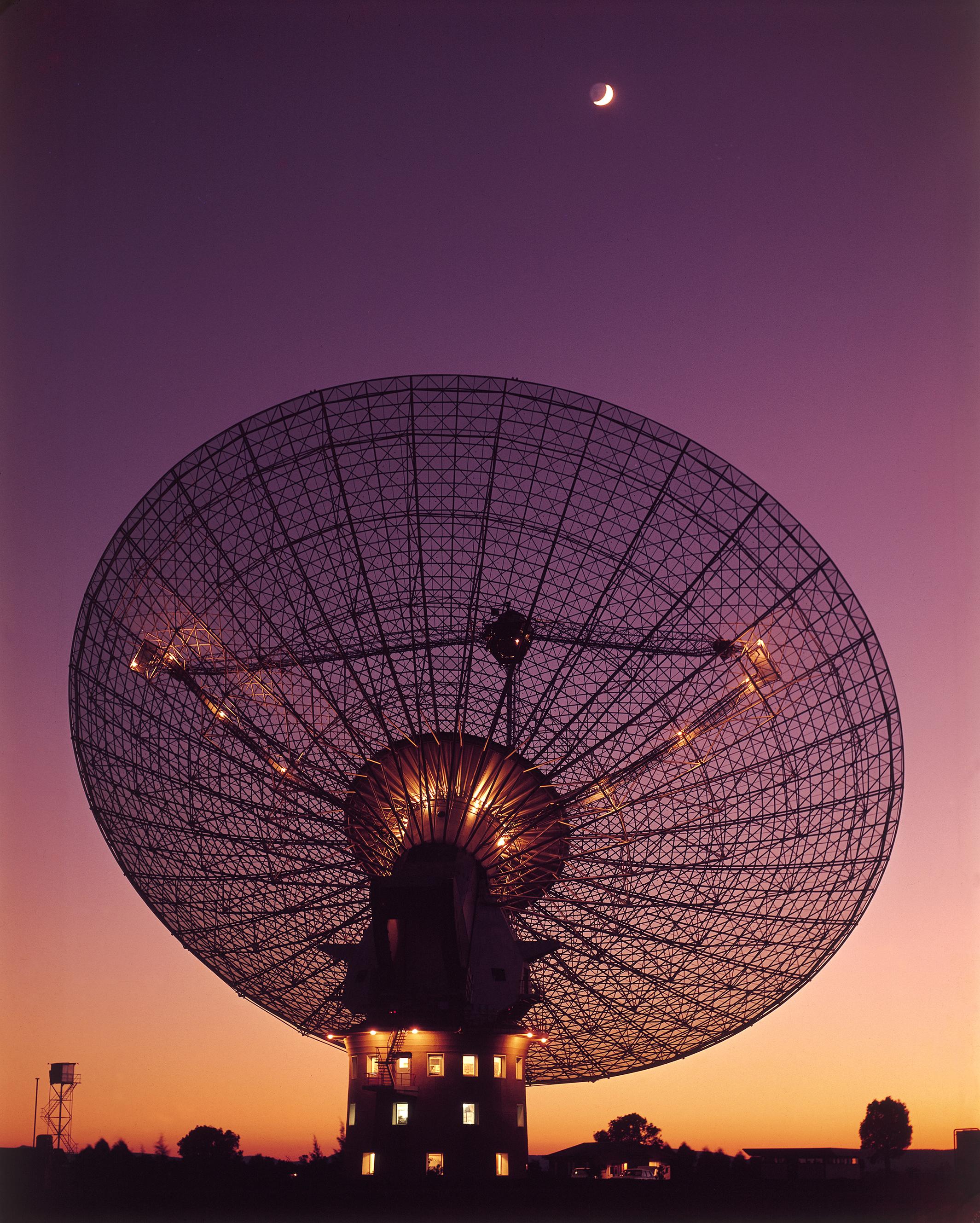 🌌 Space
The Search for Extraterrestrial Life: Project Phoenix at Parkes Observatory
In February 1995, Project Phoenix began listening for alien signals from the Parkes radio telescope in Australia — the story of SETI's most sensitive targeted search.
Read guide →Explore by subtopic
Exoplanets
11 catalogued discoveries
Black holes
5 catalogued discoveries
Nebulae
2 catalogued discoveries
Galaxies
2 catalogued discoveries
Asteroids
3 catalogued discoveries
Comets
1 catalogued discovery
Space missions
8 catalogued discoveries
Solar physics
1 catalogued discovery
Planetary defense
2 catalogued discoveries
35 discoveries
 🌌 Space
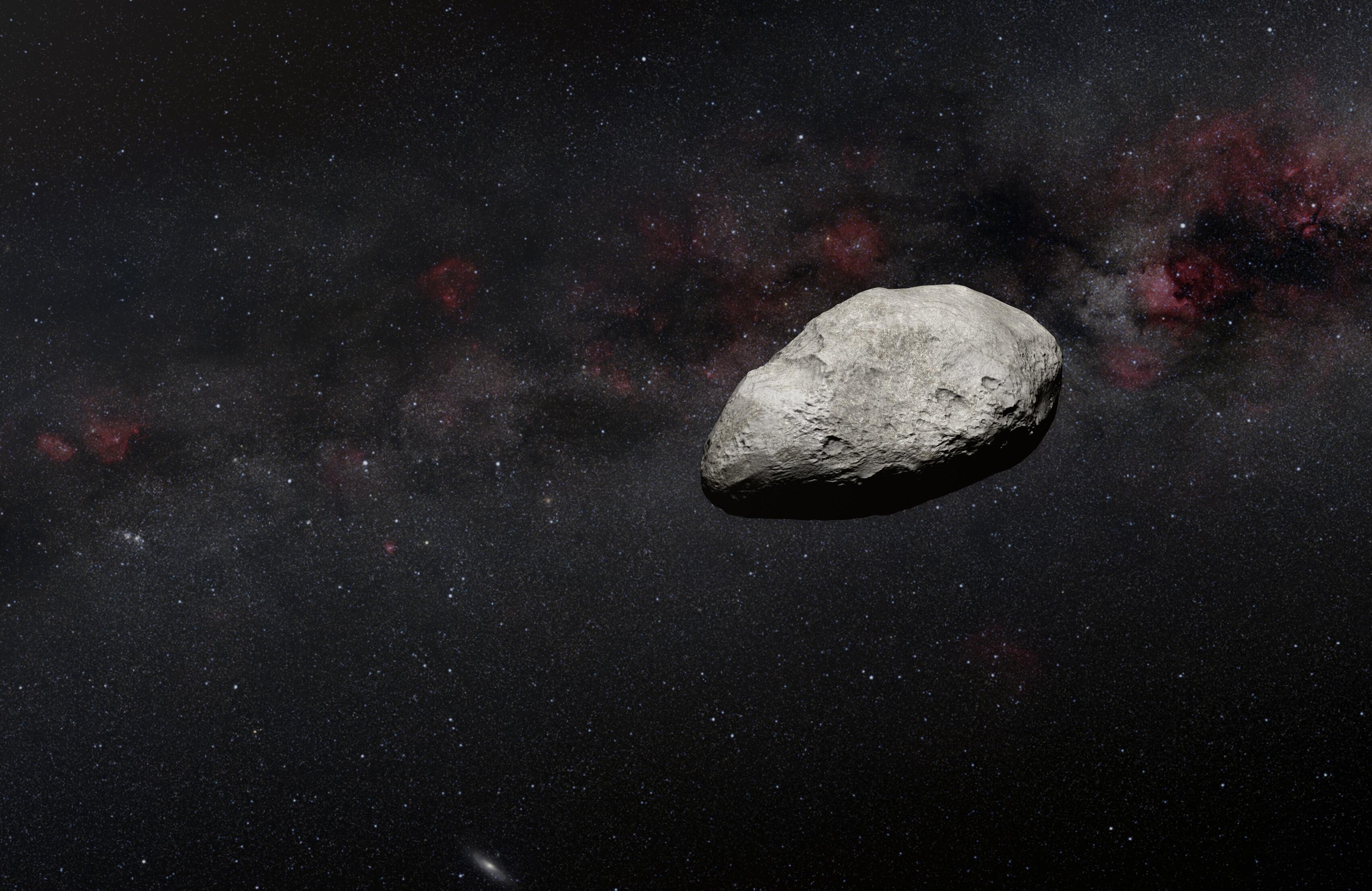
JWST Rules Out a 2032 Lunar Impact
Faint James Webb Space Telescope observations extended asteroid 2024 YR4’s measured orbit and ruled out its previously possible collision with the Moon in December 2032.
Read more →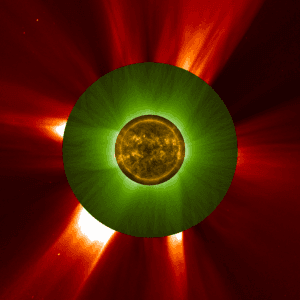 🌌 Space
Proba-3 Reveals a Faster Slow Solar Wind
Artificial-eclipse observations showed small slow-solar-wind outflows racing through the inner corona three to four times faster than expected.
Read more →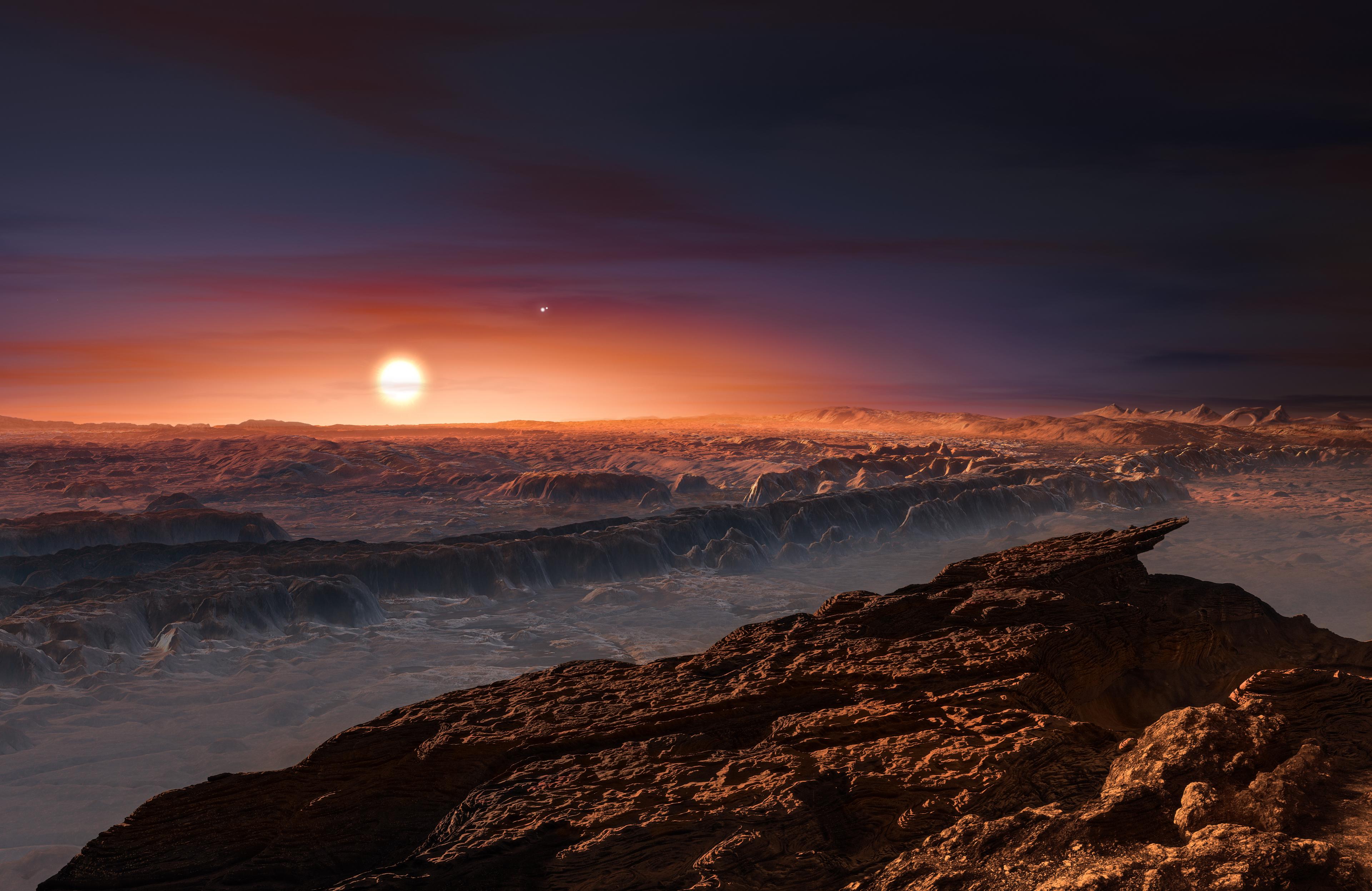 🌌 Space
GJ 887 d, a Nearby Habitable-Zone Super-Earth
A 50.77-day super-Earth confirmed in the habitable zone of GJ 887, only about 10.7 light-years away and second only to Proxima b in proximity among known temperate planets.
Read more →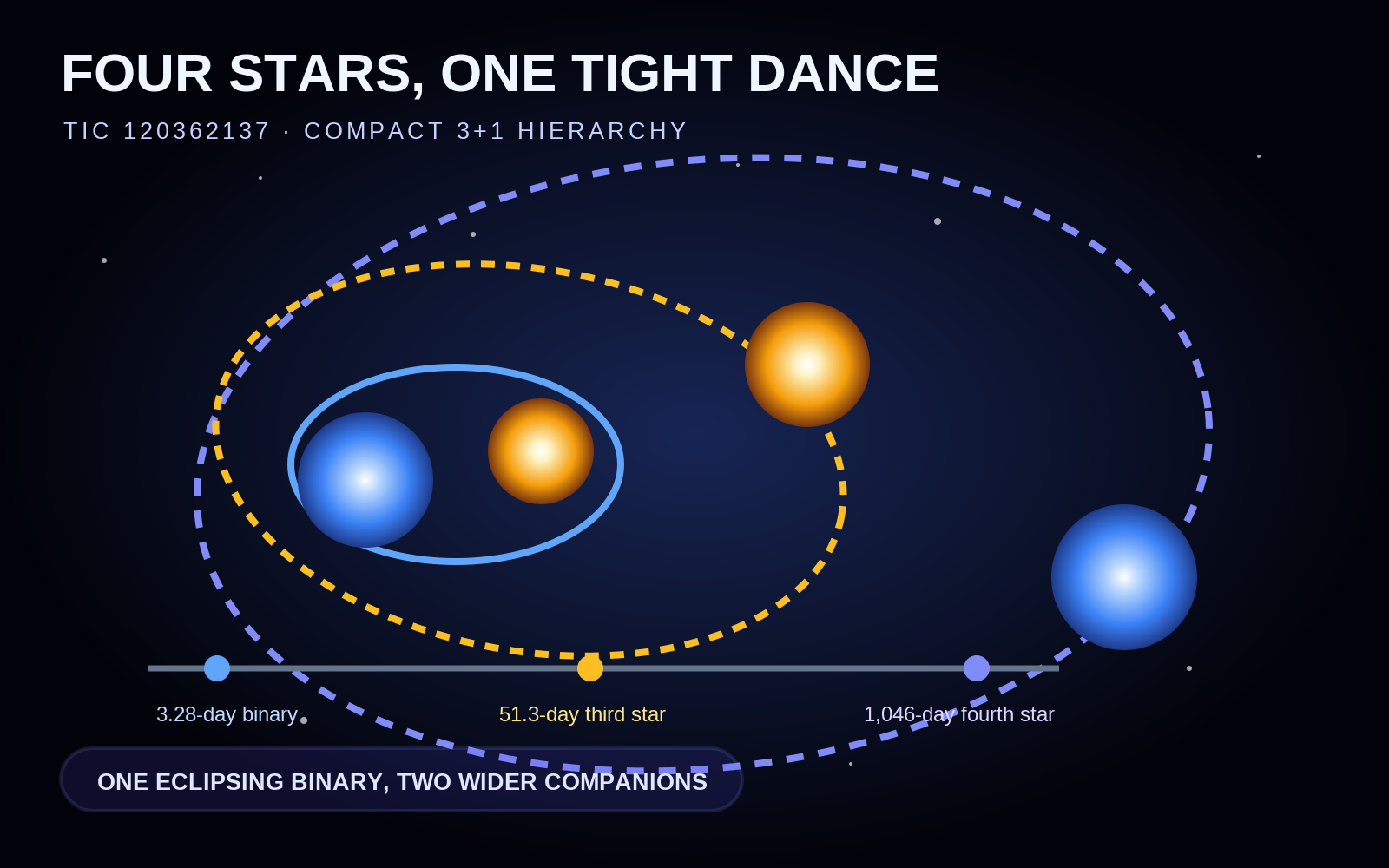 Illustration🌌 Space
The Most Compact Known 3+1 Quadruple Star System
TESS eclipse timing, ground photometry, and spectra revealed TIC 120362137 as the tightest known hierarchical 3+1 quadruple: three stars fit inside a region comparable to Mercury's orbit while a fourth circles outside them.
Read more →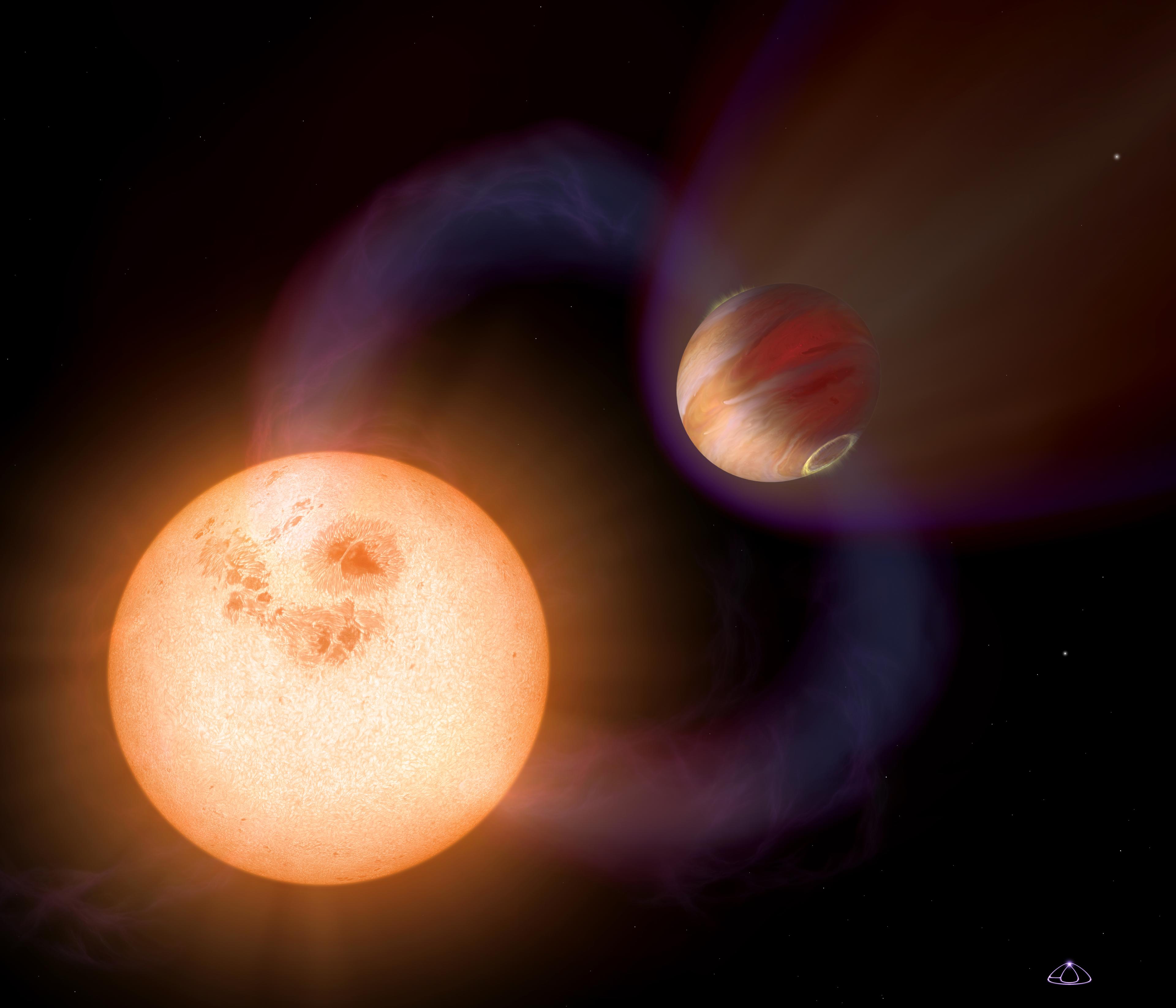 🌌 Space
The Inside-Out LHS 1903 Planetary System
Four close-orbiting planets arranged rocky–gaseous–gaseous–rocky, an unexpected architecture that supports sequential, gas-depleted planet formation.
Read more →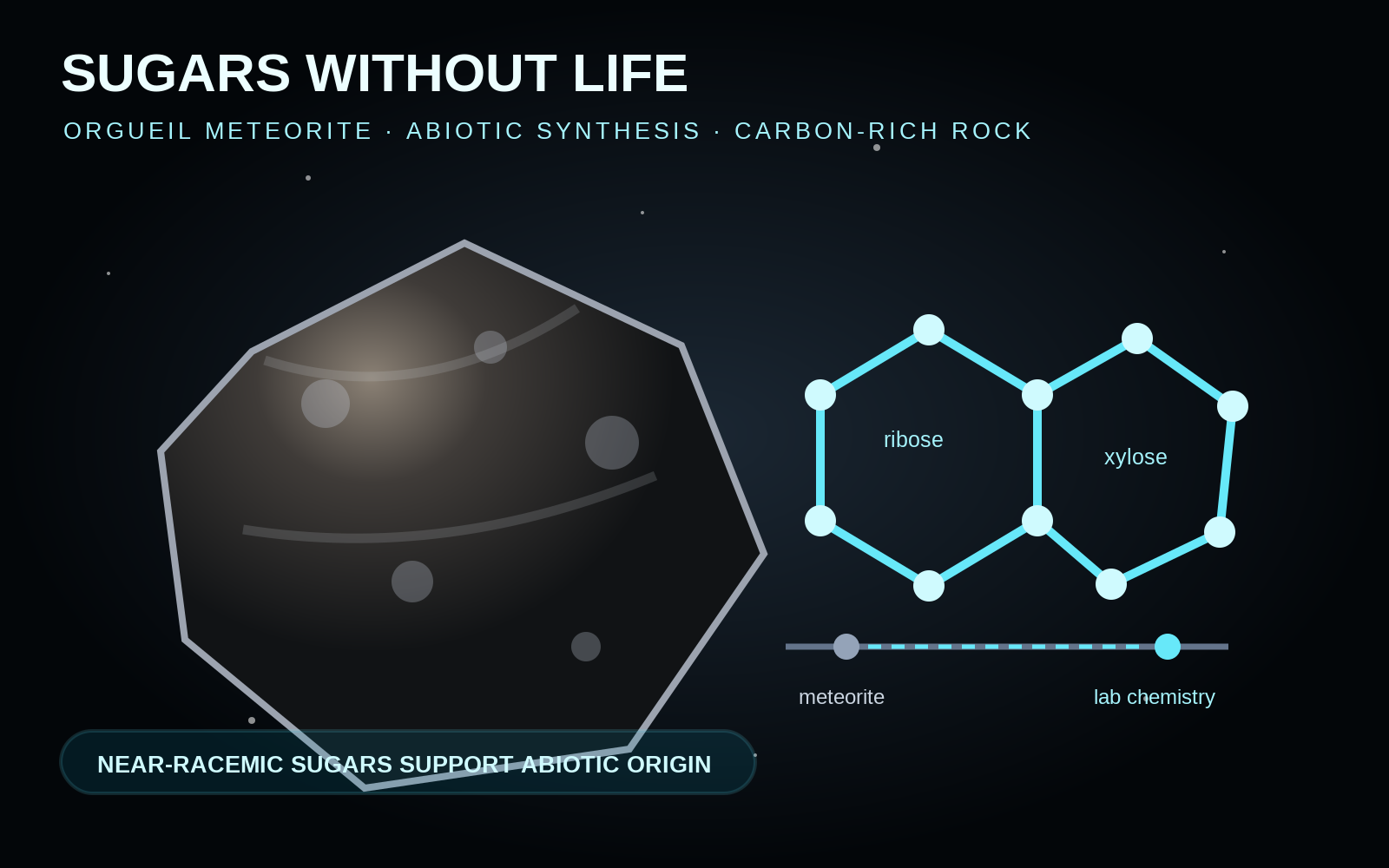 Illustration🌌 Space
Abiotic Sugars in the Orgueil Meteorite
Chiral analysis of an Orgueil meteorite sample detected ribose, arabinose, xylose, lyxose, and ribulose, with several near-racemic mixtures supporting abiotic extraterrestrial formation rather than ordinary biological contamination.
Read more → Illustration🌌 Space
Dense Gas Cocoons Explain Many Little Red Dots
Radiative-transfer modelling showed that the puzzling spectra of many JWST 'little red dots' can be reproduced by relatively young supermassive black holes embedded in compact, dense cocoons of ionized gas.
Read more →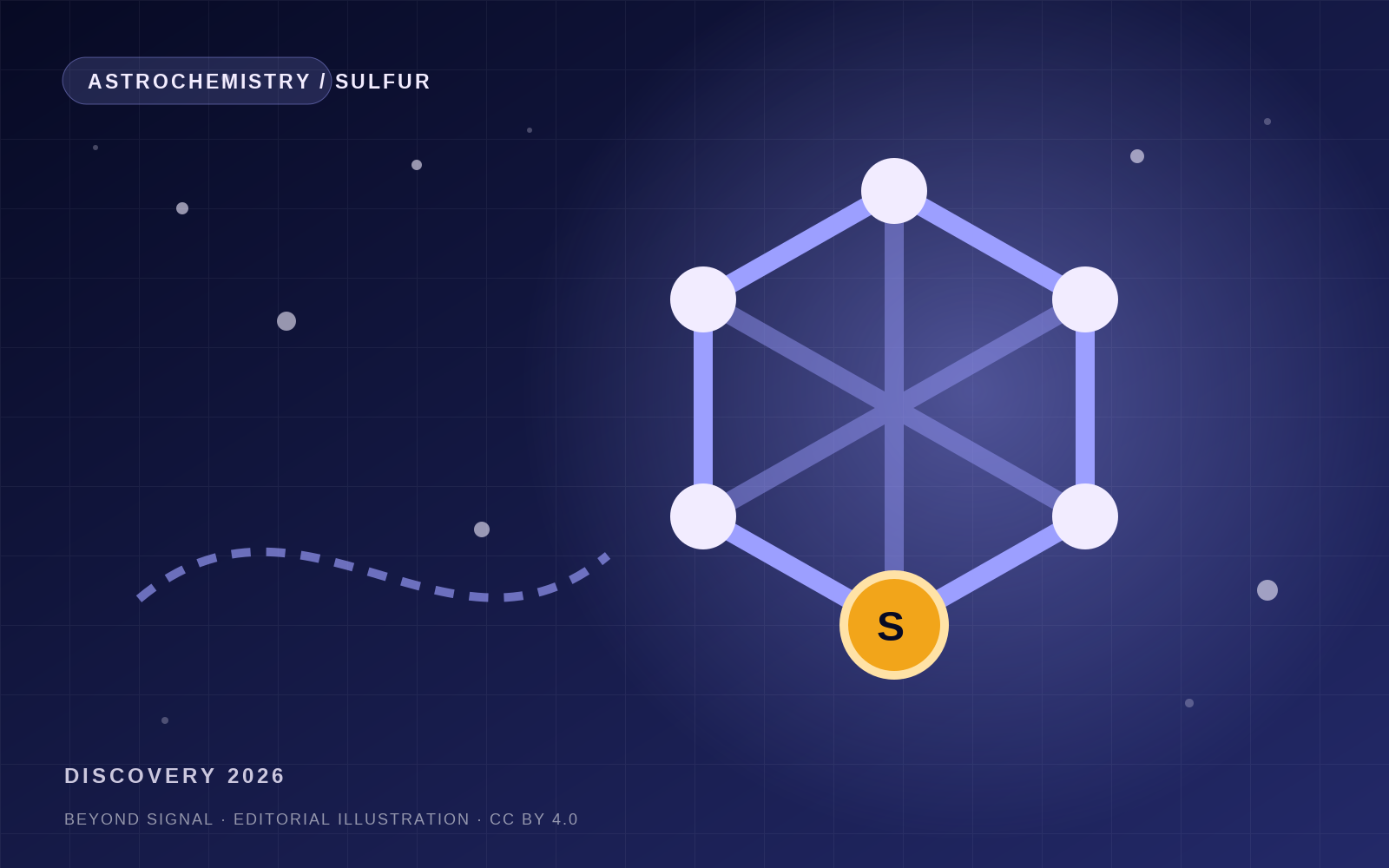 Illustration🌌 Space
The Largest Interstellar Sulfur-Bearing Molecule Yet
Radio spectra revealed 2,5-cyclohexadiene-1-thione in a Galactic-centre molecular cloud, the largest sulfur-bearing molecule yet identified in interstellar space.
Read more → 🌌 Space
C/2026 A1 (MAPS), an Early-Spotted Sungrazer
A Kreutz sungrazer detected unusually far from the Sun, giving astronomers a rare multi-month warning before its extremely close solar pass.
Read more → Illustration🌌 Space
Cassini Gravity Data Reveal Strong Tidal Dissipation in Titan
A reanalysis of Cassini radio tracking measured unexpectedly strong tidal energy loss in Titan and found that the gravity signal is inconsistent with the global subsurface ocean model previously favored for the moon.
Read more →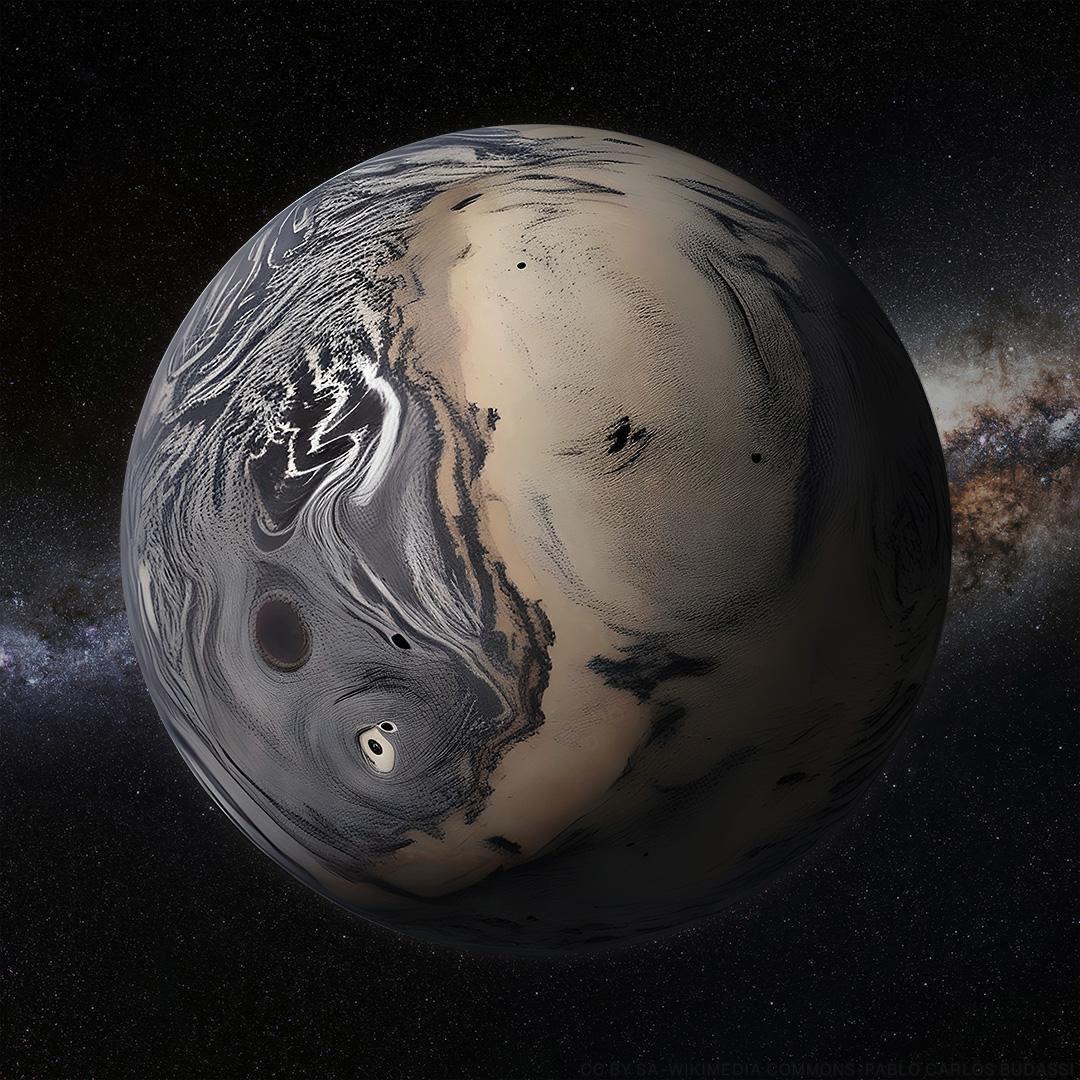 🌌 Space
A Rogue Planet's Record Growth Spurt
Astronomers observed the free-floating planetary-mass object Cha 1107-7626 accreting gas and dust at about six billion tonnes per second — the fastest growth rate recorded for a rogue planet.
Read more →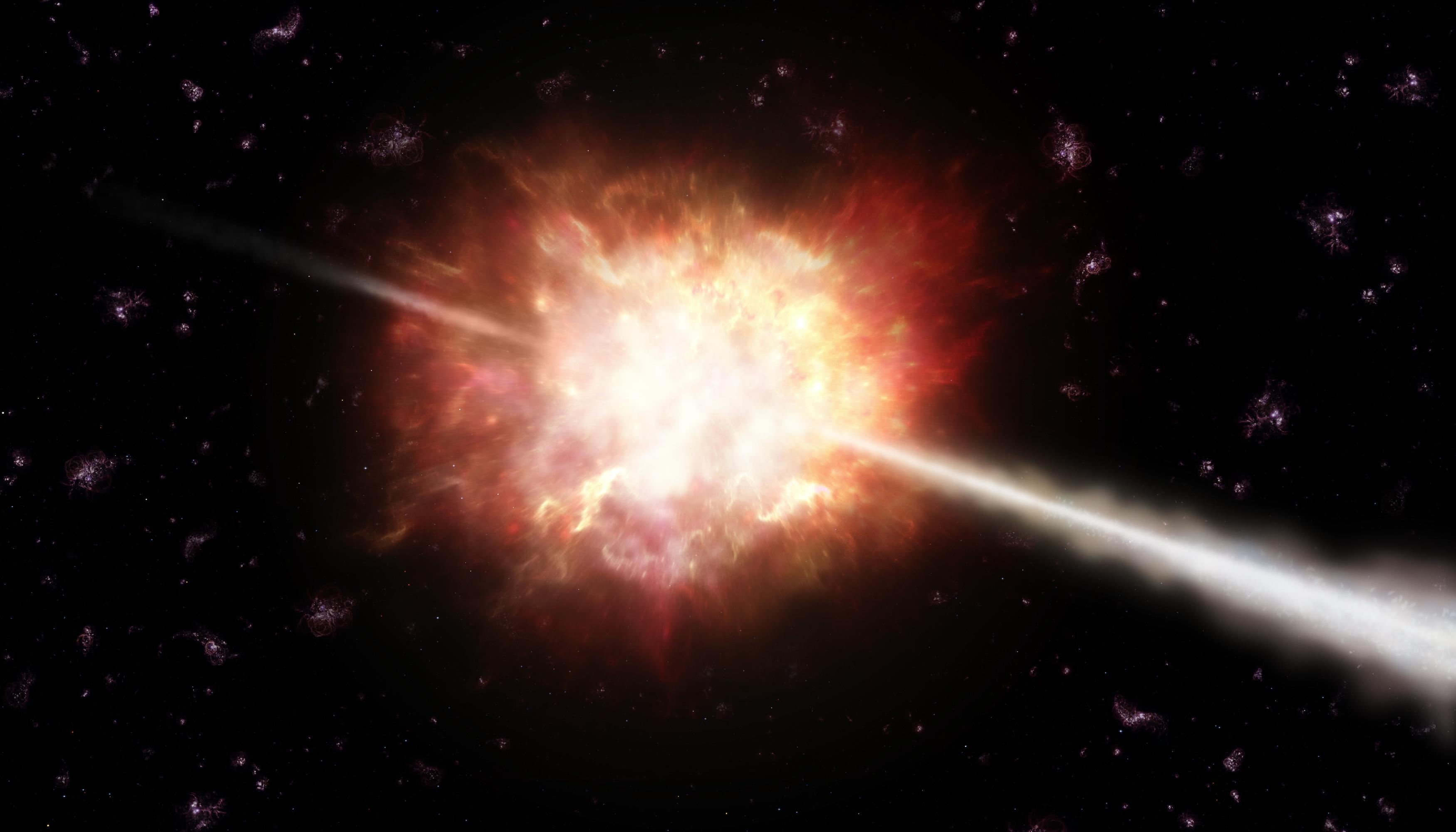 🌌 Space
A Strange Repeating Gamma-Ray Explosion
GRB 250702B produced repeated gamma-ray flashes across a day, an unusually long and unlike-anything-seen-before explosion traced to a source outside the Milky Way.
Read more →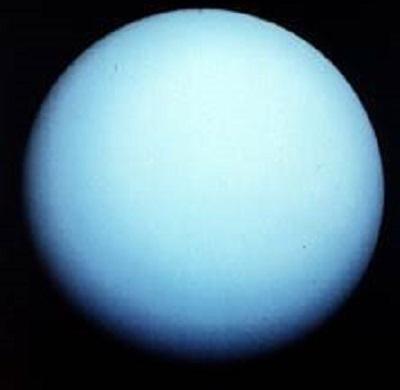 🌌 Space
A New Moon around Uranus
The James Webb Space Telescope found a previously unknown inner moon of Uranus, provisionally designated S/2025 U1 and estimated at roughly 10 km across.
Read more → 🌌 Space
Planet Formation Caught at the Start around HOPS-315
Astronomers observed the first specks of planet-forming minerals beginning to solidify around a young star, catching a process analogous to the birth of our Solar System.
Read more →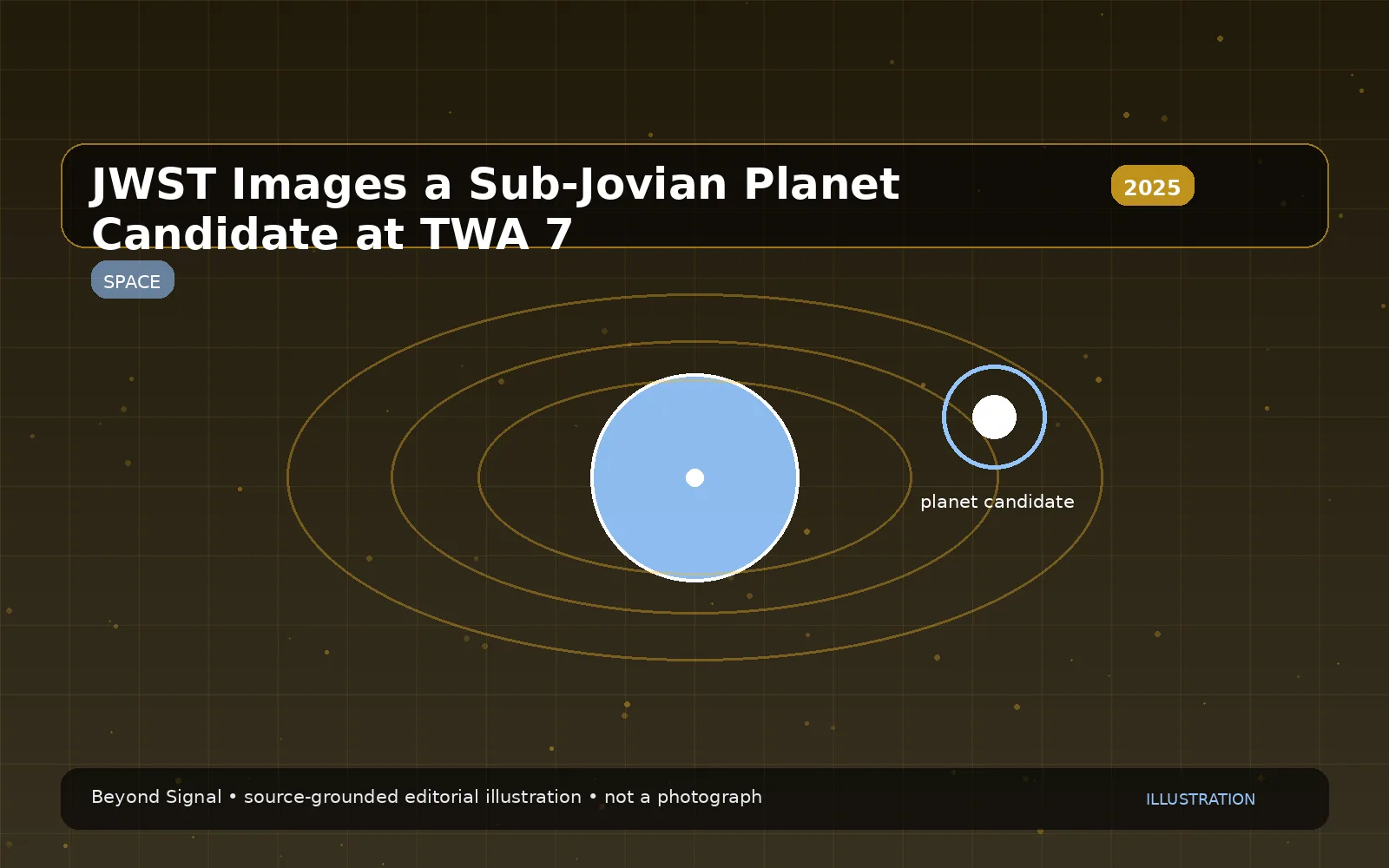 Illustration🌌 Space
JWST Images a Sub-Jovian Planet Candidate at TWA 7
James Webb Space Telescope coronagraphy revealed a compact infrared source embedded in a narrow ring of the young star TWA 7's debris disk. Models place the candidate near 0.3 Jupiter masses at about 52 astronomical units, potentially making it the lowest-mass planet directly imaged around another star.
Read more → 🌌 Space
The First Views of the Sun's South Pole
ESA's Solar Orbiter returned humanity's first clear views of the Sun's south pole, revealing a tangled mixture of magnetic polarities during solar maximum.
Read more →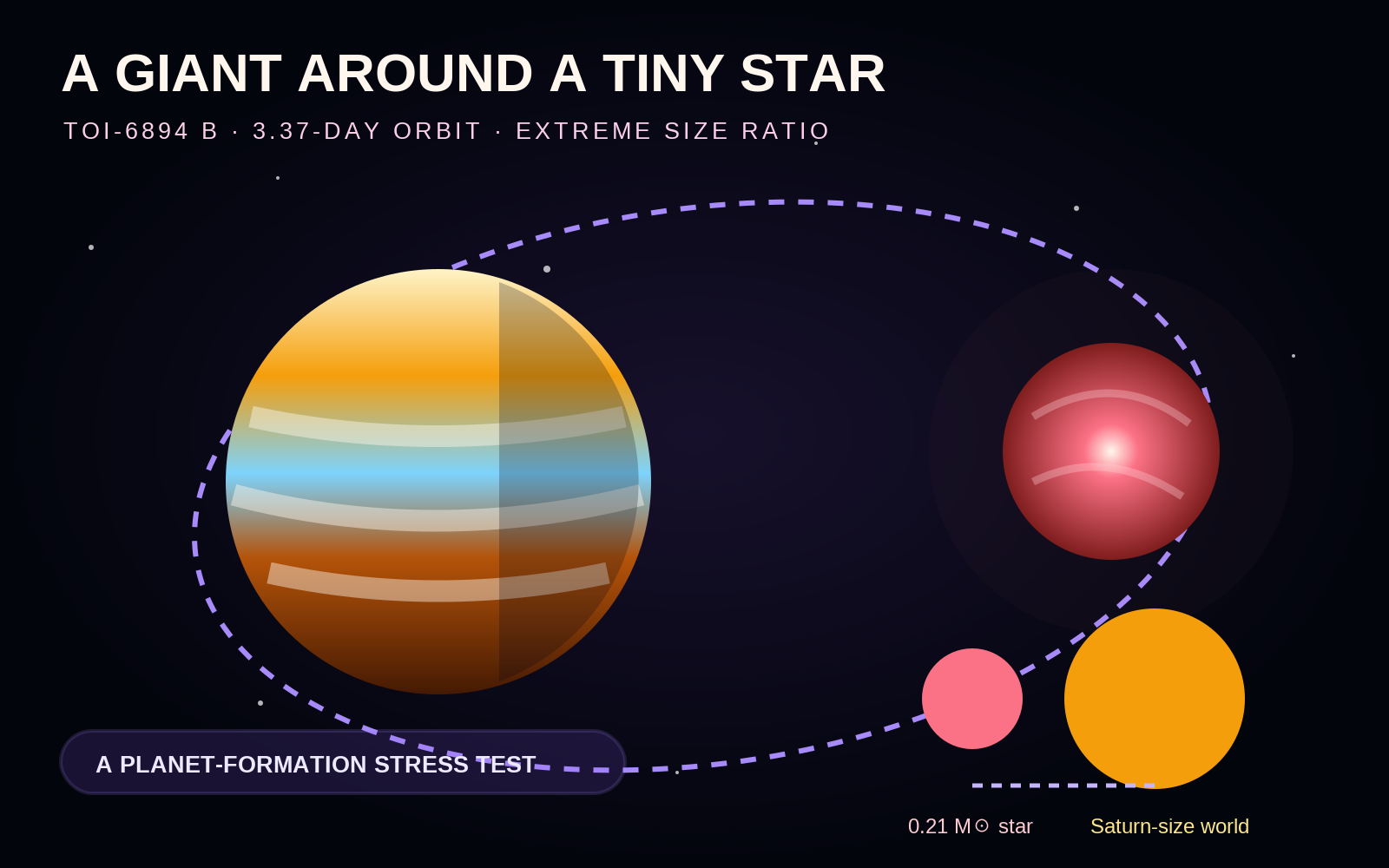 Illustration🌌 Space
TOI-6894 b, a Giant Planet Around a Tiny Star
Transit and radial-velocity measurements confirmed a low-density giant planet around a star only about one-fifth the Sun's mass, creating a demanding test for planet-formation models around very low-mass stars.
Read more →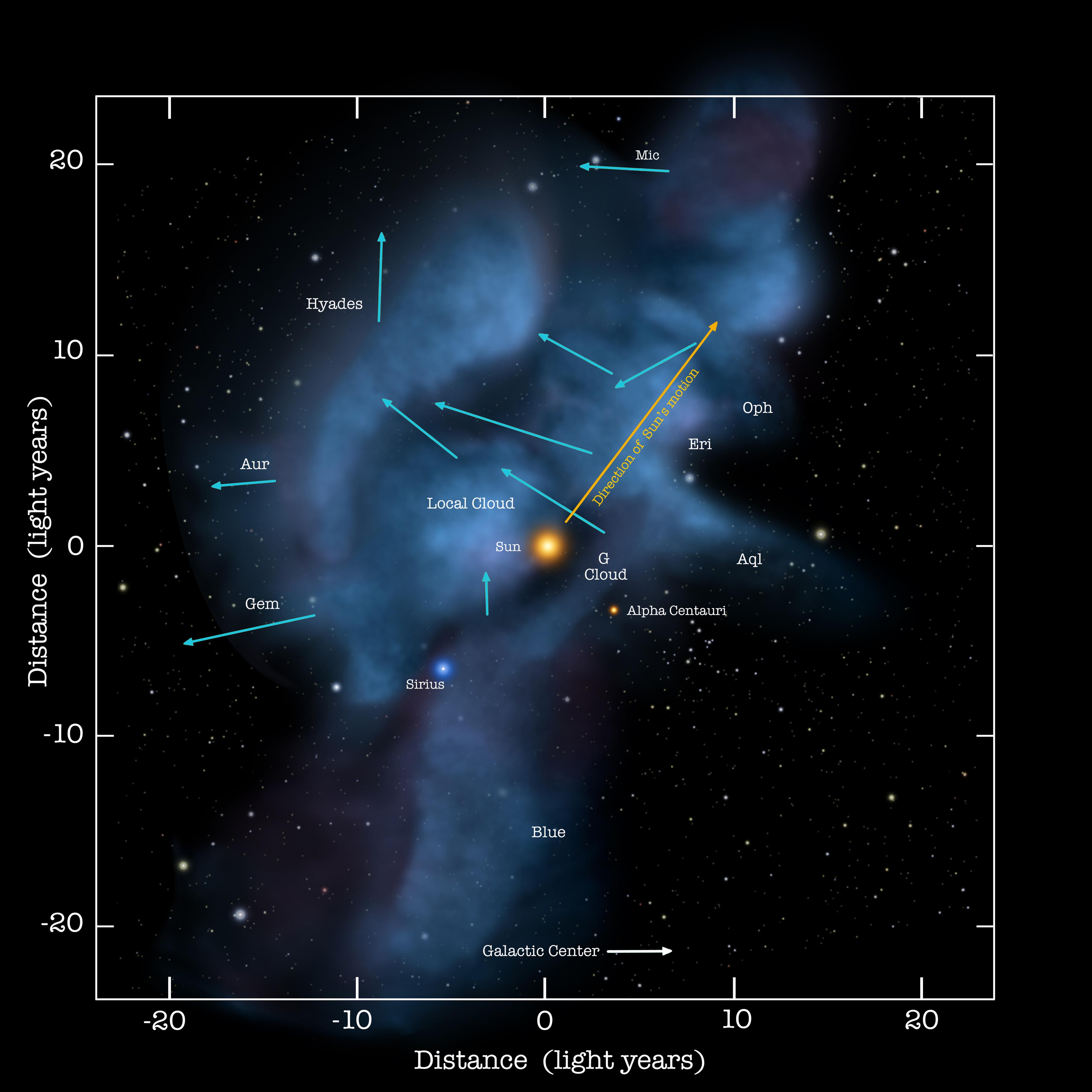 🌌 Space
Eos: A Hidden Molecular Cloud Near the Sun
Astronomers discovered Eos, a vast molecular cloud only about 300 light-years away, by detecting ultraviolet fluorescence from molecular hydrogen — a first for this class of cloud.
Read more →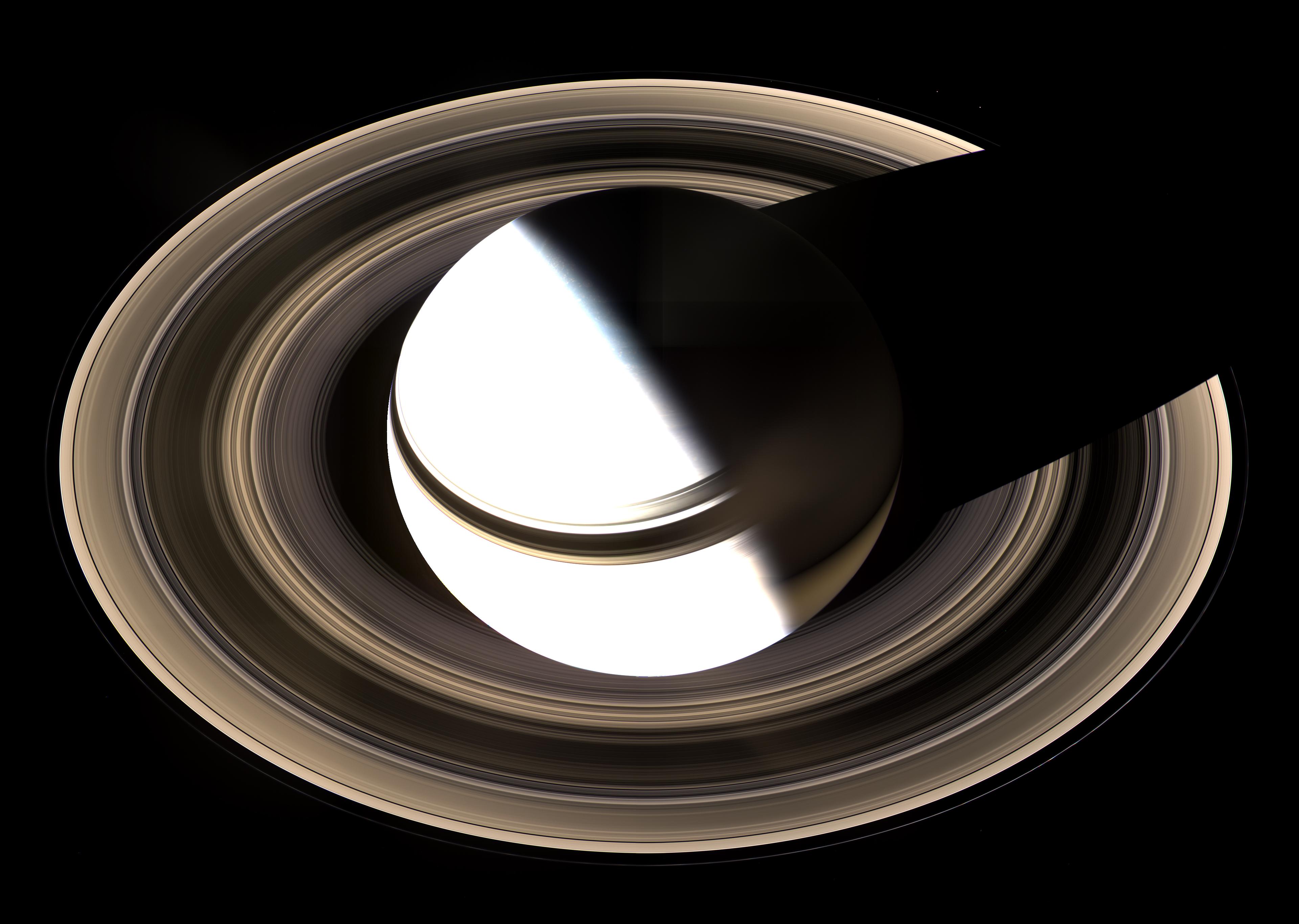 🌌 Space
Saturn's 128 New Moons
An international team found and confirmed 128 previously unrecognized small moons of Saturn, raising the planet's official total to 274 at the time of announcement.
Read more →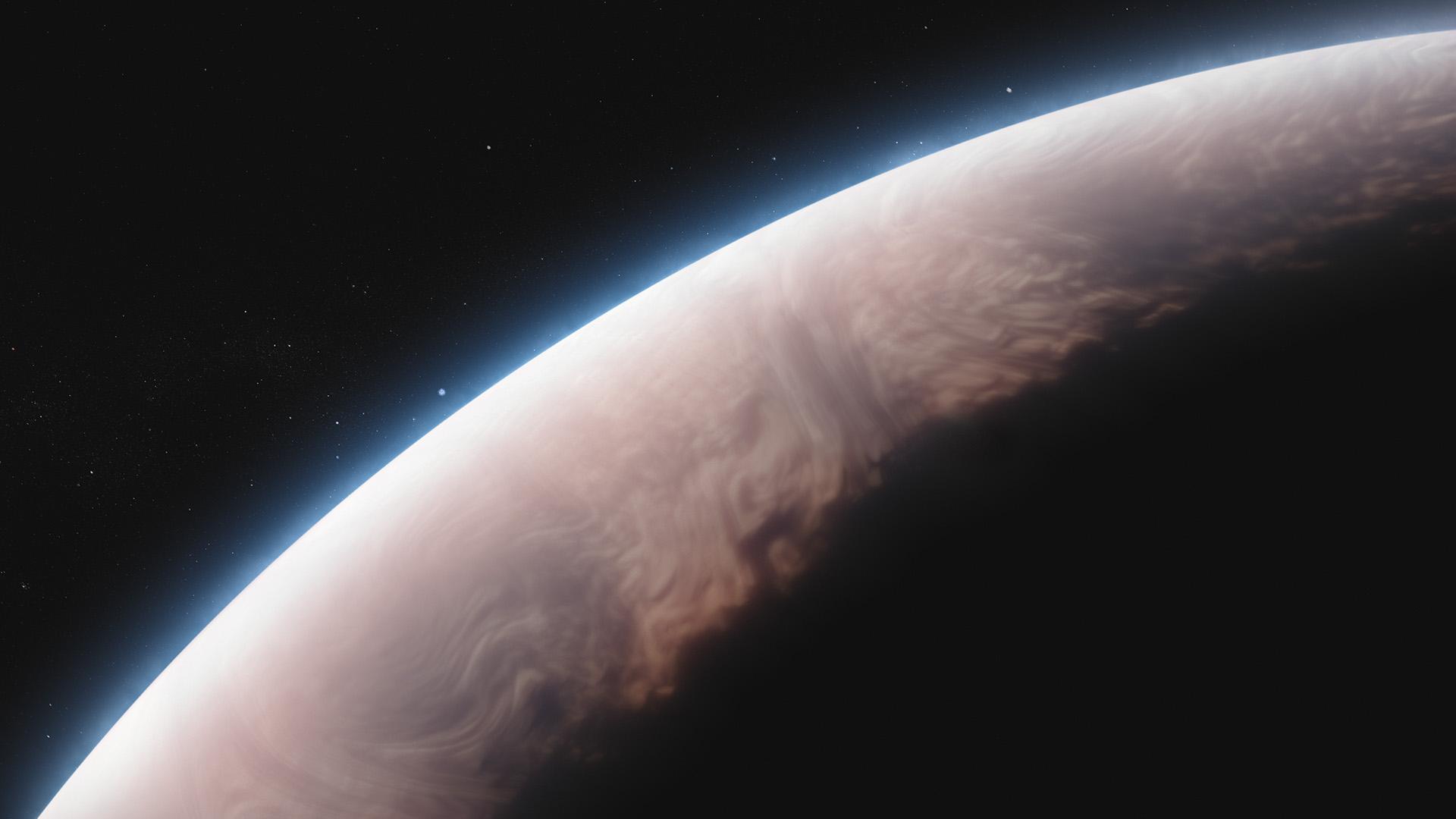 🌌 Space
A 3D Weather Map of Exoplanet Tylos
For the first time, astronomers mapped several layers of an exoplanet's atmosphere in three dimensions, revealing separate winds carrying iron, sodium, hydrogen, and titanium.
Read more →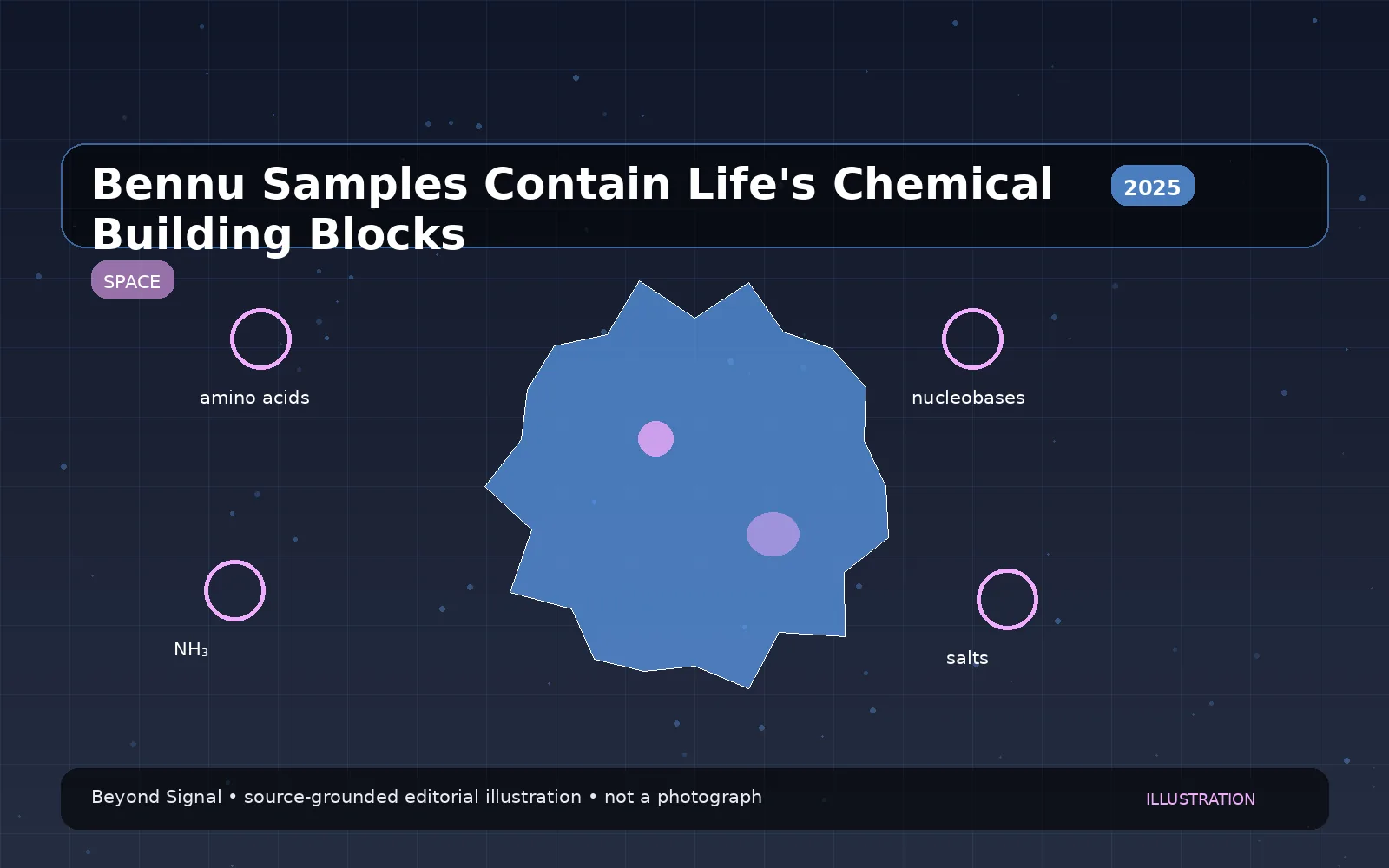 Illustration🌌 Space
Bennu Samples Contain Life's Chemical Building Blocks
Laboratory analyses of pristine asteroid Bennu material returned by OSIRIS-REx found abundant ammonia, nitrogen-rich organic matter, 14 of the 20 amino acids used by terrestrial life, and all five nucleobases used in DNA and RNA. The chemistry shows that life's ingredients were widespread, not that life existed on Bennu.
Read more →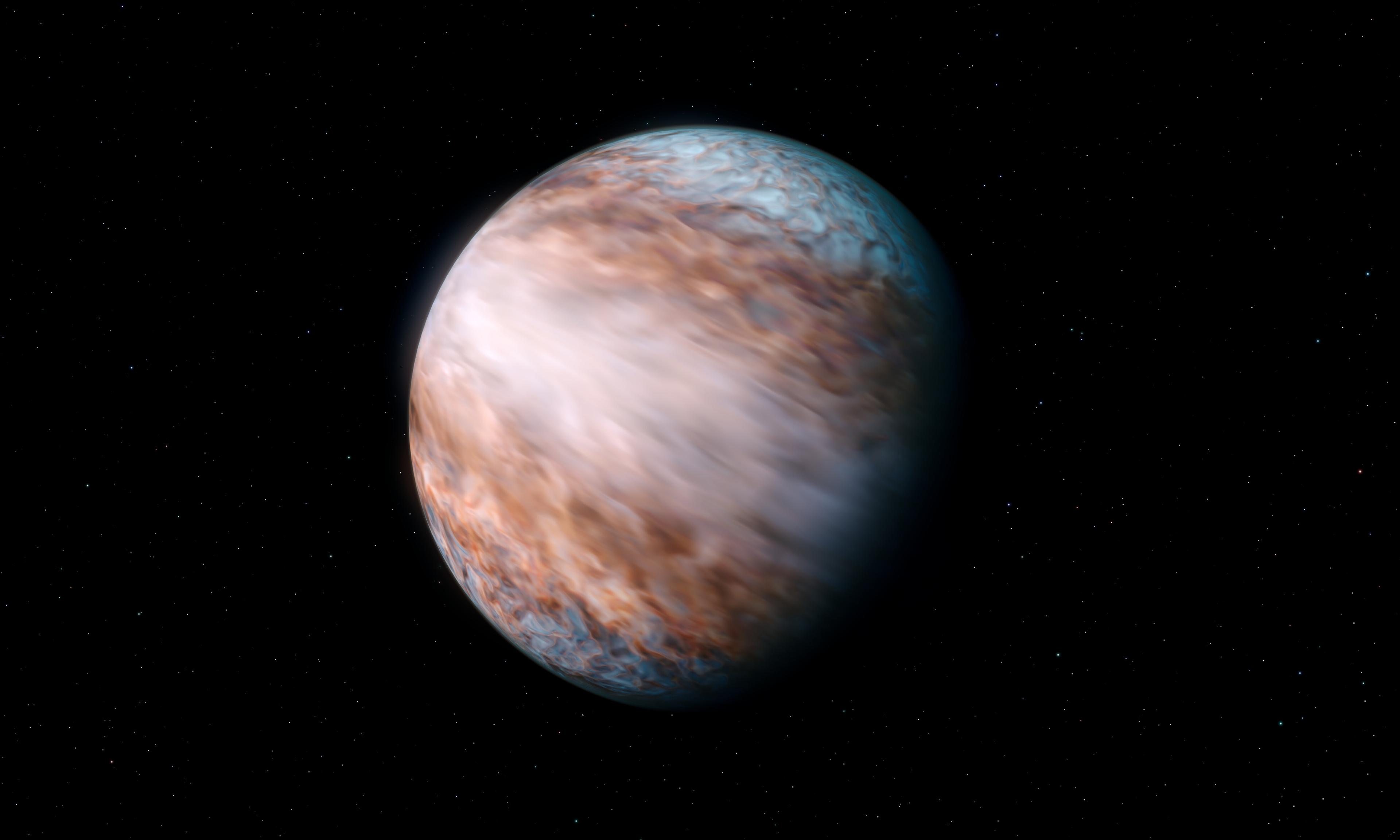 🌌 Space
Supersonic Winds on WASP-127b
Astronomers measured equatorial winds on the exoplanet WASP-127b moving at up to 33,000 km/h — the fastest planetary jet stream of its kind measured at the time.
Read more →Illustration🌌 SpaceJWST Confirms JADES-GS-z14-0 at Cosmic Dawn
JWST spectroscopy confirmed a remarkably luminous galaxy seen only about 300 million years after the Big Bang, showing that substantial galaxies assembled unexpectedly early.
Read more →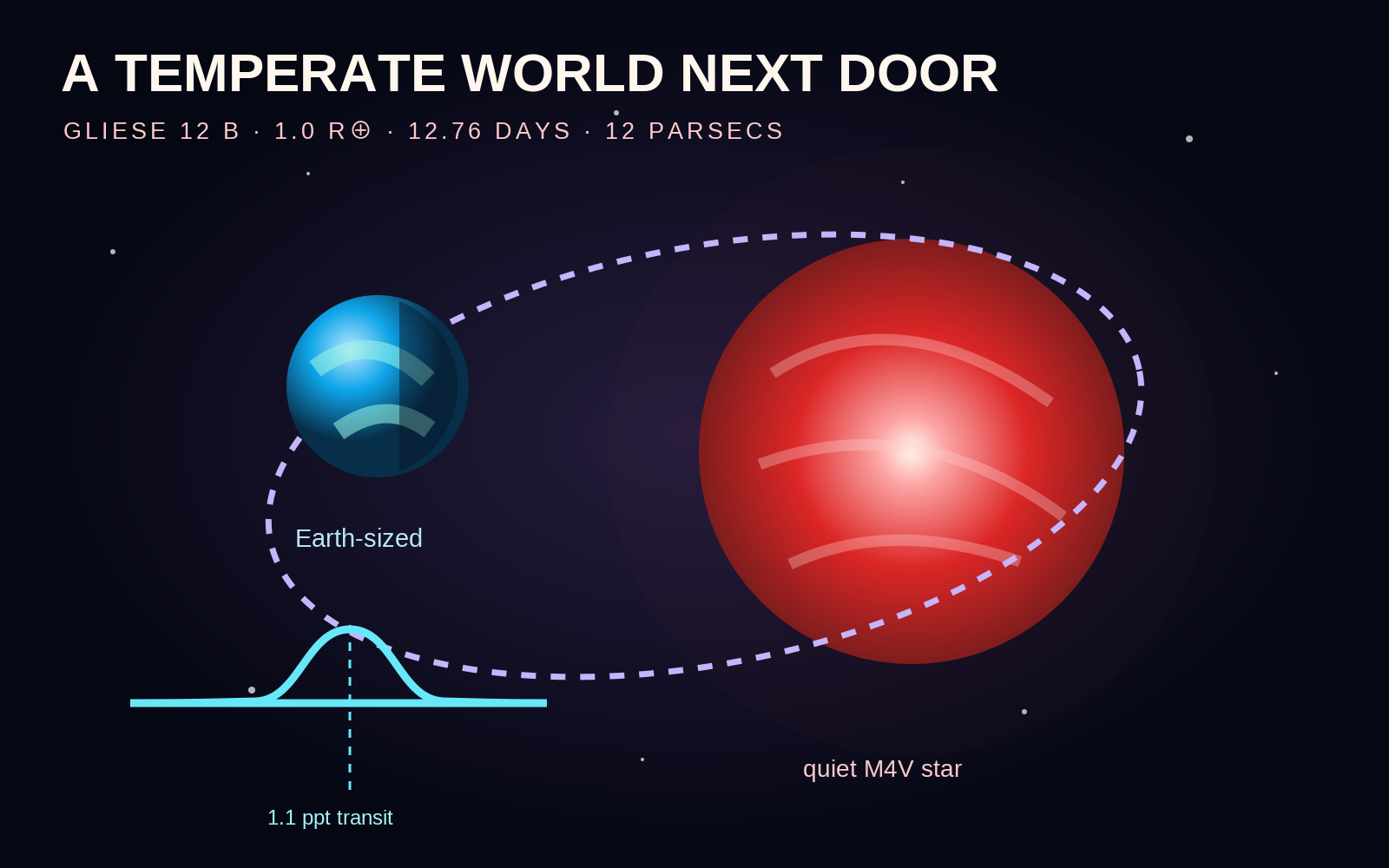 Illustration🌌 Space
Gliese 12 b, a Nearby Temperate Earth-Sized Planet
Transit observations validated Gliese 12 b as a planet about Earth's size orbiting a quiet red dwarf only 12 parsecs away, with an equilibrium temperature near 315 kelvin under standard assumptions.
Read more →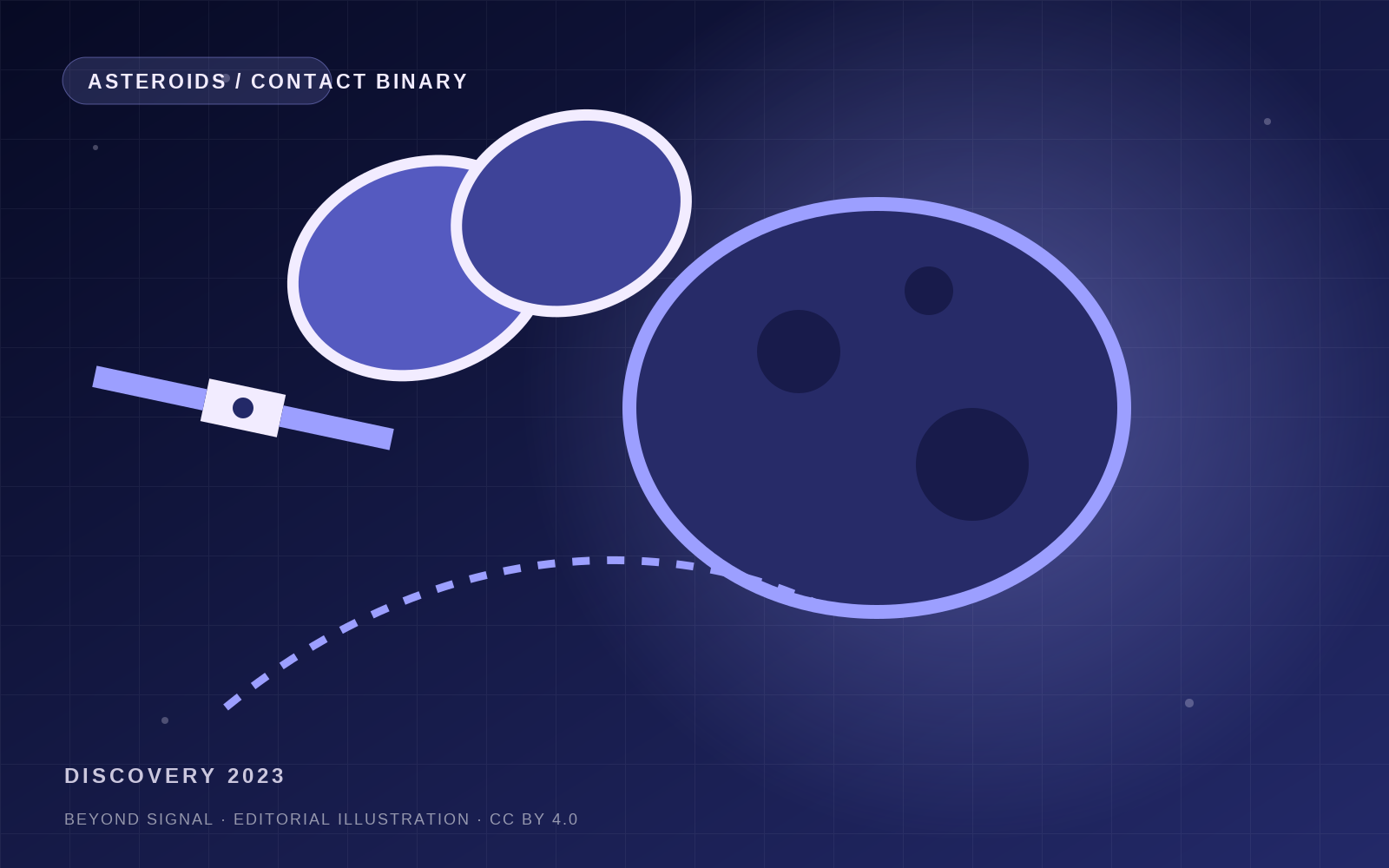 Illustration🌌 Space
Lucy Discovers Selam, Dinkinesh's Contact-Binary Moon
NASA's Lucy spacecraft found that the small main-belt asteroid Dinkinesh has a moon composed of two lobes touching each other, the first contact-binary satellite seen during a spacecraft flyby.
Read more →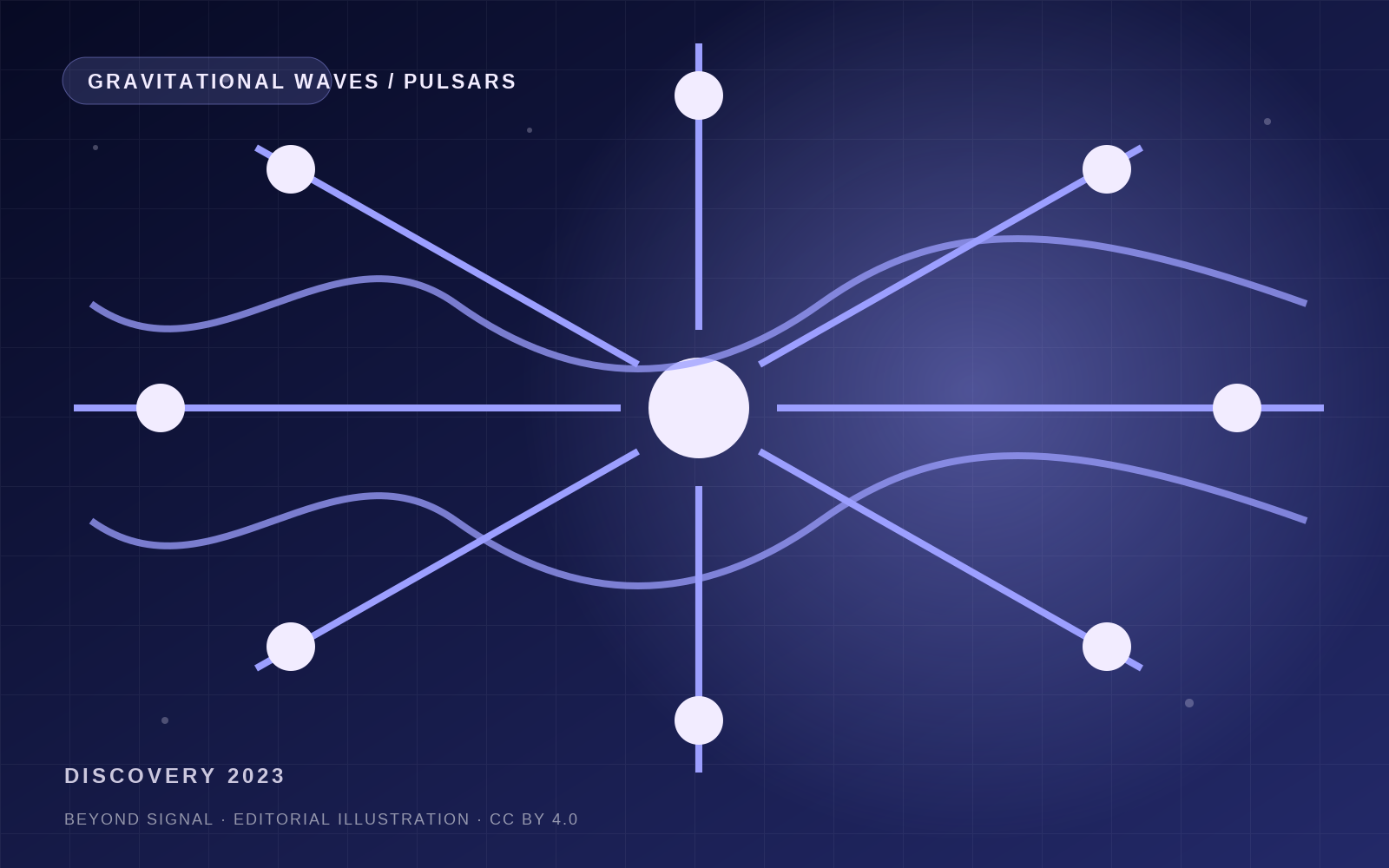 Illustration🌌 Space
NANOGrav Finds Evidence of a Cosmic Gravitational-Wave Background
Fifteen years of pulsar timing revealed the distinctive inter-pulsar correlations expected from a low-frequency gravitational-wave background, likely produced largely by orbiting supermassive black-hole binaries.
Read more →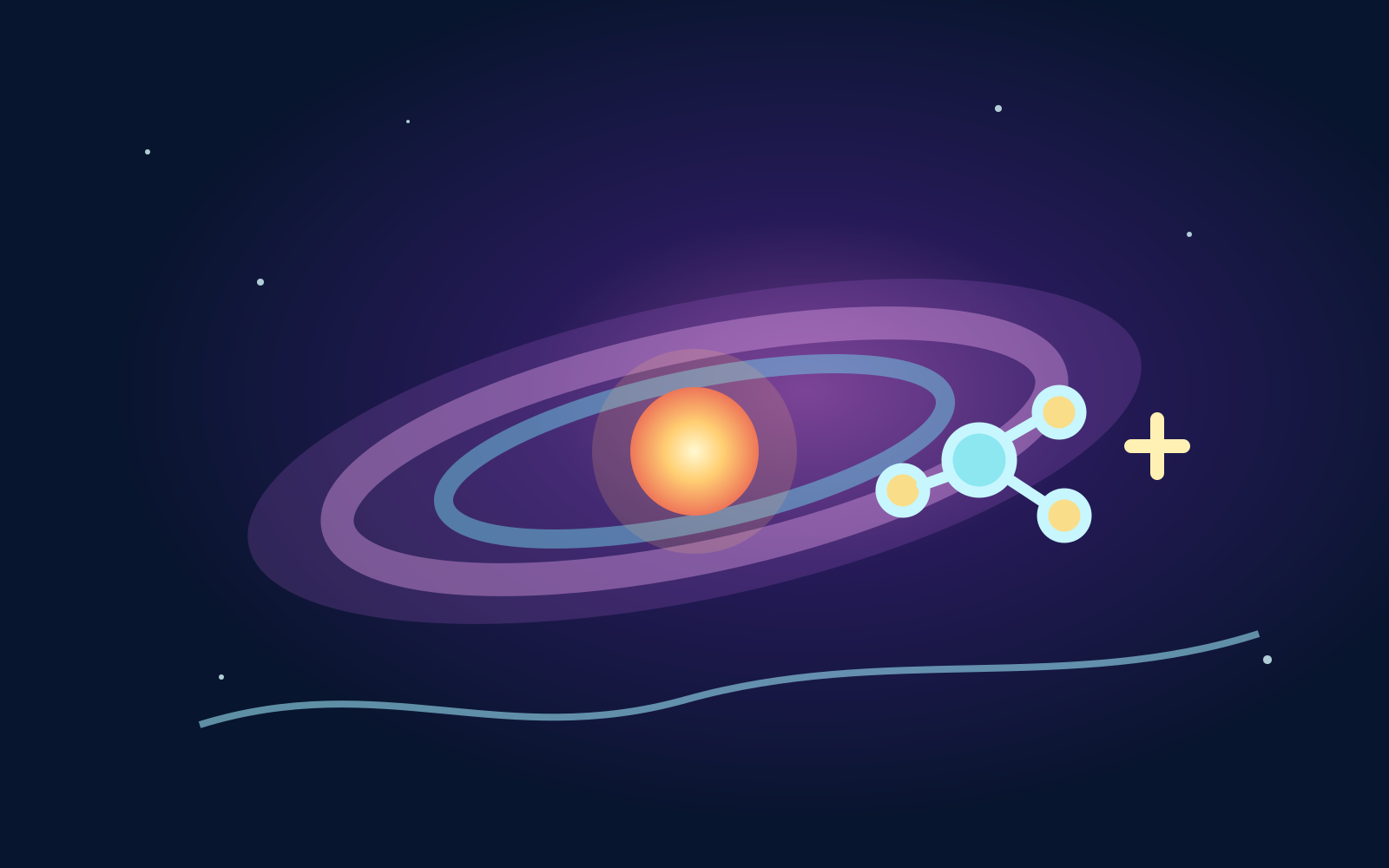 Illustration🌌 Space
JWST Detects the Methyl Cation in a Protoplanetary Disk
JWST spectra provided the first detection in space of CH₃⁺, the methyl cation, in a planet-forming disk in the Orion Nebula—direct evidence for a reactive carbon ion long expected to help initiate interstellar chemistry.
Read more →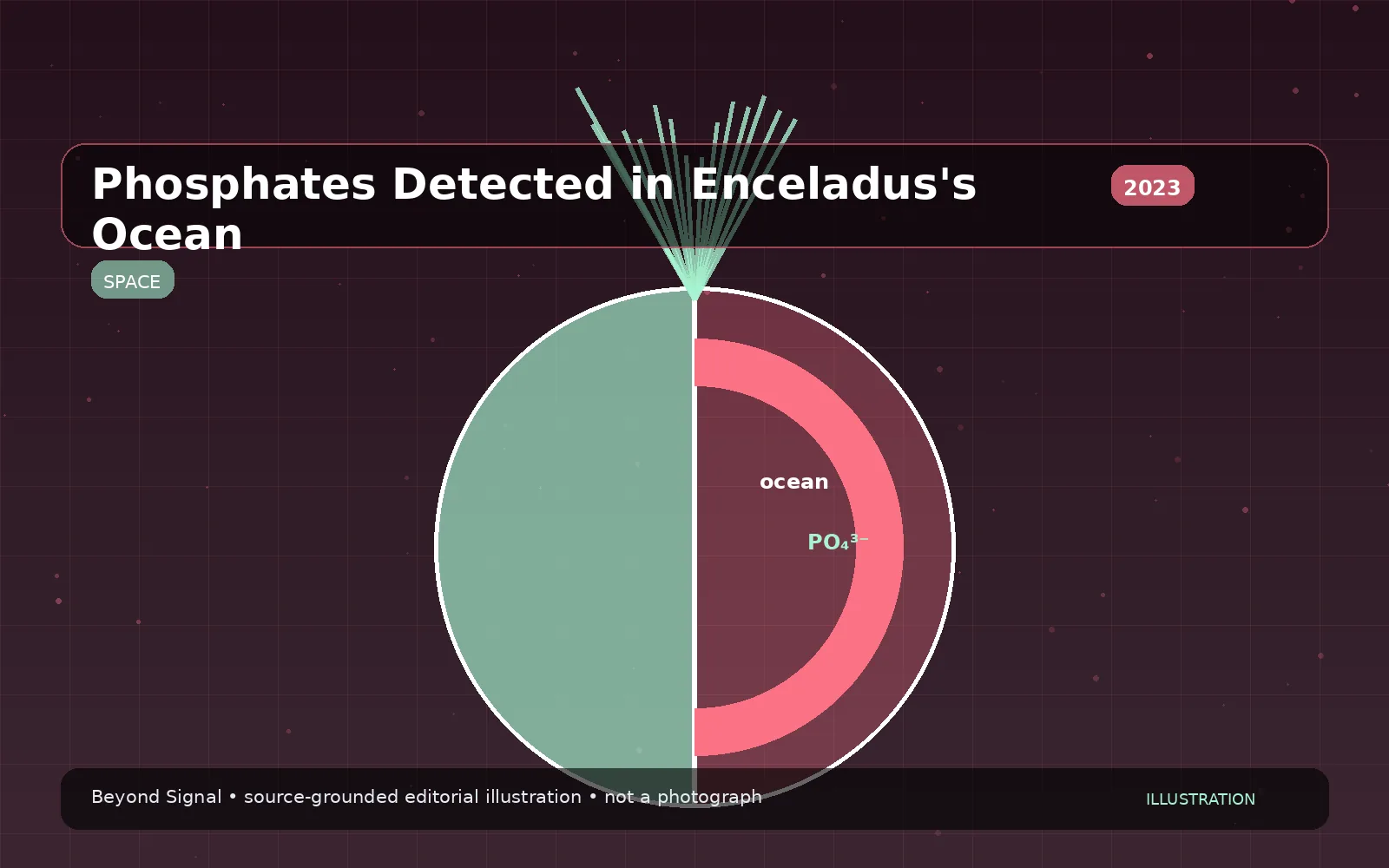 Illustration🌌 Space
Phosphates Detected in Enceladus's Ocean
Reanalysis of ice grains sampled by NASA's Cassini spacecraft detected sodium phosphates originating from the subsurface ocean of Saturn's moon Enceladus. Phosphorus is essential to terrestrial biology, and the inferred ocean concentrations were at least comparable to, and potentially higher than, those in Earth's oceans.
Read more →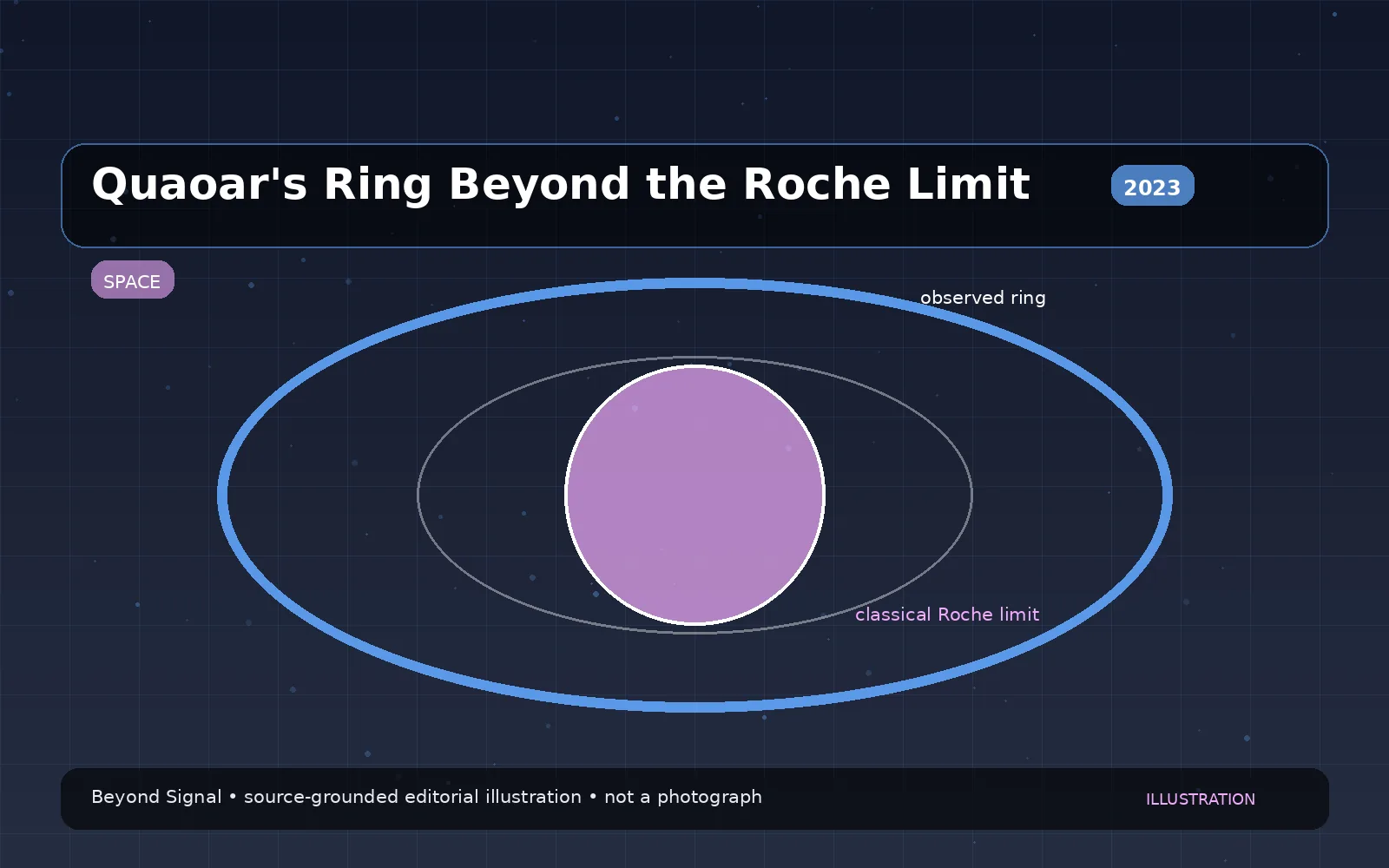 Illustration🌌 Space
Quaoar's Ring Beyond the Roche Limit
Observations of the dwarf planet Quaoar revealed a dense ring far beyond the classical Roche limit, the distance inside which tidal forces are expected to prevent ring material from assembling into a moon. The ring challenges a simple rule used to explain why planetary rings persist.
Read more →Illustration🌌 SpaceDART Successfully Changes an Asteroid's Orbit
Observations confirmed that NASA's DART spacecraft shortened Dimorphos's orbit around Didymos by roughly 32 minutes, proving that a kinetic impactor can measurably deflect an asteroid.
Read more →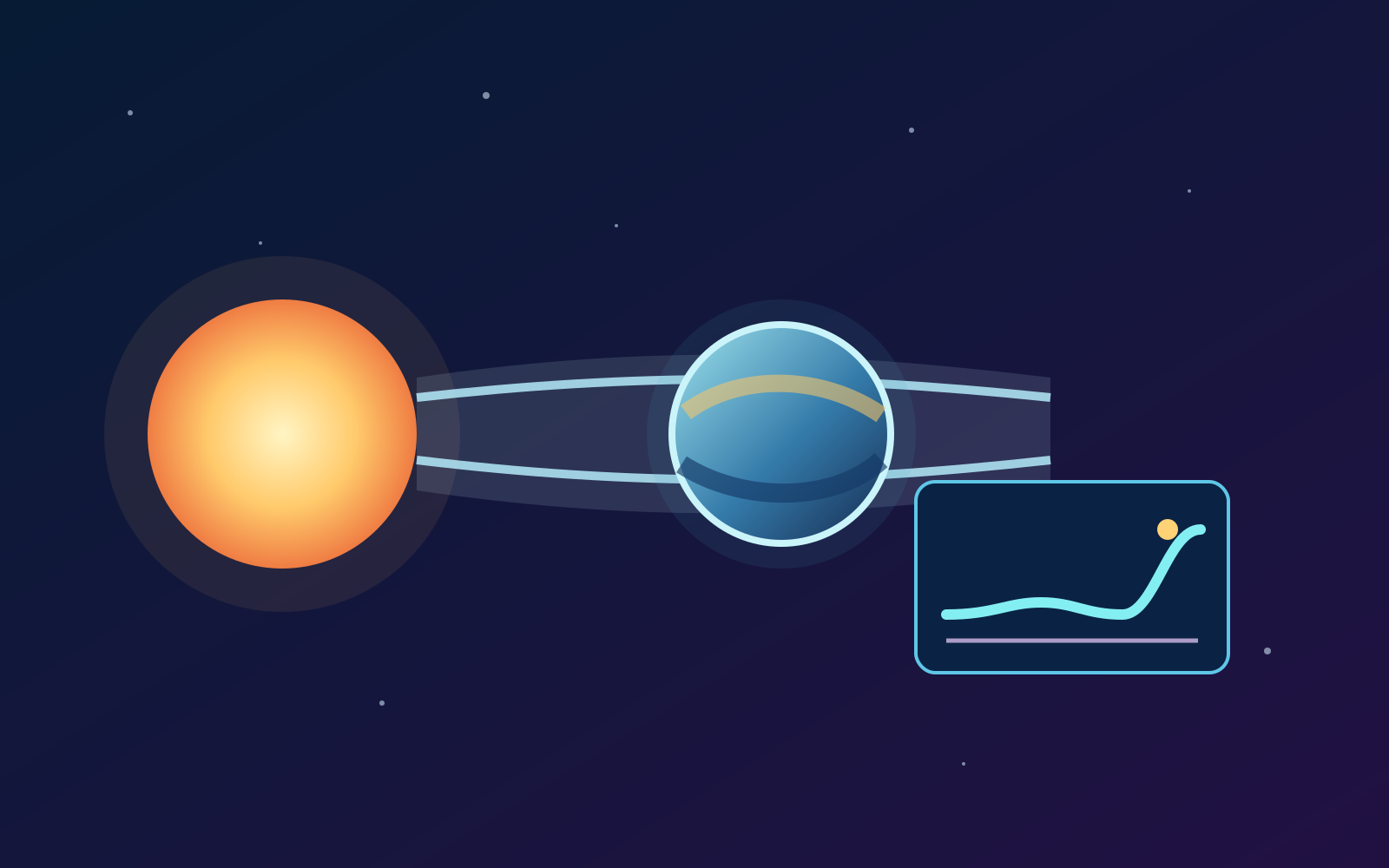 Illustration🌌 Space
Webb Detects Carbon Dioxide in WASP-39 b’s Atmosphere
JWST transmission spectroscopy delivered the first unambiguous carbon-dioxide detection in an exoplanet atmosphere, measuring a strong 4.3-micrometre absorption feature in the hot gas giant WASP-39 b.
Read more →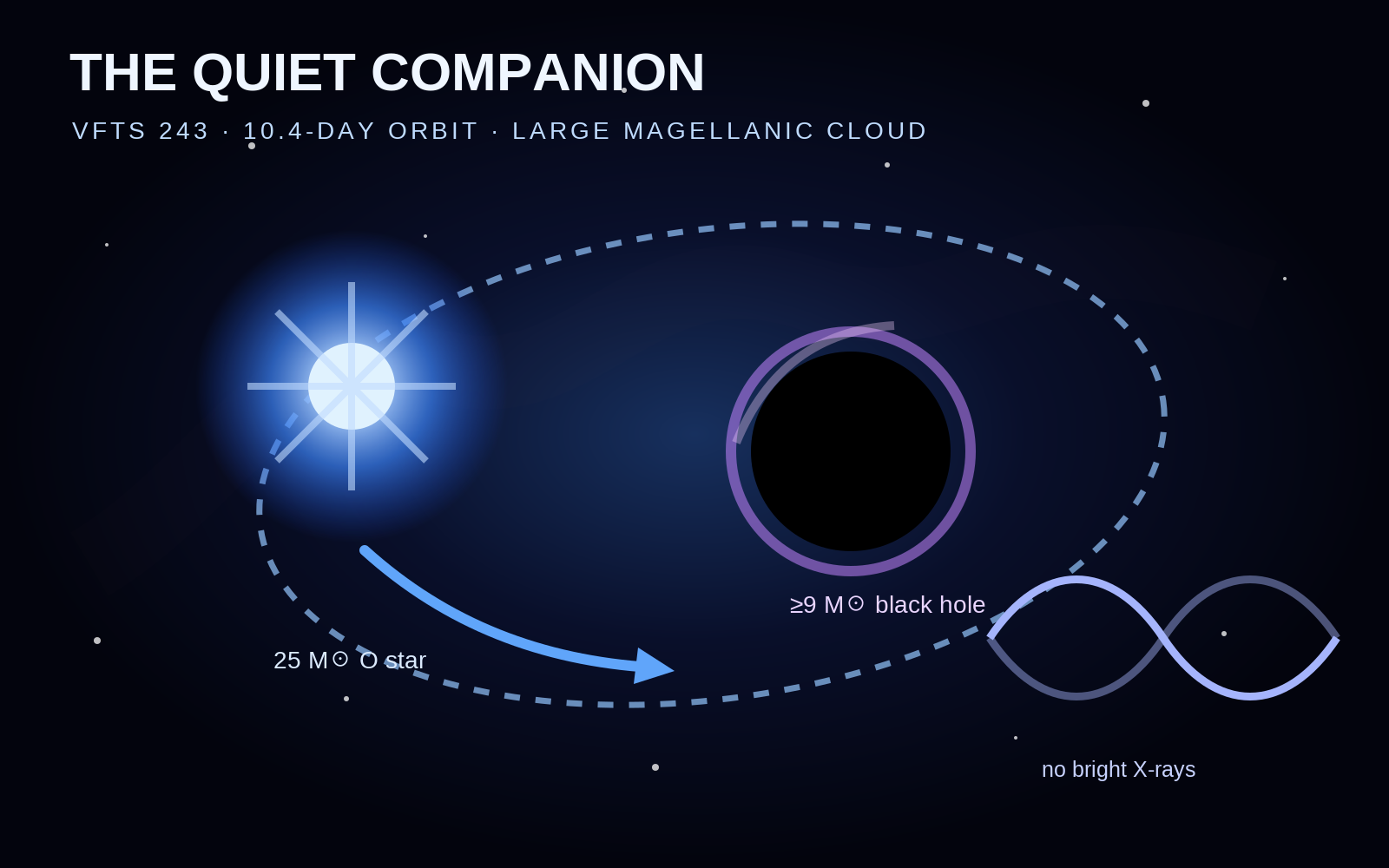 Illustration🌌 Space
VFTS 243, an Extragalactic Dormant Black Hole
Six years of stellar spectra revealed that the massive star VFTS 243 orbits an unseen companion of at least nine solar masses, making the companion the first unambiguous X-ray-quiet stellar black hole identified outside the Milky Way at the time.
Read more → 🌌 Space
Image of Our Galaxy's Black Hole (Sgr A*)
The first image of the supermassive black hole at the center of our own galaxy, 27,000 light-years away.
Read more → 🌌 Space
First Image of a Black Hole (M87*)
Humanity's first direct image of a black hole — a glowing ring of light around the shadow of M87*, 6.5 billion solar masses.
Read more → 🌌 Space
The TRAPPIST-1 Planetary System
Seven Earth-sized planets circling a cool red dwarf 40 light-years away — three of them in the habitable zone.
Read more →Major discoveries by year
- JWST Rules Out a 2032 Lunar Impact
2026 · Planetary defense
- Proba-3 Reveals a Faster Slow Solar Wind
2026 · Solar physics
- GJ 887 d, a Nearby Habitable-Zone Super-Earth
2026 · Exoplanets
- The Most Compact Known 3+1 Quadruple Star System
2026 · Space missions
- The Inside-Out LHS 1903 Planetary System
2026 · Exoplanets
- Abiotic Sugars in the Orgueil Meteorite
2026 · Asteroids
- Dense Gas Cocoons Explain Many Little Red Dots
2026 · Black holes
- The Largest Interstellar Sulfur-Bearing Molecule Yet
2026 · Nebulae
Related scientific terms
Frequently asked questions
How is an exoplanet discovered?
Common methods include measuring a star's dimming when a planet transits and detecting the star's reflex motion through radial velocity.
Why do space discoveries need follow-up observations?
Follow-up observations test whether an initial signal is real and measure additional properties such as mass, orbit, temperature, or composition.
What does a telescope image actually show?
It shows detected radiation processed into a visual representation. Colour may encode wavelength or intensity rather than what human eyes would see.