
 Illustration — not a photo of the discovery
The Gulf of Alaska's Mysterious Golden Orb
A NOAA remotely operated vehicle found a smooth golden object attached to rock about 3,300 metres deep in the Gulf of Alaska. It resisted immediate identification as an egg case, sponge, or coral. Later microscopy and genetic work linked the material to the anchoring structure of the deep-sea anemone Relicanthus daphneae.
The story
Why scientists were there
NOAA's Seascape Alaska expedition was mapping deep habitats and documenting organisms in waters that had received little direct observation. The ROV camera encountered the rounded object during a transect across rocky seafloor.
How they found it
Pilots used the ROV's manipulator and suction sampler to recover the object for shore-based study. Its layered texture and a small opening prompted competing hypotheses until subsequent anatomical and molecular comparisons connected it with Relicanthus tissue.
What makes it unique
The find became a vivid example of how little is known about common-looking structures in the deep sea. Its 2026 identification transformed an unexplained object into evidence of how an unusual giant anemone attaches to, detaches from, or moves across the seabed.
Gallery
Where it was found
Gulf of Alaska, northeastern Pacific Ocean
Tags
Related discoveries
 Illustration🪸 Ocean Discoveries
Shackleton's Endurance Found in the Weddell Sea
The Endurance22 expedition located Sir Ernest Shackleton's ship Endurance upright on the Weddell Sea floor at 3,008 metres, roughly four miles south of Captain Frank Worsley's recorded sinking position. The unusually intact wooden wreck was documented without being touched under Antarctic Treaty protection.
Read more →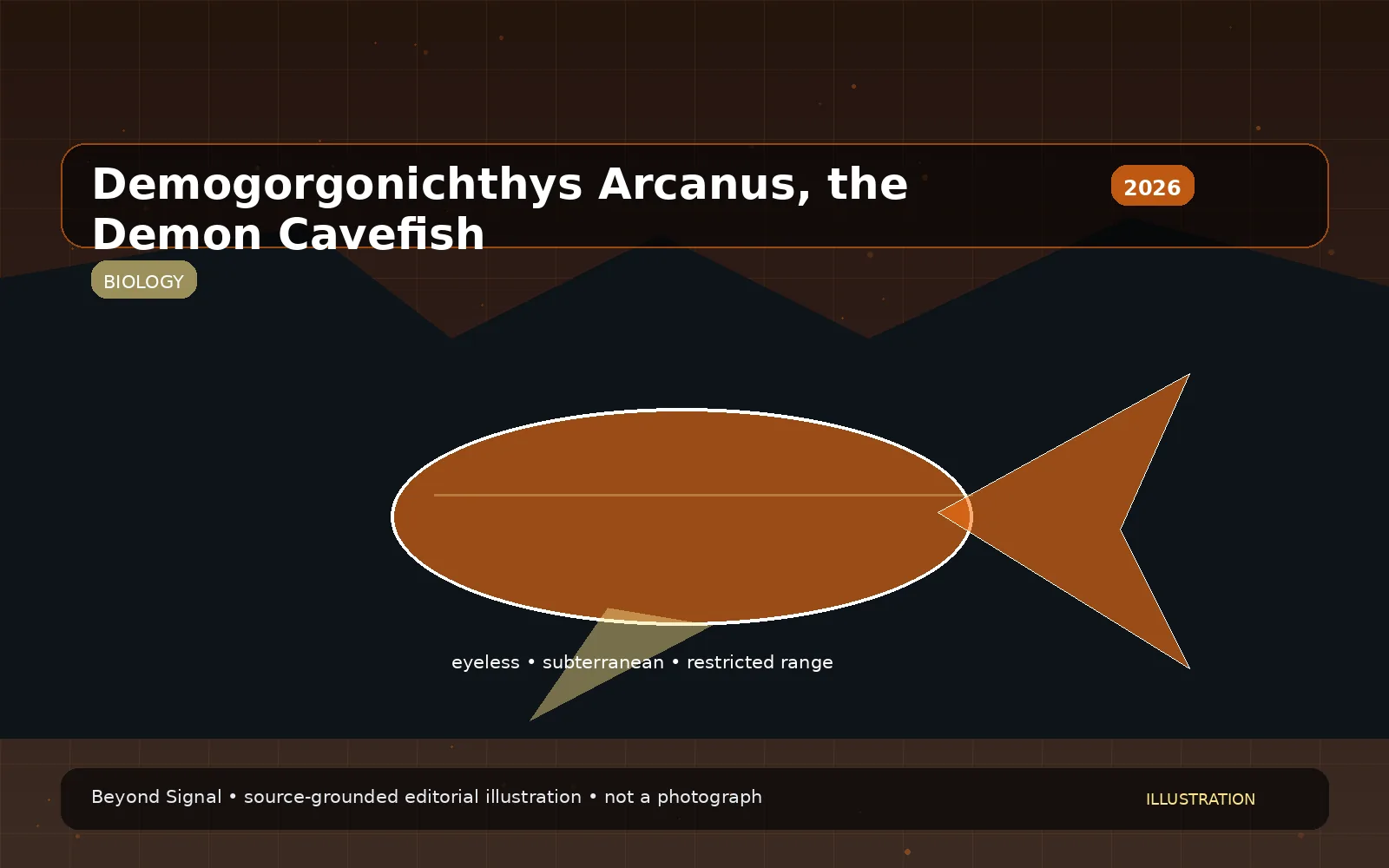 Illustration🧬 Biology
Demogorgonichthys Arcanus, the Demon Cavefish
Researchers described Demogorgonichthys arcanus, a new cavefish from the Redstone Arsenal karst near Huntsville. The pale subterranean predator differs from the Southern cavefish in head shape and fin-ray anatomy, and its coexistence with another predatory cavefish makes the small groundwater habitat ecologically unusual.
Read more → 🪸 Ocean Discoveries
The Deep-Sea ‘Golden Orb’ Identified
A mysterious golden mass collected from the Gulf of Alaska seafloor was identified as tissue shed from the attachment base of the giant deep-sea anemone Relicanthus daphneae.
Read more →