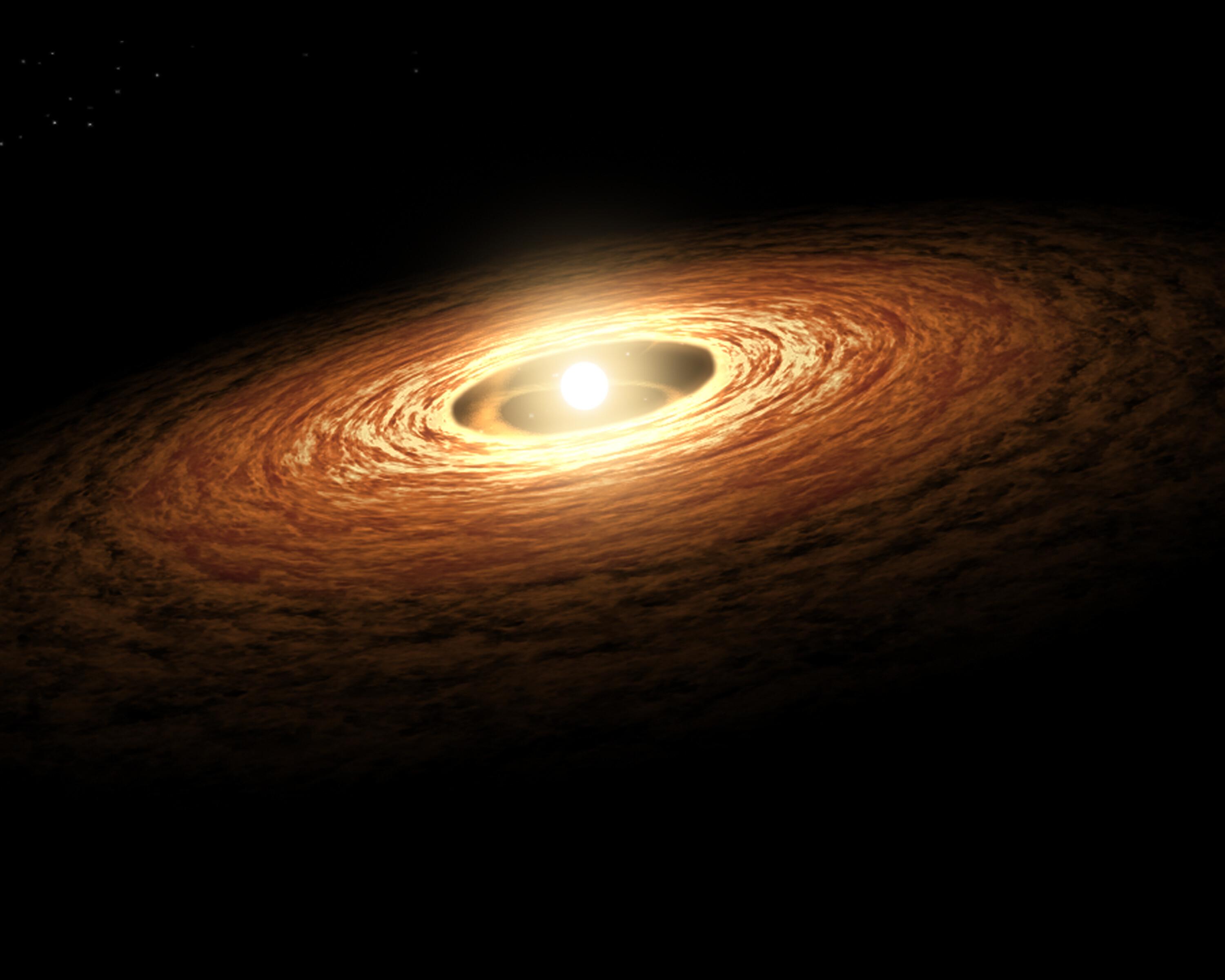
Planet Formation Caught at the Start around HOPS-315
Astronomers observed the first specks of planet-forming minerals beginning to solidify around a young star, catching a process analogous to the birth of our Solar System.
The story
Why scientists were there
HOPS-315 is a very young star surrounded by the gas and dust disc from which planets are expected to grow.
How they found it
ALMA located a narrow region of silicon-monoxide gas, while Webb detected crystalline minerals at the same place — the ingredients of the earliest planet-building solids.
What makes it unique
The observations connect a chemical transition in a distant disc to the first stage of terrestrial planet formation, before larger rocks and worlds have assembled.
Gallery

Where it was found
Atacama Large Millimeter/submillimeter Array, Chile
Tags
Related discoveries
 🌌 Space
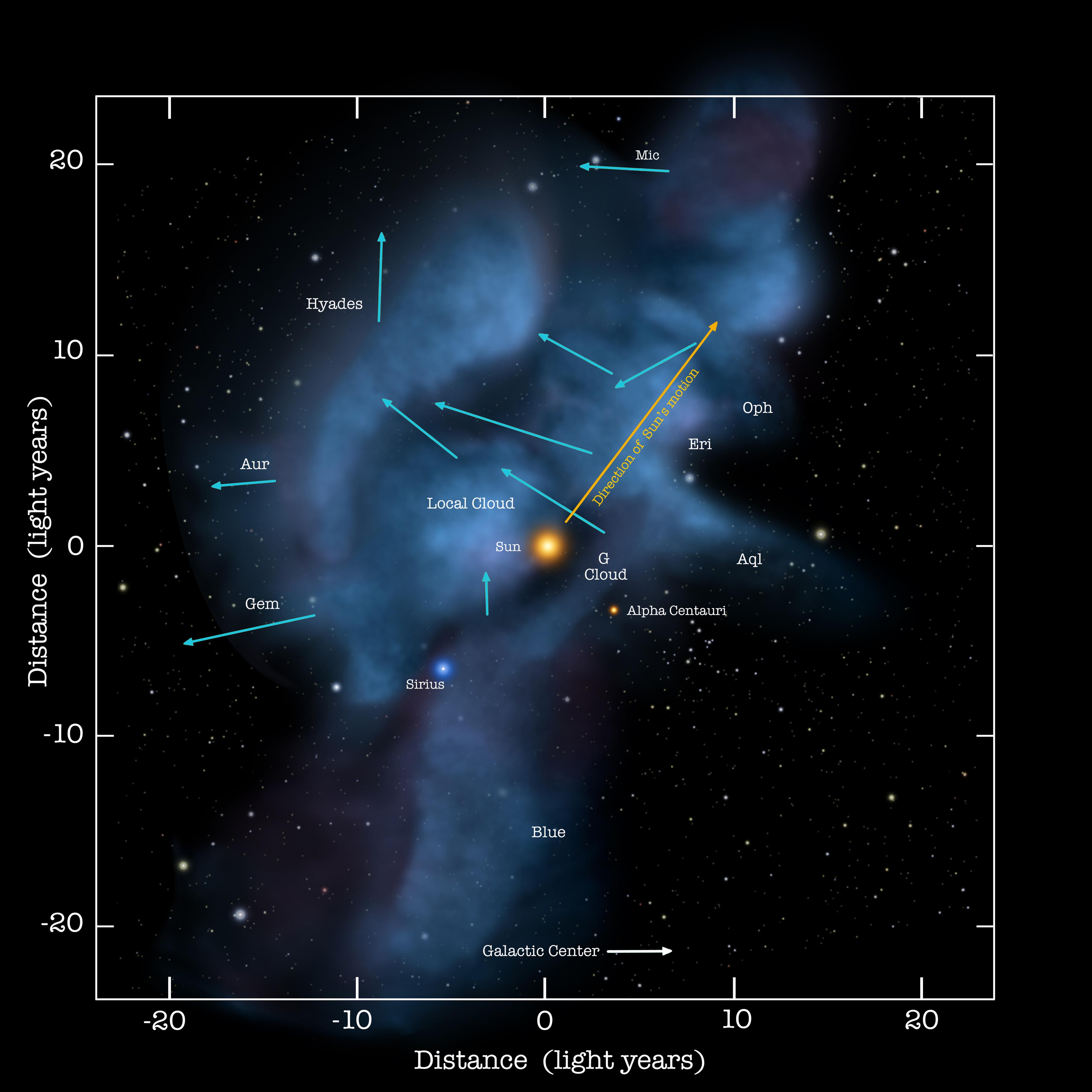
Eos: A Hidden Molecular Cloud Near the Sun
Astronomers discovered Eos, a vast molecular cloud only about 300 light-years away, by detecting ultraviolet fluorescence from molecular hydrogen — a first for this class of cloud.
Read more → 🌌 Space
The TRAPPIST-1 Planetary System
Seven Earth-sized planets circling a cool red dwarf 40 light-years away — three of them in the habitable zone.
Read more →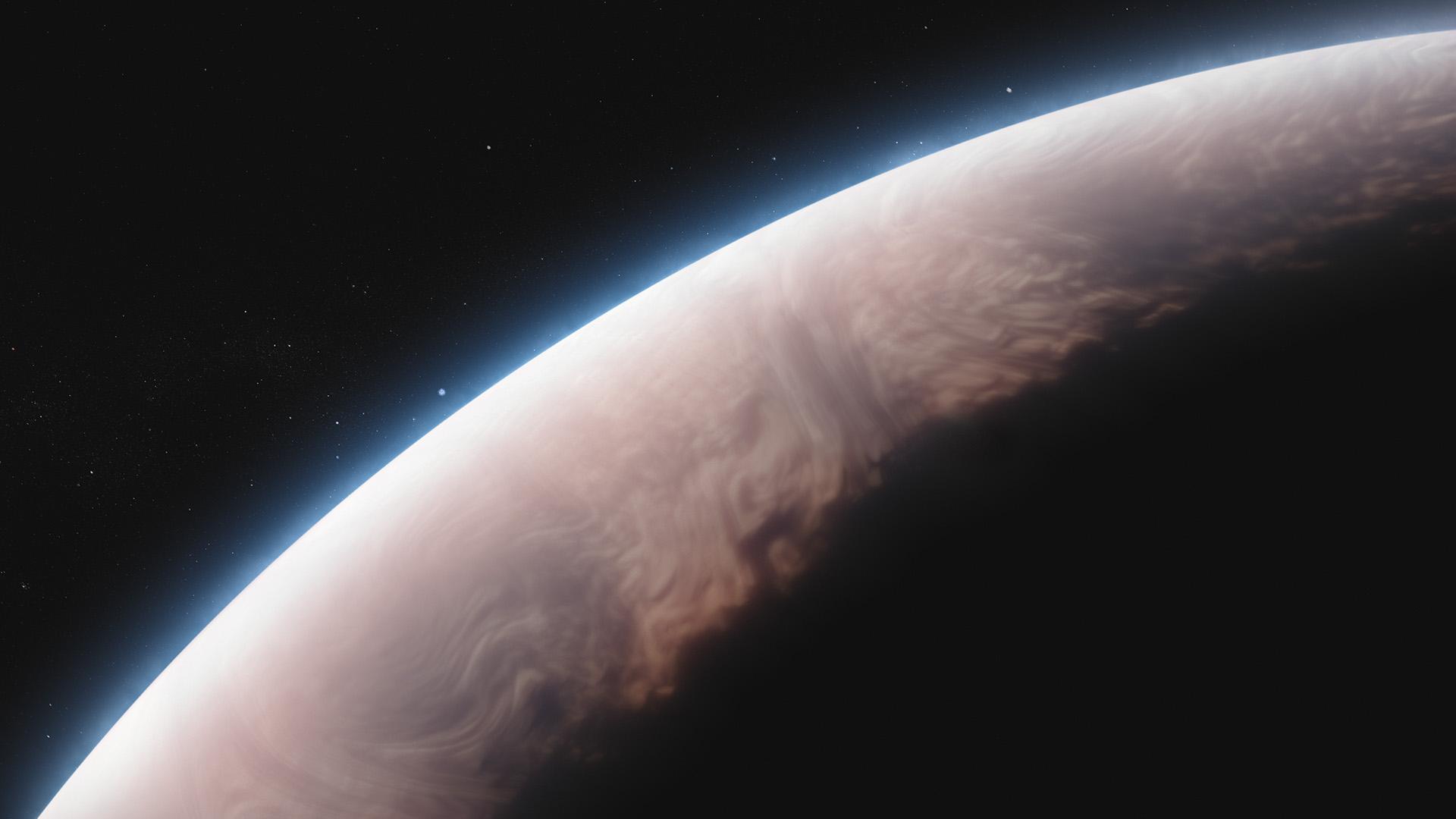 🌌 Space
A 3D Weather Map of Exoplanet Tylos
For the first time, astronomers mapped several layers of an exoplanet's atmosphere in three dimensions, revealing separate winds carrying iron, sodium, hydrogen, and titanium.
Read more →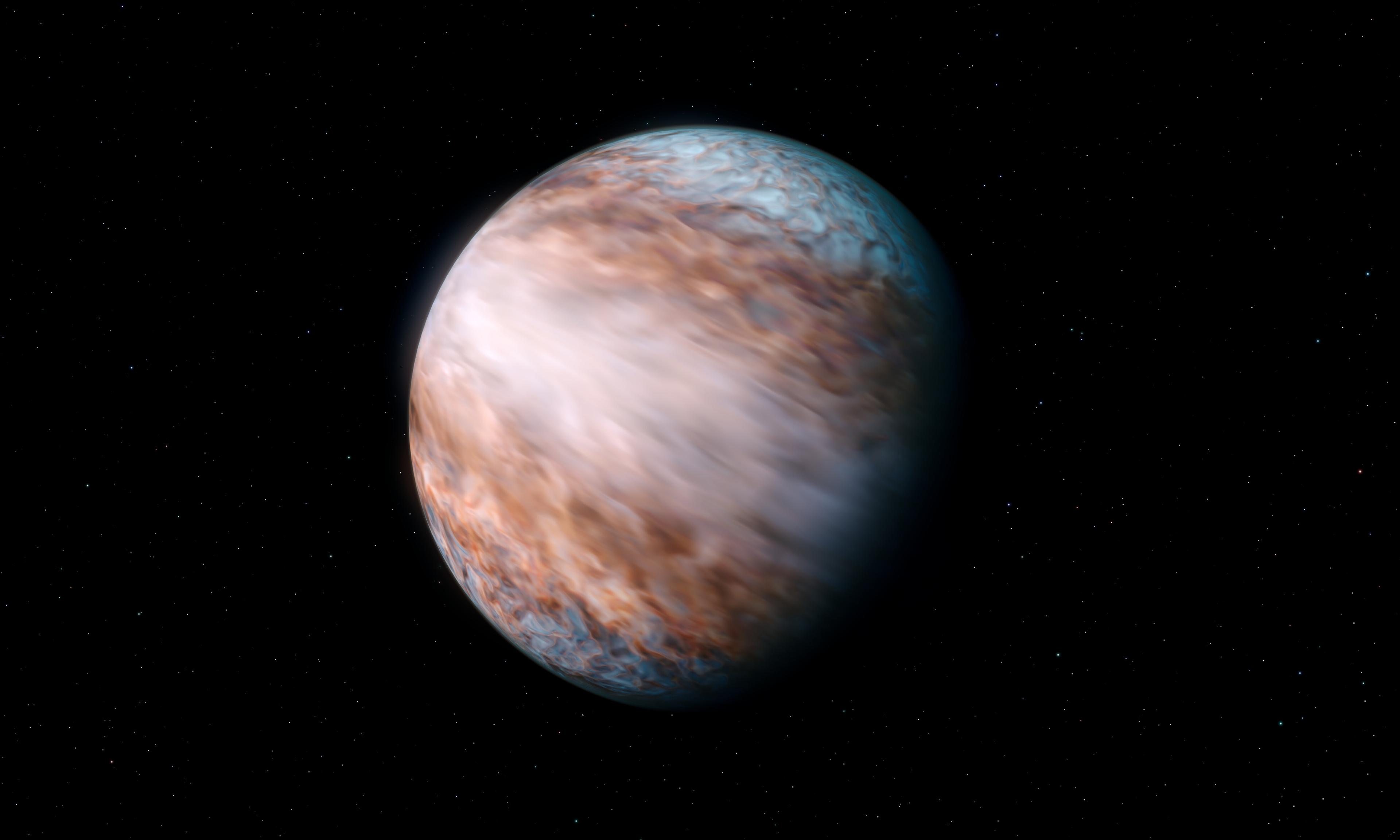 🌌 Space
Supersonic Winds on WASP-127b
Astronomers measured equatorial winds on the exoplanet WASP-127b moving at up to 33,000 km/h — the fastest planetary jet stream of its kind measured at the time.
Read more → Illustration🌌 Space
JWST Detects the Methyl Cation in a Protoplanetary Disk
JWST spectra provided the first detection in space of CH₃⁺, the methyl cation, in a planet-forming disk in the Orion Nebula—direct evidence for a reactive carbon ion long expected to help initiate interstellar chemistry.
Read more →