Lead Turned into Gold at the LHC
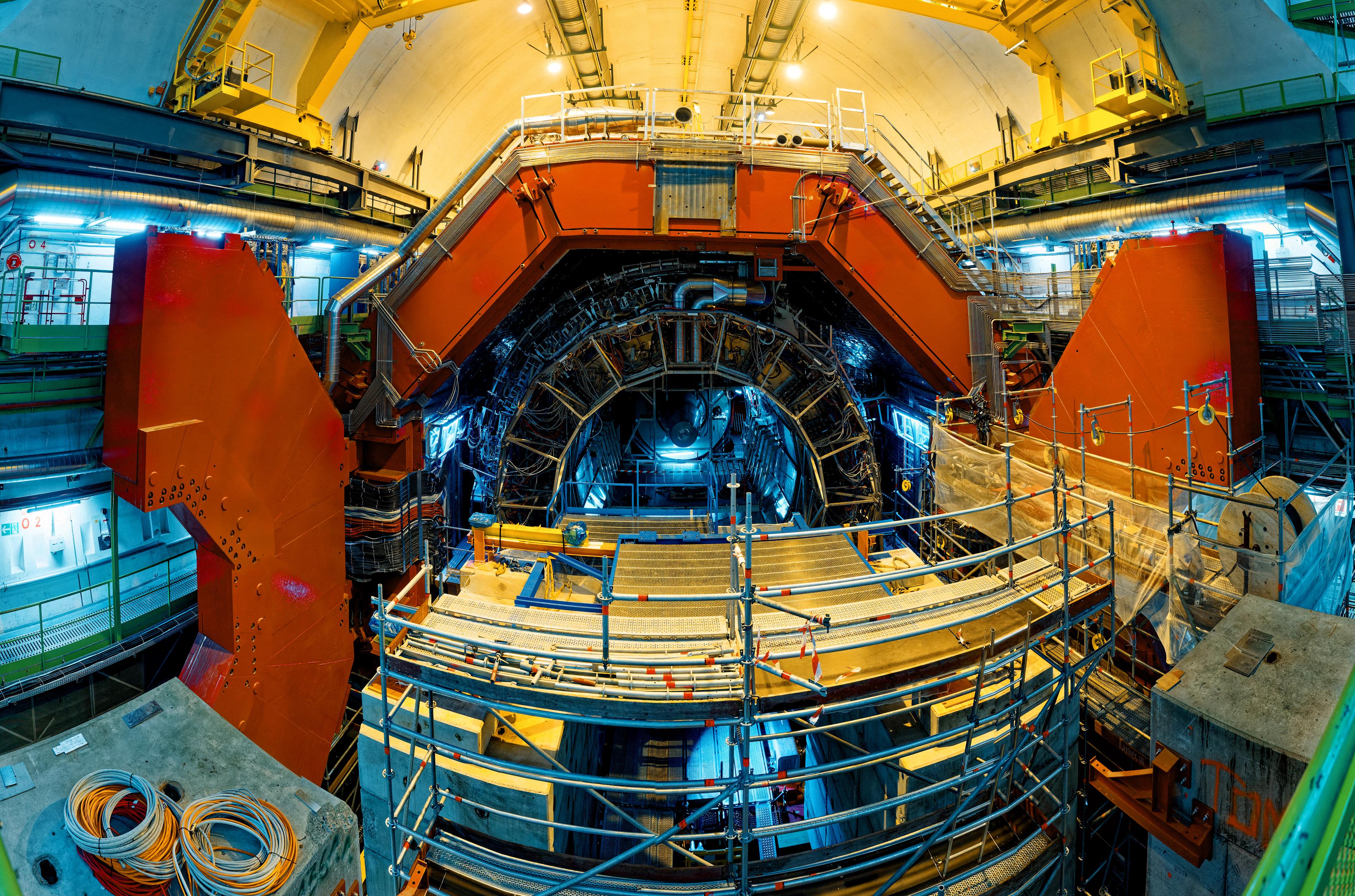
The ALICE experiment measured lead nuclei turning into gold during near-miss collisions at the Large Hadron Collider — in fleeting, subatomic quantities rather than usable metal.
The story
Why scientists were there
Lead nuclei moving near light speed generate extraordinarily strong electromagnetic fields when they pass close to one another without colliding head-on.
How they found it
The ALICE detector identified reactions in which electromagnetic interactions knocked three protons out of a lead nucleus, leaving a gold nucleus behind.
What makes it unique
It is modern nuclear transmutation in a new regime: the medieval dream of alchemy appeared for an instant, while also giving physicists a precise test of electromagnetic processes around heavy ions.
Gallery

Where it was found
CERN Large Hadron Collider, Geneva, Switzerland
Tags
Related discoveries
 ⚛️ Physics
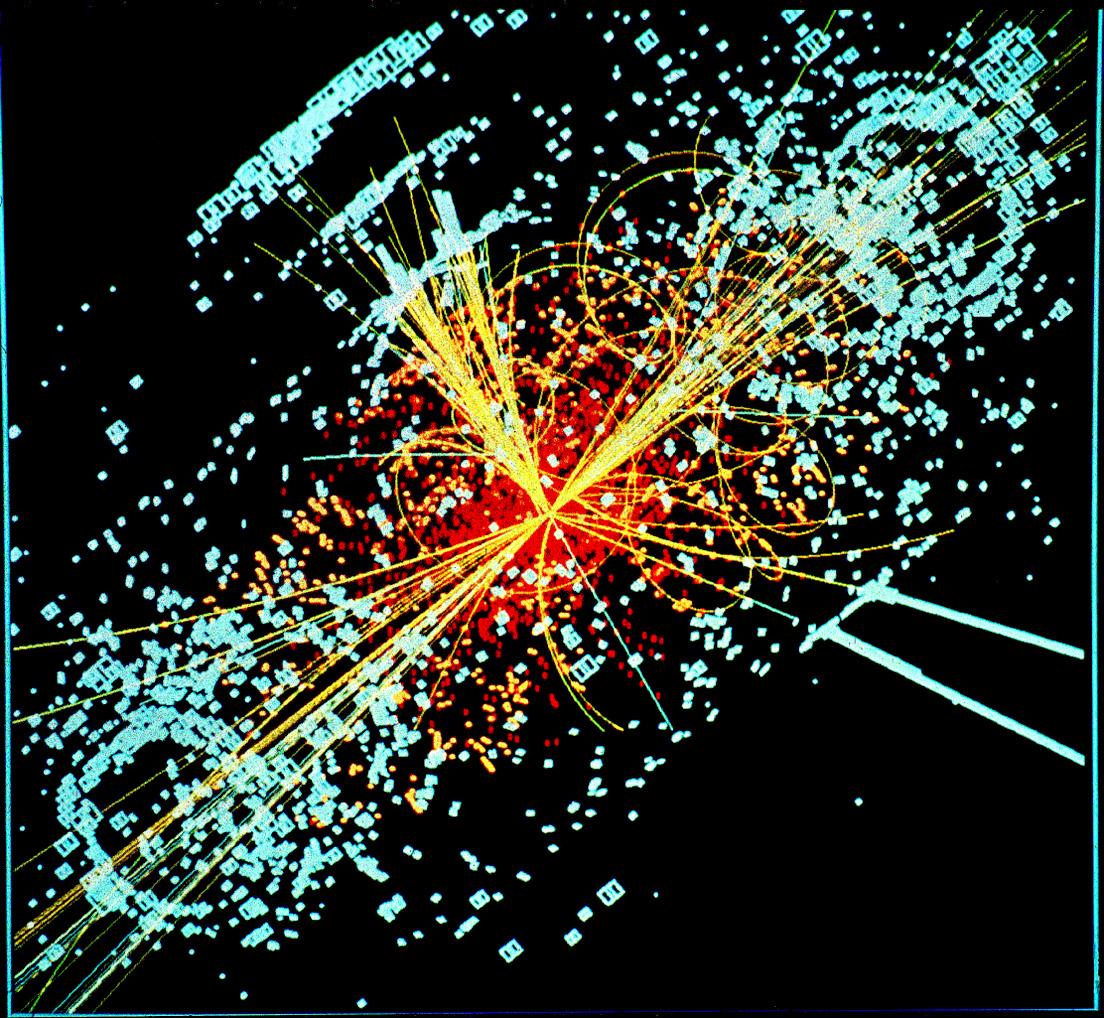
Discovery of the Higgs Boson
The Large Hadron Collider revealed the particle behind the field that gives other particles mass — the keystone of the Standard Model.
Read more → ⚛️ Physics
Fusion Ignition at the NIF
For the first time, a fusion reaction produced more energy than the laser energy delivered to the fuel — crossing the long-sought ignition threshold.
Read more →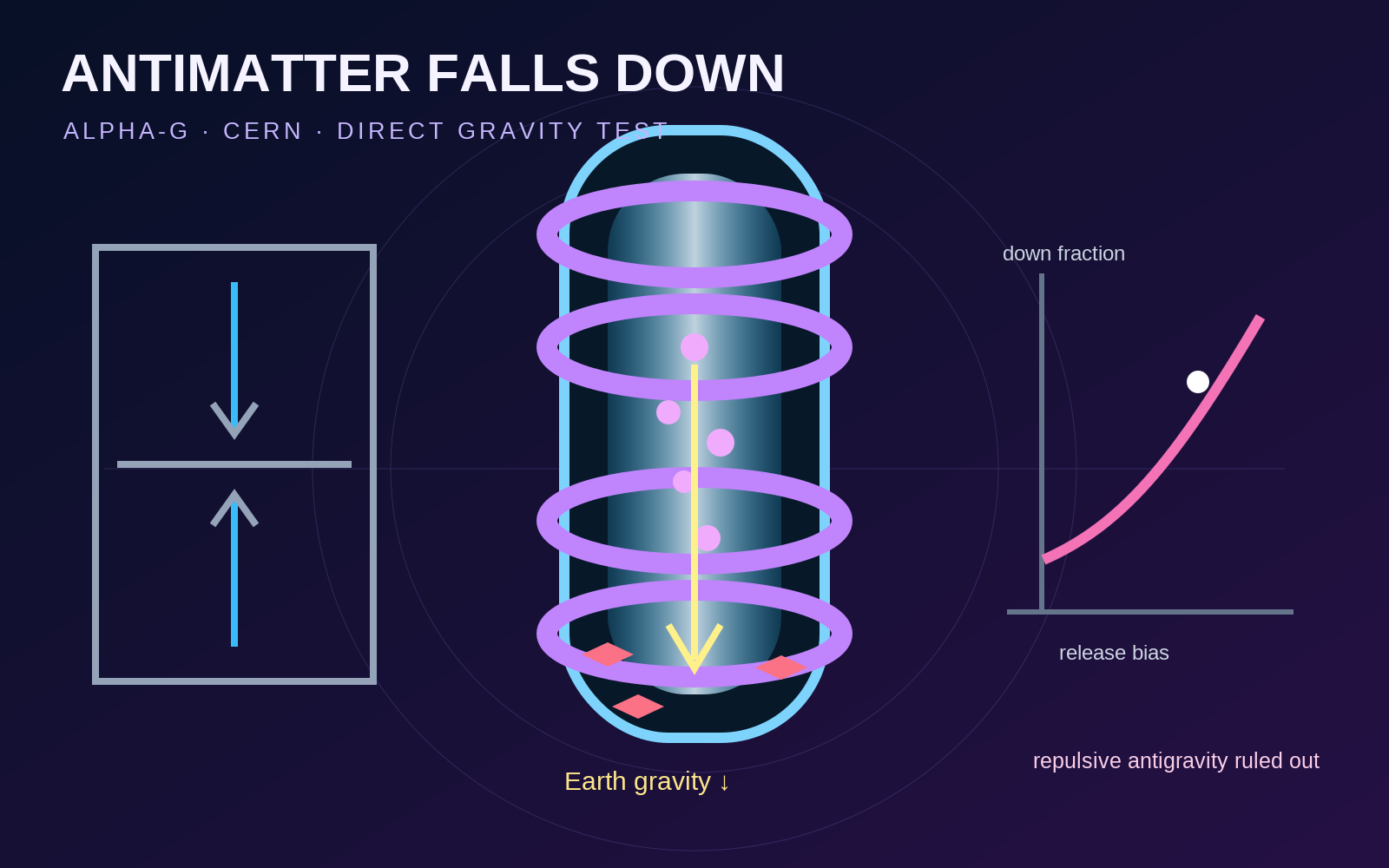 Illustration⚛️ Physics
Antihydrogen Falls Downward Under Gravity
The ALPHA-g experiment released trapped antihydrogen atoms in a vertical magnetic apparatus and observed motion consistent with gravitational attraction toward Earth, directly ruling out repulsive antigravity for antihydrogen at the experiment's precision.
Read more → Illustration⚛️ Physics
LHCb’s Strange Pentaquark Candidate
LHCb reported a high-significance resonance consistent with the first pentaquark candidate containing a strange quark, adding a new case to the study of exotic combinations of quarks.
Read more →