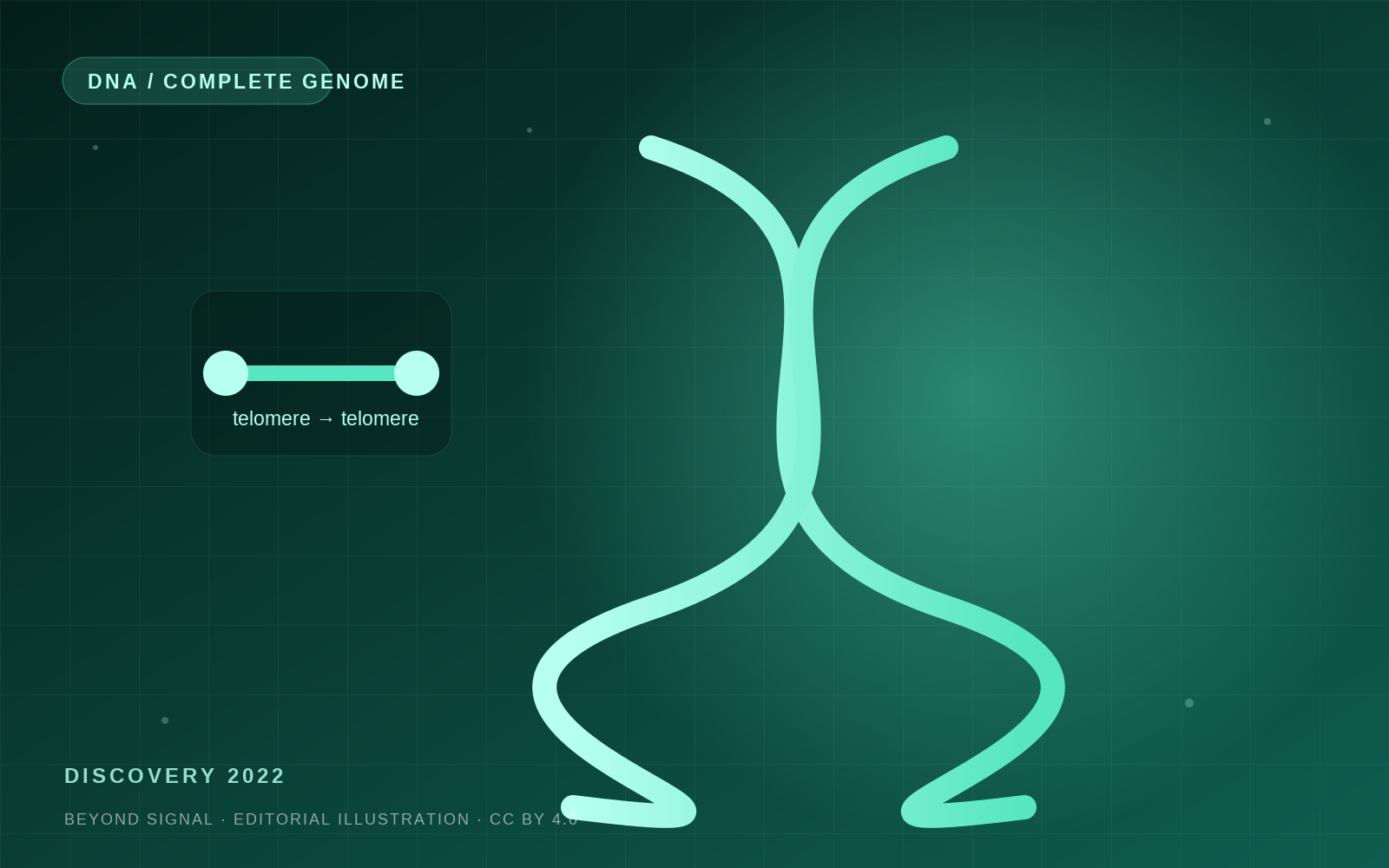
 Illustration — not a photo of the discovery
The First Gapless Human Genome Sequence
The Telomere-to-Telomere Consortium filled the remaining gaps in the human reference genome, adding nearly 200 million DNA letters and complete views of centromeres, segmental duplications, and chromosome ends.
The story
Why scientists were there
Earlier human reference genomes still contained unresolved regions because long, repetitive stretches of DNA could not be assembled reliably with older sequencing technologies.
How they found it
The consortium combined highly accurate long-read sequencing with an effectively haploid cell line and new assembly methods, then validated the sequence from one chromosome end to the other.
What makes it unique
T2T-CHM13 delivered the first essentially complete, gapless sequence of a human genome and opened previously hidden regions to studies of variation, evolution, and disease.
Gallery
Where it was found
National Human Genome Research Institute, Bethesda, Maryland
Tags
Related discoveries
 Illustration🧬 Biology
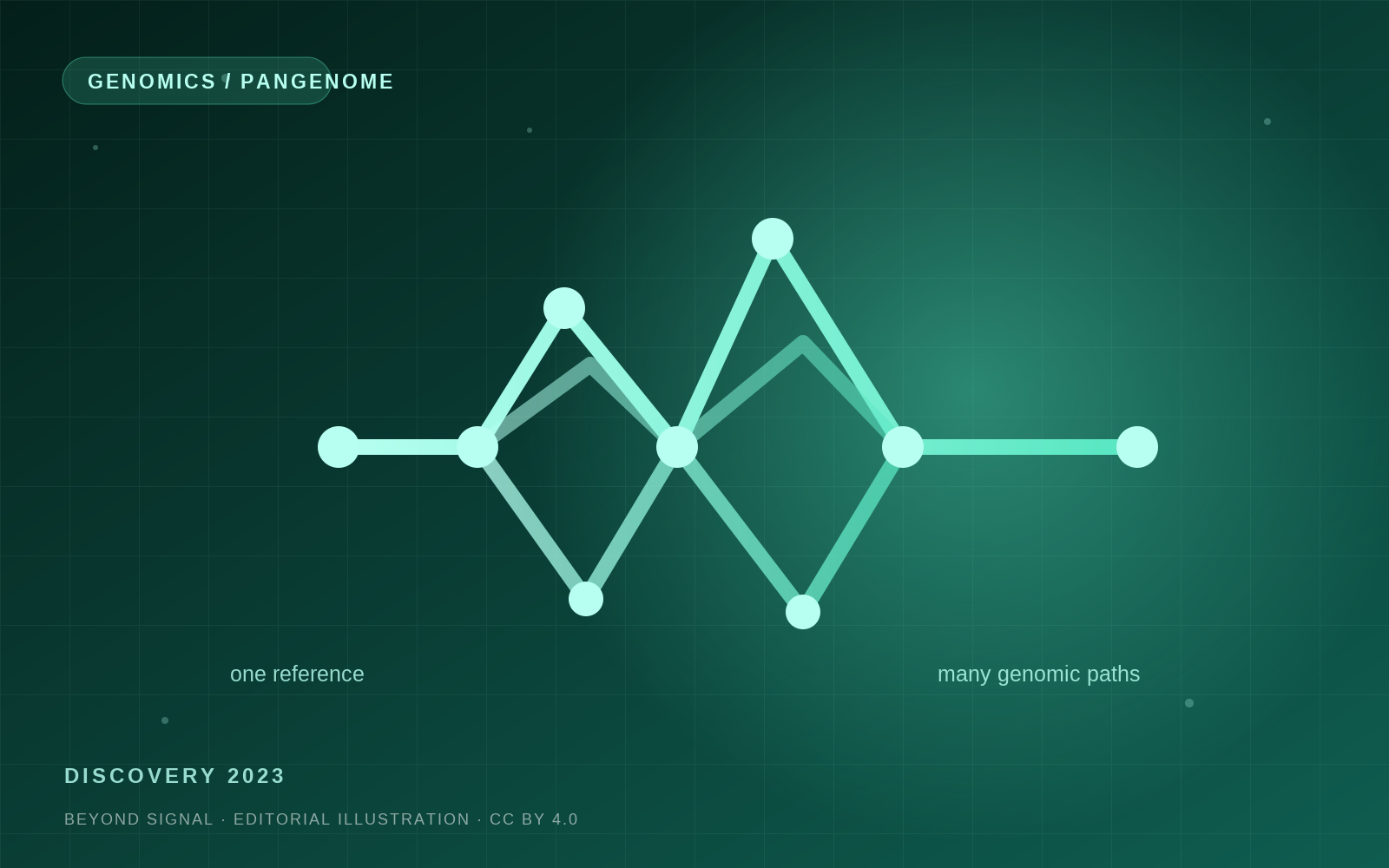
A More Diverse Human Pangenome Reference
Researchers released a draft human pangenome built from 47 genetically diverse people, replacing a single linear reference with multiple possible genomic paths.
Read more →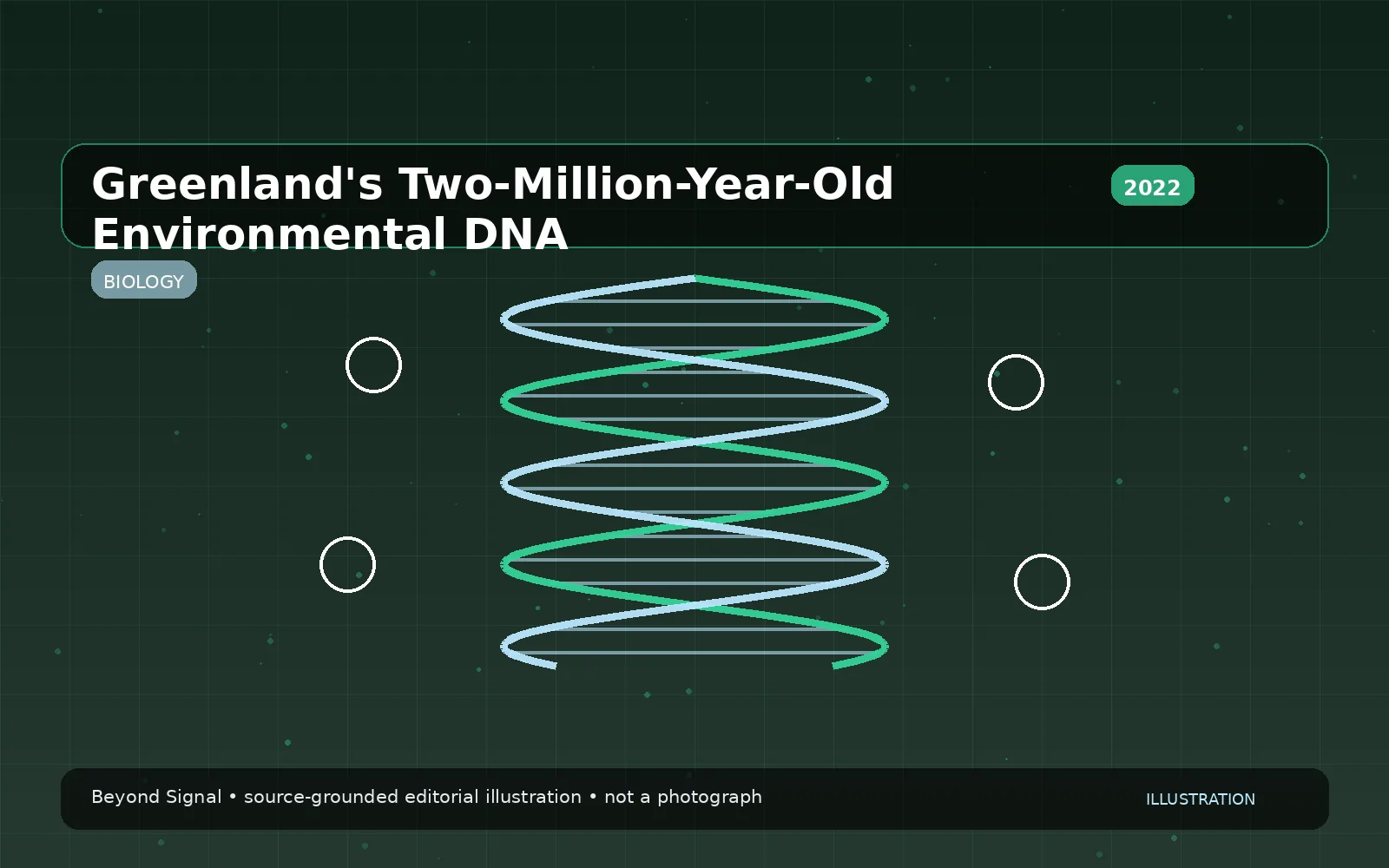 Illustration🧬 Biology
Greenland's Two-Million-Year-Old Environmental DNA
Environmental DNA recovered from mineral-rich sediments at Greenland's Kap København Formation reconstructed a roughly two-million-year-old ecosystem containing mastodons, reindeer, hares, geese, plants, and marine organisms. The fragmented DNA extended the known survival limit of ancient genetic material by about one million years.
Read more →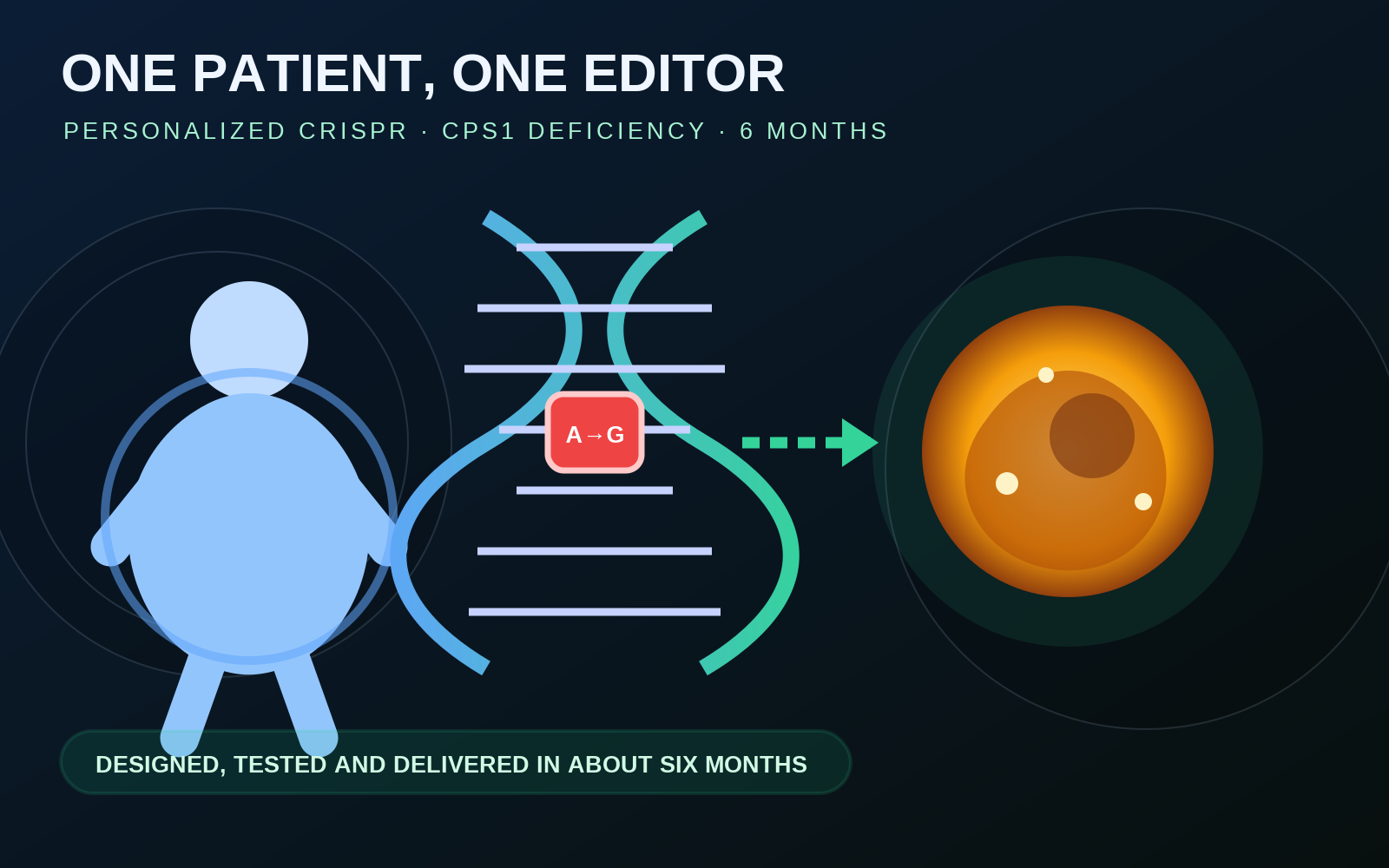 Illustration🤖 Technology
The First Personalized In Vivo CRISPR Treatment
A bespoke adenine base editor was designed, manufactured, and infused into an infant with severe CPS1 deficiency, producing early clinical improvement in the first reported patient-specific CRISPR treatment delivered inside the body.
Read more → Illustration🤖 Technology
Bridge RNAs Link DNA Targets and Donors for Programmable Recombination
Researchers found that IS110 elements use a bridge RNA with independently programmable donor- and target-recognition loops, enabling sequence-specific DNA insertion, excision, and inversion in laboratory experiments.
Read more →