
 Illustration — not a photo of the discovery
Chemosynthetic Communities Found Across Hadal Trenches
Crewed dives documented extensive communities of tube worms and bivalves sustained by methane- and hydrogen-sulfide-rich fluids from 5,800 to 9,533 metres in the Kuril–Kamchatka and western Aleutian trenches.
The story
Why scientists were there
Hadal trenches are among Earth’s least directly observed habitats, and chemosynthesis there had been proposed more often than documented. The expeditions demonstrate communities at sampled sites, not a complete map of trench life; surveys in other trenches and genetic work on the organisms will test how widespread and connected these systems are.
How they found it
Scientists used the crewed submersible Fendouzhe to survey trench floors over a 2,500-kilometre distance. They photographed and sampled the communities, measured fluids, and used isotopic analysis to connect the local methane and hydrogen sulfide to microbial production from organic matter transported through deep sediments and faults.
What makes it unique
The direct evidence is the in situ observation and sampling of organisms, fluids, and isotope signatures at hadal depths. The conclusion that similar communities may occur in other geologically comparable trenches is an extrapolation from those conditions, rather than a detection beyond the surveyed areas.
Gallery
Where it was found
Kuril–Kamchatka Trench, Northwest Pacific
Tags
Related discoveries
 Illustration🪸 Ocean Discoveries
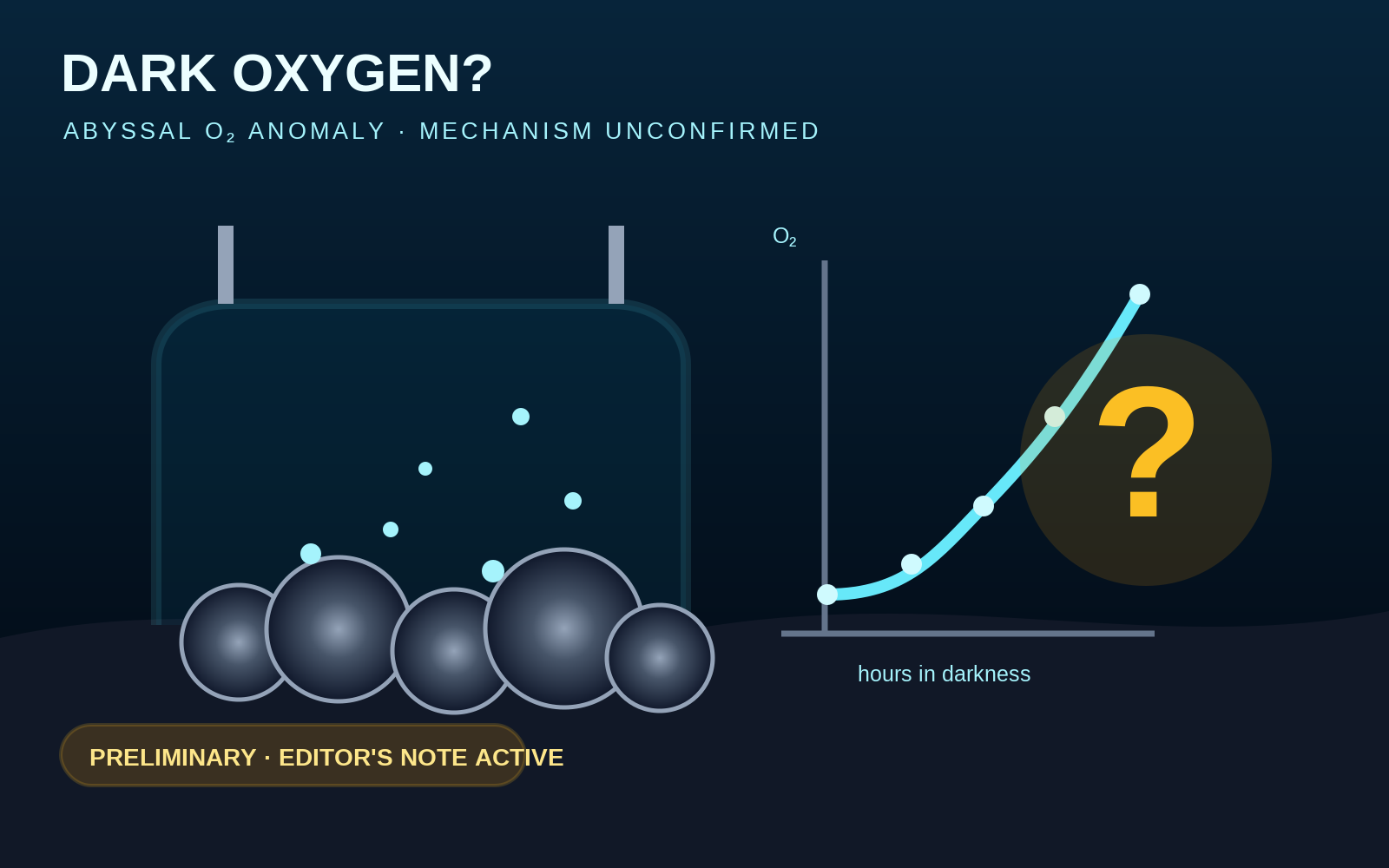
Evidence for 'Dark Oxygen' at the Abyssal Seafloor
Benthic-chamber experiments in the Clarion-Clipperton Zone recorded oxygen concentrations increasing in darkness near polymetallic nodules, but the proposed natural production mechanism remains unconfirmed and aspects of the paper are under editorial review.
Read more →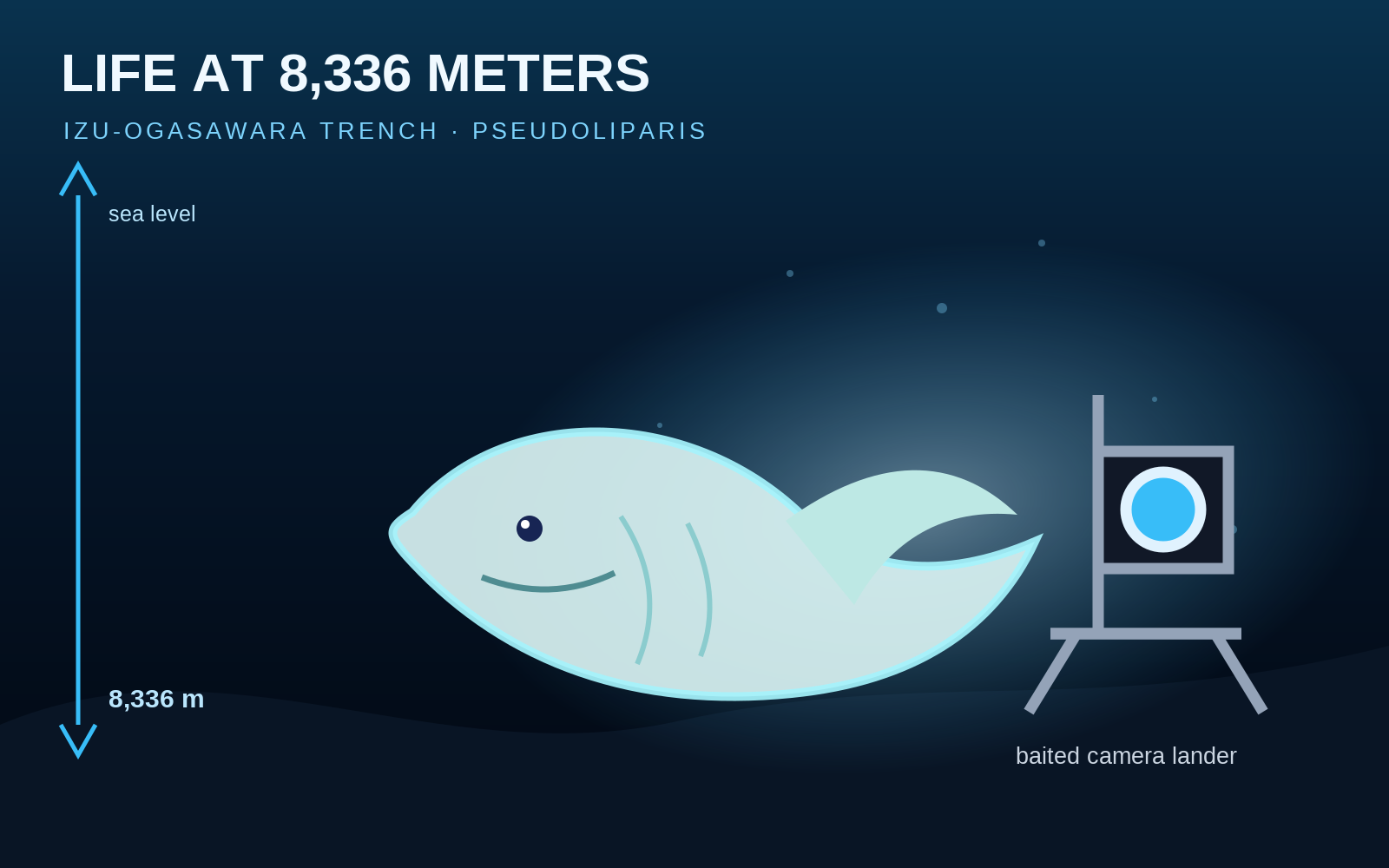 Illustration🪸 Ocean Discoveries
The Deepest Fish Ever Filmed
A baited lander recorded an unidentified Pseudoliparis snailfish 8,336 meters down in the Izu-Ogasawara Trench, setting the verified depth record for a fish filmed in the ocean.
Read more → Illustration🦕 Dinosaurs & Fossils
A Deep-Sea Whale Necropolis in the Diamantina Zone
Dives in the Diamantina Zone recorded five modern whale-fall communities and 476 fossil cetacean sites over 1,200 kilometres of seafloor, documenting a whale-fall archive that extends back at least 5.3 million years.
Read more →