 Illustration — not a photo of the discovery
Bennu Samples Contain Life's Chemical Building Blocks
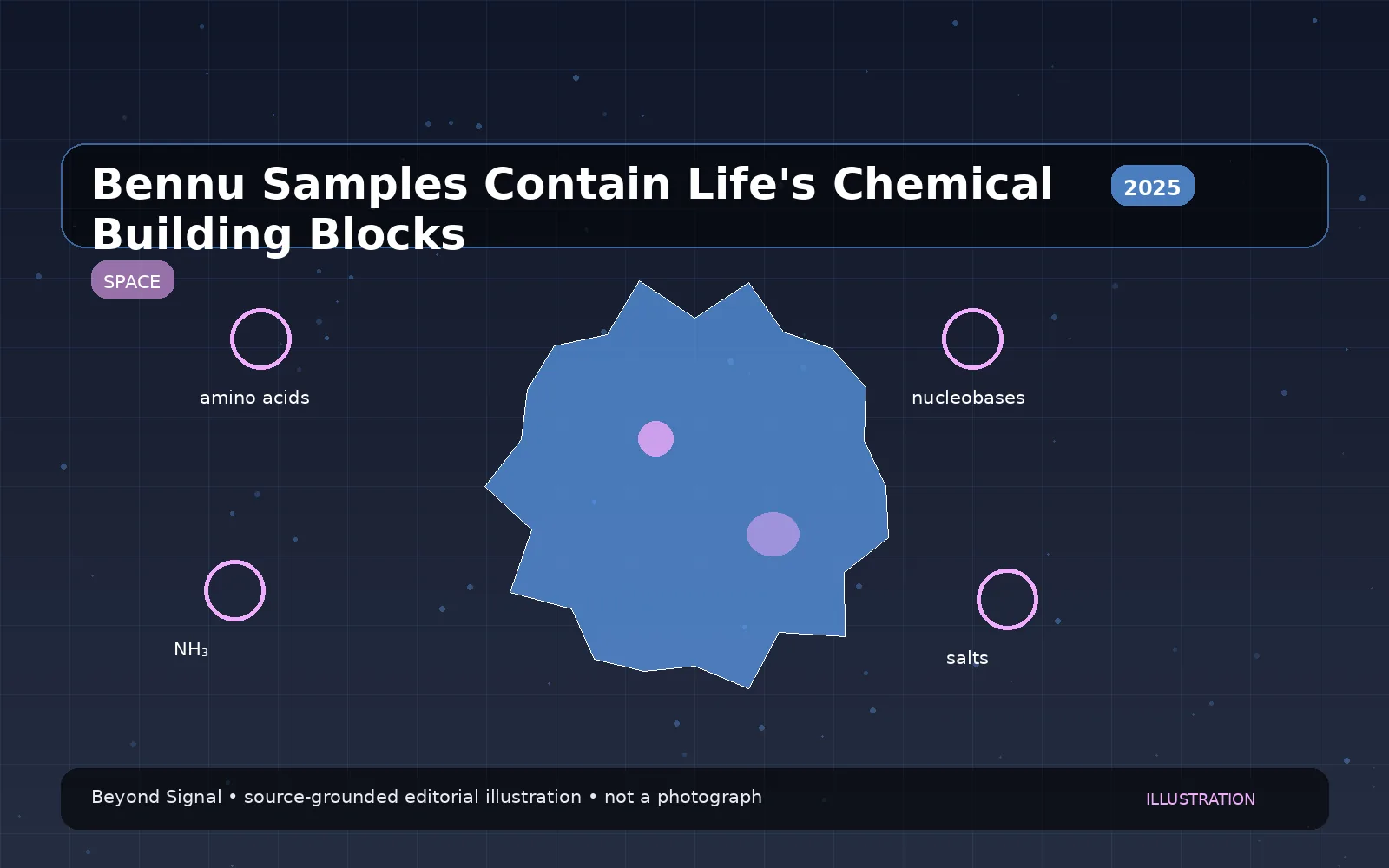
Laboratory analyses of pristine asteroid Bennu material returned by OSIRIS-REx found abundant ammonia, nitrogen-rich organic matter, 14 of the 20 amino acids used by terrestrial life, and all five nucleobases used in DNA and RNA. The chemistry shows that life's ingredients were widespread, not that life existed on Bennu.
The story
Why scientists were there
OSIRIS-REx collected material directly from Bennu and sealed it for return to Earth, avoiding the weathering and contamination that affect meteorites. Researchers used the sample to examine how organic molecules and salts formed in the early Solar System.
How they found it
Multiple laboratories applied mass spectrometry, chromatography, microscopy, and mineral analysis to separate and identify soluble organics and evaporite minerals. Parallel studies examined both carbon-rich molecules and the water-related brines recorded by the asteroid's salts.
What makes it unique
The sample combined diverse prebiotic molecules with evidence for an ancient salty parent-body environment. Its amino acids included both left- and right-handed forms, arguing against terrestrial biological contamination and sharpening questions about how molecular handedness arose before life.
Gallery
Where it was found
NASA Johnson Space Center, Houston, Texas
Tags
Related discoveries
 Illustration🌌 Space
Phosphates Detected in Enceladus's Ocean
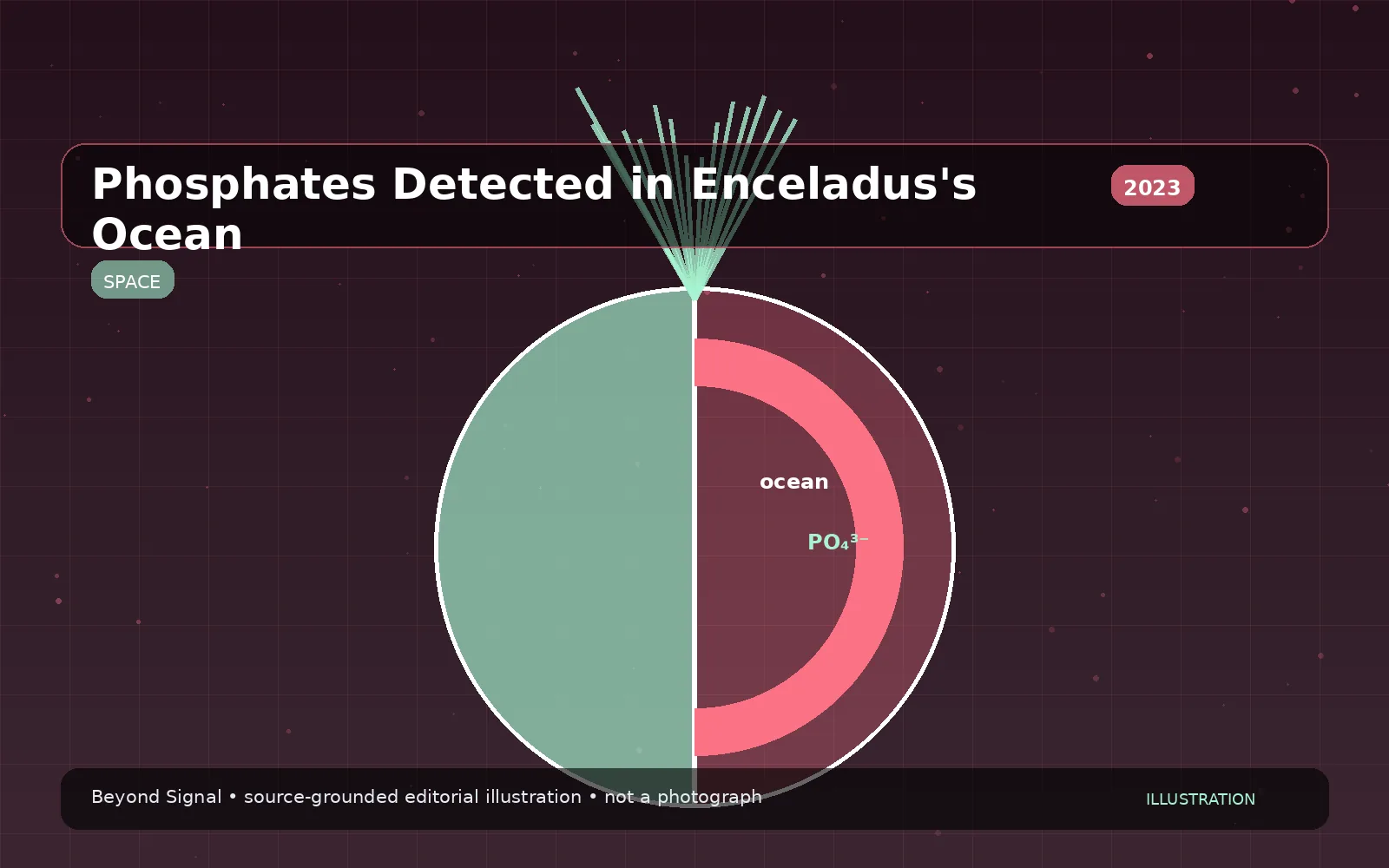
Reanalysis of ice grains sampled by NASA's Cassini spacecraft detected sodium phosphates originating from the subsurface ocean of Saturn's moon Enceladus. Phosphorus is essential to terrestrial biology, and the inferred ocean concentrations were at least comparable to, and potentially higher than, those in Earth's oceans.
Read more →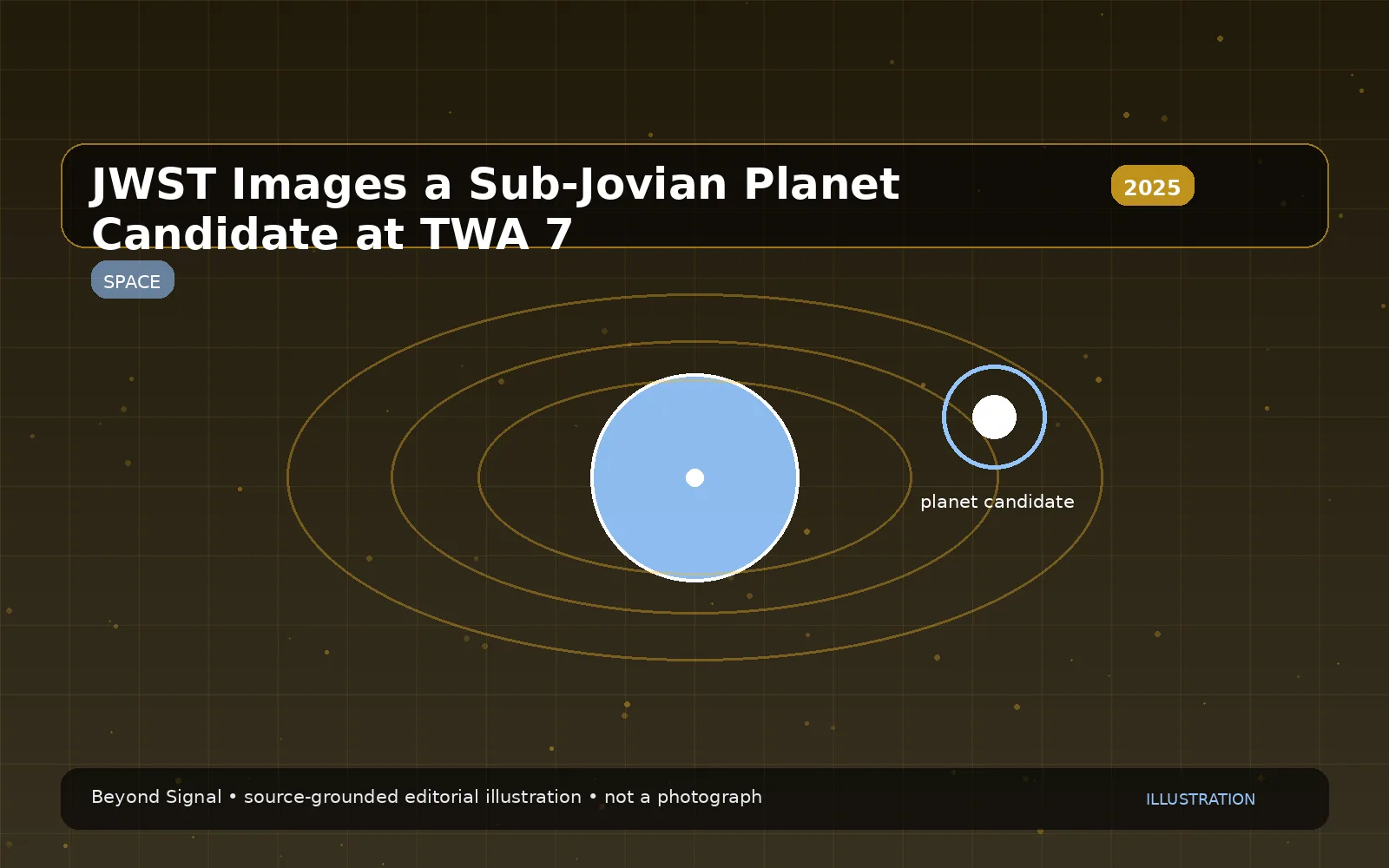 Illustration🌌 Space
JWST Images a Sub-Jovian Planet Candidate at TWA 7
James Webb Space Telescope coronagraphy revealed a compact infrared source embedded in a narrow ring of the young star TWA 7's debris disk. Models place the candidate near 0.3 Jupiter masses at about 52 astronomical units, potentially making it the lowest-mass planet directly imaged around another star.
Read more →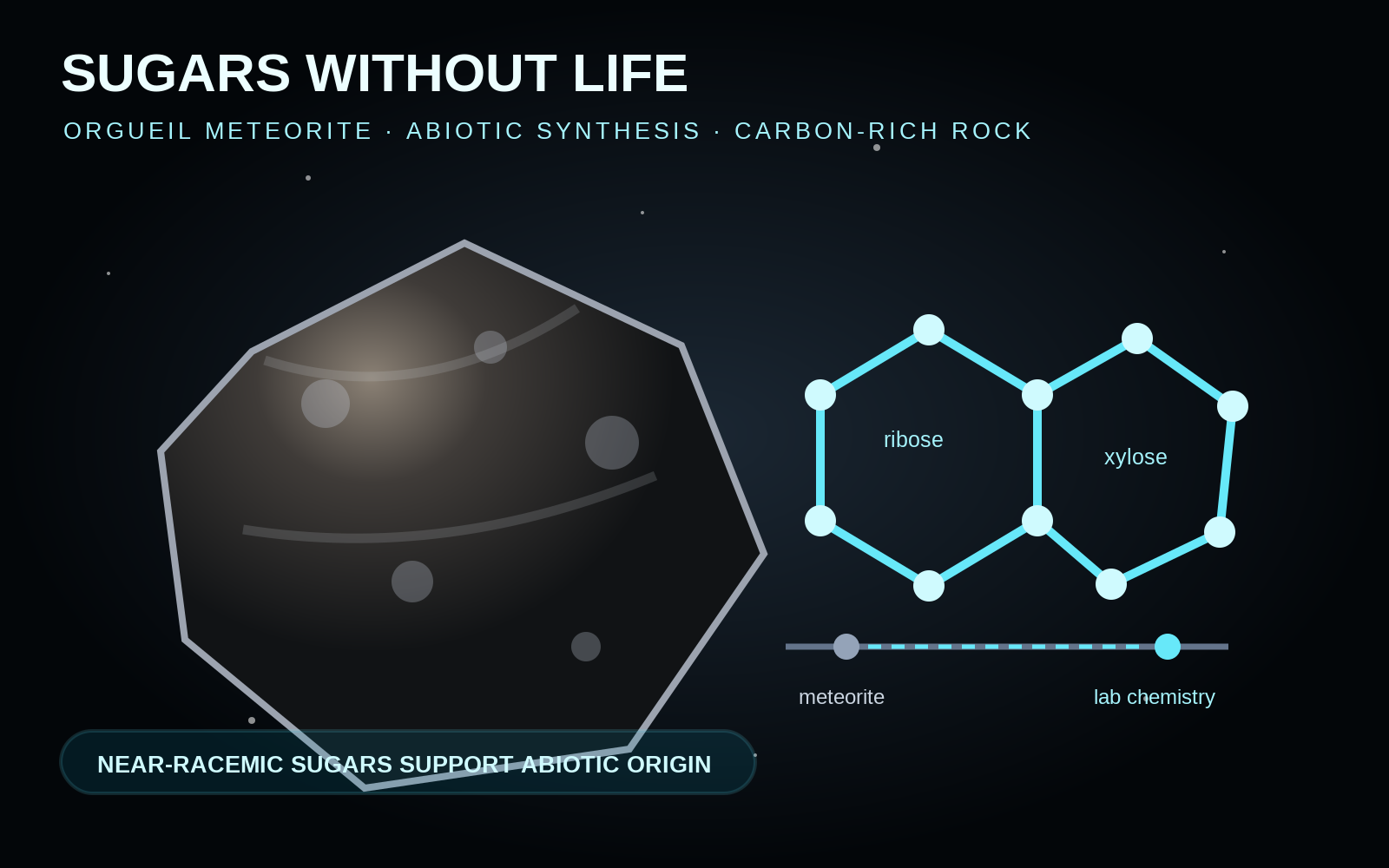 Illustration🌌 Space
Abiotic Sugars in the Orgueil Meteorite
Chiral analysis of an Orgueil meteorite sample detected ribose, arabinose, xylose, lyxose, and ribulose, with several near-racemic mixtures supporting abiotic extraterrestrial formation rather than ordinary biological contamination.
Read more → Illustration🌌 Space
The Largest Interstellar Sulfur-Bearing Molecule Yet
Radio spectra revealed 2,5-cyclohexadiene-1-thione in a Galactic-centre molecular cloud, the largest sulfur-bearing molecule yet identified in interstellar space.
Read more →