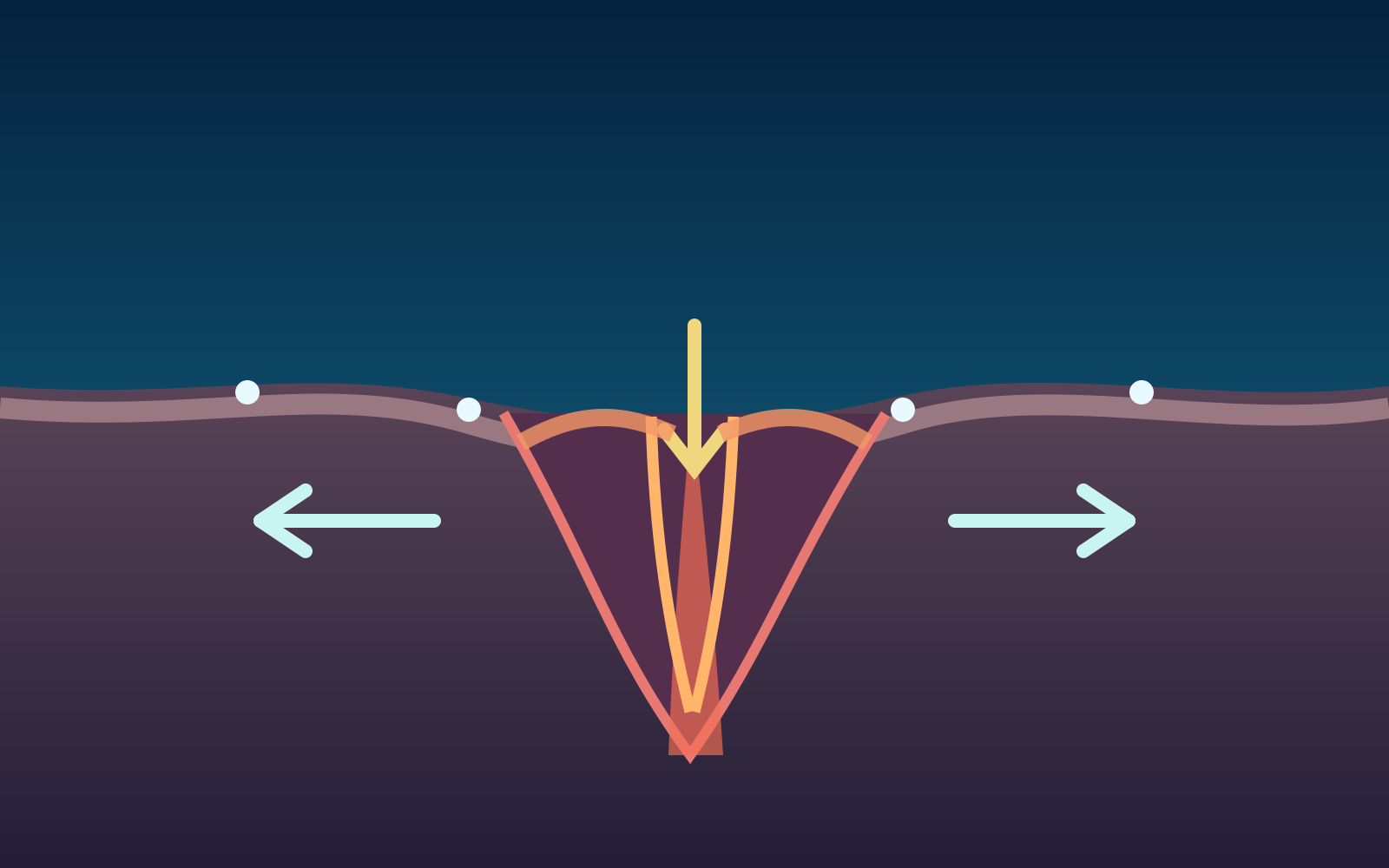
 Illustration — not a photo of the discovery
Seafloor Spreading Captured at the Southeast Indian Ridge
An autonomous seismogeodetic observatory captured a 2024 rifting event at the Southeast Indian Ridge, directly measuring seismicity, metre-scale deformation, and fresh lava emplacement at a mid-ocean ridge.
The story
Why scientists were there
Most seafloor spreading happens far from continuous observation, leaving the short events that create ocean crust poorly understood. The measurements capture one ridge segment and one event; its detailed partitioning between dykes, faults, and magma reservoirs should not be assumed to describe all mid-ocean ridges.
How they found it
The OHA-GEODAMS observatory combined hydroacoustic monitoring, direct-path acoustic ranging, bottom-pressure measurements, and repeated shipboard bathymetry. It recorded a swarm beginning on 26 April 2024, more than a metre of horizontal extension, 4.2 metres of valley-floor subsidence, and new lava flows totaling about 148–160 million cubic metres.
What makes it unique
The direct observations are the timing of seismicity, pressure-derived vertical motion, acoustic baseline changes, and before-and-after bathymetry. The authors interpret their combination as a deflating sill feeding propagating dykes and largely aseismic normal-fault slip; that mechanistic picture is a model constrained by, not identical to, the measurements.
Gallery
Where it was found
Southeast Indian Ridge near Amsterdam Transform Fault
Tags
Related discoveries
 🌋 Earth Science
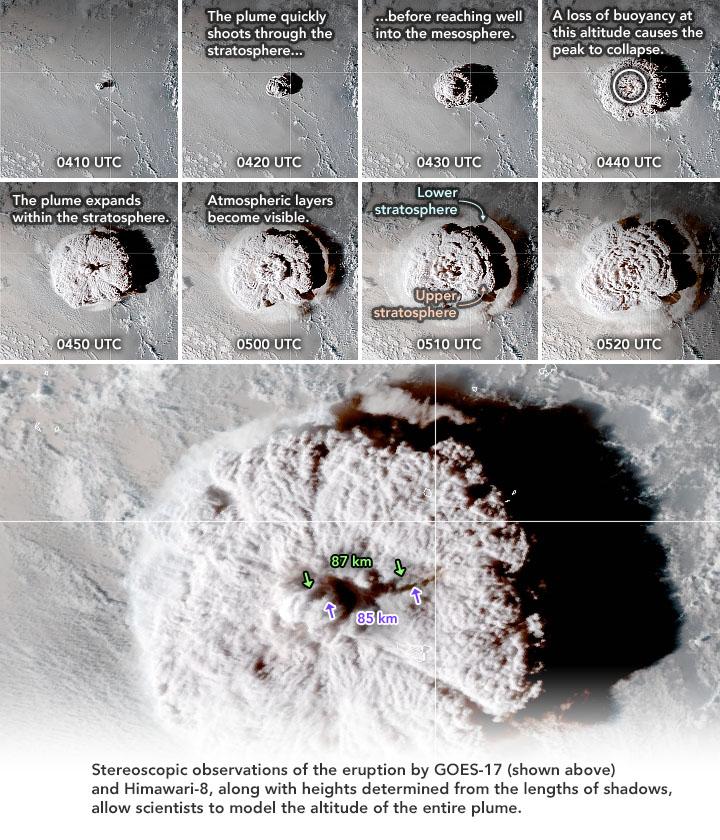
The Hunga Tonga Eruption
An undersea volcano produced the tallest eruption plume ever recorded — reaching the mesosphere — and a pressure wave that circled the globe.
Read more →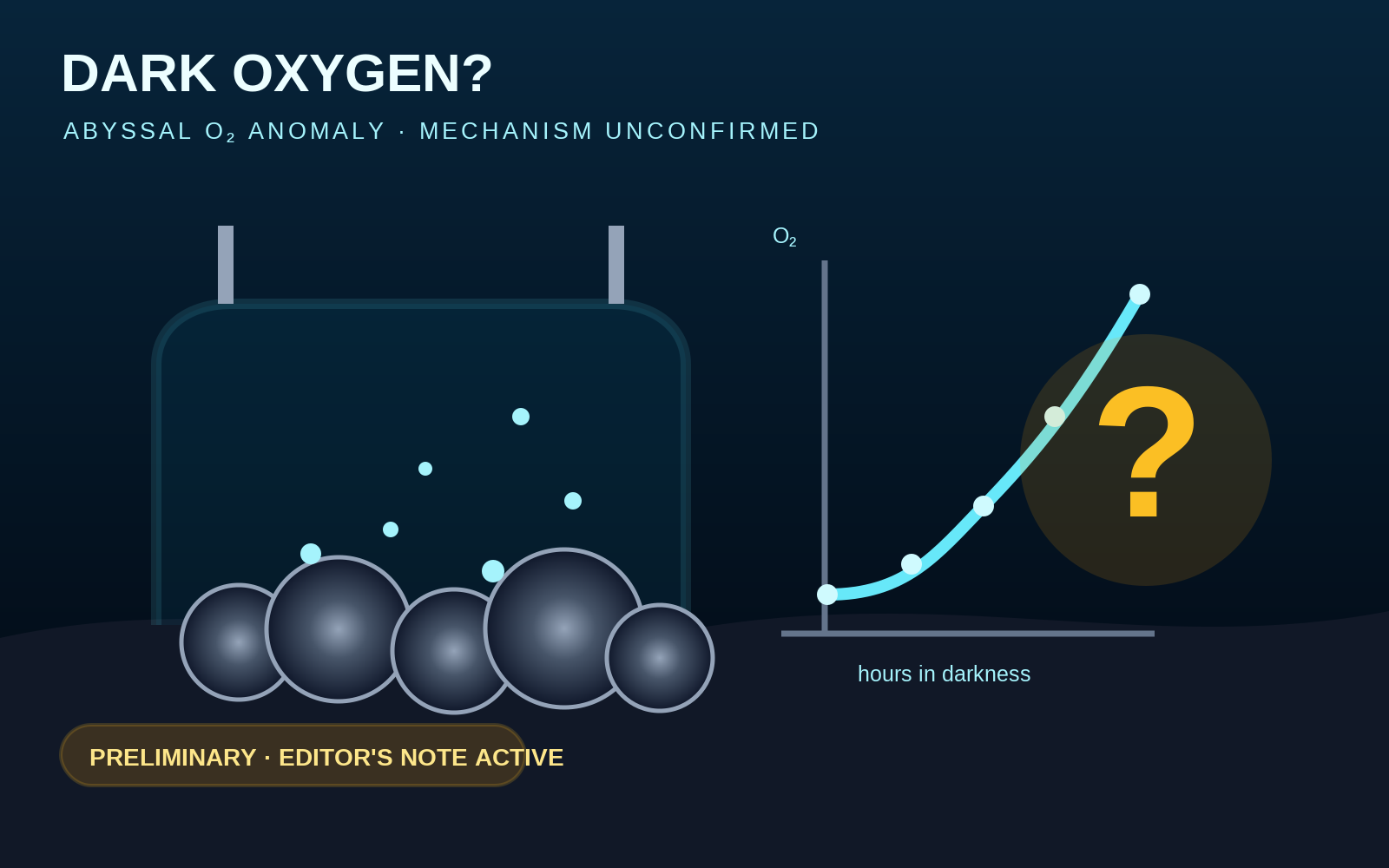 Illustration🪸 Ocean Discoveries
Evidence for 'Dark Oxygen' at the Abyssal Seafloor
Benthic-chamber experiments in the Clarion-Clipperton Zone recorded oxygen concentrations increasing in darkness near polymetallic nodules, but the proposed natural production mechanism remains unconfirmed and aspects of the paper are under editorial review.
Read more →