
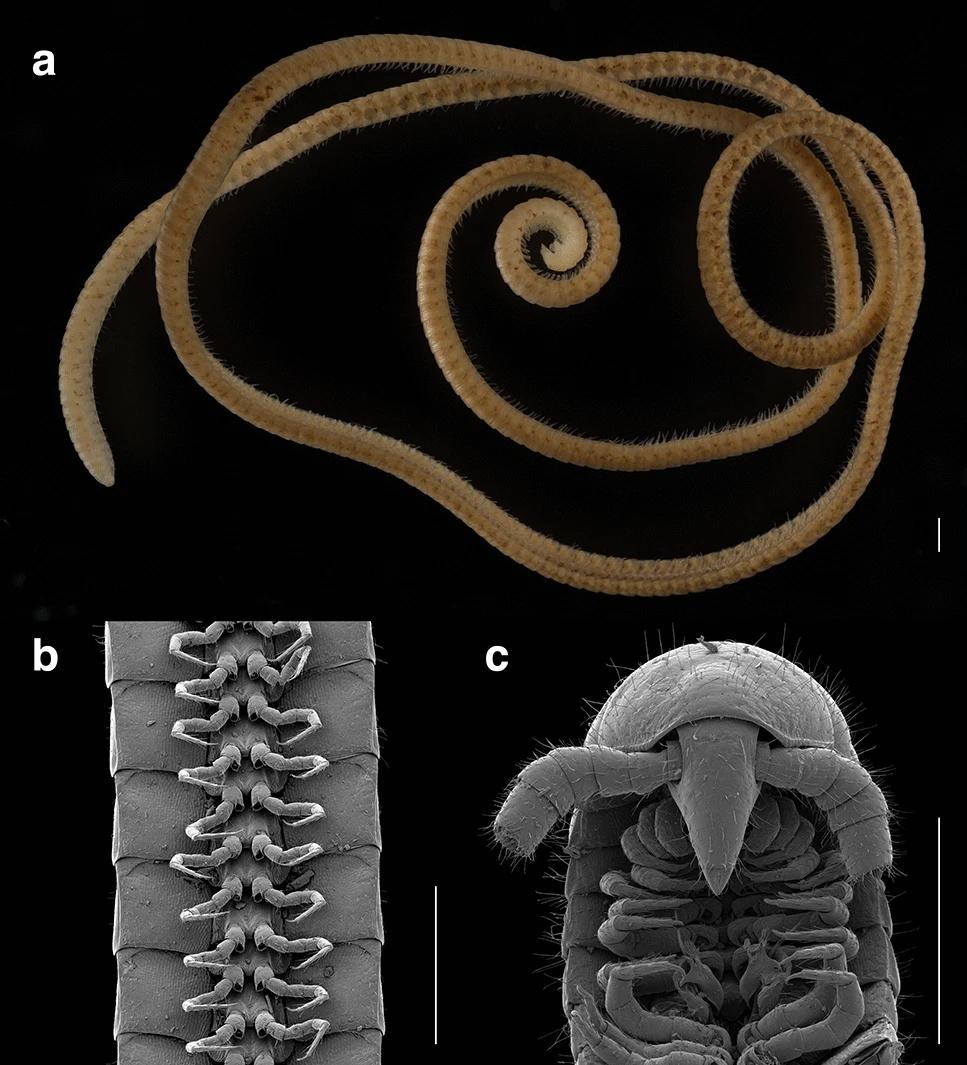
The First True Millipede (1,306 Legs)
A pale, eyeless arthropod with up to 1,306 legs — the first millipede ever found that literally has more than a thousand.
The story
Why scientists were there
Surveys for environmental impact assessments sampled deep boreholes in a mineral-exploration zone.
How they found it
A drop trap 60 m underground caught a thread-like animal that, under the microscope, proved to have a record-breaking leg count.
What makes it unique
Despite the name 'millipede' (thousand feet), no species had ever topped 750 legs until Eumillipes persephone.
Gallery

Where it was found
Eastern Goldfields, Western Australia
Tags
Related discoveries
 🧬 Biology
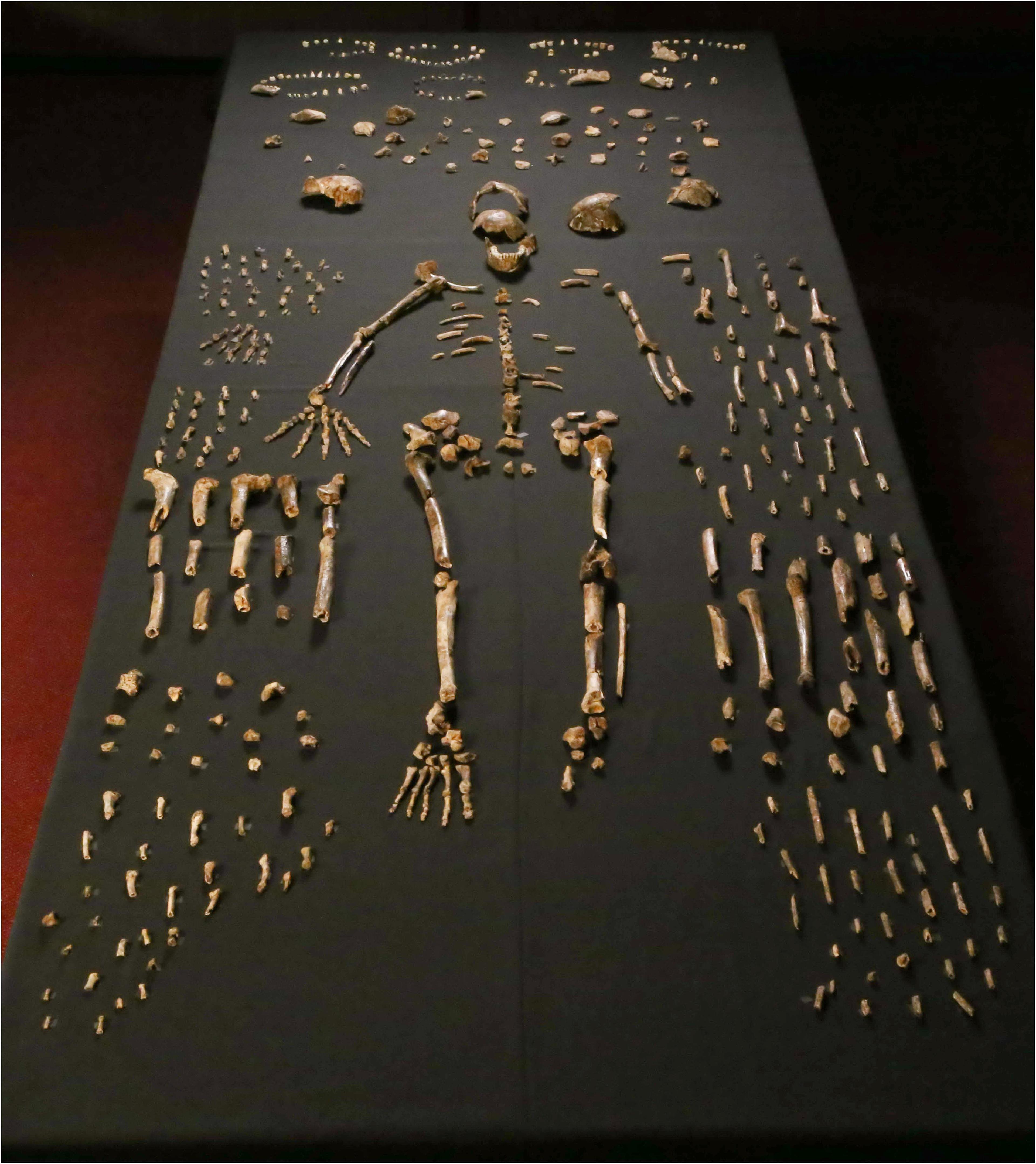
Homo naledi, a New Human Relative
More than 1,500 fossil pieces from a deep cave chamber revealed a small-brained human relative with a surprising mix of ancient and modern traits.
Read more →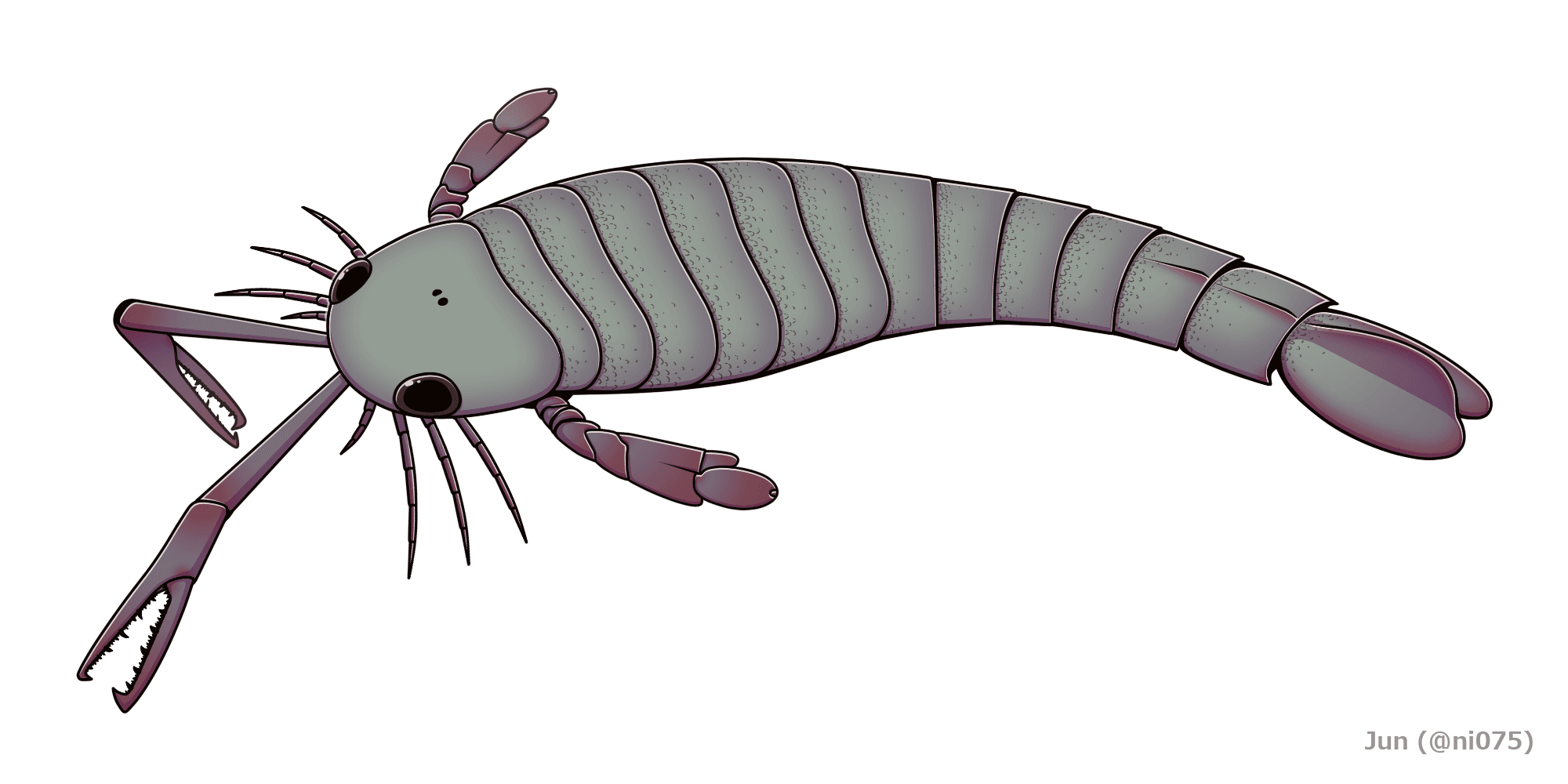 🦕 Dinosaurs & Fossils
The Metre-Long Scorpion Praearcturus
Modern reanalysis supports identifying fragmentary British fossils as a roughly one-metre scorpion, potentially the largest scorpion yet recognized.
Read more →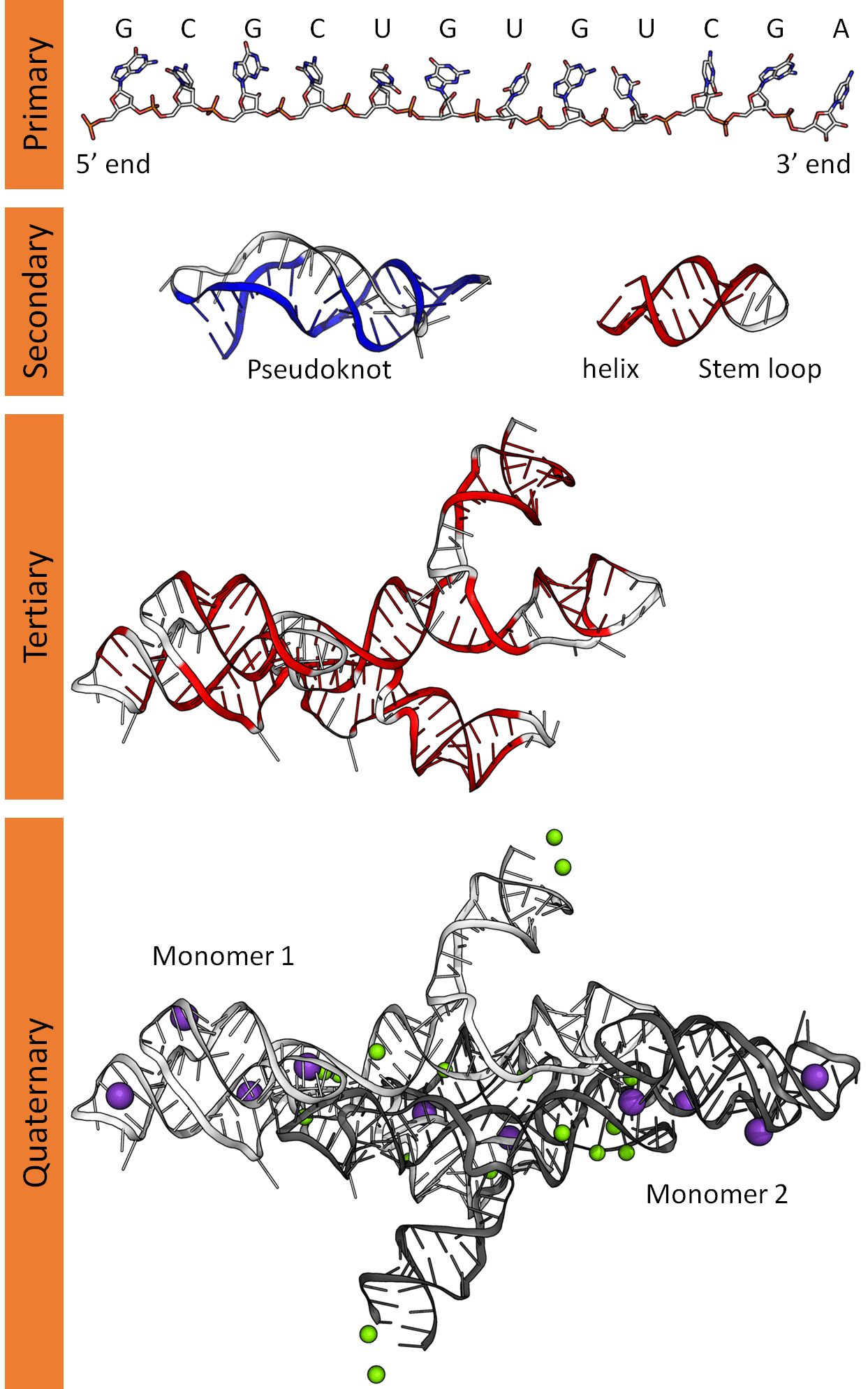 🧬 Biology
A Tiny RNA Enzyme That Can Copy Itself
A compact 45-nucleotide catalytic RNA synthesized both its complementary strand and a copy of itself, strengthening a central prediction of the RNA-world hypothesis.
Read more →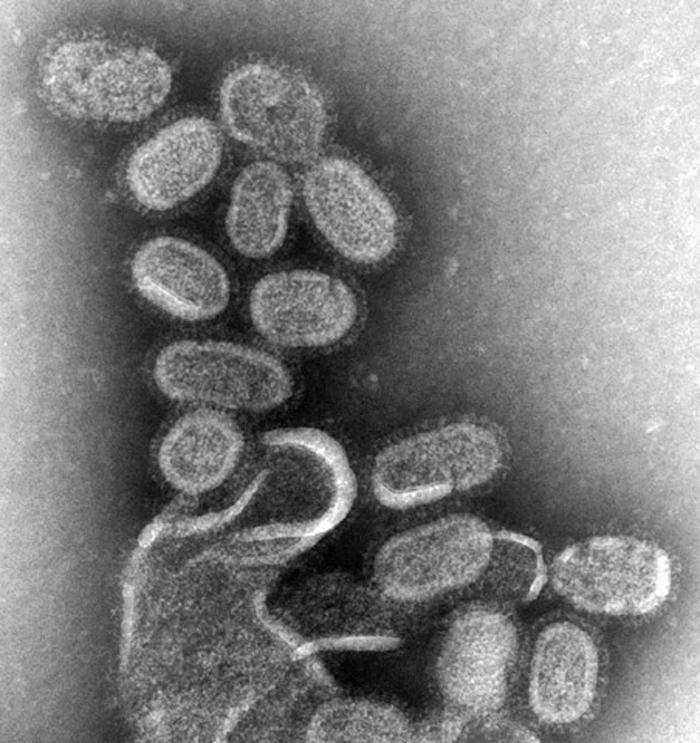 🧬 Biology
Watching Influenza Enter a Living Cell
A new combined microscopy method let scientists watch influenza viruses invade living cells in real time, revealing that cells actively help capture the virus.
Read more → Illustration🦕 Dinosaurs & Fossils
Vulcanidris Cratensis, the Oldest Known Ant
A 113-million-year-old compression fossil from Brazil was recognized as a new hell-ant species and the oldest verified ant known from the fossil record.
Read more →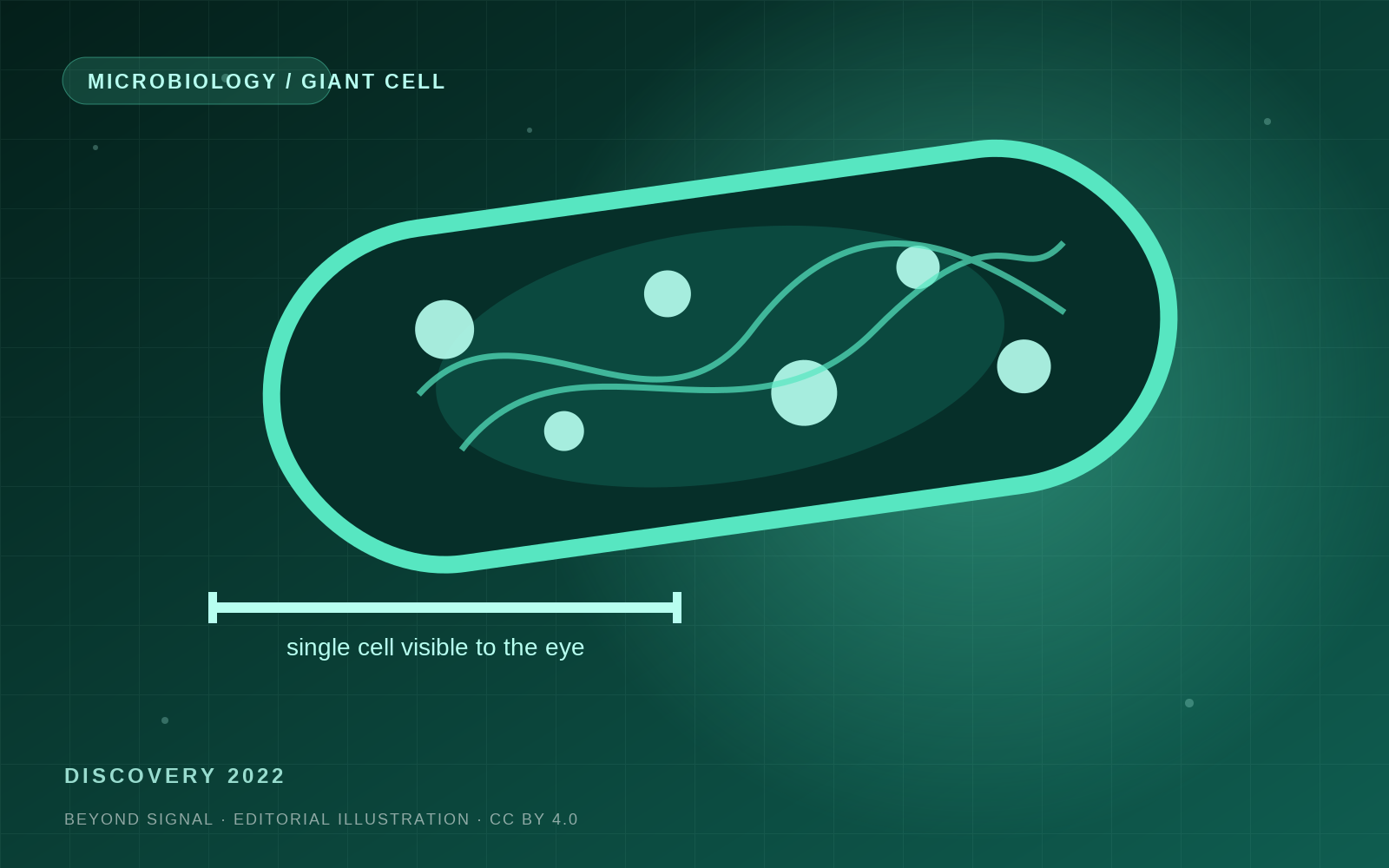 Illustration🧬 Biology
Thiomargarita Magnifica, the Giant Bacterium
A filament-shaped bacterium from Caribbean mangroves was shown to grow up to about two centimetres long, making a single bacterial cell visible to the unaided eye.
Read more →