🌊 Ocean depth explorer
Scroll down to descend through the ocean's zones — from the sunlit surface to the crushing dark of the trenches — and see what has been discovered at each level. The deepest find here: “Chemosynthetic Communities Found Across Hadal Trenches” at 9,533 m.
Sunlight Zone
Epipelagic · 0–200 mSunlit surface waters where photosynthesis is possible and most familiar marine life thrives.
 ▼ 1 m
Dudgeon's Walking Shark
A newly described walking shark from shallow Papua New Guinea reefs, identified by its distinctive spotted pattern and confirmed as a separate species through DNA comparisons.
 ▼ 40 m
A 500-Metre Detached Coral Reef
The first detached reef found in over a century — taller than the Empire State Building at ~500 m, with its peak just 40 m below the surface.
Twilight Zone
Mesopelagic · 200–1,000 mA dim world of faint blue light where bioluminescence takes over and strange hunters roam.
 ▼ 600 m
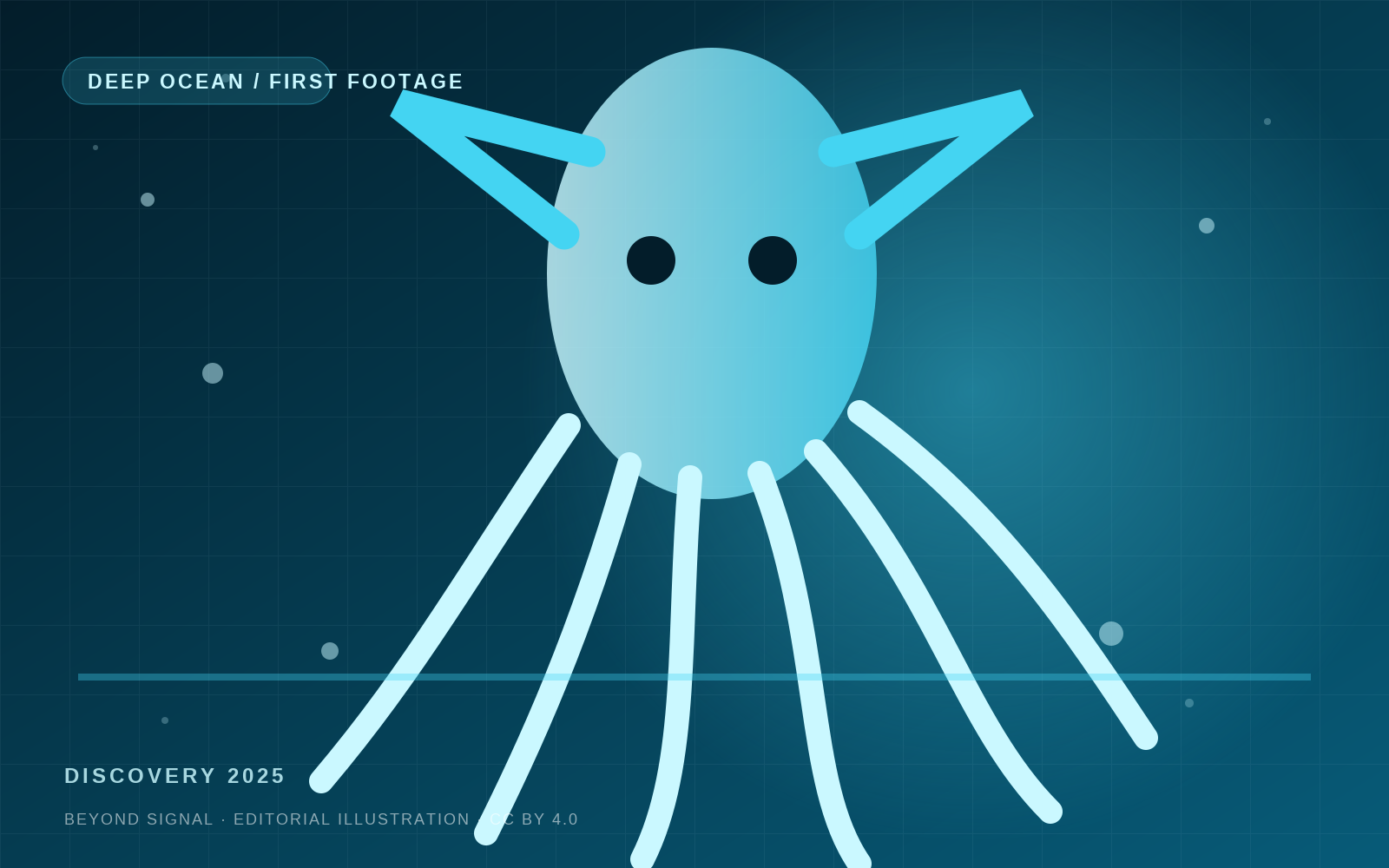
A Colossal Squid Filmed Alive in Its Natural Habitat
An ROV recorded a transparent juvenile colossal squid at about 600 metres depth, providing the first confirmed video of the species alive in its natural deep-sea habitat.
 ▼ 630 m
Giant Squid Filmed in the Deep
The first footage of a live giant squid in its natural deep-sea habitat, ending centuries of the animal being known mostly from carcasses.
 ▼ 750 m
The Lost City Hydrothermal Field
A field of towering white carbonate chimneys — one over 60 m tall — driven by seawater reacting with mantle rock rather than volcanic heat.
 ▼ 750 m
The Barreleye Fish with a Transparent Head
The first images of a living barreleye — a fish whose transparent, fluid-filled head lets its tubular eyes rotate to peer up through its own skull.
Midnight Zone
Bathypelagic · 1,000–4,000 mPerpetual darkness under crushing pressure — home to vents, whale falls, and life without sunlight.
 ▼ 1,000 m
31 New Species Found in Brazil's Ocean Midwater
A two-week expedition off Brazil rapidly identified 31 likely new species, including jellyfish, comb jellies, siphonophores, worms, amphipods, larvaceans, and giant single-celled organisms.
 ▼ 1,773 m
A Tiny Blue Octopus from the Galápagos Deep
A golf-ball-sized, deep-blue octopus from nearly 1,800 m below the Galápagos was formally described as a new species after non-destructive CT scans revealed its unusual anatomy.
 ▼ 2,228 m
The Yeti Crab
A blind, silky-clawed crab from hydrothermal vents so distinctive it required an entirely new family — nicknamed the 'yeti crab' for its hairy arms.
 ▼ 2,420 m
The Scaly-foot Snail
A deep-sea snail that armors its foot with iron-sulfide scales — the only animal known to build part of its skeleton from iron.
 ▼ 2,893 m
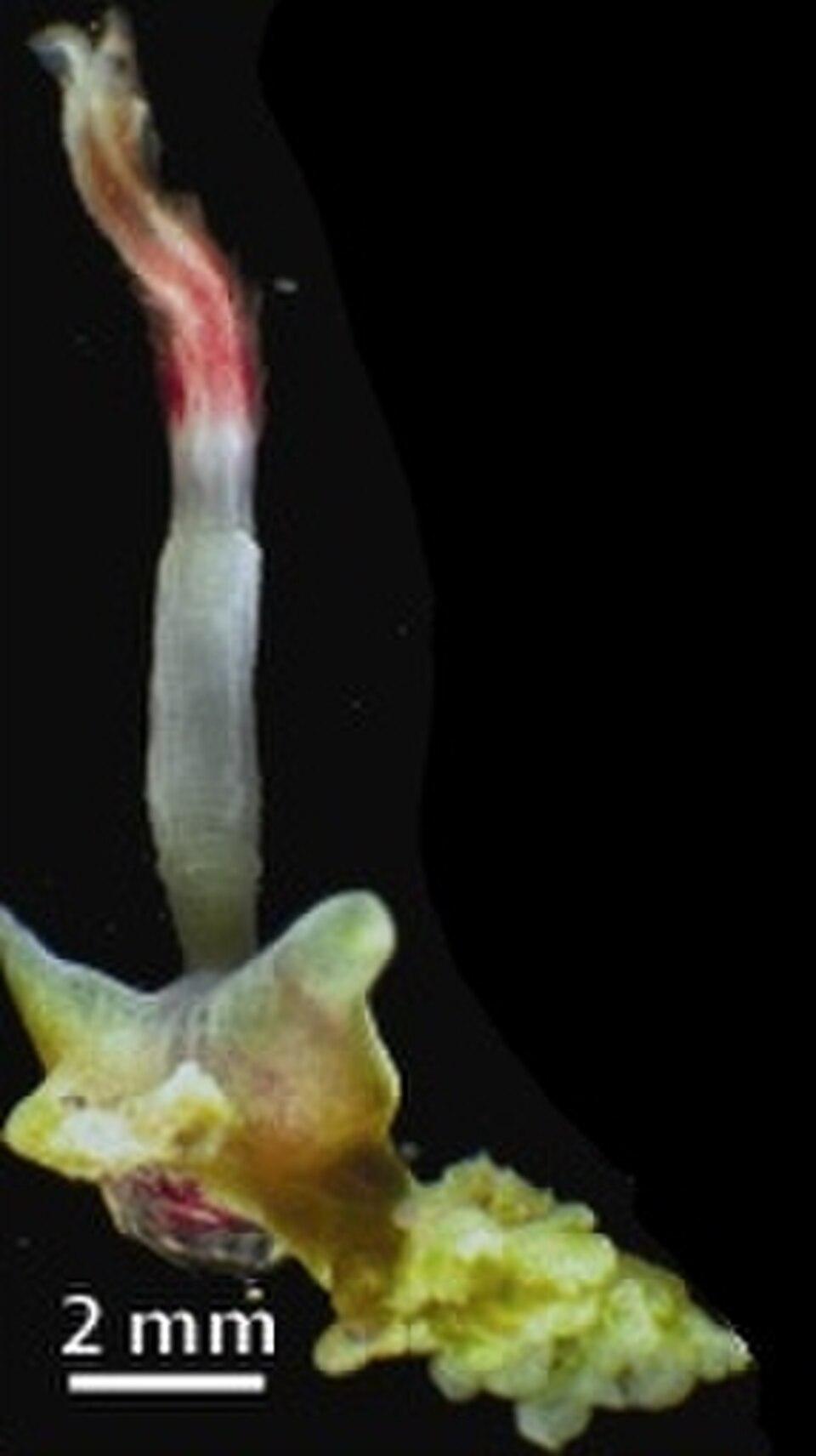
Bone-Eating 'Zombie' Worms
Rootless worms that bore into whale bones on the seafloor, dissolving them with acid and feeding through symbiotic bacteria — a new genus found on a sunken whale.
 ▼ 3,008 m
Shackleton's Endurance Found in the Weddell Sea
The Endurance22 expedition located Sir Ernest Shackleton's ship Endurance upright on the Weddell Sea floor at 3,008 metres, roughly four miles south of Captain Frank Worsley's recorded sinking position. The unusually intact wooden wreck was documented without being touched under Antarctic Treaty protection.
 ▼ 3,300 m
The Deep-Sea ‘Golden Orb’ Identified
A mysterious golden mass collected from the Gulf of Alaska seafloor was identified as tissue shed from the attachment base of the giant deep-sea anemone Relicanthus daphneae.
 ▼ 3,300 m
The Gulf of Alaska's Mysterious Golden Orb
A NOAA remotely operated vehicle found a smooth golden object attached to rock about 3,300 metres deep in the Gulf of Alaska. It resisted immediate identification as an egg case, sponge, or coral. Later microscopy and genetic work linked the material to the anchoring structure of the deep-sea anemone Relicanthus daphneae.
The Abyss
Abyssopelagic · 4,000–6,000 mNear-freezing, pitch-black plains covering much of the deep seafloor, sparsely populated and barely explored.
 ▼ 4,100 m
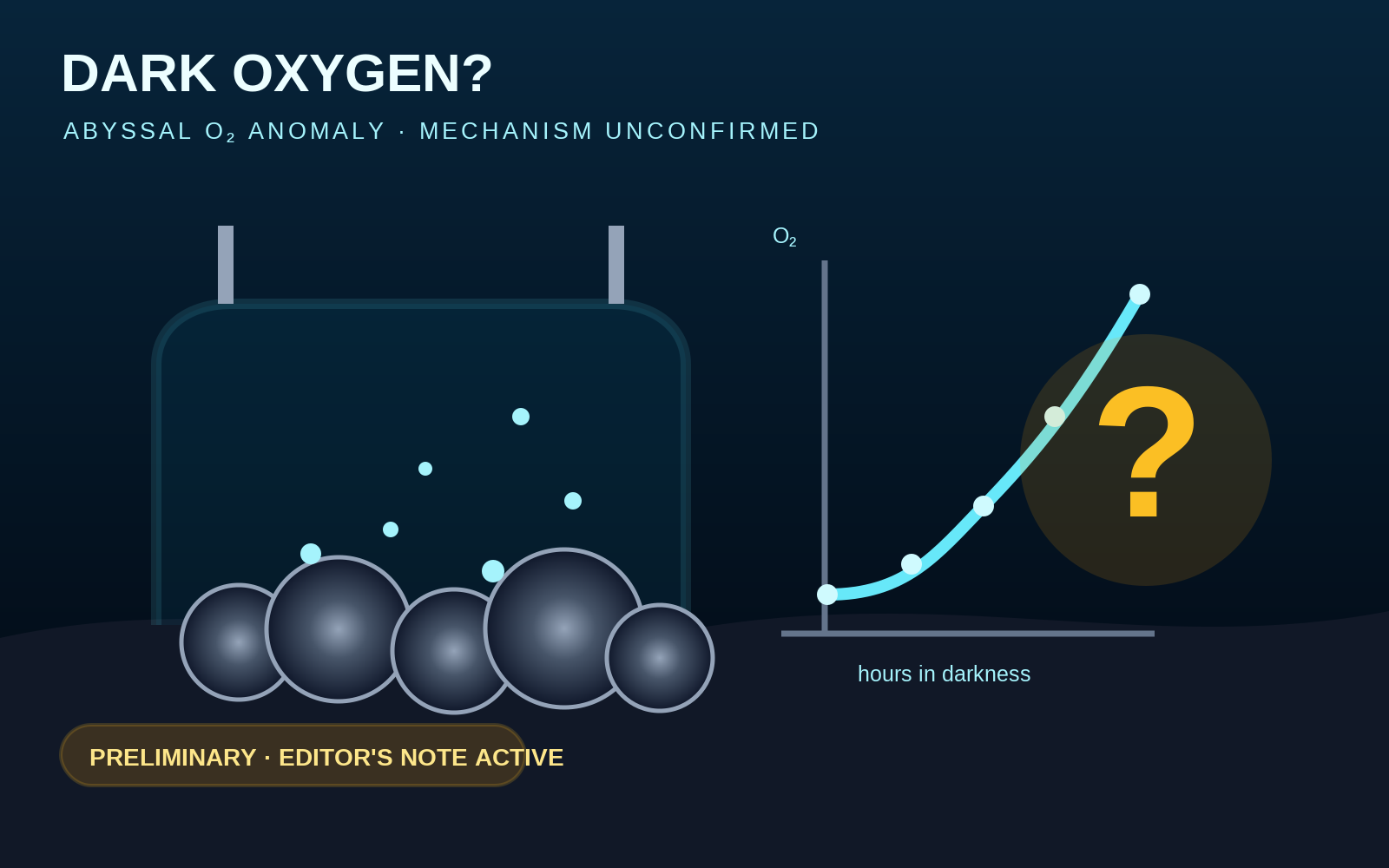
Evidence for 'Dark Oxygen' at the Abyssal Seafloor
Benthic-chamber experiments in the Clarion-Clipperton Zone recorded oxygen concentrations increasing in darkness near polymetallic nodules, but the proposed natural production mechanism remains unconfirmed and aspects of the paper are under editorial review.
 ▼ 4,290 m
"Casper" the Ghost Octopus
A ghostly, pigmentless octopus filmed at 4,290 m off Hawaii — likely a previously unknown genus living deeper than any known finned octopod.
The Trenches
Hadal · 6,000–11,034 mThe deepest ocean trenches, where pressure is over 800 atmospheres and only the most specialised life survives.
 ▼ 6,957 m
The Deepest Octopus Ever Seen
A Dumbo octopus filmed at 6,957 m in the Java Trench — nearly 2 km deeper than any confirmed octopus before, pushing the group into the hadal zone.
 ▼ 8,000 m
The Mariana Snailfish, Deepest Fish
A small, translucent snailfish that thrives near 8,000 m in the Mariana Trench — the deepest-living fish ever described.
 ▼ 8,336 m
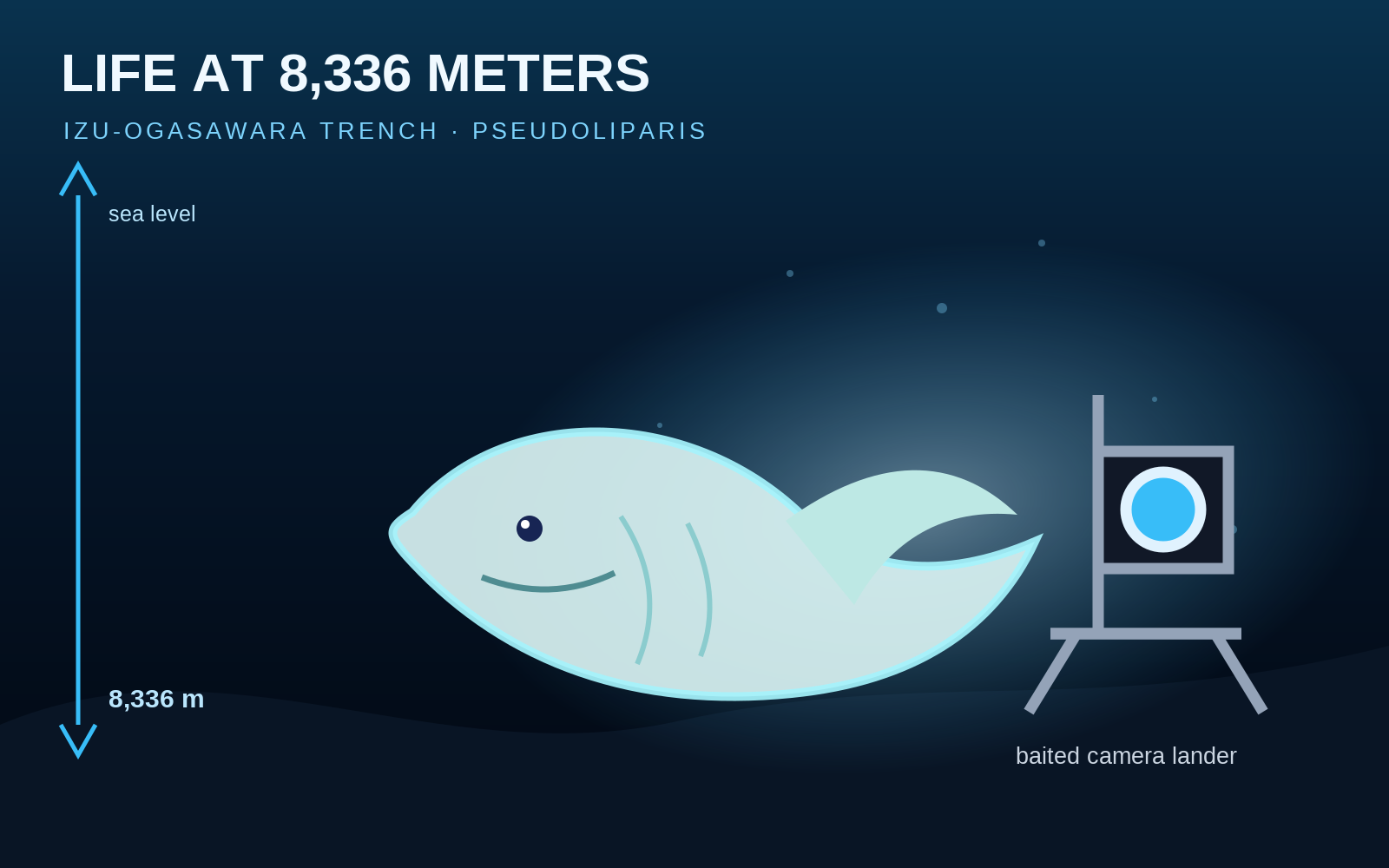
The Deepest Fish Ever Filmed
A baited lander recorded an unidentified Pseudoliparis snailfish 8,336 meters down in the Izu-Ogasawara Trench, setting the verified depth record for a fish filmed in the ocean.
 ▼ 9,533 m
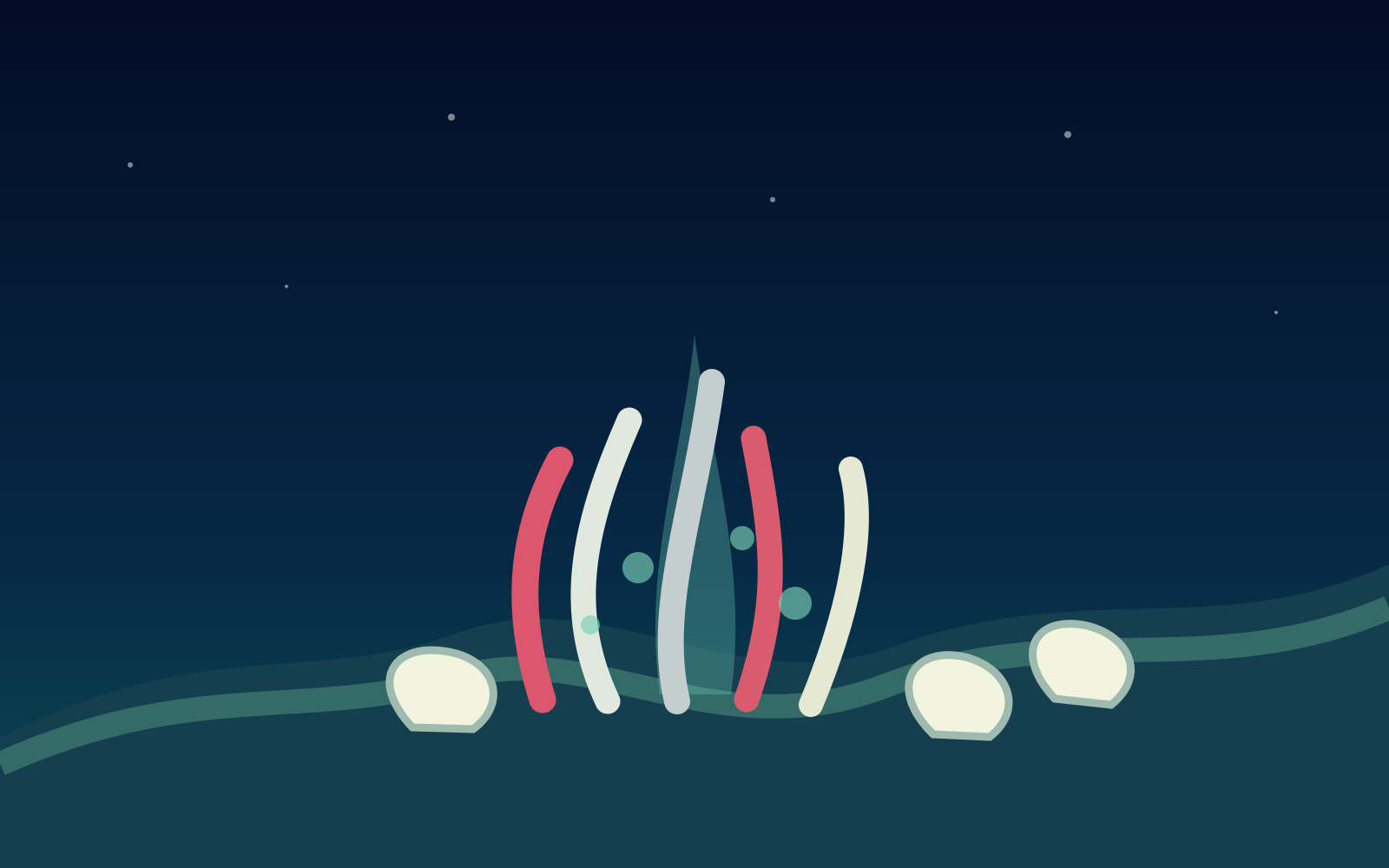
Chemosynthetic Communities Found Across Hadal Trenches
Crewed dives documented extensive communities of tube worms and bivalves sustained by methane- and hydrogen-sulfide-rich fluids from 5,800 to 9,533 metres in the Kuril–Kamchatka and western Aleutian trenches.