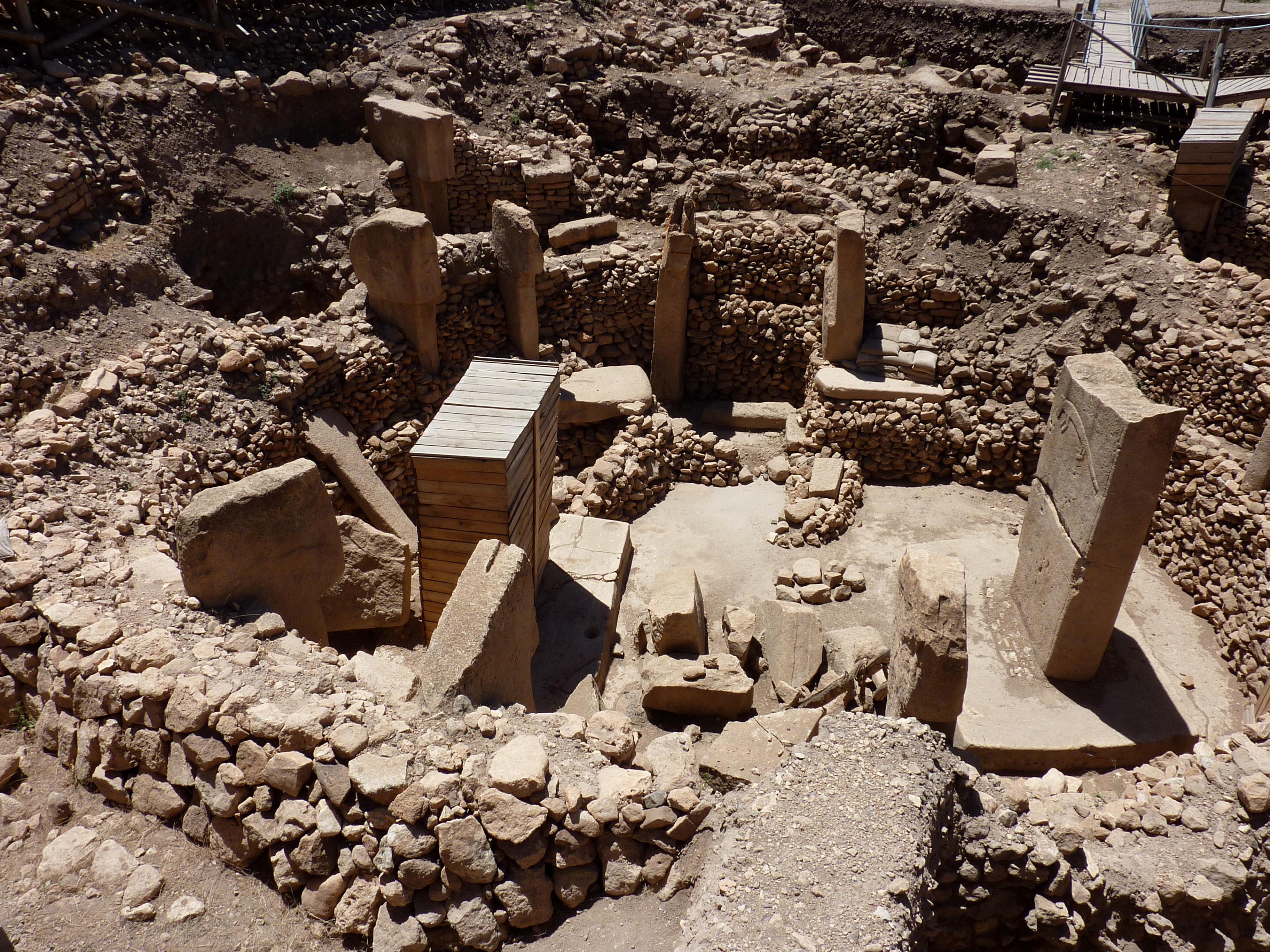
Göbekli Tepe, the First Temple
Massive carved stone pillars built ~11,000 years ago — monumental architecture from hunter-gatherers, predating Stonehenge by six millennia.
The story
Why scientists were there
Archaeologist Klaus Schmidt revisited a hilltop earlier dismissed as a medieval cemetery.
How they found it
Excavations uncovered rings of T-shaped megaliths carved with animals, buried intact beneath the mound.
What makes it unique
It showed complex ritual architecture before farming and pottery, upending the idea that cities had to come first.
Gallery

Where it was found
Şanlıurfa Province, southeastern Turkey
Tags
Related discoveries
 🏺 Archaeology
New Sanxingdui Sacrificial Pits
Six newly opened pits yielded thousands of artifacts — gold masks, bronze trees, and ivory — from the mysterious 3,000-year-old Shu kingdom.
Read more → 🧬 Biology
Homo naledi, a New Human Relative
More than 1,500 fossil pieces from a deep cave chamber revealed a small-brained human relative with a surprising mix of ancient and modern traits.
Read more → Illustration🏺 Archaeology
The Tomb of Pharaoh Thutmose II Identified
Inscriptions on alabaster vessels and decorated plaster identified a badly flood-damaged tomb west of Luxor as the original burial place of the Eighteenth Dynasty pharaoh Thutmose II.
Read more → Illustration🏺 Archaeology
Valeriana, a Maya City Revealed in Old LiDAR Data
Archaeologists reanalysed airborne LiDAR collected for an environmental survey and identified a dense Maya urban landscape in eastern Campeche, including the newly named centre Valeriana. Across 122 square kilometres, the data revealed 6,479 structures, ceremonial complexes, plazas, reservoirs, causeways, and residential zones.
Read more →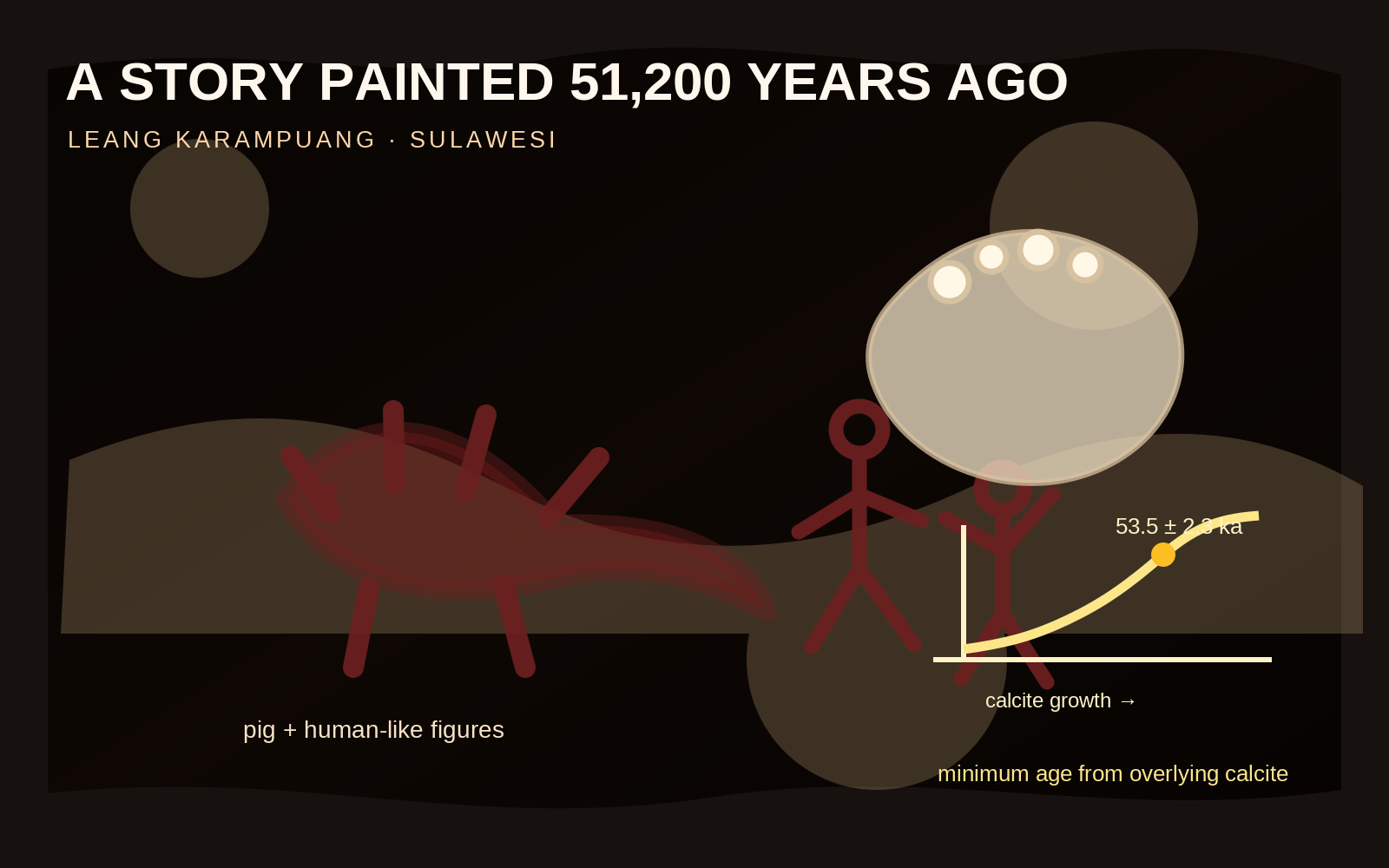 Illustration🏺 Archaeology
The 51,200-Year-Old Sulawesi Narrative Cave Art
Laser-ablation uranium-series dating showed that a scene of human-like figures interacting with a pig at Leang Karampuang was painted at least 51,200 years ago, then the oldest securely dated surviving narrative and representational art.
Read more → Illustration🏺 Archaeology
The 476,000-Year-Old Wooden Structure at Kalambo Falls
Two shaped logs from Zambia were dated to at least 476,000 years ago, preserving the earliest known structural use of wood by hominins.
Read more →