
 Illustration — not a photo of the discovery
Bridge RNAs Link DNA Targets and Donors for Programmable Recombination
Researchers found that IS110 elements use a bridge RNA with independently programmable donor- and target-recognition loops, enabling sequence-specific DNA insertion, excision, and inversion in laboratory experiments.
The story
Why scientists were there
Many genome-engineering tasks require controlled DNA rearrangements rather than a single cut or base change. The system is a research platform, not an approved human therapy: delivery, activity in different cells, off-target effects, immune responses, and long-term safety all require substantial validation.
How they found it
The team studied how an IS110 transposon excises and found that its joined non-coding ends form an RNA molecule. Structural, biochemical, and engineering experiments showed that the RNA folds into two loops that base-pair separately with donor and target DNA, and that those recognition sequences can be reprogrammed.
What makes it unique
The direct finding is a bispecific RNA guide that specifies both sides of a recombination event, unlike systems that only target one genomic address. Demonstrations of insertion, excision, and inversion establish laboratory capability; claims about broad clinical genome design are prospective, not results of this paper.
Gallery
Where it was found
Arc Institute, Palo Alto
Tags
Related discoveries
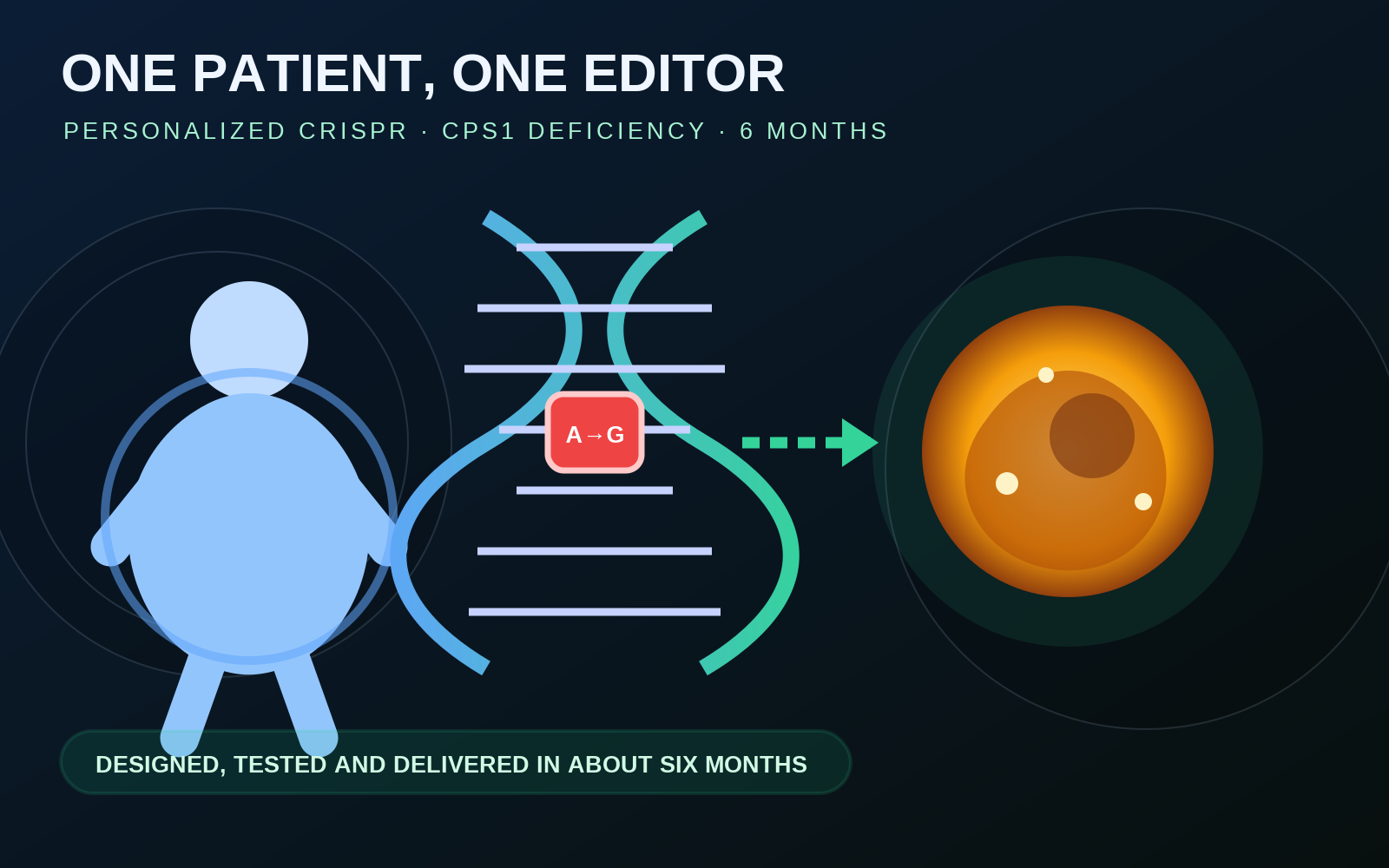 Illustration🤖 Technology
The First Personalized In Vivo CRISPR Treatment
A bespoke adenine base editor was designed, manufactured, and infused into an infant with severe CPS1 deficiency, producing early clinical improvement in the first reported patient-specific CRISPR treatment delivered inside the body.
Read more →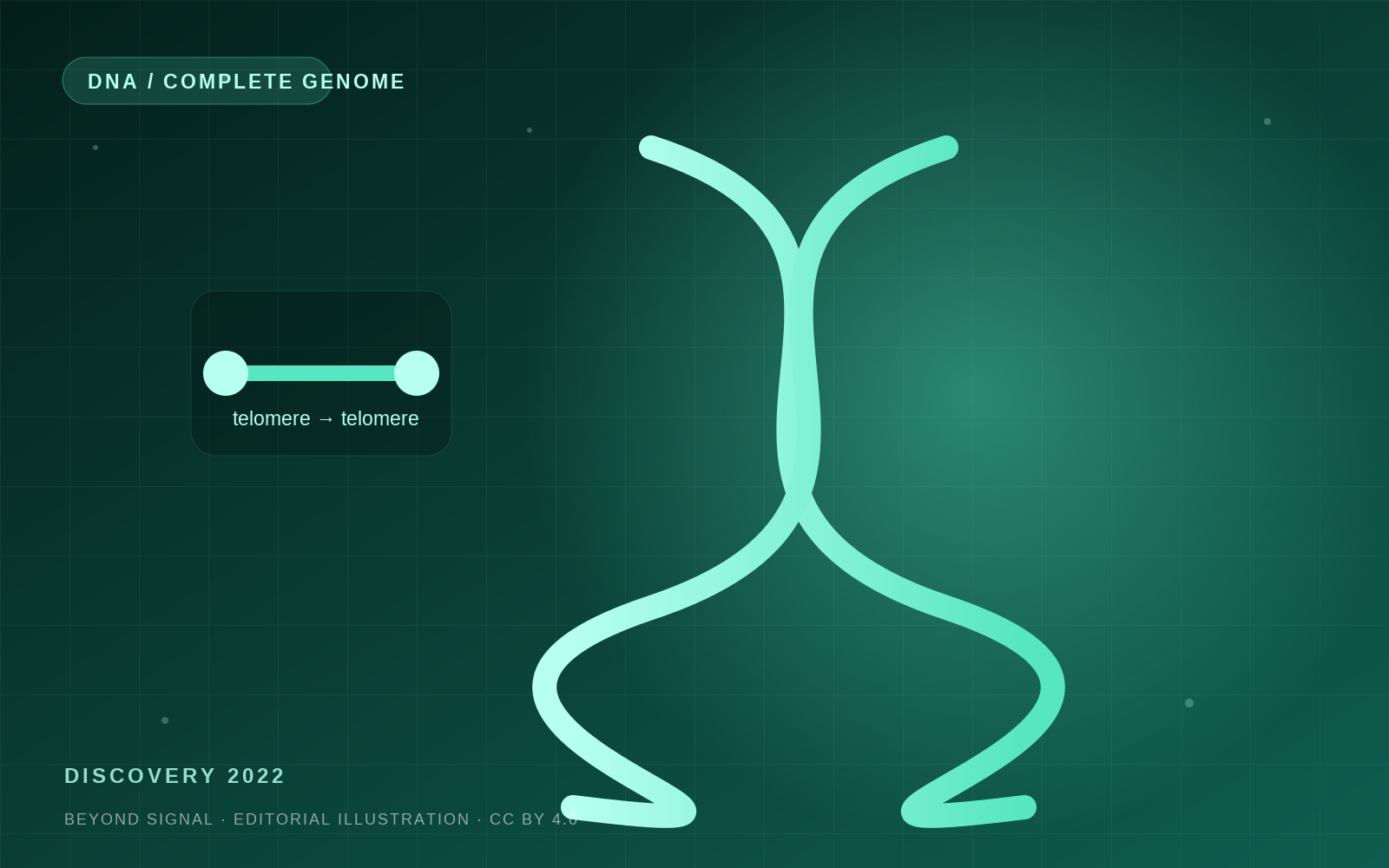 Illustration🧬 Biology
The First Gapless Human Genome Sequence
The Telomere-to-Telomere Consortium filled the remaining gaps in the human reference genome, adding nearly 200 million DNA letters and complete views of centromeres, segmental duplications, and chromosome ends.
Read more →