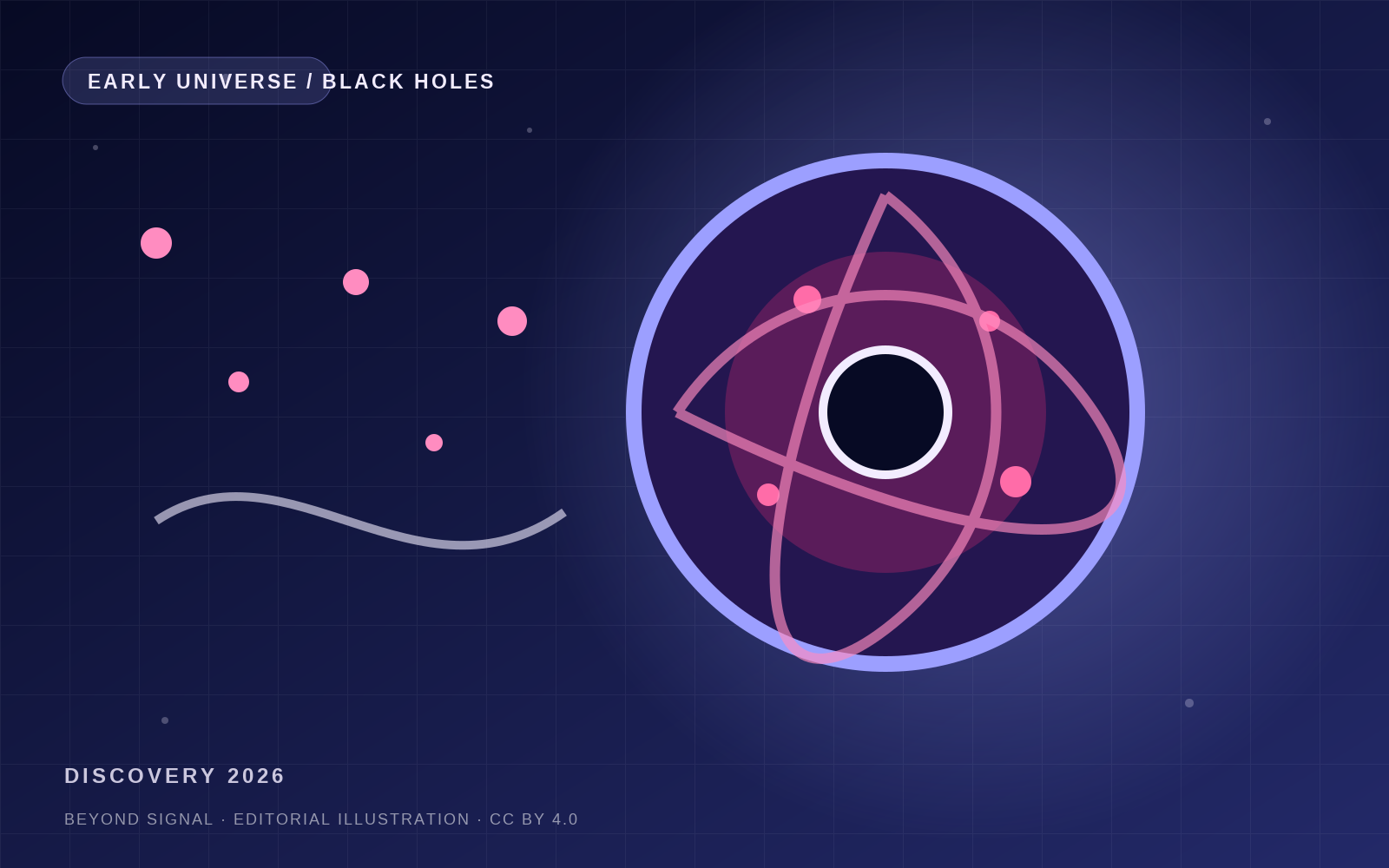
 Illustration — not a photo of the discovery
Dense Gas Cocoons Explain Many Little Red Dots
Radiative-transfer modelling showed that the puzzling spectra of many JWST 'little red dots' can be reproduced by relatively young supermassive black holes embedded in compact, dense cocoons of ionized gas.
The story
Why scientists were there
Little red dots combine broad emission lines, strong Balmer breaks, weak X-rays, and compact sizes in a way that had resisted standard galaxy and active-galactic-nucleus models.
How they found it
The team modelled light passing through non-spherical inflowing and outflowing gas, then tested predicted relationships among absorption, line widths, and spectral breaks against observations.
What makes it unique
The cocoon model explains several strange signatures without invoking stellar populations with exotic atmospheres, while suggesting typical central black holes near a million solar masses.
Gallery
Where it was found
Niels Bohr Institute, University of Copenhagen
Tags
Related discoveries
 🌌 Space
First Image of a Black Hole (M87*)
Humanity's first direct image of a black hole — a glowing ring of light around the shadow of M87*, 6.5 billion solar masses.
Read more →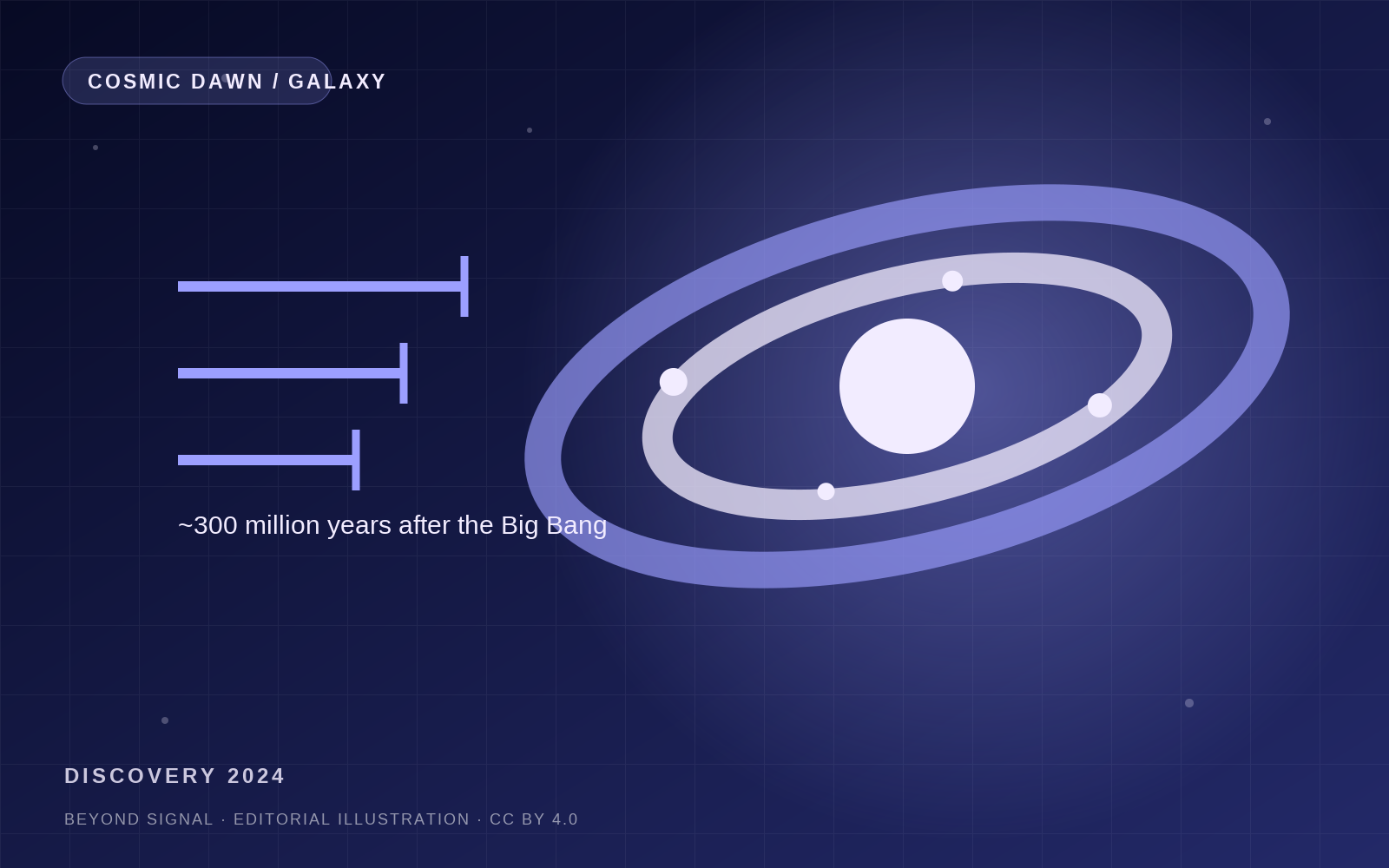 Illustration🌌 Space
JWST Confirms JADES-GS-z14-0 at Cosmic Dawn
JWST spectroscopy confirmed a remarkably luminous galaxy seen only about 300 million years after the Big Bang, showing that substantial galaxies assembled unexpectedly early.
Read more →