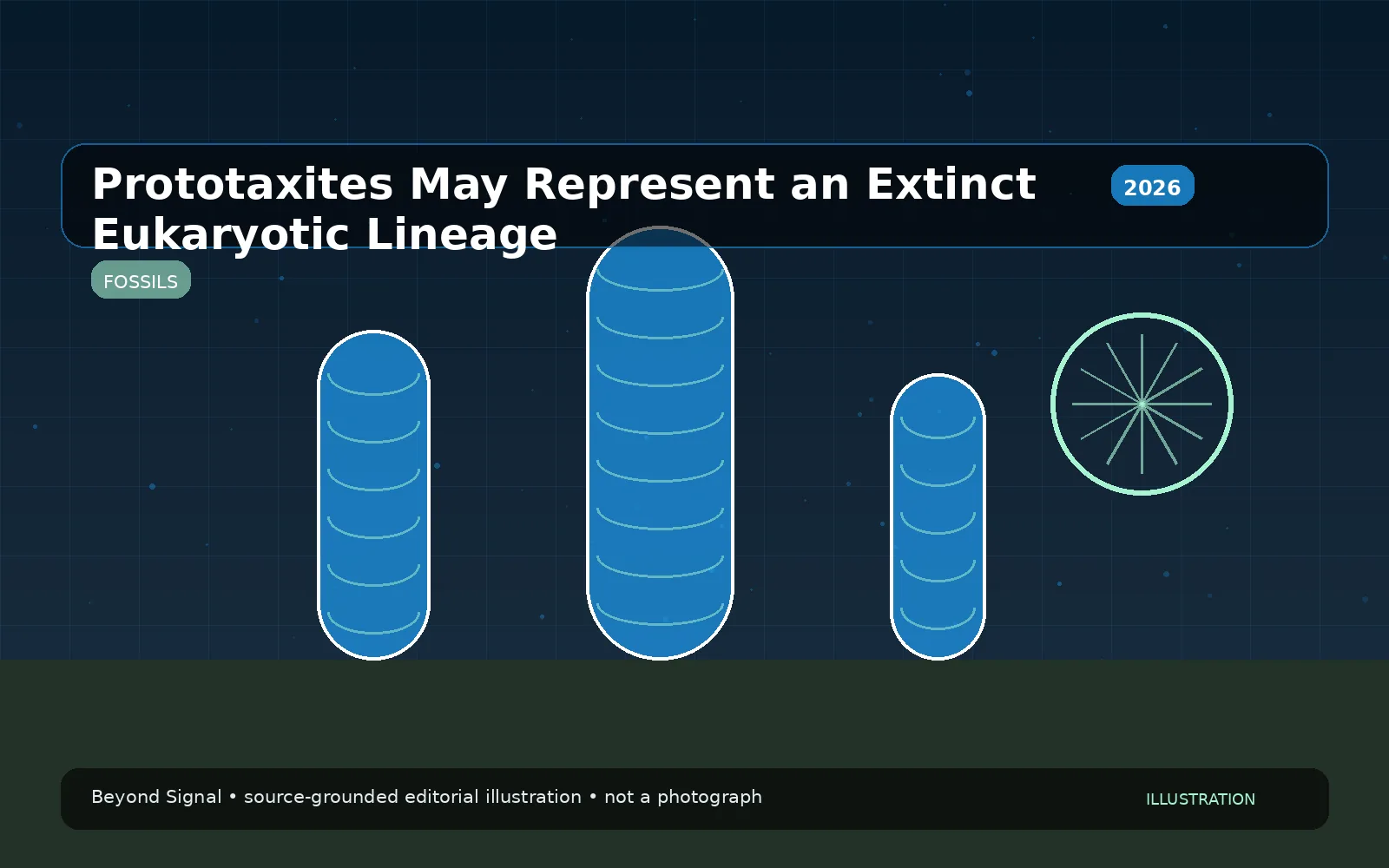
 Illustration — not a photo of the discovery
Prototaxites May Represent an Extinct Eukaryotic Lineage
Chemical and structural analyses of the giant Devonian organism Prototaxites found that its tissues do not match known fungi and may represent an entirely extinct branch of complex eukaryotic life. The interpretation revives a long-running debate over the identity of trunk-like fossils that towered over early land ecosystems.
The story
Why scientists were there
Prototaxites fossils can reach metres in height, yet their biological affinity has remained disputed for more than a century. Researchers examined exceptionally preserved material from the Rhynie chert to test the influential hypothesis that the organism was a giant fungus.
How they found it
The team combined microscopy, three-dimensional tissue reconstruction, and chemical mapping of fossilized cell walls and internal tubes. They compared the resulting patterns with fungi, plants, algae, and lichens while accounting for alteration during fossilization.
What makes it unique
The fossils lacked characteristic fungal wall chemistry and showed an internal architecture without a convincing modern analogue. The authors therefore proposed that Prototaxites belonged to an extinct eukaryotic lineage, while acknowledging that its exact position remains unresolved.
Gallery
Where it was found
Rhynie chert, Aberdeenshire, Scotland
Tags
Related discoveries
 Illustration🦕 Dinosaurs & Fossils
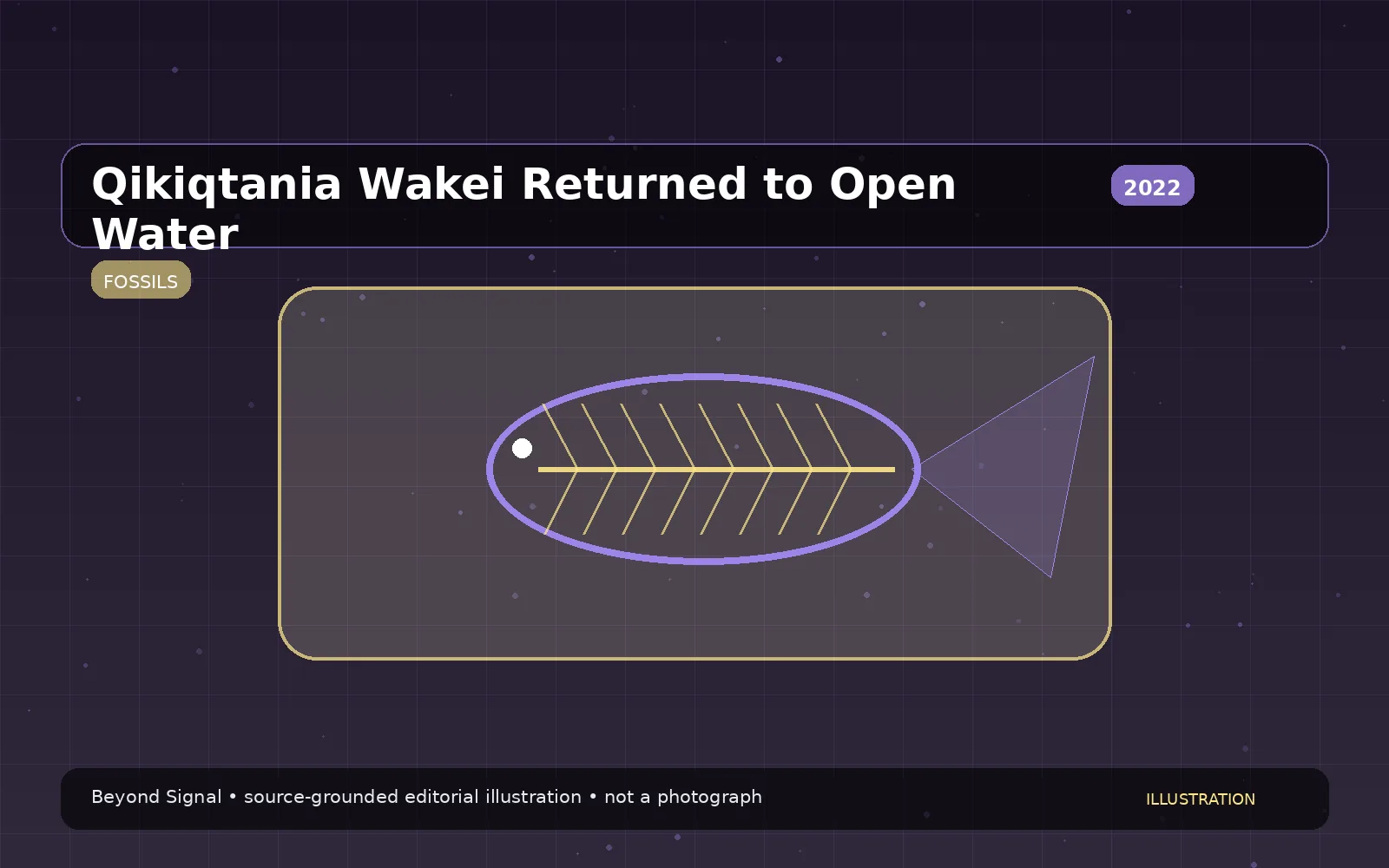
Qikiqtania Wakei Returned to Open Water
A Late Devonian fossil from Nunavut revealed Qikiqtania wakei, a close relative of limbed vertebrates whose pectoral fin was specialized for swimming rather than supporting the body on a hard surface. The animal shows that evolution near the fish-to-tetrapod transition explored more than one ecological direction.
Read more →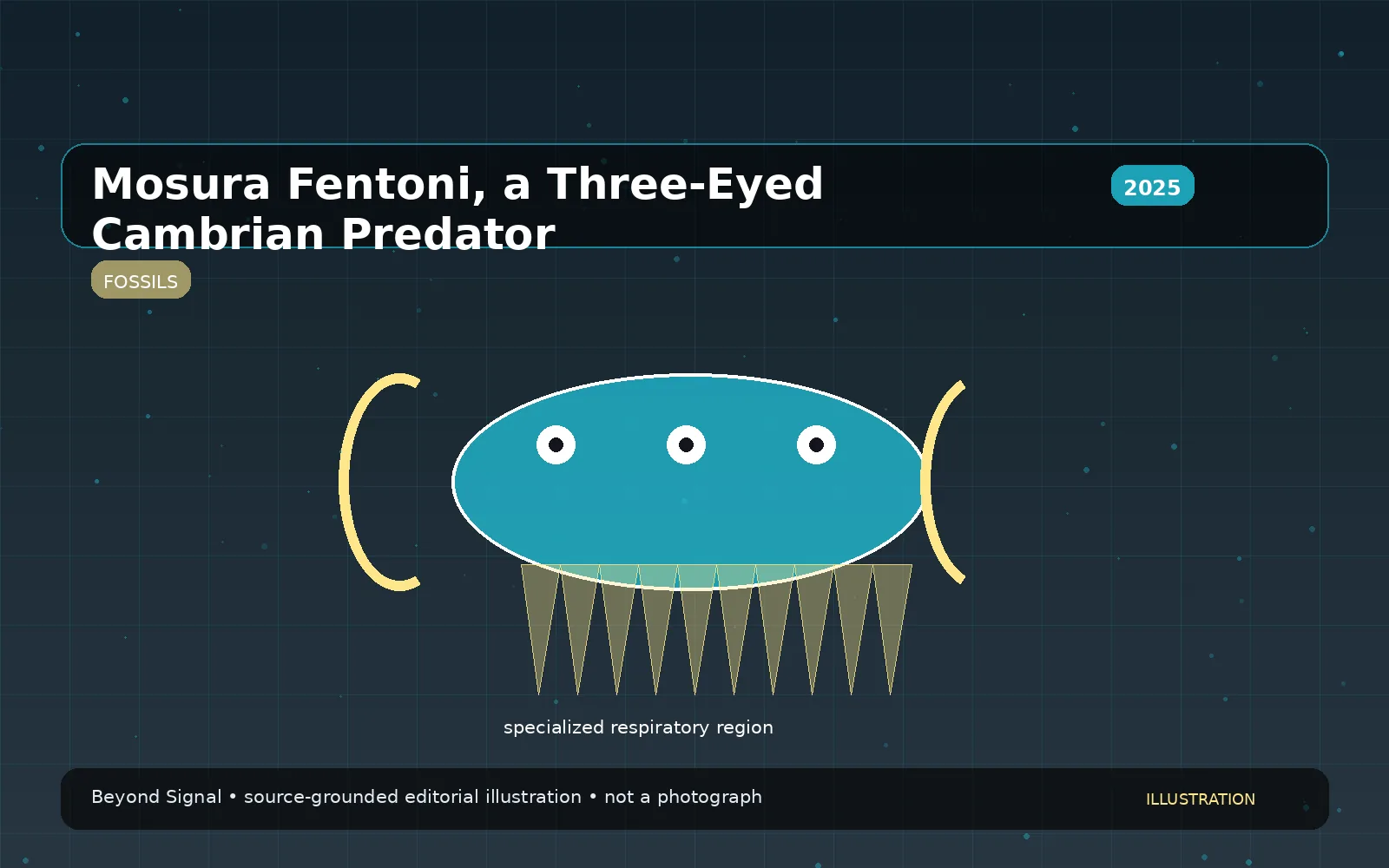 Illustration🦕 Dinosaurs & Fossils
Mosura Fentoni, a Three-Eyed Cambrian Predator
More than 60 Burgess Shale fossils revealed Mosura fentoni, a roughly six-centimetre radiodont with three eyes, grasping frontal appendages, and a body divided into a broad swimming region and a specialized rear section carrying respiratory structures. The anatomy expands the known diversity of early arthropod relatives.
Read more →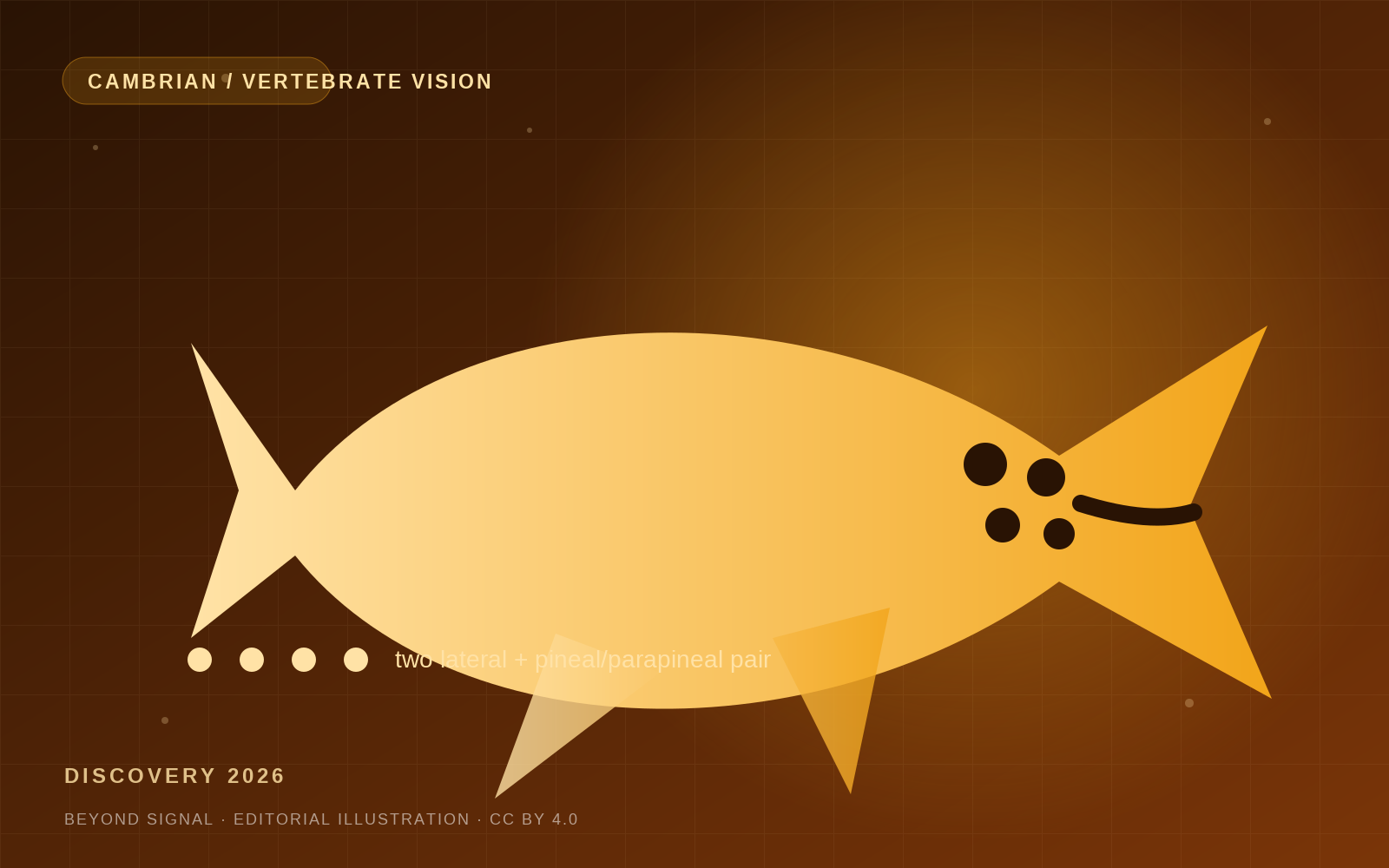 Illustration🦕 Dinosaurs & Fossils
Cambrian Vertebrates Had Four Camera-Type Eyes
Reanalysis of exceptionally preserved Cambrian fish fossils interpreted two structures once called nasal sacs as an additional pair of image-forming eyes.
Read more → Illustration🦕 Dinosaurs & Fossils
The Oldest Known Fossilized Amniote Skin
A tiny three-dimensional patch of reptile-like skin from an Oklahoma cave system pushed the direct fossil record of amniote skin back by more than 130 million years.
Read more →