Dinosaurs & Fossils
New dinosaur species, ancient mammals, fossil discoveries, and the evolving timeline of life on Earth.
Field guide
Understanding dinosaurs & fossils
Fossils are not simply old bones; they are preserved evidence of bodies, environments, behaviour, and geological time. A new dinosaur or fossil mammal can change a family tree, extend the known range of a group, or reveal an adaptation that was previously invisible. Beyond Signal presents fossil discoveries with the rock layer, location, and reconstruction choices that allow scientists to move from a fragment in the ground to a testable account of ancient life.
Interpretation is especially important in palaeontology because the original organism is incomplete. Teeth, footprints, skin impressions, and sediment can each tell a different part of the story. A responsible reconstruction distinguishes what is directly preserved from what is inferred by comparing living relatives, biomechanics, and the surrounding environment.
Reading deep time
Stratigraphy provides the timeline that gives a fossil meaning. The age of a layer, the fossils found beside it, and the chemistry of the surrounding rock help establish when an organism lived and what kind of environment it occupied.
From specimen to species
Naming a fossil species requires diagnostic features that distinguish it from known relatives. Modern imaging and digital modelling increasingly allow researchers to examine internal anatomy without destroying rare specimens.
Explore by subtopic
18 discoveries
 Illustration🦕 Dinosaurs & Fossils
A Deep-Sea Whale Necropolis in the Diamantina Zone
Dives in the Diamantina Zone recorded five modern whale-fall communities and 476 fossil cetacean sites over 1,200 kilometres of seafloor, documenting a whale-fall archive that extends back at least 5.3 million years.
Read more →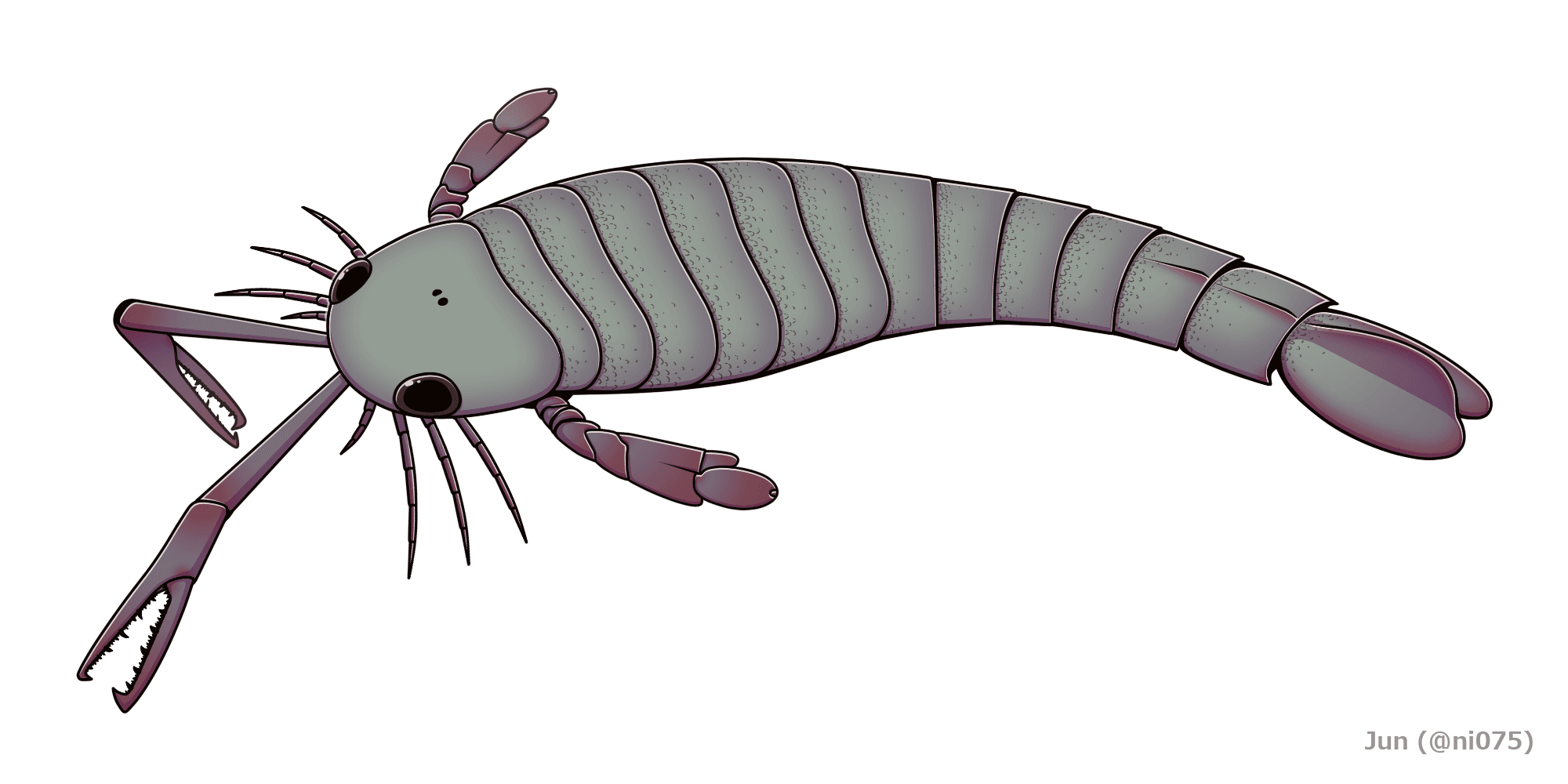 🦕 Dinosaurs & Fossils
The Metre-Long Scorpion Praearcturus
Modern reanalysis supports identifying fragmentary British fossils as a roughly one-metre scorpion, potentially the largest scorpion yet recognized.
Read more →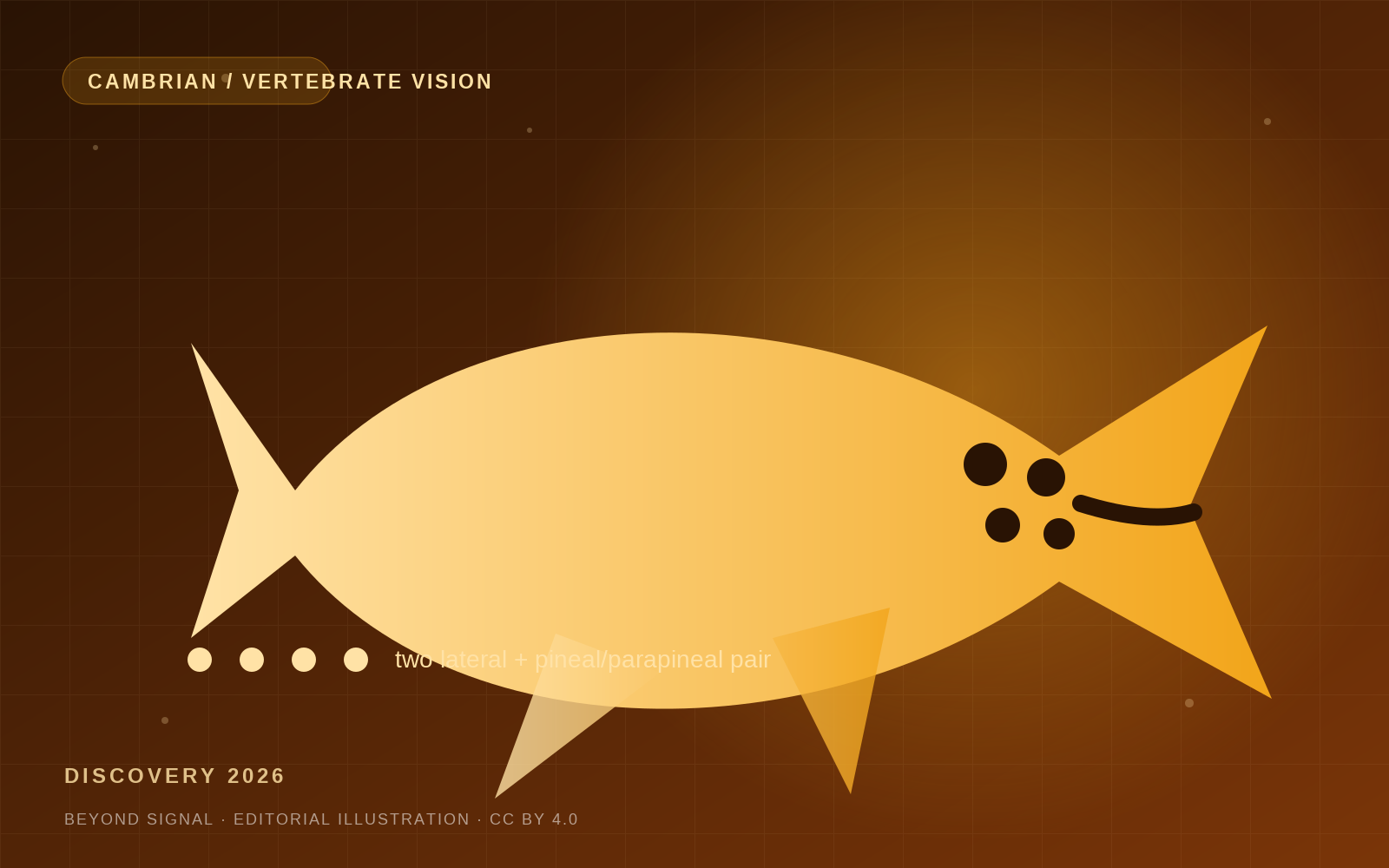 Illustration🦕 Dinosaurs & Fossils
Cambrian Vertebrates Had Four Camera-Type Eyes
Reanalysis of exceptionally preserved Cambrian fish fossils interpreted two structures once called nasal sacs as an additional pair of image-forming eyes.
Read more →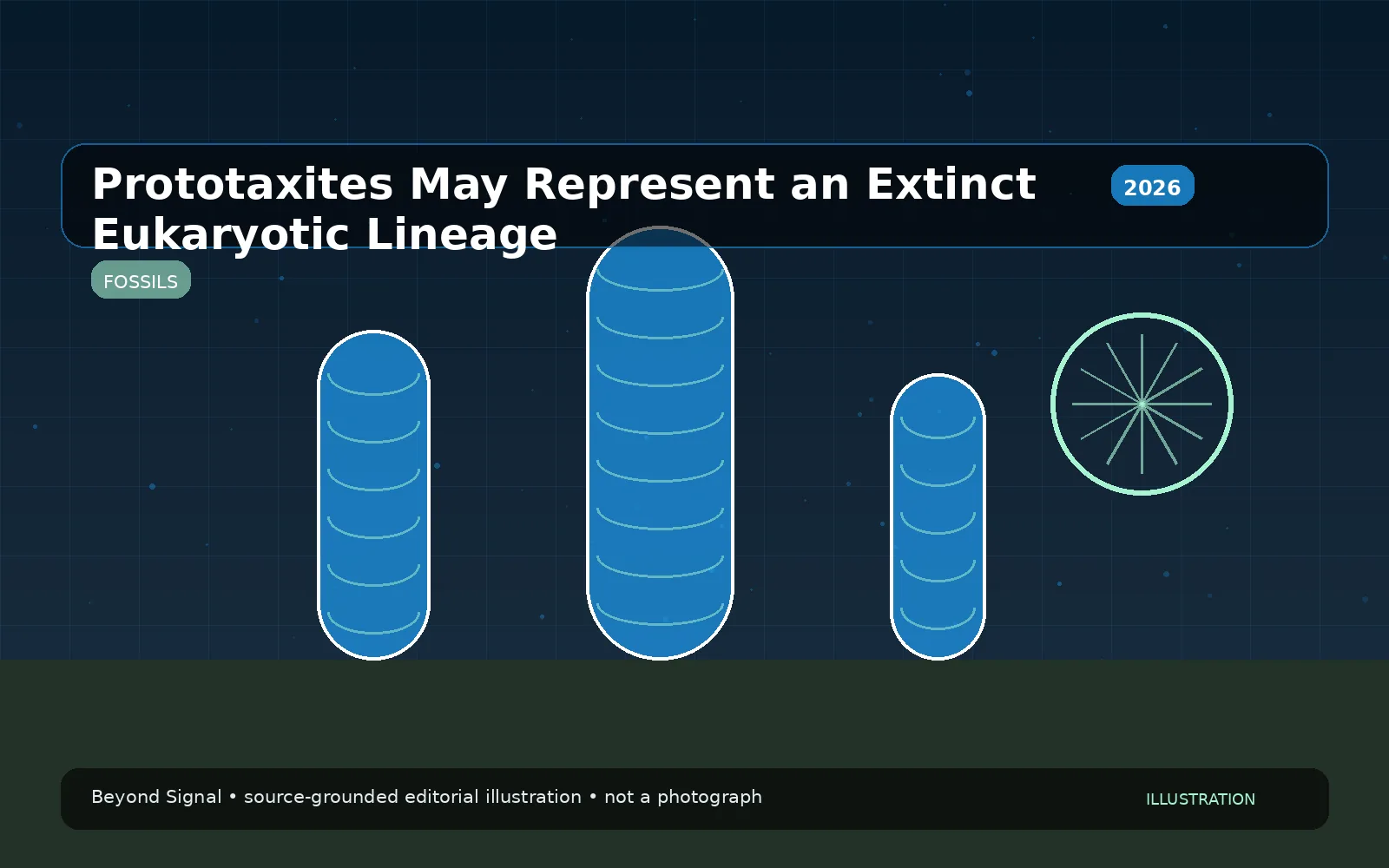 Illustration🦕 Dinosaurs & Fossils
Prototaxites May Represent an Extinct Eukaryotic Lineage
Chemical and structural analyses of the giant Devonian organism Prototaxites found that its tissues do not match known fungi and may represent an entirely extinct branch of complex eukaryotic life. The interpretation revives a long-running debate over the identity of trunk-like fossils that towered over early land ecosystems.
Read more → Illustration🦕 Dinosaurs & Fossils
A Jurassic Midge from Gondwana
A 151-million-year-old fossil midge from Australia became the oldest known member of its group in the Southern Hemisphere, challenging assumptions about where these insects evolved.
Read more →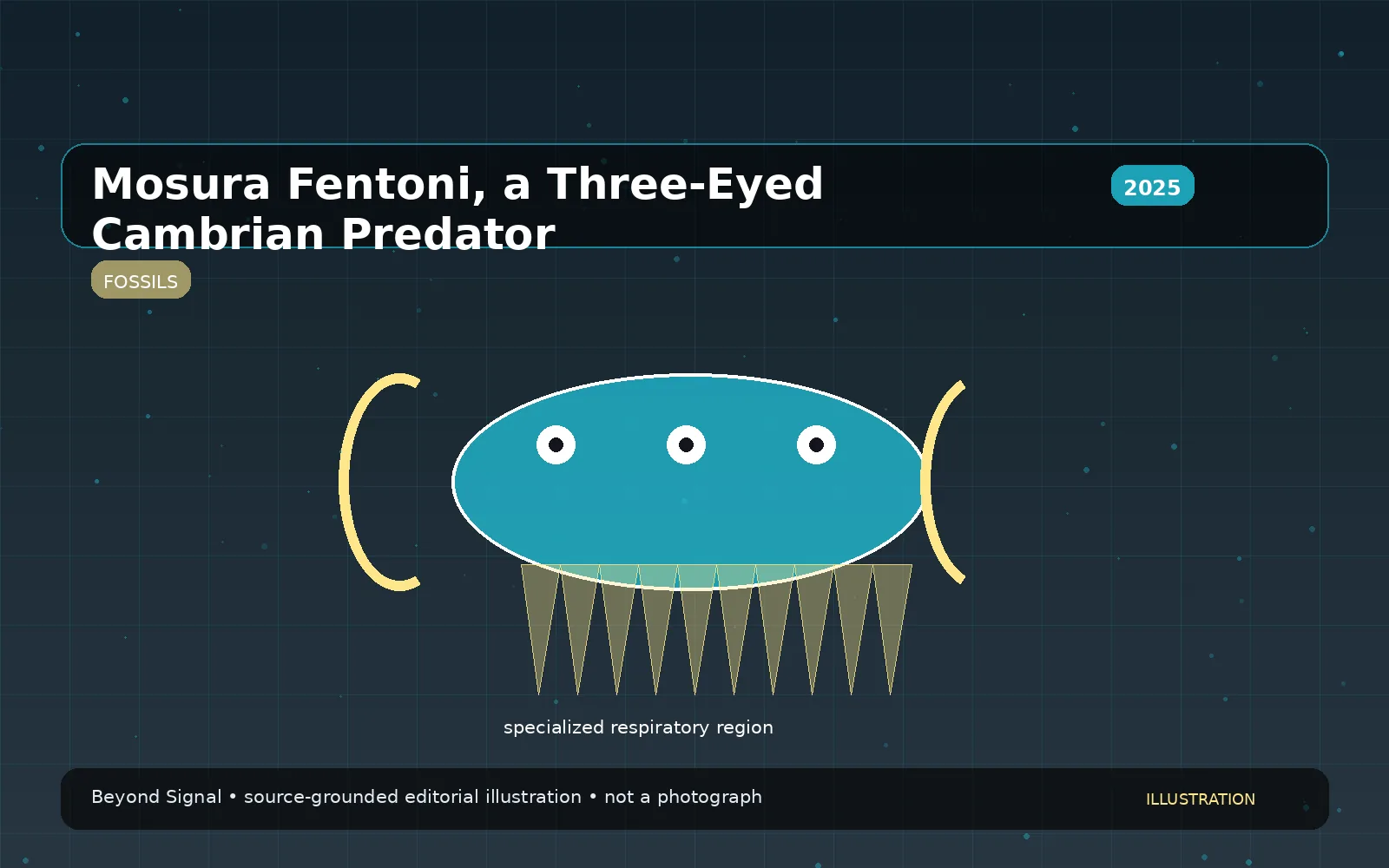 Illustration🦕 Dinosaurs & Fossils
Mosura Fentoni, a Three-Eyed Cambrian Predator
More than 60 Burgess Shale fossils revealed Mosura fentoni, a roughly six-centimetre radiodont with three eyes, grasping frontal appendages, and a body divided into a broad swimming region and a specialized rear section carrying respiratory structures. The anatomy expands the known diversity of early arthropod relatives.
Read more →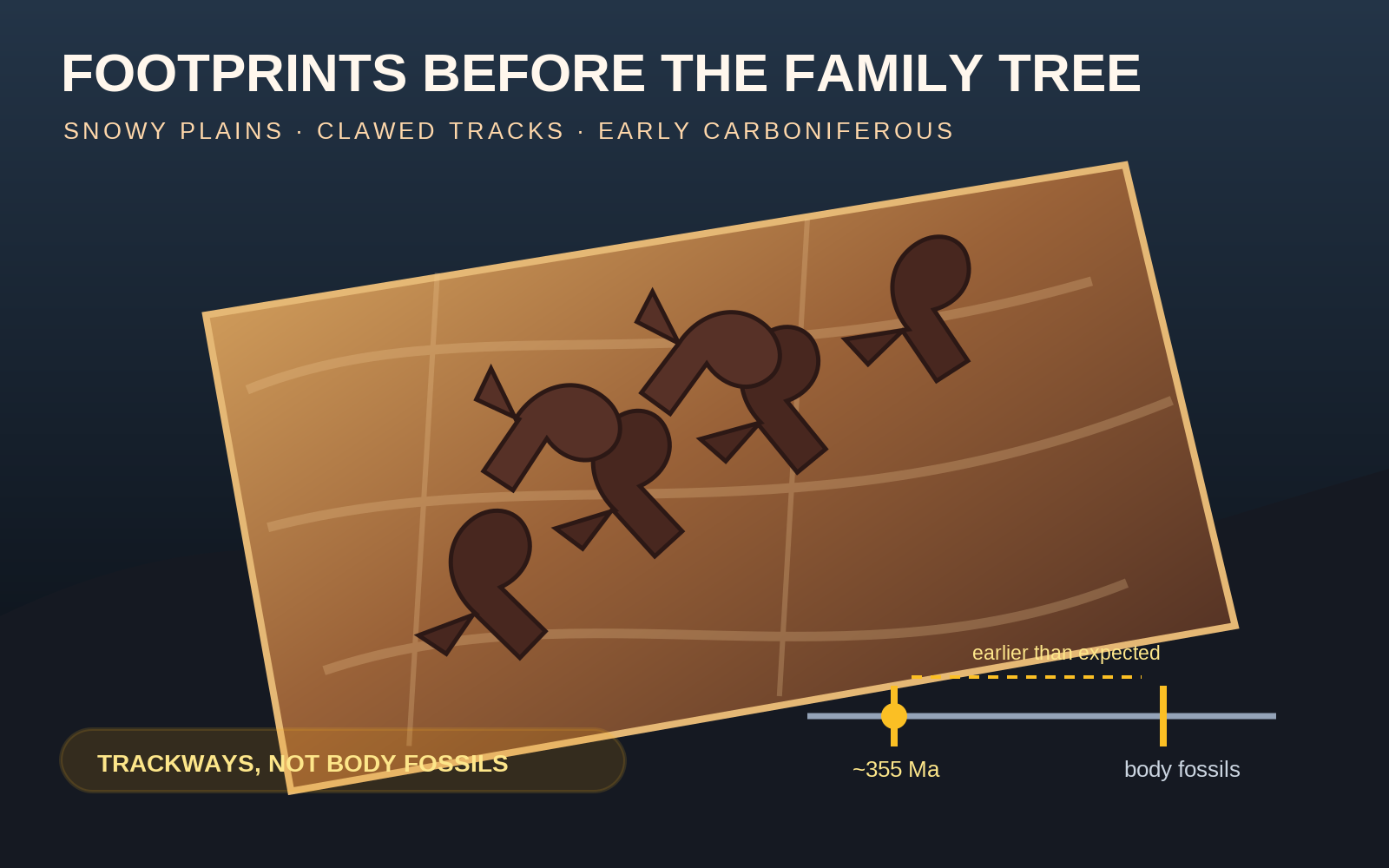 Illustration🦕 Dinosaurs & Fossils
The Earliest Known Amniote Trackways
Clawed five-toed trackways from Australia's Snowy Plains Formation were attributed to an early sauropsid amniote and dated to roughly 359–354 million years ago, extending the amniote record by about 35 million years.
Read more →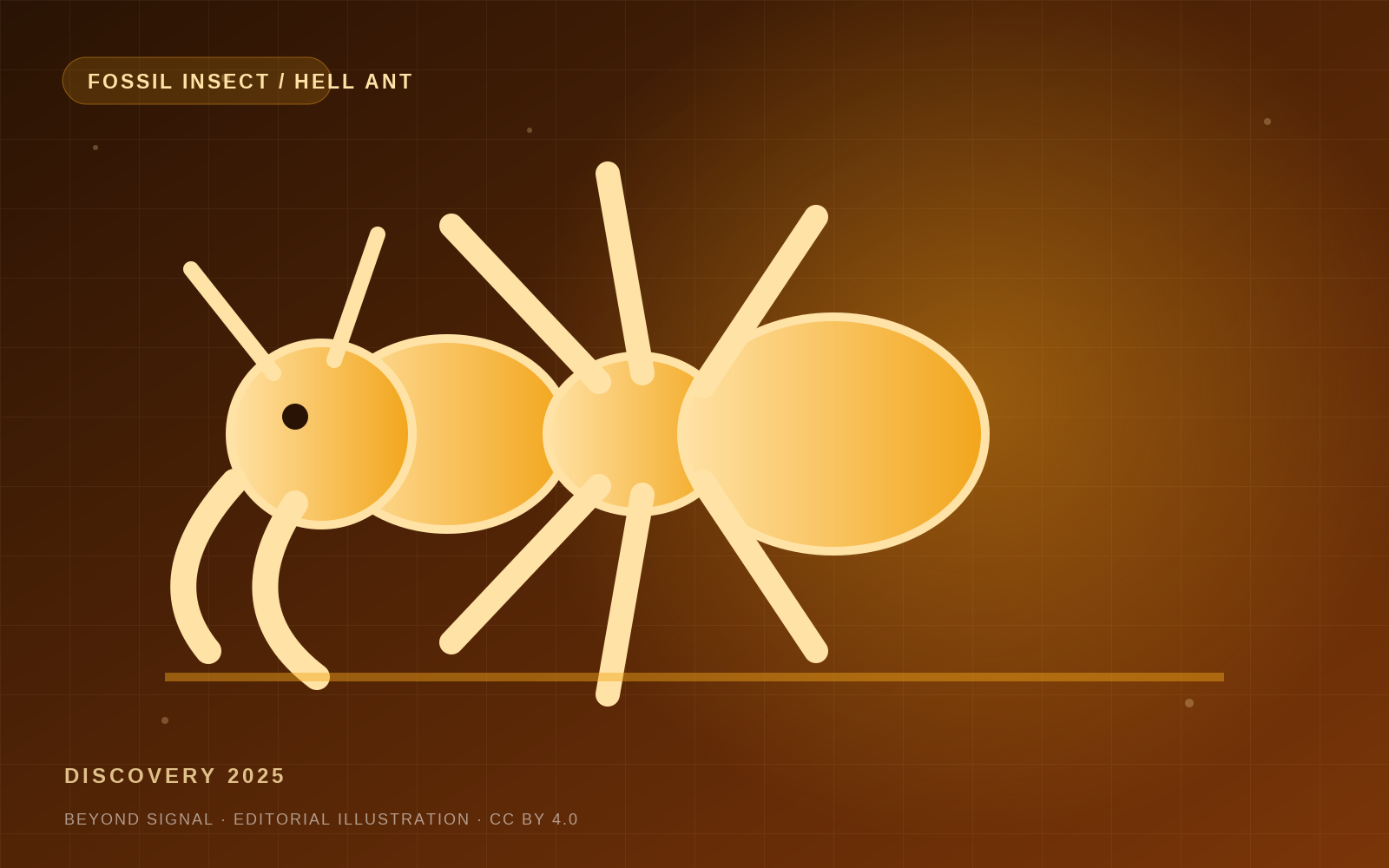 Illustration🦕 Dinosaurs & Fossils
Vulcanidris Cratensis, the Oldest Known Ant
A 113-million-year-old compression fossil from Brazil was recognized as a new hell-ant species and the oldest verified ant known from the fossil record.
Read more →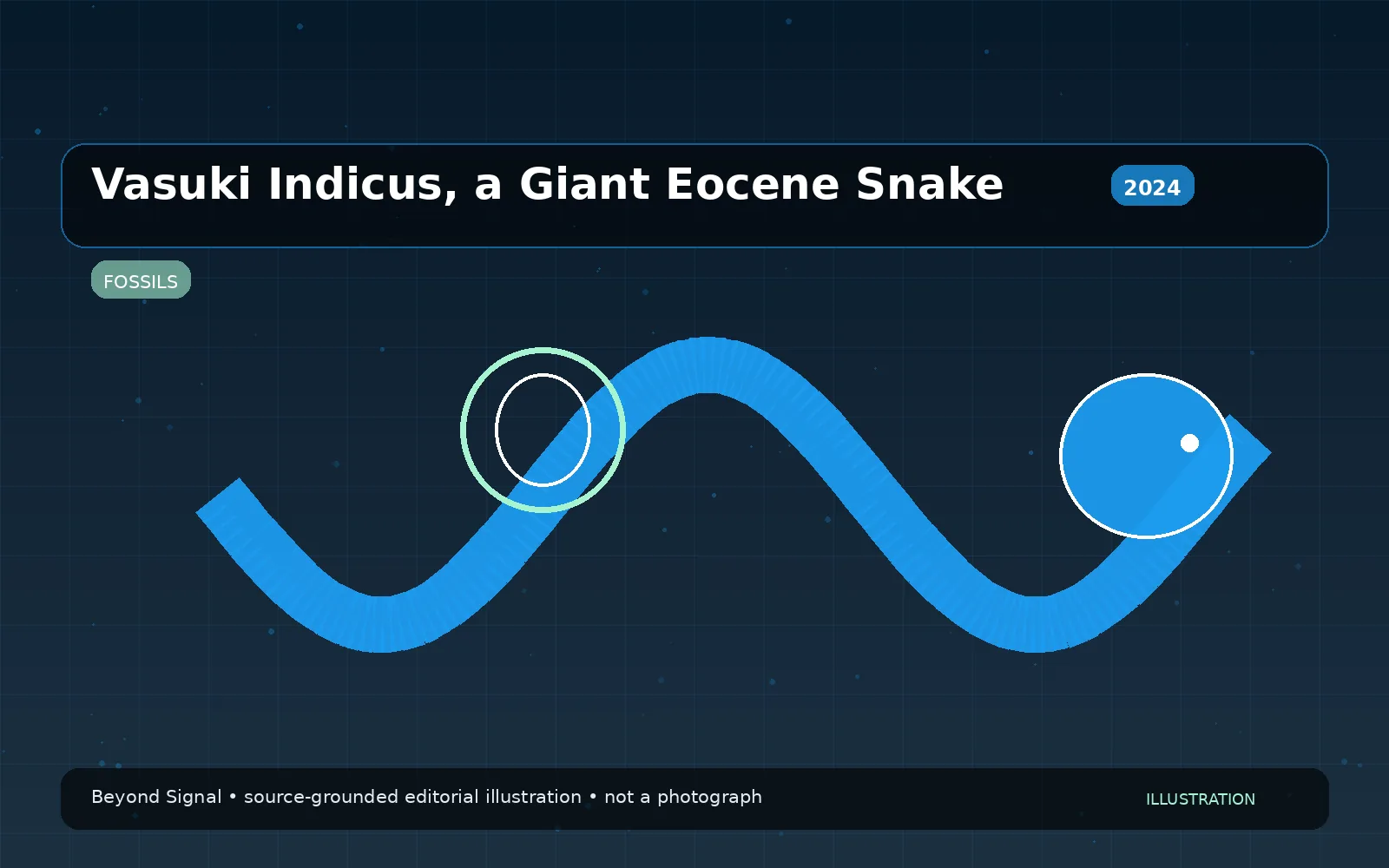 Illustration🦕 Dinosaurs & Fossils
Vasuki Indicus, a Giant Eocene Snake
Twenty-seven associated vertebrae from western India were described as Vasuki indicus, a giant madtsoiid snake that lived about 47 million years ago. Scaling from the vertebrae produced a broad estimated length of roughly 11 to 15 metres, placing it among the largest snakes known but leaving substantial uncertainty.
Read more →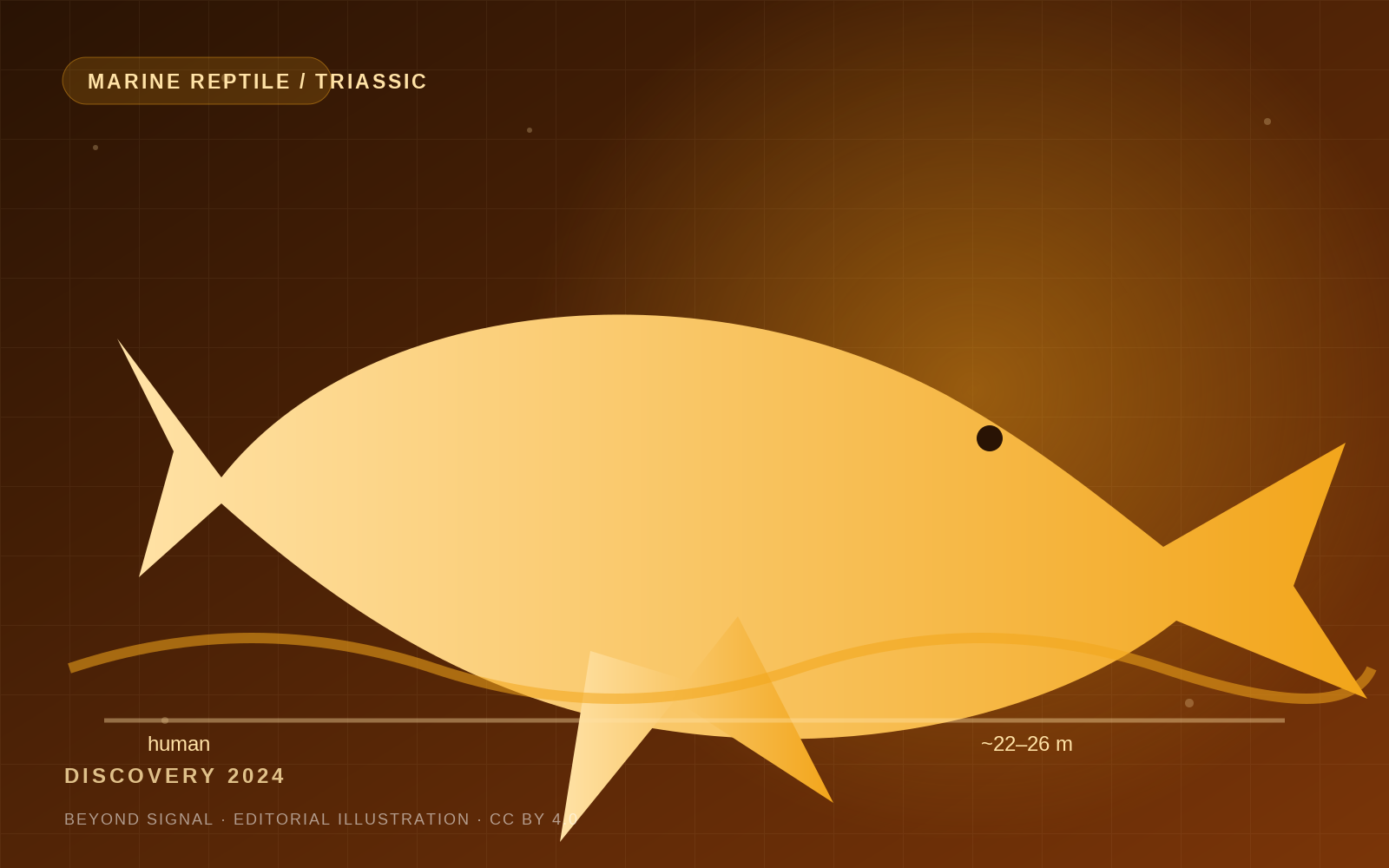 Illustration🦕 Dinosaurs & Fossils
Ichthyotitan Severnensis, a Blue-Whale-Sized Marine Reptile
Fragments of enormous jawbones from southwest England were assigned to a new Late Triassic ichthyosaur estimated at roughly 22–26 metres long.
Read more →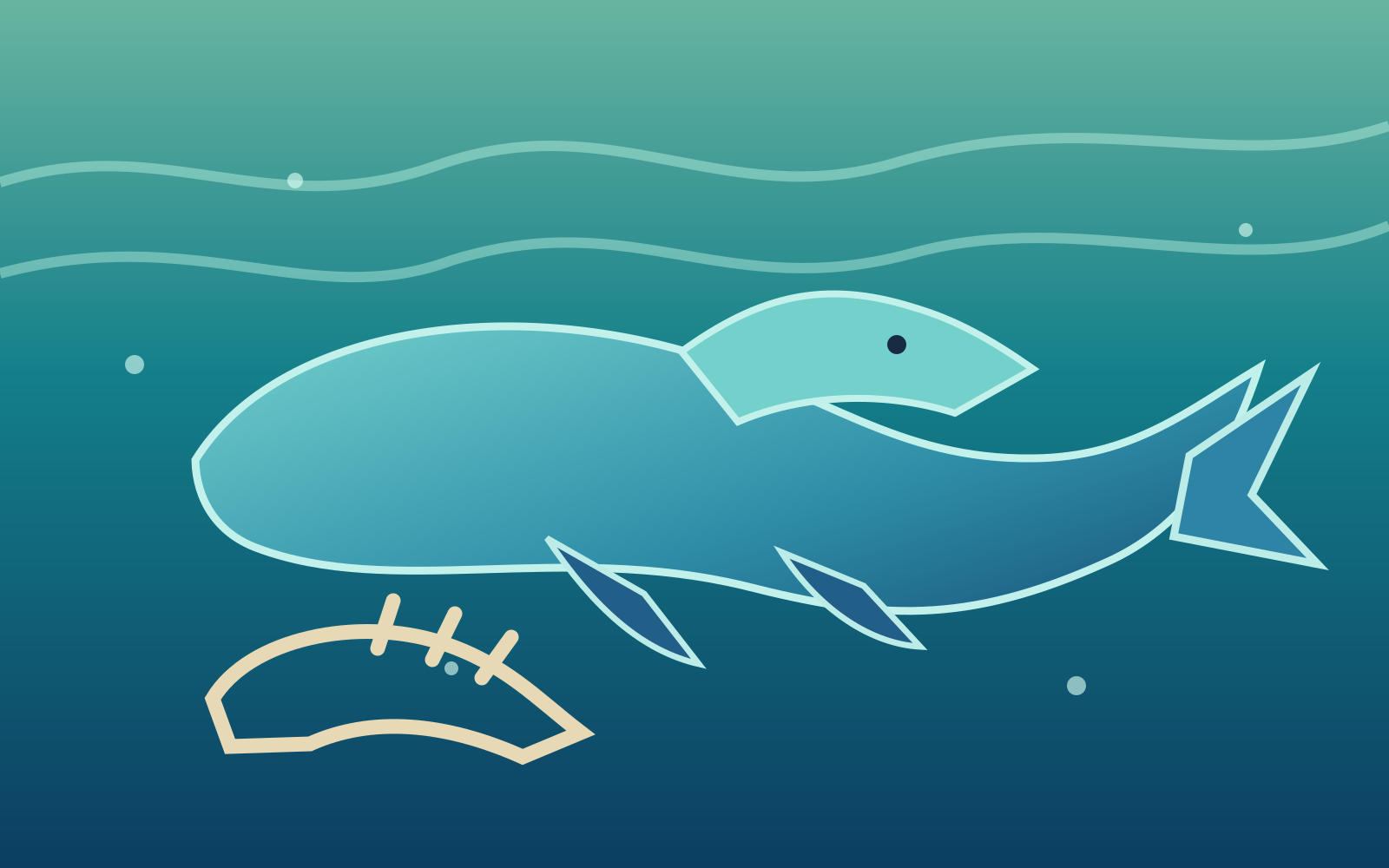 Illustration🦕 Dinosaurs & Fossils
Pebanista yacuruna, the Largest Known River Dolphin
A 16-million-year-old skull from Peru established Pebanista yacuruna as a new, 3–3.5-metre river dolphin and the closest known fossil relative of living South Asian river dolphins.
Read more →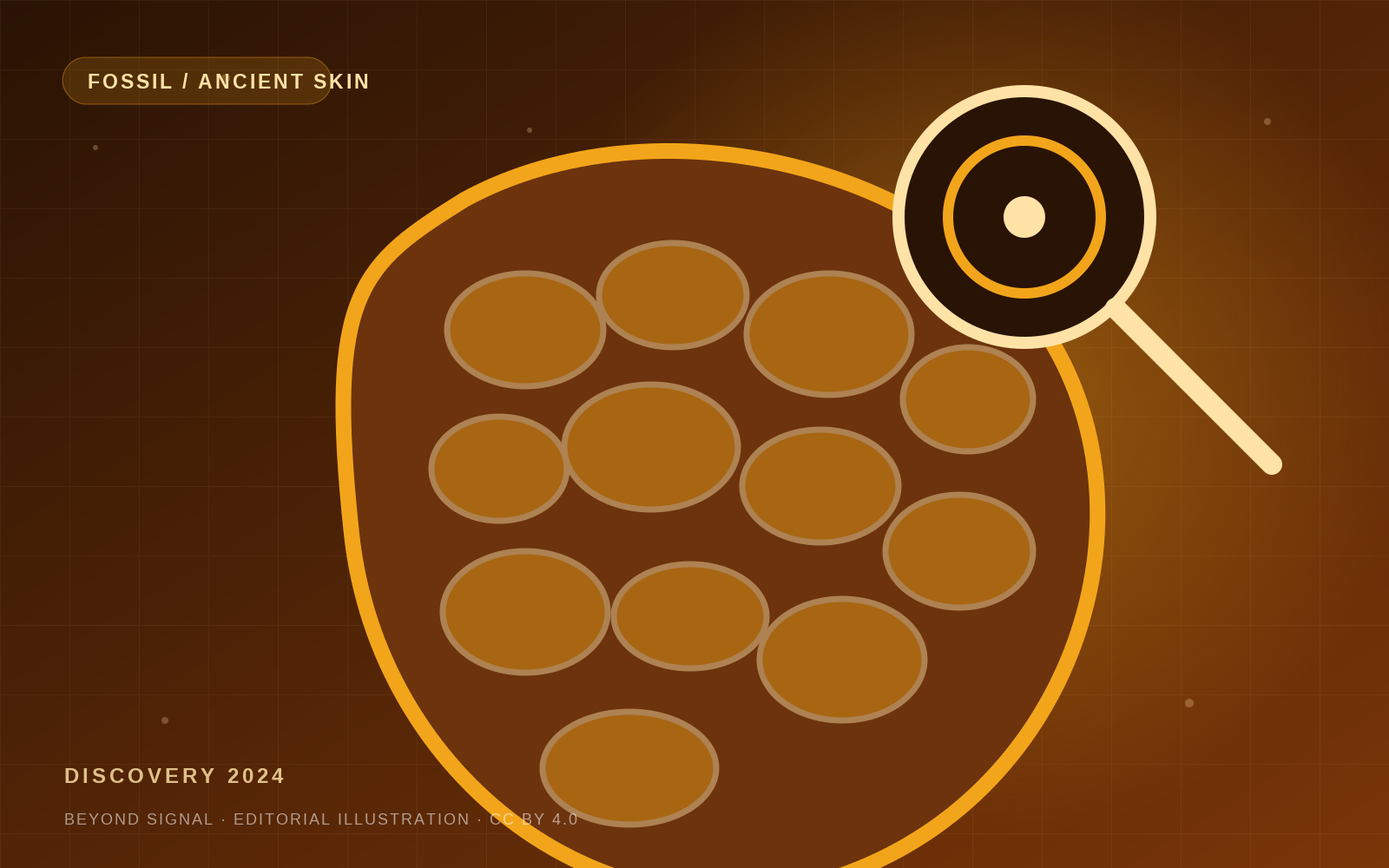 Illustration🦕 Dinosaurs & Fossils
The Oldest Known Fossilized Amniote Skin
A tiny three-dimensional patch of reptile-like skin from an Oklahoma cave system pushed the direct fossil record of amniote skin back by more than 130 million years.
Read more →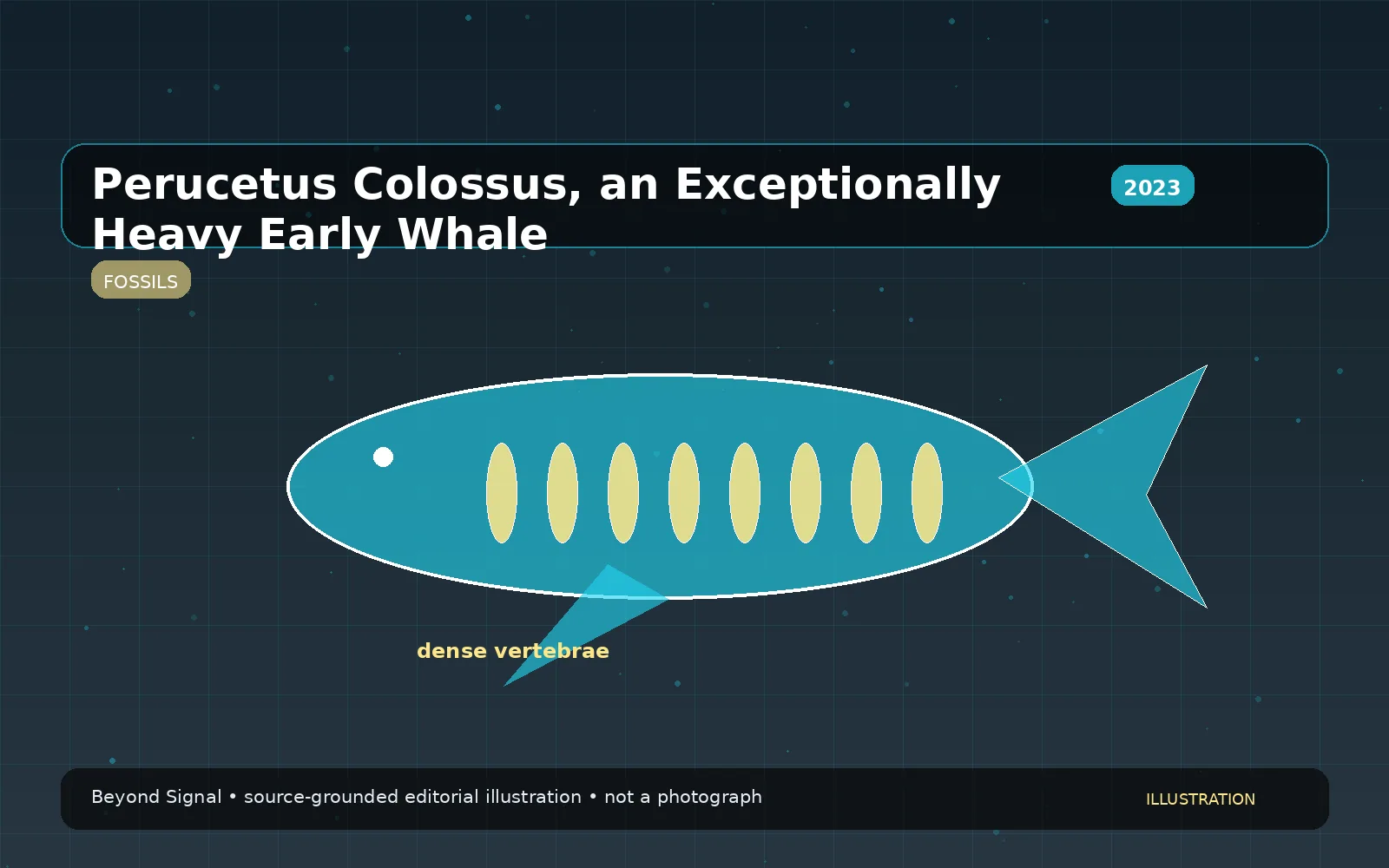 Illustration🦕 Dinosaurs & Fossils
Perucetus Colossus, an Exceptionally Heavy Early Whale
A partial skeleton from Peru's Eocene Pisco Basin revealed Perucetus colossus, an early whale with extraordinarily thick and dense vertebrae and ribs. Initial mass estimates suggested an animal of exceptional weight, although later analyses have debated how much soft tissue should be reconstructed around the unusual bones.
Read more →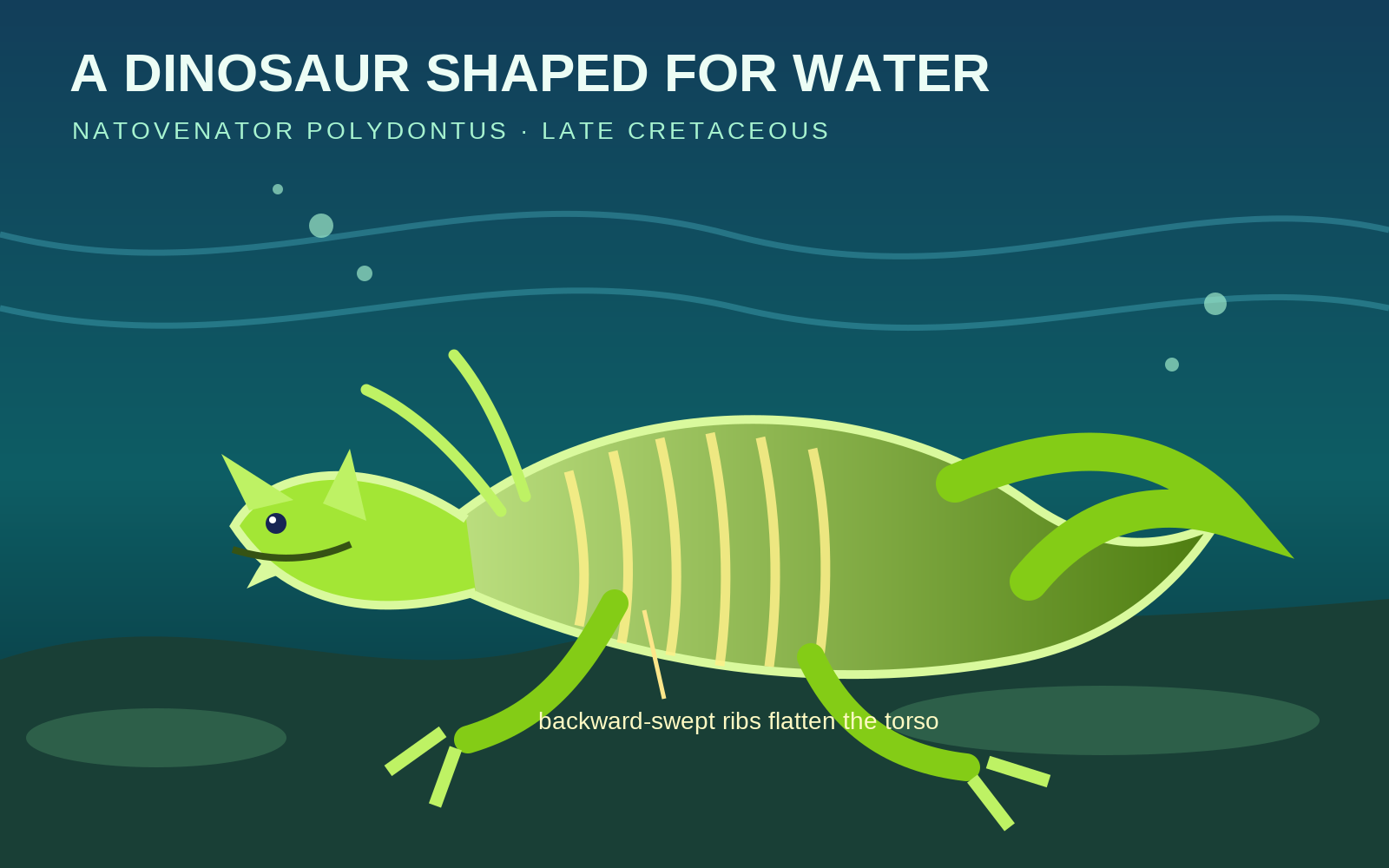 Illustration🦕 Dinosaurs & Fossils
Natovenator, a Streamlined Swimming Dinosaur
A well-articulated dromaeosaurid skeleton from Mongolia preserved backward-swept ribs and a flattened torso, providing the first compelling evidence of a streamlined body in a non-avian theropod dinosaur.
Read more → Illustration🦕 Dinosaurs & Fossils
Qikiqtania Wakei Returned to Open Water
A Late Devonian fossil from Nunavut revealed Qikiqtania wakei, a close relative of limbed vertebrates whose pectoral fin was specialized for swimming rather than supporting the body on a hard surface. The animal shows that evolution near the fish-to-tetrapod transition explored more than one ecological direction.
Read more → Illustration🦕 Dinosaurs & Fossils
Meraxes Gigas, a Giant Short-Armed Predator
An unusually complete giant predatory dinosaur from Patagonia revealed that reduced forelimbs evolved independently in several large theropod lineages.
Read more →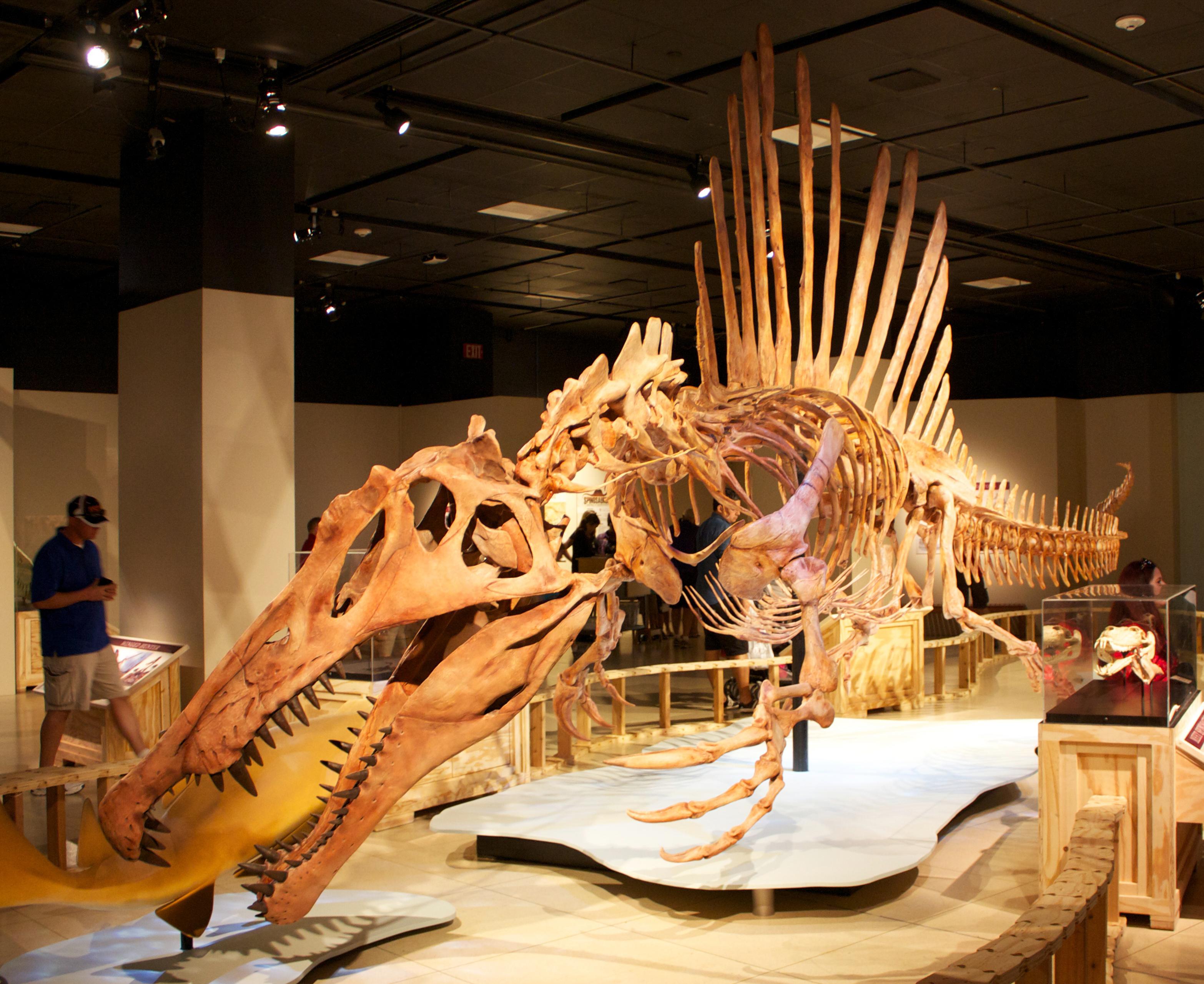 🦕 Dinosaurs & Fossils
Spinosaurus: the Swimming Dinosaur
A near-complete fossil tail showed Spinosaurus had a fin-like paddle — the strongest evidence yet of a swimming, water-propelled dinosaur.
Read more →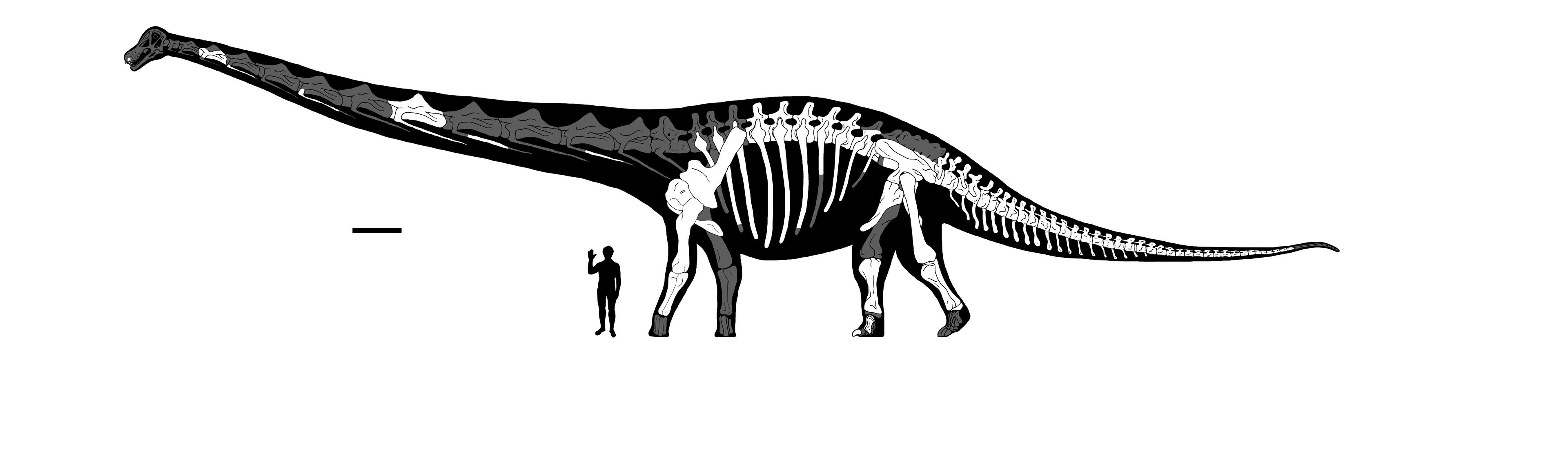 🦕 Dinosaurs & Fossils
Dreadnoughtus, a Colossal Titanosaur
One of the most complete giant dinosaurs ever found — a 26 m sauropod whose skeleton let scientists reliably estimate its ~59-tonne mass.
Read more →Major discoveries by year
- A Deep-Sea Whale Necropolis in the Diamantina Zone
2026 · Fossil discoveries
- The Metre-Long Scorpion Praearcturus
2026 · Fossil reinterpretation
- Cambrian Vertebrates Had Four Camera-Type Eyes
2026 · Fossil reinterpretation
- Prototaxites May Represent an Extinct Eukaryotic Lineage
2026 · Fossil reinterpretation
- A Jurassic Midge from Gondwana
2025 · Fossil discoveries
- Mosura Fentoni, a Three-Eyed Cambrian Predator
2025 · Fossil discoveries
- The Earliest Known Amniote Trackways
2025 · Evolution timeline
- Vulcanidris Cratensis, the Oldest Known Ant
2025 · Fossil discoveries
Related scientific terms
Frequently asked questions
How do scientists know how old a fossil is?
They combine the age of the surrounding rocks, radiometric dating where possible, and the fossil's position within a well-studied sequence of layers.
Why are dinosaur reconstructions sometimes revised?
New fossils, improved biomechanics, and better comparisons with living animals can change conclusions about posture, movement, colour, or behaviour.
What makes a fossil species new?
It must have a combination of anatomical features that is not already documented in another species.