
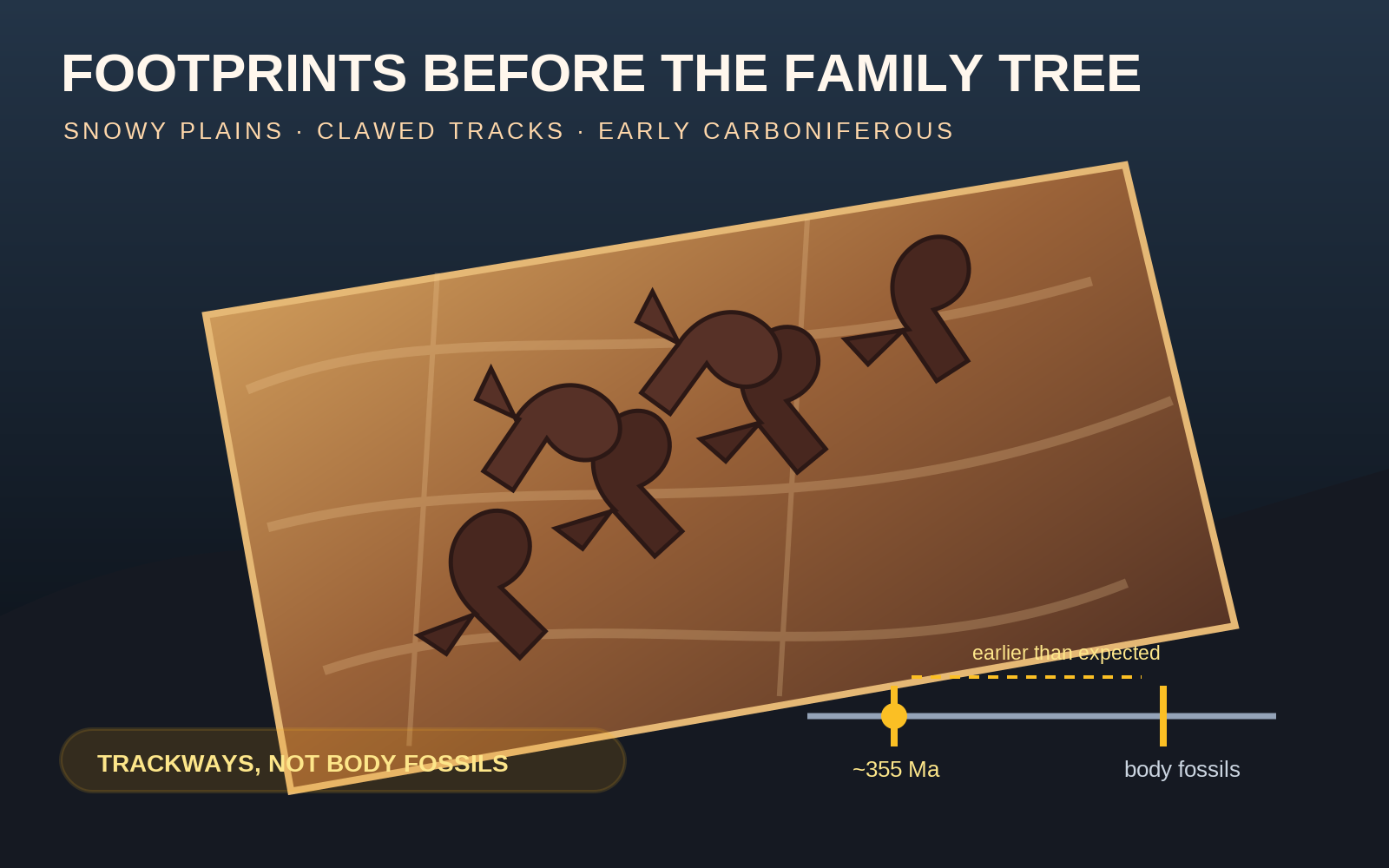
 Illustration — not a photo of the discovery
The Earliest Known Amniote Trackways
Clawed five-toed trackways from Australia's Snowy Plains Formation were attributed to an early sauropsid amniote and dated to roughly 359–354 million years ago, extending the amniote record by about 35 million years.
The story
Why scientists were there
If the identification is correct, the ancestors of reptiles, birds, and mammals—and the tetrapod crown groups before them—must have diversified much earlier than the body-fossil record indicates. The slab was found loose but locally derived, and tracks cannot name their maker; additional in-place tracks and body fossils are needed to test the revised timeline.
How they found it
Researchers documented repeated pentadactyl prints with long, laterally deflected claw marks and compared their proportions with younger sauropsid trackways. Fish fossils and regional stratigraphy constrained the source rocks to the earliest Carboniferous, while anatomical character analysis rejected known amphibian-grade trackmakers as the best fit.
What makes it unique
These are the oldest reported tracks carrying the suite of foot and claw features expected near or within crown Amniota. They record behavior rather than bones, so the paper's evolutionary implication depends on the sauropsid interpretation and should not be simplified into a formally named 'first reptile.'
Gallery
Where it was found
Snowy Plains Formation, Taungurung Country, Victoria
Tags
Related discoveries
 Illustration🦕 Dinosaurs & Fossils
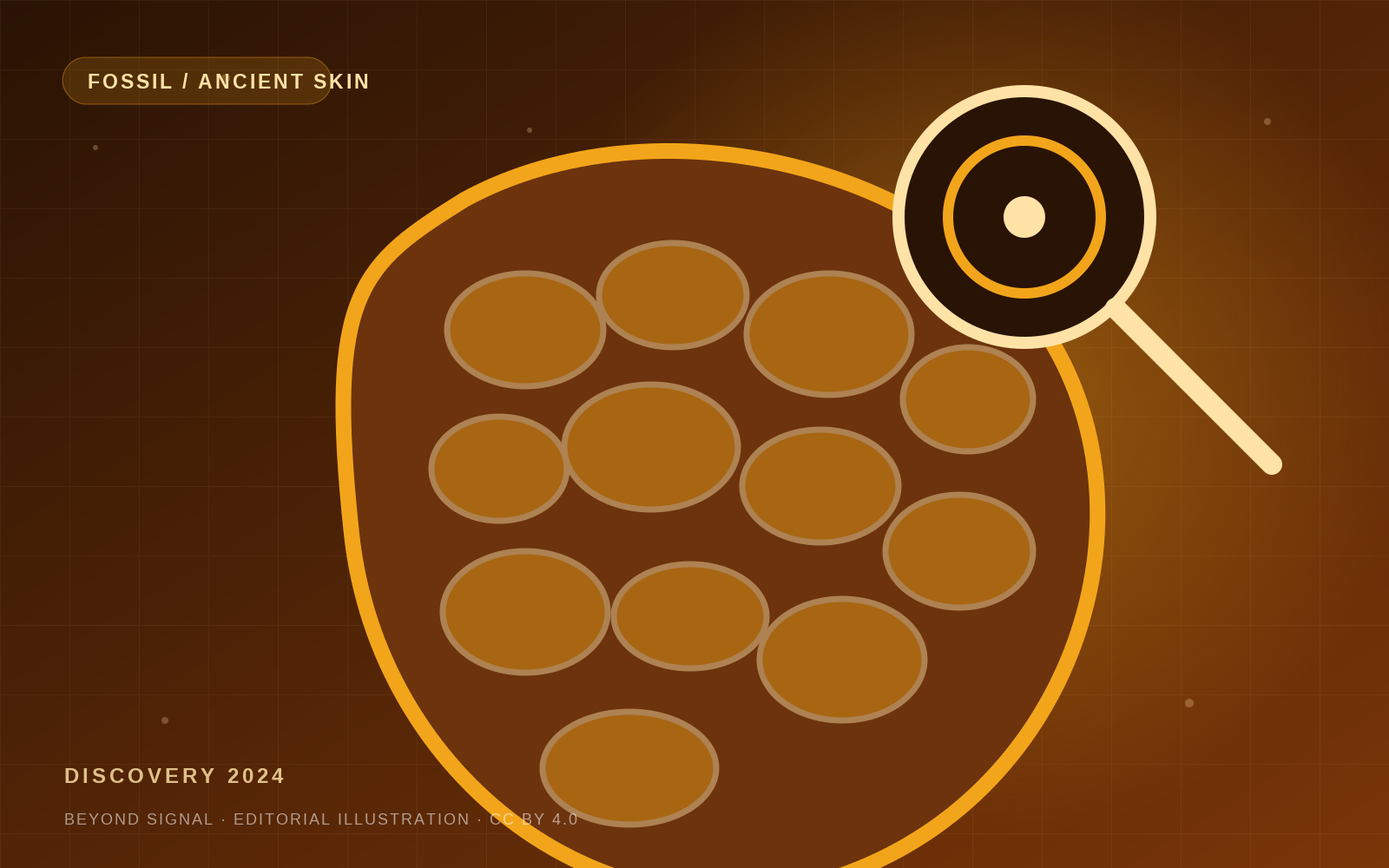
The Oldest Known Fossilized Amniote Skin
A tiny three-dimensional patch of reptile-like skin from an Oklahoma cave system pushed the direct fossil record of amniote skin back by more than 130 million years.
Read more →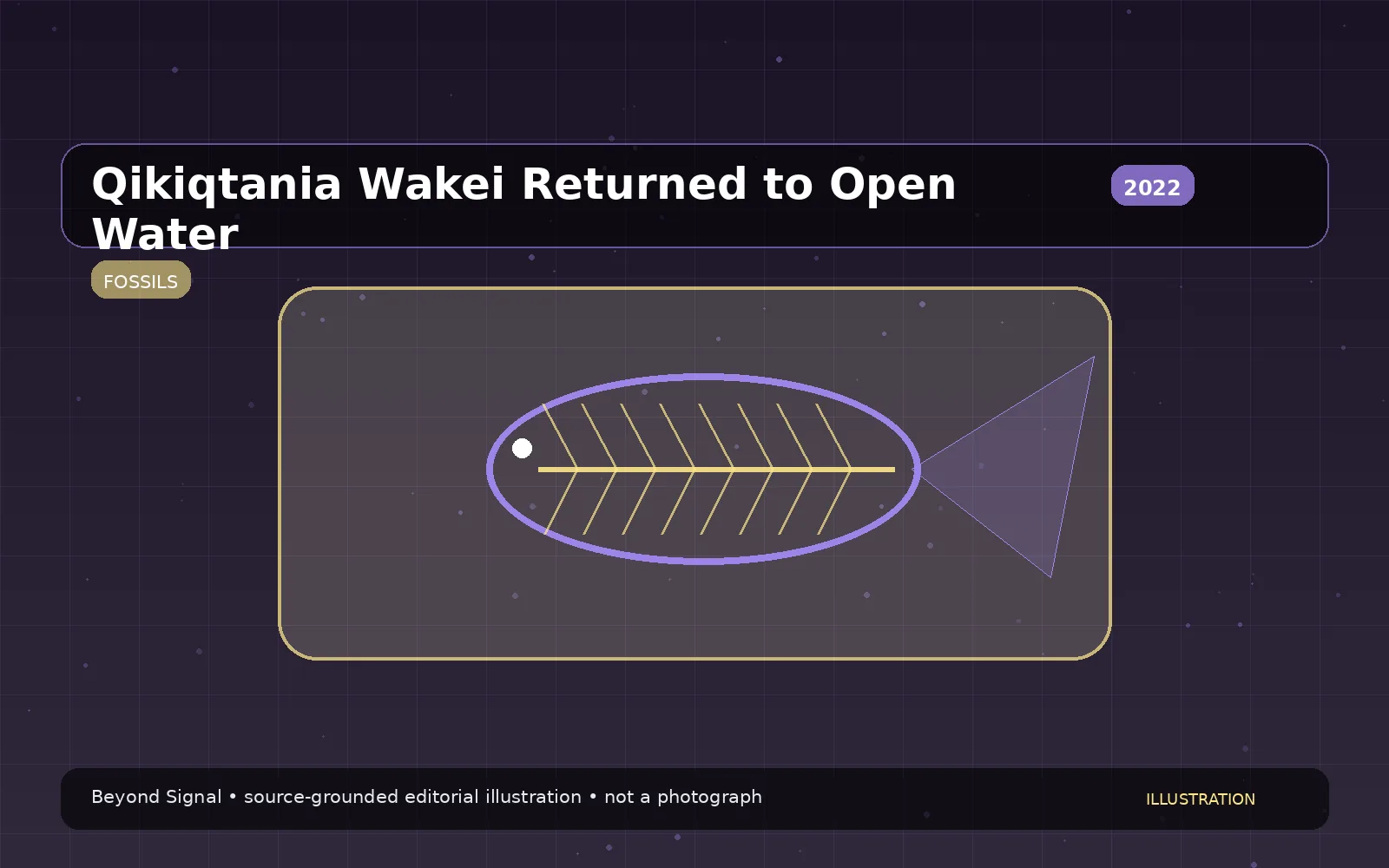 Illustration🦕 Dinosaurs & Fossils
Qikiqtania Wakei Returned to Open Water
A Late Devonian fossil from Nunavut revealed Qikiqtania wakei, a close relative of limbed vertebrates whose pectoral fin was specialized for swimming rather than supporting the body on a hard surface. The animal shows that evolution near the fish-to-tetrapod transition explored more than one ecological direction.
Read more →