
Topic hub
Space missions discoveries in Space
This topic hub follows 8 catalogued space missions discoveries across The Nucleon directory. Each entry connects the finding to its location, discovering institution, scientific source, and related work.
What this topic includes
In space, space missions can describe a change in what scientists observe, classify, or measure. The entries below are grouped by their documented subject rather than by headline popularity, making it easier to compare discoveries from different years and places.
Key discoveries
 Illustration🌌 Space
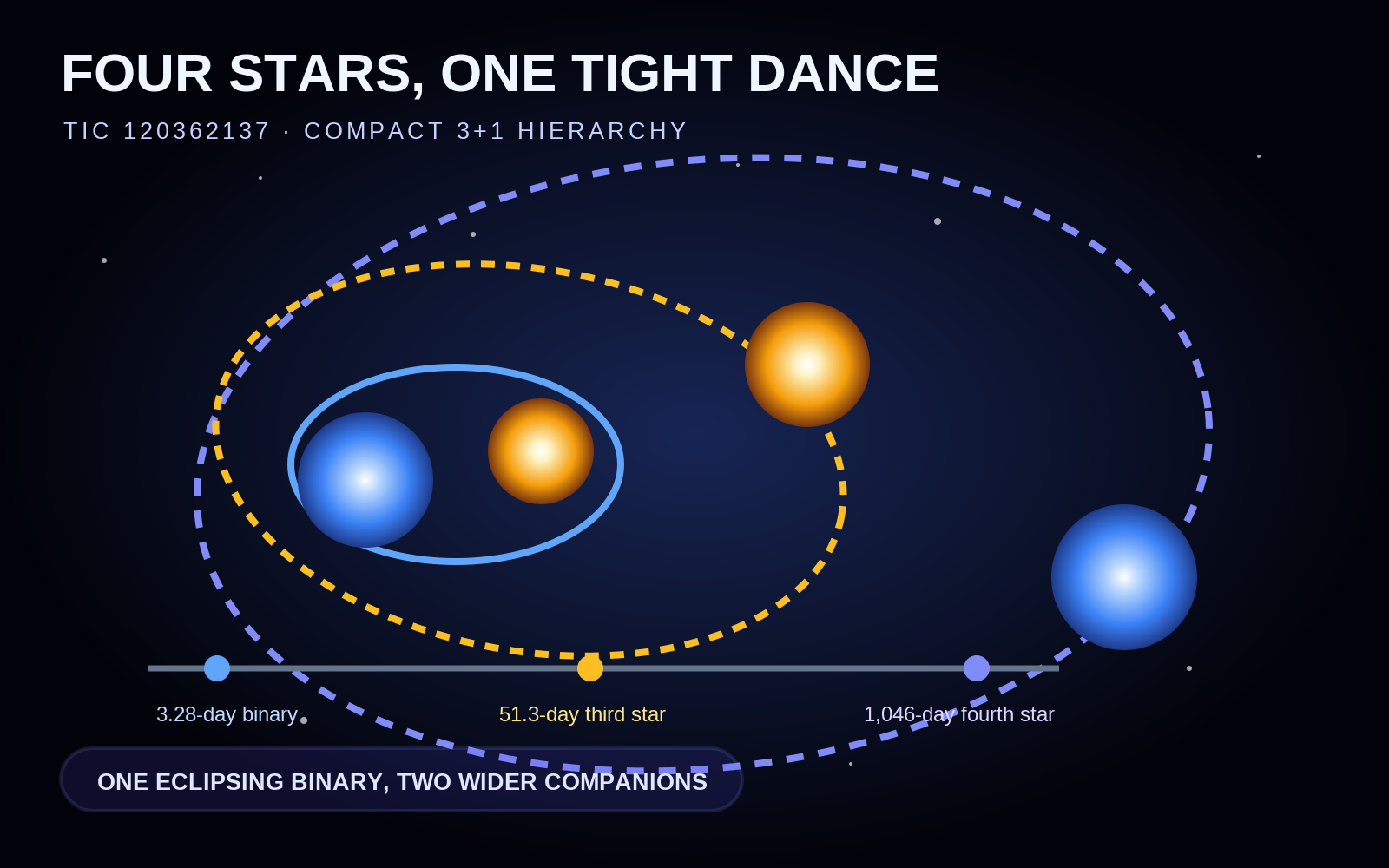
The Most Compact Known 3+1 Quadruple Star System
TESS eclipse timing, ground photometry, and spectra revealed TIC 120362137 as the tightest known hierarchical 3+1 quadruple: three stars fit inside a region comparable to Mercury's orbit while a fourth circles outside them.
Read more →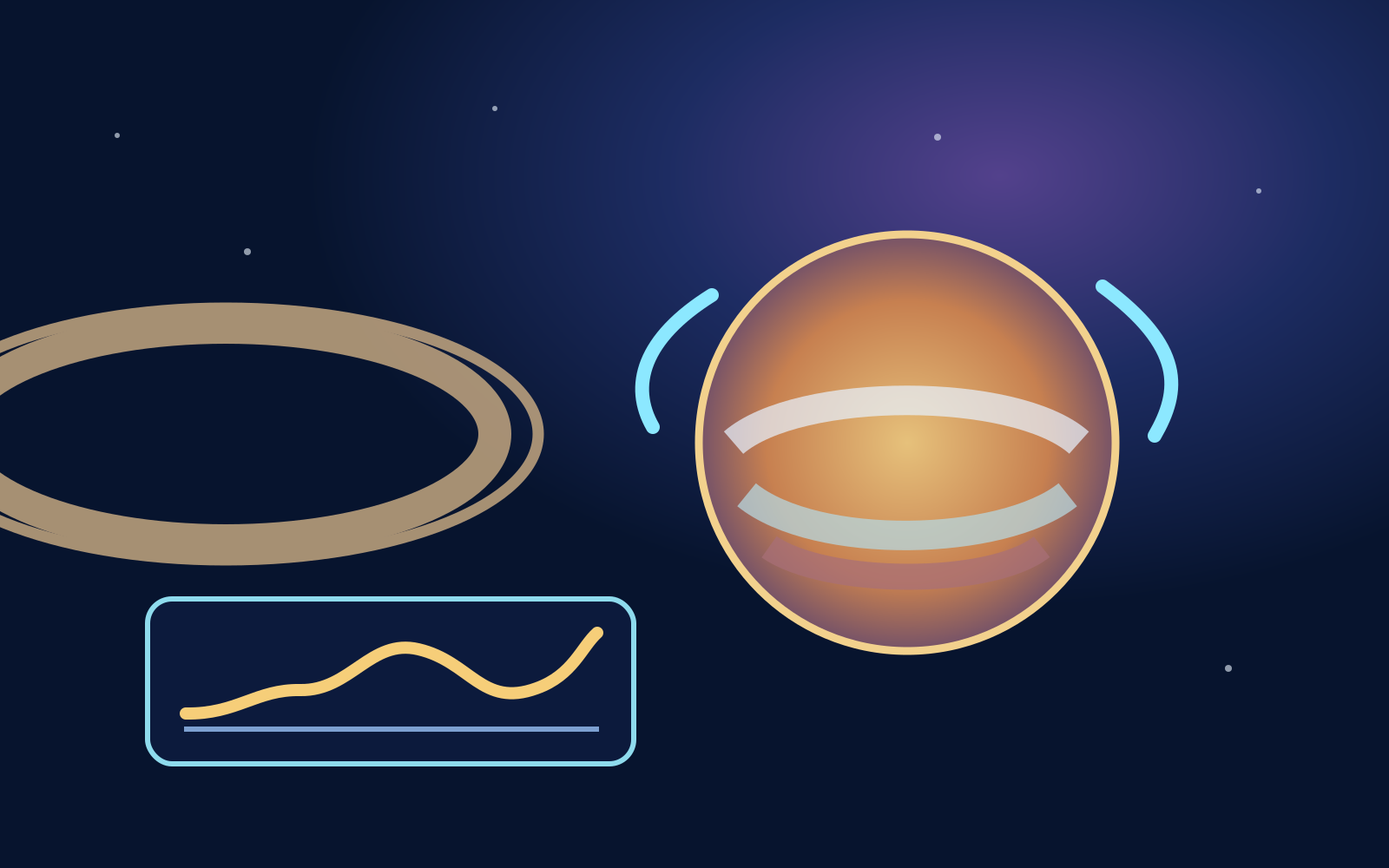 Illustration🌌 Space
Cassini Gravity Data Reveal Strong Tidal Dissipation in Titan
A reanalysis of Cassini radio tracking measured unexpectedly strong tidal energy loss in Titan and found that the gravity signal is inconsistent with the global subsurface ocean model previously favored for the moon.
Read more →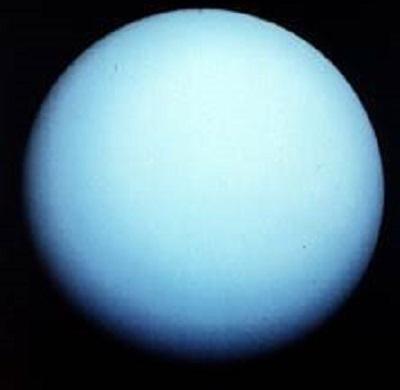 🌌 Space
A New Moon around Uranus
The James Webb Space Telescope found a previously unknown inner moon of Uranus, provisionally designated S/2025 U1 and estimated at roughly 10 km across.
Read more → 🌌 Space
The First Views of the Sun's South Pole
ESA's Solar Orbiter returned humanity's first clear views of the Sun's south pole, revealing a tangled mixture of magnetic polarities during solar maximum.
Read more →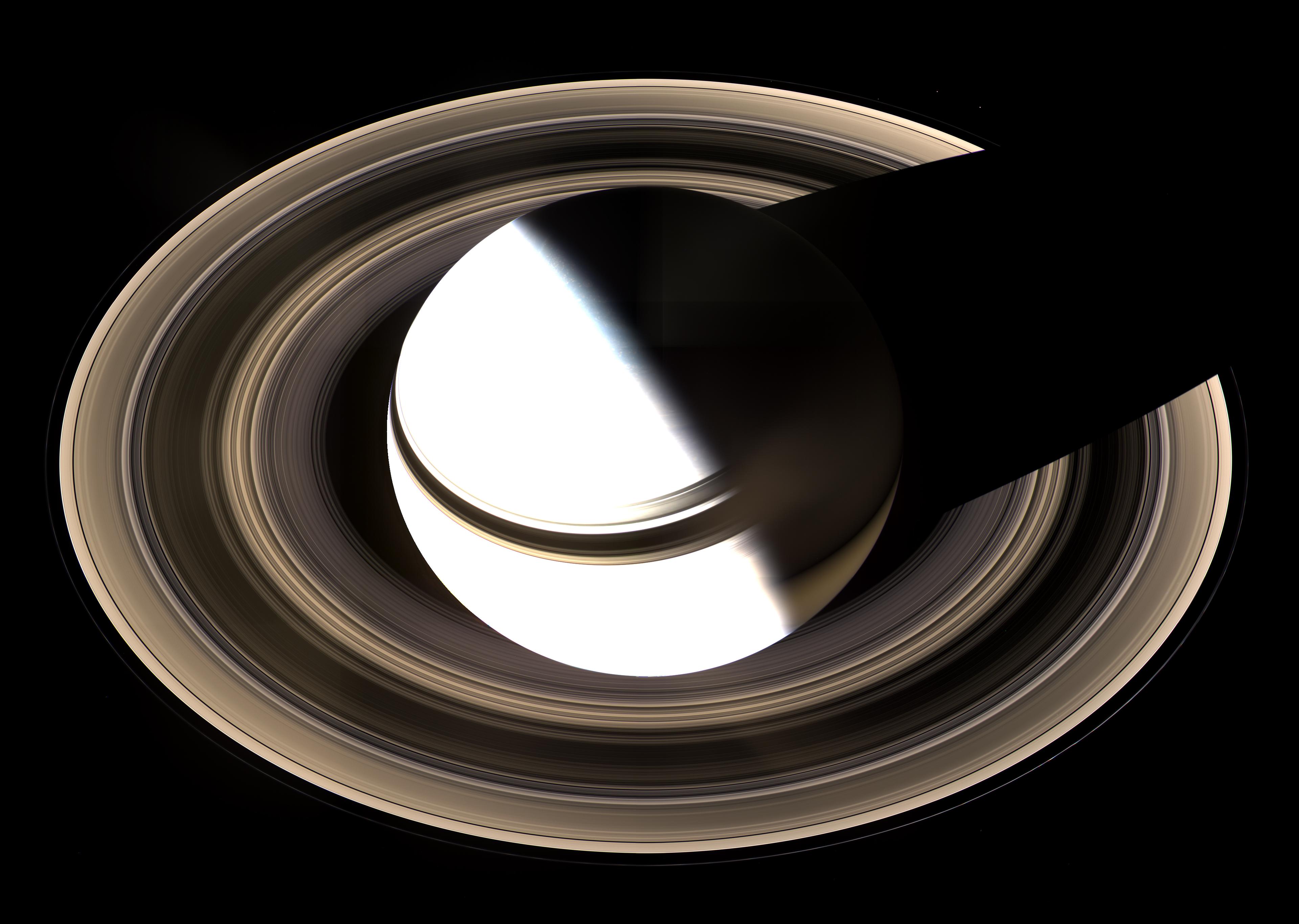 🌌 Space
Saturn's 128 New Moons
An international team found and confirmed 128 previously unrecognized small moons of Saturn, raising the planet's official total to 274 at the time of announcement.
Read more →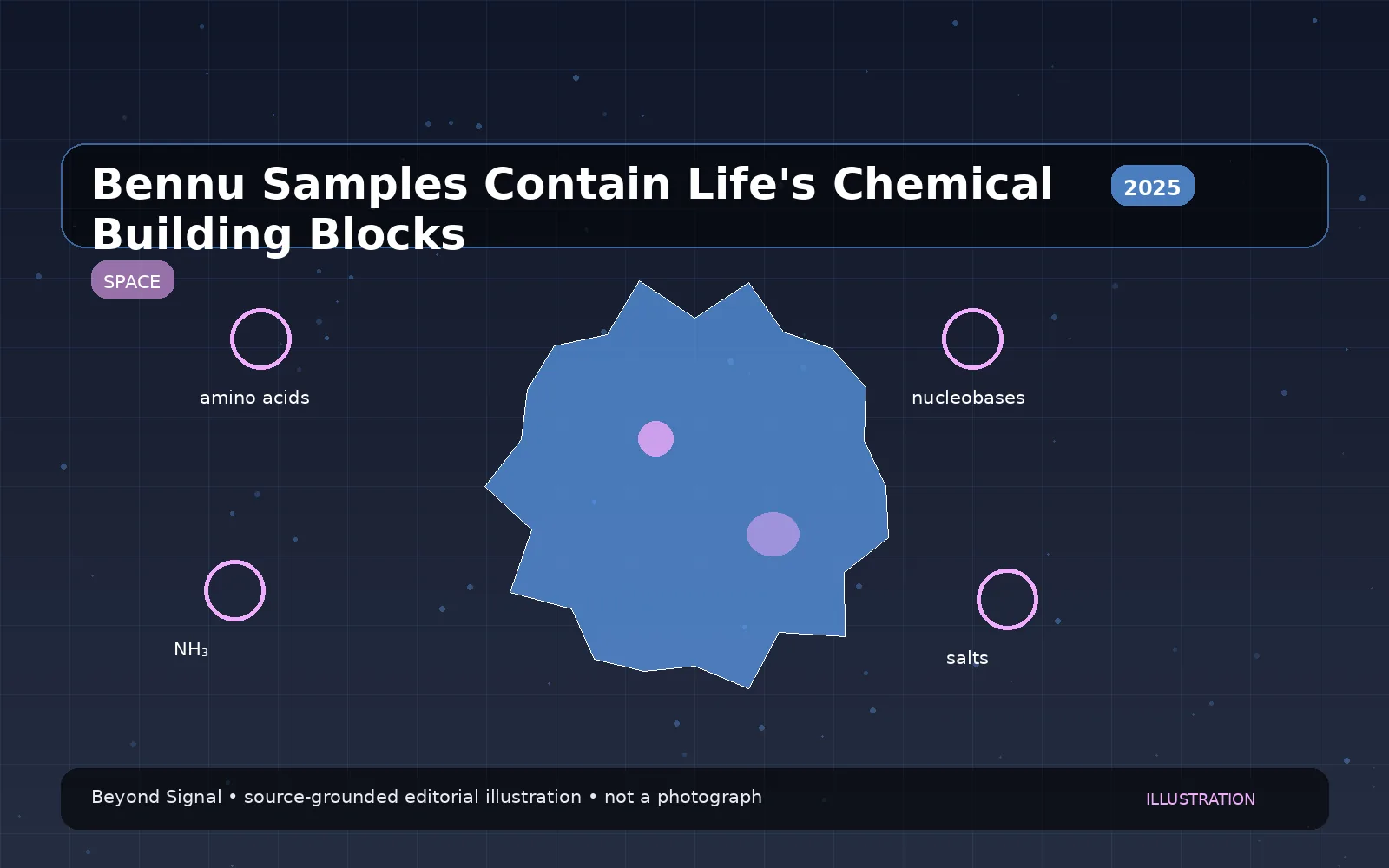 Illustration🌌 Space
Bennu Samples Contain Life's Chemical Building Blocks
Laboratory analyses of pristine asteroid Bennu material returned by OSIRIS-REx found abundant ammonia, nitrogen-rich organic matter, 14 of the 20 amino acids used by terrestrial life, and all five nucleobases used in DNA and RNA. The chemistry shows that life's ingredients were widespread, not that life existed on Bennu.
Read more → Illustration🌌 Space
JWST Detects the Methyl Cation in a Protoplanetary Disk
JWST spectra provided the first detection in space of CH₃⁺, the methyl cation, in a planet-forming disk in the Orion Nebula—direct evidence for a reactive carbon ion long expected to help initiate interstellar chemistry.
Read more →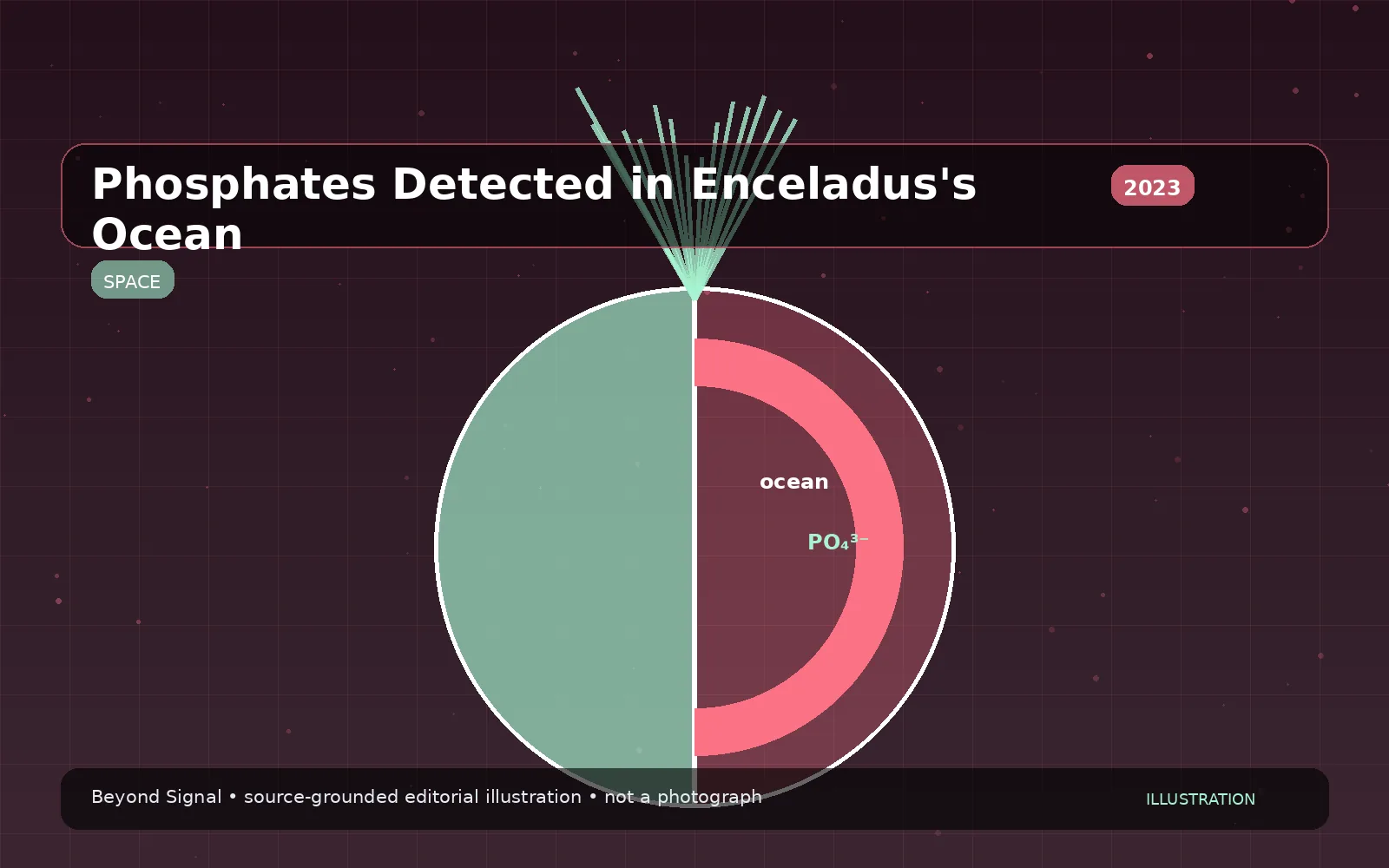 Illustration🌌 Space
Phosphates Detected in Enceladus's Ocean
Reanalysis of ice grains sampled by NASA's Cassini spacecraft detected sodium phosphates originating from the subsurface ocean of Saturn's moon Enceladus. Phosphorus is essential to terrestrial biology, and the inferred ocean concentrations were at least comparable to, and potentially higher than, those in Earth's oceans.
Read more →Questions readers ask
How many space missions discoveries are catalogued?
The Nucleon currently lists 8. The total changes as new source-checked entries are added.
Where have these discoveries been made?
They span 5 countries or international research settings, from University of Szeged, Szeged to other locations in the catalogue.
How should these entries be compared?
Start with the primary source and the discovery method. A visually striking result and a formal species or particle identification do not always use the same standard of evidence.