
Topic hub
Exoplanets discoveries in Space
This topic hub follows 11 catalogued exoplanets discoveries across The Nucleon directory. Each entry connects the finding to its location, discovering institution, scientific source, and related work.
What this topic includes
In space, exoplanets can describe a change in what scientists observe, classify, or measure. The entries below are grouped by their documented subject rather than by headline popularity, making it easier to compare discoveries from different years and places.
Key discoveries
 🌌 Space
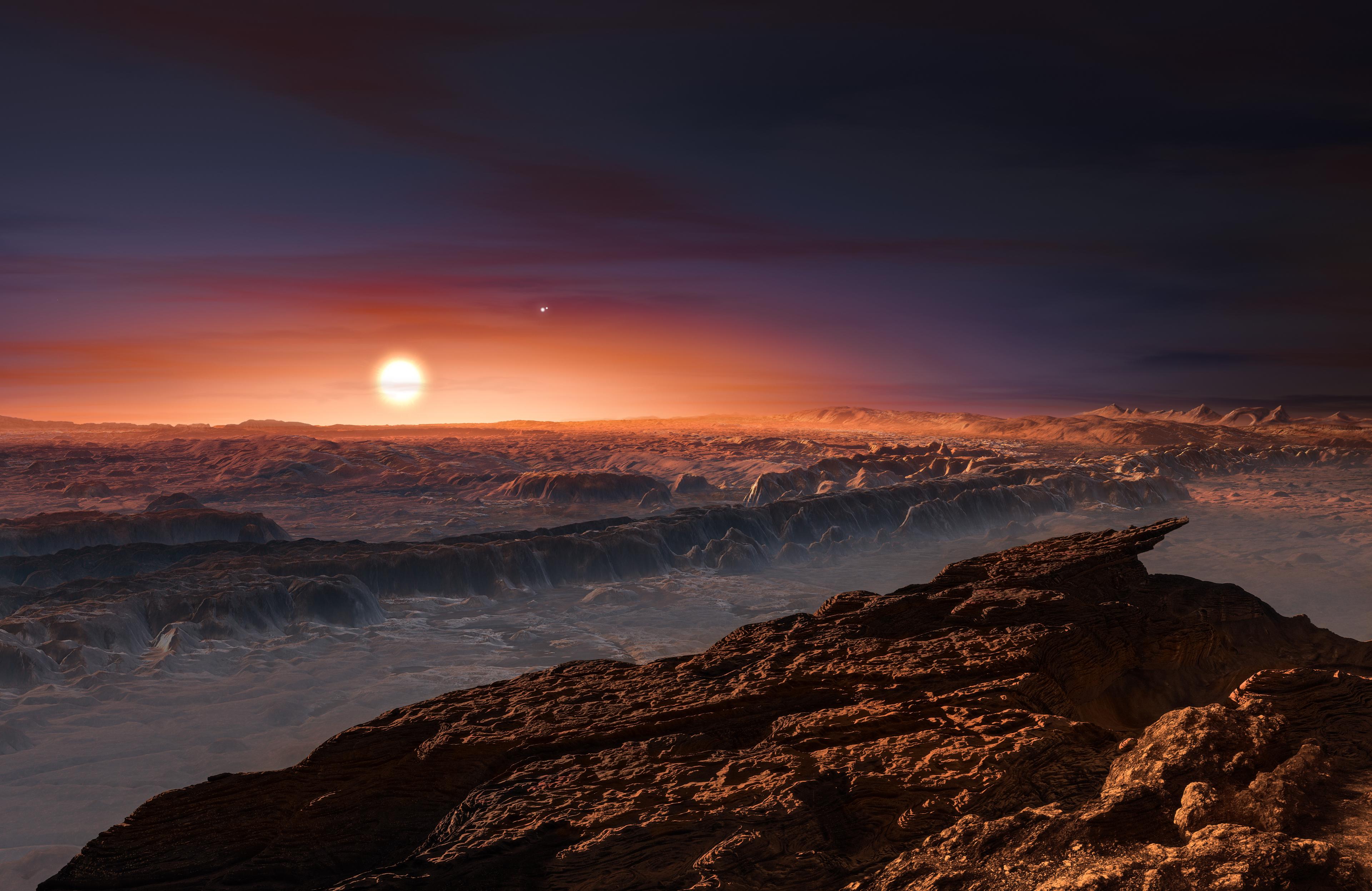
GJ 887 d, a Nearby Habitable-Zone Super-Earth
A 50.77-day super-Earth confirmed in the habitable zone of GJ 887, only about 10.7 light-years away and second only to Proxima b in proximity among known temperate planets.
Read more →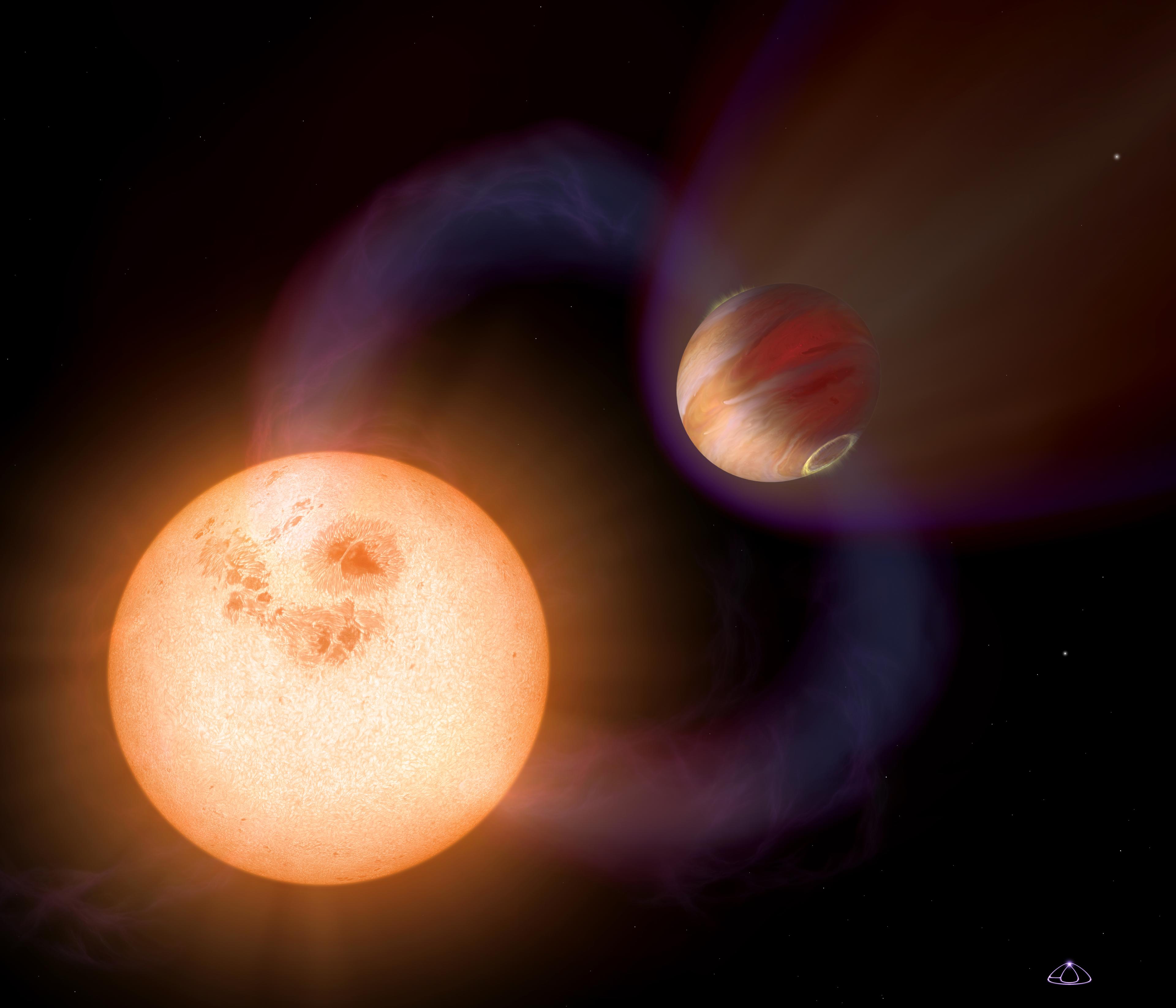 🌌 Space
The Inside-Out LHS 1903 Planetary System
Four close-orbiting planets arranged rocky–gaseous–gaseous–rocky, an unexpected architecture that supports sequential, gas-depleted planet formation.
Read more →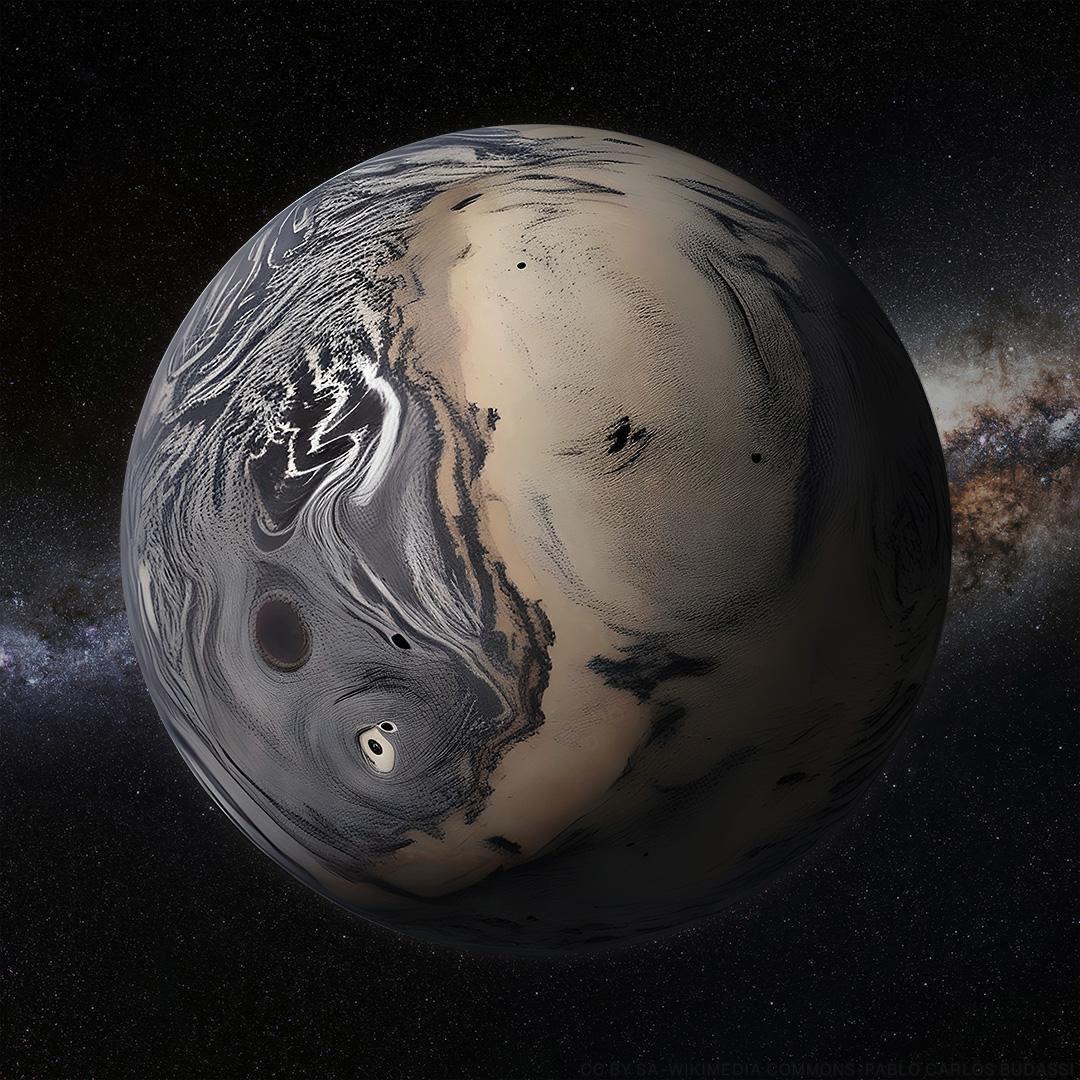 🌌 Space
A Rogue Planet's Record Growth Spurt
Astronomers observed the free-floating planetary-mass object Cha 1107-7626 accreting gas and dust at about six billion tonnes per second — the fastest growth rate recorded for a rogue planet.
Read more →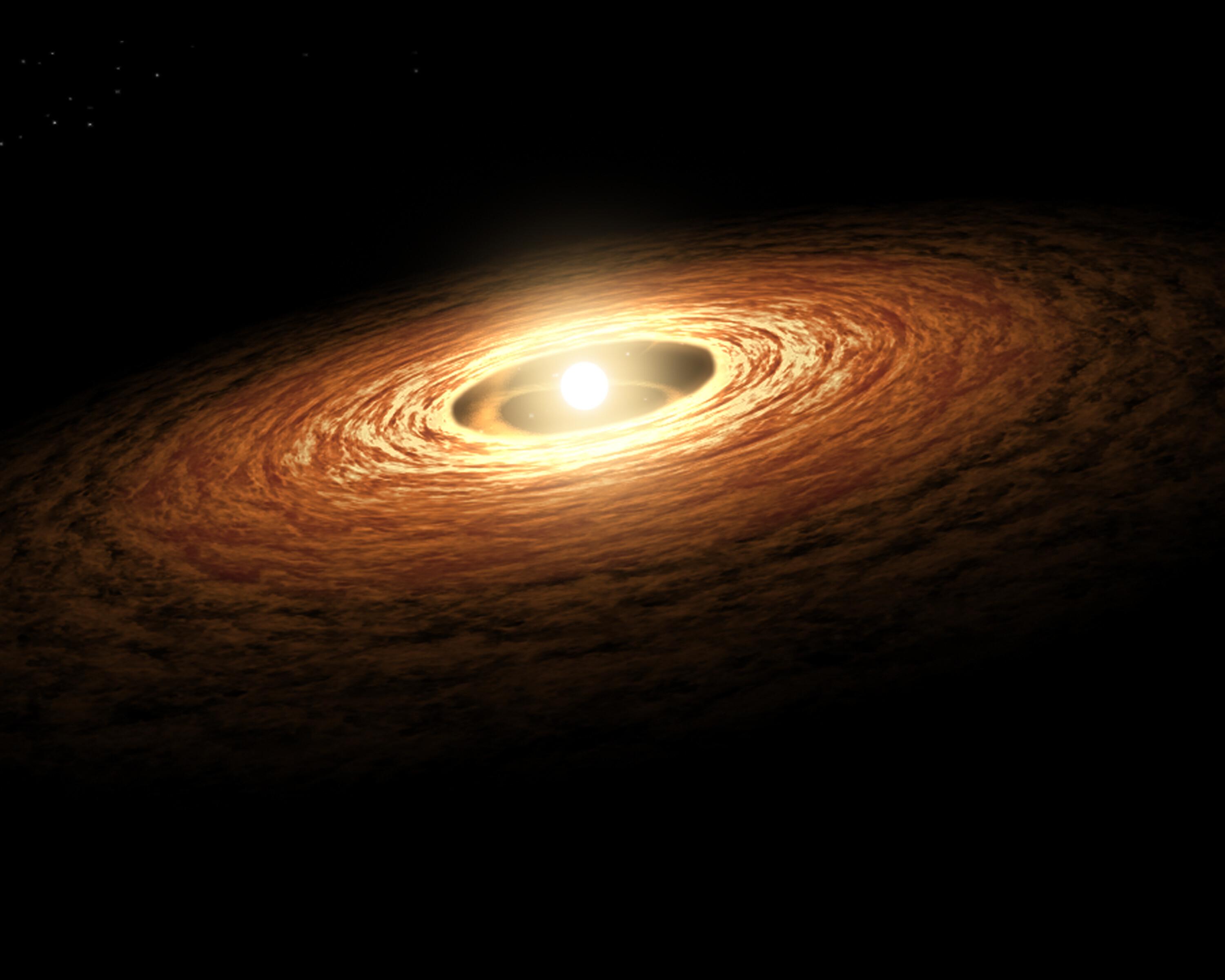 🌌 Space
Planet Formation Caught at the Start around HOPS-315
Astronomers observed the first specks of planet-forming minerals beginning to solidify around a young star, catching a process analogous to the birth of our Solar System.
Read more →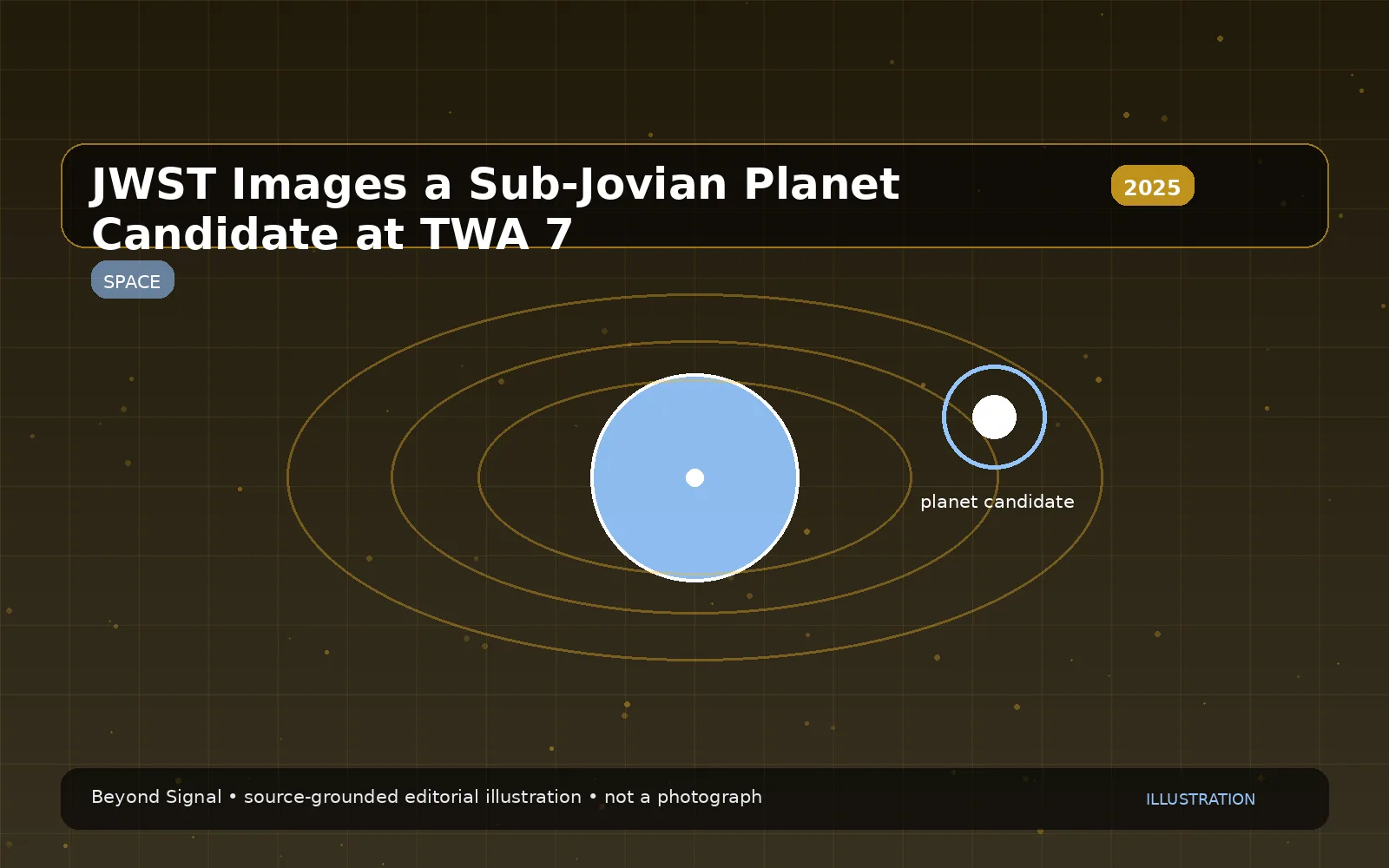 Illustration🌌 Space
JWST Images a Sub-Jovian Planet Candidate at TWA 7
James Webb Space Telescope coronagraphy revealed a compact infrared source embedded in a narrow ring of the young star TWA 7's debris disk. Models place the candidate near 0.3 Jupiter masses at about 52 astronomical units, potentially making it the lowest-mass planet directly imaged around another star.
Read more →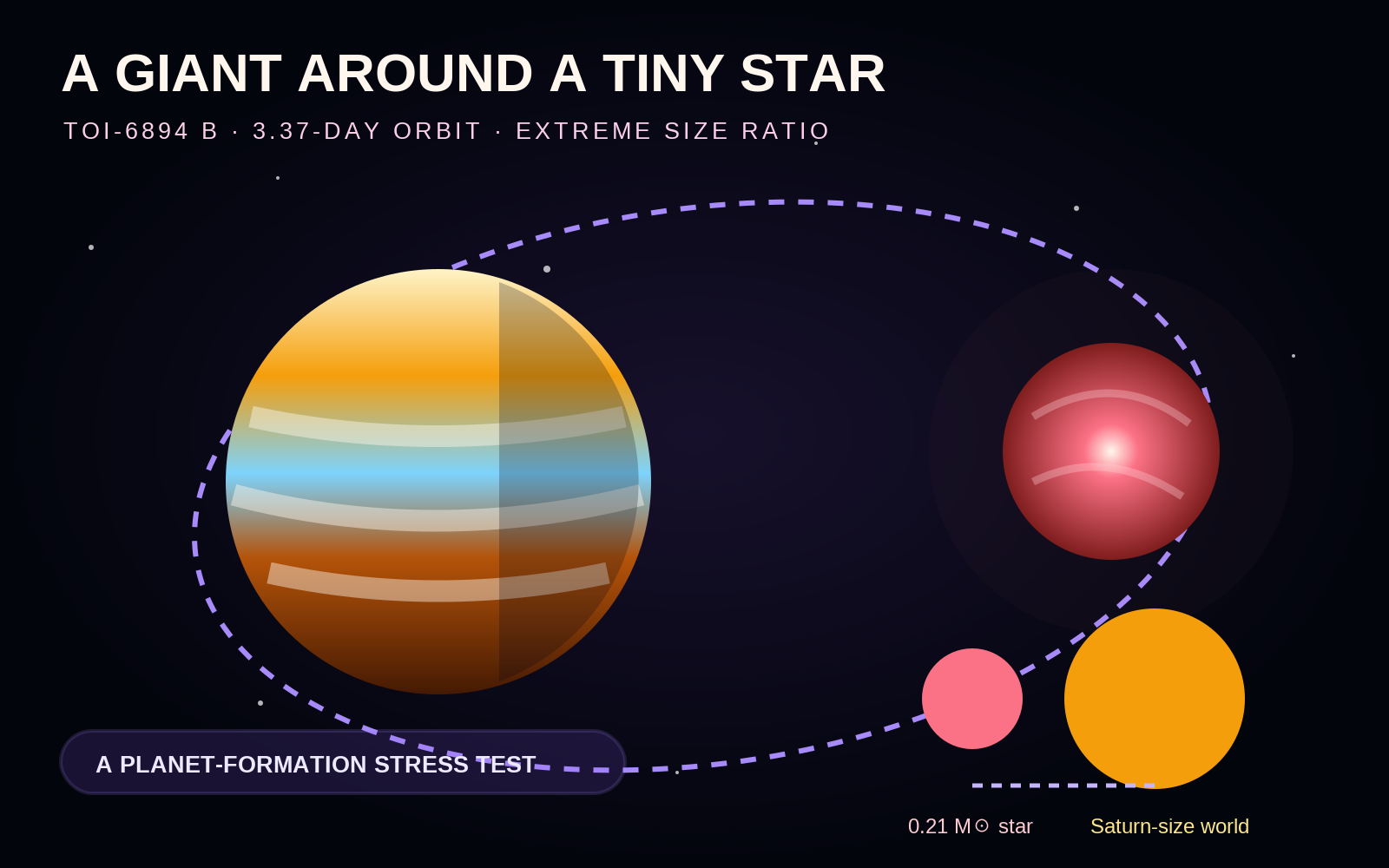 Illustration🌌 Space
TOI-6894 b, a Giant Planet Around a Tiny Star
Transit and radial-velocity measurements confirmed a low-density giant planet around a star only about one-fifth the Sun's mass, creating a demanding test for planet-formation models around very low-mass stars.
Read more →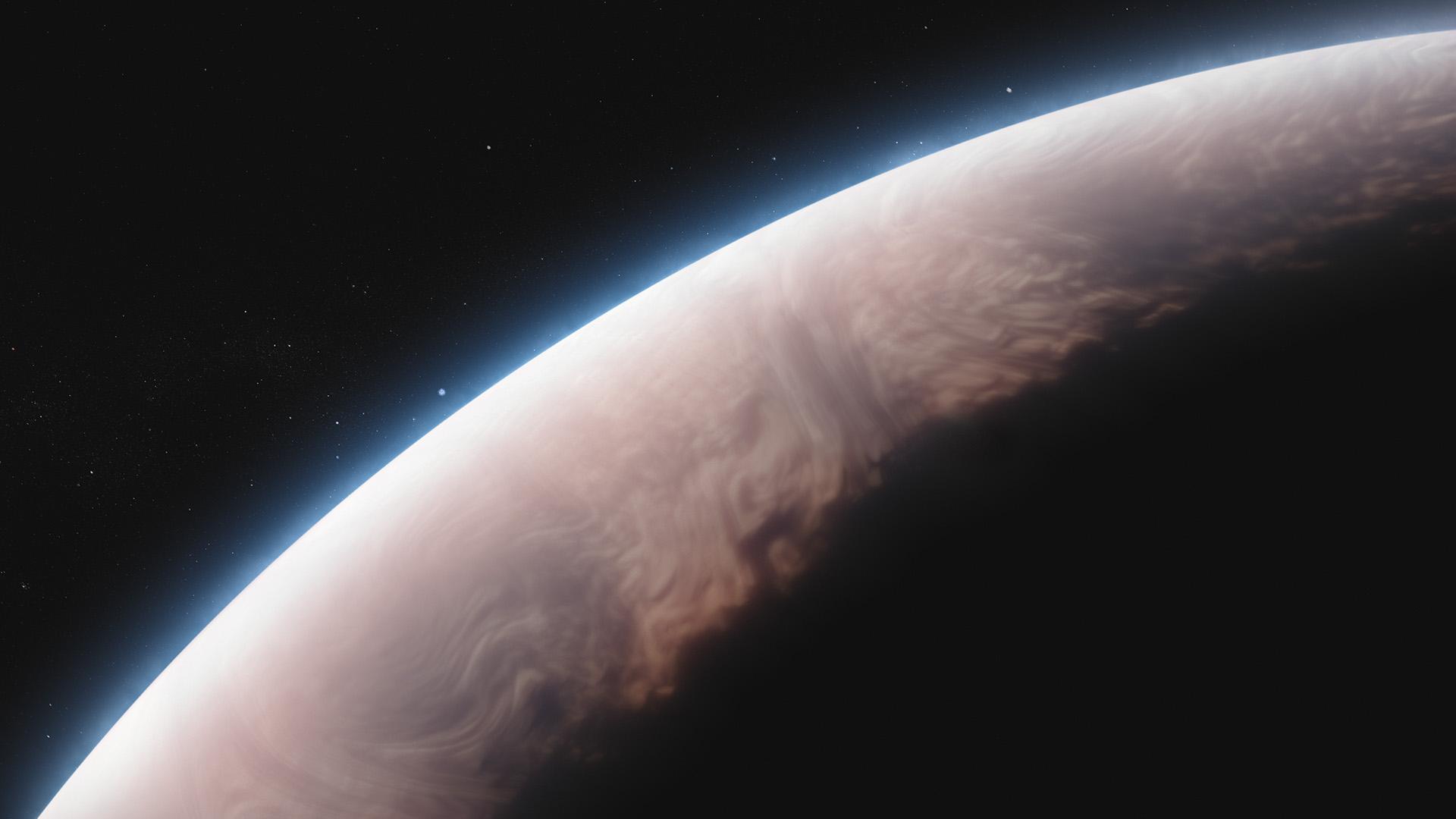 🌌 Space
A 3D Weather Map of Exoplanet Tylos
For the first time, astronomers mapped several layers of an exoplanet's atmosphere in three dimensions, revealing separate winds carrying iron, sodium, hydrogen, and titanium.
Read more →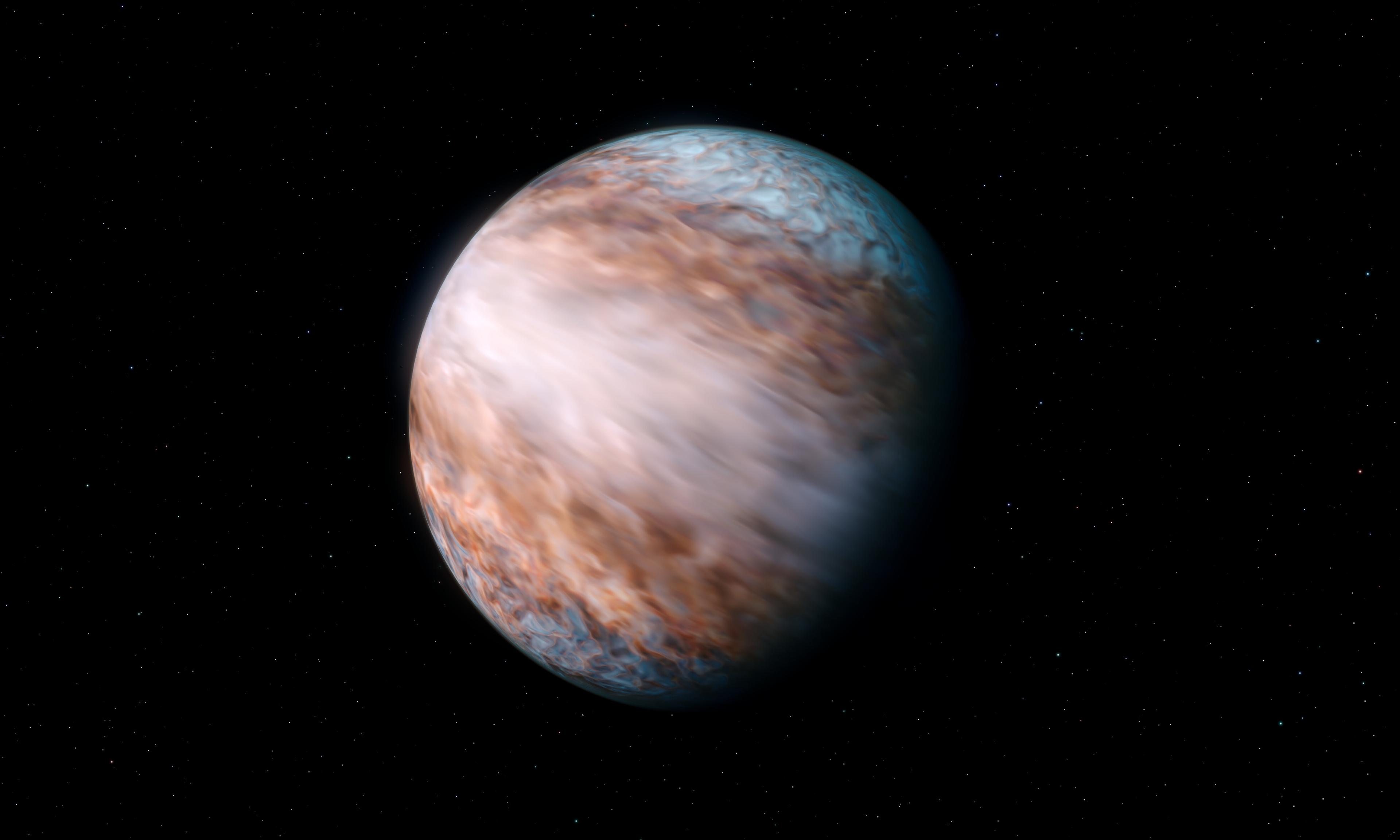 🌌 Space
Supersonic Winds on WASP-127b
Astronomers measured equatorial winds on the exoplanet WASP-127b moving at up to 33,000 km/h — the fastest planetary jet stream of its kind measured at the time.
Read more →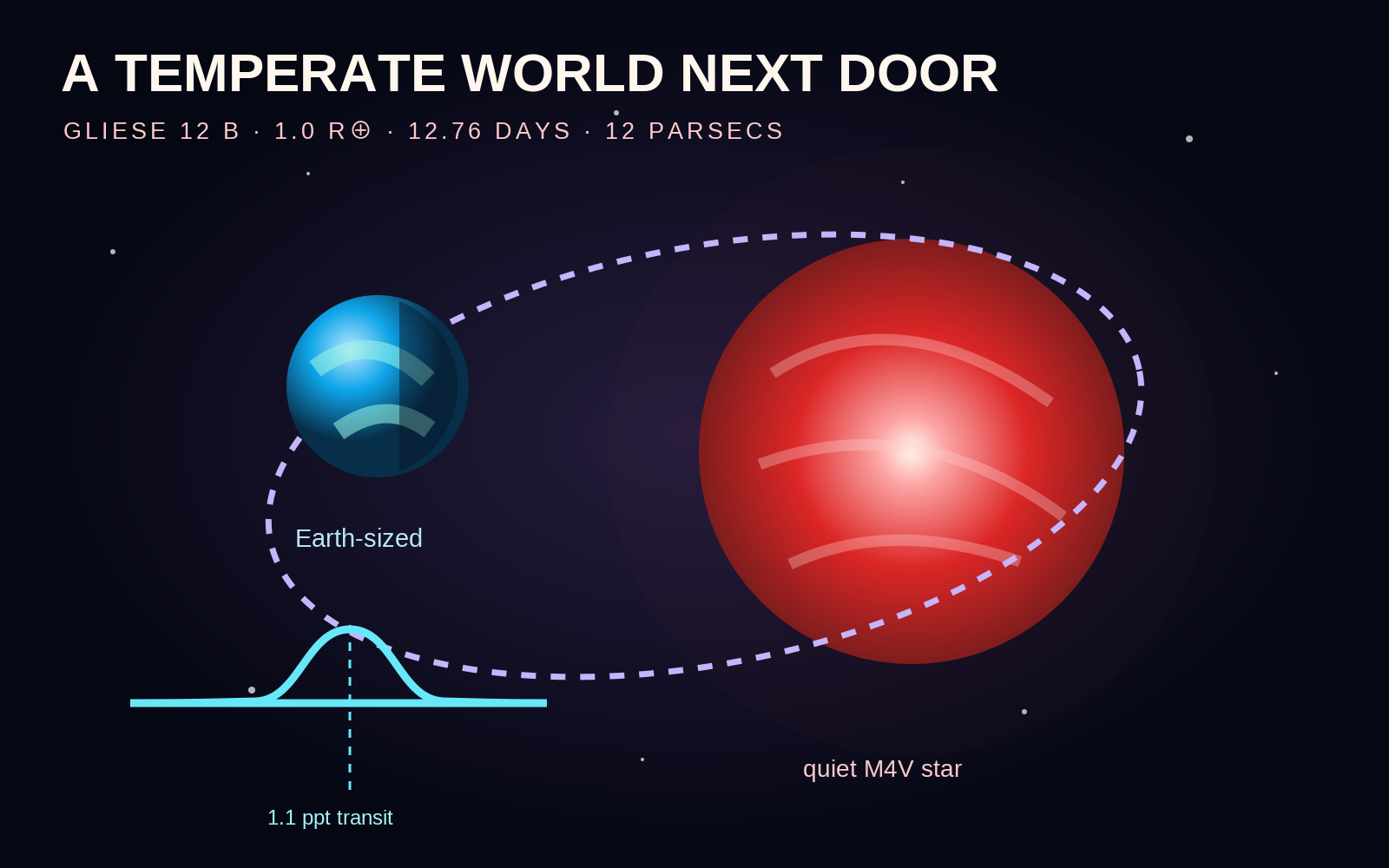 Illustration🌌 Space
Gliese 12 b, a Nearby Temperate Earth-Sized Planet
Transit observations validated Gliese 12 b as a planet about Earth's size orbiting a quiet red dwarf only 12 parsecs away, with an equilibrium temperature near 315 kelvin under standard assumptions.
Read more →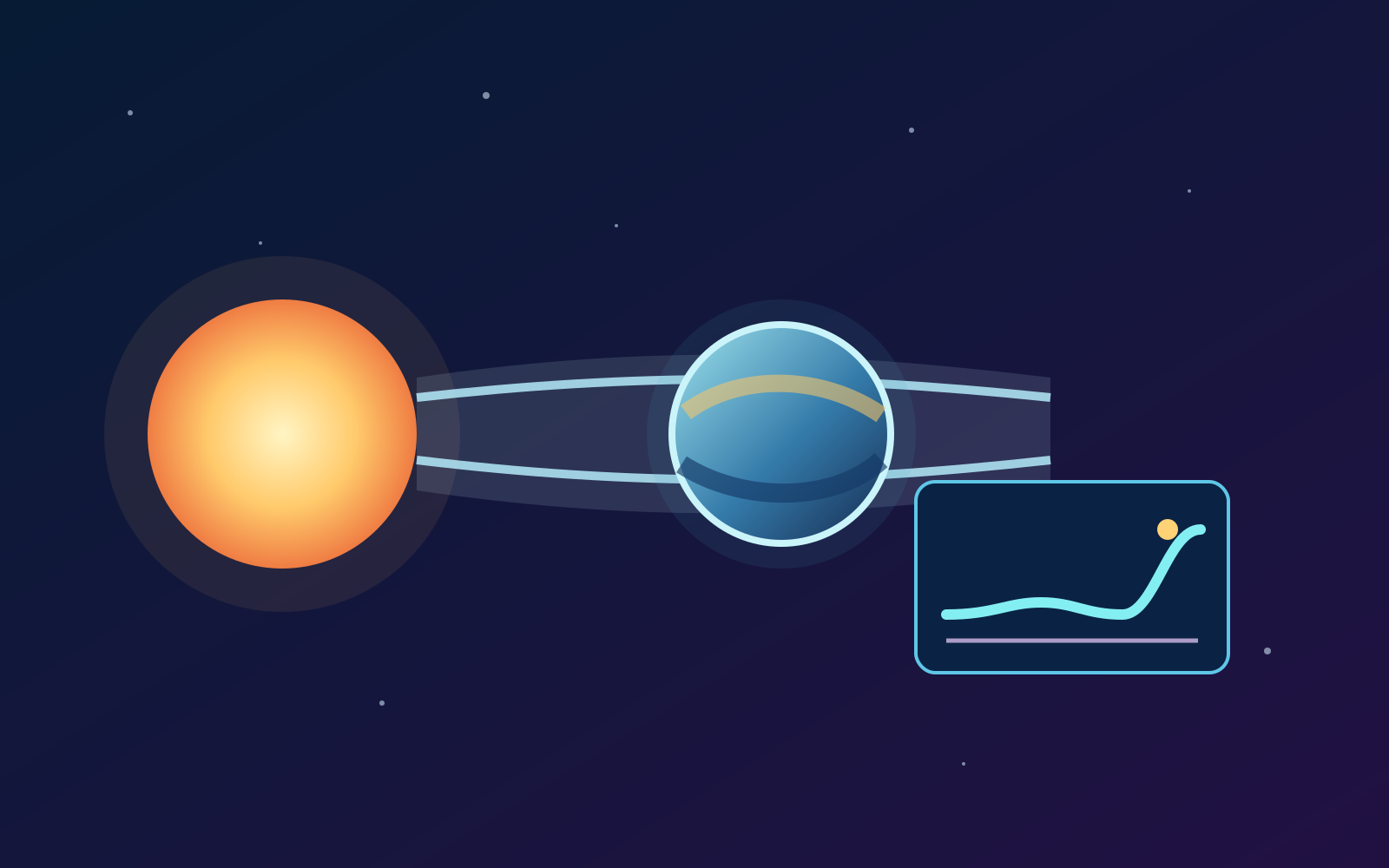 Illustration🌌 Space
Webb Detects Carbon Dioxide in WASP-39 b’s Atmosphere
JWST transmission spectroscopy delivered the first unambiguous carbon-dioxide detection in an exoplanet atmosphere, measuring a strong 4.3-micrometre absorption feature in the hot gas giant WASP-39 b.
Read more → 🌌 Space
The TRAPPIST-1 Planetary System
Seven Earth-sized planets circling a cool red dwarf 40 light-years away — three of them in the habitable zone.
Read more →Questions readers ask
How many exoplanets discoveries are catalogued?
The Nucleon currently lists 11. The total changes as new source-checked entries are added.
Where have these discoveries been made?
They span 5 countries or international research settings, from La Silla Observatory, Chile to other locations in the catalogue.
How should these entries be compared?
Start with the primary source and the discovery method. A visually striking result and a formal species or particle identification do not always use the same standard of evidence.