
Topic hub
Black holes discoveries in Space
This topic hub follows 5 catalogued black holes discoveries across The Nucleon directory. Each entry connects the finding to its location, discovering institution, scientific source, and related work.
What this topic includes
In space, black holes can describe a change in what scientists observe, classify, or measure. The entries below are grouped by their documented subject rather than by headline popularity, making it easier to compare discoveries from different years and places.
Key discoveries
 Illustration🌌 Space
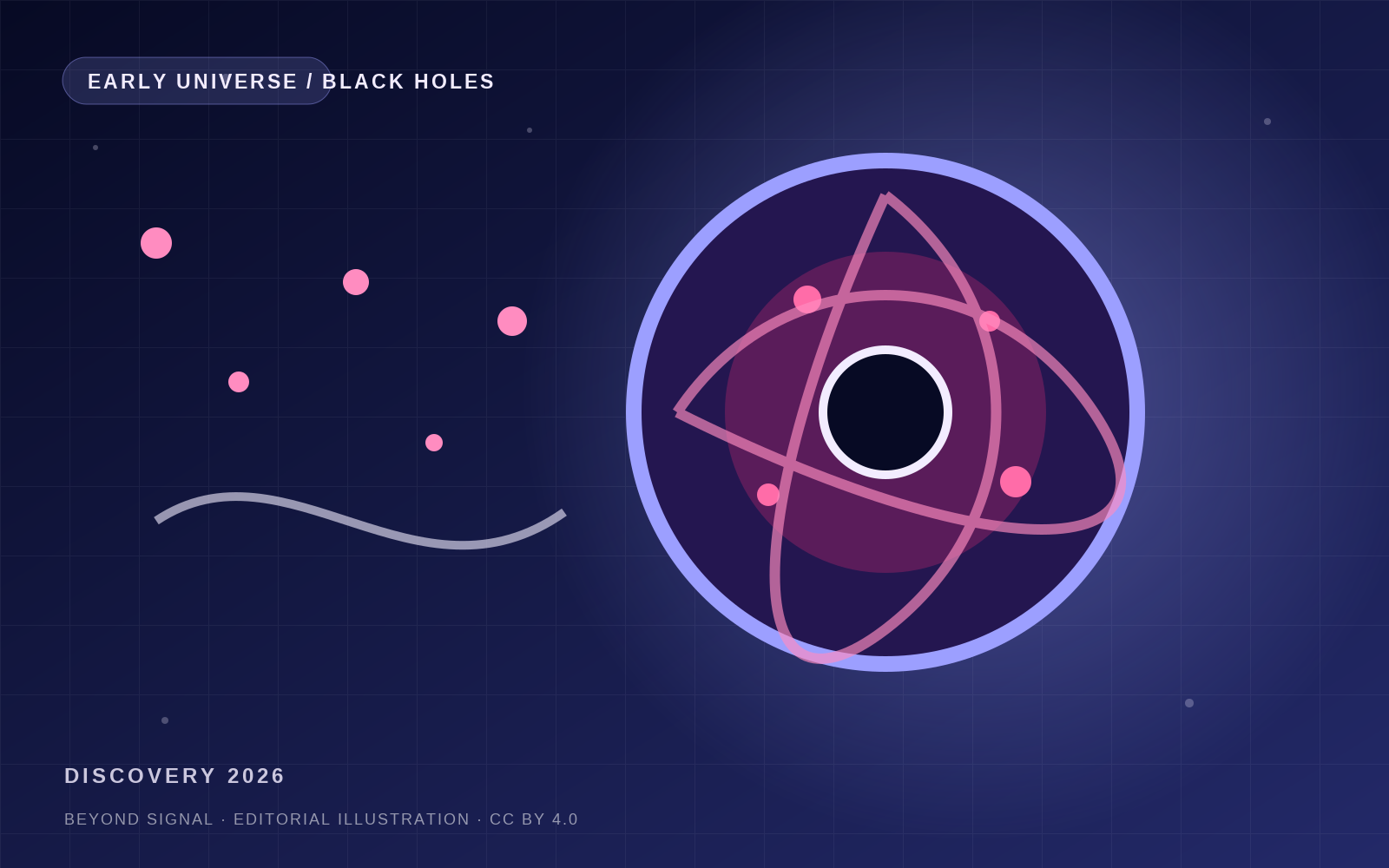
Dense Gas Cocoons Explain Many Little Red Dots
Radiative-transfer modelling showed that the puzzling spectra of many JWST 'little red dots' can be reproduced by relatively young supermassive black holes embedded in compact, dense cocoons of ionized gas.
Read more →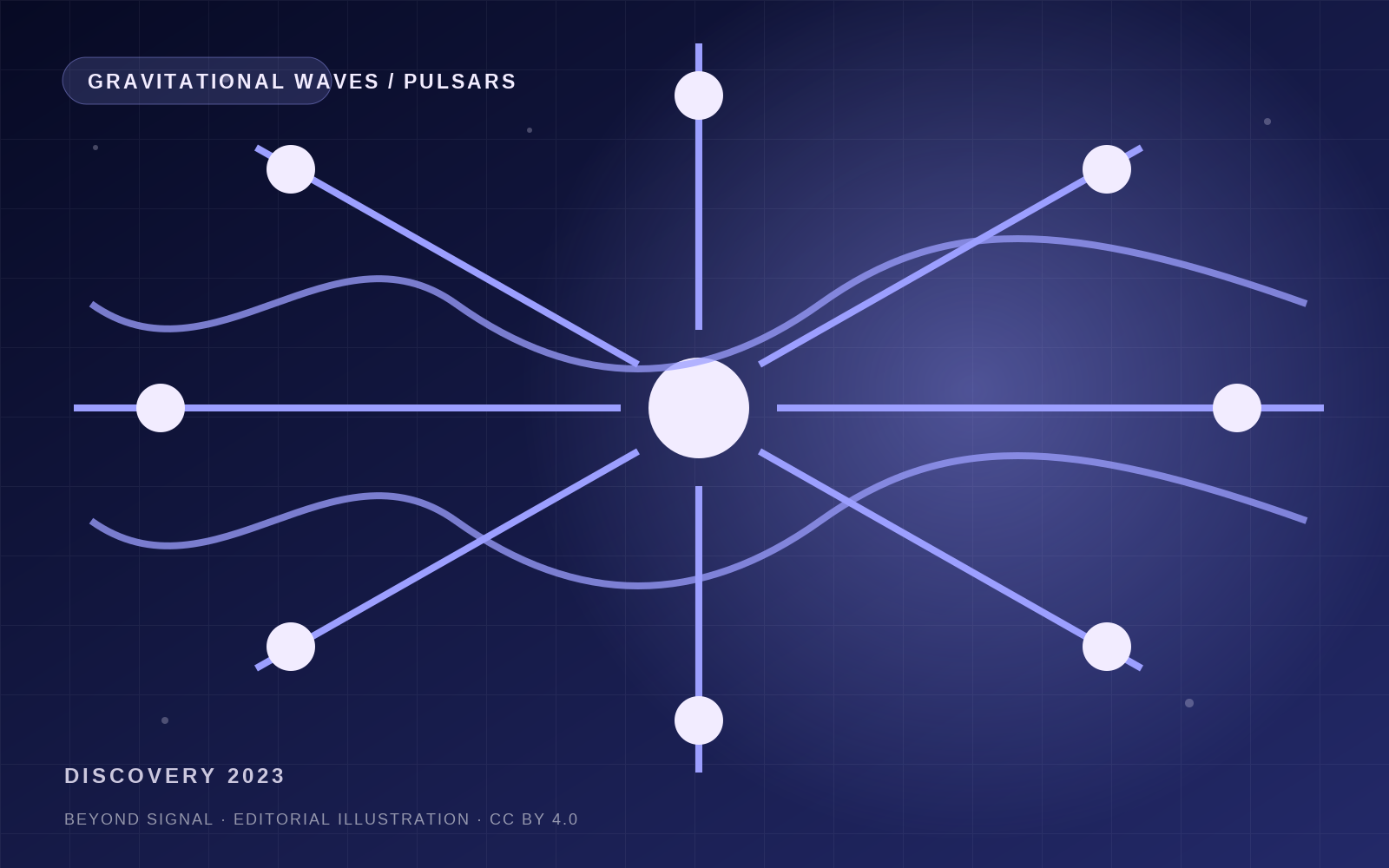 Illustration🌌 Space
NANOGrav Finds Evidence of a Cosmic Gravitational-Wave Background
Fifteen years of pulsar timing revealed the distinctive inter-pulsar correlations expected from a low-frequency gravitational-wave background, likely produced largely by orbiting supermassive black-hole binaries.
Read more →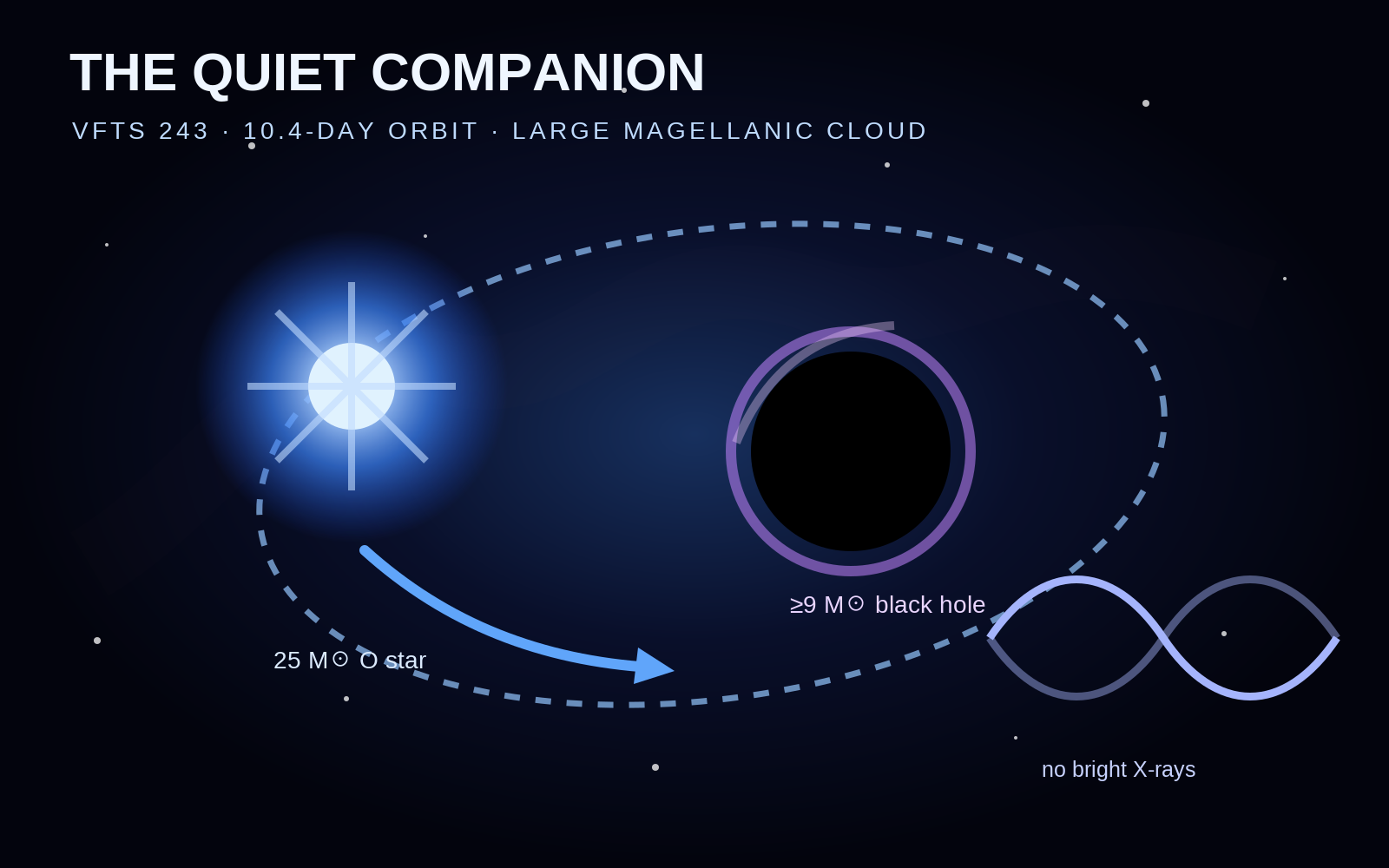 Illustration🌌 Space
VFTS 243, an Extragalactic Dormant Black Hole
Six years of stellar spectra revealed that the massive star VFTS 243 orbits an unseen companion of at least nine solar masses, making the companion the first unambiguous X-ray-quiet stellar black hole identified outside the Milky Way at the time.
Read more → 🌌 Space
Image of Our Galaxy's Black Hole (Sgr A*)
The first image of the supermassive black hole at the center of our own galaxy, 27,000 light-years away.
Read more → 🌌 Space
First Image of a Black Hole (M87*)
Humanity's first direct image of a black hole — a glowing ring of light around the shadow of M87*, 6.5 billion solar masses.
Read more →Questions readers ask
How many black holes discoveries are catalogued?
The Nucleon currently lists 5. The total changes as new source-checked entries are added.
Where have these discoveries been made?
They span 4 countries or international research settings, from Niels Bohr Institute, University of Copenhagen to other locations in the catalogue.
How should these entries be compared?
Start with the primary source and the discovery method. A visually striking result and a formal species or particle identification do not always use the same standard of evidence.