
Topic hub
Asteroids discoveries in Space
This topic hub follows 3 catalogued asteroids discoveries across The Nucleon directory. Each entry connects the finding to its location, discovering institution, scientific source, and related work.
What this topic includes
In space, asteroids can describe a change in what scientists observe, classify, or measure. The entries below are grouped by their documented subject rather than by headline popularity, making it easier to compare discoveries from different years and places.
Key discoveries
 Illustration🌌 Space
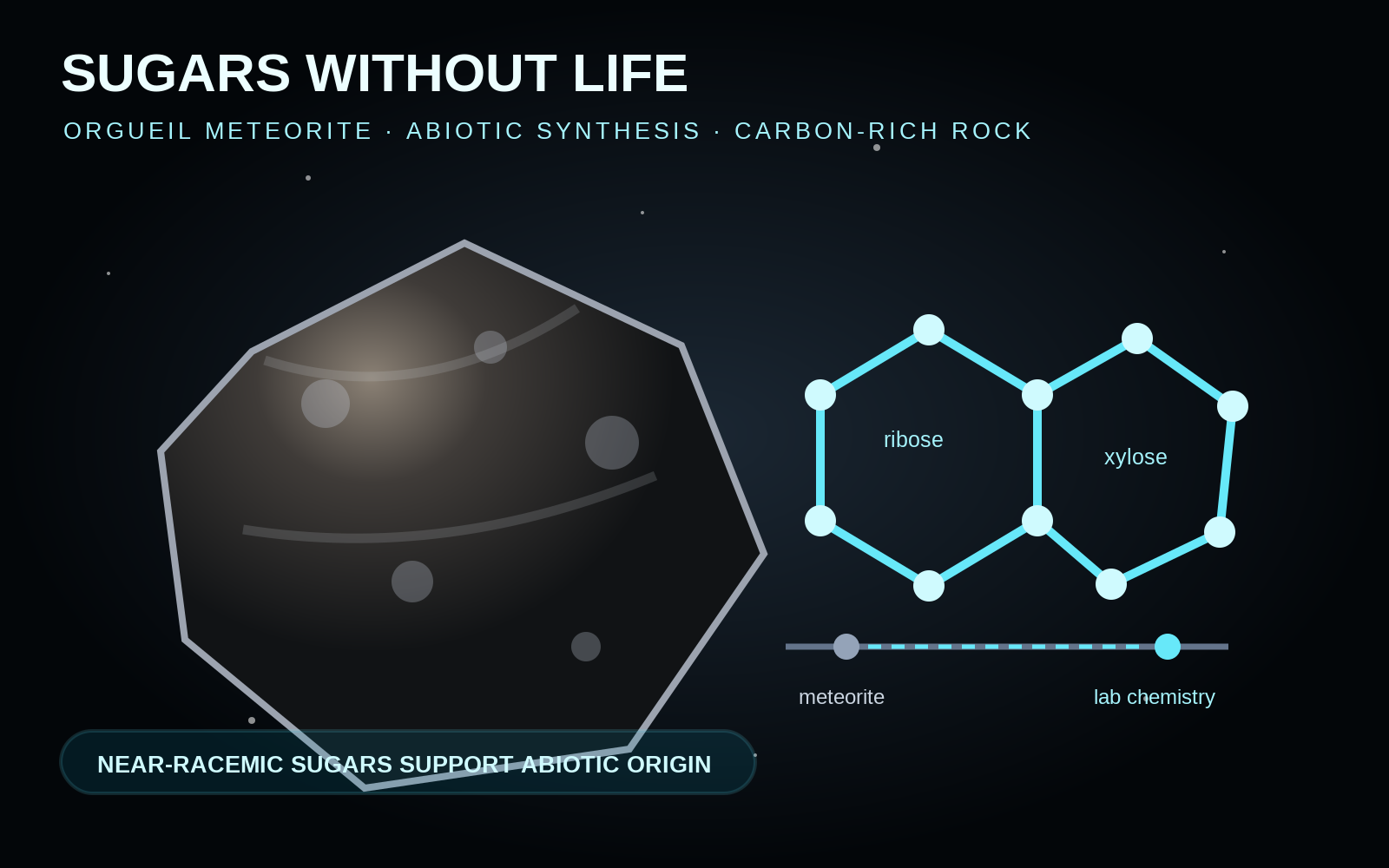
Abiotic Sugars in the Orgueil Meteorite
Chiral analysis of an Orgueil meteorite sample detected ribose, arabinose, xylose, lyxose, and ribulose, with several near-racemic mixtures supporting abiotic extraterrestrial formation rather than ordinary biological contamination.
Read more →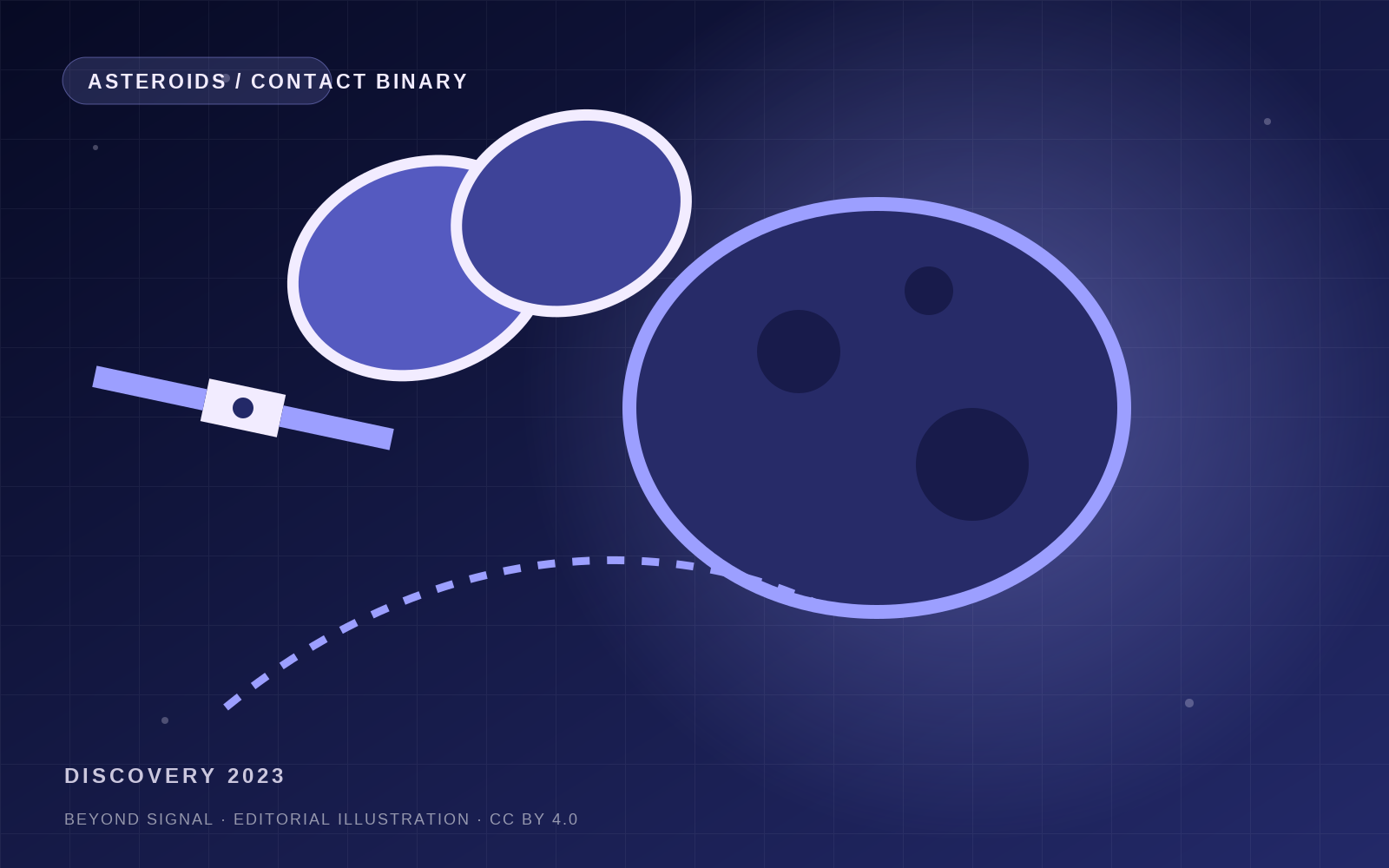 Illustration🌌 Space
Lucy Discovers Selam, Dinkinesh's Contact-Binary Moon
NASA's Lucy spacecraft found that the small main-belt asteroid Dinkinesh has a moon composed of two lobes touching each other, the first contact-binary satellite seen during a spacecraft flyby.
Read more →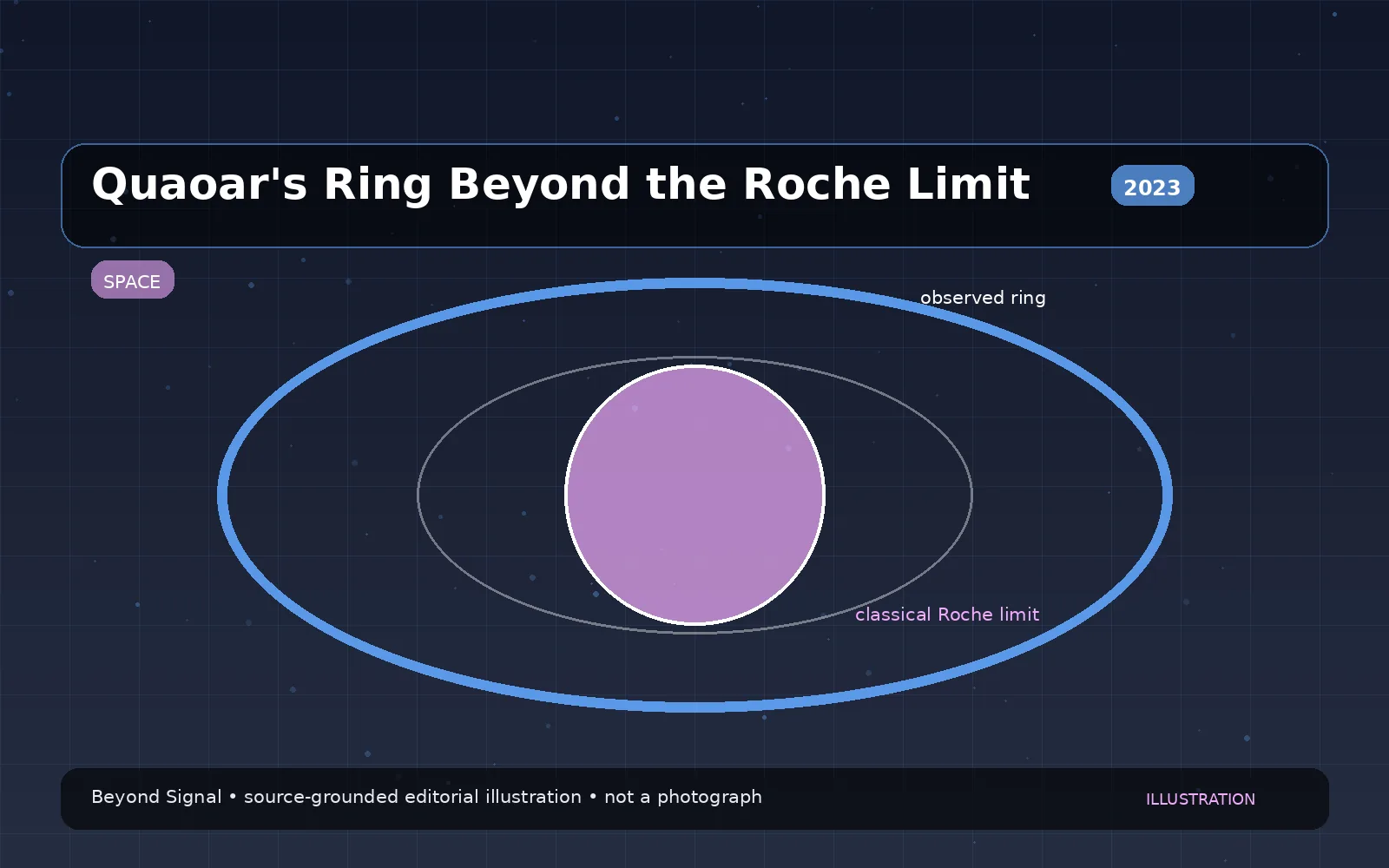 Illustration🌌 Space
Quaoar's Ring Beyond the Roche Limit
Observations of the dwarf planet Quaoar revealed a dense ring far beyond the classical Roche limit, the distance inside which tidal forces are expected to prevent ring material from assembling into a moon. The ring challenges a simple rule used to explain why planetary rings persist.
Read more →Questions readers ask
How many asteroids discoveries are catalogued?
The Nucleon currently lists 3. The total changes as new source-checked entries are added.
Where have these discoveries been made?
They span 3 countries or international research settings, from Orgueil meteorite fall site, Tarn-et-Garonne to other locations in the catalogue.
How should these entries be compared?
Start with the primary source and the discovery method. A visually striking result and a formal species or particle identification do not always use the same standard of evidence.