
Annual archive
Scientific Discoveries in 2022
A year-level index of 19 source-backed scientific discoveries from 2022. Use the monthly archives to follow the sequence of announcements, or open an entry for its location, method, and primary source.
 Illustration⚛️ Physics
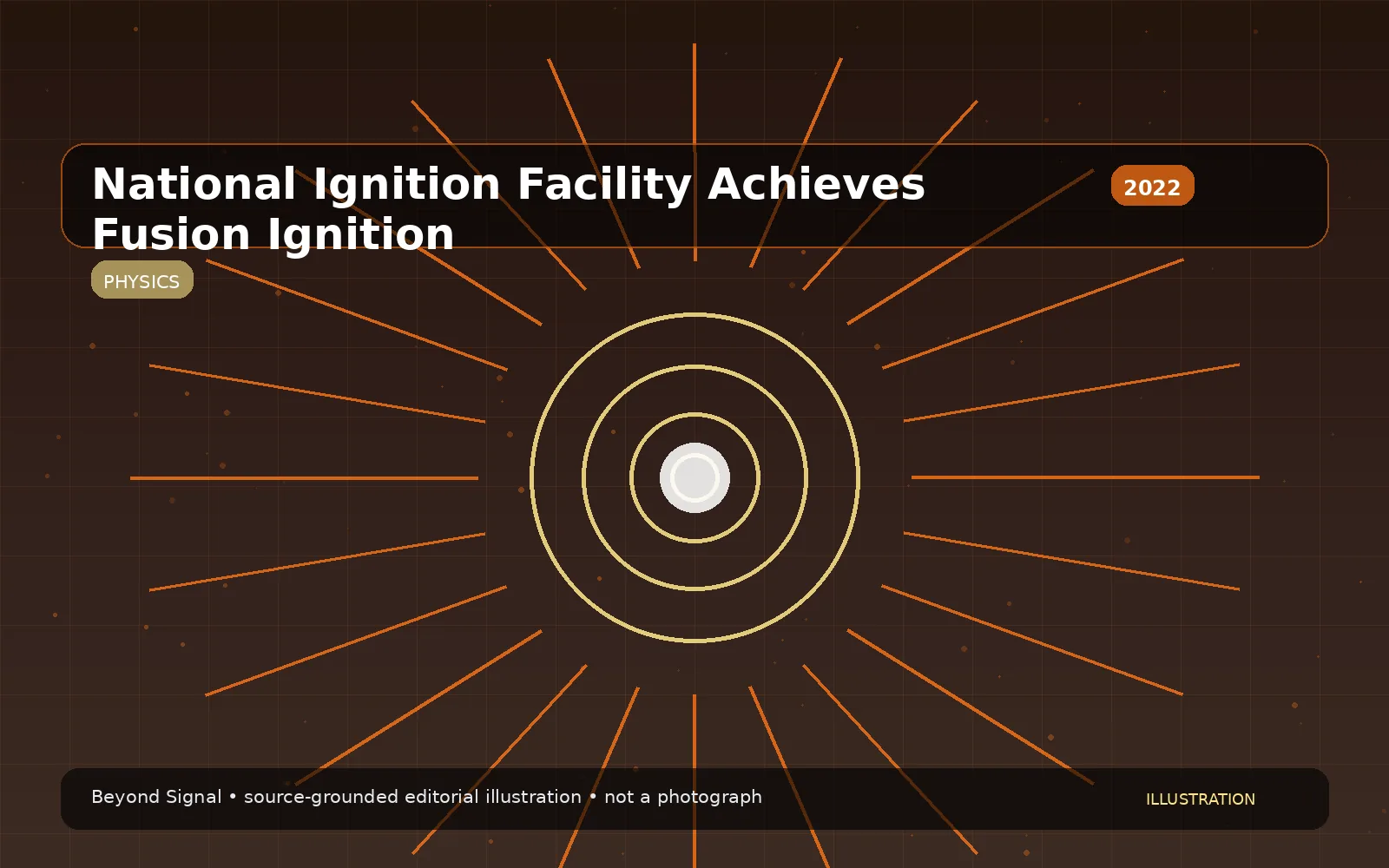
National Ignition Facility Achieves Fusion Ignition
The National Ignition Facility announced the first controlled fusion experiment to produce more fusion energy from a target than the laser energy delivered to it. The December 5 shot sent 2.05 megajoules of laser energy into a fuel capsule and produced about 3.15 megajoules of fusion output.
Read more →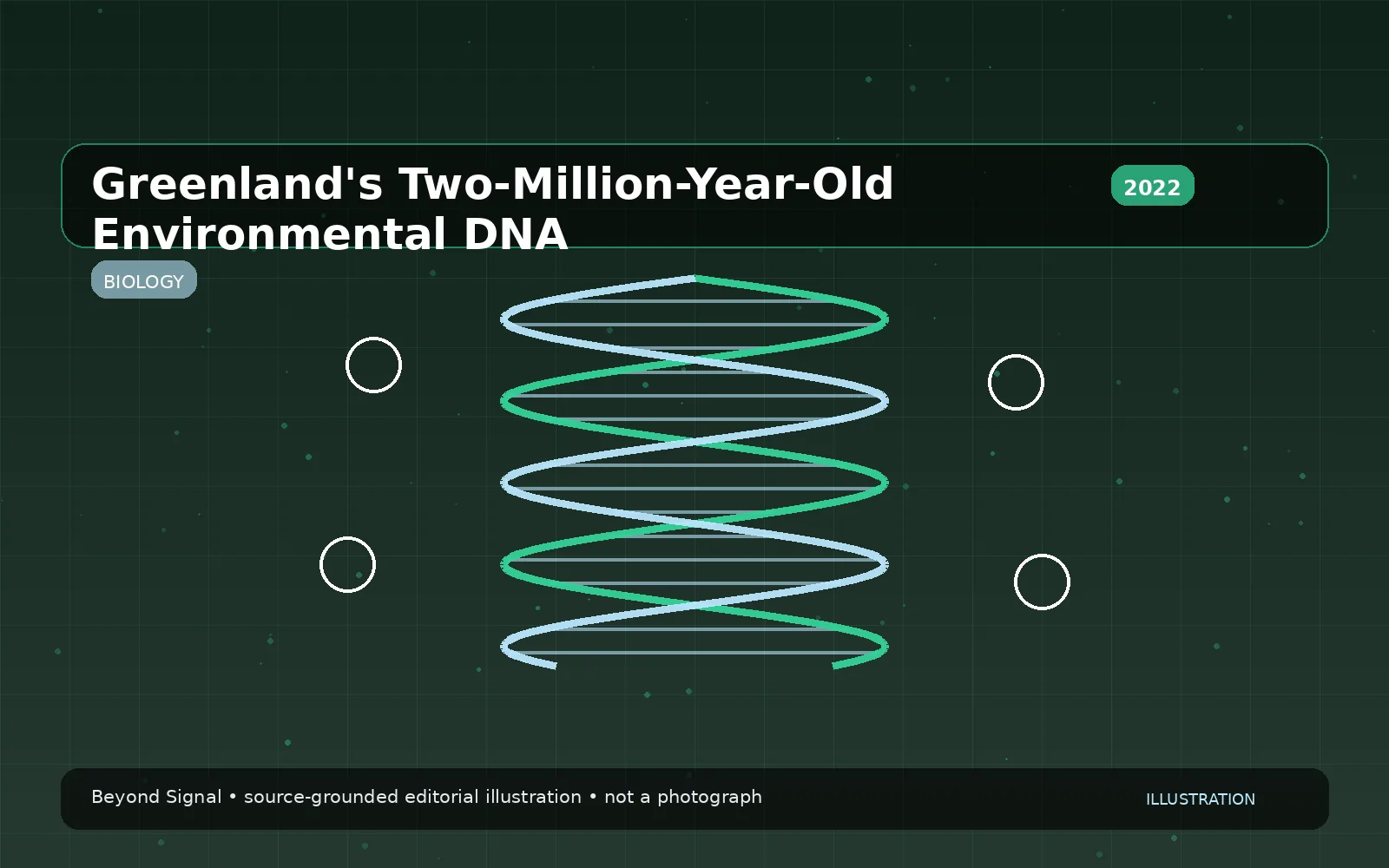 Illustration🧬 Biology
Greenland's Two-Million-Year-Old Environmental DNA
Environmental DNA recovered from mineral-rich sediments at Greenland's Kap København Formation reconstructed a roughly two-million-year-old ecosystem containing mastodons, reindeer, hares, geese, plants, and marine organisms. The fragmented DNA extended the known survival limit of ancient genetic material by about one million years.
Read more → ⚛️ Physics
Fusion Ignition at the NIF
For the first time, a fusion reaction produced more energy than the laser energy delivered to the fuel — crossing the long-sought ignition threshold.
Read more →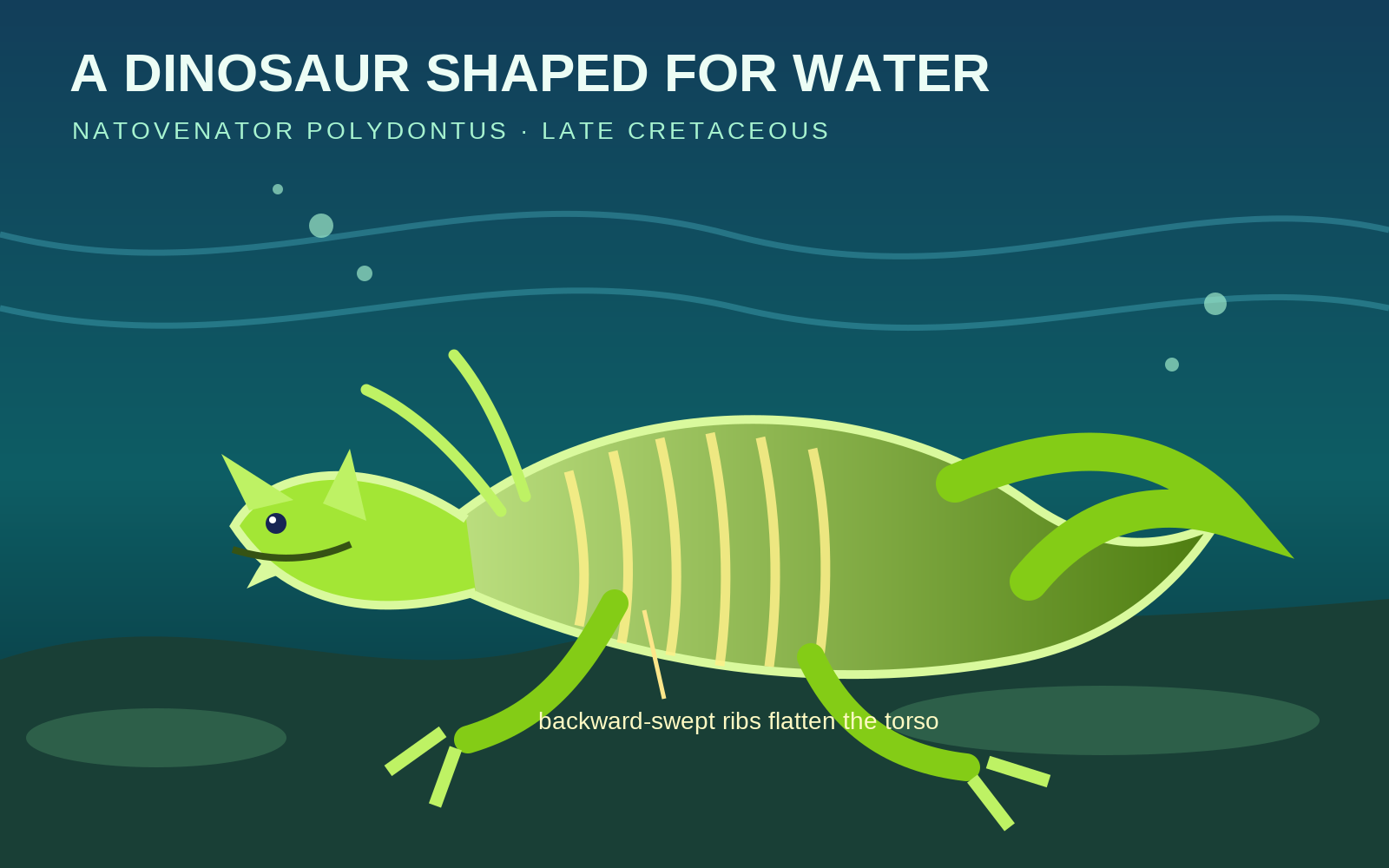 Illustration🦕 Dinosaurs & Fossils
Natovenator, a Streamlined Swimming Dinosaur
A well-articulated dromaeosaurid skeleton from Mongolia preserved backward-swept ribs and a flattened torso, providing the first compelling evidence of a streamlined body in a non-avian theropod dinosaur.
Read more →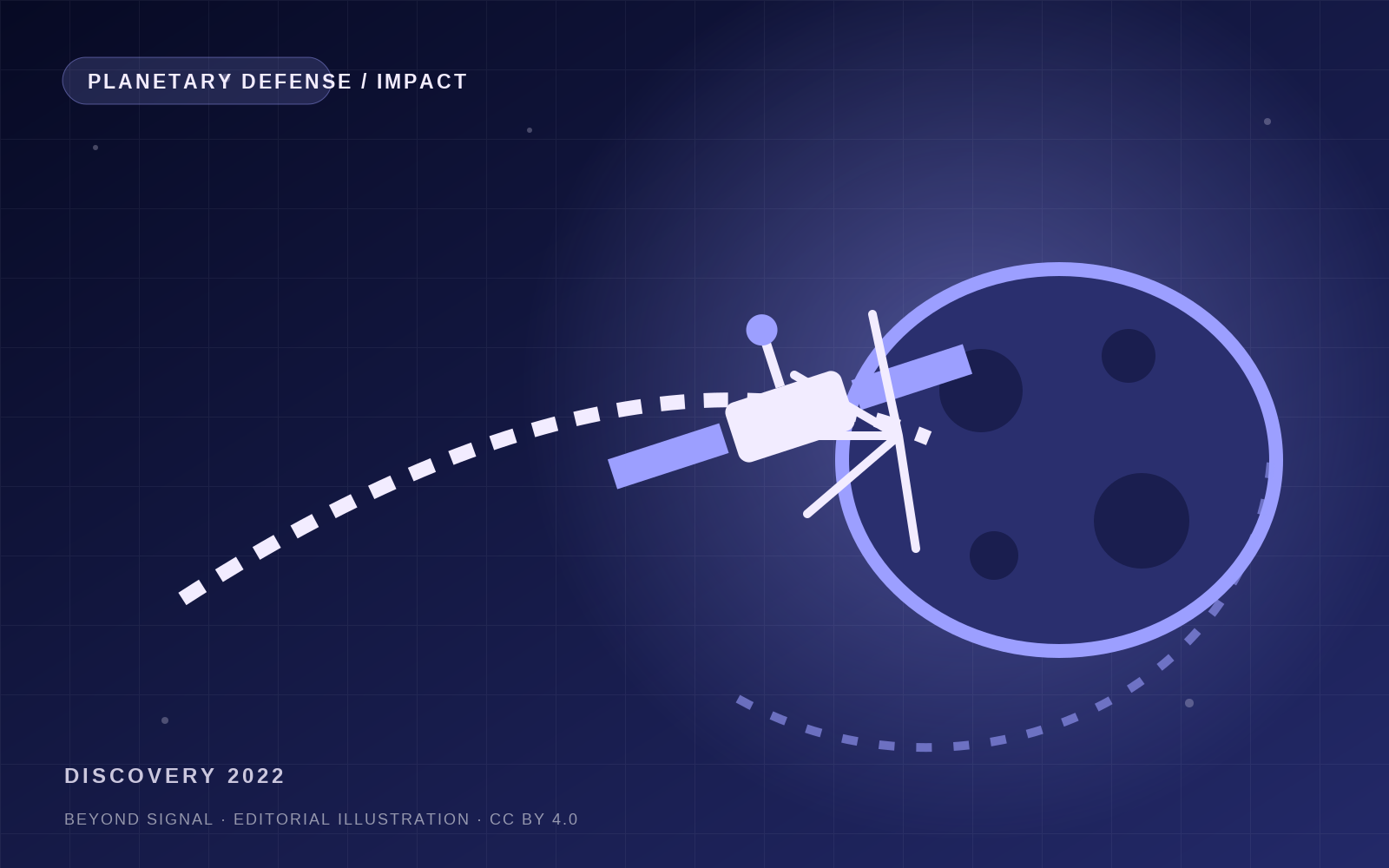 Illustration🌌 Space
DART Successfully Changes an Asteroid's Orbit
Observations confirmed that NASA's DART spacecraft shortened Dimorphos's orbit around Didymos by roughly 32 minutes, proving that a kinetic impactor can measurably deflect an asteroid.
Read more → Illustration🌌 Space
Webb Detects Carbon Dioxide in WASP-39 b’s Atmosphere
JWST transmission spectroscopy delivered the first unambiguous carbon-dioxide detection in an exoplanet atmosphere, measuring a strong 4.3-micrometre absorption feature in the hot gas giant WASP-39 b.
Read more →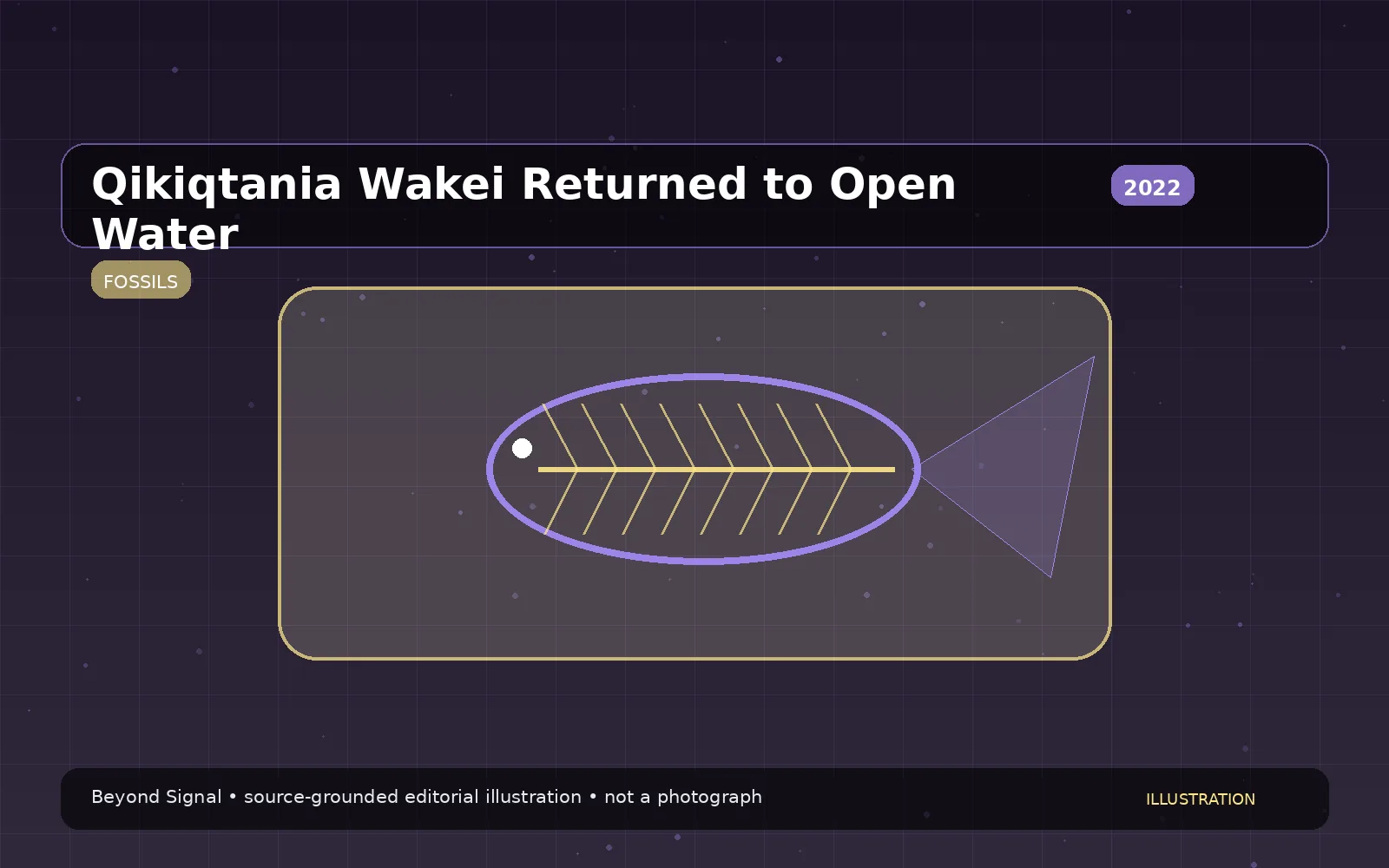 Illustration🦕 Dinosaurs & Fossils
Qikiqtania Wakei Returned to Open Water
A Late Devonian fossil from Nunavut revealed Qikiqtania wakei, a close relative of limbed vertebrates whose pectoral fin was specialized for swimming rather than supporting the body on a hard surface. The animal shows that evolution near the fish-to-tetrapod transition explored more than one ecological direction.
Read more →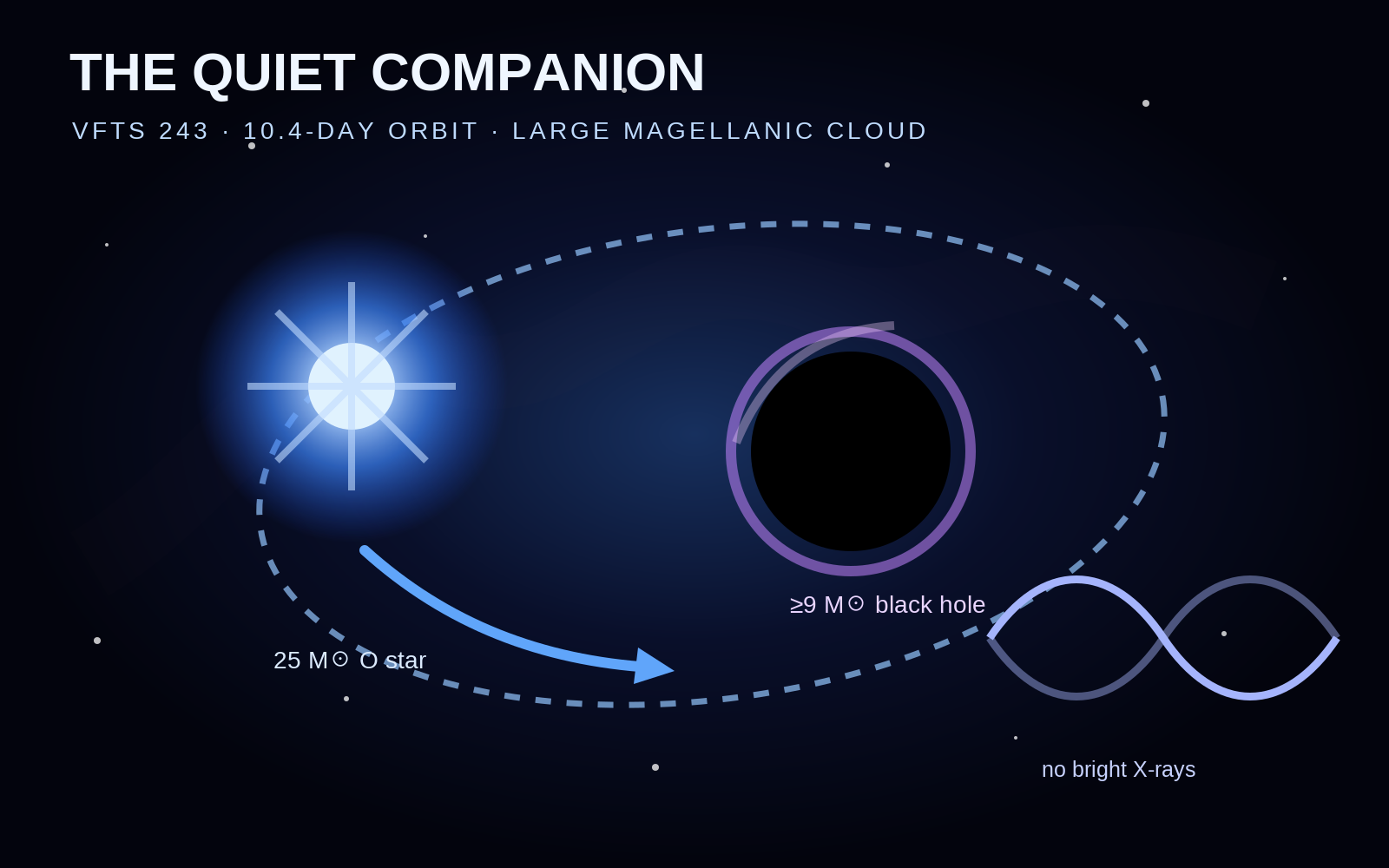 Illustration🌌 Space
VFTS 243, an Extragalactic Dormant Black Hole
Six years of stellar spectra revealed that the massive star VFTS 243 orbits an unseen companion of at least nine solar masses, making the companion the first unambiguous X-ray-quiet stellar black hole identified outside the Milky Way at the time.
Read more →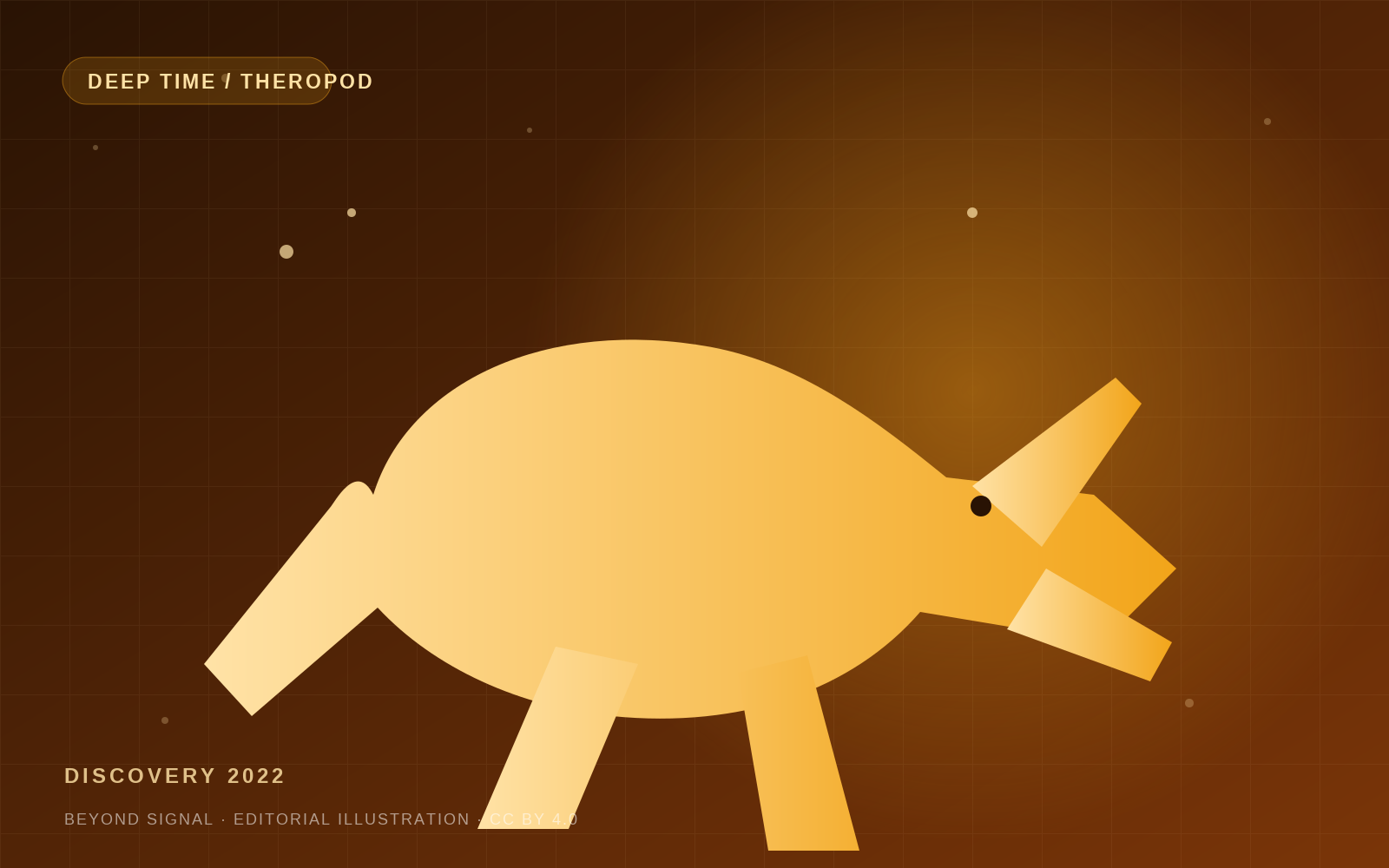 Illustration🦕 Dinosaurs & Fossils
Meraxes Gigas, a Giant Short-Armed Predator
An unusually complete giant predatory dinosaur from Patagonia revealed that reduced forelimbs evolved independently in several large theropod lineages.
Read more → Illustration⚛️ Physics
LHCb’s Strange Pentaquark Candidate
LHCb reported a high-significance resonance consistent with the first pentaquark candidate containing a strange quark, adding a new case to the study of exotic combinations of quarks.
Read more →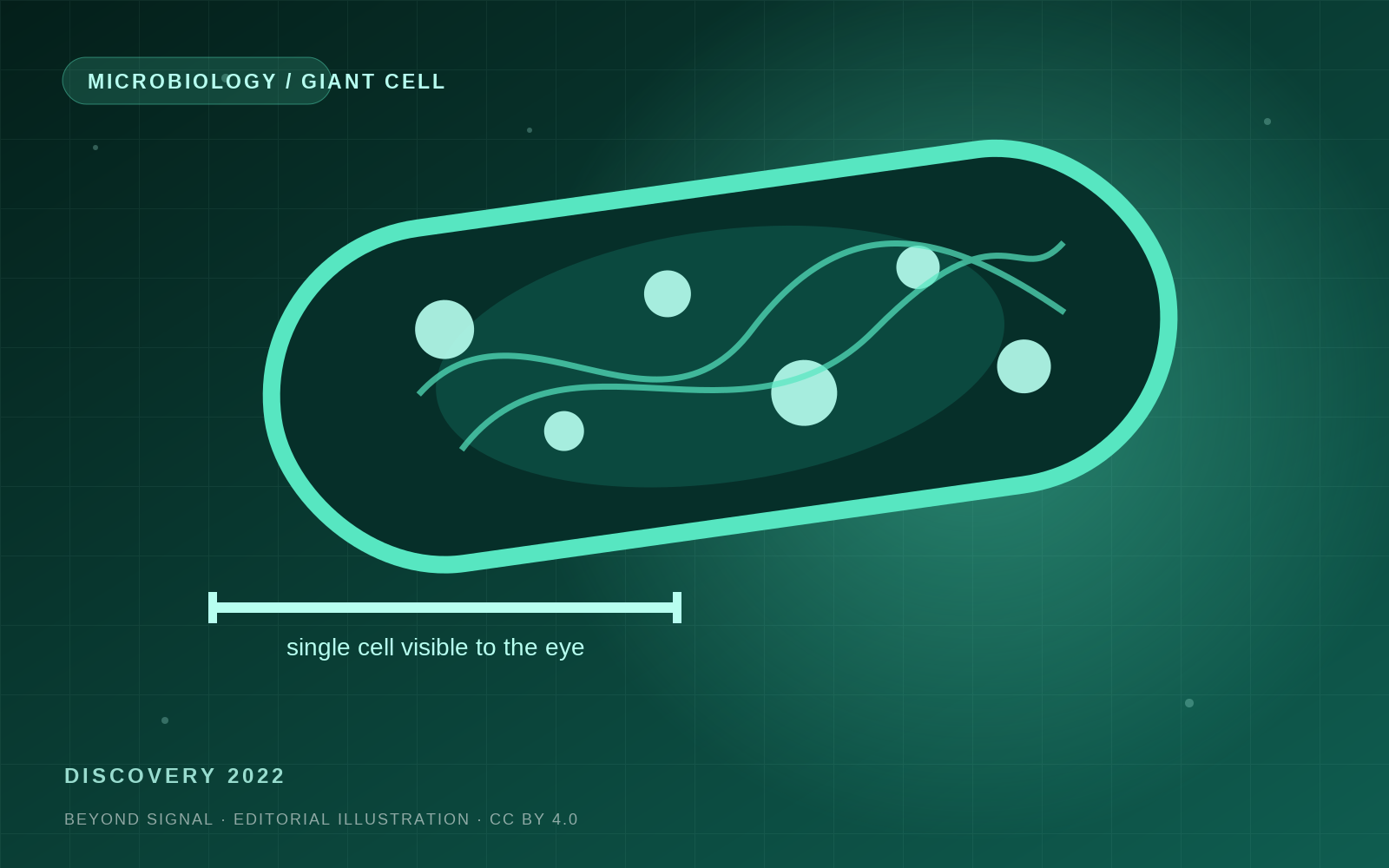 Illustration🧬 Biology
Thiomargarita Magnifica, the Giant Bacterium
A filament-shaped bacterium from Caribbean mangroves was shown to grow up to about two centimetres long, making a single bacterial cell visible to the unaided eye.
Read more →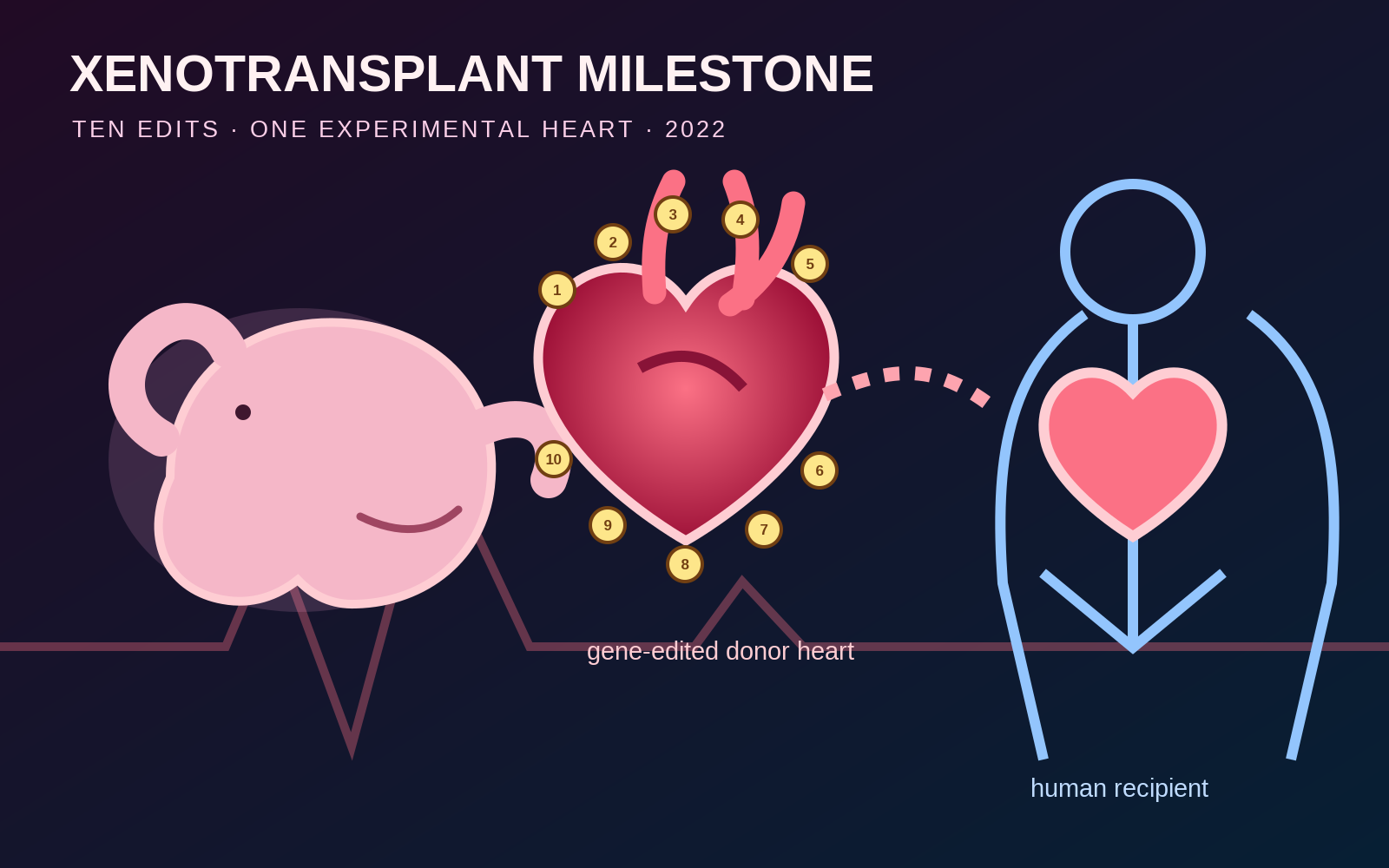 Illustration🤖 Technology
The First Gene-Edited Pig Heart Transplant in a Living Human
Surgeons transplanted a heart from a pig carrying ten targeted genetic modifications into a living adult under compassionate-use authorization, and the organ supported circulation without immediate rejection for several weeks.
Read more → 🌌 Space
Image of Our Galaxy's Black Hole (Sgr A*)
The first image of the supermassive black hole at the center of our own galaxy, 27,000 light-years away.
Read more → Illustration🪸 Ocean Discoveries
A Global Ocean Census of RNA Viruses
A metatranscriptomic survey of ocean samples substantially expanded the known RNA virome, reorganizing major evolutionary groups and revealing that marine RNA viruses are both abundant and deeply diverse.
Read more →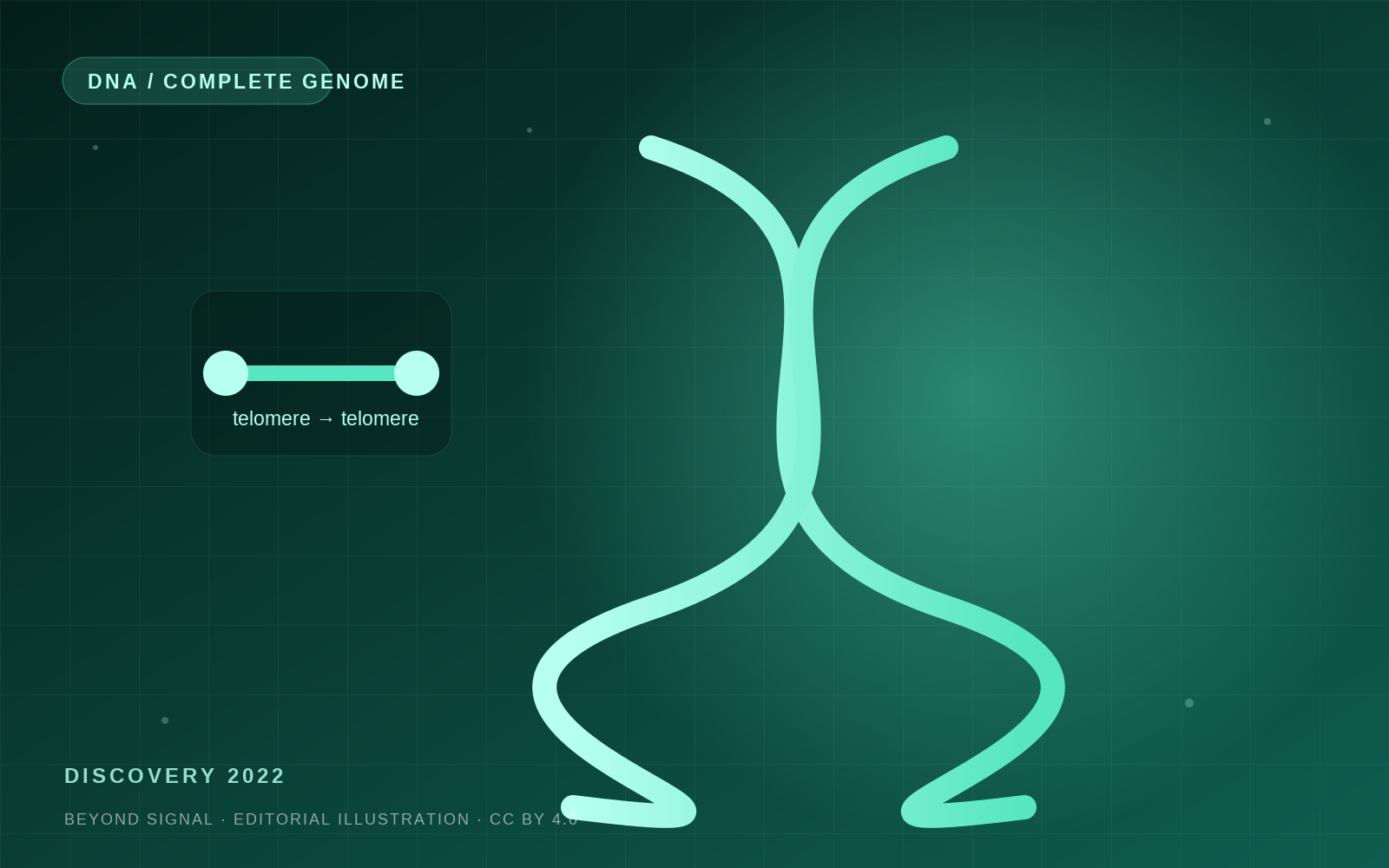 Illustration🧬 Biology
The First Gapless Human Genome Sequence
The Telomere-to-Telomere Consortium filled the remaining gaps in the human reference genome, adding nearly 200 million DNA letters and complete views of centromeres, segmental duplications, and chromosome ends.
Read more →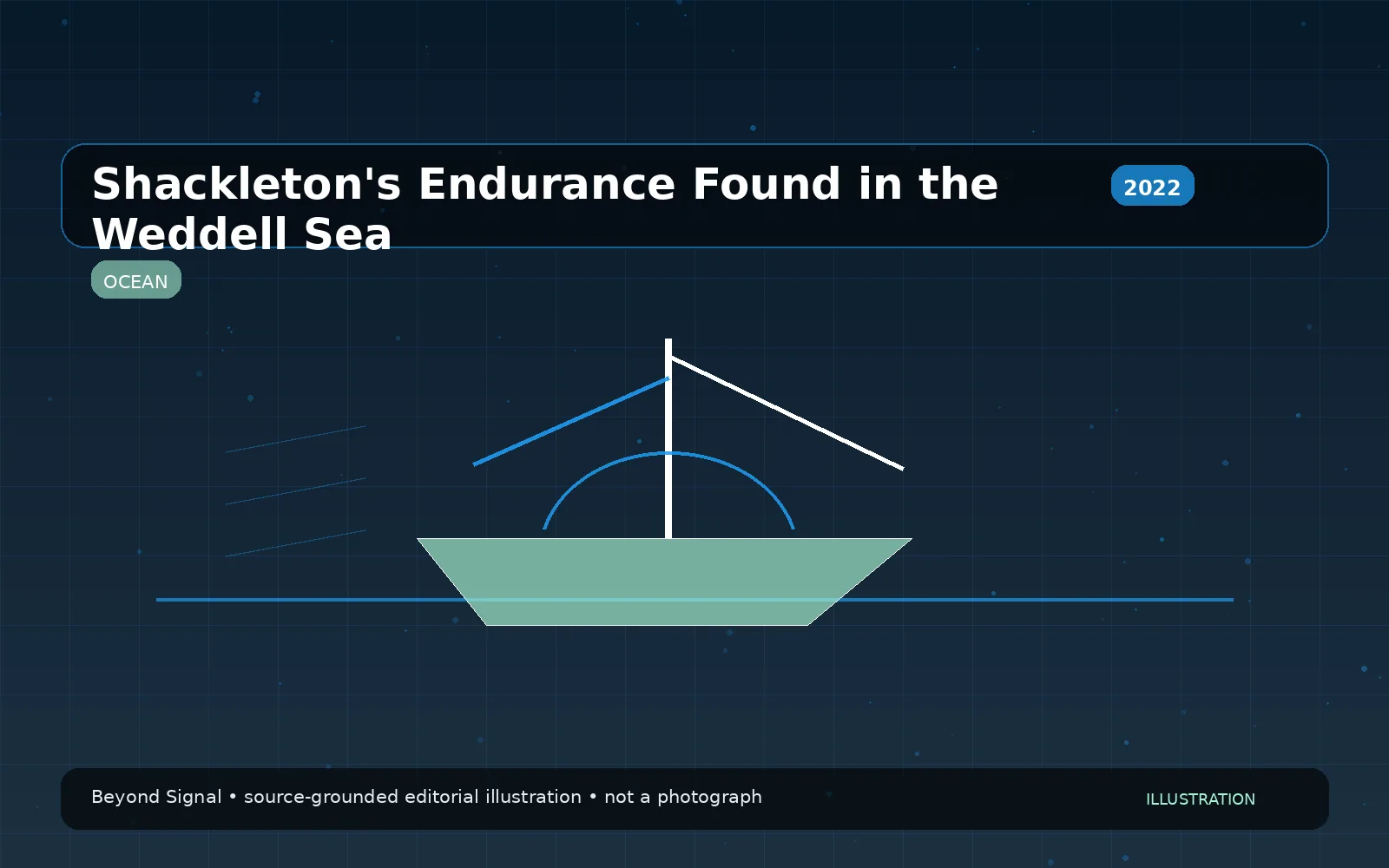 Illustration🪸 Ocean Discoveries
Shackleton's Endurance Found in the Weddell Sea
The Endurance22 expedition located Sir Ernest Shackleton's ship Endurance upright on the Weddell Sea floor at 3,008 metres, roughly four miles south of Captain Frank Worsley's recorded sinking position. The unusually intact wooden wreck was documented without being touched under Antarctic Treaty protection.
Read more → Illustration🏺 Archaeology
Modern Humans at Grotte Mandrin 54,000 Years Ago
Teeth, stratigraphy, and stone-tool layers at Grotte Mandrin indicate a short Homo sapiens presence in southeastern France about 54,000 years ago, followed by renewed Neanderthal occupation.
Read more →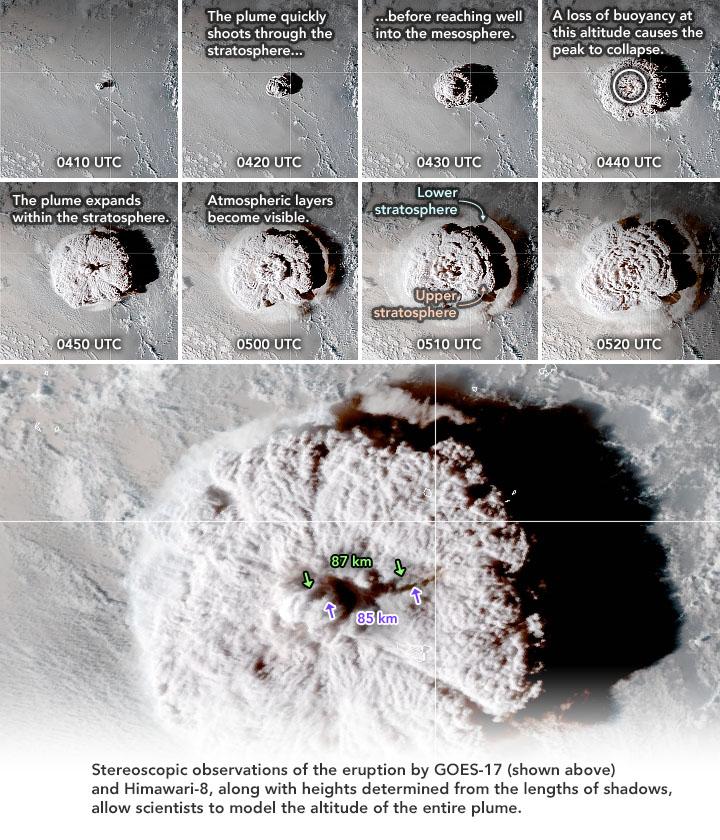 🌋 Earth Science
The Hunga Tonga Eruption
An undersea volcano produced the tallest eruption plume ever recorded — reaching the mesosphere — and a pressure wave that circled the globe.
Read more →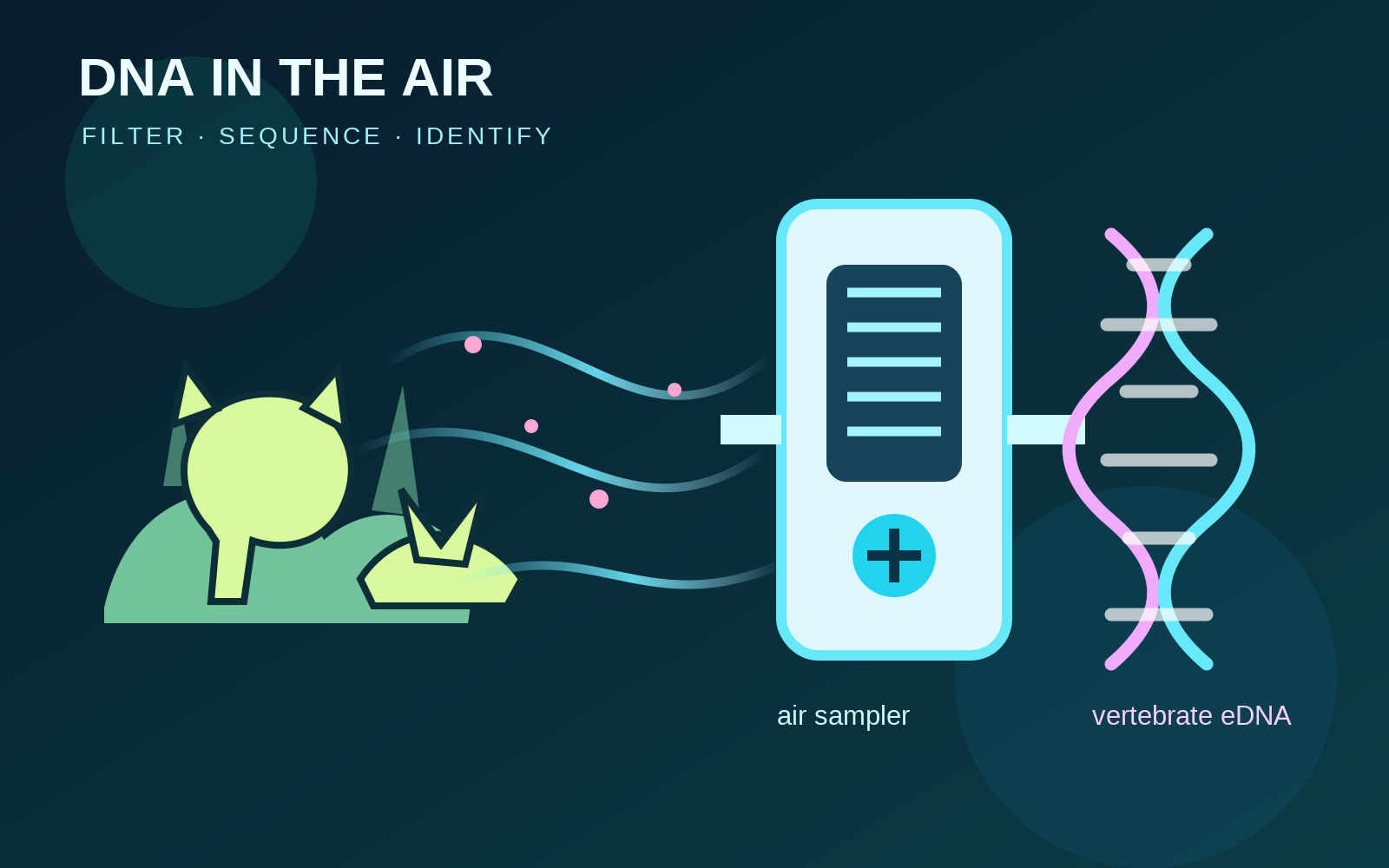 Illustration🧬 Biology
Airborne eDNA Reveals Terrestrial Vertebrates
Two independent zoo studies showed that vertebrate DNA can be collected directly from air and matched to nearby species, establishing airborne eDNA as a practical new route for surveying terrestrial biodiversity.
Read more →