
Topic hub
Fossil discoveries discoveries in Dinosaurs & Fossils
This topic hub follows 8 catalogued fossil discoveries discoveries across The Nucleon directory. Each entry connects the finding to its location, discovering institution, scientific source, and related work.
What this topic includes
In dinosaurs & fossils, fossil discoveries can describe a change in what scientists observe, classify, or measure. The entries below are grouped by their documented subject rather than by headline popularity, making it easier to compare discoveries from different years and places.
Key discoveries
 Illustration🦕 Dinosaurs & Fossils
A Deep-Sea Whale Necropolis in the Diamantina Zone
Dives in the Diamantina Zone recorded five modern whale-fall communities and 476 fossil cetacean sites over 1,200 kilometres of seafloor, documenting a whale-fall archive that extends back at least 5.3 million years.
Read more → Illustration🦕 Dinosaurs & Fossils
A Jurassic Midge from Gondwana
A 151-million-year-old fossil midge from Australia became the oldest known member of its group in the Southern Hemisphere, challenging assumptions about where these insects evolved.
Read more →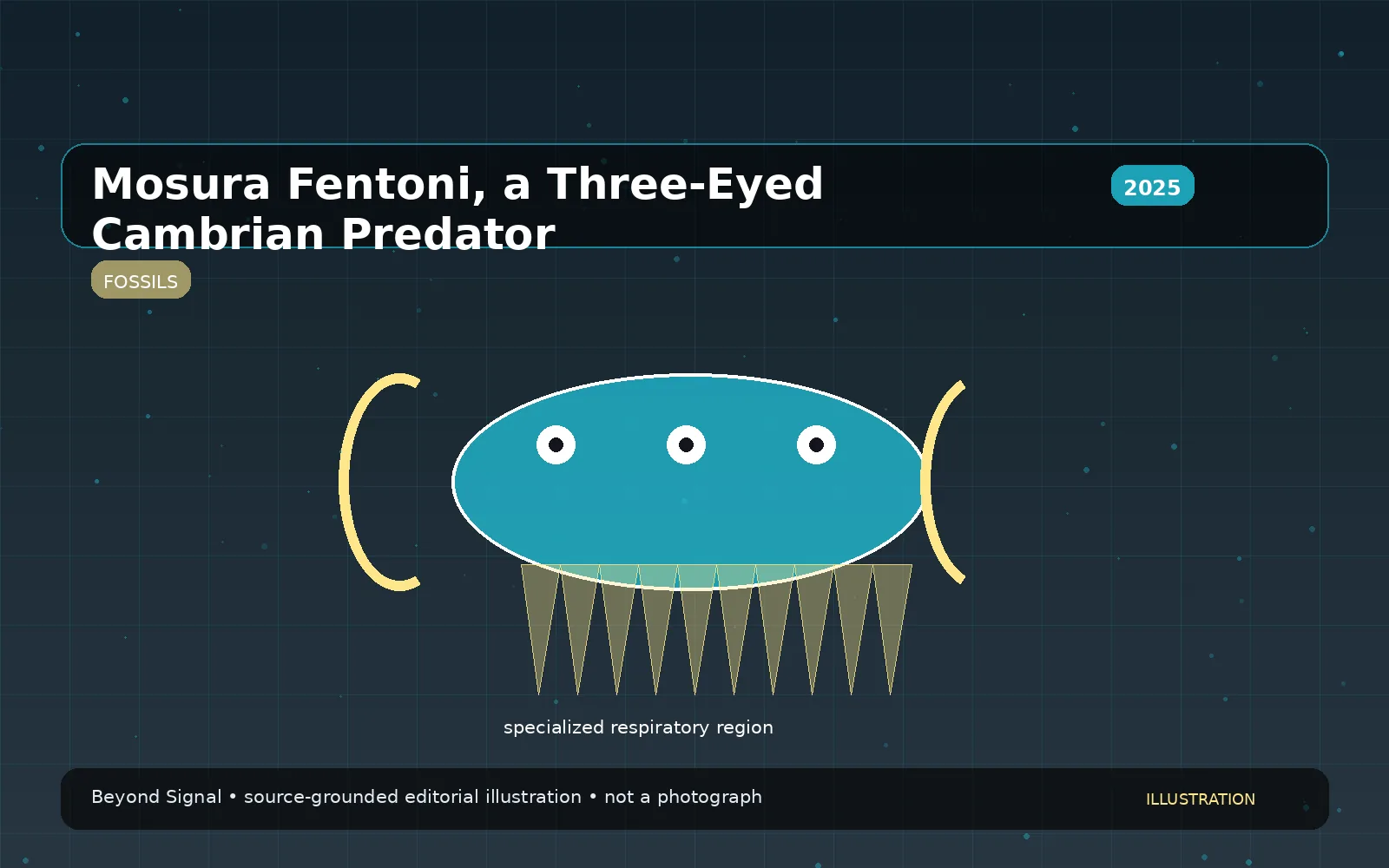 Illustration🦕 Dinosaurs & Fossils
Mosura Fentoni, a Three-Eyed Cambrian Predator
More than 60 Burgess Shale fossils revealed Mosura fentoni, a roughly six-centimetre radiodont with three eyes, grasping frontal appendages, and a body divided into a broad swimming region and a specialized rear section carrying respiratory structures. The anatomy expands the known diversity of early arthropod relatives.
Read more →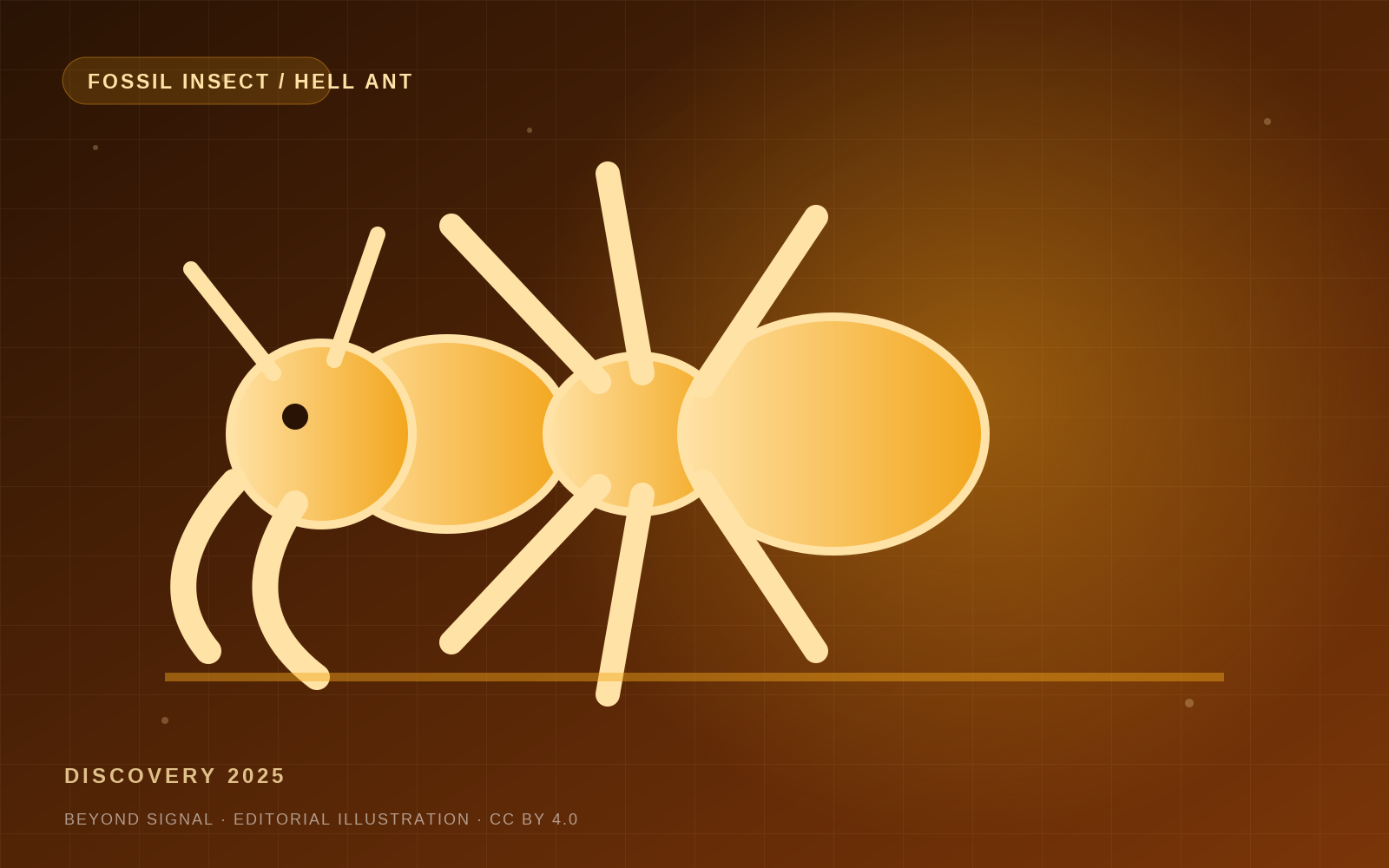 Illustration🦕 Dinosaurs & Fossils
Vulcanidris Cratensis, the Oldest Known Ant
A 113-million-year-old compression fossil from Brazil was recognized as a new hell-ant species and the oldest verified ant known from the fossil record.
Read more →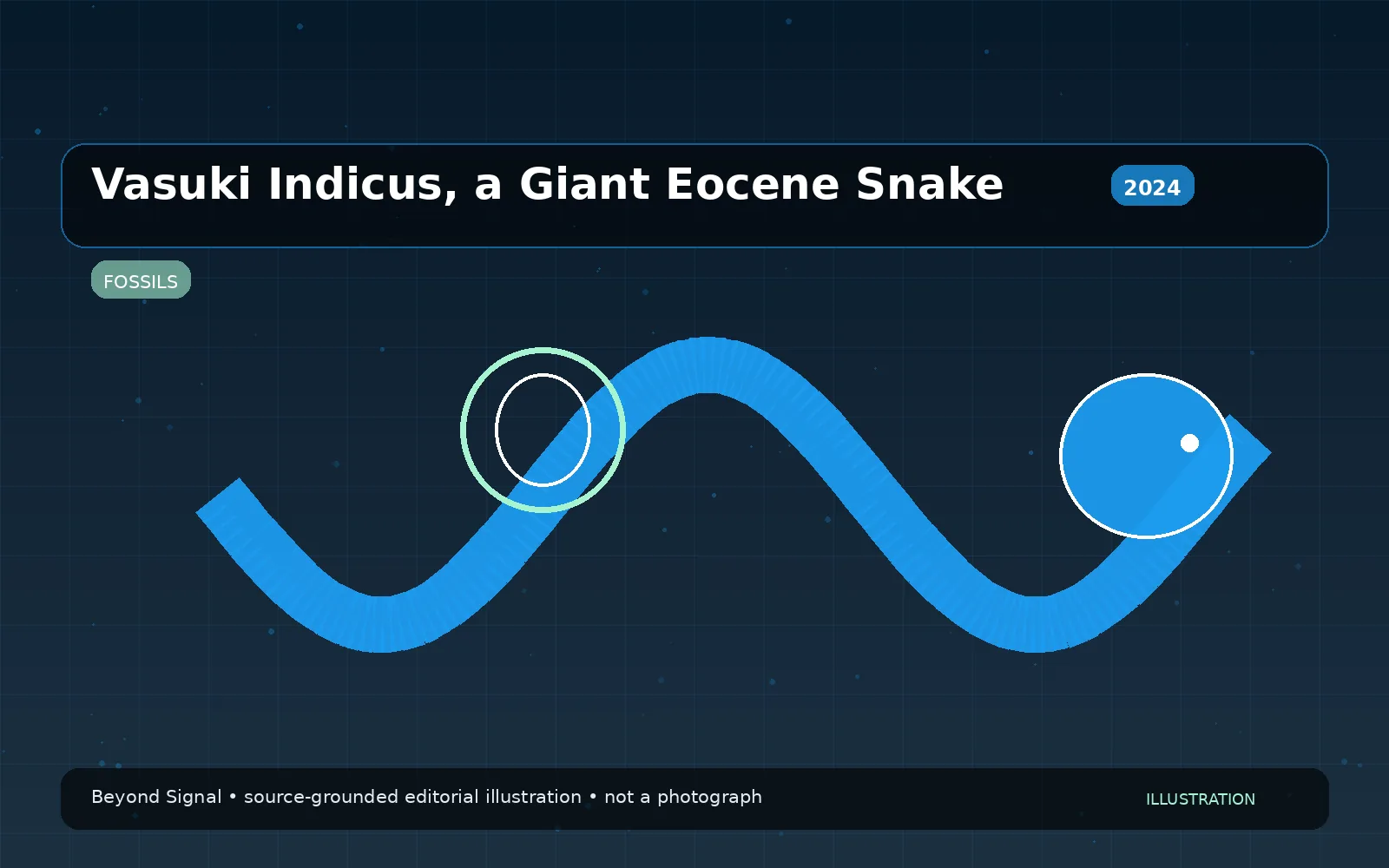 Illustration🦕 Dinosaurs & Fossils
Vasuki Indicus, a Giant Eocene Snake
Twenty-seven associated vertebrae from western India were described as Vasuki indicus, a giant madtsoiid snake that lived about 47 million years ago. Scaling from the vertebrae produced a broad estimated length of roughly 11 to 15 metres, placing it among the largest snakes known but leaving substantial uncertainty.
Read more →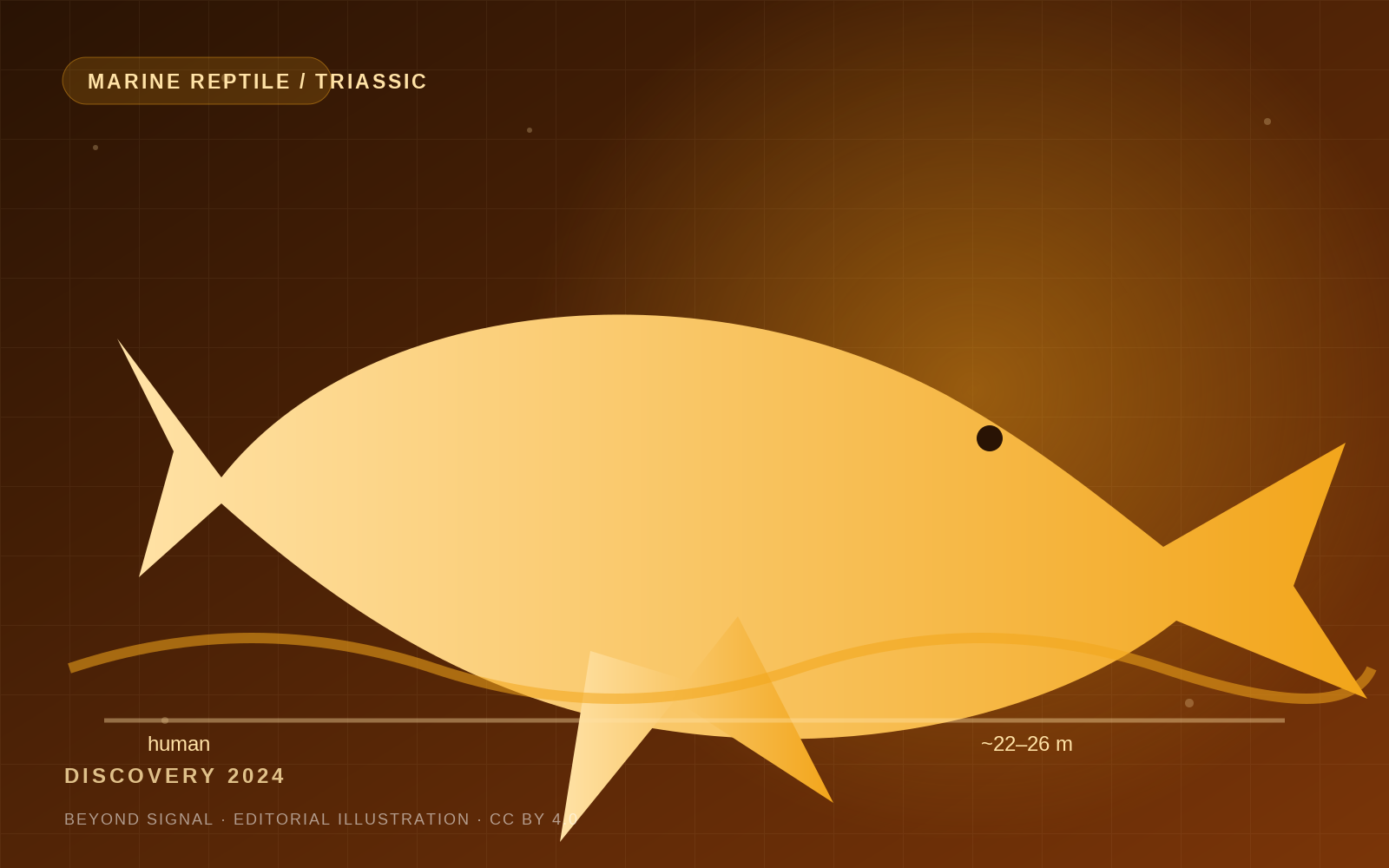 Illustration🦕 Dinosaurs & Fossils
Ichthyotitan Severnensis, a Blue-Whale-Sized Marine Reptile
Fragments of enormous jawbones from southwest England were assigned to a new Late Triassic ichthyosaur estimated at roughly 22–26 metres long.
Read more →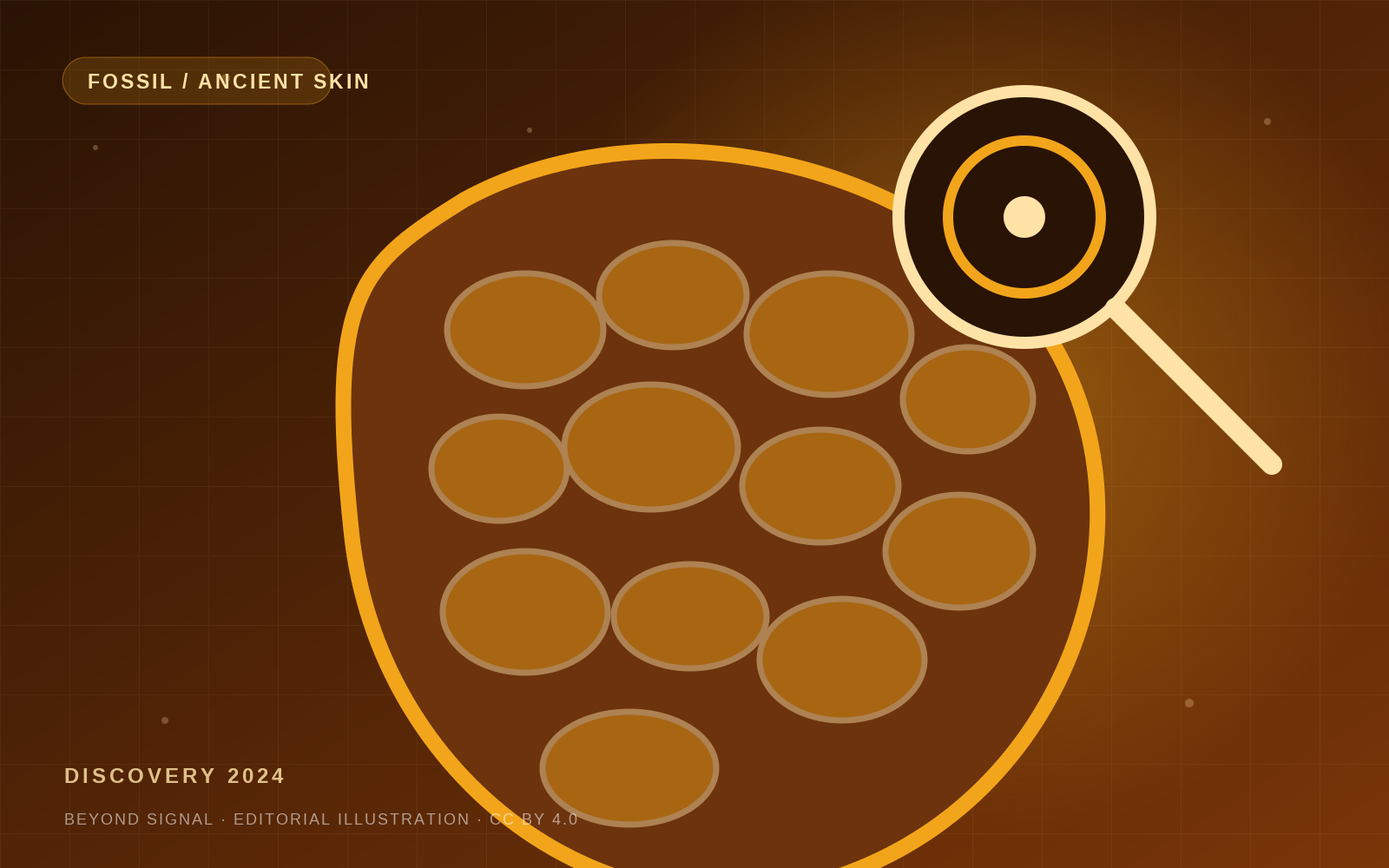 Illustration🦕 Dinosaurs & Fossils
The Oldest Known Fossilized Amniote Skin
A tiny three-dimensional patch of reptile-like skin from an Oklahoma cave system pushed the direct fossil record of amniote skin back by more than 130 million years.
Read more →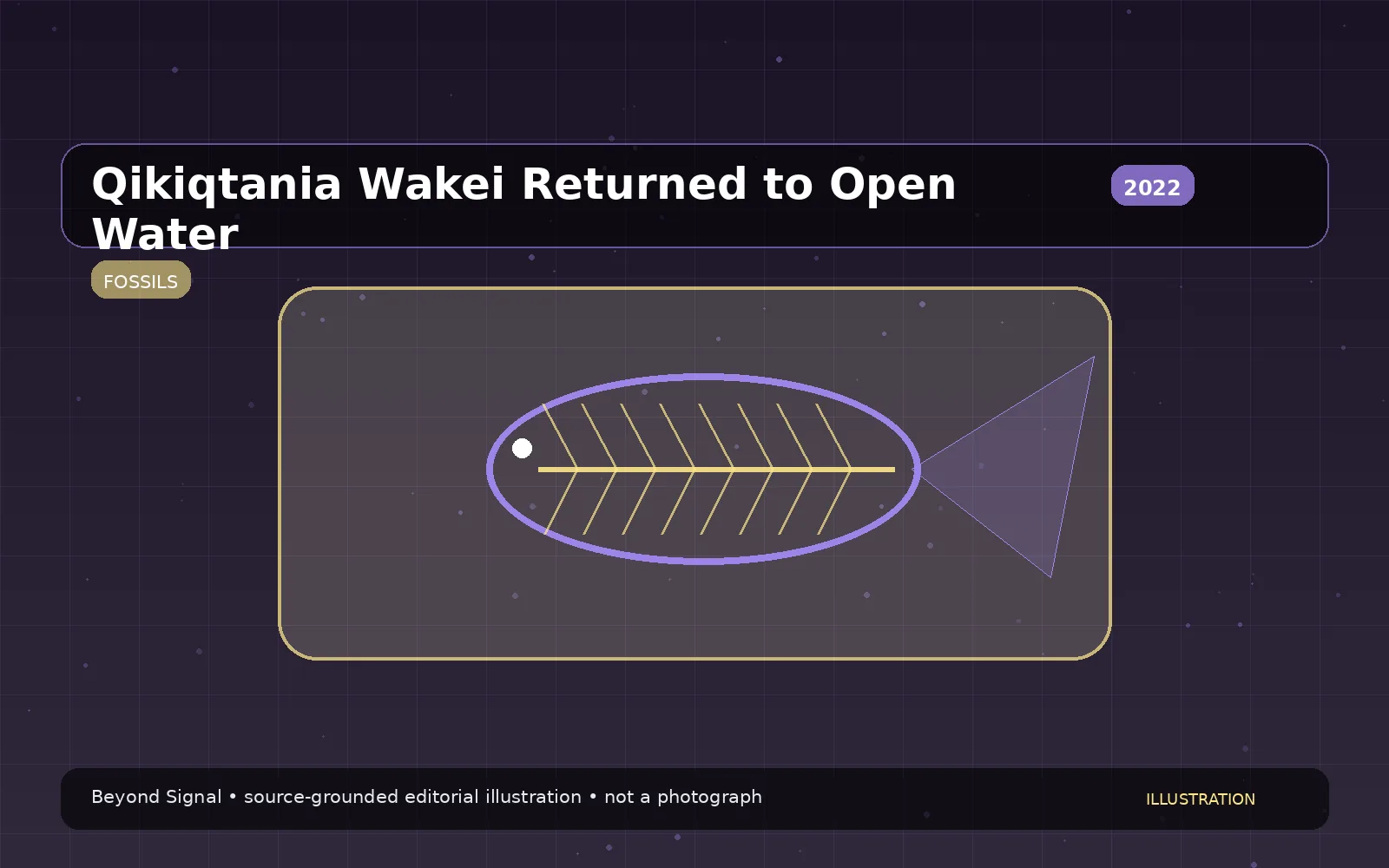 Illustration🦕 Dinosaurs & Fossils
Qikiqtania Wakei Returned to Open Water
A Late Devonian fossil from Nunavut revealed Qikiqtania wakei, a close relative of limbed vertebrates whose pectoral fin was specialized for swimming rather than supporting the body on a hard surface. The animal shows that evolution near the fish-to-tetrapod transition explored more than one ecological direction.
Read more →Questions readers ask
How many fossil discoveries discoveries are catalogued?
The Nucleon currently lists 8. The total changes as new source-checked entries are added.
Where have these discoveries been made?
They span 7 countries or international research settings, from Diamantina Zone, southeastern Indian Ocean to other locations in the catalogue.
How should these entries be compared?
Start with the primary source and the discovery method. A visually striking result and a formal species or particle identification do not always use the same standard of evidence.