
Topic hub
Genetics discoveries in Biology
This topic hub follows 8 catalogued genetics discoveries across The Nucleon directory. Each entry connects the finding to its location, discovering institution, scientific source, and related work.
What this topic includes
In biology, genetics can describe a change in what scientists observe, classify, or measure. The entries below are grouped by their documented subject rather than by headline popularity, making it easier to compare discoveries from different years and places.
Key discoveries
 Illustration🧬 Biology
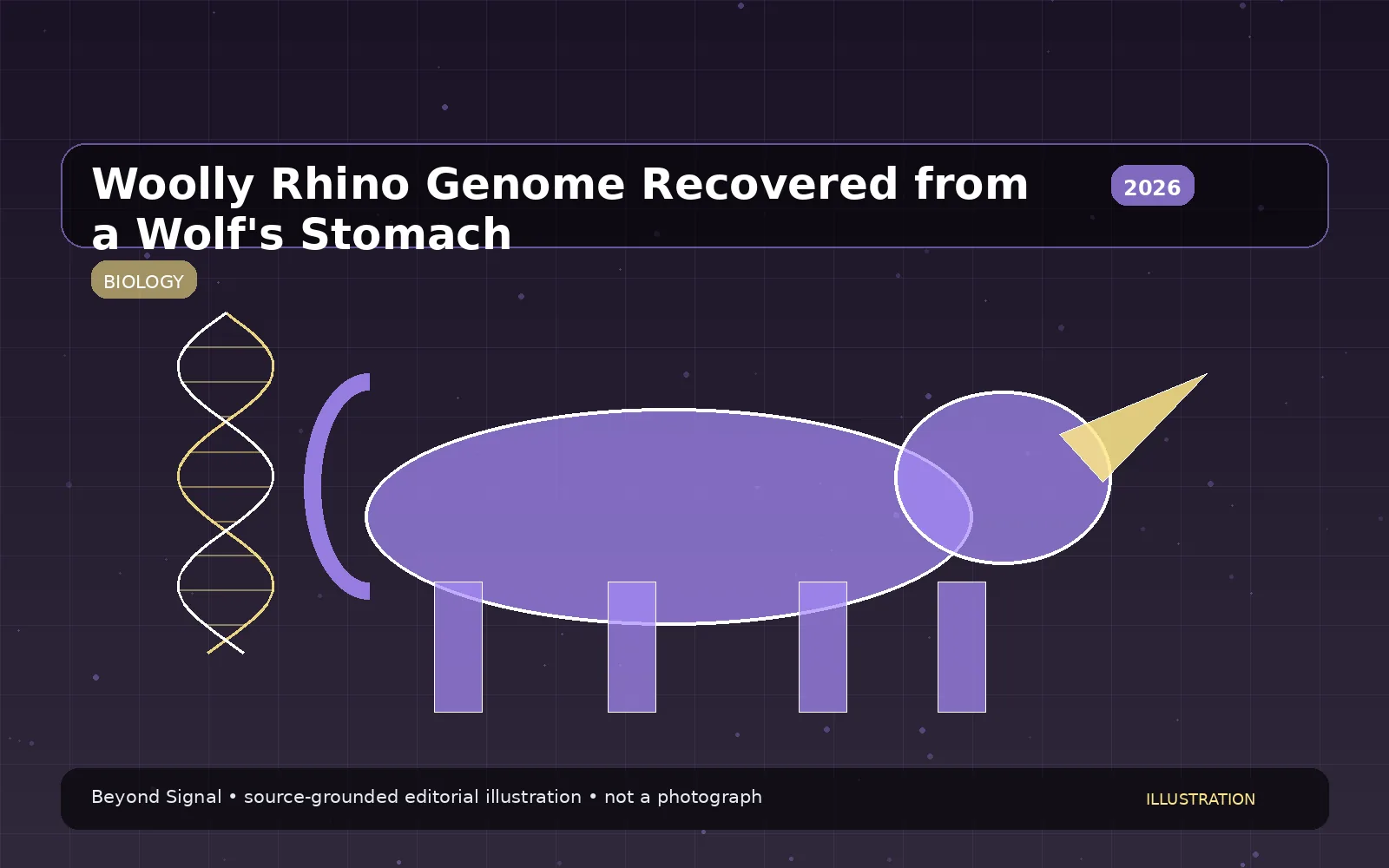
Woolly Rhino Genome Recovered from a Wolf's Stomach
Scientists reconstructed a high-quality woolly rhinoceros genome from undigested meat preserved in the stomach of a roughly 14,400-year-old wolf pup. Comparisons with older rhino genomes found no prolonged loss of diversity or rising inbreeding before extinction, supporting a comparatively rapid population collapse.
Read more →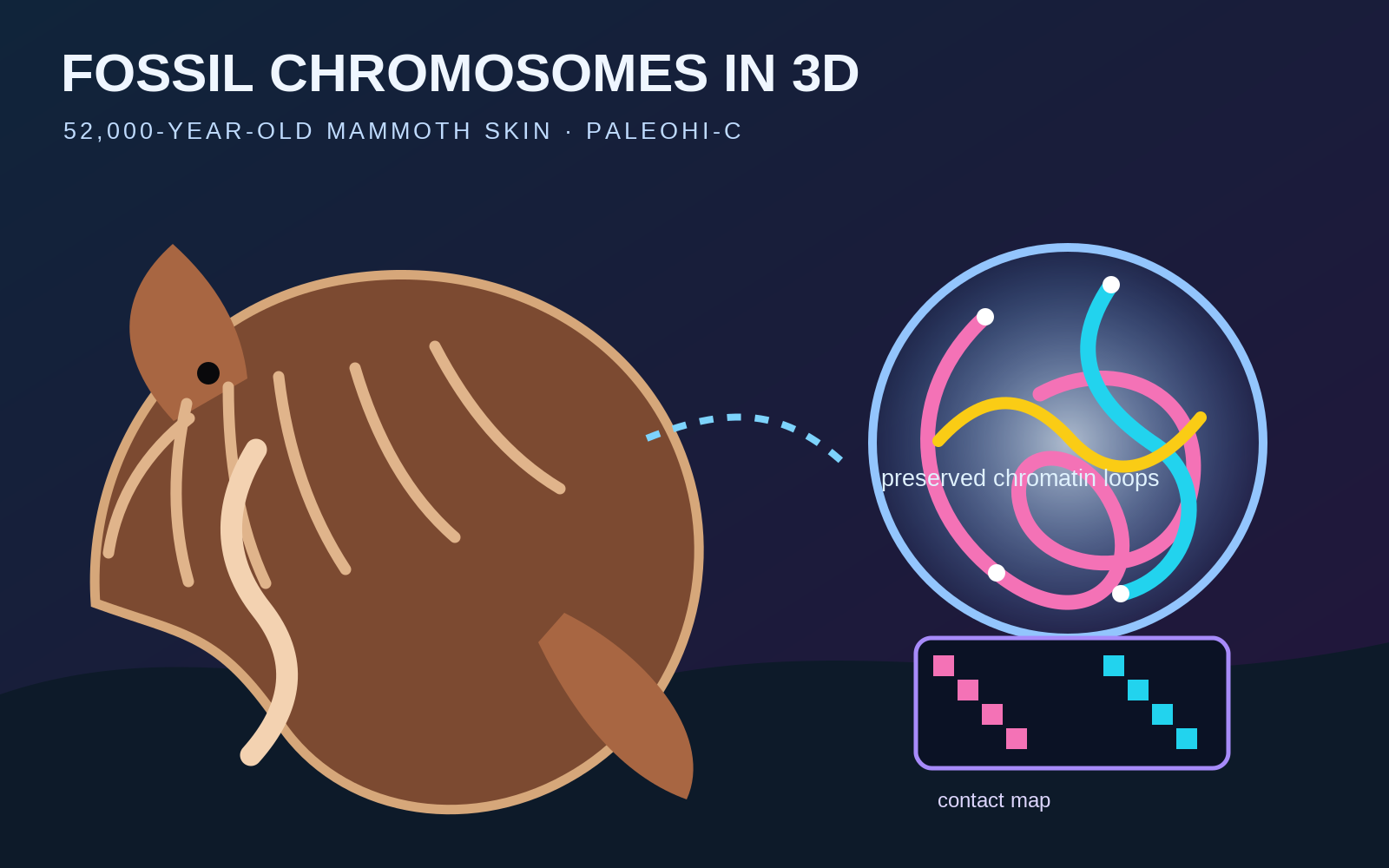 Illustration🧬 Biology
Three-Dimensional Chromosomes Preserved in Mammoth Skin
A 52,000-year-old woolly mammoth skin sample retained chromosome-scale contacts, allowing researchers to reconstruct 28 chromosomes and features of the genome's three-dimensional organization in an extinct animal.
Read more → Illustration🧬 Biology
A New Sex-Determination Mechanism in an African Butterfly
Work in Bicyclus anynana showed that combinations of variants of the Z-linked Masculinizer gene determine sex, revealing a sex-determination mechanism not previously described in butterflies.
Read more →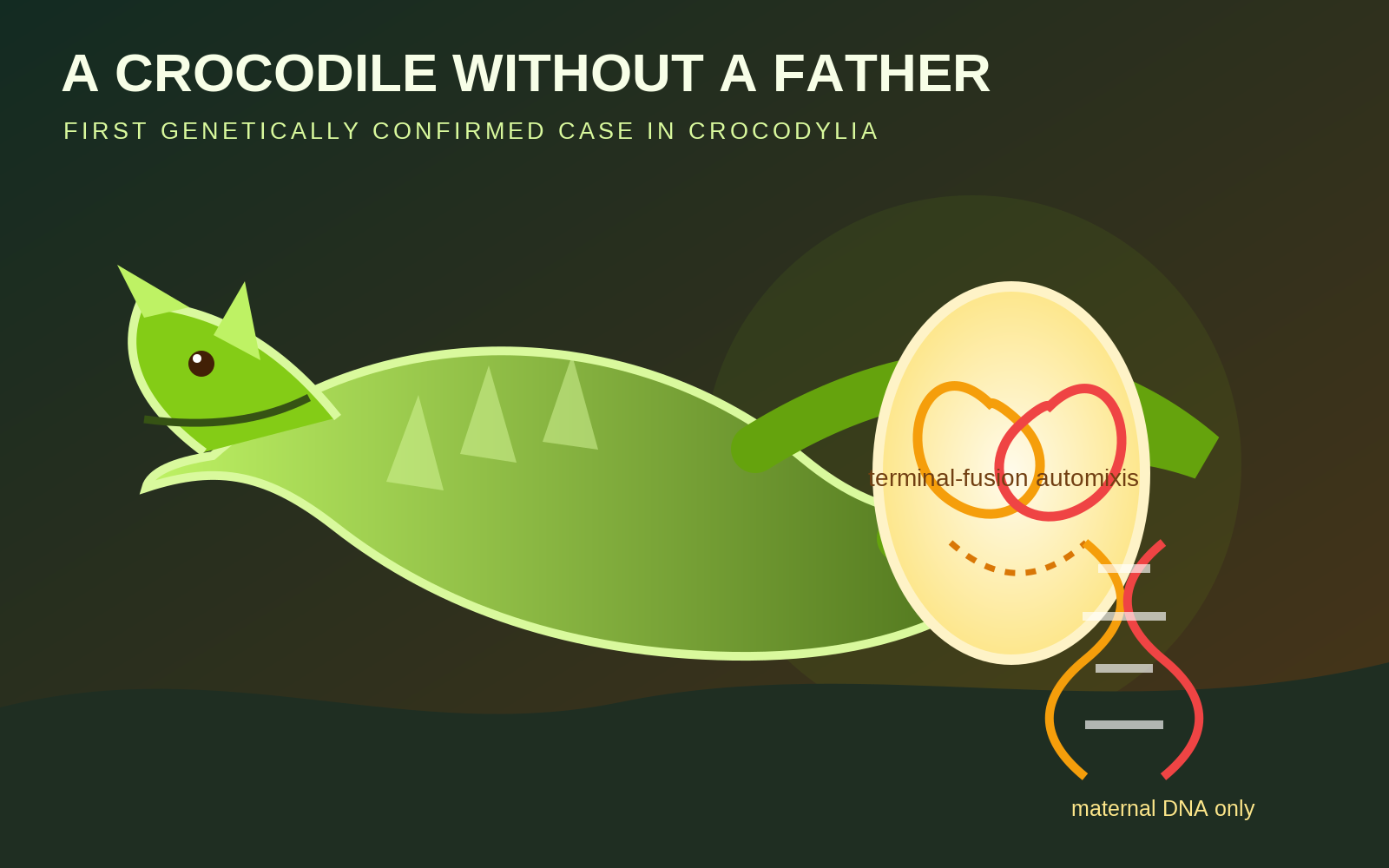 Illustration🧬 Biology
Crocodile Facultative Parthenogenesis Confirmed
Genetic analysis of a fully formed fetus from an egg laid by an isolated American crocodile documented facultative parthenogenesis in crocodilians for the first time.
Read more →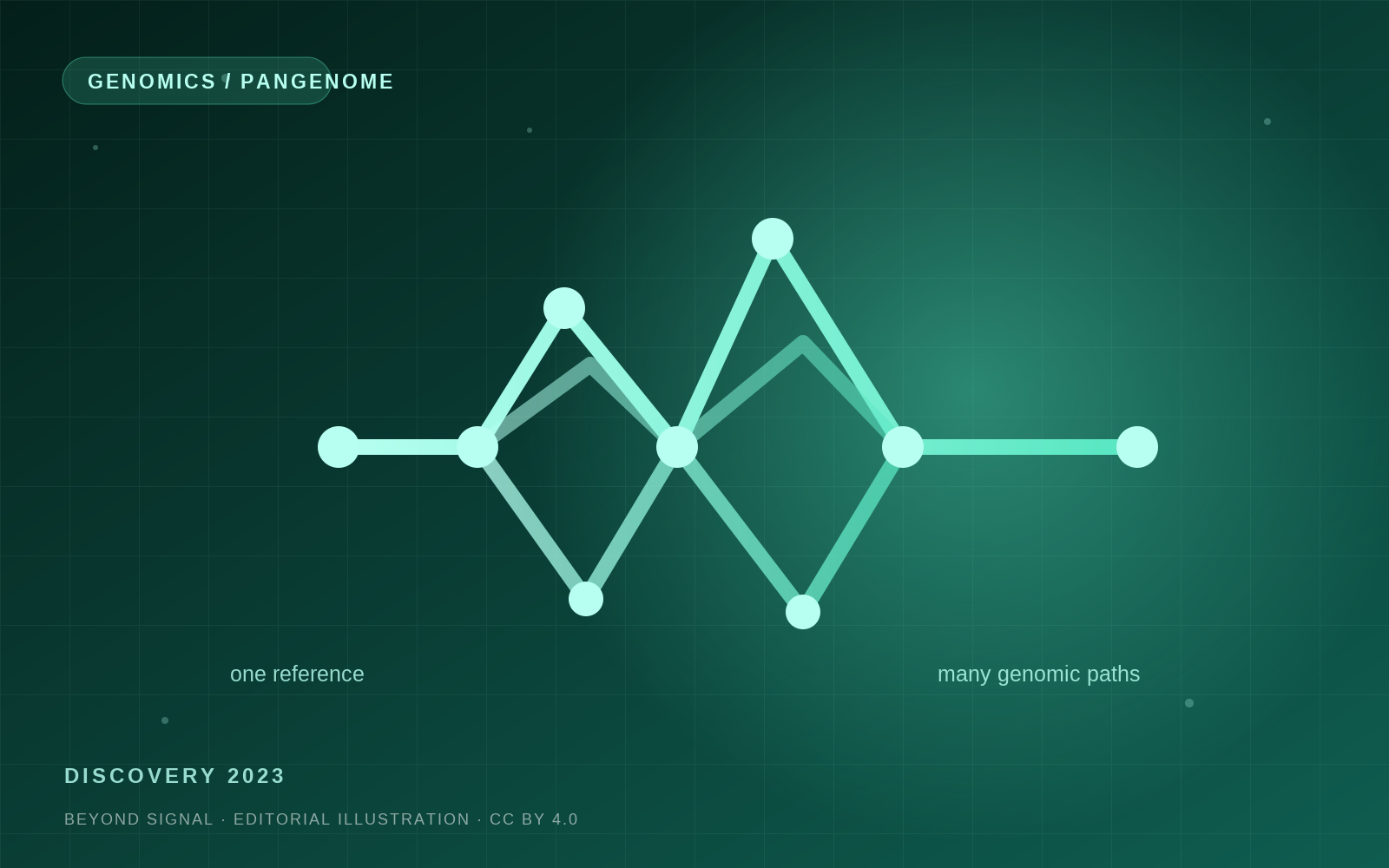 Illustration🧬 Biology
A More Diverse Human Pangenome Reference
Researchers released a draft human pangenome built from 47 genetically diverse people, replacing a single linear reference with multiple possible genomic paths.
Read more → Illustration🧬 Biology
Greenland's Two-Million-Year-Old Environmental DNA
Environmental DNA recovered from mineral-rich sediments at Greenland's Kap København Formation reconstructed a roughly two-million-year-old ecosystem containing mastodons, reindeer, hares, geese, plants, and marine organisms. The fragmented DNA extended the known survival limit of ancient genetic material by about one million years.
Read more → Illustration🧬 Biology
The First Gapless Human Genome Sequence
The Telomere-to-Telomere Consortium filled the remaining gaps in the human reference genome, adding nearly 200 million DNA letters and complete views of centromeres, segmental duplications, and chromosome ends.
Read more →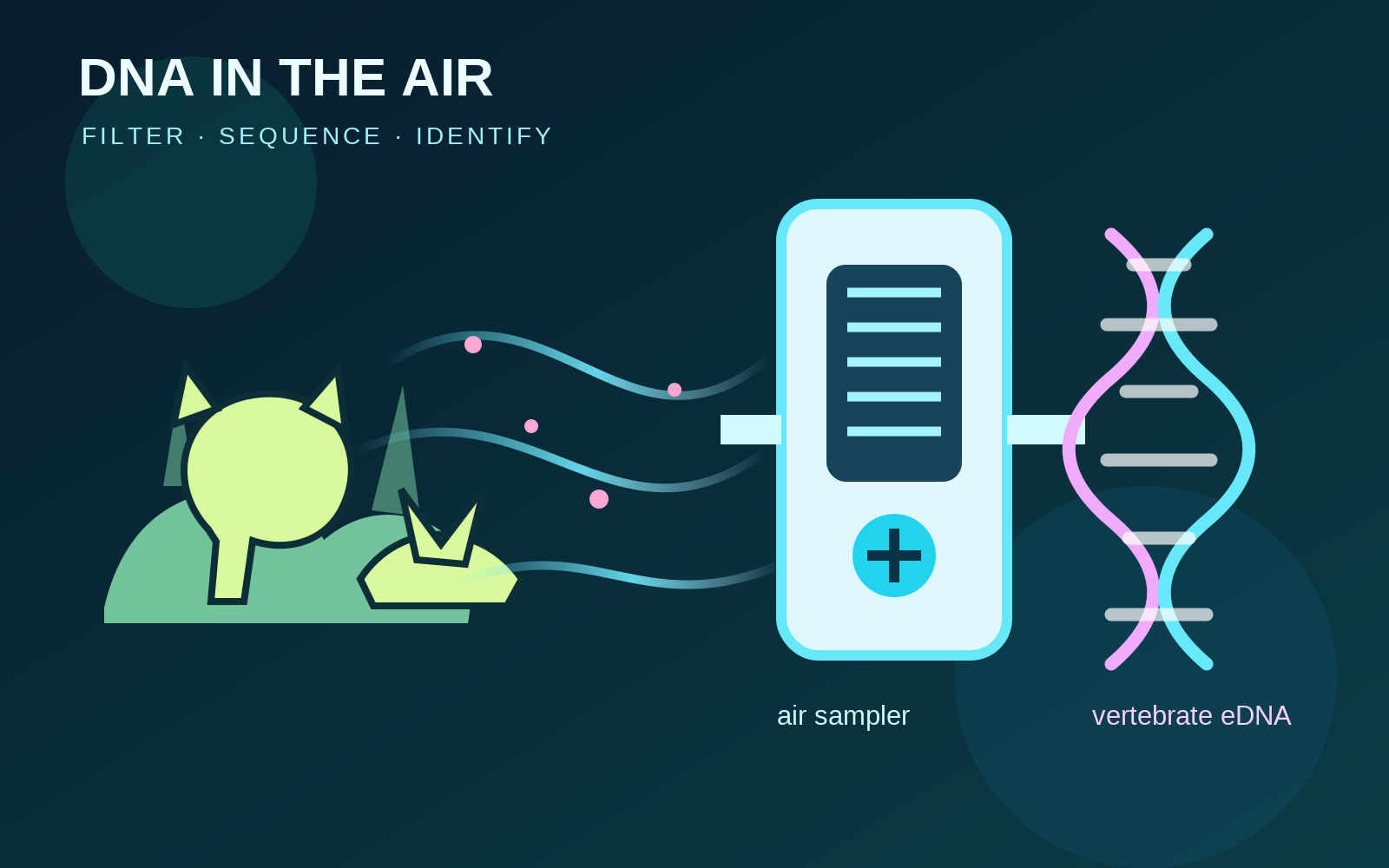 Illustration🧬 Biology
Airborne eDNA Reveals Terrestrial Vertebrates
Two independent zoo studies showed that vertebrate DNA can be collected directly from air and matched to nearby species, establishing airborne eDNA as a practical new route for surveying terrestrial biodiversity.
Read more →Questions readers ask
How many genetics discoveries are catalogued?
The Nucleon currently lists 8. The total changes as new source-checked entries are added.
Where have these discoveries been made?
They span 6 countries or international research settings, from Tumat, Sakha Republic, northeastern Siberia to other locations in the catalogue.
How should these entries be compared?
Start with the primary source and the discovery method. A visually striking result and a formal species or particle identification do not always use the same standard of evidence.