
Annual archive
Dinosaurs & Fossils Discoveries in 2026
A year-level index of 5 source-backed scientific discoveries from 2026. Use the monthly archives to follow the sequence of announcements, or open an entry for its location, method, and primary source.
 Illustration🦕 Dinosaurs & Fossils
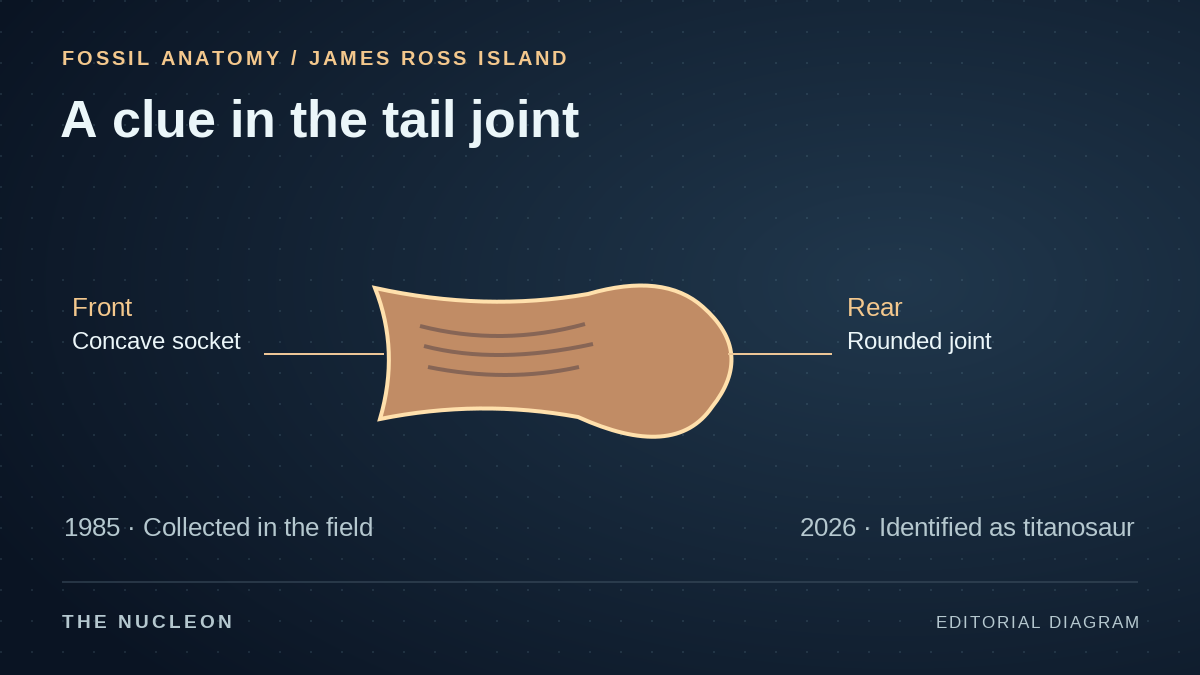
A Tail Bone Identifies a Titanosaur on James Ross Island
A bone collected in Antarctica in 1985 has been identified as part of a titanosaur’s tail. The vertebra came from roughly 82-million-year-old marine rocks on James Ross Island.
Read more → Illustration🦕 Dinosaurs & Fossils
A Deep-Sea Whale Necropolis in the Diamantina Zone
Dives in the Diamantina Zone recorded five modern whale-fall communities and 476 fossil cetacean sites over 1,200 kilometres of seafloor, documenting a whale-fall archive that extends back at least 5.3 million years.
Read more →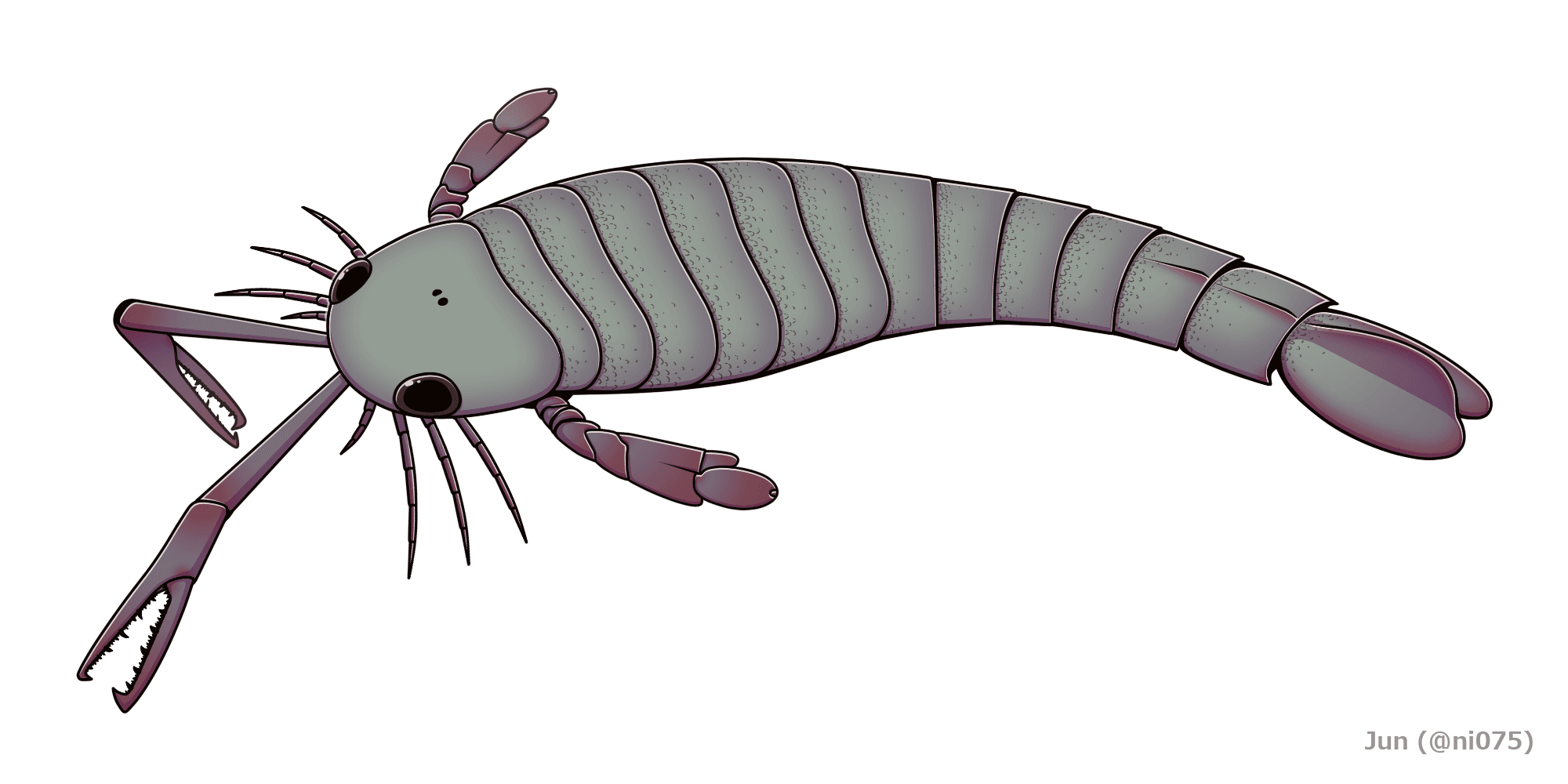 🦕 Dinosaurs & Fossils
The Metre-Long Scorpion Praearcturus
Modern reanalysis supports identifying fragmentary British fossils as a roughly one-metre scorpion, potentially the largest scorpion yet recognized.
Read more →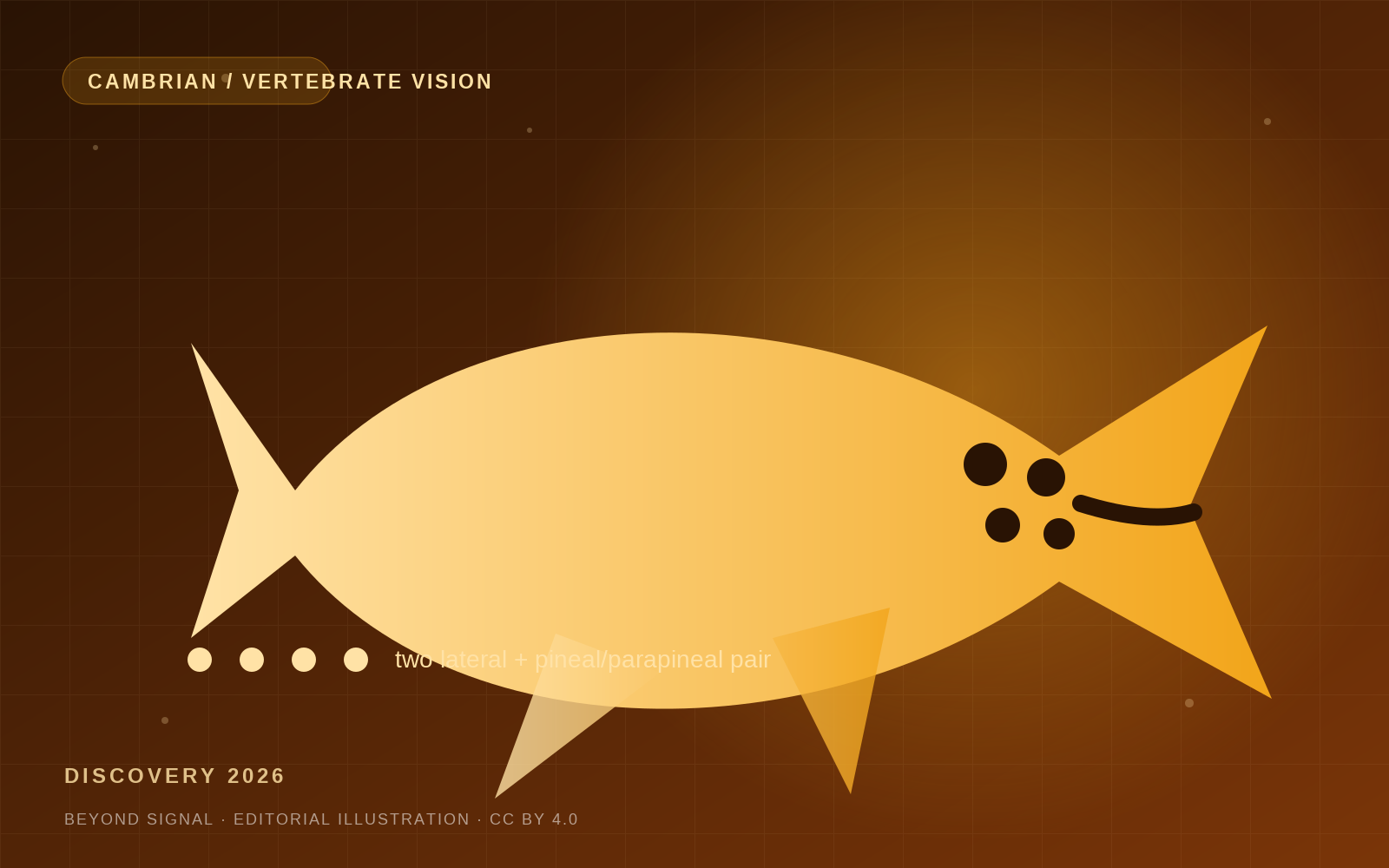 Illustration🦕 Dinosaurs & Fossils
Cambrian Vertebrates Had Four Camera-Type Eyes
Reanalysis of exceptionally preserved Cambrian fish fossils interpreted two structures once called nasal sacs as an additional pair of image-forming eyes.
Read more →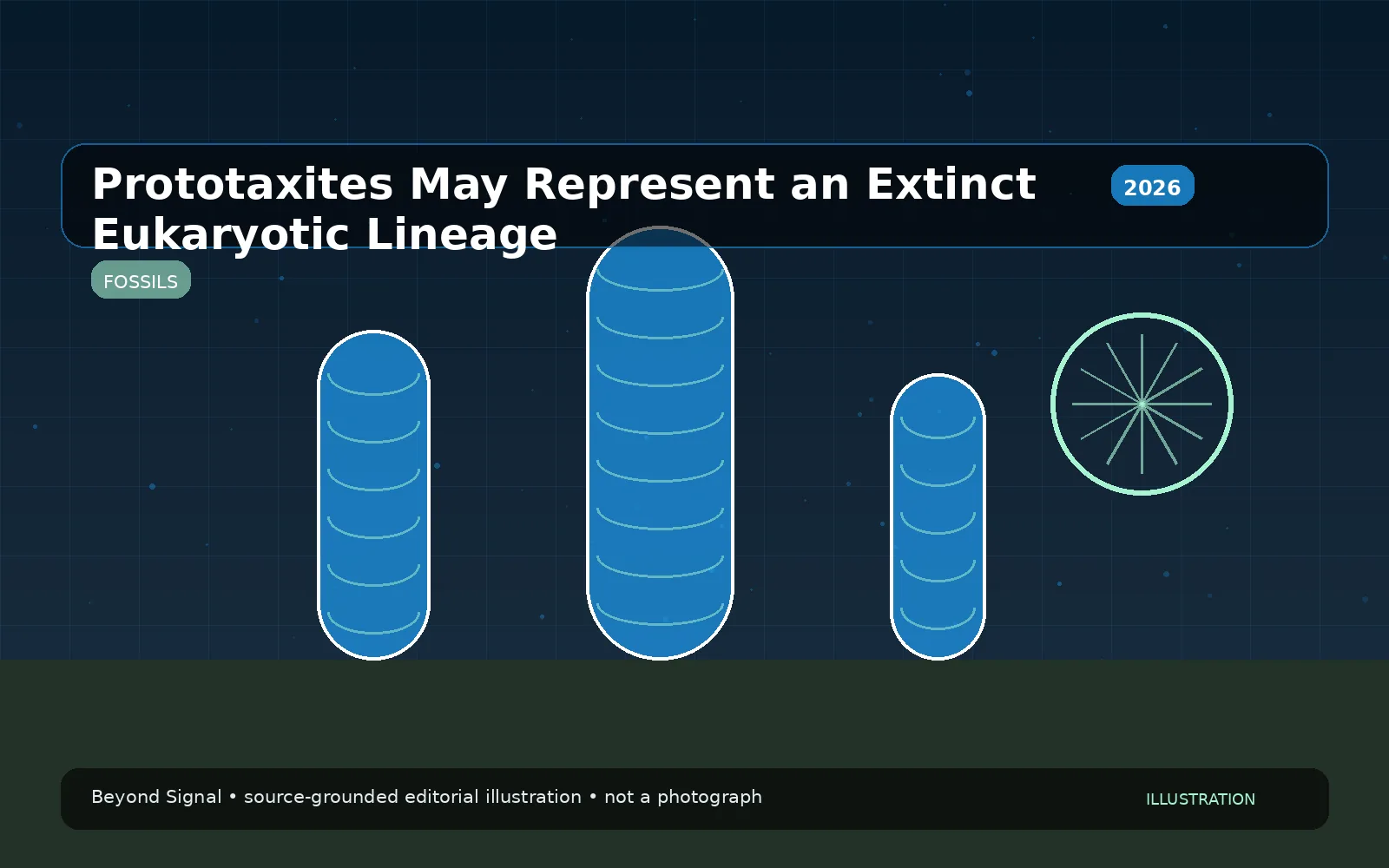 Illustration🦕 Dinosaurs & Fossils
Prototaxites May Represent an Extinct Eukaryotic Lineage
Chemical and structural analyses of the giant Devonian organism Prototaxites found that its tissues do not match known fungi and may represent an entirely extinct branch of complex eukaryotic life. The interpretation revives a long-running debate over the identity of trunk-like fossils that towered over early land ecosystems.
Read more →