
Scientific tag
new species
The new species tag groups 8 source-backed discoveries that share a scientific subject. Tags are a connective layer across the catalogue: they help readers move from a single entry to related findings without replacing the more specific category, location, or institution context.
The current group crosses 2 fields. Follow the individual pages for the evidence, source status, and explanation of what each discovery contributes.
- Entries
- 8
- Scientific fields
- 2
Discoveries connected to new species
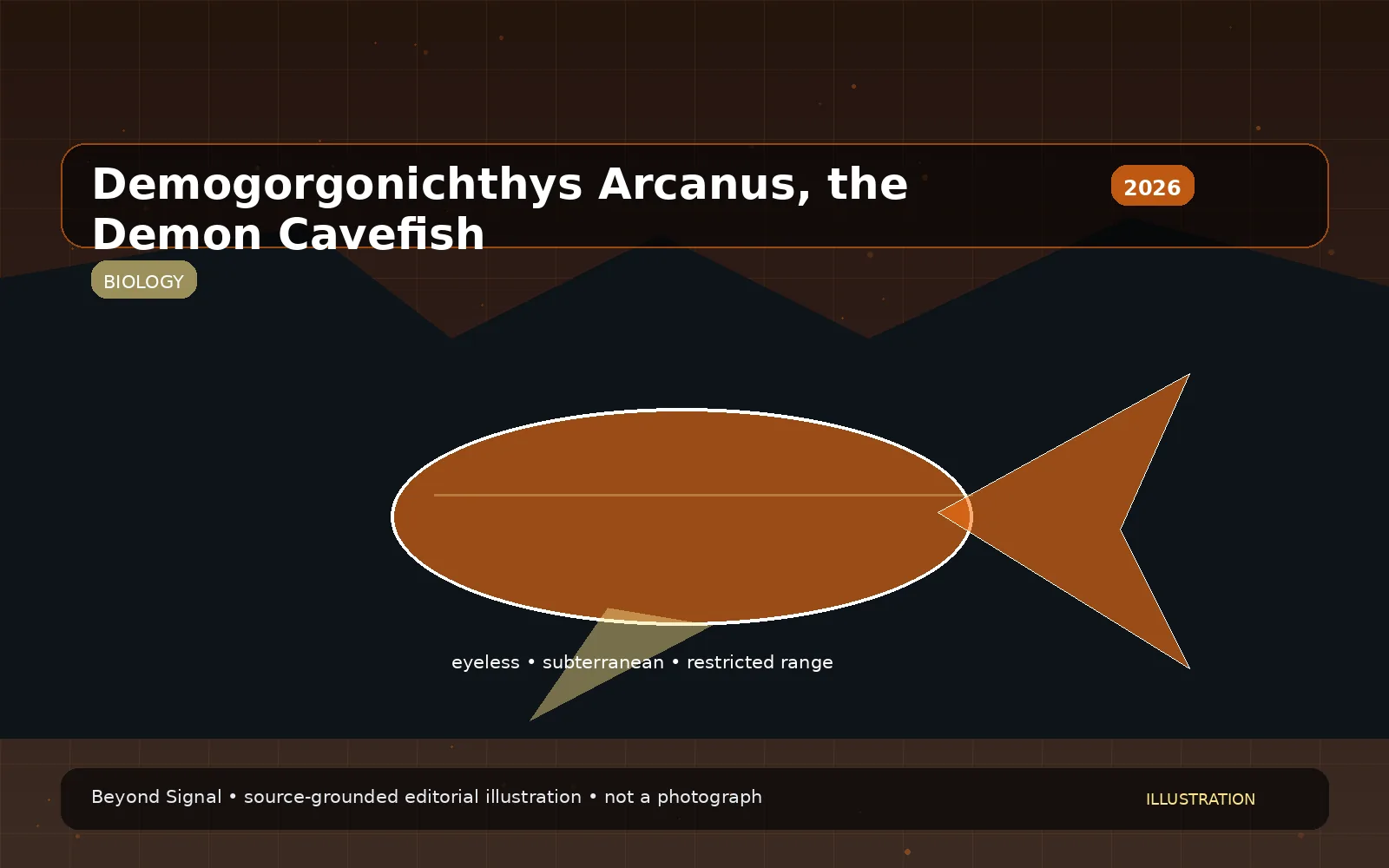 Illustration🧬 Biology
Demogorgonichthys Arcanus, the Demon Cavefish
Researchers described Demogorgonichthys arcanus, a new cavefish from the Redstone Arsenal karst near Huntsville. The pale subterranean predator differs from the Southern cavefish in head shape and fin-ray anatomy, and its coexistence with another predatory cavefish makes the small groundwater habitat ecologically unusual.
Read more → Representative🪸 Ocean Discoveries
31 New Species Found in Brazil's Ocean Midwater
A two-week expedition off Brazil rapidly identified 31 likely new species, including jellyfish, comb jellies, siphonophores, worms, amphipods, larvaceans, and giant single-celled organisms.
Read more → Representative🪸 Ocean Discoveries
Dudgeon's Walking Shark
A newly described walking shark from shallow Papua New Guinea reefs, identified by its distinctive spotted pattern and confirmed as a separate species through DNA comparisons.
Read more → Representative🪸 Ocean Discoveries
A Tiny Blue Octopus from the Galápagos Deep
A golf-ball-sized, deep-blue octopus from nearly 1,800 m below the Galápagos was formally described as a new species after non-destructive CT scans revealed its unusual anatomy.
Read more →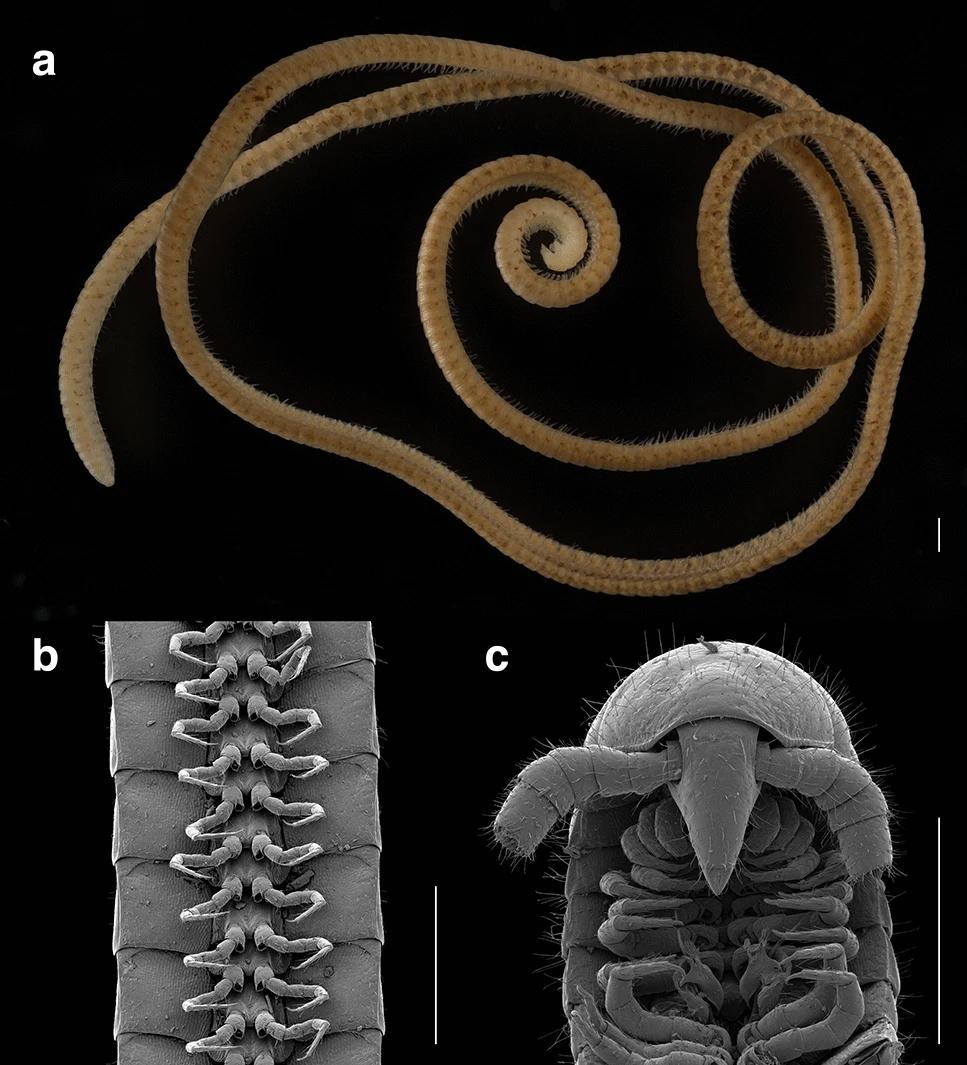 🧬 Biology
The First True Millipede (1,306 Legs)
A pale, eyeless arthropod with up to 1,306 legs — the first millipede ever found that literally has more than a thousand.
Read more → 🪸 Ocean Discoveries
The Mariana Snailfish, Deepest Fish
A small, translucent snailfish that thrives near 8,000 m in the Mariana Trench — the deepest-living fish ever described.
Read more → 🪸 Ocean Discoveries
The Yeti Crab
A blind, silky-clawed crab from hydrothermal vents so distinctive it required an entirely new family — nicknamed the 'yeti crab' for its hairy arms.
Read more →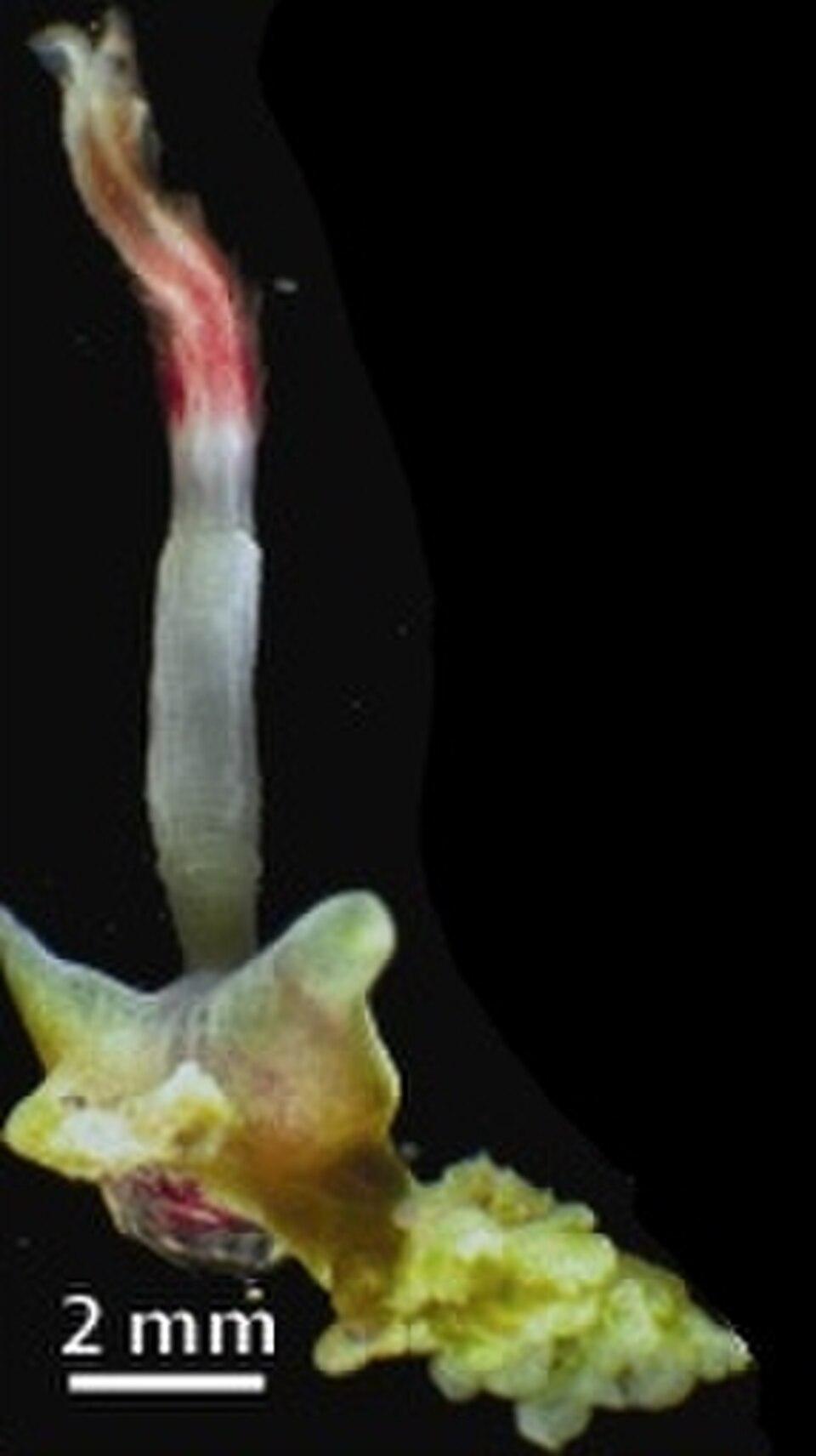 🪸 Ocean Discoveries
Bone-Eating 'Zombie' Worms
Rootless worms that bore into whale bones on the seafloor, dissolving them with acid and feeding through symbiotic bacteria — a new genus found on a sunken whale.
Read more →