
Annual archive
Space Discoveries in 2022
A year-level index of 4 source-backed scientific discoveries from 2022. Use the monthly archives to follow the sequence of announcements, or open an entry for its location, method, and primary source.
 Illustration🌌 Space
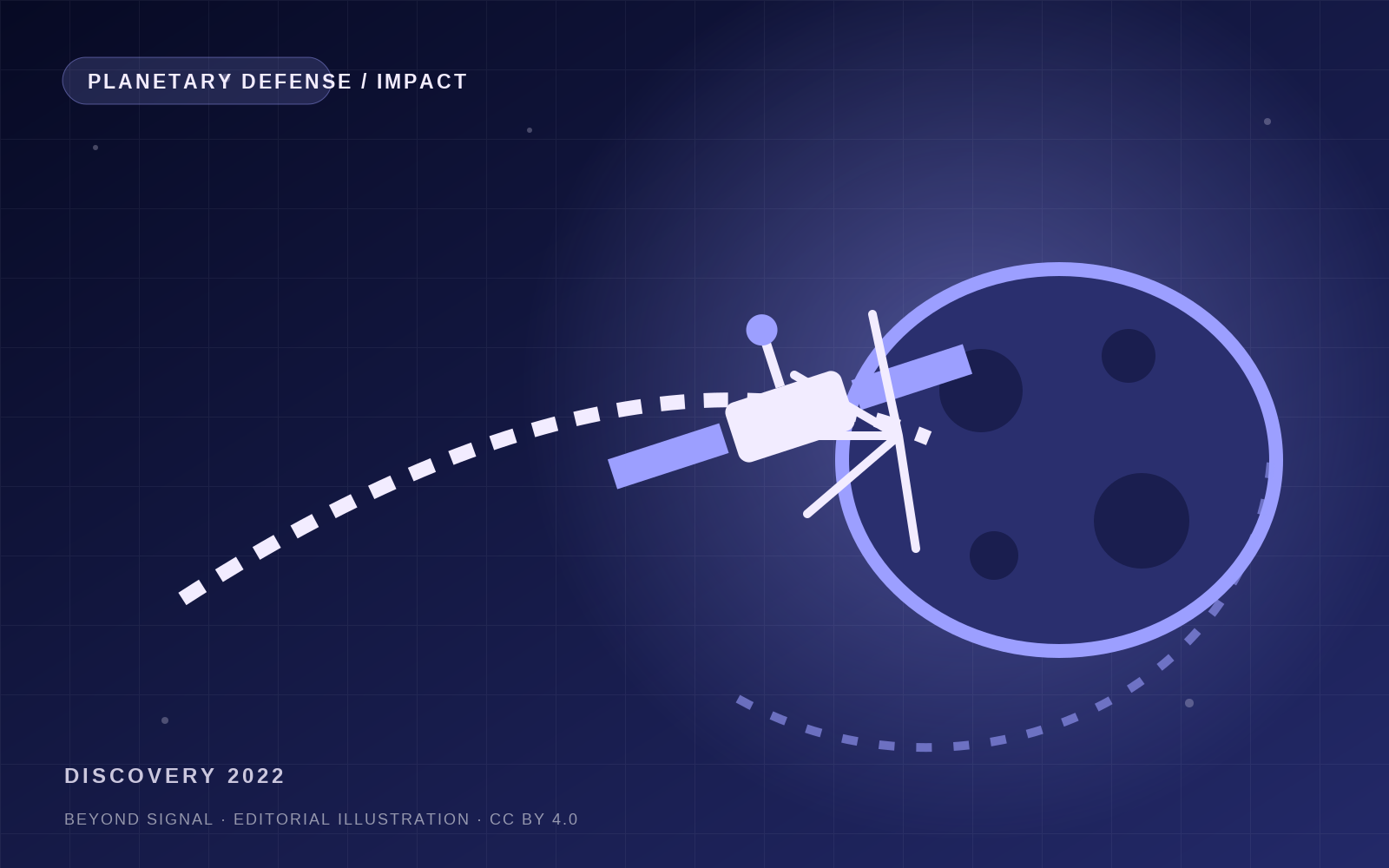
DART Successfully Changes an Asteroid's Orbit
Observations confirmed that NASA's DART spacecraft shortened Dimorphos's orbit around Didymos by roughly 32 minutes, proving that a kinetic impactor can measurably deflect an asteroid.
Read more → Illustration🌌 Space
Webb Detects Carbon Dioxide in WASP-39 b’s Atmosphere
JWST transmission spectroscopy delivered the first unambiguous carbon-dioxide detection in an exoplanet atmosphere, measuring a strong 4.3-micrometre absorption feature in the hot gas giant WASP-39 b.
Read more →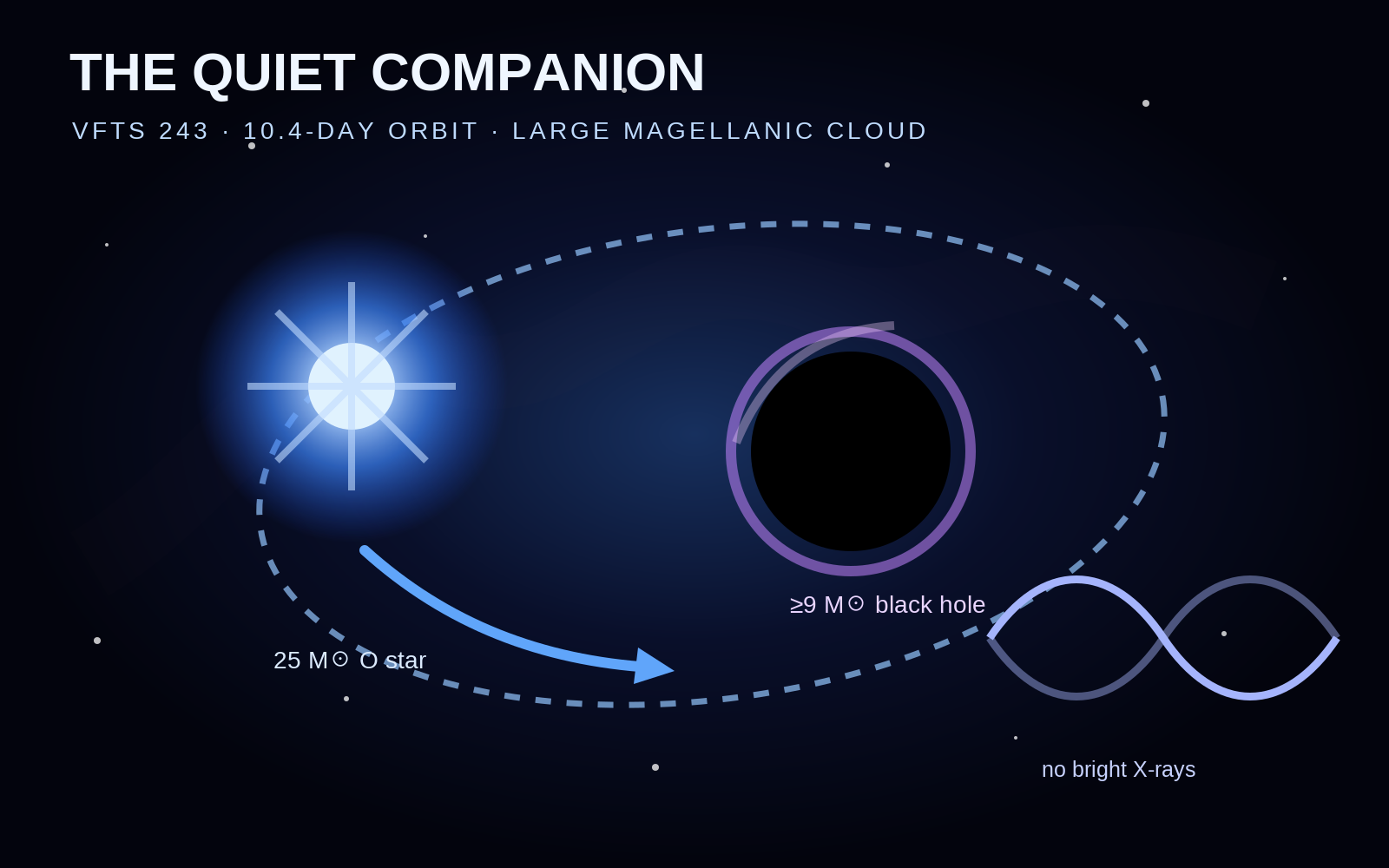 Illustration🌌 Space
VFTS 243, an Extragalactic Dormant Black Hole
Six years of stellar spectra revealed that the massive star VFTS 243 orbits an unseen companion of at least nine solar masses, making the companion the first unambiguous X-ray-quiet stellar black hole identified outside the Milky Way at the time.
Read more → 🌌 Space
Image of Our Galaxy's Black Hole (Sgr A*)
The first image of the supermassive black hole at the center of our own galaxy, 27,000 light-years away.
Read more →