
Topic hub
Earthquakes discoveries in Earth Science
This topic hub follows 2 catalogued earthquakes discoveries across The Nucleon directory. Each entry connects the finding to its location, discovering institution, scientific source, and related work.
What this topic includes
In earth science, earthquakes can describe a change in what scientists observe, classify, or measure. The entries below are grouped by their documented subject rather than by headline popularity, making it easier to compare discoveries from different years and places.
Key discoveries
 Illustration🌋 Earth Science
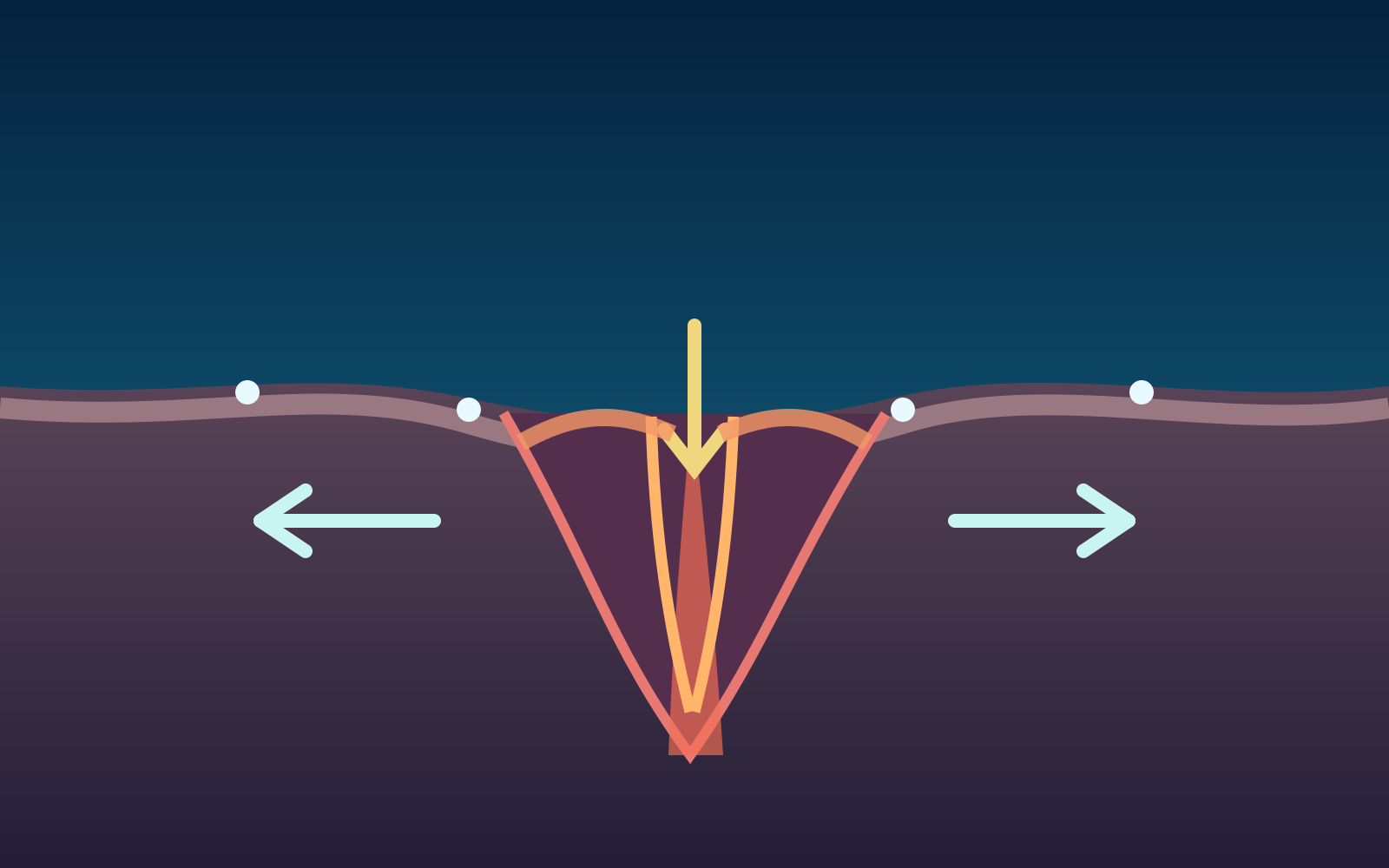
Seafloor Spreading Captured at the Southeast Indian Ridge
An autonomous seismogeodetic observatory captured a 2024 rifting event at the Southeast Indian Ridge, directly measuring seismicity, metre-scale deformation, and fresh lava emplacement at a mid-ocean ridge.
Read more →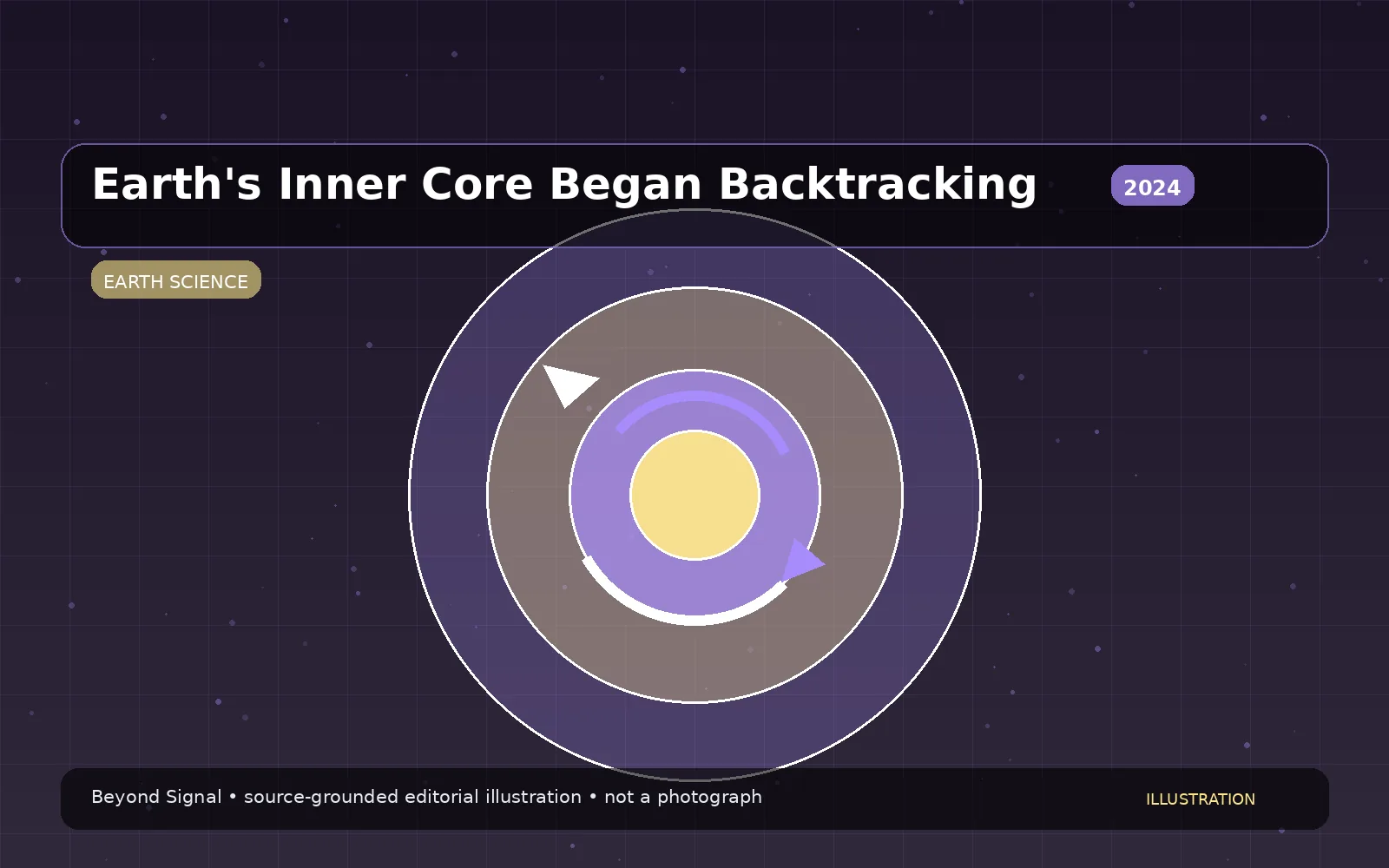 Illustration🌋 Earth Science
Earth's Inner Core Began Backtracking
Seismic waveforms from repeating earthquakes indicated that Earth's solid inner core had slowed and was moving backward relative to the mantle after about 2010. The result extended evidence that inner-core rotation oscillates over decades rather than maintaining a constant faster or slower spin.
Read more →Questions readers ask
How many earthquakes discoveries are catalogued?
The Nucleon currently lists 2. The total changes as new source-checked entries are added.
Where have these discoveries been made?
They span 2 countries or international research settings, from Southeast Indian Ridge near Amsterdam Transform Fault to other locations in the catalogue.
How should these entries be compared?
Start with the primary source and the discovery method. A visually striking result and a formal species or particle identification do not always use the same standard of evidence.