
 Illustration — not a photo of the discovery
Impact Melt Dates Siberia’s Popigai Crater
Dating rocks melted by the Popigai impact placed the collision around 35.7 million years ago, narrowing previous estimates that spanned tens of millions of years.
The story
Why scientists were there
The northern Siberian impact structure contains rock that melted and cooled during the collision. That material can preserve the age of the event independently of the surrounding landscape.
How they found it
Researchers measured argon isotopes in impact melt and compared the resulting age with the timing of other events in the late Eocene geological record.
What makes it unique
A dated crater can be tested against distant deposits and biological changes. Agreement or disagreement in timing is a first test of a proposed link, rather than evidence of causation by itself.
Gallery
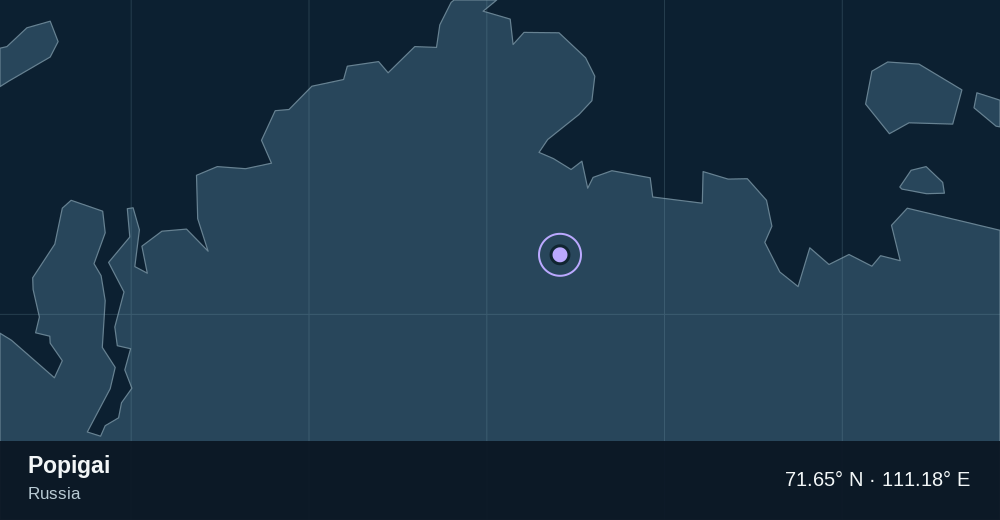
Where it was found
Popigai impact structure, northern Siberia
Tags
Related discoveries
 Illustration🌌 Space
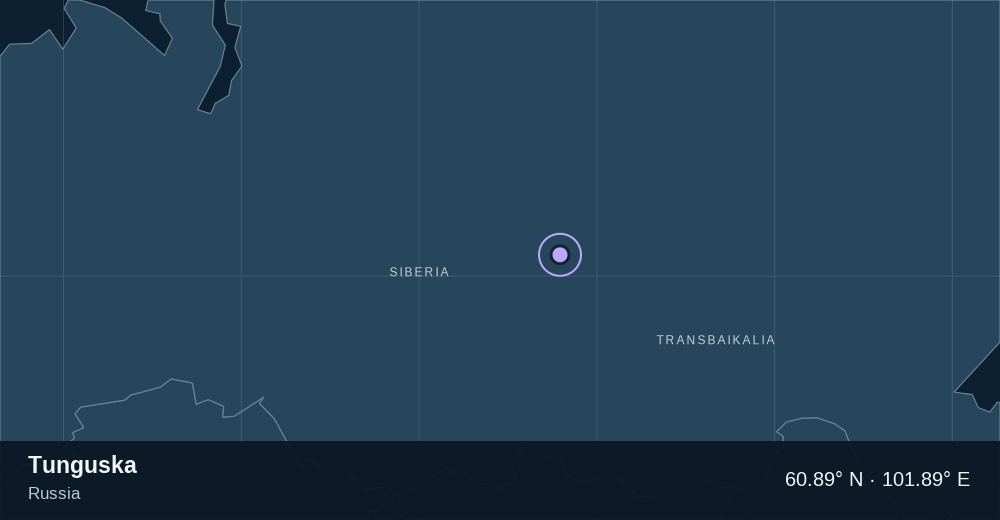
Fallen Trees Record the Tunguska Airburst
An atmospheric explosion above central Siberia on 30 June 1908 flattened forest over a vast area. The pattern of fallen trunks became crucial evidence for reconstructing the event.
Read more →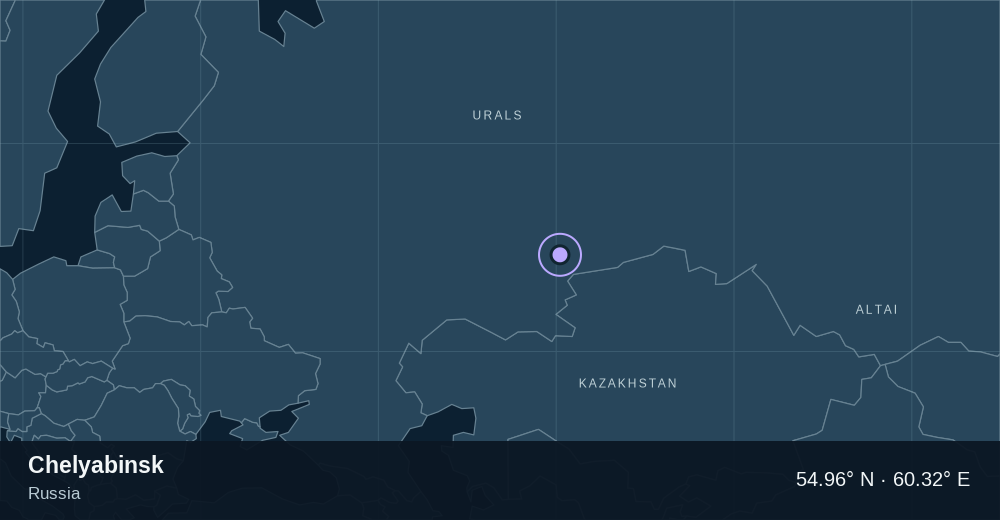 Illustration🌌 Space
Video and Meteorite Fragments Reconstruct the Chelyabinsk Airburst
On 15 February 2013, a space rock broke apart over the southern Urals. Video recordings, damage surveys and recovered meteorites let researchers reconstruct the same event independently.
Read more →