🪵 The 476,000-Year-Old Wooden Structure That Rewrote Prehistory
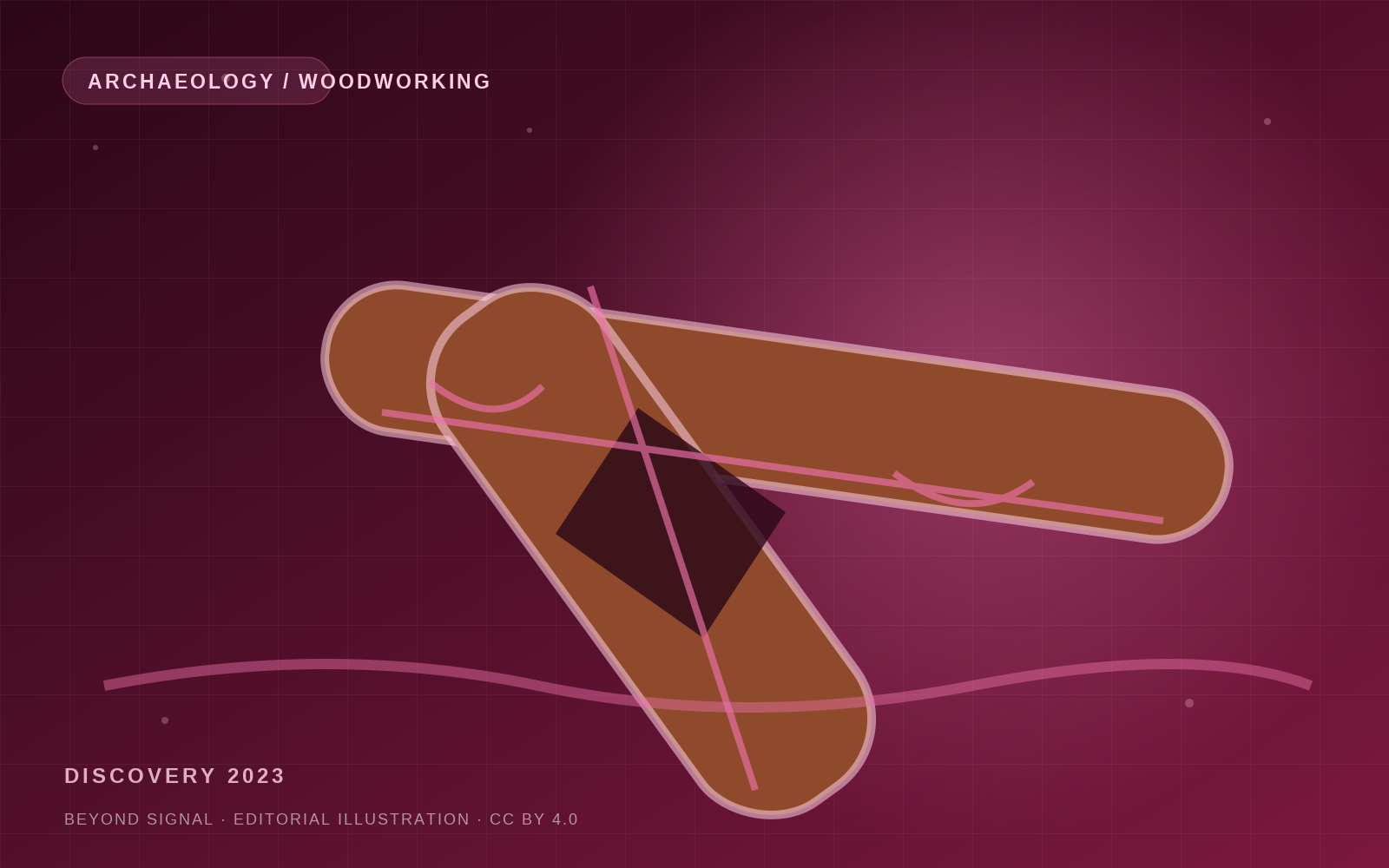
Stone survives. Wood usually disappears. That imbalance has made early technology look far more stone-centred than it probably was. At Kalambo Falls in Zambia, permanently wet sediments preserved something almost never seen from deep prehistory: two large logs deliberately shaped to fit together, dated to at least 476,000 years ago.
Key facts
- Site
- Kalambo Falls, Zambia
- Excavated
- 2019
- Age
- At least 476,000 years
- Material
- Worked waterlogged wood
- Construction
- Two logs joined by a cut notch
- Species
- Unknown hominin, before Homo sapiens
Why ancient wood is almost invisible to archaeology
Wood was abundant, workable and useful for digging, hunting, carrying, building and controlling fire. Yet microorganisms, oxygen and changing moisture destroy it rapidly. Most Palaeolithic sites therefore preserve stone tools while the objects those tools helped make have vanished.
Kalambo Falls is different. A high water table and fine river sediments created oxygen-poor conditions that protected wood and plant remains. Earlier excavations had already suggested the site might preserve a rare wooden record, and renewed work in 2019 recovered multiple modified objects.
The notch that showed deliberate construction
The oldest find consists of an upper log laid across a larger trunk. The upper piece is about 1.4 metres long and contains a broad U-shaped notch. The lower trunk passes through that notch, connecting the two pieces at an angle rather than leaving them as a chance pile of driftwood.
Researchers documented chopping, scraping and adzing marks on the notch and shaped surfaces. Experiments and microscopic examination supported the interpretation that hominins intentionally modified both pieces to make a joined structure.
How sand grains dated wood too old for radiocarbon
Radiocarbon dating cannot reach nearly half a million years, and the team did not date the wood directly. Instead, researchers used luminescence techniques on mineral grains in the surrounding sediments. These methods estimate when quartz or feldspar was last exposed to sunlight before burial.
The sediment cluster containing the interlocking logs produced an age of about 476,000 years with an uncertainty of roughly 23,000 years. Younger layers at the site preserved additional wooden tools, including a possible wedge, a digging stick and a cut log.
What the structure says, and what remains uncertain
The joined logs demonstrate planning, control of large pieces of timber and the idea of combining separate parts into a construction. The researchers suggested possibilities such as a raised platform, walkway or foundation in a wet floodplain, but the surviving fragment is not enough to identify one function with certainty.
No human remains were found with the structure, so its makers cannot be assigned securely to a species. What can be said is more important than a speculative name: hominins living before Homo sapiens were transforming their environment with large-scale woodworking hundreds of thousands of years earlier than the surviving record had shown.
Frequently asked questions
Is this the oldest wooden object ever found?
Not necessarily. Older isolated pieces of modified wood have been reported, but the Kalambo find is the earliest known evidence of logs intentionally joined into a structure.
How could wood survive for 476,000 years?
Waterlogged, oxygen-poor sediments slowed biological decay and kept the wood buried in unusually stable conditions.
Who built the Kalambo structure?
The builders are unknown. The structure predates Homo sapiens, and no diagnostic hominin remains were recovered with it.
Was it definitely a house?
No. A platform, walkway or foundation are plausible interpretations, but the preserved logs do not establish the structure's exact purpose.